
Natural Tick Repellents and Easy Tick Control Tips

This post may contain affiliate links. Read my full disclosure here.
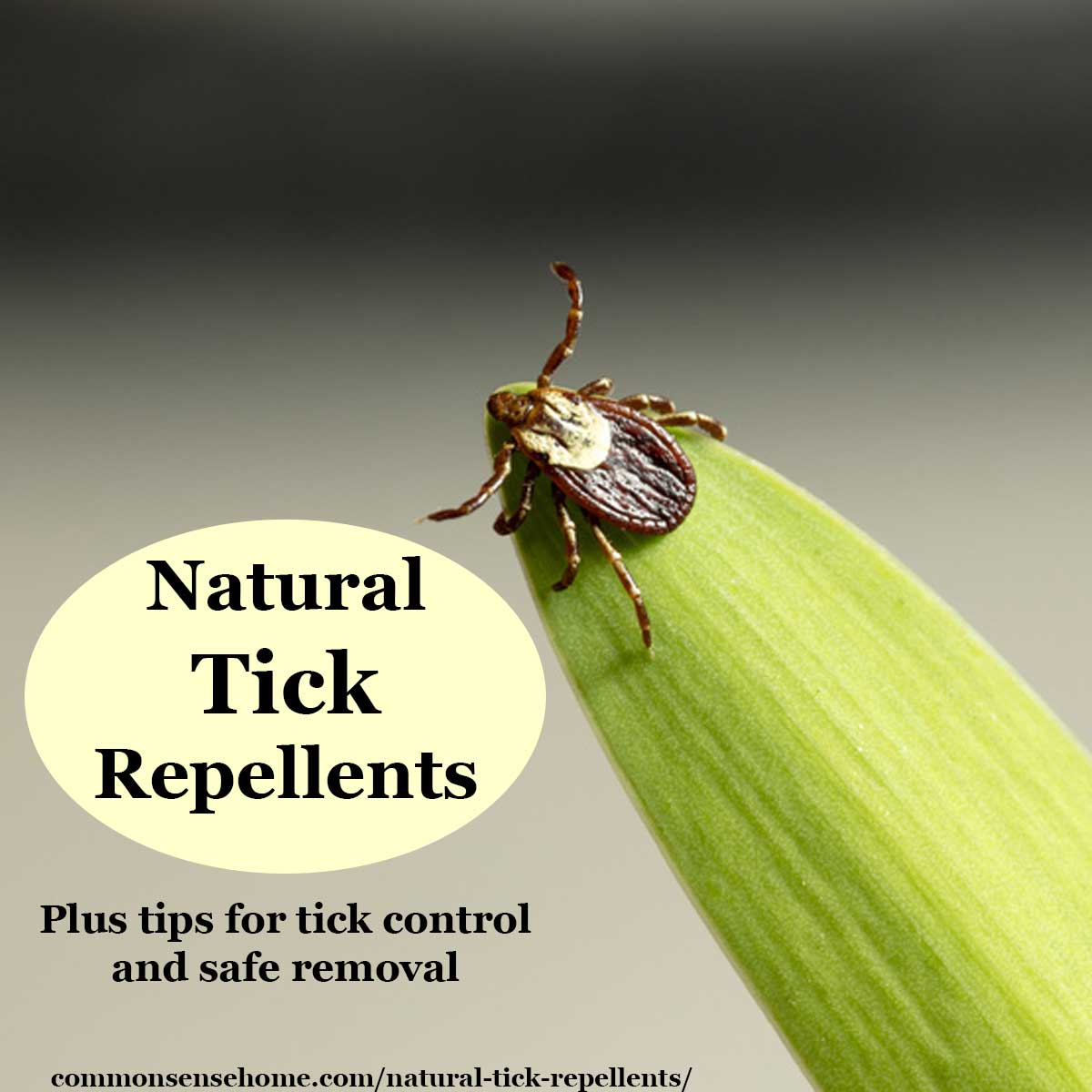
TICKS – Everything you will read about avoiding or repelling ticks will have the word DEET in it. From the CDC to the EPA, they all recommend using DEET to protect yourself and those you love from blood-sucking ticks. Instead, I’d like to discuss Natural Tick Repellents, tick control, and tips to avoid getting bit. We also include recipes for tick repellents for humans and dogs made with essential oils, and how to remove a tick safely.
Would you like to save this?
Why I Don’t Use DEET
In attempt to remove toxic chemicals from our lives, I always look for an organic approach and alternatives to conventional methods. Even though DEET is commonly recommended, that doesn’t mean it is safe for my family. It is up to us to make informed and educated decisions and decide whether or not we trust their advertising.
DEET is short for N,N-diethyl-m-toluamide (also known as N,N-diethyl-3-methylbenzamide). It is a member of the toluene chemical family. Toluene is an organic solvent used in rubber and plastic cements and paint removers. DEET is absorbed through the skin and passes into the blood.
The Medical Sciences Bulletin, published by Pharmaceutical Information Associates Ltd. reports, “Up to 56% of DEET applied topically penetrates intact human skin and 17% is absorbed into the bloodstream.” Blood concentrations of about 3 mg per liter have been reported several hours after DEET repellent was applied to skin in the prescribed fashion. DEET is also absorbed by the gut.
The most serious concerns about DEET are its effects on the central nervous system. Dr. Mohammed Abou-Donia of Duke University studied lab animals’ performance of neuro-behavioral tasks requiring muscle coordination. He found that lab animals exposed to the equivalent of average human doses of DEET performed far worse than untreated animals. Abou-Donia also found that combined exposure to DEET and permethrin, a mosquito spray ingredient, can lead to motor deficits and learning and memory dysfunction.
See “The Hazards of DEET” for more information.
Alternatives to DEET
So if you don’t use DEET, what do you use?
Well, I have a safe, natural tick repellent alternative that is just as effective as DEET – continue reading to find out what it is!
Before we explore natural ways to repel and avoid ticks, we need to learn more about them, as follows:
- Tick behavior
- Diseases spread by ticks
- What ticks look like
What are Ticks?
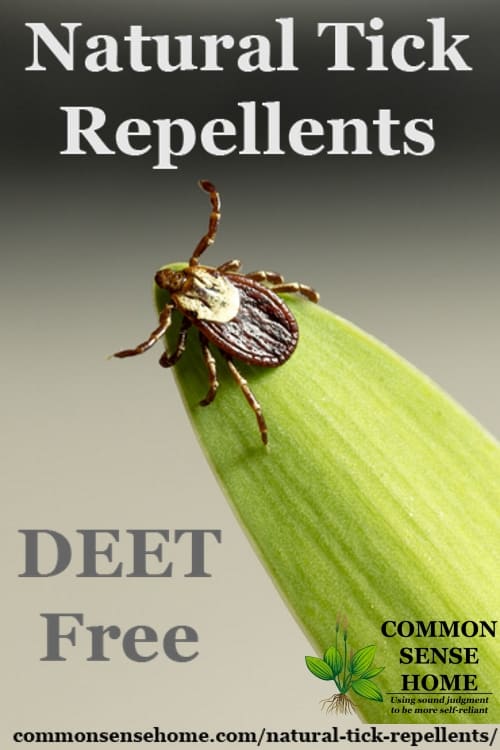
Ticks are small, blood-sucking arachnids (eight legged bugs related to spiders). They can range in size from as small as a pin’s head to as large as a pencil eraser. The different kinds of ticks can range in color from shades of brown to reddish brown and black.
As they take in more blood, ticks become larger and larger. At their biggest, ticks can be about the size of a marble. After a tick has been feeding on its host for several days or weeks, they become engorged and can turn a greenish blue color. When done feeding, they usually fall off to breed, lay eggs and start the cycle again.
Types of Ticks
There are many different types of ticks, but only the Blacklegged Ticks (Deer Ticks) carry the bacterium that causes Lyme disease. According to the CDC, Lone Star Ticks, American Dog Ticks, the Rocky Mountain Wood Tick, and the Dog Tick do not transmit the Lyme disease.
Tick Borne Diseases
Aside from Lyme disease, other tickborne diseases are: Southern Tick-Associated Rash Illness (STARI), Rocky Mountain Spotted Fever (RMSF), Ehrlichiosis, Babesiosis, Anaplasmosis, Tularemia and now Powassan Virus.
Although tickborne diseases can have mild symptoms that may be treated at home, some symptoms can be severe (even cause death) and require hospitalization. If you have been bit by a tick, please seek the advice of a medical professional immediately. See Tick Bites: Symptoms and Treatments for more information.
How Do Ticks Get on You?
You may have seen images with ticks standing on a blade of grass with their front legs outstretched, waiting to hitch a ride on their next victim. The article How Ticks Get On You explains what’s going on:
In 1881, scientist G. Haller published the first description of these structures, although he misunderstood their purpose. Haller believed the structures were auditory sensors, when in fact they proved to be olfactory sensors. That means, when a tick sits on a blade of grass with its front legs extended, it is effectively sniffing the air for your scent.
What’s remarkable, however, is just how well the tick can smell prey and sense even the slightest movement. Using its Haller’s organs, a tick can detect the carbon dioxide you exhale with each breath and the ammonia in your sweat. Even the most well-groomed hiker can’t avoid detection by the Haller’s organs because they can also sense changes in temperature as you approach.
Ticks have an incredible sense of smell and can detect you coming, some even seek you out. The way that herbs work at repelling mosquitoes, spiders, ticks and other biting insects is that they provide you with sensory camouflage. They mask your natural scent and odors that the biting species find attractive.
Tick Repelling Herbs – Which Herbs Keep Ticks Away?
Many of the same herbs that repel mosquitoes and spiders also repel ticks.
Tick repelling herbs include:
- Rose Geranium (Pelargonium capitatumx raden)
- Sweetgrass – New research finds that sweetgrass, a meadow grass native to northern climates, contains chemicals that work as well as DEET in fending off the blood-sucking insects.
- Pennyroyal
- Rosemary
- Rue
- Wormwood
- Lavender
- Lemongrass
- Citronella
- Eucalyptus
Planting any of the above herbs, as well as Beauty Berry Bush and Mountain Mint, will act as a natural tick repellent for your yard.
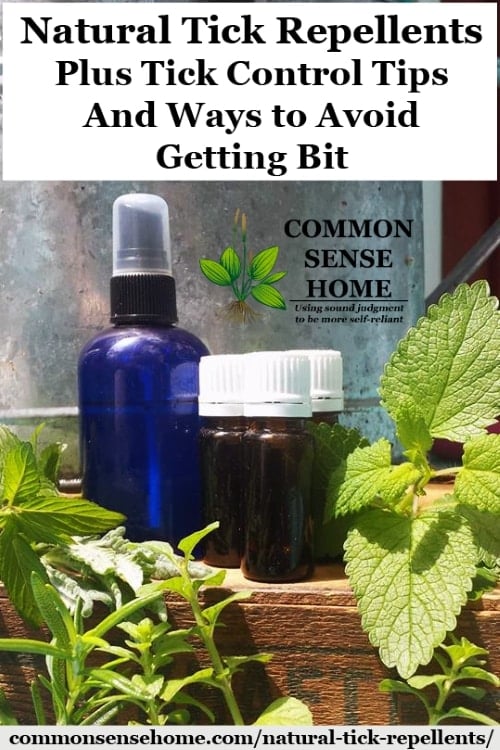
Natural Tick Repellents
Now more than ever it is important to explore all of the constituents, properties, and applications for herbs because bacteria, parasites, viruses, and pathogens have become resistant to the current chemical and medical protocols. In many cases doctors and scientist have no plan B. They are working diligently at finding alternatives but time is running out. We need to arm ourselves with an herbal warfare apothecary against these invaders to protect us when all else fails (or be our first course of action).
The article Ticks: Natural Prevention and Care warns about the need for new plant based tick controls:
A team of scientists from the Scottish Agricultural College believes that the long term outlook for insect and parasite control may not be so rosy. Project leader Dr. Jos Houdijk states that it is now time to look for alternatives to the veterinary drugs which farmers in industrialized countries have come to rely on.
“When these drugs were introduced in the west in the 1960s we thought they would solve all our problems but we couldn’t have been more wrong. Nowadays the parasites are becoming resistant and the consumer is becoming more aware about having products that have a minimum use of drugs. Alternative medicines are coming into fashion again.
The long term solution to tick -borne disease prevention lies in the power of plants and herbs. These plant-based treatments, along with some knowledge of ticks and tick-borne diseases may be your best bet at staying healthy in the ensuing summer months.
The top two natural tick repellents listed in this post (Rose Geranium and Sweetgrass) are two of these plant-based treatments.
See: Mosquito-repelling chemicals identified in traditional sweetgrass and Bioactivity-guided investigation of geranium essential oils as natural tick repellents for more on studies demonstrating their effectiveness.
Which Essential Oils Keep Ticks Away?
Any combination of the above herbs will work at repelling ticks, but the best essential oils for keeping ticks away are Rose Geranium and Sweetgrass. You can use whatever essential oils you have on hand from the list above, but make sure you use Rose Geranium and Sweetgrass as your primary tick repellent essential oils.
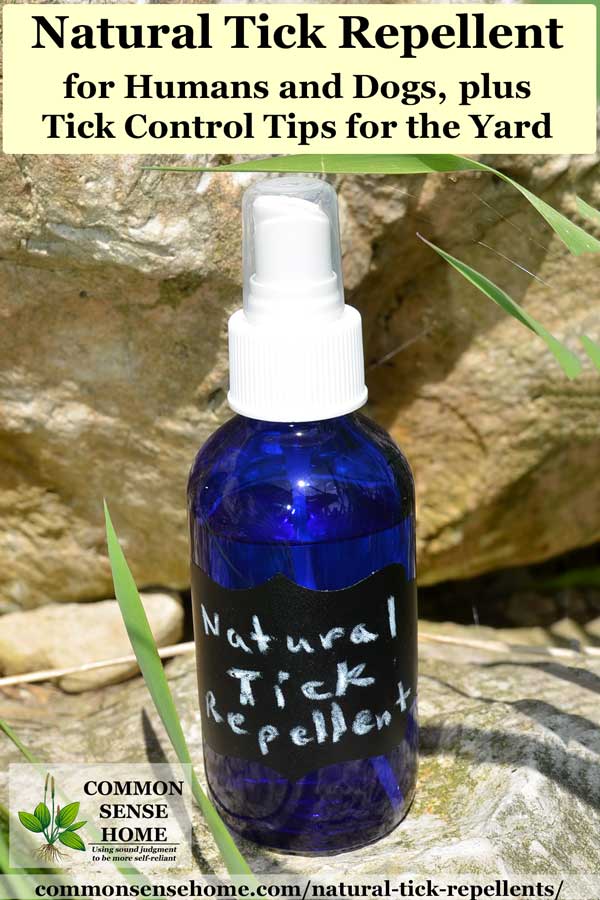
Natural Tick Repellent Recipe
This is a safe, natural tick repellent for humans made with essential oils. A simpler tick repellent for dogs is listed below.
Ingredients
- 20 Drops of Rose Geranium Essential Oil
- 10 Drops of Sweetgrass Essential Oil
- 5 Drops of Lavender Essential Oil
- 5 Drops of Citronella or Lemon Essential Oil
- 4oz of Rubbing Alcohol, Witch hazel, Vodka, Apple Cider Vinegar or Distilled Water
- Glass Spray Bottle
Directions for Use
Add all of the ingredients into the spray bottle and spray on clothes before going outside. Shake before using.
Note: While you can use water, the other options are better for keeping the oils in solution. Regular tap water may contain contaminants, so distilled water is preferred.
Other Recommended Tick Repellent and Removal Options
- The Original Ticked Off Tick Remover
- Tick Remover Set with Small and Large Tick Twister
- Organic Tick and Flea Control Spray for Dogs
- Nantucket Spider Tick Repellent Spray for People
Tick Protection from the Inside Out
There are many herbs you can use to repel ticks externally, but you may also be able to make yourself less appealing as a tick meal from the inside out by:
- Taking Bitters – Herbalists have found that taking Gentian Bitters helps protect you from getting bit by ticks.
- Eating Garlic
Natural Tick Control for Your Yard
Animals, insects and even fungi play an important role at keeping nature in balance. It is our job to help implement these natural alternatives when we see an infestation or an issue for concern, to protect the health of our family.
Some amazing species that can provide your family, homestead or farm with natural tick-controlling benefits are:
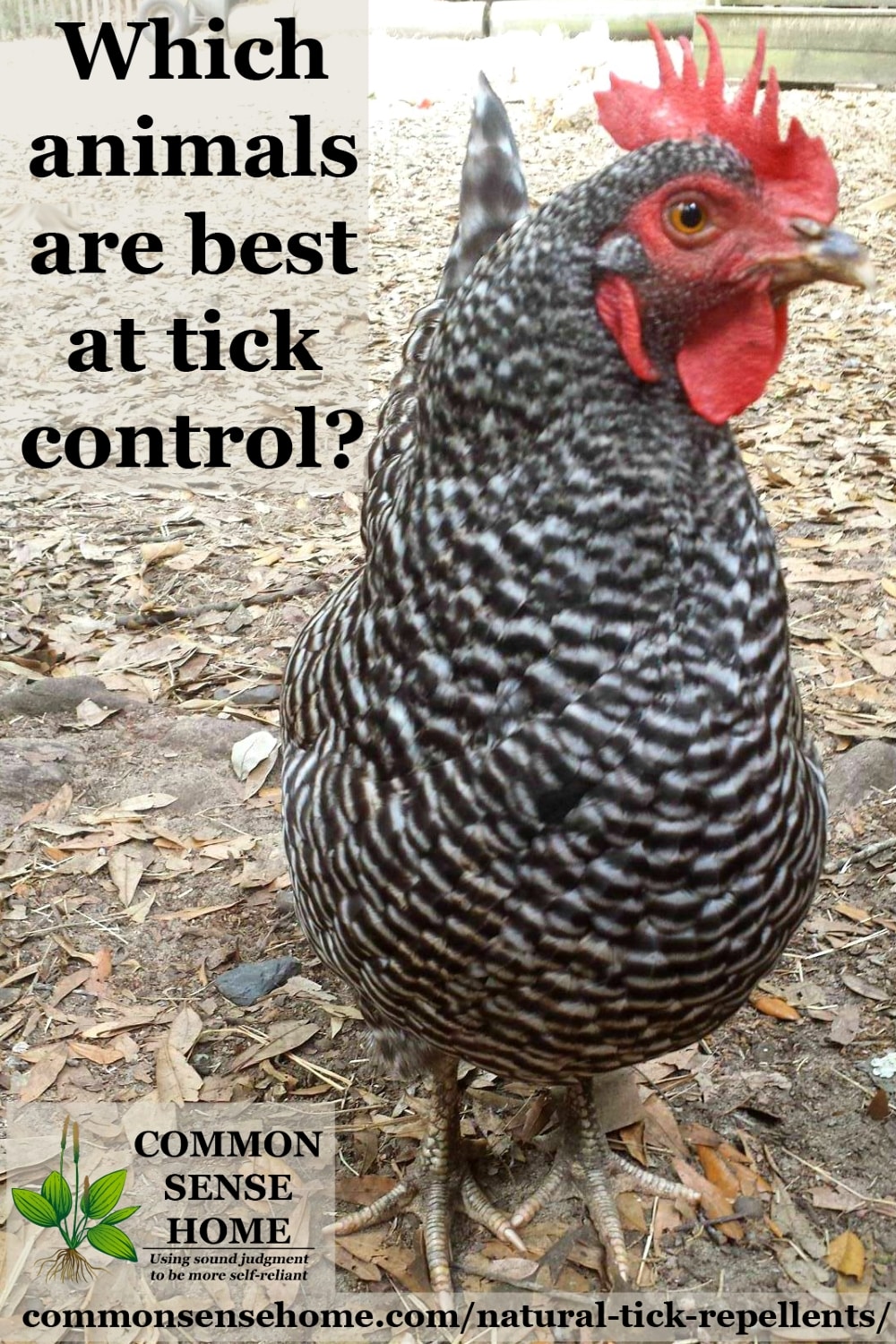
- Guinea Fowl – Guinea Fowl have been used to help reduce tick population and unlike chickens, they don’t damage the garden.
- Chickens – Our protein-loving feathered friends are huge fans of consuming ticks and any other insect they can scratch for.
- Ducks – Chickens, ducks, turkeys and guinea fowl are not only entertaining and beautiful, but they can supply fresh eggs daily, and offer effective bug and slug control
- Opossum – Opossums can kill about 5,000 ticks in one season.
- Fire Ants – Fire Ants can clear a field of ticks (and most other creatures) quite effectively.We finally found a benefit to having fire ants!
- Nematodes and Fungi – Several kinds of parasitic nematodes and fungi infect ticks and can cause their demise. These have been investigated as potential means to reduce risk of ticks and tick-borne infections.
Tips to Avoid Getting Bit by Ticks
The first defense to avoid getting bit by ticks is to know where ticks like to live. Ticks like to live in tall grasses and wooded areas with a moist and humid environment. Limiting your exposure to this type of environment will also limit your tick exposure.
To avoid getting bitten, use the following tips:
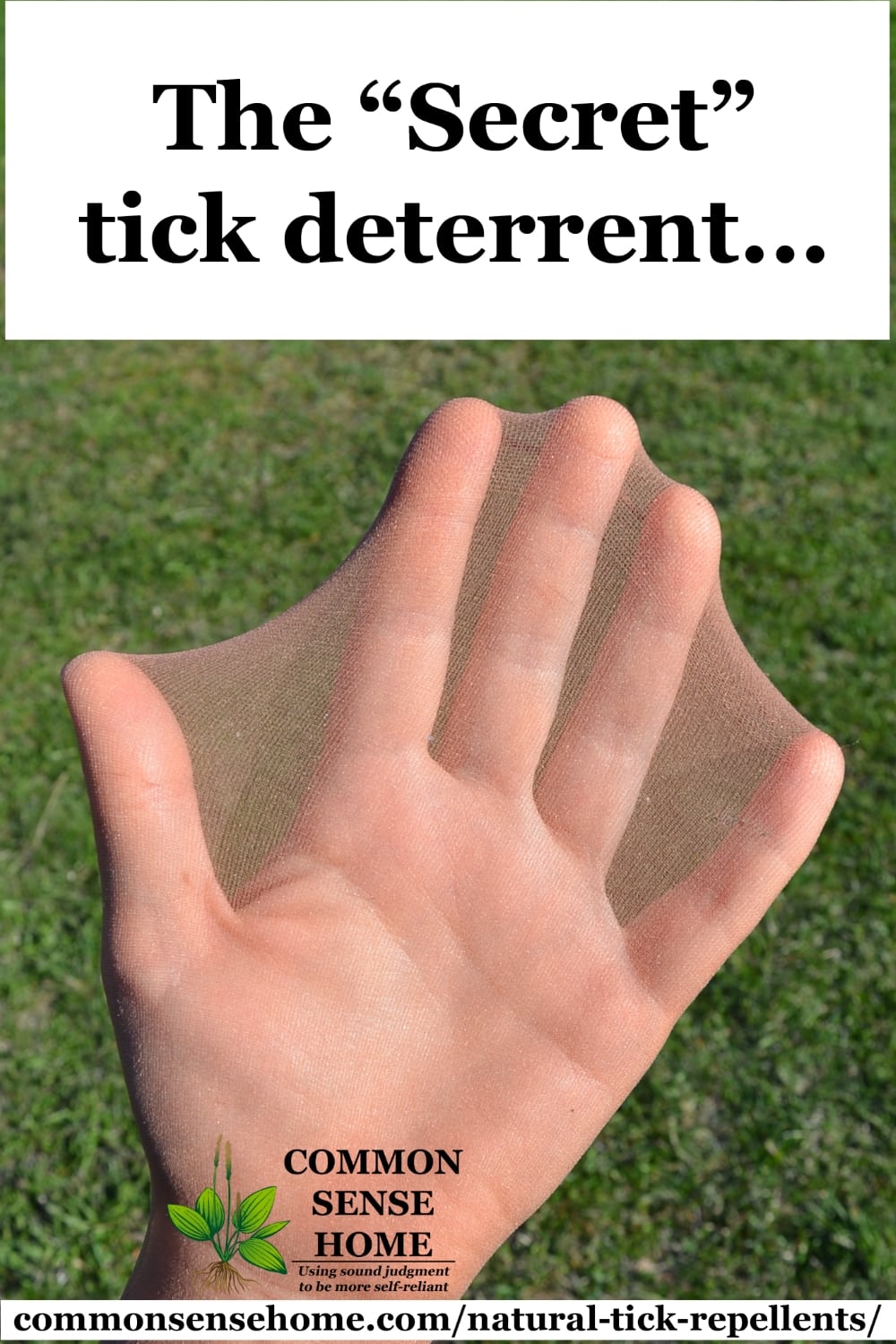
- Wear panty hose under pants
- Don’t walk in high grassy areas
- Keep your grass cut
- Don’t sit on logs – If you sit on a log for only five minutes in a tick infested area, you have a 30% chance of getting a tick on you.
- Wear hats when walking in the woods and tight (not loose) braids, pony tails or buns
- Wear clothing that covers the skin and has elastic on the wrist and ankles, with boots or shoes tightened at the ankles
- Tuck your pants into your socks
- Always walk in the center of trails when taking nature walks
- Shower within two hours of coming indoors
- Inspect your clothes and body, especially: Under the arms, around the ears, inside the belly button, back of knees and in your hair.
Safe Tick Removal
If you notice a tick on your skin or in your hair it is important you know how to remove it safely to get the entire bug and avoid tick borne illness.
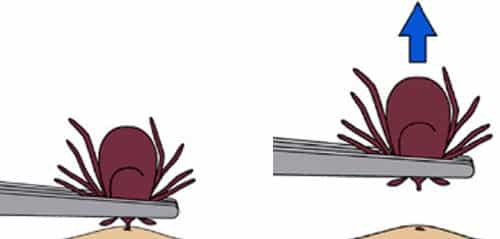
Here are the current recommendations for how to remove a tick safely from the CDC. Image and text courtesy of Tick Removal: How to Remove a Tick at cdc.gov.
- Use fine-tipped tweezers to grasp the tick as close to the skin’s surface as possible.
- Pull upward with steady, even pressure. Don’t twist or jerk the tick; this can cause the mouth-parts to break off and remain in the skin. If this happens, remove the mouth-parts with tweezers. If you are unable to remove the mouth easily with clean tweezers, leave it alone and let the skin heal.
- After removing the tick, thoroughly clean the bite area and your hands with rubbing alcohol, an iodine scrub, or soap and water.
- Dispose of a live tick by using one of the following methods:
- submersing it in alcohol
- placing it in a sealed bag/container
- wrapping it tightly in tape
- flushing it down the toilet
- burning
Never crush a tick with your fingers.
Avoid folklore remedies such as “painting” the tick with nail polish or petroleum jelly, or using heat to make the tick detach from the skin. Your goal is to remove the tick as quickly as possible–not waiting for it to detach.
If you develop a rash or fever within several weeks of removing a tick, see your doctor. Be sure to tell the doctor about your recent tick bite, when the bite occurred, and where you most likely acquired the tick.
Note: The longer the tick stays attached, the more opportunity there is for disease transmission.
Natural Tick Repellents for Dogs
Dogs seem to be the biggest domesticated victim of ticks, due to their proximity to the ground and their desire to roam the great outdoors. Although dogs can fall prey to tickborne disease, they can also bring ticks into the home, which can then bite your family members.
To make a safe tick repellent for dogs, combine:
- About 20 drops of Rose Geranium essential oil
- two tablespoons carrier oil, such as almond oil
(You can use vegetable oil, but almond oil contains sulfur, which is also a natural tick repellent.)
Mix these ingredients together and place a few drops on the dog or dog’s collar.
Note: Pennyroyal essential oil may be used in place of rose geranium oil, but it is toxic to dogs at high doses. It should not be used on dogs with kidney disease, and should only be applied to the dog’s collar, not directly on the dog.
These tick repellent oils are not meant to be used with cats or pregnant animals.
Related Posts on the Site
- How to Get Rid of Fleas (Non-Toxic, Pet Safe Options)
- Natural Mosquito Repellents that Work and Mosquito Repelling Plants
- Deer Fly Control and Deterrent Tips to Keep Biting Flies Away
- Natural Spider Repellents – 8 Ways to Get Rid of Spiders
- How to Get Rid of Ants Naturally & Why You Should Protect Outside Ants

This post is by Amber Bradshaw of My Homestead Life.
Amber and her family moved from their tiny homestead by the ocean in South Carolina to forty-six acres in the Smoky Mountains in East Tennessee.
They cook without electricity, collect water from the creek and raise chickens, goats, pigs, turkeys, bees, and guineas.
They filmed their journey for a TV show called Building Off The Grid: The Smokey Mountain Homestead.
Originally published in 2016, updated in 2018.
Wow! a lot of information all in one place. I worked for a behavioral health program that included outdoor adventures and never heard as many tips as you presented here. We live near a national forest and have a wooded homestead. Definitely bookmarking this one for future reference. Thank you for sharing!
I’m glad you found it useful.
Wow. Well with a yard full of American beauty berry bushes and fire ants all over the place I already have some protection. I was aware of lots of benefits of the American beauty berry bushes but I am surprised ANY benefit has been found for the fire ants. Thanks for a great article.
You’re welcome. Almost everything has some good that can come of it, even though in the main it may be awful.
I was told by a man at the Ranch Supply to use granulated sulfur in my garden spreader to keep ticks out of my yard and/or encourage them to leave. Apparently, it won’t kill the ticks but they will go where there is not so high a concentration of sulfur. It doesn’t hurt the animals after it has been watered in & it may even help the land as our soil here is quite alkaline.
In any event, I’ve been using that for many years and, between that and the Bravecto, I haven’t even seen a a tick here in at least 25 years!
Wow! what a goldmine of useful bug-away information!
One of the routines we adopted years ago to repel mosquitoes is to eat a medium sized clove of raw garlic daily. Crush to activate crucial enzymes, wait 15 seconds, chop and add to a salad or a hot dish that has cooled to tongue temperature. or if you can take it, chomp it down solo.
The enzymes break sown under cooking temperatures.
I was told that this will increase our level of thiamine, or B-1, which will repel mosquitoes.
Seems to work on ticks, too.
We don’t notice detectable garlic odor after the meal is over.
If I eat cooked garlic, but miss my clove of raw garlic with the meal, well that could be a problem if you don’t like garlic odor!
Regarding Sweetgrass essential oil, there appears to be some confusion regarding the source of its unique scent Stillpoint Aromatics states that it is possible to extract the characteristic scent of Sweetgrass in a hydrosol. Hydrosols can contain a quanta of essential oils and other scent carrying substances depending on what plant is distilled. In the case of Sweetgrass, steam distillation does not extract the scent in the form of an essential oil. At least, this was so as of 2020 when the article they list was last updated. There is Sweetgrass scented Sweetgrass perfume oil, but that would not contain Sweetgrass essential oil. I tend to avoid perfume oils because the can contain toxic chemical components that are extracted with solvents like benzene. My source: https://www.stillpointaromatics.com/sweet-grass-organic-hydrosol?v=2
Thanks for the link on the sweetgrass. So much of what’s labeled as “sweetgrass” isn’t.
Thank you for the information. Can you tell me about the herbs. Where would I purchase them and how would I make them?
Thank you
There are many different sources for herbs. You can find them online on sites like Amazon and Mountain Rose Herbs, or you may have local herb shops, or you can grow your own.
To make up a plant based repellent, you can do something similar to the first repellent recipe in this article – https://commonsensehome.com/natural-mosquito-repellents/
Over the past two years we learned that a family member has the Alpha-gal Syndrome from a tick bite. They were suddenly having body aches and joint issues as well as digestive tract issues and loss of weight. It wasn’t until Christmas of 2019 when we were at a large family gathering had some prime rib (something we don’t cook normally) and a few hours later they went into anaphylaxis shock and were rushed to the hospital. Because it was about 4 hours after eating we had no idea what brought it on but the ER doctor recommended a visit with an allergist. It was a few weeks later that the allergist told them they had Alpha-gal and would not be able to consume any mammalian products; dairy of any kind, meats such as beef, pork, lamb, goat, rabbit, deer, etc. (fins and feathers were ok), whey and gelatin. I cannot tell you just how many products contain whey or gelatin either, including your medications! As a family we have always cooked from scratch about 75% of the time but now have to cook everything to be sure there is no cross contamination. We have only found one or two restaurants we could even consider going to out of safety.
We were told there was a possibility they could outgrow it in a few years but after the 6 months and 1 year mark of testing, it’s only gotten worse. Definitely changes how we homestead and the plans we had for our new land.
Wow – I’m glad your ER doc thought to direct you to an allergist. I hope they do grow out of it, as I can imagine the challenges involved with adapting cooking and homesteading plans. Severe food allergies are no joke, and make a daily impact on your life.
I’ve seen mention of Alpha-gal Syndrome in online discussions, but I can’t recall any protocols or techniques people were using effectively to speed up the healing process. If I come across anything I will post it here.
Hi! Is sweet grass the same or interchangeable with lemon grass?
No, they are not the same thing and do not have the same properties.
Hi- my son and roommate went hiking a we’re covered in seed ticks. Now their dorm room has seed ticks. Do you know what they can do to get rid of them in their room? Thanks!
About all I can say is clean everything as well as possible. Wash clothes and linens, vacuum carpets, check themselves regularly for any ticks. You can try the repellent sprays and treatments to keep them out of areas or off your body, but once they are in, they need to be removed.
Hello, I’m curious to know if you have ever looked into using food grade diatomaceous earth to rid ticks and fleas from living quarters and pets as well?
We do have a recipe for flea repellent with a diatomaceous earth base in the post “How to Get Rid of Fleas”, which was just recently added to the site.
We do have a recipe for a diatomaceous earth based repellent in the post “How to Get Rid of Fleas“, which was recently added to the site.
Pennyroyal is toxic to dogs. It causes hepatic necrosis or liver failure, and consequently death.
Yes, you are correct. Pennyroyal is toxic to dogs in high doses. That is why amber recommends mixing it with a carrier oil and putting only a few drops of the mixed oil on a collar, not on the dog itself. I will see what I can do to make this more clear in the post.
Hi, I also heard that Tea Tree oil works as a repellent. Is that true? I hate the scent but prefer it to DEET and we are avid hikers so need it.
Thanks
Tea tree oil is commonly used in pest repellent blends. Like most deterrents, some work better in some areas and not so well in others. It’s fairly inexpensive and readily available, which are points in its favor. I feel blends have better odds, but strong scents in general are helpful, and tea tree certainly has a strong scent.
What about cats? I never see articles on cats and what can be used on them. I’m planning on taking mine out for walks. She used to be an outside cat and I believe she’d like to get back out. But I know they are way more sensitive.
As strange as it may sound, catnip may be the answer. The nepetalactone in the plant has been tested and found to repel a wide range of pests. You can either rub her down with crushed fresh leaves, or make a strong infusion (extra strong tea) with fresh or dried leaves and wipe her down with that. She’d likely have some reaction to it for about 10 minutes, if she’s one of the cats that react, but then that would wear off and she’d be back to her normal self.
You can read more about catnip at Catnip – Uses for People and Cats – Weekly Weeder #19.
To add to the common sense, I am not sure that wrapping the tick in a bag, taping it and flushing it down the toilet is the right thing to do… It seems a little overkill, it’s not good for your plumbing OR for the environment…
Tape is plastic, and I am assuming you mean a plastic bag… plastic kills aquatic wildlife, and it would be just as simple to wrap it in the bag, tape it and throwing it in the garbage. Or just stick it onto tape by itself, wrap some tape around the tape, and throw that in the garbage. Anyhow, thank you so much for sharing all this good info!
The article notes:
The intention is that you choose one of these methods, not all of them. You can put in alcohol – or a sealed container – or in tape – or flush it. I will see if I can make that a little more clear.
Thanks for the clarification 🙂
Thank you so much for the information! My question is what can and cant I use on my pregnant dog for ticks, and why?
Thank you so very much!
Donna
Amber says if you mix up the tick repellent for dogs, skip the pennyroyal and just use the rose geranium. She says they also put essential oils in the the cleaning water when they mop the floors to make the ticks less welcome if they get in the house.
Pennyroyal is toxic to dogs.
https://www.dogsnaturallymagazine.com/what-you-should-know-about-pennyroyal/
The site you linked describes a study where the oil was placed undiluted directly on the dog’s skin. Of course that’s going to cause problems. We never advocate the use of essential oils on the skin without a carrier oil, on people or pets.
Hi Jodi and thanks for your concern about using the pennyroyal on dogs. The studies with pennyroyal and dogs were based on using the oil directly on the dog’s skin and there was only one reported case in the 1990’s. No further study has been done. I would never place any oil neat on the skin, dog, human or otherwise.
In addition, the recipe I gave suggest a couple of drops on their collar. Since dogs can not lick their collar and a couple of drops are mixed with a carrier oil, I personally trust this recipe for my own dogs.
That said, you can always use the first suggested oil or even cedar oil- mixed with a carrier oil of course.
And as a reminder for other readers, essential oils should never be used with cats.
Same suggested oils for over seas travel? Any add one youd reccomend or just apply more frequently?
The general premise is the same no matter where you are – camouflage your odor with strong scents – so it should help. I would inquire with locals if there is a specific tick deterrent that they find more effective.
Good to know thank you kindly!
You’re welcome.