
How to Grow Broccoli: A Complete Guide for Bigger Harvests

This post may contain affiliate links. Read my full disclosure here.
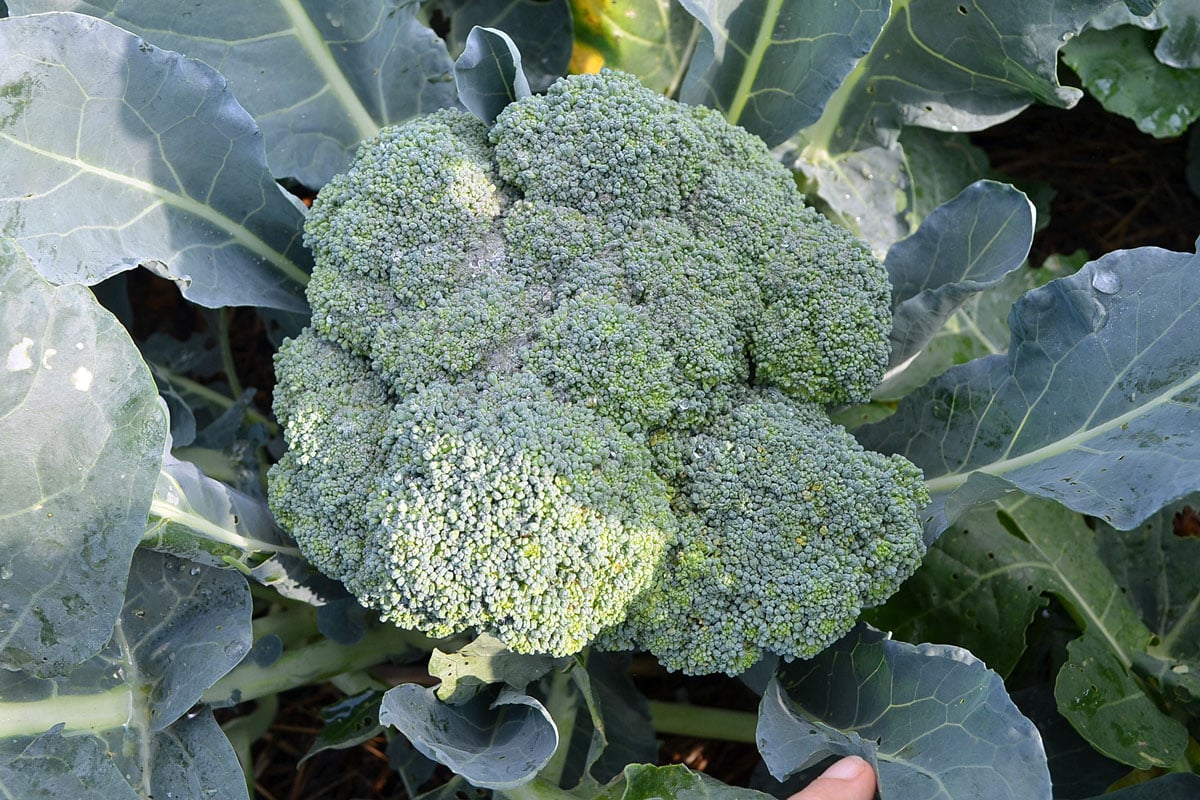
This guide walks you through how to grow broccoli from seed to harvest. With practical tips for timing, soil prep, spacing, and heat management, you’ll get the most from every plant.
In decades of gardening, I’ve probably made every broccoli growing mistake in the book. The beautiful thing about gardening is that you have a new opportunity every year. Now broccoli is one of our mainstay vegetables, with large center heads and ample side shoots. We enjoy it fresh during the season and freeze enough for year round use.
Would you like to save this?
Table of Contents
Understanding How to Grow Broccoli
Broccoli ( Brassica oleracea ) is a cool-season crop, closely related to cabbage, cauliflower, and kale. It grows best when daytime temperatures stay between 55–75°F, making it ideal for early spring and fall gardens.
When stressed—especially by heat—broccoli plants may:
- Form small or loose heads
- Bolt prematurely
- Produce bitter or tough florets
The goal is steady, uninterrupted growth during cool seasons, with plenty of nutrients and consistent moisture.
On our northeast Wisconsin homestead, I can start broccoli in spring and harvest from summer through deep frost. This works because of location, soil health, and specific care. We don’t get as hot as many areas, but do see summer temps in the 80s and 90s.
When to Plant Broccoli
For most climates, plant broccoli in early spring. Broccoli likes cool weather, but not really cold weather.
- Start broccoli seeds indoors 6–8 weeks before your last frost date
- Transplant seedlings outdoors 2–3 weeks before the last frost
- Light frosts won’t hurt young plants and often improve flavor
Fall broccoli is often easier than spring because temperatures cool gradually instead of heating up suddenly.
- Start broccoli seeds indoors in mid-summer
- Transplant outside when daytime temperatures begin to drop
- Aim for harvest before hard freezes set in
In areas with long, hot summers, fall may be the most reliable season for growing broccoli.
Starting Broccoli from Seed
You can plant broccoli seeds directly in the garden, but I don’t recommend it. Starting indoors gives you better control and more consistent results. You can pick the healthiest seedlings and plant them in the garden with room to grow.
How to Start Broccoli Seeds Indoors
- Use clean seed trays and a quality seed-starting mix
- Plant seeds ¼ inch deep
- Keep soil evenly moist (not soggy)
- Provide bright light as soon as seedlings emerge
Broccoli seedlings grow quickly. Once they have 3–4 true leaves, they’re ready for hardening off and transplanting.
How to Plant Broccoli Outdoors
Crowded broccoli plants compete for nutrients and light, leading to small heads. Space plants about 18–24 inches apart. This spacing allows each plant to develop a large central head and strong side shoots.
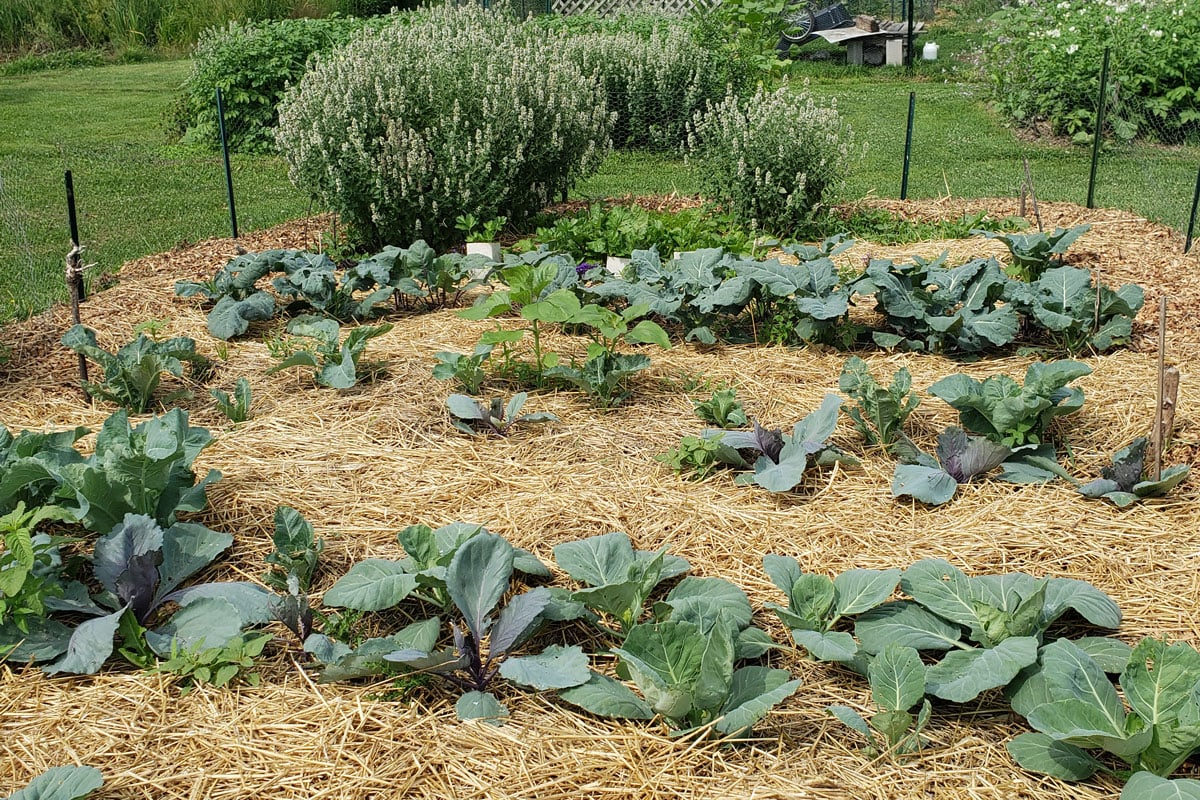
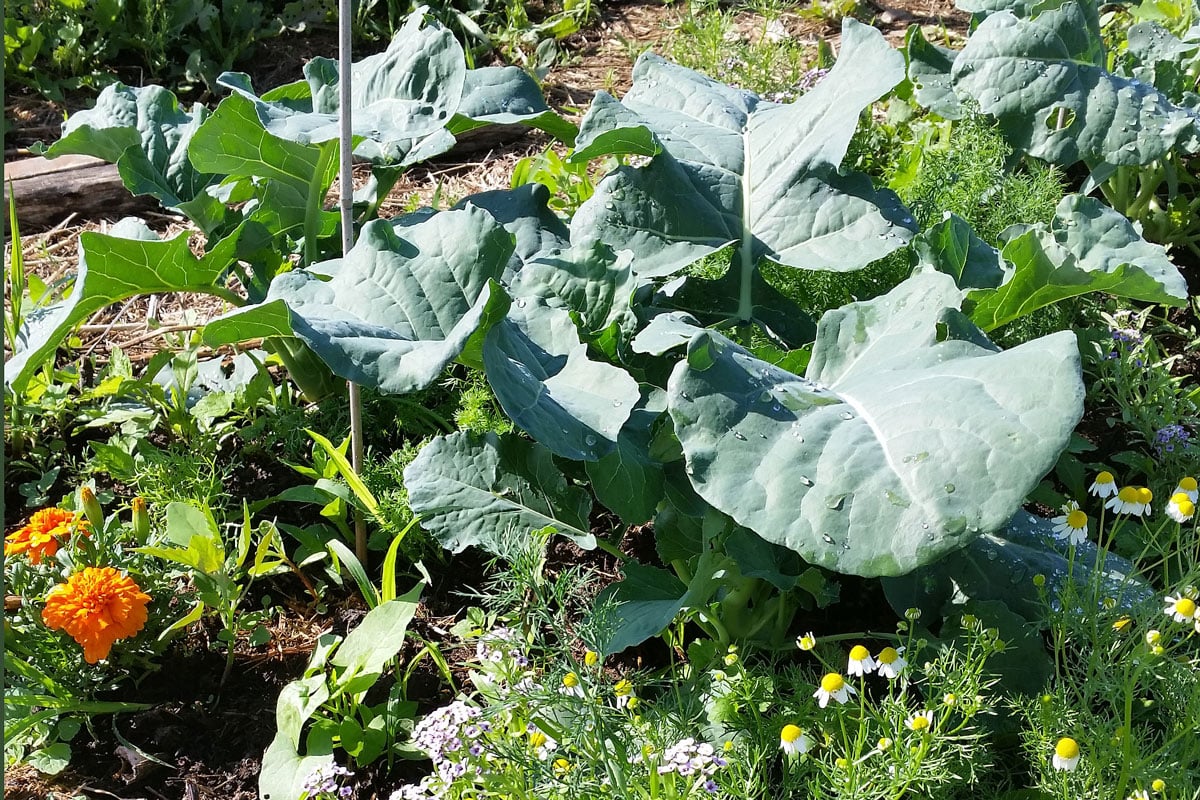
Lately, we’ve been putting plants in staggered double wide rows with about 2 feet between rows. The image below shows our 2025 brassica bed with cabbage, cauliflower, broccoli, and some companion plants. By the end of the season, it was very full of plants.
Growing Requirements of Broccoli
Broccoli prefers a neutral pH – 6.5 to 7.5 preferred, down to 6.0 okay. Add some garden lime or crushed oyster shells to boost pH if your soil is acidic
Soil temperature should be 60-65°F (16-18°C) (You can check your soil temperature with a soil thermometer.)
Plant in full sun for best yield in cool climates. In warmer climates, partial shade is okay, especially in the afternoon.
Broccoli Requires Rich Soil! I think it may be impossible to overfeed broccoli, especially when it comes to nitrogen. Work plenty of rotten manure, some blood meal or cottonseed meal into the soil before planting. For an extra boost, water with fish emulsion or other organic fertilizers every three to four weeks.
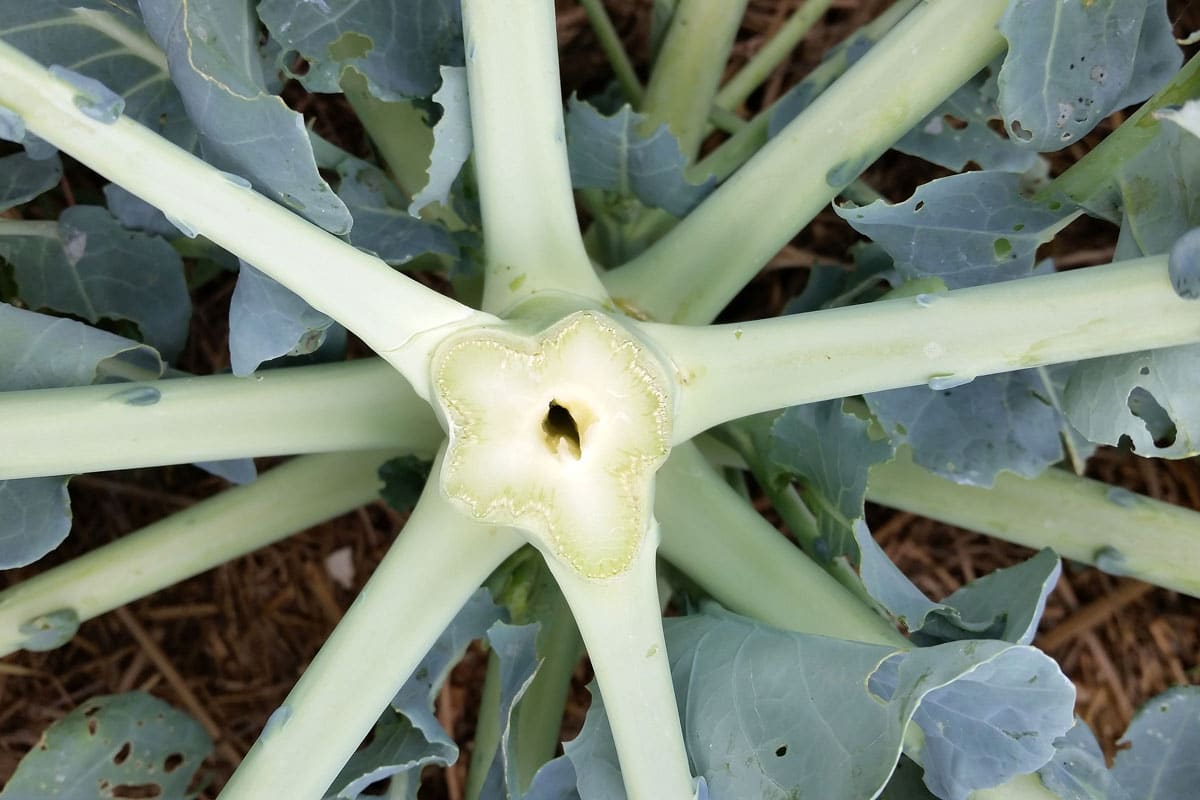
Cole crops such as broccoli, cabbage, cauliflower, kale and kohlrabi benefit from significant amounts of boron. If your soil is very acid or alkaline (or low in organic matter), boron is less bio-available plants. Water with 2 tablespoons of Borax per a gallon of water early in the season as a foliar feed.
If you’ve run into hollow stems in your broccoli, boron may help.
Water and Mulch
Broccoli plants need consistent moisture, especially as heads begin forming.
Aim for 1–1.5 inches of water per week. Rainwater is best, but any water is better than none. Water deeply to encourage strong root systems. Drought stress—even briefly—can result in bitter flavor or poor head formation.
Mulch your broccoli well. Cover soil with 2-3 inches of organic mulch such as grass clippings, finely ground leaves or straw. This helps to keep the soil from overheating, which is important because heat will cause broccoli to bolt (send up flower stalks). We layer straw over wet newspaper for extra weed control.
In cool areas with a lot of moisture, the opposite treatment may be needed. Excessive moisture can lead to booming slug populations. When we are waterlogged, I skip the mulch and spread crushed eggshells under the plants to keep the slugs in check.
Managing Heat Stress and Hot Weather
Hot weather is broccoli’s biggest enemy. When temperatures climb above 80°F, plants may:
- Bolt prematurely
- Form loose or uneven heads
- Stop growing altogether
Ways to Protect Broccoli in Warm Conditions
- Plant early enough to mature before heat sets in
- Use mulch to keep soil cool
- Provide afternoon shade in hot climates
- Choose heat-tolerant varieties for late spring planting
If you live in a warm region, fall planting is usually the better choice.
Which Broccoli Variety to Grow
This may take some experimenting to find the best broccoli for your area. If you’re buying from a seed catalog, note Days to Maturity and growing habits. Most listings will state whether the variety is known for producing a large head, abundant sprouts or both.
If you’re buying seedlings from a nursery, you will likely get plants labeled “broccoli”. May the odds be ever in your favor.
My favorite variety to date is Nutribud. It features a large center head and abundant side sprouts. Most years, I can keep picking from midsummer to frost off of one planting.
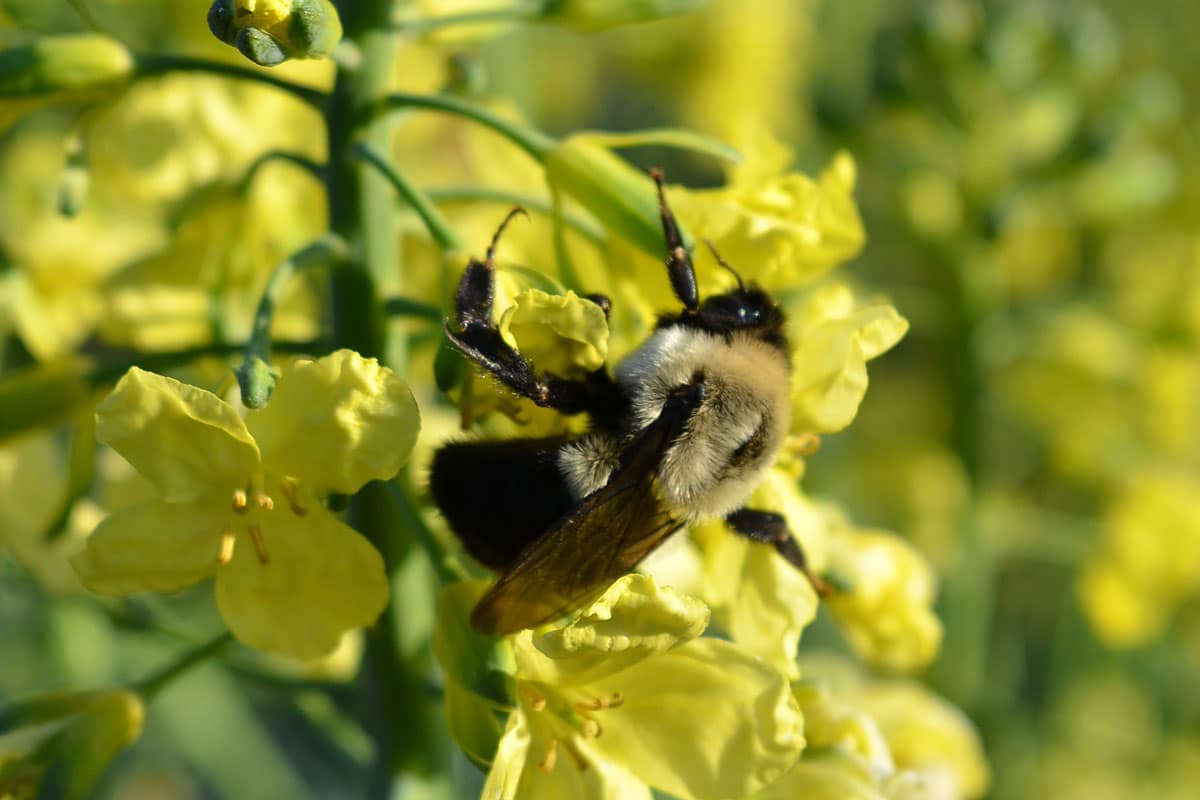
As the season goes on, I allow some plants to flower. They are one of the few flowers available for the bees after hard frost. Our honeybees and native bees love them.
Companion Plants
Good Companion Plants for Broccoli: Bush bean, beet, carrot, celery, chard, cucumber, dill, lettuce, mint, nasturtium, onion family, oregano, potato, rosemary, sage, spinach, tomato, marigold
Strong scented herbs such as dill may deter cabbage butterflies. This reduces the incidence of green cabbage worms on your broccoli.
Bad Companion Plants for Broccoli: Pole and snap beans, strawberry
Harvesting Broccoli
The main head is ready when:
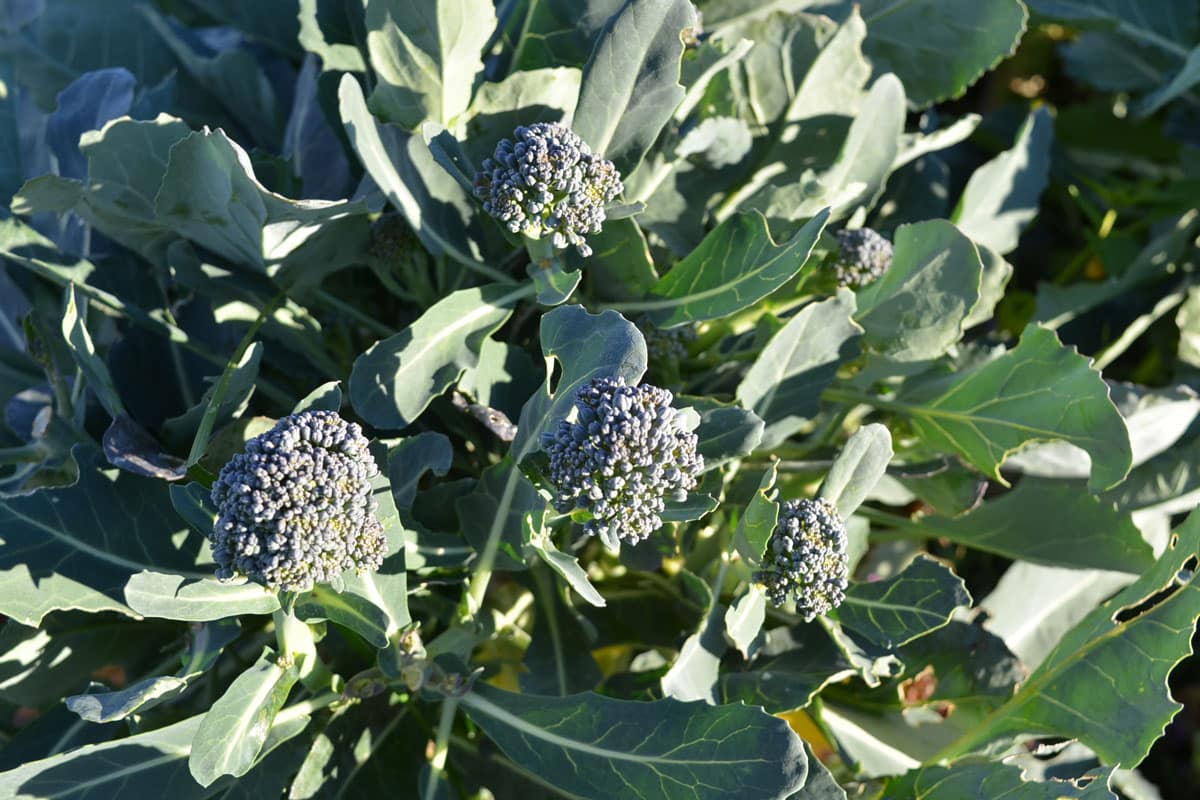
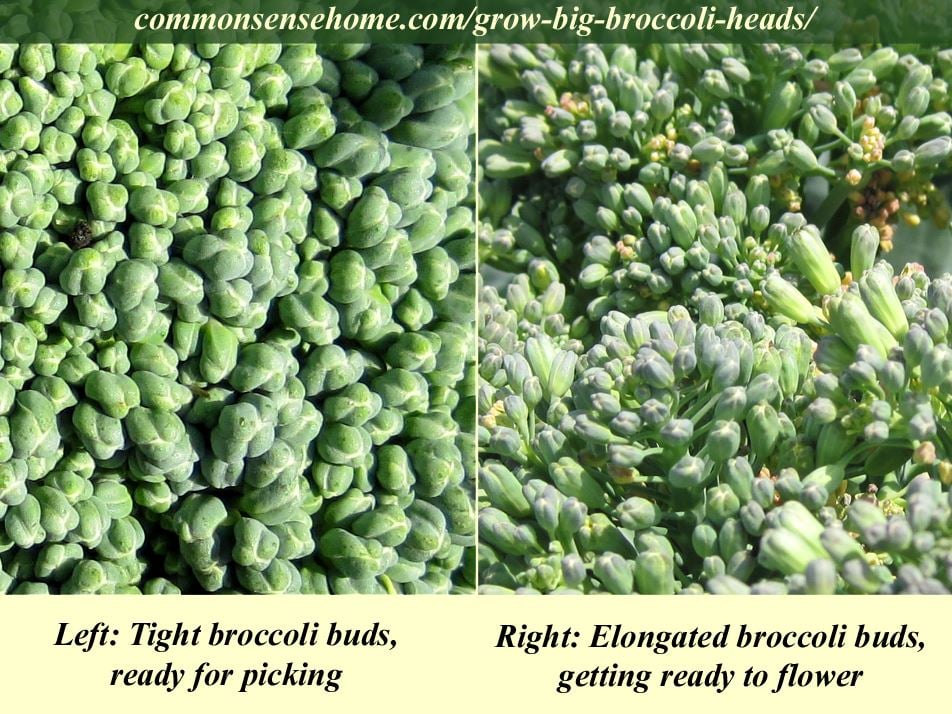
- Buds are tight and dark green
- No yellow flowers are visible
- The head feels firm when gently squeezed
Cut the main head with a sharp knife, leaving several inches of stem.
After harvesting the main head, leave the plant in place. Continue watering and feeding lightly. Smaller side shoots will show up on many varieties. Harvest regularly to keep the plant producing.
Broccoli Troubleshooting Tips
“My broccoli plants are tiny, but they’re already forming heads. What happened?”
Broccoli plants like it cool but not cold. According to Bonnie Plants:
“If transplants sit exposed to cold below 40°F for a week or two, the chilling injury triggers heads to form way too early.”
If your small broccoli plant is making a head, you’re not going to get a large head of broccoli from that plant. Consider it a learning year and try again.
“My broccoli plants were big and healthy, but they never formed a head of broccoli.”
Your broccoli may have gone blind. Seriously – as strange as it sounds, broccoli blindness is a real thing. If the growing tip of the broccoli is injured via rough handling, insects or weather, a head may not form.
“My broccoli has small yellow flowers. When will the heads form?”
Once you see flowers, your broccoli head is already going to seed. You can still eat the broccoli once it is starting to flower, but it becomes more bitter and tough. A head of broccoli is just a big old cluster of tightly packed flower buds. That broccoli plant wants to flower and produce seeds if you give it a chance.
Hot weather is likely the cause of your broccoli flowers. Once it gets above 80°F (26.7C), plants can bolt very quickly. Pick all heads and side shoots promptly, even if they are small.
If you have broccoli worms, read “The Easiest Way to Get Worms Out of Broccoli“. The worms are edible, but I’m not that hungry.
Once you have your broccoli cleaned and ready to use, you may enjoy the following recipes:
- Cheesy Broccoli Soup
- Broccoli, Bacon and Cheese Salad
- Easy Cheese Quiche Recipe with Fresh, Frozen or Freeze Dried Veggies
I hope this post helps you grow the best broccoli to ever grace your garden. Share your broccoli tips or questions below.

This article is written by Laurie Neverman. Laurie and her family have 35 acres in northeast Wisconsin. They grow dozens of varieties of fruiting trees, shrubs, brambles, and vines, along with an extensive annual garden. Along with her passion for growing nutrient dense food, she also enjoys ancient history, adorable ducks, and lifelong learning.
Originally published in 2015, last updated in 2026.
After harvesting the broccoli heads I cook the leaves. They can used like kale —steamed, boiled, in soup, etc.
We have kale that volunteers every year for greens, but that’s a good option to get most harvests from your plants. Our ducks are allowed access to the greens as part of their fall food supply, too, and once the ducks are done, the deer come in and clean up anything that’s left.
Hello! We grew broccoli for the first time this year. Our plants grew large but the broccoli heads remained quite small, and would flower quickly. Any tips?
Have you read the article? I would start there.
It sounds like you have plenty of nitrogen, since the plants grew large, but maybe your soil lacks other nutrients.
How was the weather? Broccoli prefers cooler temperatures, so temps that get too warm may trigger premature flowering.
Did they get enough water? Dry conditions can also trigger premature flowering and small heads.
Fabulous article! Thank you so much.
I have something edible this year, each year gets better. And with the shut down this spring, a new farm and new beds, and no compost availability, I’m surprised I have anything! The heads are a good size and not bolting but not exactly pretty either, and some army worms… never had that before. I got a lot of tips from your article to do better next year.
I wanted to add a tip my husband just told me. He is Scottish, now in America with me. Even in cold Scotland they can have issues with broccoli bolting, so what they do is when the head starts to form, they take some of the large leaves (and breaking them a little) fold them over the head like a little tent. This allows the plant to get sun, but the head is rather shaded, and he says it helps prevent the flowering. I’m going to try it with the next crop of broccoli, in fact I might try it on some of the broccoli, and leave some just the way they grow so that I can compare how they do, but I think it makes sense and thought some of you might also like to try it.
Similar to bentonite clay, when we get signs of worms, in addition to checking the undersides of leaves and hand picking, we also dust lightly with food-grade diatomaceous earth, an inexpensive organic treatment.
Thanks again. I’m encouraged that the next crop will be good by using your advice!
Interesting. I’ve heard of protecting the heads of cauliflower with leaves, but not broccoli.