
Phytophotodermatitis – Plants That Cause It, How to Treat It

This post may contain affiliate links. Read my full disclosure here.
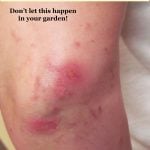
I’m sharing my story here so you don’t make the same mistake I did, and end up with Phytophotodermatitis (PPD). Phytophotodermatitis is also known as plant and sun dermatitis, parsnip burn, and sometimes lime disease (not to be confused with Lyme disease) or margarita photodermatitis. You get it from exposure to plant sap or juice and sunlight, as outlined below. We’ll cover plants that cause phytophotodermatitis and how to treat it.
Would you like to save this?
This was not parsnip burn from exposure to some “poison parsnip” or giant hogweed. I was working in my garden. Garden parsnips and wild parsnips are the same species, and it turns out they can cause the same problems. Several other plants can cause the problem, too.
I originally wrote this post in 2014, and unfortunately ended up with another smaller case in 2018. I thought I was being careful, but apparently not careful enough.
The pain doesn’t start until days after sap and sun exposure. By then, the damage is done, and all you can do is treat the symptoms.
What is Phytophotodermatitis?
Medscape defines Phytophotodermatitis as:
Phytophotodermatitis (PPD) is a cutaneous phototoxic inflammatory eruption resulting from contact with light-sensitizing botanical substances and long-wave ultraviolet (UV-A 320-380 nm) radiation. The eruption usually begins approximately 24 hours after exposure and peaks at 48-72 hours.[1] The phototoxic result may be intensified by wet skin, sweating, and heat.
In other words, your skin erupts with blisters and itchy, burning red areas because you were in contact with plant chemicals (in this case, parsnip and carrot sap) and exposed to sunlight.
You don’t realize you’re in trouble until several days after exposure, by which point, you’re skunked. This is one of the aspects that makes PPD different from most other contact dermatitis. If you’re working with wet plants on a hot summer day, it’s going to be worse. (That’s what happened to me.)
If you visit the Medscape website, they go into a detailed explanation of how the chemicals in the plants that cause the damage (Furocoumarins) are activated in stages under different conditions, and how they actually damage the DNA of the skin.
You cannot “wash off” phytophotodermatitis chemicals with soap and water once they are activated by UV radiation. I did shower after working in the garden, but it didn’t do any good. Washing may help limit additional damage.
Is Phytophotodermatitis contagious?
Nope. Only those directly exposed to the problem plants and conditions experience skin reactions.
The only case that might be an exception is berloque dermatitis, a special type of phytophotodermatitis caused by perfumes. There are older perfumes that used oil of bergamot. (Bergamot is one of the citrus fruits that can trigger PPD.)
If one person applied the problem perfume and was in close contact with another person, they might spread the perfume – and the skin condition. It’s unlikely, but possible.
I do think that the fluid from the blisters *might* encourage the formation of additional blisters (on the same person). I’ve had blistered areas spread without additional plant exposure. It’s possible some of the fluid from the blisters got smeared over a wider area due to the blister being bumped or scratched. I have not been able to confirm this.
Which Plants Cause Phytophotodermatitis?
Here’s a kicker – there are wide range of plants that can cause this condition that you might never suspect.
Plants that may cause phytophotodermatitis include (but are not limited to):
- Parsnips (Pastinaca sativa)
- Carrots (Daucus carota subsp. sativus)
- Celery (Apium graveolens)
- Gas plant (Dictamnus albus)
- Parsley (Petroselinum crispum)
- Wild Parsnip (Pastinaca sativa)
- Queen Anne’s Lace (Wild Carrot) (Daucus carota)
- Giant Hogweed (Heracleum mantegazzianum)
- Limes (Citrus × aurantiifolia)
- Figs (Ficus carica)
- Chrysanthemums – Chrysanthemum genus, aster family
- Common Rue (Ruta graveolens)
- Russian sage (Perovskia atriplicifolia)
Those who are into botany will notice that the top six plants on the list are all related to each other (they are members of the Apiaceae family). Some of you may have also heard about getting blisters from wild parsnip or poison parsnip, but may not have realized the garden parsnips can also cause burns. Garden parsnip and wild parsnip are both different varieties of the same species – Pastinaca sativa. The veggies typically cause burns on agricultural workers and grocers, who handle large quantities of plant material.
The Medscape site shows a rather nasty blister that covers about 1/3 of the forearm of a flight attendant who spilled lime juice on her skin. The phytophotodermatitis from limes is also referred to as “margarita dermatitis” because of all those poor folks who have sucked on their limes in the summer sun.
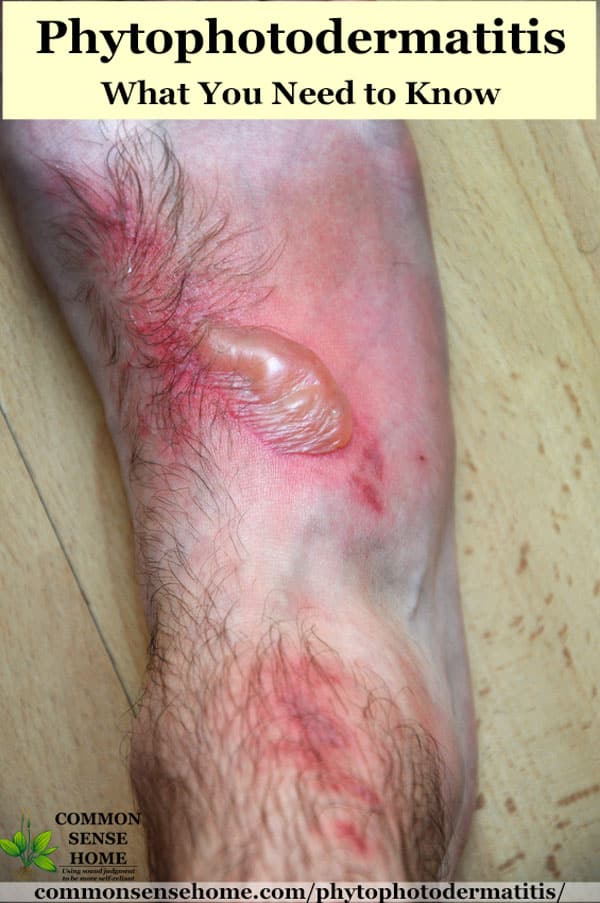
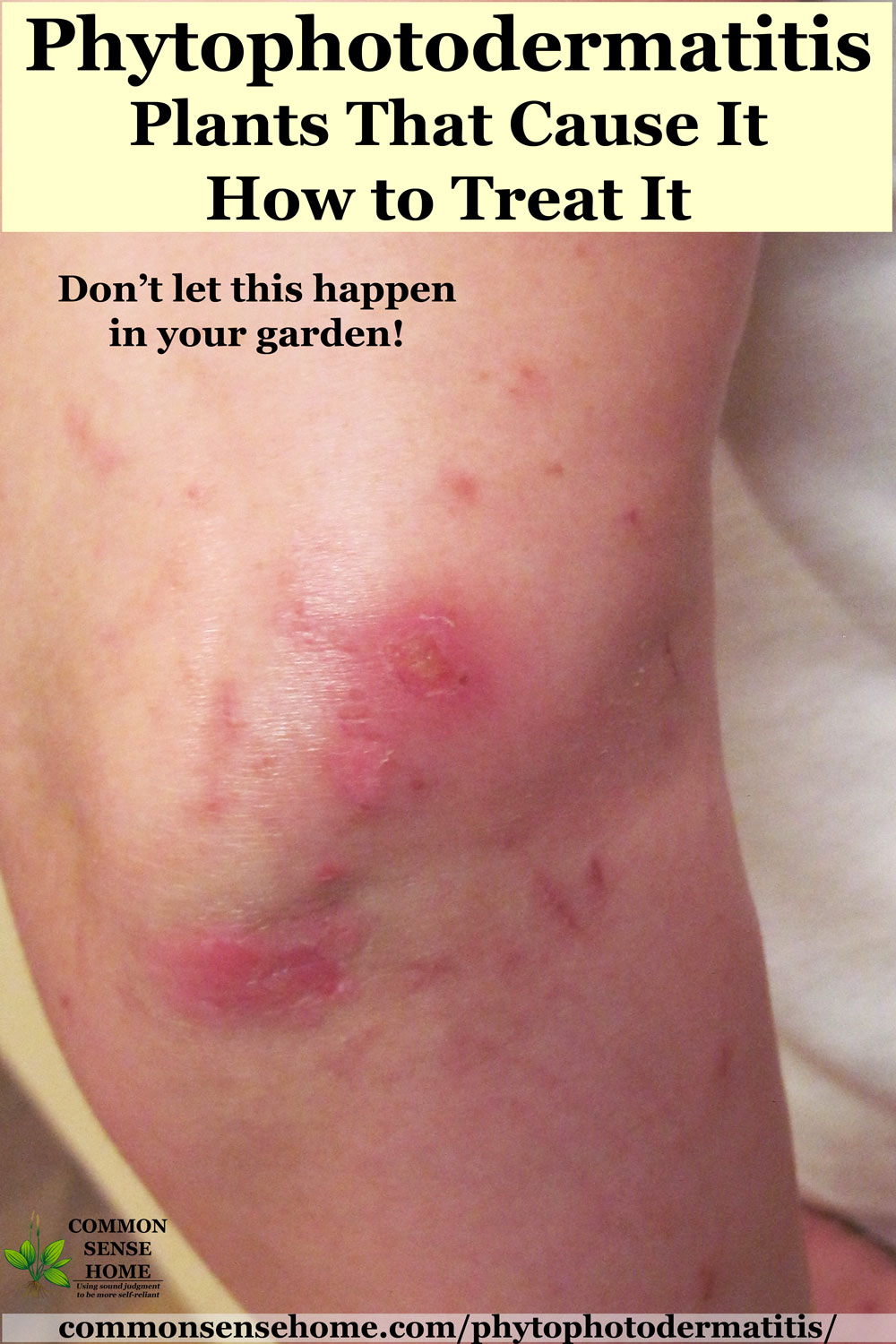
The wild parsnip burns (and those from other wild plants like hogweed or queen Anne’s lace) can be some of the worst, because people do terrible things like running weed whackers with shorts on and get their legs all covered with little bits of parsnip (and sap), like the poor guy featured in the article “Burned by Wild Parsnip” in Wisconsin Natural Resources magazine. The photo below is as example of how large the blisters can get.
I’m Going to Stop Growing “Poison Parsnips” Because They’re Too Dangerous
No. I’m not. I’m not skipping the carrots, parsley or celery, either.
In all my years of gardening, these past couple of decades on my own and helping mom out growing up, I’ve never been burned by garden parsnip before. I did get about an inch long blister from wild parsnip, but none from garden parsnip.
Here’s what I screwed up:
I was working in the morning, so the plants were covered in dew. More moisture = wet skin.
It was hot, so I was sweating = more wet skin + heat, both triggers for phytophotodermatitis.
The area I was working on was roughly 80 square feet, very thickly planted, mostly with carrots and parsnips. I had thinned and weeded the patch when the plants were younger, but this round of thinning took place when the plants were a couple feet tall.
The only way to reach the roots to pull them out was to stick my arm into lots of foliage. (Lots of exposure.) I gathered up the bundles of plant tops after removing the roots with my bare arms. (More exposure.)
By the time I finished, it was pushing midday, with a bright, beaming blue sky = lots of nice, intense sunlight.
In my 2018 case of phytophotodermatitis, I allowed queen Anne’s lace to grow in the greenhouse as companion plants for the tomatoes. I was trying to thin them out as the greenhouse became more crowded. It was hot, humid and sunny. I must have broken some of the stems, and got the sap on my hands and feet.
What I Should Have Done:
The simplest thing I could have changed was to wear long sleeves and gloves to cover up my skin. Problem solved.
Alternatively, not handling the broken plants with bare skin, or thinning harder when the plants were small so I didn’t need to stick my arms into a thicket would probably also have done the trick. That said, we have been enjoying the carrots and parsnips I picked. 🙂 No more wild carrots in the greenhouse. It’s simply too easy to get accidental exposure while working around the plants in close quarters.
How do you Treat Phytophotodermatitis
Like a standard burn, you can apply cool compresses to relieve the pain, and try to keep blisters intact as long as possible to protect the tender skin underneath. Over the counter itch cream like those for poison ivy may also help, along with anesthetic creams like Aspercreme.
I hit the pantry and the garden for treatment options.
On the first couple of blisters, I used fresh plantain and yarrow leaves, mashed and applied as a poultice. As more blisters showed up, I coated the worst blisters with manuka honey to promote healing and fight infection. You can read more about using honey for wound treatment in the post, “Honey as Medicine“. With over 30 blisters on my arms and hands, the honey was a little awkward to try and use on all of them, so I made up some comfrey salve with lavender essential oil.
I coated the burns several times per day with the salve, and at one week after exposure, some of the scabs fell off to expose new skin underneath. The burns on my hands and elbow didn’t heal quite as fast. My hands spend way too much time being beat up during canning and gardening season, so I can’t keep bandages on them, and the elbow is just awkward to keep bandaged.
Be patient. Badly affected areas may take weeks to months to heal, depending on the damage. I still have dark areas on my skin a year after exposure from the worst spots.
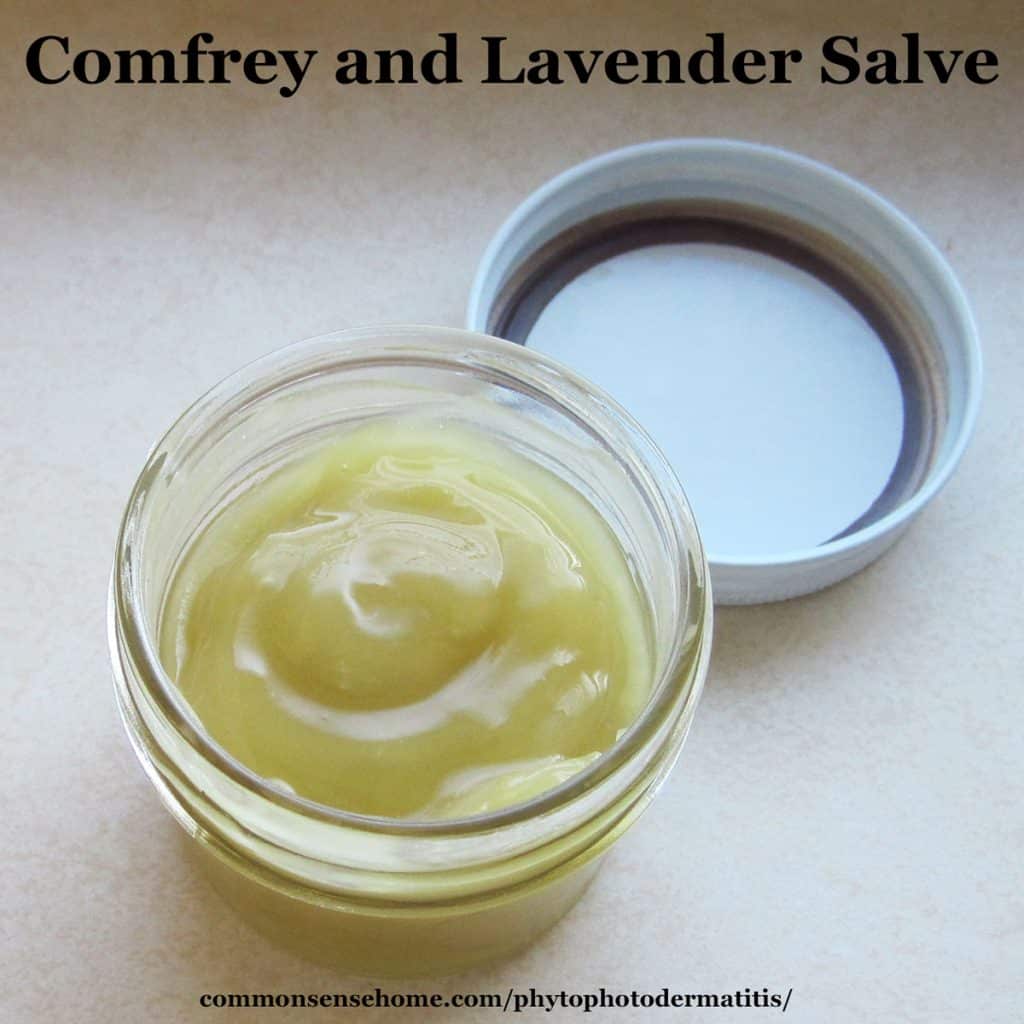

Comfrey and Lavender Salve Recipe
Adapted from the Herbal Academy
Ingredients
- 1 cup organic extra virgin olive oil
- 50 drops of lavender essential oil
- 1 ounce organic dried comfrey leaf
- 1 ounce beeswax
Directions
- Pour olive oil into a double boiler or small, heavy bottom pot. Add comfrey leaves.
- Heat over low heat for 60 minutes, stirring occasionally. You’re looking for gentle heat, not boiling.
- Remove from heat. Strain and compost comfrey, reserving infused oil.
- Melt beeswax in a clean pan over low heat.
- Once melted, add herbal infused oil and lavender essential oil. Mix well.
- Quickly pour salve into tins or glass jars and allow to cool before placing lids on and labeling.
The HANE website notes that “Comfrey contains allantoin, an anti-inflammatory phytochemical that speeds would healing and stimulates growth of new skin cells.” The HANE burn cream recipe also includes one ounce each of dried plantain, calendula and St. John’s wort to bump up the healing power a little more.
Photos of Phytophotodermatitis
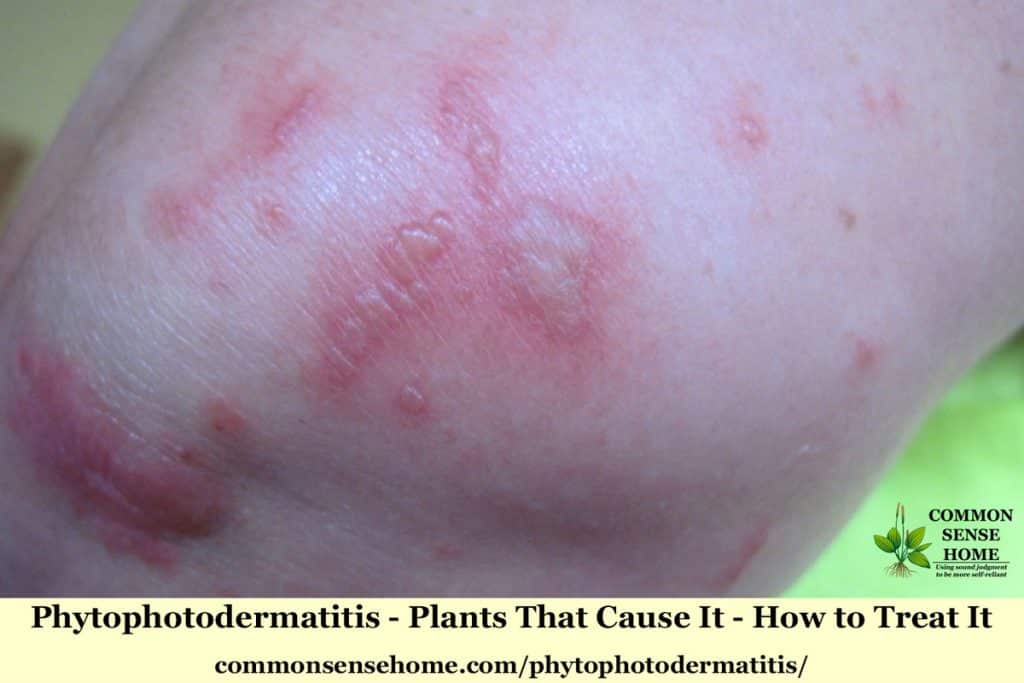
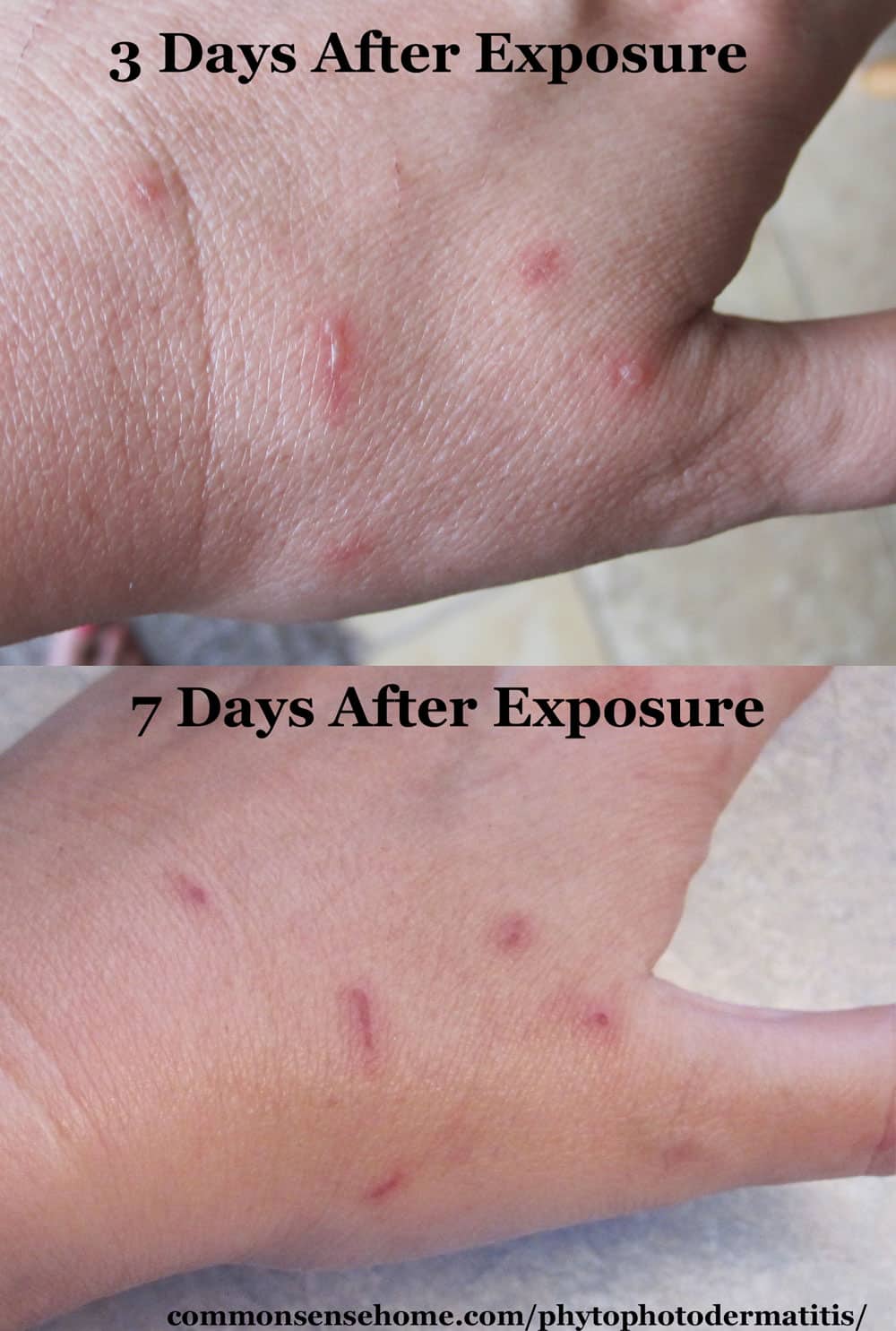
Just so you can see how the eruptions progressed, I’ve included some comparison photos of the affected skin below. The image at the top of the post is my left elbow on day three after exposure. 24 hours earlier (48 hours after exposure), there was only one blister.
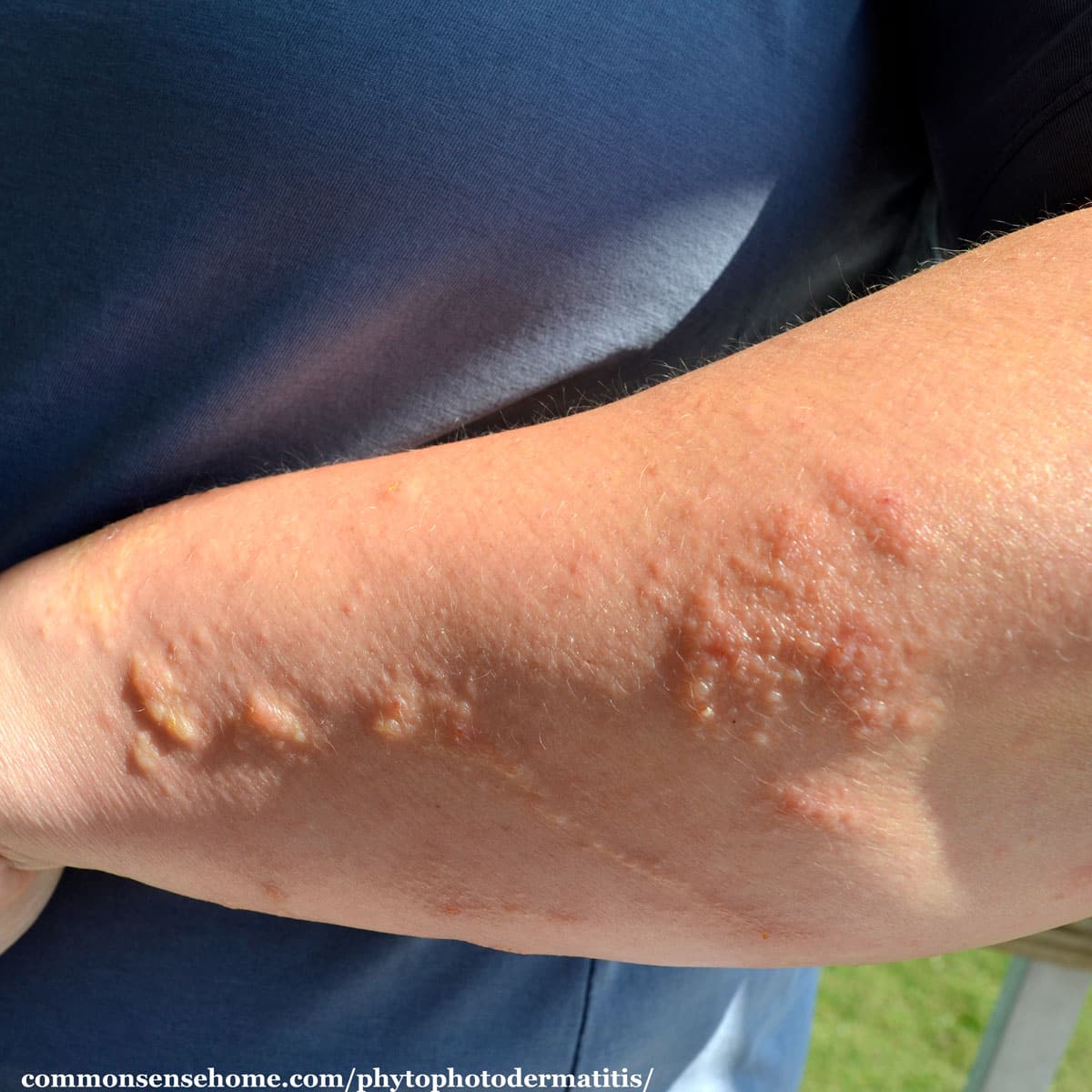
My left hand at day 3 and day 7 after exposure. Day seven may not look much better, but it feels much better. No more burning and itching.
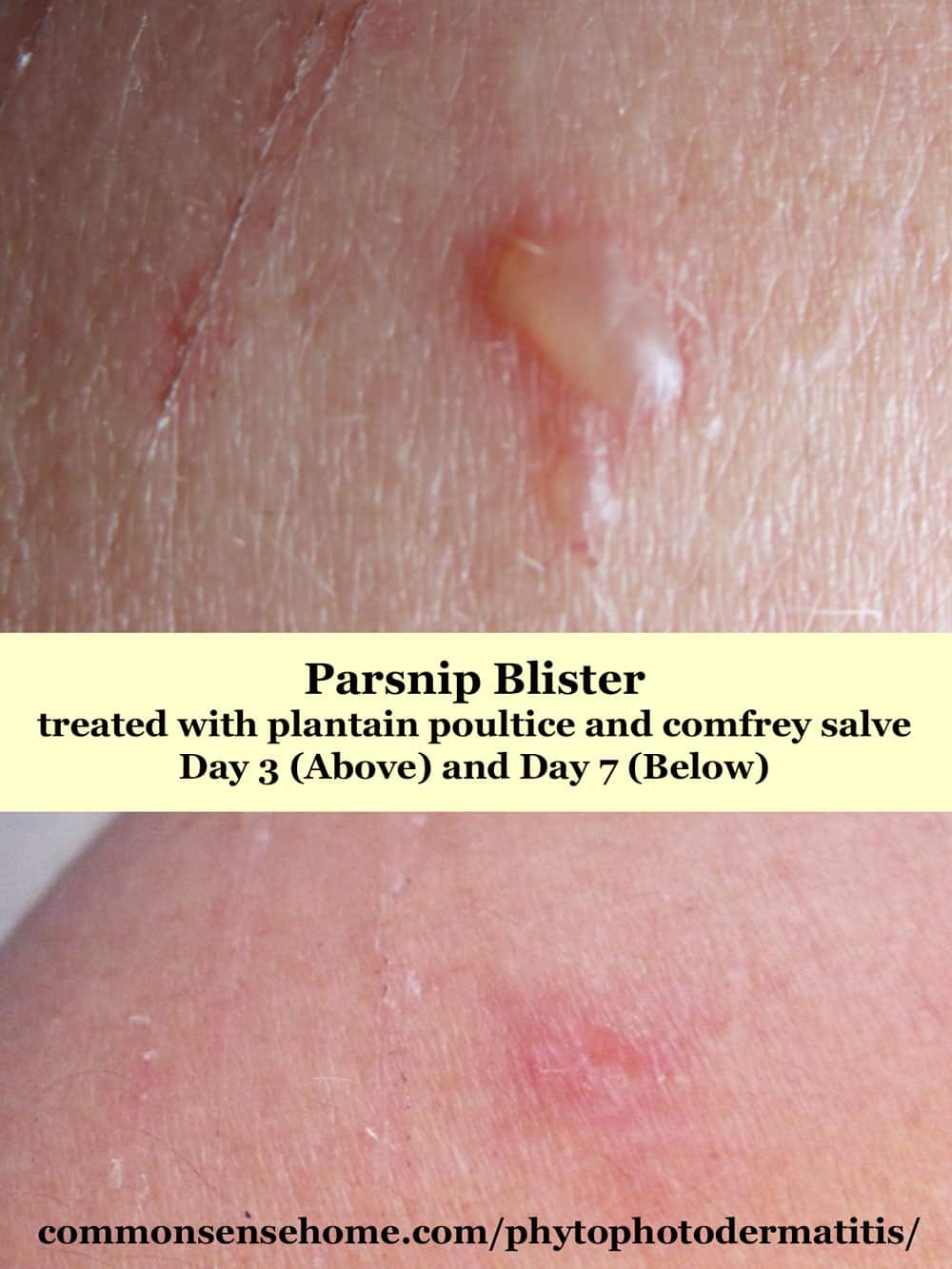
One last shot. A blister on my right arm that was one of the first to appear that I treated with a plantain poultice followed up by a day of honey and ongoing use of the comfrey salve.
Don’t fear the plants, just don’t handle them in such a way that you set yourself up for some serious discomfort. Learn from my mistakes. 🙂
July 2019 – I’ve run into this again. After helping to clear an overgrown area near the greenhouse in shorts and a t-shirt, I ended up with blisters on my arms and legs. I didn’t see any queen Anne’s lace or other trigger plants, but they must have been in the mix.
I suspect repeated exposure may make you more likely to have a skin reaction.
The video below highlights this year’s exposure. (Make sure any ad blockers are off to get the video to display.)
You may also find useful:
- 9 Home Remedies for Dry Skin – Soothe Dry and Flaking Skin Naturally
- Grandma Called it Medicine Leaf
- Herbal Antibiotics – the Top 15 Herbal Antibiotics
Originally posted in 2014, updated in 2018.
I’m new at all this… So if you need to be careful of the broken stems/sap is it okay to feed the tops to the chickens? Or to let them forage at the end of the season?
Poultry doesn’t seem to be bothered, at least not that I or my poultry friends have seen. If tops are being ingested, the sap doesn’t get exposed to the sun.
I suffer from PPD caused by parsnip tops.
I haven’t always suffered, it first happened about 8 or 9 years ago, before then I was fine handling parsnips.
What has changed?
Why did I suddenly become allergic to parsnip leaves?
Is it possible to reverse the condition?
The sap of parsnips is always capable of causing PPD. It’s not an acquired allergy. The trick is whether or not the conditions are right for the reaction to take place.
I’ve handled parsnip and carrot greens for years and never had a problem – until I did. You only see the reaction when all the different factors come into play, as explained in the post. Moisture, sun exposure, and sap are the key factors.
I have very sensitive skin. I also have seen 5 doctors. No one seems to be taking it seriously. I’ve suffered now for 1.5 years. Yes YEARS. It looks like your pics but mine had kinda hard white heads (like acne) in it. My Dr says my body is trying to push bacteria out thru my pores. He doesn’t know of this plant, YET!!!!
I was given a steroid cream. Made a terrible mess. I was allergic to the cream the steroid was in. Made my skin so hard, it looked and acted like I buffed my arms with rainX. Nothing was gtn or out of my skin. Dr had to correct that problem first .
Now it seems to have started to spread again. Its winter here. At lease 1ft of SNOW!!! Can anyone help me?
It is painful to get wet from my hands to my feet. It hurts if my shirt cuff rubs on my hands. I can’t let anyone even touch me it hurts! I think the Dr’s think I’m a drama queen. That is false. They say they see dry unhappy skin. My friends see it. Its there. I even record any changes with my camera. Pictures are there not imaginary.
They even said I need to see a psychiatrist for my stress. One said I did it to myself. YUP! I sit on the couch eat gallons of white nonperrels until they a popping out of my skin, watch a movie and peel the skin off my arms and hands. Not just until they bleed, but to the 4th layer.
I showed up at my own Dr’s Quick Care. They took one look at me and made me stand OUTSIDE the building! They didn’t know if I might be contagious. Someone out there…. please help me!!!! PLEASE PLEASE. This is not a joke. I am living this!!!! I have many pics!!!! to prove all of this.
I’m not a doctor, but I understand your pain. Let’s talk about some possible causes.
If you’re in the middle of winter, I would think it would be very difficult for you to be exposed to one of the problem plants. If you were exposed to a topical irritant, the reaction shouldn’t last for a year and a half, unless you keep getting exposed. Is there any chance that some product that your skin is exposed to may be causing the reaction? Is there any product that only touches the affected areas? If so, eliminating this would be a place to start.
Could you possibly have a food allergy? Sometimes the manifest in odd ways. An elimination diet would be a way to test and see if you are sensitive to specific foods.
Have you considered candida overgrowth, coupled with pustular psoriasis? If you do an image search on pustular psoriasis, some of the images look very similar to what you describe, like this one – https://www.medicinenet.com/image-collection/pustular_psoriasis_picture/picture.htm
A couple of years ago, my skin went nuts. I looked like a burn victim. Different areas all over my body got thick, flaky skin that would peel off until it oozed and sometimes bled. It hurt to breathe or smile because my face was in such bad shape. I went to the dermatologist, and she said it was just psoriasis, gave me some steroid cream and told me to live with it. That was not acceptable to me. I got allergy testing done, and found out that I had candida overgrowth. I changed my diet and used some other alternative treatments, and my skin is now completely clear. I ended up writing a series about the experience, which starts here – https://commonsensehome.com/psoriasis-the-year-my-face-exploded/ There are photos of different areas of skin throughout the series. I haven’t updated it recently, but it all ended up clearing except for a tiny bit of rough skin on my elbows. I did have psoriasis, but the candida was the trigger for it.
I hope this is helpful. I know what it’s like to suffer in your own skin.
Your desperation and frustration are heard, and as someone who struggled with increasingly extreme rashes, itching, oozing skin, pain and periods of extreme fatigue and mental fog from 12 years of age until my mid-50’s, it is understood.
Laurie’s journey through seeking help, being pointed through a lot of wrong doors and then resolving to work it out even if she had to do it on her own is a a bit different than mine, but it does underscore that contemporary Western medical training could use some overhauling. It takes a strong will to withstand the suffering you are going through and still pursue a solution. It took many people, a few of them MDs, who looked to traditional and innovative therapies to sort our what was happening to me.
In my case, a case of flu was treated with penicillin in doses far too high for a child of 8 years. This appears to have killed off my digestive flora and pretty well stopped up my digestion. More people in our society now know that digestive flora are an important part of our immune system. Undigested food ferments in us, inspiring the yeasts, bacteria and parasites we naturally carry around with us to multiply and try to digest the rotting food for us. They are really only there to help out if our natural gut flora briefly get a bit behind.
I had a good appetite as a kid, and until that inappropriate medication for flu was pretty healthy except for an allergy to mosquito bites. In the 60’s, talking about digestive problems was considered poor manners, and doctors didn’t ask about it, especially with children. As the years went by the festering undigested food began to overwhelm my intestines, liver and kidneys. Traditional practitioners know to begin looking at digestive issues when the see skin problems, because they have recognized the relationship between healthy skin and healthy organs. Ayurvedic practitioners say that health begins with the digestion. Laurie discusses this in a discreet way.
Since you are so uncomfortable, you might want to think about how common it is for you to drink 48 to 64 ounces of non-chlorinated water (if you can manage it, artesian spring water is probably the finest form of water for healing) per day, and whether you move your bowels at least once with gold stars for around three times a day. Think of it as food in, garbage out There are specific details on finer points of this aspect of our daily health routine in Dr. Bernard Jensen’s books on digestive health. It gets pretty graphic, and that is because a return to health may depend on it.
You might also find it helpful to think back to whether you went through a period of notable stress before the rash began and if that stress has been managed or passed. Sometimes a toxic exposure can overwhelm us if we are not in the best of health. Were you exposed to a lot of sun, plant matter and/or atmospheric or food stream chemicals not long before the rash appeared? If you want the help of a traditional or holistic health practitioner, be prepared to go through an exam and at least one session where you talk over your experiences with the practitioner. Some are good listeners and some are not.The good ones may not use flashy techniques, but they do take time to understand your health history and what was going on when you began to experience symptoms.
It may take a few weeks before the level of toxins in your bloodstream reduces enough that your organs can manage them internally. The first thing I noticed was that my bowel became regular, elimination became more comfortable and I was sleeping better. Good sleep is a clue that your body is beginning to heal. Arrange to get plenty of sleep and time to rest.
For most of us, if we can get those basics re-established, our natural healing abilities will take over, and at minimum we can turn our minds to accelerating the process by seeking knowledge on how to take proper care of ourselves. It takes a strong person to go through what you have, and it will feel so much better to apply that strength to healing. And with skin, once we figure out how get pat the problem, it can heal quite rapidly. Good Luck. Healing is one of the greatest adventures we can have!
I am experiencing this right now. Thank you so much for sharing your story. It has been very scary for me and also a little difficult to find similar stories out there. I was pruning fig trees and warned not to get the sap on my skin. Thought I was being careful but it turns out, you need to be VERY careful and cover up any exposed areas of skin. I have been left with blisters all over my arms and partially on my legs. This was seven days ago- blisters have gone down and are no longer painful ( I used Aloe Vera gel and this seemed to work fairly quickly). I am now left with deep red marks in strange shapes all over my body. Have been feeling pretty devastated about it and so worried about scarring, but this post has made me feel less alone!
At least now you know and can be more careful next time around. Take care of the affected areas, and over time they should heal and be scar free. I can’t even tell where all the blisters were on my arms now. I do think the salve helped speed healing, because the more recent burns that I treated with the salve faded much more quickly than the burn I got many years ago. That one eventually faded, too, but it took at least twice as long.
This is great news, I will try it!! Thank you again.
You’re welcome.
Hi Laurie,
Thank you for your post, the pictures and information was helpful.
Recently I got into a mulching project that got me into lots of Poison Parsnip. With the information you provided, I set up a treatment of Colendula oil and a salve of Burdock root, Comphrey,
Chickweed, Echinacea, Plantain and St Johnswort. For 5 days straight I kept the affected area (my hands) out of the sun by always having dark, sun blocking gloves on and repeated applications of the Colendula Oil and Comphrey salve. It looks like I have prevented the worst from occurring. The sites where one would expect blisters there are only dark spots that look as if they have scabbed without blistering. I have recently had Poison Parsnip on my foot and that site, with out treatment, blistered, the skin peeled off and the skin underneath was dry and red. I was especially concerned that my hands would suffer the same affects. So far, day 5 now, it looks like i have dodged the bullet.
Thank you.
Glad you were able to prevent worse damage. I was sloppy this year while I was out with the ducks hunting for slugs, at least, I think that’s when I got exposed. I was pulling weeds around the compost bin. The next day, I had two small blisters on the outside edge of my hand, just below the pinky finger – right where the broken off stem of wild carrot that I pulled would have hit. Since they were small, I coated the area with manuka honey and a bandage for a day. That drew down fluid in the blisters and they’re healing nicely.
My both hands are covered in parsnip rash , worst on the finger tips. Mine was cause by parsnip that I’d left go to seed , I cleared them on a sunny spring day , pulling them up and chopping the foliage up into my compost bin. The sap only turns toxic after the plant has flowered and gone to seed, I’ve had this problem every summer for the last 6 years and because it all over my fingers and hands it stops me from doing the simplest things. Its the equivalent of third degree chemical burns and there’s nothing to fix it, I have to wear white cotton gloves to avoid infection and also to not freak people out, my hands look like I’ve tried to remove my finger prints.
Wear gloves x
The sap can cause the phytophotodermatitis at any time in the life of the plant, given the right conditions. My plants were young, basically large seedlings.
Please cover up the next time you need to deal with these plants.
Thank you so much for this. I am actually going through the same right now. Mine was from trimming my Rue plant. I never imagined it was that as I trimmed the plant the day before and usually reactions start within a few hours. It started off looking like hives on the first day with some slight tingling but not itchiness at the time, the next day it looked like a rash, by the 3rd day it blistered a bit. Since I mostly used my right arm and had it way in the plant trimming close to the trunk, that is the most affected. Some of the blisters look like they’ve popped. It got kind of itchy and when I would accidentally scratch it it felt like a bad sunburn. I was wearing shorts and I did get a bad blister on one knee that is still there but no longer painful to touch. I know Rue is loved by the Yellow Swallowtail caterpillars, and one year they nearly ate the whole plant, just leaving the bare stems. Today is day 4 of exposure and it has started to get a bit itchy. I’m just applying my anti-itch gel that helps. Thanks again!
Thanks for sharing your experience, although I’m sorry you have to go through it. I think one of the worst parts of the situation is how you have no idea that something is wrong until there is nothing effective that can be done other than to treat the damage.
This just recently happened to me and gave me the scare of my life. Last Friday I climbed a hill and encountered a lot of snakes, so I was worried if one of them might have bitten me without my noticing. After a few hours and no symptoms I figured I was safe, but the following day a big red scratch appeared on my hand and I thought it was just a scratch, even though it wasn’t there the previous day. As the time progressed, it started burning a lot and blisters started appearing. They were getting worse by the hour. At one point I was sure that I got bitten by a snake and rushed to emergency hoping that I wouldn’t lose my hand. Fortunately, when I got examined, the doctor said it was probably a reaction to some poisonous plant. I searched online and found your website, and your pictures look exactly like what happened to me, except mine was worse. It’s still in the process of healing and I guess it will take some time.
Yes, it will take some time to heal, but as long as you care for it properly it should heal without a scar.
My daugher and her friend were making “perfume” out of orange, kumquat, petunia, geranium, orange blossoms, snap dragons and boganvilla flowers. Then they went swimming in the Phoenix sun. They both developed blisters on their hands andmy daugher on her face, neck, shoulders, arms, legs and feet. She must have more sensitive skin than her friend. Their skin look just like your pictures. Thanks for the information! I think this maybe what they have. Pediatrician was concerned she had a systemic bacterial infection and prescribed anti-biotics.
Oh no! Poor girls. Hopefully it was just phytophotodermatitis, and once they heal they’ll be back to normal. Make sure to get her on probiotics after she finishes her antibiotics (or sooner, if okay with doctor).
Please beware of morning glory also. I have been battling a dermatitis/infection/steroid nightmare for 6 years at its peak the skin on my hand gloves off 6 times and my feet go bed off 3. I weeded morning glory out of garden bare handed and bare footed.
Last summer my daughter repeatedly broke out with something very similar. Doctors said allergy to something, eczema, etc, etc, nothing helpful. They actually insisted I stop using my plantain/calendula salve and homemade body butter on her and buy some very expensive “special” soap and lotion products.
I narrowed it down to probably contact with green bean plants (no allergy to green beans themselves) which is apparently also very common. She loves to pick them every afternoon. But, we had carrots planted next to the beans, so this year I’ll be looking at that as well. Thanks for the info!
My neighbor’s daughter breaks out in hives from contact with potato foliage. When I went into the dermatologist for a different skin problem (psoriasis), they told me the same thing (don’t use homemade products) and gave me a shopping list of products that looked like an advertisement for Proctor and Gamble. I tried their way for a couple weeks, and things got worse instead of better. I switched back to my regular products, and instead did an overhaul of my diet and added some different herbal teas to the mix. My skin cleared up. I think you’re on the right track to watch closing for what’s she’s in contact with to pinpoint the allergen.
I just happened to come to your site by chance and I’m pleased that I have. Thank you for sharing this post, I have never heard of this before. I’ve been growing vegetables for many years and I have thankfully never encountered this problem and hopefully I won’t ever now. I shall hopefully learn from your mistake and keep my skin covered when working with parsnips, carrots etc…
I found your post to be well written and very informative so thanks again.
Today my ankles and feet broke out in a rash and blisters. Google images came up with one of your photos – which closest resembles mine.
On the weekend I mowed the lawn and attached a small fig bush with the weed wacker- in the heat. I was covered in grass and sap – I’m paying the price now! At least I learnt a lesson about the fig sap.
Thanks for sharing this useful information.
Ouch! I hope you heal quickly, and now you know to avoid it in the future.
Hi, I have been dealing with this first on my legs, and now on my arms. It was misdiagnosed several times and I ended up in the ER in Bogota Colombia where I was given an anti-biotic that I’m apparently allergic to and I got hives. It looked like I had some terrible, nasty, life-threatening disease on my legs and I’ve not seen yet pictures that look as bad as I did. I do think now it is Wild Parsnip, but I am also thinking that the repeated exposure to sun even without the plant exposure made it much worse. I am also sensitive to extreme heat (anything over 80 now with the humidity) which is a real bummer since I grew up spending all summer outside and swimming.
My question is, do you ever use Coconut oil in place of the Olive oil in this recipe? How about adding Plantain, Golden seal, Echinacea, Calendula, Evening Primrose Oil, Tea Tree oil….etc… to this recipe? I’ve just been going thru books, the web and other notes I have on herbs, homeopathy, essential oils, ETC to see what will help. Thanks so much.
You could use coconut oil, but the salve would be much thicker. If you wanted to add other ingredients, I would only add one at a time. Be careful that you don’t make things worse. Sometimes less is better.
Good thought, thanks. I do tend to go quite overboard, sometimes making it worse before it gets better. Am making this today….
I tend to be very sensitive to a variety of things, so I always try to keep my remedies as simple as possible. Good luck.
I recently spent a weekend at my daughter’s home in VT where I first heard of the dangers of wild parsnip that is in the fields adjacent to their home. I had occasion to be in those fields and on the morning after returning home I had what appeared to be a cluster of bug bites on my cheek–not itchy and not painful and did not present itself like poison ivy with which I am very familiar. But over the next few days other little itchy blisters began appearing on my hands, shoulders, etc.–similar to how poison ivy often spreads on me. My cheek continues to look very red and but no huge blisters or pain. Does a reaction to wild parsnip appear all at once or can it take a week or so for all infected areas to break out?
In my experience, it all erupted within a short period of time. The sap isn’t oily, so I suspect it dries and stays put, unlike the oils of poison ivy, which readily transfer from one surface to another.
Oh, count me in on this one – discovering hogweed on a hiking trip and not being aware of its effects, I explored it for a while… It was July, sunny day, and it rained afterwards – all of them aggravating factors. Next day, I discovered reddish area on my hands and face, thought it was some burn, which will develop scabs and heal. But no – two days later, it just darkened. Then I visited a dermatologist and discovered the cause and extent of the situation. Luckily, I didn’t developed blisters and it’s not painful, but three weeks after I have some pretty visible hyperpigmentation on my hands and face. I hope it will recede eventually, but it doesn’t really seem like it now. What an irritating plant/s (no pun intended :)!
I’m glad that you didn’t get the blisters. Those were the worst.
Hi there, the moment I saw your pin and the associated picture I was shocked – I had exactly the same type of reaction to the top of a pumpkin stem when I picked a pumpkin from our garden. It took a few days for the blistering to appear and could not figure out what had caused it as it looked like a burn from the oven – wracking my brains, then it dawned on me – when I picked the pumpkin I felt a few prickles but nothing much – but the burns were exactly where I had rested the stem. There was no point doing the usual burn treatment of running under cold water as the blisters were already there so I just used burn cream. It took weeks for the burns to clear up and in the end to help the healing process I was taking a silica supplement. So no more picking pumpkins for me – hubby can do that from now on. The scaring has finally healed but it took a few months. I did notice though that pumpkin is not on your list – maybe I just have extremely sensitive skin.
I’ve gotten pumpkin sap on me a number of times over the years, with no reaction other than minor redness. I suspect you may have had an allergic reaction.
Hi Laurie, thanks for your post. I have a terrible phytophototoxic rash on my hands from squeezing lemons – I’m an herbalist and did not know they contained furanocoumarins! My hands look awful. The initial reaction has almost subsided but now there are huge blotches of hyperpigmentation remaining. I’m curious how long the residual redness from your rash lasted/does it still persist? I’m reading about the more conventional ways to treat the hyperpigmentation but if you found herbal preparations successful I would much prefer them. Thanks again!
The marks were pretty much gone after a few weeks. Of course, since it was summer, I tanned over the top of everything. Since my modeling career has been a little slow (haven’t done any of that since college over 20 years ago) and I’m not in a job where I work directly with people all day, I didn’t look into treatments for the skin discoloration, only the pain.
Just as parsnip and wild parsnip are the same species, so are carrots and Queen Anne’s Lace the same species (Daucus carrota).
Do you know if Queen Anne’s Lace will cause this? If so, perhaps you should add it to your list, as people are likely to make the same mistake of weed-whacking in shorts.
Yes, wild carrot may have the same effect. Thanks for the note.
Is the comfrey/lavender salve good for other skin issues? I’d like to have it around if it is…
How long do you think it would last in the refrigerator?
Yes, the salve should soothe most minor skin irritations, and last several months in the fridge.