
Phytophotodermatitis – Plants That Cause It, How to Treat It

This post may contain affiliate links. Read my full disclosure here.
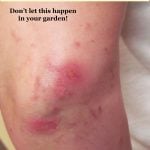
I’m sharing my story here so you don’t make the same mistake I did, and end up with Phytophotodermatitis (PPD). Phytophotodermatitis is also known as plant and sun dermatitis, parsnip burn, and sometimes lime disease (not to be confused with Lyme disease) or margarita photodermatitis. You get it from exposure to plant sap or juice and sunlight, as outlined below. We’ll cover plants that cause phytophotodermatitis and how to treat it.
Would you like to save this?
This was not parsnip burn from exposure to some “poison parsnip” or giant hogweed. I was working in my garden. Garden parsnips and wild parsnips are the same species, and it turns out they can cause the same problems. Several other plants can cause the problem, too.
I originally wrote this post in 2014, and unfortunately ended up with another smaller case in 2018. I thought I was being careful, but apparently not careful enough.
The pain doesn’t start until days after sap and sun exposure. By then, the damage is done, and all you can do is treat the symptoms.
What is Phytophotodermatitis?
Medscape defines Phytophotodermatitis as:
Phytophotodermatitis (PPD) is a cutaneous phototoxic inflammatory eruption resulting from contact with light-sensitizing botanical substances and long-wave ultraviolet (UV-A 320-380 nm) radiation. The eruption usually begins approximately 24 hours after exposure and peaks at 48-72 hours.[1] The phototoxic result may be intensified by wet skin, sweating, and heat.
In other words, your skin erupts with blisters and itchy, burning red areas because you were in contact with plant chemicals (in this case, parsnip and carrot sap) and exposed to sunlight.
You don’t realize you’re in trouble until several days after exposure, by which point, you’re skunked. This is one of the aspects that makes PPD different from most other contact dermatitis. If you’re working with wet plants on a hot summer day, it’s going to be worse. (That’s what happened to me.)
If you visit the Medscape website, they go into a detailed explanation of how the chemicals in the plants that cause the damage (Furocoumarins) are activated in stages under different conditions, and how they actually damage the DNA of the skin.
You cannot “wash off” phytophotodermatitis chemicals with soap and water once they are activated by UV radiation. I did shower after working in the garden, but it didn’t do any good. Washing may help limit additional damage.
Is Phytophotodermatitis contagious?
Nope. Only those directly exposed to the problem plants and conditions experience skin reactions.
The only case that might be an exception is berloque dermatitis, a special type of phytophotodermatitis caused by perfumes. There are older perfumes that used oil of bergamot. (Bergamot is one of the citrus fruits that can trigger PPD.)
If one person applied the problem perfume and was in close contact with another person, they might spread the perfume – and the skin condition. It’s unlikely, but possible.
I do think that the fluid from the blisters *might* encourage the formation of additional blisters (on the same person). I’ve had blistered areas spread without additional plant exposure. It’s possible some of the fluid from the blisters got smeared over a wider area due to the blister being bumped or scratched. I have not been able to confirm this.
Which Plants Cause Phytophotodermatitis?
Here’s a kicker – there are wide range of plants that can cause this condition that you might never suspect.
Plants that may cause phytophotodermatitis include (but are not limited to):
- Parsnips (Pastinaca sativa)
- Carrots (Daucus carota subsp. sativus)
- Celery (Apium graveolens)
- Gas plant (Dictamnus albus)
- Parsley (Petroselinum crispum)
- Wild Parsnip (Pastinaca sativa)
- Queen Anne’s Lace (Wild Carrot) (Daucus carota)
- Giant Hogweed (Heracleum mantegazzianum)
- Limes (Citrus × aurantiifolia)
- Figs (Ficus carica)
- Chrysanthemums – Chrysanthemum genus, aster family
- Common Rue (Ruta graveolens)
- Russian sage (Perovskia atriplicifolia)
Those who are into botany will notice that the top six plants on the list are all related to each other (they are members of the Apiaceae family). Some of you may have also heard about getting blisters from wild parsnip or poison parsnip, but may not have realized the garden parsnips can also cause burns. Garden parsnip and wild parsnip are both different varieties of the same species – Pastinaca sativa. The veggies typically cause burns on agricultural workers and grocers, who handle large quantities of plant material.
The Medscape site shows a rather nasty blister that covers about 1/3 of the forearm of a flight attendant who spilled lime juice on her skin. The phytophotodermatitis from limes is also referred to as “margarita dermatitis” because of all those poor folks who have sucked on their limes in the summer sun.
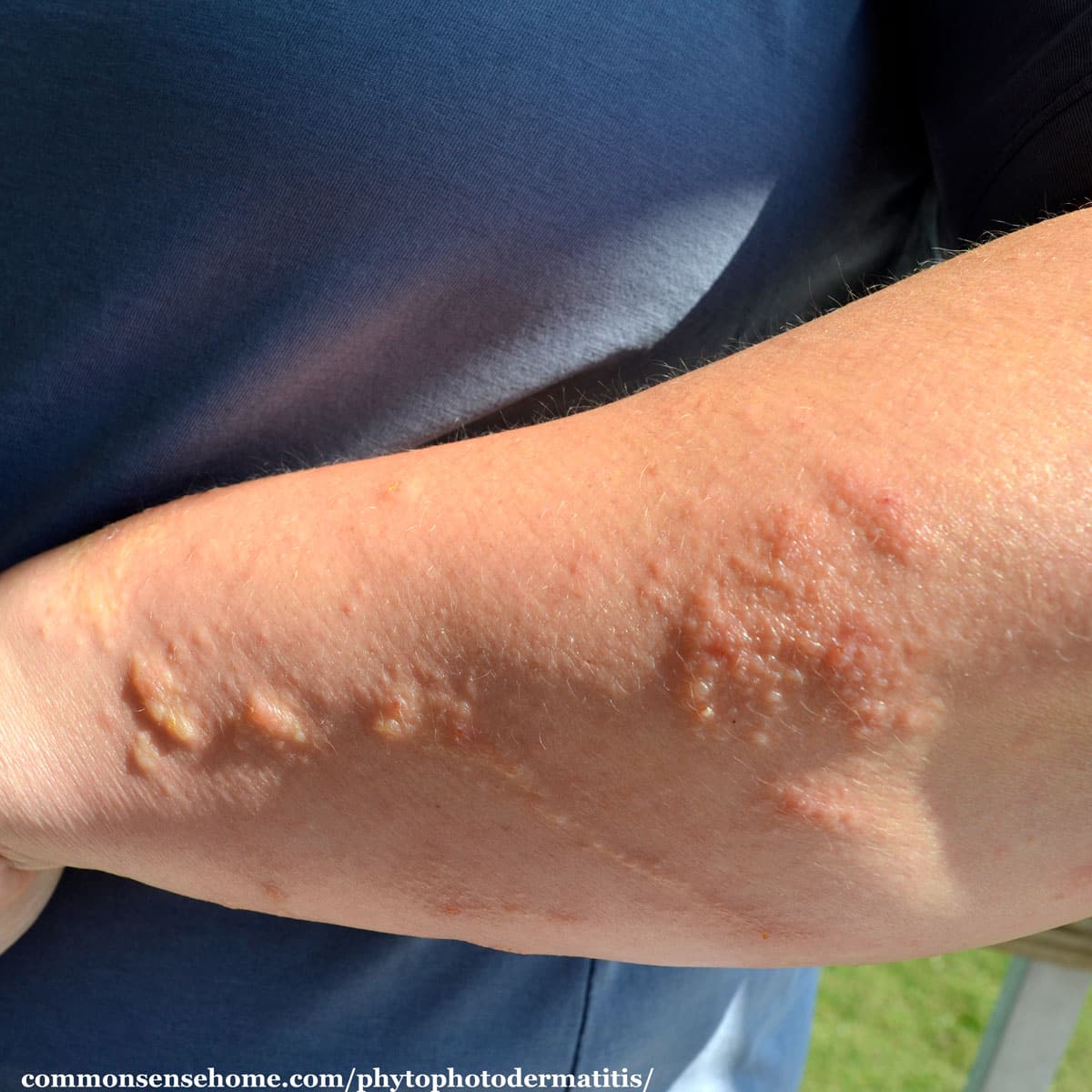
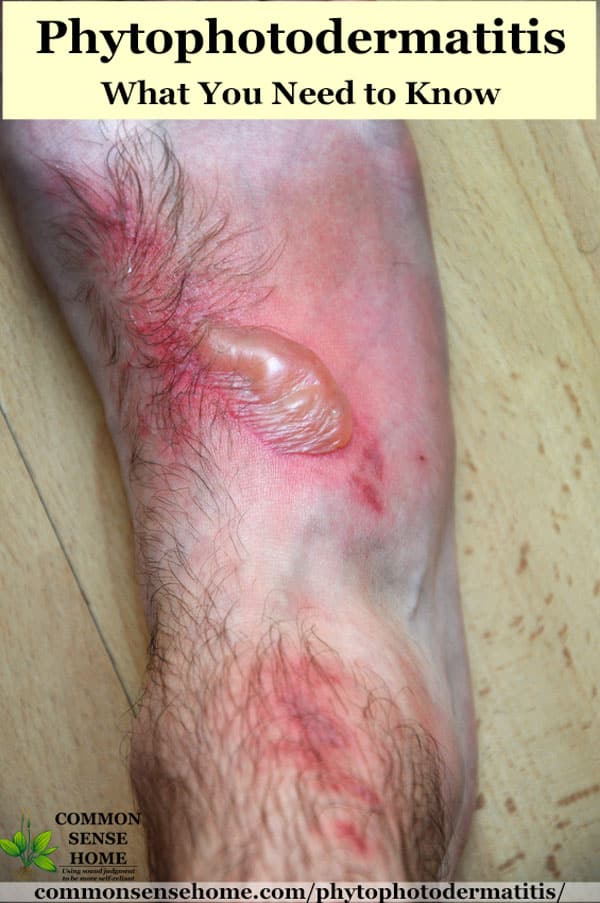
The wild parsnip burns (and those from other wild plants like hogweed or queen Anne’s lace) can be some of the worst, because people do terrible things like running weed whackers with shorts on and get their legs all covered with little bits of parsnip (and sap), like the poor guy featured in the article “Burned by Wild Parsnip” in Wisconsin Natural Resources magazine. The photo below is as example of how large the blisters can get.
I’m Going to Stop Growing “Poison Parsnips” Because They’re Too Dangerous
No. I’m not. I’m not skipping the carrots, parsley or celery, either.
In all my years of gardening, these past couple of decades on my own and helping mom out growing up, I’ve never been burned by garden parsnip before. I did get about an inch long blister from wild parsnip, but none from garden parsnip.
Here’s what I screwed up:
I was working in the morning, so the plants were covered in dew. More moisture = wet skin.
It was hot, so I was sweating = more wet skin + heat, both triggers for phytophotodermatitis.
The area I was working on was roughly 80 square feet, very thickly planted, mostly with carrots and parsnips. I had thinned and weeded the patch when the plants were younger, but this round of thinning took place when the plants were a couple feet tall.
The only way to reach the roots to pull them out was to stick my arm into lots of foliage. (Lots of exposure.) I gathered up the bundles of plant tops after removing the roots with my bare arms. (More exposure.)
By the time I finished, it was pushing midday, with a bright, beaming blue sky = lots of nice, intense sunlight.
In my 2018 case of phytophotodermatitis, I allowed queen Anne’s lace to grow in the greenhouse as companion plants for the tomatoes. I was trying to thin them out as the greenhouse became more crowded. It was hot, humid and sunny. I must have broken some of the stems, and got the sap on my hands and feet.
What I Should Have Done:
The simplest thing I could have changed was to wear long sleeves and gloves to cover up my skin. Problem solved.
Alternatively, not handling the broken plants with bare skin, or thinning harder when the plants were small so I didn’t need to stick my arms into a thicket would probably also have done the trick. That said, we have been enjoying the carrots and parsnips I picked. 🙂 No more wild carrots in the greenhouse. It’s simply too easy to get accidental exposure while working around the plants in close quarters.
How do you Treat Phytophotodermatitis
Like a standard burn, you can apply cool compresses to relieve the pain, and try to keep blisters intact as long as possible to protect the tender skin underneath. Over the counter itch cream like those for poison ivy may also help, along with anesthetic creams like Aspercreme.
I hit the pantry and the garden for treatment options.
On the first couple of blisters, I used fresh plantain and yarrow leaves, mashed and applied as a poultice. As more blisters showed up, I coated the worst blisters with manuka honey to promote healing and fight infection. You can read more about using honey for wound treatment in the post, “Honey as Medicine“. With over 30 blisters on my arms and hands, the honey was a little awkward to try and use on all of them, so I made up some comfrey salve with lavender essential oil.
I coated the burns several times per day with the salve, and at one week after exposure, some of the scabs fell off to expose new skin underneath. The burns on my hands and elbow didn’t heal quite as fast. My hands spend way too much time being beat up during canning and gardening season, so I can’t keep bandages on them, and the elbow is just awkward to keep bandaged.
Be patient. Badly affected areas may take weeks to months to heal, depending on the damage. I still have dark areas on my skin a year after exposure from the worst spots.
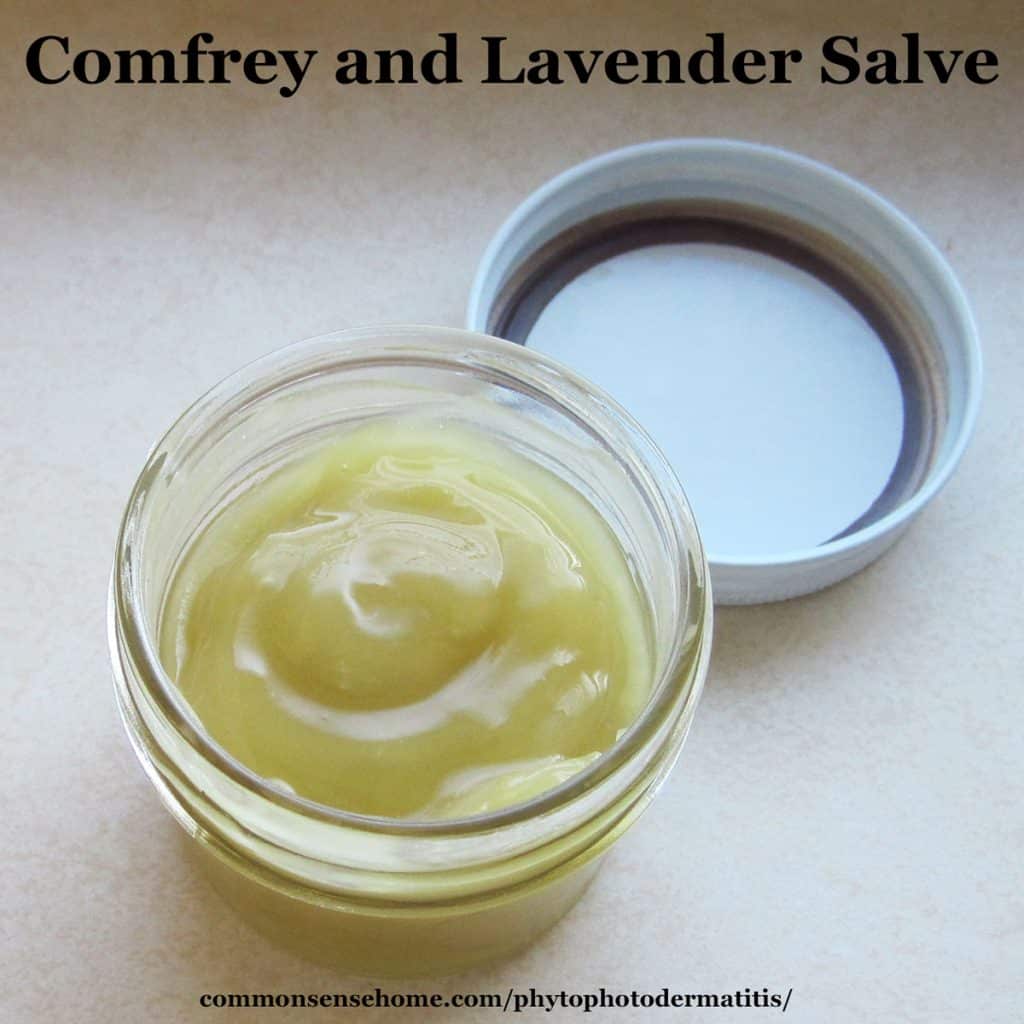

Comfrey and Lavender Salve Recipe
Adapted from the Herbal Academy
Ingredients
- 1 cup organic extra virgin olive oil
- 50 drops of lavender essential oil
- 1 ounce organic dried comfrey leaf
- 1 ounce beeswax
Directions
- Pour olive oil into a double boiler or small, heavy bottom pot. Add comfrey leaves.
- Heat over low heat for 60 minutes, stirring occasionally. You’re looking for gentle heat, not boiling.
- Remove from heat. Strain and compost comfrey, reserving infused oil.
- Melt beeswax in a clean pan over low heat.
- Once melted, add herbal infused oil and lavender essential oil. Mix well.
- Quickly pour salve into tins or glass jars and allow to cool before placing lids on and labeling.
The HANE website notes that “Comfrey contains allantoin, an anti-inflammatory phytochemical that speeds would healing and stimulates growth of new skin cells.” The HANE burn cream recipe also includes one ounce each of dried plantain, calendula and St. John’s wort to bump up the healing power a little more.
Photos of Phytophotodermatitis
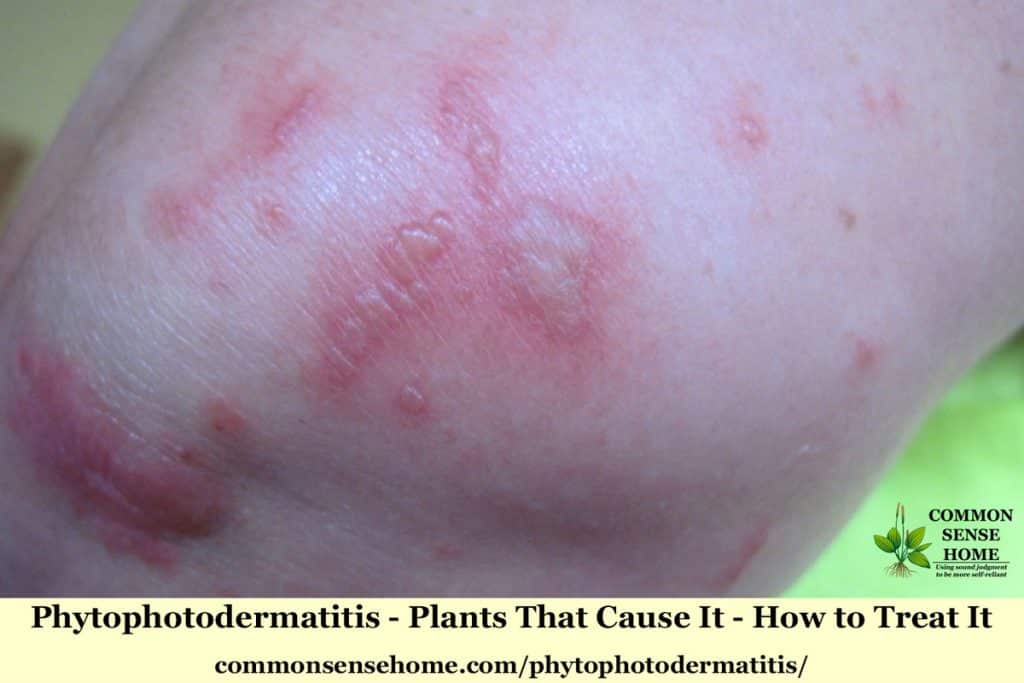
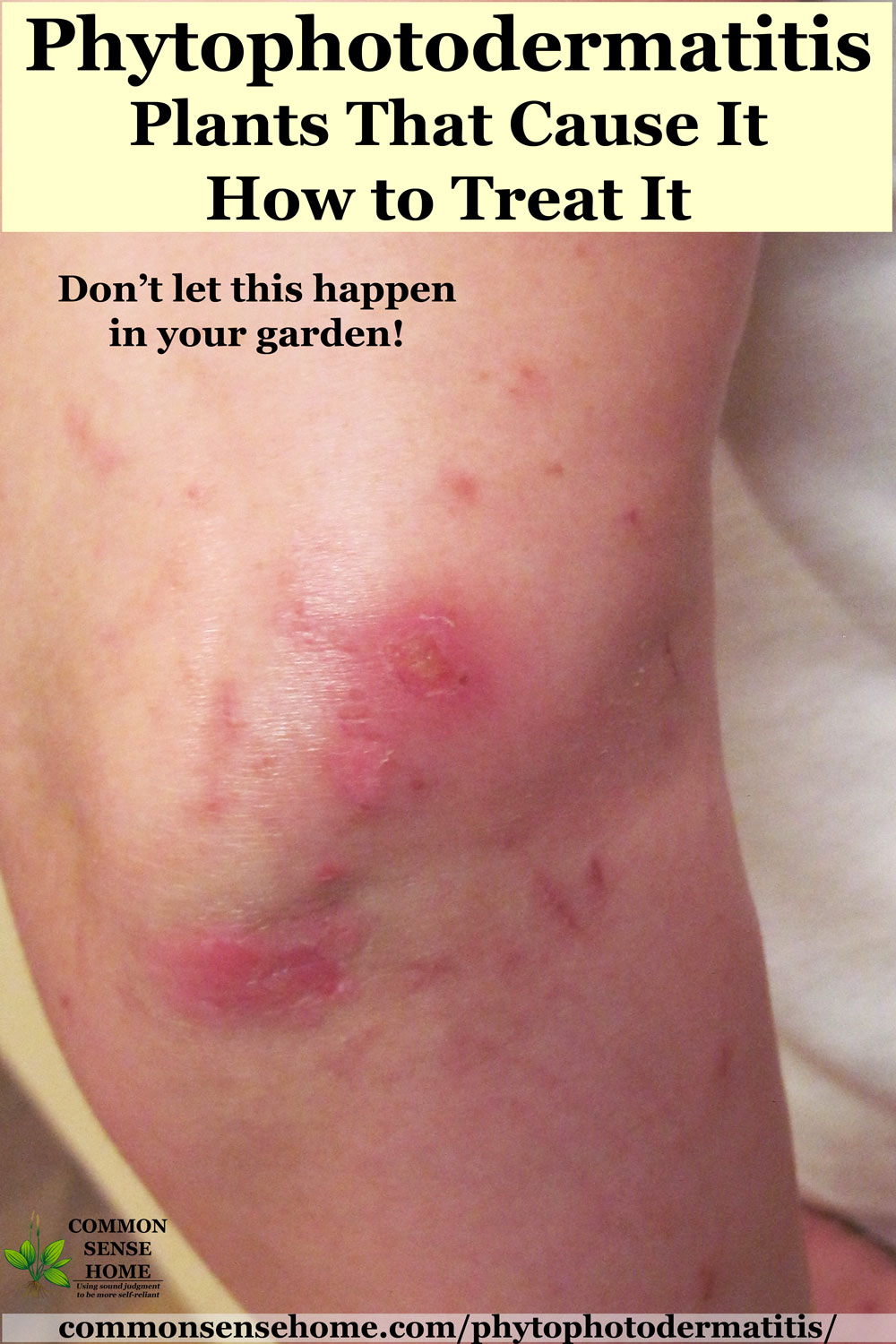
Just so you can see how the eruptions progressed, I’ve included some comparison photos of the affected skin below. The image at the top of the post is my left elbow on day three after exposure. 24 hours earlier (48 hours after exposure), there was only one blister.
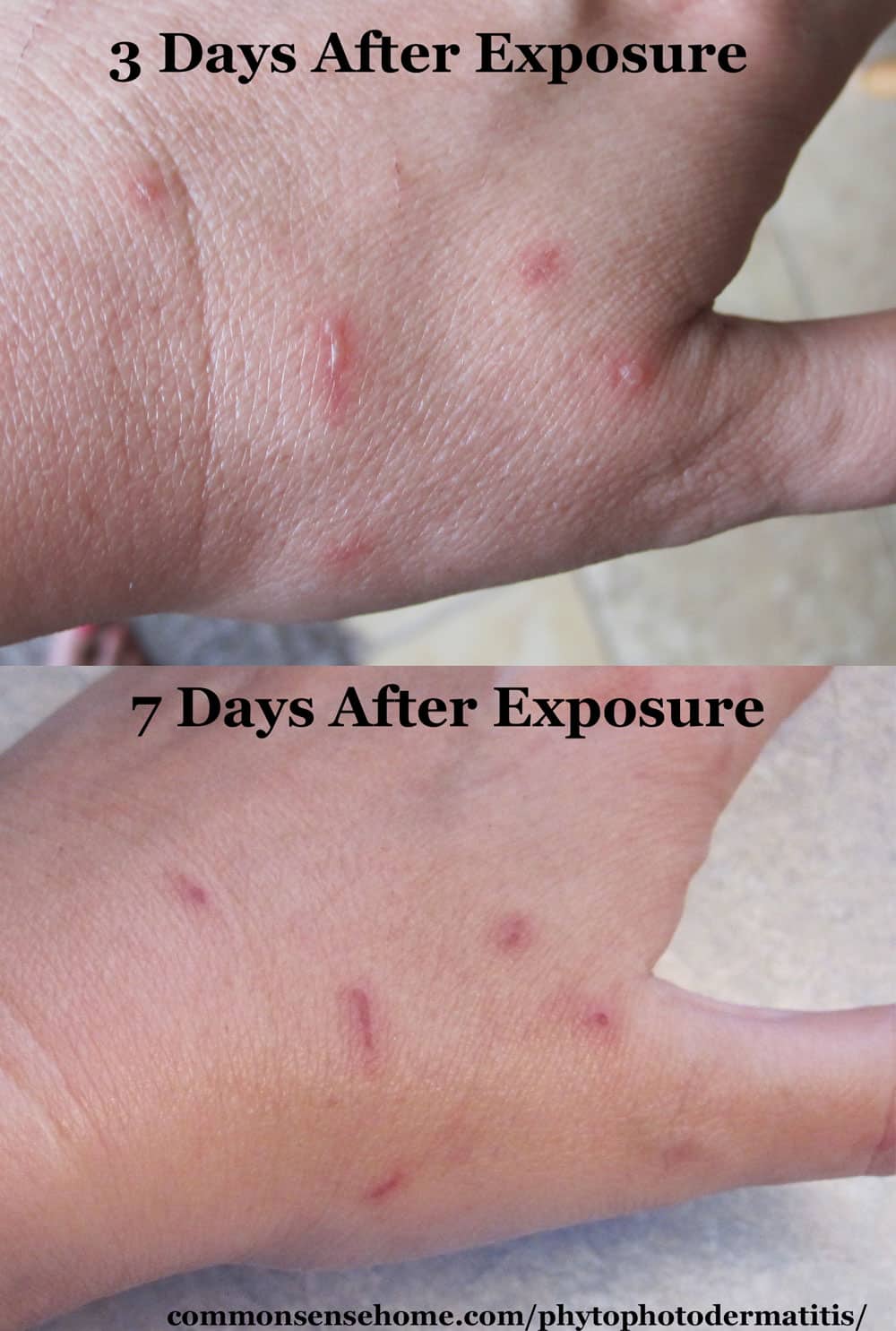
My left hand at day 3 and day 7 after exposure. Day seven may not look much better, but it feels much better. No more burning and itching.
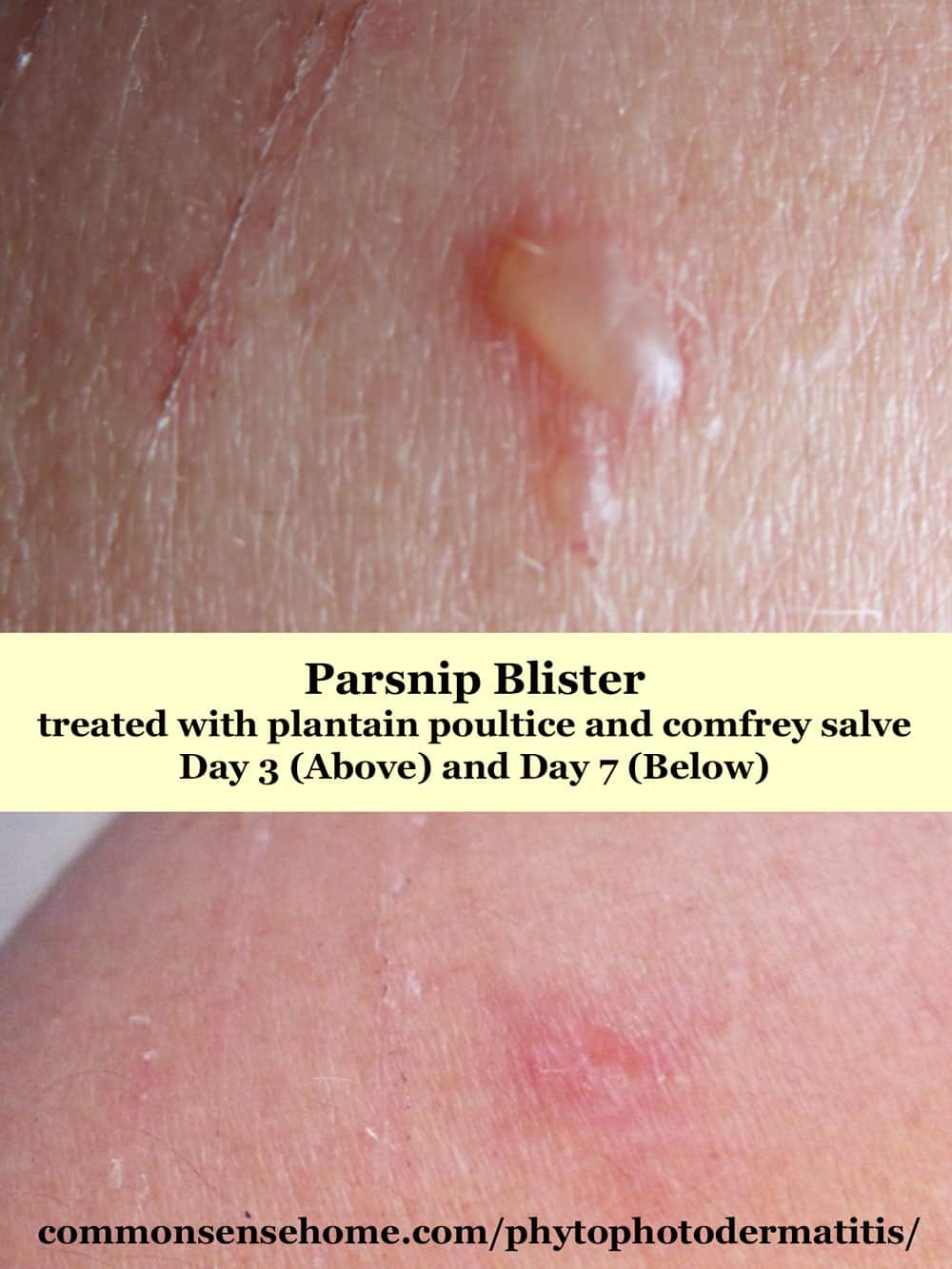
One last shot. A blister on my right arm that was one of the first to appear that I treated with a plantain poultice followed up by a day of honey and ongoing use of the comfrey salve.
Don’t fear the plants, just don’t handle them in such a way that you set yourself up for some serious discomfort. Learn from my mistakes. 🙂
July 2019 – I’ve run into this again. After helping to clear an overgrown area near the greenhouse in shorts and a t-shirt, I ended up with blisters on my arms and legs. I didn’t see any queen Anne’s lace or other trigger plants, but they must have been in the mix.
I suspect repeated exposure may make you more likely to have a skin reaction.
The video below highlights this year’s exposure. (Make sure any ad blockers are off to get the video to display.)
You may also find useful:
- 9 Home Remedies for Dry Skin – Soothe Dry and Flaking Skin Naturally
- Grandma Called it Medicine Leaf
- Herbal Antibiotics – the Top 15 Herbal Antibiotics
Originally posted in 2014, updated in 2018.
Laurie, so sorry you had to go through so much pain and suffering. My story is a little bit different. Living in Oklahoma, I was bitten by a Brown Recluse Spider, also known as ‘Fiddleback’. It changed my entire metabolism. Yes, I always did some gardening but didn’t grow the plants you refer to. After the spider bite and working in the yard, I was afflicted with poison ivy
problems. Had it treated and it went away. However, any time thereafter I only went into my yard (didn’t have to touch anything) and I came down with poison ivy rash again. At least the doctor said it was poison ivy. I was so looking forward to working in my yard after retirement and I couldn’t even go outside. The doctor said it probably was wind born. At the same time we also boarded my daughter’s two Rottweilers and the doctor thought the dogs swished against some plants and then transferred the sap to me. Well, thanks to your post, I now know better. It was PPD. There was no poison ivy in our yard anyway. I used comfrey tea to bathe the sores with. This dreadful condition lasted a mere 20 years. Haven’t had it for the last 20 years, so I should be over it by now. Amen to that!
Oh my goodness – 20 years! I’m so glad you finally got clear of it. I’ve heard about brown recluse spiders. Thankfully we don’t have them around here, but they are nothing to play around with.
When we moved to our farm. We saw this lovely yellow flower that looked a lot like queen anne’s lace(yellow flower was wild parsnip). It was everywhere. We were weed wacking and some of the sap sprayed on my wife it took most of the summer for that to heal. Now we can identify it in all its stages. Thanks for the article hopefully it can help others avoid the burn. When I think I have become exposed to out I go into the house and rub vinegar on it then wash it with soap. If I still feel itchy I use lavender essential oil and apply directly and those things have helped immensly.
Oh no! So sorry you didn’t find out what it was until it was too late. Thanks for sharing your story and tips.
I use jewell weed ASAP on almost any skin irritation. I love the stuff! And it grows wild right in our yard.
Jewelweed is great remedy if you have it on hand. It’s the featured plant of Weekly weeder #33.
I have celery and parsley growing in my garden and a toddler. He likes to smell the basil and put his face near the plants. Now I will keep him out of it! Is the danger of being burned present until the plants are harvested?
Don’t keep him completely away from all the plants, unless sensitivity to specific plants runs in the family. Kids need plant and dirt time, and enjoying the scents as little ones can help grow lifetime gardeners. My guys have worked right along side me since they were tots, sniffing, touching and tasting where appropriate. Here’s a shot from around 13 years ago, during tomato harvest season.
It’s the sap in combination with the moisture and sun exposure that generally causes the problem with the plants discussed in the article. Casual touching of unbroken plants, or working with cut veggies out of the sun should pose little or no risk.
Also not sure if it can work like other allergic type reactions where some people seem to have better resistance to something than other but a lot of that starts from childhood. The more they are exposed to as children the better immunity they build up. Let them dig in the dirt and enjoy the plants! Avoiding prime conditions for reaction exposure of course…
Just out of interest – did you have sunscreen on your skin at the time?
No, I rarely wear it at all, and when I do it’s on areas like the back of my neck and ears early in the season before I’ve built up a tan.
Wow, every year I go out and cut buckets full of wild and tame parsnip blooms for filler material in bouquets. I just love the lovely green flowers. I did not know it could do this. I’ll have to be more cautious when I do this in the future. Poison ivy never bothered me either until this one time…and that was a full blown episode!
As I mentioned in the post, I’ve worked with them for years and never had a problem – until this time. Stay safe!
I am so grateful you posted this. Giant Hogweed is a big issue where I live but I had no idea about the other plants causing burns. You just saved me a lot of pain and suffering.
Glad you found us before it was too late.
Thanks for all of the info. You have answered a lot of questions. Russian Sage was the problem for me. It was a hot, sunny, sweaty day and I was weeding under the sage. The purple blooms on the sage were tall and falling over where I wanted to weed. I held it up with my left arm and had my head under the blooms…..wiping my right cheek with my glove. BIG MISTAKE! Cheek, forehead, and right ear suffered the red eruptions. It looked like I had leprosy! Dermatologist didn’t know what it was and did a biopsy (that came back saying I had dermatitis!), It has all cleared up, just leaving a light red cheek and forehead. Thanks so much for all of your information!
I just read your comment to my son, and he asked, “Why wouldn’t a dermatologist know that?” My reply, “Because they don’t garden.” Sorry you didn’t find out until it was too late, but glad it healed.
I am glad I read your comment – I had a run-in with a woody stem of a Russian sage plant in my garden one March 3 years ago when I was doing some spring cleanup. I got a big scratch from a hard stem along the inside of my forearm. Within a day or so I had blisters up and down my arm, and they kept spreading out from the scratch. Very itchy and painful. After some on-line searching, I came across the possibliity of phytophotodermatitis, but never saw a citation that included Russion sage in the list of culprits. Yours is the first! Thanks!
Sorry you got exposed, but glad you found the information you needed. I’m going to add Russian sage to the main body of the post to make it easier to spot.
This happened to me for the first time ever. Terrified me! I’ve been using a homemade comfrey & tea tree salve. Now I’ve switched to lavender e.o. in hopes of reducing any potential scars. Thanks for posting this – a friend found and shared it after it happened to her too. I hope you’re feeling better.
Only the worst spots are still a little tender at this point. Live and learn (and pass the lesson along).
I have some thing look like that but only one area same spot on my butt. Over and over again. I thought I allergy to wheat. Are you allergic when you eat that vegetables as well?
No, I only react to the sap from the greens under specific conditions, not the roots of the vegetables. Sorry about your butt. Ouch. 🙁
Let’s just say, you have a lime burn… can you still ingest limes? I’m having a burn right now (blisters just went away but still have red skin) and I had a drink that had real limes on it and now my blisters are coming back.
I haven’t had phytophotodermatitis from limes, or seen any reference noting that drinking a lime drink can trigger a return of symptoms, but it wouldn’t surprise me at all.
Since my original heavy exposure and reaction, it seems like I react more easily to smaller exposure that would not have bothered me in the past. Coincidence or my imagination? I don’t know, but nursing blisters on my left hand again from thinning out the carrot patch, and I tried to be as careful as I possibly could and wore gloves for most of the time.
Oh my gosh! What about aloe? I had serious contact dermatitis from medical tape and after several rounds of steroid creams that just made things worse, a dear friend brought me several leaves from her aloe plant. It was magical. After three weeks of suffering, I finally had relief!!!
I do have an aloe plant, I just don’t like the way the sap feels on my skin when it dries. If you have fresh aloe available, it can be used just like you would for other burns. All but the worst of the burns are largely healed now. The big ones are still tender. Pain and itching stopped once I hit them with the salve. I’ll have scars for quite a while, but eventually they should fade.
Wow. Had no idea. Looks like poison ivy/oak rash. Wonder how many are misdiagnosed? Does it itch & burn like poison ivy?
I’ve never had poison ivy, but from the descriptions, I think it’s somewhat similar. This doesn’t spread easily around the body from transferred oils. It’s very spotty – just where contact is made with the sap.
I know that dehydration plays a big part in how sensitive we are to this thing. And sweating. The ph of our sweat triggering a more damaging reaction. I wonder am I the only one whos body does not send that signal to drink til way too late
I find it interesting that I am allergic to all of those, except the limes. Since I can’t eat them, I don’t plant them.
I had some smaller spots without quite a noticeable blister as yours but now it makes sense. I knew at the time it was a topical reaction to a plant but couldn’t imagine it came from a garden plant!! I thought more possibly a weed. They seem to get ahead of me all the time. (note to self, must find a better way to manage weeds!)
I used an alcohol/witch hazel several times a day and it took about two weeks to heal. I will definitely look into your links because my mom has similar issues.
Thanks so much Laurie!!
Pam
You’re welcome. Watch out for ragweed, too. That gives me bumpy, itchy hands if I pull enough of it.
This is wonderful information. Thank you! I wonder if this has anything to do with having itchy arms after harvesting beans. It’s really just redness and hives for me- not blisters, but it’s an interesting thought!
Plants don’t want to be eaten, so they do often have compounds that will cause reactions. Thankfully, most of them are not as severe.
Thank you very much for sharing your stories. It will definitely help others. Also thank you for Comfrey and Lavender Salve Recipe!
You’re welcome, Tanmay. A number of people have commented on social media about similar experiences and doctors not recognizing the symptoms.
I had exactly the same problem which I have no absolut idea what it was until, my husband happen to chat talk on the radio the day before about gardening. We looked up the plant & it showed all the symptom that I had. It was awful. I know now that I need to take extra care next time. Thanks for sharing!
I figured I couldn’t be the only one who made the mistake, so I might as well put my discomfort to good use.
Thanks for this post! This happened to me and I was sure it was a reaction when I was moving a lime bush. I went to the doctor and he had no idea. Thought maybe chicken pox or shingles. Called in another doctor and they argued about whether one can get chicken pox twice. I was sure I was scratched by the lime bush and it was an allergic reaction to the lime bush. Now I know!!! Phytophotodermatitis. Photos are confirmation – this was it. I’m thinking the big city doctor needs to spend some time in the garden! 🙂 Thanks again for posting!
Doctor’s are only human, so it’s good to be able to ask questions to work with them as your own best advocate.
Thank you for the information. I recently got what I thought was poison oak. However, now I see it may have been this. I had recently been around wild parsnips, and would have been sweating and even wet from rain. I know what poison oak and poison ivy are, and I always avoid exposure. So, I wondered how I could have contracted my rash. Thanks for confirming that my rash did not come from poison oak/ivy.
In treating my rash, I used crushed Jewelweed poultice, Vitamin C taken orally, and apple cider vinegar. Actually, I saw the best results from apple cider vinegar, but healing did not come as quickly as for you. So, I think I will try the salve next time (hope there is not next time!).
I hope you don’t have a next time, either. It sure is uncomfortable.
Thank you for posting this! I usually use nitrile gloves in the garden to protect my hands. No I realize I need to do a bit more, as I do have celery, parsnip, and carrots growing. Appreciate your posting the treatment too.
i have this rash on my right leg the doctors tell me it is eczema. i was in the garden on one of the hottest days i ended up the heat stroke and ended up in the hospital the next day i got this rash just like yours that was almost 3 years have used all kinds of treatment and nothing works now i am getting this on my other leg i was working in my carrot and parsnip patch . will this cream work after this long thank you for posting this as i am going crazy from the itch
I can’t say for sure the cream will work, but at the very least it should do no harm.
I get those same bumps every year on my hands about halfway through the spring. I have seen 5 different dermatologists. None of them take it seriously. Have you heard of it coming back and breaking out like that?
Only with repeated exposure.
I had the burn up my legs last summer; terribly painful, blisters larger than baseballs, 3rd degree burns. This year, I find that even five minutes in the sun has small blisters reappearing; on top of that, I am super-sensitive to heat stroke. I’m dizzy and nauseated after even just fifteen minutes in the shade. I came online just now to see if anyone else who had the burns was having issues the next year.
My doctor had told me that it can be like this for at least two years after the burns had cleared up! 🙁
Oh no! How awful. Those sound like extremely severe burns. When I had heat stroke as a teenager, it did take me a while to recover. I passed out in the church choir later the same summer. Eventually it did get better, but I don’t remember the exact timeframe. I didn’t have a reoccurrence of the blisters, but I did get psoriasis a couple years later. Linked? Maybe, maybe not. Either way, this summer my skin is behaving pretty well overall.
You need to cover the affected area with sunscreen and preferably also light clothing as exposure to the sun will bring the painful rash back again – as my husband has unfortunately discovered.
once you loose the natural Paba UV protection in you skin, the sun will burn you there for years after, till all the skin cells are replaced
I was picking Figs and my legs started itching like crazy, so I quickly took a warm shower and than dried myself with a towel. After that I put Benadryl all over my legs. Was this a good choice?
At the very least it shouldn’t make it worse, but I don’t know if it will entirely address the damage if the sap soaked in.
You realize this is not a rash, right? This is a chemical burn reaction caused by the sap and sun exposure. It’s unlikely to have this for 3 years unless you continue to expose yourself to the sap and the sun. If you find yourself exposed to the sap you can try washing it off prior to sun exposure to prevent a reaction or at least reduce the worst of it.
I also got sunstroke. This was during a school picnic when I was a pre-teen. Since then I have a tendency towards rash. If you have the opportunity to consult with a certified holistic practitioner or want to research kidney issues on your own, you will probably discover that the Chinese meridian system clearly describes the location of the kidney meridian as running from the outer foot up along the outside of your calf and thigh, and they will discuss the correlation between kidney challenges and rash. I have had chronic rash a lot in these areas. In addition to always keeping well hydrated on the purest filtered water, available to me I have found my greatest success in reducing and for the most part eliminating chronic rash on my legs by following a diet that keeps my liver, large intestine, kidneys and mind as clear of toxins and stress as possible I struggled with allopathic prescriptions into early adulthood until I had the good fortune of encountering people who passed the word on the holistic strategies that worked for them. I hope this points you towards a path free of misery.
Another strategy that has been very protective from toxic plants and biting insects is that I make a point of putting on arm gaiters when working outside I have in the past ordered reliable, inexpensive, easy to wash arm gaiters from BountifulGardens.org To my disappointment, they do not appear to stock these anymore. The closest product I could find to what I have been using are longer and have a few more features, which is probably a good thing: http://www.gardengaiter.com/ARMWEAR.php . I haven’t tried them, but will probably try a pair when my old pals wear out. They cost nearly twice as much, but if they work as well or better, higher cost is worthwhile. They also list a similar product that protects legs from the knees down.
And many thanks to you, Laurie for for the alert on sensitizing plants! I am pretty sure I have cow parsnip on our property, and have planted parsnip this year.
One of the things I have noticed is that even when I have brushed up against plants that can be a problem, ex. cow parsnips and nettles, I can hang them up at the end of the day and don’t have pick up any irritation the next morning. Is this unique to these plants? I did once contaminate a number of shirts when my husband came home and didn’t mention before hugging me “hello” that he had tangle with some poison oak at work that day. So I know that some plant toxins persist a frustratingly long time. Would be useful to know which ones!
I’m sure during of irritation likelihood is linked to weather the irritant is an oil or a sap, with the oil based irritants persisting much longer. I have not seen a list like you describe, but if I find one, I’ll add it.
You might research a farm supply store or veterinarian supplies.
What you are describing sounds like the arm covering “gloves” used when checking/pulling calves.
I’ve been getting this for the last 5 years and by trial and error found a system that works for me. To stop it from spreading I use a cotton ball and apply rubbing alcohol to the affected area. While still wet I apply Aloe Vera Gel. While that is still wet then I apply Tolnaftate Antifungal Powder 1% and let stick to the wet Aloe Vera. (Keep on the skin as long as you can stand it)
To stop the itch I take One doTERRA Tri Ease Seasonal Blend Softgel every 8 hours along with a cap full of Organic Apple cider Vinegar with mother and weirdly, One Garcinia Cambogia pill. That cuts the itch down to a bearable level. It works for me.
The Antifungal Power I get over the counter at the drug store. Hope this helps someone.
I’m glad I saw your article on Facebook. I was beginning to think I was crazy. I got this from a lot of different plants. Lemon Trees, Fig trees, Plumaria, and just dirt in pots.
Thanks for the tips Rose. I too find the alcohol stwabbing and foot powder trick helps some of the misery this toxin is punishing me with. Trial and error is all I can pray for this third thing garcinia Cambogia…what is this. I desperately want to get past this nasty condition and sadly am feeling defeat.
Have you tried honey? If the wound is deep, that might be a good option to help reduce the swelling and draw out more of the toxin. I tried it will a small reaction this year and it worked quite well.
I have tan-iah scars left is this normal? Do they fade? I got them 3 weeks ago and they still itch!!
The scars fade over time. How much time depends on the severity of the damage and each individual’s ability to heal. I can still very faintly see the worst of the scarring from last year in the right lighting, but not the scars from a couple years ago.
Husband has this now from a fig tree. Wondering how long until the worst of the itch and discomfort is over?
It depends on a number of factors. How bad was the exposure? How sensitive is the person? How are they treating the sores? Are they scratching? (Bad idea, even though it feels like you really, really want to do it.)
I’ve had it last between a few days to up to a week.
I still have a scar from 2 years ago, but it’s not very visible.
Workman’s Comp recommends getting a dermal peal. Anyone out there brave this one? They also inform that skin grafting may be necessary for the deep wounds. Mercy me I sure got beat up by this toxin. My face was like a bal.oon for a week from rubbing the sweat off myself. Mother nature 1 Sandra 0. Lol
I have just been to A&E after coming out with horrendous burning red blotchy bubbly blisters on both my elbows & arms, Dr suspected it was a plant allergy so prescribed Antihistamines, Antibiotics & a soothing lotion. It was frightening to think hauling out a few overgrown parsnip & turnip plants could cause such awful burns – worse than bad sunburn!!! How long did everyone else’s blisters/rash take until the pain subsided? Many thanks
The worst of it is usually over in a week or so after exposure for me (pain and itching), then it takes a while for the skin to heal completely. The honey and other topical treatments help speed things up.
My blisters lasted about 5 days. On the first day I went to ER because I had just come back from a nature trip (climbing a hill) and was worried that I might have been bitten by a snake or some other poisonous animal. The doctor said it was probably just a poisonous plant, drained the liquid from my blister (it was a big one) and bandaged my hand. I kept it like that for a few days and, when I took the bandage off, the blister was there again and filled with liquid again. It took some time for it to burst and then I just drained it myself.
As for the pain, I felt a burning sensation for about 3-4 days and then it started itching, which lasted a few more days. The scar is still slightly visible after 2 years and 2 months.
Thanks for sharing your experience, Sanja.
This last round of PPD exposure left me miserable for the better part of a week. If I look carefully, I can still see a faint scar from last year’s exposure, and of course this year’s scars are still quite visible. One on the back of my leg looks very much like a bite.
This is a great article.
Celery is my nemesis during the summer and as produce manager its a losing battle lol.
I’ll try to better cover myself and look into that salve.
Thank you!
Good luck. I know it’s tough to avoid exposure when you’re working with plants non-stop.
Although it may seem natural to wipe your brow or rub your eyes or mouth after pruning or picking figs on a hot day , it is disastrous. I have had large baggy blisters on my arms and around my eyes . I love fresh figs .I have now trained my tree as the Japanese do, horizontally so I can reach the fruit easily without leaning into the plant. Now I cut one leg off track pants ,to cover my arm ,rub barrier cream liberally on any exposed areas ,then put on latex gloves as well.
I have have always doubted that Adam and Eve covered their genitals with a Fig leaf .Couldn’t think of a worse place to be infected.
Whoever came up with the idea of fig leaf garb clearly never experienced phytophotodermatitis.