
6 Ways to Get the Musty Smell Out of Clothes and Towels

This post may contain affiliate links. Read my full disclosure here.


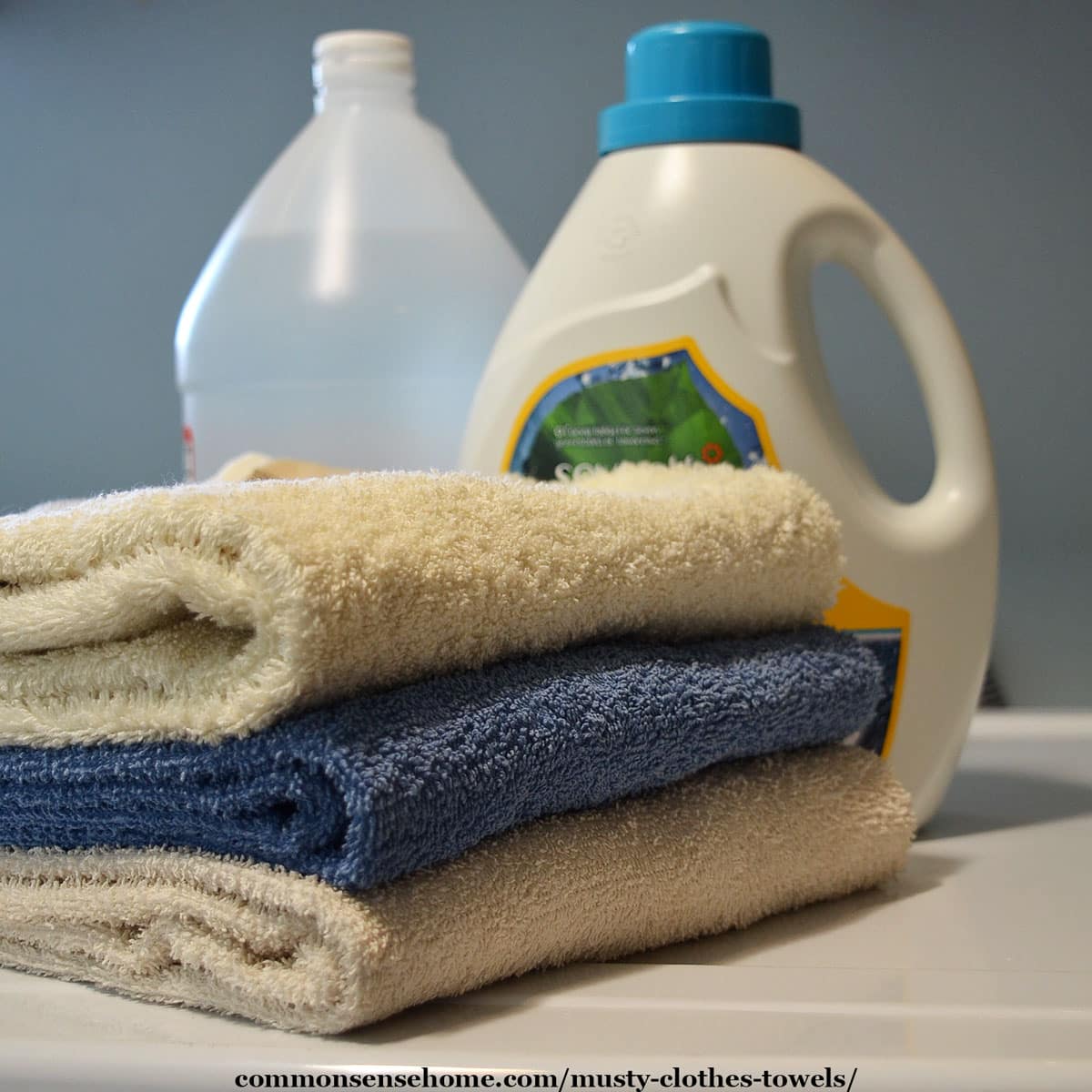
If your towels smell fine when they’re dry but turn funky the second they get wet, or your freshly washed clothes smell less than fresh, you’re not alone. Musty clothes are a common problem, especially in humid weather and busy households.
The good news is that you can usually remove mildew smell, stale odors, and sour towel funk. The trick is figuring out what’s causing the problem and the best solution(s).
In this post, I’ll walk you through how to get rid of musty clothes and towels. We’ll also cover what causes laundry odor, so you can try to avoid the problem in the first place.
Would you like to save this?
Table of Contents
Why Clothes and Towels Smell Musty
When clothes smell musty, the problem usually comes down to trapped moisture, residue, and microbes. Sometimes it’s the laundry itself, sometimes it’s the washer, and sometimes it’s both.
Here are the most common reasons clothes and towels develop that stale, sour, or mildew-like odor:
1. Damp clothes sit too long
If you leave damp clothes sitting wet in a hamper (or anywhere), moisture gets trapped in the fabric. That gives mold or mildew a chance to grow and turns a normal load of laundry into a science experiment.
2. Towels don’t dry fully between uses
Bath towels, kitchen towels, washcloths, and cleaning rags get wet over and over again. If they stay damp too long, mold growth and mildew become more likely, especially in humid bathrooms or busy kitchens.
This is one reason towels may smell fine when they’re dry but develop odor as soon as they get wet again.
3. Too much laundry detergent or fabric softener leaves buildup behind
It’s tempting to use extra soap when laundry smells bad, but too much laundry detergent can make the problem worse. If you’re using more than the recommended amount of detergent, residue can build up in the fabric. This residue traps body oils, dirt, and odor.
Fabric softener can cause similar trouble. It coats fibers, which can make towels less absorbent and more likely to hang onto stale smells.
4. Cool water doesn’t always cut greasy or musty buildup
Cold water is fine lightly soiled clothing. That’s about it. If you’re dealing with musty towels, greasy kitchen cloths, or heavy residue, it may not be enough. Some loads do better with warm or hot water, especially sturdy cotton towels and rags that need a deeper clean.
(Side note – it vexes me that most clothes now are “cold water wash” because they fall apart if you wash them in hot water.)
5. The washing machine may be part of the problem
If your laundry comes out of the washer less than smelling fresh, the machine itself may need attention. A washer with detergent residue or mildew buildup can transfer that funk right back to clean laundry.
If you regularly notice clothes smelling stale after washing, clean your washing machine.
See Washing Machine Smells – How to Get Rid of the Stink.
6. Musty laundry often has more than one cause
A load of towels might smell bad because:
- they sat wet too long
- they have detergent buildup
- someone got heavy-handed with the fabric softener
- they didn’t dry completely between uses
- the washer itself needs cleaning
That’s why musty laundry sometimes sticks around even after rewashing. You need to deal with both the smell and the reason it developed in the first place.
How to Get Musty Smell Out of Clothes and Towels
If your towels or clothes already smell musty, work through these methods from simplest to strongest. Don’t try and cover odors with fragrances! You need a better wash routine.
1. Use White Vinegar to Remove Musty Odors
White vinegar is one of my favorite laundry helpers. It cuts residue, freshens fabric, and helps remove mildew smell without layering on artificial fragrance.
My husband’s great uncle ran a commercial laundry for years, and he swore by vinegar for stubborn laundry problems. I’ve used it in the rinse cycle for years, especially in place of fabric softener.
How to use vinegar in the wash
- Top-load washer: use 1 cup of white vinegar
- Front-load or HE washer: use 1/4 to 1/2 cup
For a standard load, add the vinegar to the rinse dispenser or directly to the washer during rinse.
If towels are especially funky, try this:
- Wash the towels in warm or hot water with no detergent
- Add a cup of vinegar
- Run a full wash cycle
- Wash again with detergent if needed
This works especially well for towels that smell okay when dry but develop odor as soon as they get damp.
2. Add Baking Soda for Sour Smells and Stale Laundry
Baking soda is another classic odor remover. It helps absorb odor, soften wash water a bit, and freshen up stale-smelling loads.
How much baking soda to use
For most loads, add 1/4 to 1/2 cup of baking soda to the washer drum. For extra stubborn odor, use a cup of baking soda with towels or heavily used cleaning cloths.
You can:
- add a cup of baking soda to a load of towels
- use it with regular laundry detergent
- follow with a vinegar rinse for extra deodorizing power
Just don’t pour vinegar and baking soda into the washer at the same moment in the same spot -unless you’re trying to put on a small science demonstration in the laundry room.
3. Wash Musty Towels in Hot Water
Not every load needs hot water, but grimy laundry often benefits from a warmer wash. If your towels still smell after laundering, they may have buildup that cool water isn’t removing.
Washing your clothes in warm to hot water can help:
- loosen residue
- break up body oils
- reduce odor
- improve cleaning for heavily used towels and rags
Always check care labels first, but for sturdy cotton towels, a hotter wash can make a big difference.
4. Use Borax for Heavy Buildup and Deep Odor
Borax is a good next step when vinegar and baking soda aren’t enough. It helps cut through buildup and can be especially helpful for towels, dishcloths, cleaning cloths, and work clothes with stubborn odor from clothes.
How to use borax
- Fill a tub, sink, or washer with hot water
- Add 1/2 cup borax
- Soak towels or clothes for 30 to 60 minutes
- Wash as usual with laundry detergent
This is a good “reset” for laundry that still smells bad after repeated washing.


5. Try Enzyme Cleaners for Sweat and Synthetic Fabrics
Sometimes the problem isn’t mildew so much as sweat, body oils, and trapped organic residue. Synthetic workout clothes are notorious for hanging onto odor.
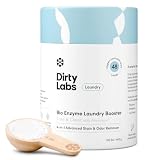
If your activewear, socks, or synthetic base layers still smell after washing, try an enzyme-based laundry product. Enzymes can help break down the proteins and oils that contribute to odor from clothes.
This is especially helpful for:
- workout clothes
- sports uniforms
- synthetic underlayers
- teen boy laundry that has developed a personality of its own
6. Line Dry in the Sun When You Can
Sunshine and fresh air are still useful laundry tools. Hanging laundry outside can help with smelling fresh, especially if the load only has a mild stale odor.
Sunlight and airflow may help:
- kill odor causing microbes with UV light
- freshen towels and sheets
- reduce lingering stale smells
- improve the smell of clothes stored too long
- finish drying thick items completely
That said, line drying alone usually won’t fix towels with heavy detergent or mildew buildup. It’s more of a finishing touch than a miracle cure. The downside of using sunlight is the bleaching effect. Over time, it will lighten clothes, making them look more worn.
Sunlight also breaks down elastic and spandex with repeated exposure, the same way it makes plastic brittle. The odor removal power of sunlight also works much better on natural fibers, and not so well on synthetics.
See also:
- Prairie Pin Pouch Handmade Clothespin Bag for an old fashioned clothespin bag option
- Kevin’s Quality Clothespins -The Best Clothespins You’ve Ever Used for heavy duty clothespins.
- How to Make Wool Dryer Balls to reduce drying time in the clothes dryer.
Strip Buildup Out of Towels That Still Smell
If your towels smell fine dry but stink the minute they get wet, you’re probably dealing with buildup. Detergent residue, body oils, hard water minerals, and fabric softener can all collect in the fibers and trap odor.
Simple towel reset method
- Wash towels in warm or hot water
- Add a cup of vinegar and skip detergent
- Run the load through a full wash cycle
- Wash again with a cup of baking soda or 1/2 cup if your machine is smaller
- Dry completely
This is one of the best ways to remove mildew smell and deal with towels that seem clean but still smell wrong.

This article is written by Laurie Neverman. Laurie is a lifelong learner with a passion for natural remedies and holistic healing. She’s successfully improved her eyesight, cleared her psoriasis, and gotten off of prescription medication.
Originally posted in 2017, last updated in 2026.
How do i get rid of the smell in my closet. I have my blankets extra bedding etc they have now all picked up that scent. Do i need to wash them all with recommended baking soda/vinegar and then use a closet oder remover? Is there a way to get the smell out without washing them?
Please see the section on getting rid of smells in a closet for tips on getting the smell out of a musty closet.
Regarding odors in bedding, it depends on how stinky they are. If they only smell a bit musty, you might be able to hang them or spread them out in the sun to deodorize them. If they are quite musty, or you don’t have much sun, I would wash them.
Look for 20 Mule Team Borax in your grocery store BEFORE buying from amazon. It is at least half the cost at a reasonable Grocer. Perhaps, phone them for availability and price to get the best deal. Where I am Kroger is items are ridiculously high but on the west coast the store they own named Fred Meyer, has good prices.
Please subscribe me, thank you
Barbara McLeod
Done. Watch your inbox for a confirmation email.
Soaking athletic synthetics in vinegar overnight can be helpful for that musty stink too. I discovered this online when trying to find a solution for keeping sports bras smelling nicer. Much cheaper than the special detergents marketed for sports clothing. I only need top do this one every month or two, not with every wash.
Thanks for sharing your experience, Denis. Soaking only when needed will help extend the life of the garment, too.
Super helpful info! I’m going to have to try the EnviroKlenz! I appreciated the suggestions for the musty closet too. I noticed improvement after we removed our closet doors a couple years ago which provided better air flow (and I added an air purifying unit in our bedroom this past year which has helped with air quality). I skimmed through the comments to see if there was anything already posted on this next question, but I don’t think I saw anything.
Any recommendations for preventing/combating the “musty” (not sure it’s really musty but I’m not sure how else to describe it) smell from clothing which is stored in furniture like dressers, armoires or nightstands? I hadn’t thought about particleboard shelving contributing to the musty smell or giving off VOCs- grrrr! Maybe that’s the issue with my furniture, too, although I’m pretty certain our bedroom furniture is solid wood as it’s pretty heavy & not easy to move, even when empty, so I don’t know…
The challenge with the furniture is how do we improve air flow without leaving drawers open all time (not only would it be an eye sore, but I wouldn’t be able to walk around my tight bedroom ;)). Any suggestions? The smell I’ve noticed that accumulates on our extra/stored pillow cases, t-shirts, pajamas, etc is awful & it drives me crazy that when I take something out of the drawer, I feel I need to wash it because of the smell (sometimes multiple times because I can’t always get rid of the smell even with baking soda, vinegar, enzyme odor removers & essential oils)… only to often end up back in the drawer by the time it’s satisfactorily washed & dried because I no longer need the item like I did when I originally went for it. And then eventually the cycle begins all over again.
I wonder if maybe I’m not using enough baking soda… I typically only use one scoop worth (it’s a tiny scoop that came with my natural powder detergent which I repurposed) which I doubt even equates to 1/4 cup. And I wonder how much my fabric softener compartment holds because I always fill that to the max with vinegar in each load but maybe it’s not enough either?
Hmmm… anyhow… any ideas for how to help/improve/combat the musty smell at the source in the furniture? We don’t live in a super humid place (northwest indiana) & we our house is typically temp controlled (maybe a couple of weeks out of the entire year it’s comfortable enough to have windows open…& if there’s rain in the forecast, the hubby shuts everything to keep that humidity out). I’m stumped on what the issue could be & frustrated with the never-ending battle against the musty smell.
It sounds like (if I’m understanding correctly) the odor is coming from the furniture itself.
When there’s nothing in a drawer and you stick your head in, does the drawer smell musty/have a funk?
If so, this is tough to address. There’s likely mildew or other age related odors soaked into the wood that spread to the fabrics. We have an heirloom mirrored dresser passed down through my husband’s family that looks beautiful, but I don’t use it for storage because the drawers smell musty. (It’s in the guest bedroom.)
Completely scrubbing down the furniture inside and out with oil based soap and letting it dry in the sun may be your best bet to combat the embedded musties. You can also try herbal sachets in the drawers, but these only cover odors, they don’t clear them. Replacing the problem furniture is another option, but I know I’m hesitant to dump furniture that is otherwise functional.
Hello, I am living in France and looked around for Enviroklenz but of course it’s unknown here. I clean holiday houses and have a lot of laundry to do. The sheets of our 10 beds are a good quality 400 – 600 thread and all white. I never mix colors and wash them at 60° (140 F) with a normal liquid laundry soap, from time to time on 90° (194 F). I always hang them out to dry. But after a while the sheets are getting a mucky yellowish and sometimes worse : a yellow stain in the middle of the sheet with grease. Not only the sweaty grease of people but often also the grease of after sun oil and so on. I can, after a while get that stain out with baking powder and vinegar but I can’t get the sheets white-white again. I can’t use bleach because we are on septic tank. I took some to a professional laundry once, but they came back as yellow as I gave them. What to do?
I have a tip though : when you missed a bloodstain and washed it, it is extremely hard to get rid of it afterwards. Just put that tip (with the bloodstain on top) of that sheet and put it in a pot with hot water with a dental cleaning tablet. After the tablet worked out, rinse the tip : done !
Thanks for the stain tip.
An idea for the oils from “How to Remove Body Oil Stains and Odors From Bed Sheets“:
Add laundry detergent to machine. To the empty washing machine, add however much detergent you normally use for a load of sheets. I usually go for about 2/3 of the cup that comes with the detergent, then throw in the cup so it gets all the soap off while washing.
Use hot water. Set your machine to the hottest setting on a normal or normal/heavy load. I use the hot/cold setting (wash in hot water, rinse in cold).
Add dishwashing soap. Add three good squirts directly into the flow of the water (to ensure that it mixes in real good). My “3 squirts” rule probably works out to about three tablespoons or just under a quarter cup of dish soap.
Add Borax. Sprinkle about 1/4 cup into the water. Once again, I eyeball this right out of the box.
Put in the sheets and make sure they’re all completely submerged in the water.
Add 1/4 to 1/3 cup of distilled white vinegar to your washing machine’s fabric softener dispenser. I always use a spare laundry detergent cup for this. If your machine doesn’t have a fabric softener dispenser, you can either add the vinegar during the rinse cycle or get a Downy ball (see the Amazon link below) and toss that in.
Let it soak for about 30 minutes once the washing machine has filled. This soak is important because it helps to break apart the oils in the sheets. I always leave the lid of my washing machine open for this step to prevent the wash cycle from starting up again.
Let the wash cycle continue as usual after your sheets have soaked. If you do not have a fabric softener dispenser or a Downy ball, be sure to add the vinegar during the rinse.
Dry your sheets as usual. Since you already used vinegar, which is a natural fabric softener, you can skip the dryer sheets. You may also skip the fabric softener because it can make the body oil thing worse.
Thank you Laurie. The washing machine is a front loader but I have 3 compartiments in the soap dispenser : 1 pré-wash, 1 main wash and 1 fabric softener. The only thing that that machine doesn’t do is soak. I will add the things you said and keep an eye on the machine. So when it has mixed the soap and the water very well, I will stop the machine for 30 min (or longer). Sometimes I take a very bad stained sheet home to wash it my own machine. My boss doesn’t want me to wash the sheets every time on 90°, he says it wear out the sheets to quickly. I am reluctant to use that program, not for the reason he says but because it takes 3,5 hours to complete the program while a 60° wash only takes 1h45. I have to wash, dry outside and iron sheets from monday till friday (+ towels and everything else). On saturday everything has to be ready again for the change-over. I am alone to do 5 houses : 10 beds.
I understand your dilemma, but unfortunately don’t have a quick fix. Higher temp, more aggressive washing will wear out the sheets faster, but those oils are tough to remove. You might also try something like pretreating worst areas with liquid dish detergent (like Dawn), but we careful because it may cause excessive sudsing. I wish I could help more.
Thanks Laurie. I tried your tip on the worst sheets yesterday and I when I took them out of the machine I already saw and felt the difference! I don’t have to do this every time but I will wash the worst sheets separately and at the end of my workday.
Oh good! I’m glad it helped.
I used to assist with a hotel laundry occasionally. One of their tricks for stains was to soak unused guest soap until it was a sort of gel and spread that on stubborn stains (lipstick, foundation, etc.)
Hello Laurie!
I too have the same musty problems with my old front load washing machine. Frustrating!
I am in search of a new washer. What new washer did you purchase? I’ve never seen a washer that can be cleaned out below the drum and am very excited to hear about your machine!
Thank you very much.
Amy
Hi Amy.
We ended up with an LG WM3270C, but they have several units with the clean out access panel. You’ll see a small panel on the front of the machine, at the bottom right or left, depending on the unit.
The difference is amazing. I knew the old unit was musty, but smelling the difference – wow. The new unit holds more than our old one, too, which is handy.
To clean it, I open the little access door (I have to pop ours off because we have a drop tray under our washer). Then there’s a small hose that I remove from where it is clipped. I take the plug out of the hose, and drain into a small container. The stinky water goes down the toilet. I put the plug back in, clip it back into place, and that part is done. There’s also a small lint/chunk trap that unscrews. I check that, too, and remove hair or odd bits that got caught and toss those in the garbage. I rinse it off and screw it back in. It all takes a matter of minutes.
One note – make sure the crud catcher is snugly screwed back in. One time I left it a tiny bit loose – and flooded the laundry room.
Hi, Thanks for this. Please tell me what washing machine you purchased. My new top loading Samsung is a nightmare for odour. I am constantly battling musty laundry smells. I never had this problem for 20 years with my older Maytag. I am sure there is stinky water under the spinner and I cannot access it. I have never been so unhappy with a washer and I have tried everything. Thanks Trish
Our new washer is an LG WM3270 C. It has a cleanout with drain below the drum so you can empty out the stinky water from time to time. We picked it up at Home Depot.
My house is cluttered. Now smell order in my room that was a garage. I never used my washing dryer after I retired. That was 5 years ago.
I’m not sure I’m following your question entirely. Is it the entire room that you want to deodorize? Is it a washer and dryer (or washer with built in dryer)? Is it clothes that piled up in the garage room?
The first step I would suggest is cleaning. Go through the room entirely, get rid of anything you no longer use and organize what’s left. Purge as much as you can. Less stuff = less clutter and so much easier cleaning in the future. It’s like lifting a weight off your shoulders.
Is the washer in the garage room, or does a dryer vent into the garage room? I know people vent dryers into garage type areas for extra heat, but it can add a lot of moisture, which leads to mold and mildew growth – and odors. If you have a musty washing machine, trying running a load of old towels with really hot water, a long cycle (sanitize is a good option if your machine has it) and the Enviroklenz laundry odor remover and cleaner of your choice.
If there is a dryer involved, make sure the dryer vent is clear and clean, not blocked by lint or rodents that may have moved in while it was not in use. Route dryer vents outside.
This post covers odor eliminators for items other than laundry – https://commonsensehome.com/best-odor-eliminators/
This post covers getting rid of musty house smells – https://commonsensehome.com/musty-smells-house/
I have a question about a different kind of odor. I call it “Old People’s Smell.” It isn’t the oniony sweaty smell of athletic clothing. I suppose it’s “musty” but it isn’t mildewy either. It smells like old people who don’t wash or clean their clothes often enough. Or maybe themselves! Not all old people have this, of course. I’m not sure I do but can’t really tell. At 81, I no longer have a lot of energy to wash loads of shirts and put them on hangers to dry. His shirts smell this “old person” way, and they don’t get washed often, or worn often, for that matter. He wears a short-sleeved t-shirt under them. He also has no oniony sweaty smell, for reasons I don’t understand. We live in New Mexico with very low humidity, and have quite a lot of ventilation in the house. Outdoor clotheslines are pretty much out of the question because we have a lot of wind, some of it very strong and dusty, coming up suddenly. Should I just try baking soda or vinegar at first and see how it goes? Sorry this is so long…
I’m familiar with the odor you’re talking about, at least I believe I am, as I can’t do an onsite sniff confirmation. I think it’s fairly common, as it gets to be more of an effort to keep everything washed as one ages.
You could start with the easy options like the baking soda and/or vinegar, and see if it does the trick. If it doesn’t, then you can give the fancier options like the enzyme cleaners or Environklenz products a try.
Also, it may be helpful to pare down the wardrobe, and declutter in general. Less to keep organized and clean can make the labor load a little lighter.
Another option might be to have someone who stops in weekly or twice a month for some deep cleaning or extra round of laundry washing. Sometimes having someone to tackle the “big stuff” makes the day to day maintenance much more manageable.
Ahem. Almost a year after the above reply to my original question, I am revisiting it and realized again that I was somewhat offended by the suggestion that I “pare down the wardrobe and declutter in general.” Excuse me! I am supposed to get rid of my husband’s shirts? Recipe for disaster at home! And did I say anything about clutter? Next you will tell me to take all these items, hold them in my hands, and see if they “spark joy.” You didn’t tell me that, but the decluttering fad is getting on my nerves. Also who has extra money in retirement to have “someone [I love that “someone”] who stops in weekly or twice a mouth for deep cleaning”? And what is “deep cleaning”? I still don’t know what this is beyond vacuuming and dusting, and mopping hard flooring like kitchen tiles. Is it, umm, removing carpets? Emptying cabinets and seeing if the contents “spark joy”? Sorry to be snarky–well, actually, I guess I’m not sorry–but I find these suggestions in particular really offensive. I have the feeling you are responding to my age rather than to the question I asked, and assuming that age-related disabilities are my “problem.”
21,402
That’s the number of comments currently on the website. Roughly half of those are my responses to people’s questions. Given the thousands of questions that I personally answer, I’m not likely to find a perfect answer every time.
I work from the information given to me and based on personal experience. Based on personal experience, over the years, thing tend to accumulate. Some of them are useful, some of them not so much. Sometimes it’s clothes that don’t fit quite right, or maybe kitchen tools I don’t use as much because I cook differently now than I did in the past, or maybe it’s things I was gifted that I don’t use. Whatever the reason, things accumulate. I find it personally useful to go through every so often and get rid of items I rarely use. If that’s not an issue for you, then you’re good to go and can skip that.
As for the “someone” comment: My in-laws live in an apartment and are getting on in years. Sometimes the hire help for cleaning, sometimes the kids and grandkids tackle stuff. Sometimes churches and community organizations also offer assistance. You said you “no longer have a lot of energy to wash loads of shirts and put them on hangers to dry”. If you don’t have the energy, suggesting assistance seemed logical, as that’s the solution that my in-laws have selected. My suggestion was in no way meant to be offensive.
RE: deep cleaning. Again, in the case of my in-laws, a couple of times per year they get their carpets professionally cleaned, including the ones in their closets. My sons come in and move all the furniture and contents of closets around before and after cleaning. She (my MIL) also likes everything dusted in just a certain way and scrubbed in a certain way. My sons and I also help with things like air filter changes and moving furniture to vacuum behind or underneath it.
In our case, when I deep clean rooms or closets, everything comes out, gets checked over, the closet gets scrubbed down, and items go back in. If items are seldom used, they may be donated instead of going back in, If items are worn, they may get composted or trashed.
For every day cleaning, I sweep or vacuum, wipe off counters, put items away. When I refer to “deep cleaning”, I’m talking about more time consuming cleaning or cleaning in areas that might not get daily cleaning. No offense was intended.
I’m more of a “get rid of sh*t I don’t use much” type than “spark joy” type, but if you feel you don’t need to declutter, don’t. Only you know what your family needs.
My husband & I are 66. Useless, our bedroom smells like “memories” of my grandfather- bearded, balding, musty—a kind man in his late 80’s.
I too, am trying baking soda on the carpet, spritzing the air after pulling back the bed covers in the morning with vinegar, peppermint solution, open windows, ceiling fan on, regular cleaning— it’s a mystery and I’m perplexed about whether to start pulling down wallpaper.
If there’s a solution, I’m open.
It sounds like you are doing things that make sense. Beyond that, if you want to take it to the next level, I’d pull everything out and scrub all surfaces before anything went back in. If you can smell it in the walls, they’ll need to be scrubbed with a heavy duty odor remove like the Enviroklenz products or something similar, or stripped and redone. If there’s soft furniture, that may need professional cleaning.
Theres no need to defend yourself. Your site is informative and trying to be helpful. The lady truly was snarky and overly sensitive in her reply. How about wash your husband’s shirt everytime he wears it regardless if he wears a shirt underneath or not. That is gross and also why it smells.
People can be sensitive about things. I just try to help as best as I am able.
FWIW, we don’t wash every item of clothing every time we wear it, but do normally keep worn items separate from clean, unworn clothes. Not everyone has the space to do that.
Seriously….a YEAR LATER. REALLY?!?! She made clear, concise,and practical recommendations. You could just choose not to take those recommendations. She is not responsible for your emotional sensitivities. If you don’t want practical suggestions, do not ask. But certainly do not expect somebody else to know all the intricacies of your life including their financial status, and the amount of clutter in your closet. She gave you a generic answer, due to the lack of details you gave, as to encompasses many possibilities as possible. Remember she was trying to help you, your hyper offensiveness at a completely benign statement, says more about you than it does her.
Thank you, Megan.
We don’t know what Virginia is going through right now. Not that I like people coming back and being grumpy, but I try to simply help as I am able and let go of everything else.
Virginia, I laughed when I read your rebuttal to Laurie’s comments: getting rid of your husbands cabinets… seeing if the contents “spark Joy”. I also thought Laurie’s reply was comprehensive and thoughtful. Mainly because this is an open Q&A discussion, I didn’t think she was singling you out but answering for any reader by giving a comprehensive reply, with many suggestions, some that fit and some that don’t. I personally didn’t think she was judging you by any personal metric.
I want to acknowledge that Agism does exist and I appreciated your rebuttal in voicing your irritation. It helps remind us all.
Love the post and totally agree. I have recently become a pensioner and it’s very annoying that people seem to think that overnight I also became an idiot.
I have great respect for my elders, and did my best to answer the question as it was presented with the limited information given.
Also, if you have advice to share on the topic, it’s welcome. It has been my experience that most old people didn’t get to be old people by being idiots. Life experience is golden.
Her clothes have makeup, sweat, sunscreen, bug spray and who knows what else. I think liquid softeners may even compound this. The dawn dissolves those oils better than laundry detergent. Also, a paste of Dawn, peroxide and baking soda (and a little elbow grease) gets out just about any other stains on the white or grey items as well. Blood, grass, the lovely ground in red dirt and my favorite…all of those combined into one!
Sounds like you’ve had to clean just about anything an active teen daughter can get into on the field. Thanks for sharing your experience.
boots, shoes… and oh yes socks all have a bad odor I can get the smell out of footwear… is it athletes foot making the smell?
Without knowing more about your situation, I can’t say if it’s athlete’s foot or stinking feet for another reason. Athlete’s foot and other fungal issues typically show up in discolored toenails and itching and irritated skin.
If the smell is really bad, you might want to see a foot doctor.
You can try the different laundry options on the socks, change socks frequently, and make sure you wear socks that breathe.
Some shoes are washable, some are not. To help with odor, keep the shoes in a spot with good ventilation if possible. Some time outside in sun and wind will kill surface microbes.
My daughter plays softball and her uniforms and workout clothes are all made of synthetic materials and trap odors something terrible. I have found that dishwashing liquid (dawn platinum) either as a presoak in the sink or added along with detergent makes a huge difference. Try putting freshly washed shorts in a sink soak with dawn and you may find they are not nearly as clean as you thought. Kinda disheartening but eye opening. While this is not a cure for the traditional musties, it sure helps with synthetics.
I sometimes use Dawn on oily stains. I wonder if it’s cleaning out body oils, too?
I have found the same for bed sheets. The Dawn cleans the body oils out that makes them smell funny if stored for a while. Just don’t mix bleach with the dish detergent.
if I were to use dawn when I wash my bedsheets, how much would I use?
Front loader or top loader?
Top loader can take a little more – say a tablespoon, maybe two. Front loader better stay closer to a teaspoon until you test your machine so you don’t end up with excess suds.
When you use Dawn Dish Soap in your washer, are you also adding Laundry Detergent or just Dawn?
I’m not sure what Nancy does, but sometimes I spot treat with Dawn but still use detergent.
Regarding Enviroklenz, it is easy to buy the ingredients of the laundry enhancer and put it together oneself for a lot less money than what one pays purchasing the product ready-made:
For the powdered form: Soda Ash (AKA washing soda which one can easily make oneself from baking soda), Magnesium Oxide (MgO), Zinc Oxide (ZnO), Titanium Dioxide (TiO2).
For the liquid version the first ingredient is water and soda ash gets left out of the product according to the ingredients of their website.
All these can be purchased online.
If someone has the time and patience to gather the ingredients and come up with a formulation that works for them, that’s certainly an option.
I recently purchased a nice polyester polo shirt on eBay. It was in great condition but has an awful mildew smell. I have tried all the vinegar and baking soda remedies with no luck. I can try the borax or would you just recommend that I have it dry cleaned and save all the trouble, if that is also a viable solution?
Polyester is terrible for holding odors. My son’s stinky shorts are polyester, and the Enviroklenz product was the only home laundry odor remover that did the job.
I rarely dry clean unless there’s no other option, since I don’t like the residual odor that dry cleaning often leaves, but dry cleaning should remove musty odors from most items. I’d ask at your dry cleaners to see if they think they can clean it, since they work with different fabrics and their specific dry cleaning chemicals on a daily basis.
Put the item into a garbage bag with lots of crumpled newspaper for a few days, changing out the paper if necessary. This completely removed the odor from a leather purse I was given which smelled like mothballs.
Thanks, Evelyn.
I really wonder if the pressed wood shelves cause my clothes to be musty? The chemicals in the shelving?
The typical materials used in composite shelving do give off VOCs (volatile organic chemicals). Also, if shelves have gotten damp at some point, it’s possible that mold could be growing inside the melamine/particleboard, giving a musty odor to anything in contact with the shelf.
This is off topic on this post. I want to make your tomato soup to can. It calls for ultra gel do you think this is the same as instant clear gel?
Out of curiosity, why not ask this question on the tomato soup post? Yes, Clear Gel is a similar product, just not tested to be GMO free. It can be substituted one for one in the recipe.
I tried a steamer, (small hand held for wrinkles) it removed the Oder …. Out of clean storage clothes. I had no time to wash ….I ate a salad instead.
Alrighty then. Enjoy your salad.
?
Too funny!
I’m definitely going to try the baking soda. I have a big problem with towels getting musty after multiple uses, which makes me wonder if, in addition to poor bathroom ventilation, over-use is a cause… How often do you change your (hand and bath) towels? I’m changing hand towels daily now, but have tried to get more uses out of a bath towel before washing it…
I generally wash bath towels weekly, hand towels and wash clothes 2-3 times per week. I often go a day or two without showering, but the guys shower daily.
Thanks for sharing, Laurie. You get more “life” out of your towels than I do, so I really need to try the baking soda trick!!
The vinegar rinse is my regular “go to” courtesy of Great Uncle Bill and the laundry. Maybe your humidity levels are higher? Is there any way to improve ventilation in the bathrooms? We have timed ventilation in ours.
Thanks, Laurie. Our shower (and toilet) are in a small, windowless room, and I’m sure that doesn’t help. I’d love to try the vinegar trick, but my front-loader’s fabric softener dispenser doesn’t empty properly. My husband tried to unclog it, but it needs a harder look. Is there any reason not to put some vinegar right in the drum with the laundry, do you think?
It’s best to add the vinegar during the rinse cycle to remove detergent residue at the end, instead of reacting with the detergent during cleaning. You could try a load just with hot water and a cup of vinegar directly in the drum – no detergent – to remove residue.
Try putting a small fan in your bathroom and leave it running.
Laundry Solution – musty odor/body odor —approx. (I don’t measure) 3 cups coke to a full large load, generic is okay. Pre soak 15 min. Also removes stains like oil. I also use vinegar in 2nd. rinse with all my laundry. Don’t know why or how it works.
Maybe the phosphoric acid?
Wow! My husband, who works on our vehicles, and has meal maps on most of his t-shirts, wants to try this! Thanks!
GREAT post! Don’t know why, but since becoming chemically sensitive persistent BO ( I know why mustiness does it: Mold produces arsenic fumes) can really wind up the reactivity. For some reason dry baking soda and boric acid powder burn my skin and cause a painful rash. I have used baking soda fairly effectively for odors, but have to be carefully to rinse extremely thoroughly, and when you hand pump all your water, triple rinsing takes way too much day! I It never occurred to me to add white vinegar to my wash, though I use it for cleaning. Lately when something sours I have been dropping it into boiling water and simmering it for a few minutes but it still needs a thorough rinse and a rapid dry. BTW, The boil/simmer technique will work on bird mites. Running a fan, even a small one, to prevent mold works because disturbing the air interrupts the sporification cycle. Nature is such a perfect thing–it gives us an invincible destructive mechanism like mod, and gives us a simple little out. Heads up on the BioKlenz: It’s main ingredients sound good, but it has a little titanium dioxide (TiO2), the same white stuff that gives extended exposure to sunburn cream and printing with coated stock a risk factor for ingesting or inhaling titanium, a heavy metal. TiO2 in a liquid may just be a cosmetic ingredient to give it a more substantial look. How much risk this product poses would be hard for me to judge, but they might want to check this out.
Thanks for your insight!
We’ve had good luck with washing towels and wash and dish cloths in hot water with dry homemade laundry detergent (baking soda, borax, Fels-Naptha), then using white vinegar in the rinse water. 🙂
Thanks, Cindy.