
Home Freeze Drying – Read this Before You Buy a Freeze Dryer

This post may contain affiliate links. Read my full disclosure here.

Thinking about getting a freeze dryer? We’ll explain how home freeze drying works, and answer questions about freeze dried food storage for emergencies and more.
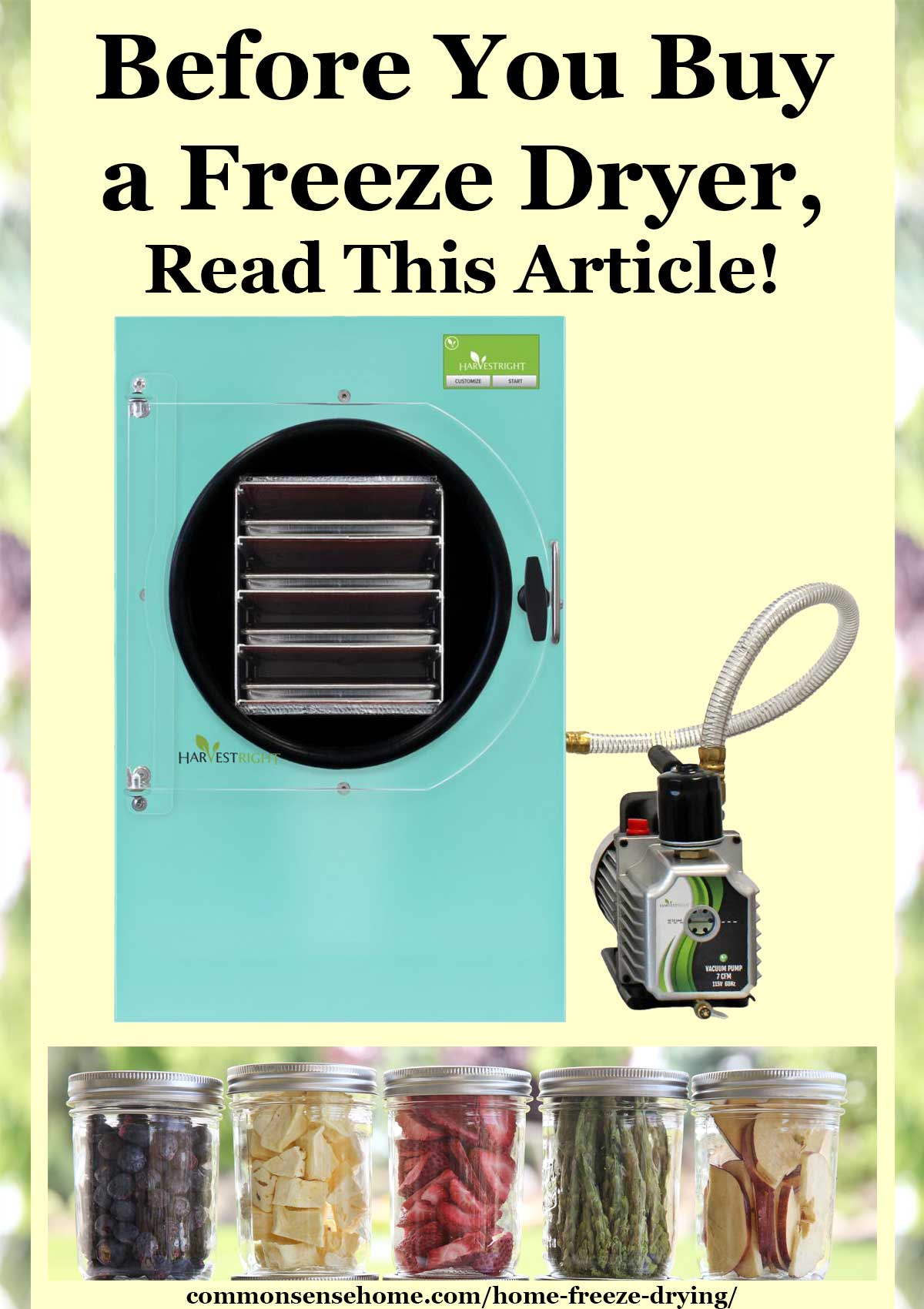
Why get a freeze dryer?
I’ve been curious about home freeze drying ever since I did an interview with Dr. Prepper back in 2015. The doc raved about his home freeze dryer. He loved the quality of the food, how much money it saved him, and what a great addition it was to his preps.
In early 2016 Harvest Right home freeze dryers contacted me to do a review of their product. I could purchase it at a discount, as long as I did a review. My other option was to get it for free, if I committed to a series of endorsements.
Being the stubborn individual that I am, I didn’t want to commit to selling you something that was such a big investment without thoroughly testing it. I purchased a freeze dryer and have been using it since May 2016.
My conclusion – if you want long term food storage or portable food storage, check out freeze drying. Commercial freeze dried foods are pricey and often have questionable ingredients. Home freeze drying puts you in control.
How Does Freeze Drying Work?
Here’s the official definition of freeze drying (Lyophilization) from the FDA:
Lyophilization or freeze drying is a process in which water is removed from a product after it is frozen and placed under a vacuum, allowing the ice to change directly from solid to vapor without passing through a liquid phase.
The process consists of three separate, unique, and interdependent processes; freezing, primary drying (sublimation), and secondary drying (desorption).
So, how do we do that at home?
- First, you get a heavy duty freezer (the Harvest Right units drop to -30°F (-34°C) or colder).
- Second, you pair this up with a completely airtight chamber that can hold a vacuum (no oxygen) every single time you use it.
- Third, you tie in a high end vacuum pump strong enough to suck the stripes off a zebra.
- Fourth, you add a heater and thermostat, so you can cycle the temps up and down, repeating the sublimation process for hours on end.
- Fifth, tie in a humidity sensor to make sure the water is out, triggering the cycle completion.
There’s a reason the big commercial freeze drying units are priced from $5000 to over $100,000 – the freeze drying process is significantly more complicated than other home food preservation options.
If you’re wondering how freeze drying compares to dehydrating, you can read more about that in the post “What’s the Difference Between Dehydrating and Freeze Drying?“
Harvest Right Home Freeze Dryer Basic Information
Here’s some information everyone should know before buying a Harvest Right freeze drying machine. Since the time this review was originally posted, Harvest Right made a number of upgrades. They now have HR pumps in two different styles, slight design changes in the main units, and new software that speeds up freeze drying times.
Freeze Dryer Dimensions
Harvest Right has three sizes of home freeze dryers – large, medium and small.
Each unit includes a detachable vacuum pump weighing 35 lbs that sits outside the freeze dryer. They also have a drain hose that routes below the unit. Oil free pumps are available at an additional cost. (More on this below.)
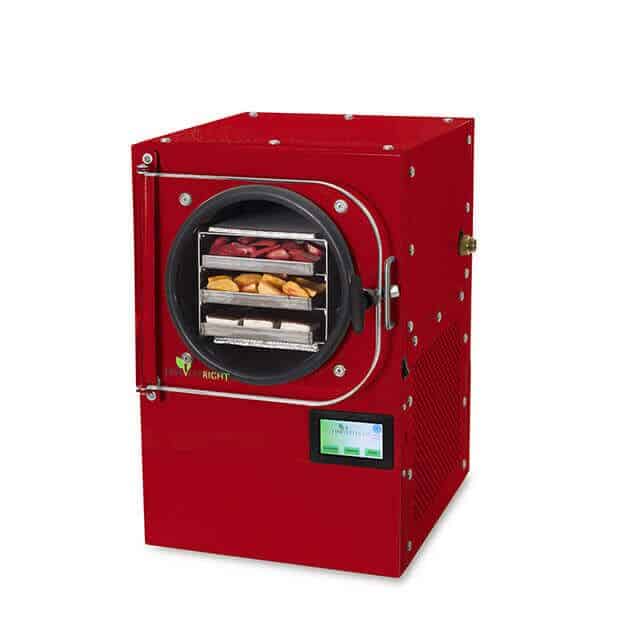
Small Freeze Dryer
- Overall product dimensions: 16.5″ W x 18.5″ D x 25″ H
- 3 trays (7.75″ W x 14″ L x 0.75″ H)
- 61 lbs.
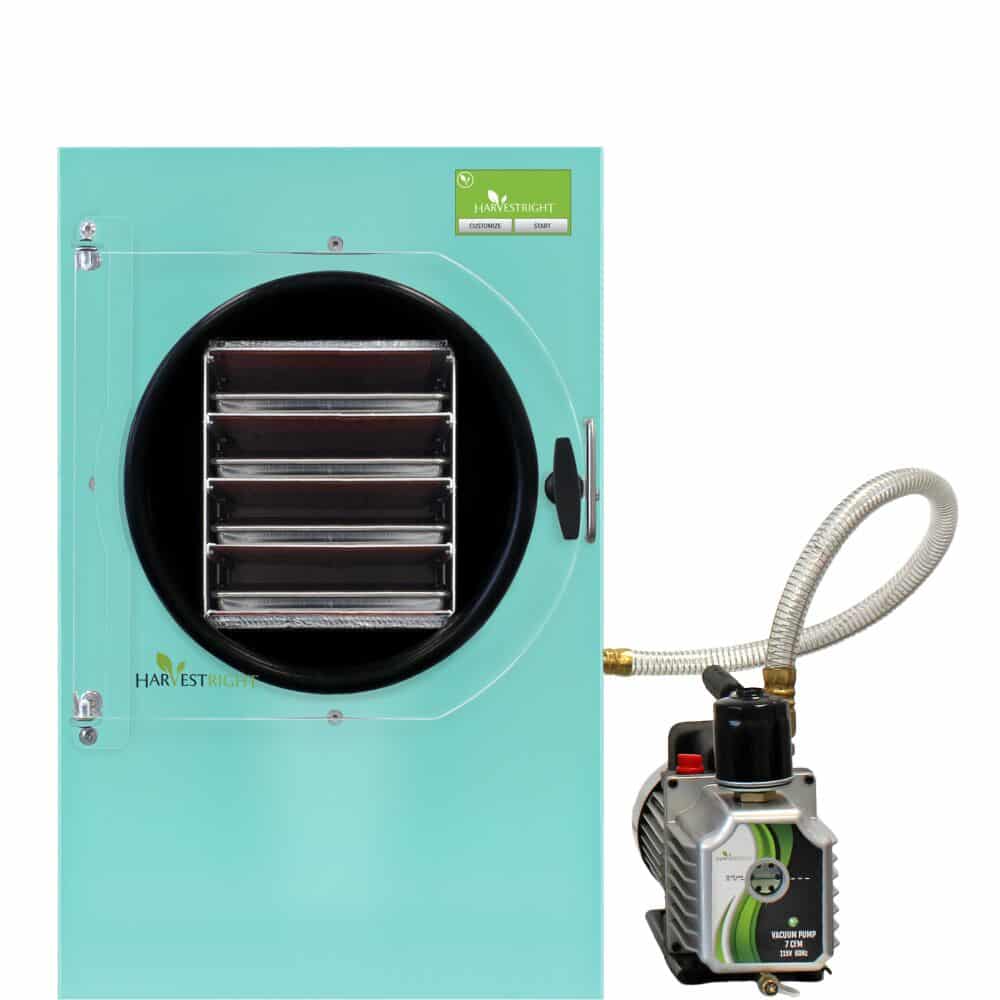
Medium Freeze Dryer
- Overall product dimensions: 18″ W x 21.25″ D x 28.5″ H
- 4 trays (7.5″ W x 18″ L x 0.75″ H)
- 112 lbs.
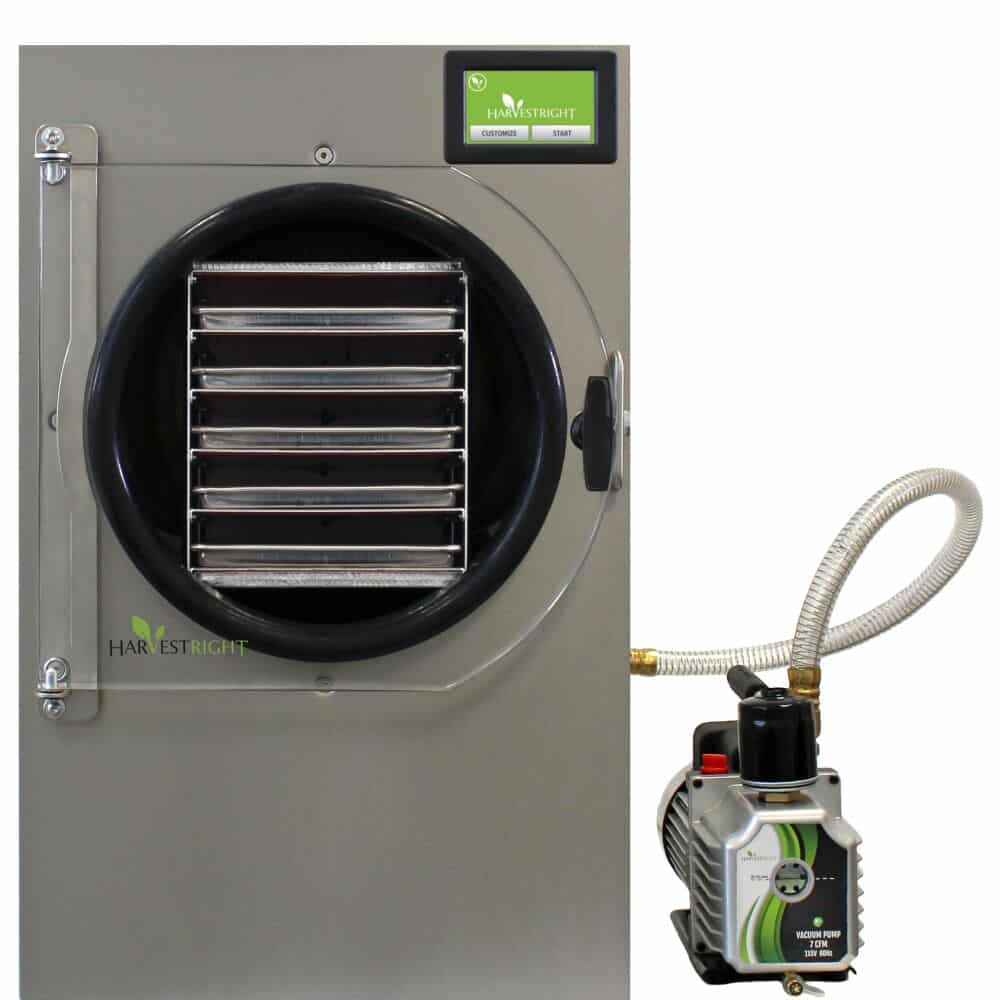
Large Freeze Dryer
- Overall product dimensions: 20.25 ” W x 23.75″ D x 30.75″ H
- Perfect for counter top, cart, or table.
- 5 trays (9″ W x 20.5″ x 0.75″ H)
- 138 lbs.
Moving these units is a two person job, unless you put it on a rolling cart, which many owners do.
I have a mid-sized unit of the old design, updated with new software.
How much food can you freeze dry?
Small Freeze Dryer
- Freeze dry 840 pounds of fresh food per year (4-7 pounds per batch).
- In a year’s time, you can freeze dry 195 gallons of food.
Medium Freeze Dryer
- Freeze dry 1,450 pounds of fresh food per year (7-10 pounds per batch, roughly equal to 1.5 to 2 #10 cans).
- In a year’s time, you can freeze dry 312 gallons of food.
Large Freeze dryer
- 2,500 pounds of fresh food per year (12-16 pounds per batch).
- In a year’s time, you can freeze dry 546 gallons of food.
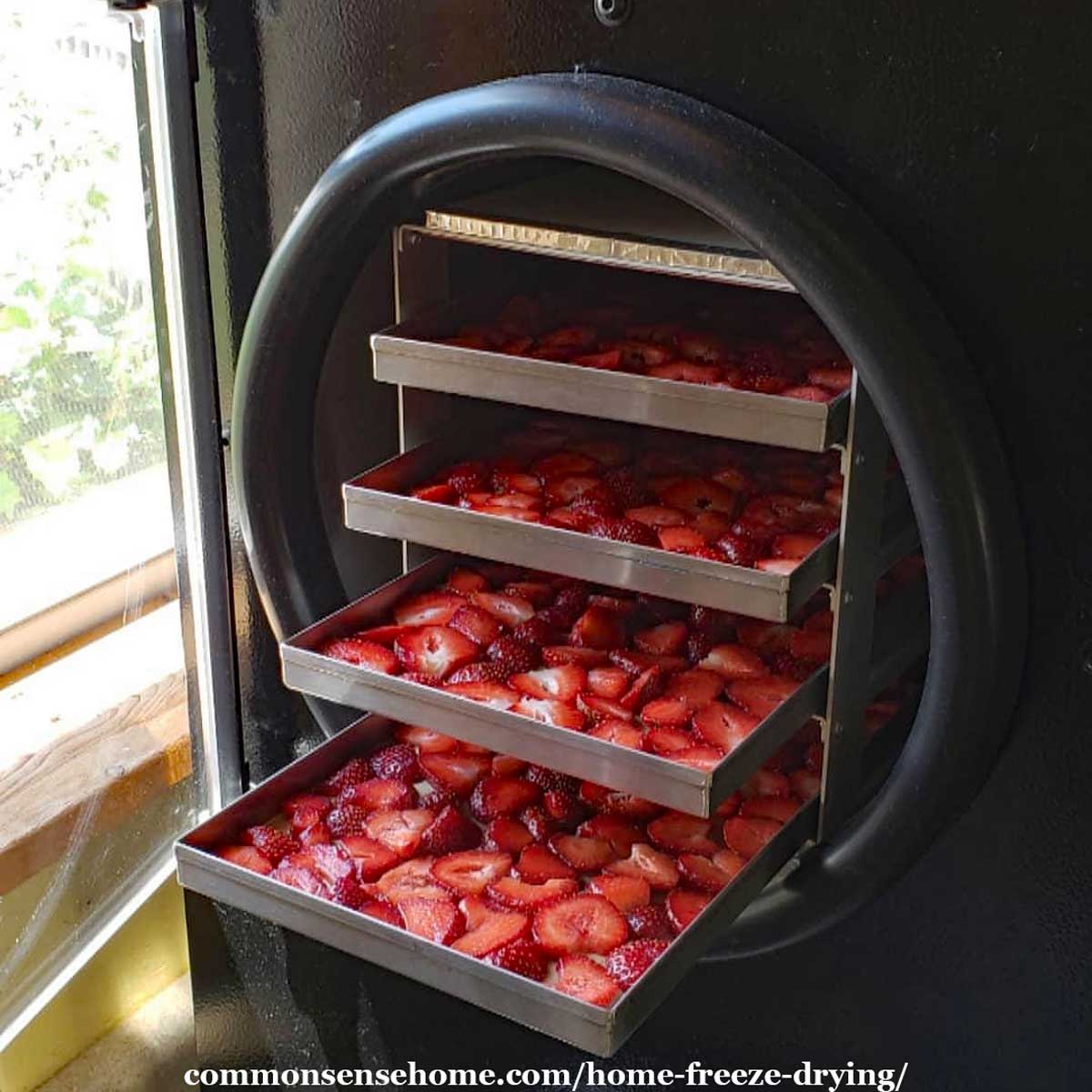
Why can’t I stuff more food in, and stack those trays fuller? During the freeze drying process, ice builds up on the walls of the freeze drying chamber. Add too much food, and the ice buildup will get too thick for the unit to work properly.
Freeze Dried Food Q&A
What foods can you freeze dry?
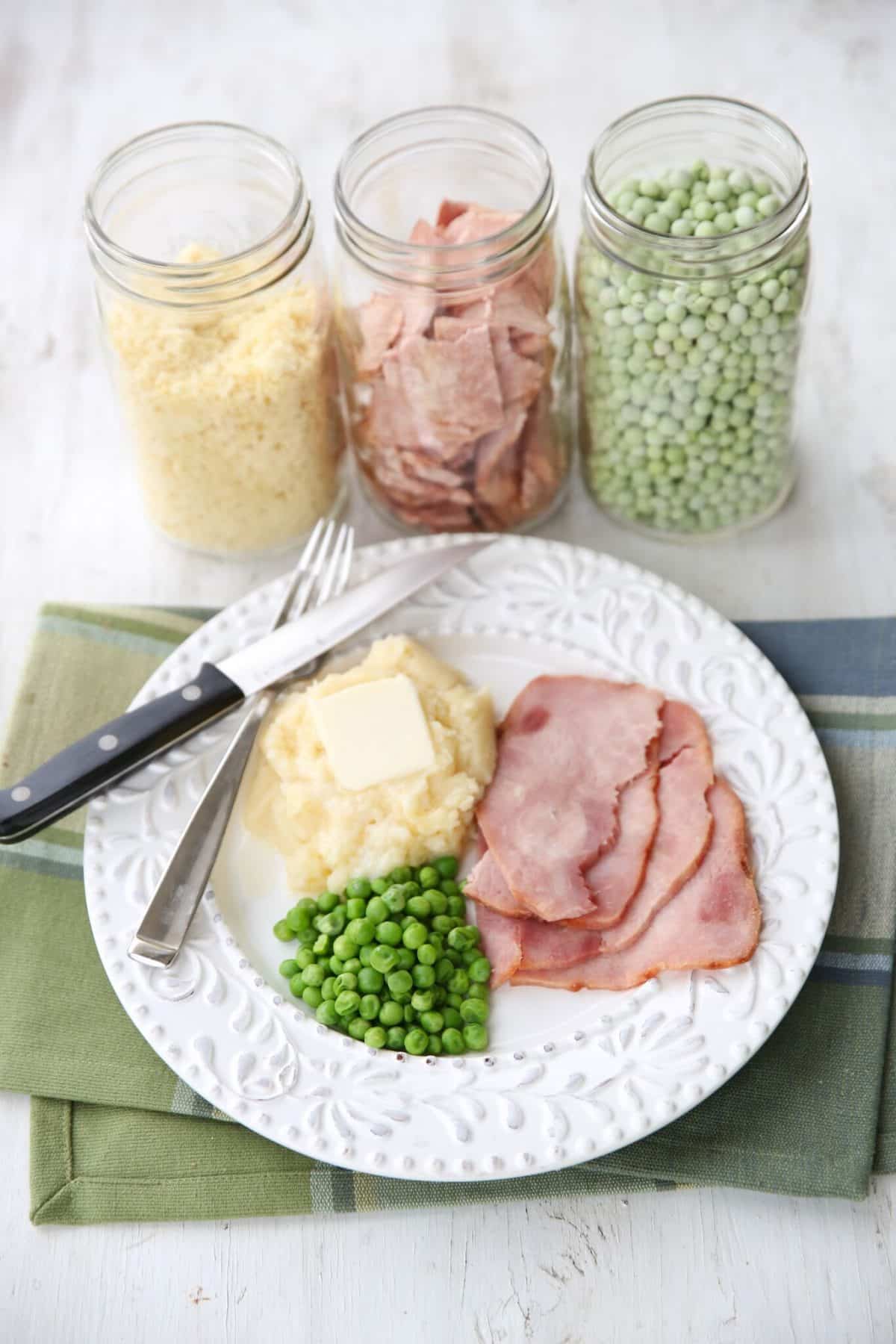
Fruits, vegetables, meats, dairy products, meals, desserts, and more. Freeze drying is safe for preserving cooked pasta and grains, unlike canning.
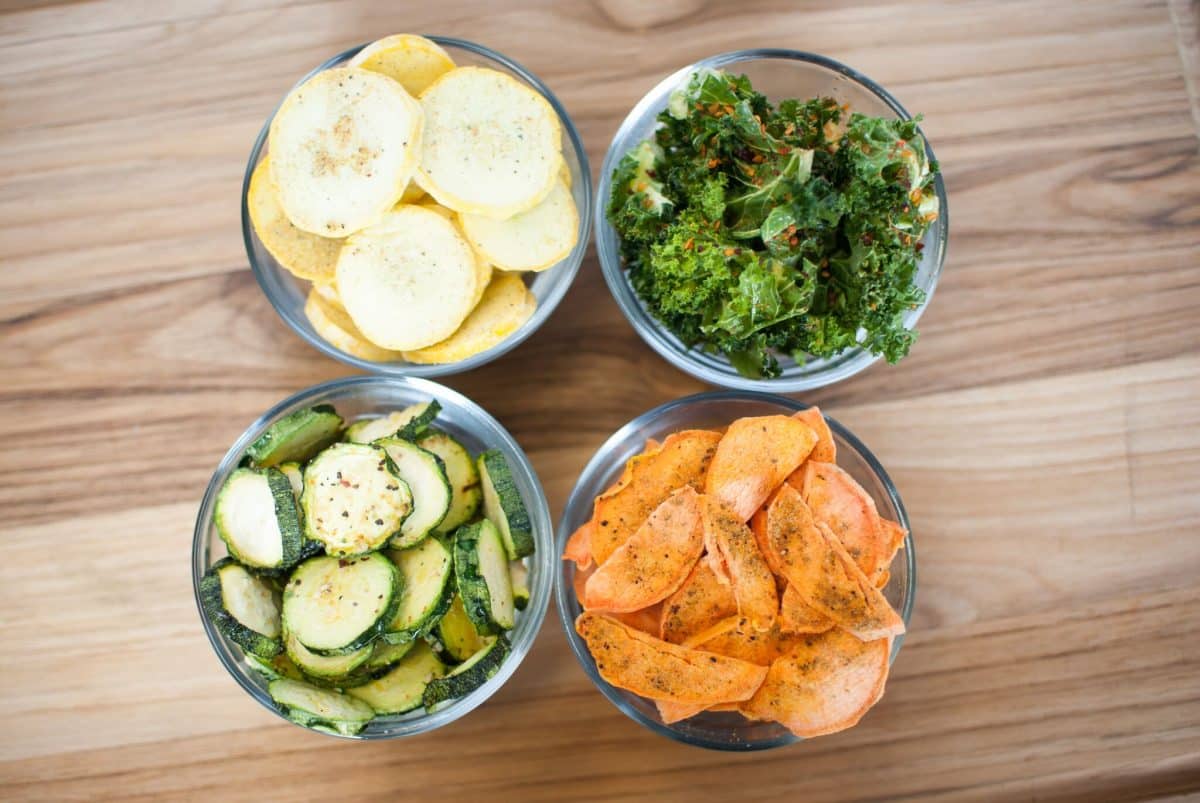
Those of you who follow me on Instagram know that I’ve freeze dried plenty of fruits and veggies, but I also tried some more interesting items like scrambled eggs and fajita filling.
What foods can’t you freeze dry?
Anything that’s mostly fat or mostly sugar will not freeze dry well. Fat won’t dry – but it can heat up and melt in the unit and coat every surface. When I tried pre-cooked pork sausage patties, they made a big mess.
Sugar binds to water, trapping it in the food. This is great for inhibiting bacteria growth, but it means you can’t freeze dry jams and jellies that are mostly sugar. Plain fruit and most desserts are fine.

How long does freeze drying take?
Around 24 hours was the estimated freeze drying time for an average load, but with the new software, I’ve freeze dried loads in as little as 13 hours. Warm, humid conditions increase drying time.
When you load up your home freeze dryer and hit “Start”, the unit takes you through a short menu. You select whether the food going in is already frozen (or not), and whether it is solid or liquid. Then the freeze dryer prompts you to close the drain valve and begin the cycle.
The new software is smart. The main differences between the old and new software are as follows:
- It measures the freezing temperatures (it used to only measure the warming temps)
- The vacuum pump is used as part of the freeze (when the temp of the food hits 0 degrees F, the pump turns on). This is important because the food gets colder faster.
- Once the food is frozen cold enough, it clicks immediately into drying (it doesn’t wait for the full freeze time to finish)
- The drying phase ramps up to the specified shelf temperature (this helps you get a better finished product)
- The final dry is the same
The biggest benefits occur if you put pre-frozen food it. However, there is still a decrease in the processing times for foods that aren’t pre-frozen. Anyone who gets a new freeze dryer also gets the new software.
The new software will be sold as an upgrade to older users, due to the customer service involved with it. Harvest Right has almost 50,000 freeze dryer customers. I received a copy of the new software to test and review.
Can you mix foods in the freeze dryer?
Yes, but watch placement. The website claims that flavors don’t mix, but we have found that they do. We ended up with freeze dried kiwis with a hint of green beans. Advice from the freeze drying groups suggests placing stronger flavored items on the upper shelves, milder items on the lower shelves.
As always, proper food safety rules should be observed. Avoid cross contamination, dry thoroughly, and package promptly.
How do I know the food is done freeze drying?
The freeze dryer senses the moisture content of the food and finishes the cycle automatically, but sometimes it’s a little off and you need to add extra time.
When you first remove food from the dryer, it will be a little cool from the ice buildup inside the chamber, but not “cold”. I always break open some larger pieces and check inside for cold spots. If you find cold spots, put the trays back in and add time to the drying cycle. Your freeze dryer will prompt you to check for dryness.
One of our readers, Rose, shares what she does to check dryness:
One thing I did choose to add to my arsenal for safety was a FLIR thermal imaging camera. With one easy picture, I can quickly identify areas on the tray that might not be completely dry, and pose an issue for long term storage. The image will show as being “cold” in the area that is not completely dry.
In the MANY loads I have done, I have only had one that didn’t pass (the pre-mashed potatoes) the very center of the tray was still cold. I was able to quickly extend the dry period for a couple more hours and produce a perfectly done product with no fear!
FLIR ONE IOS Thermal Imaging Camera for iPhone – works with the phone
FLIR C2 Compact Thermal Imaging System – standalone camera
How do I use freeze dried foods in recipes?
The book “Freeze-Drying the Harvest” provides detailed guidance for using your freeze dryer and rehydrating your freeze dried foods.
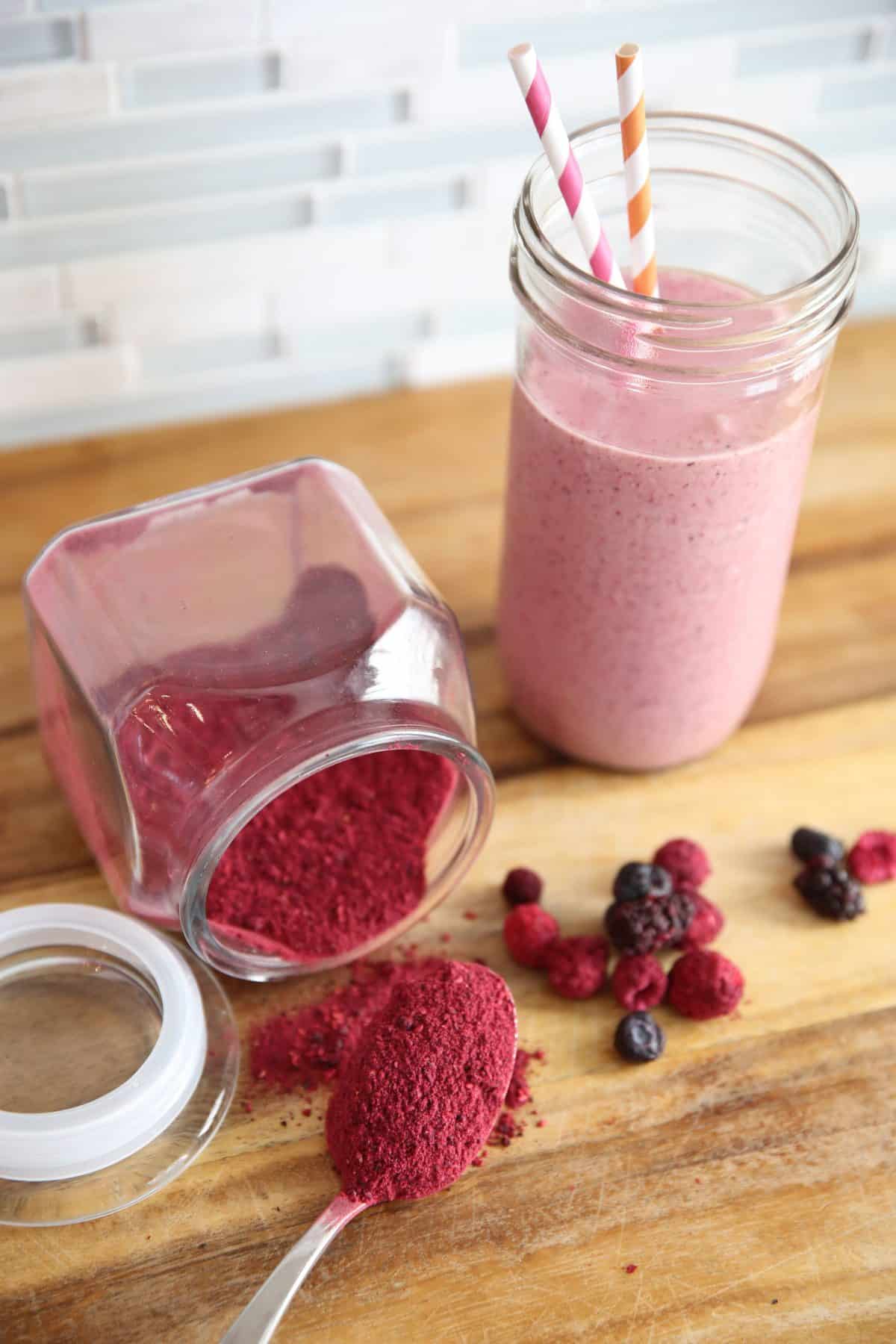
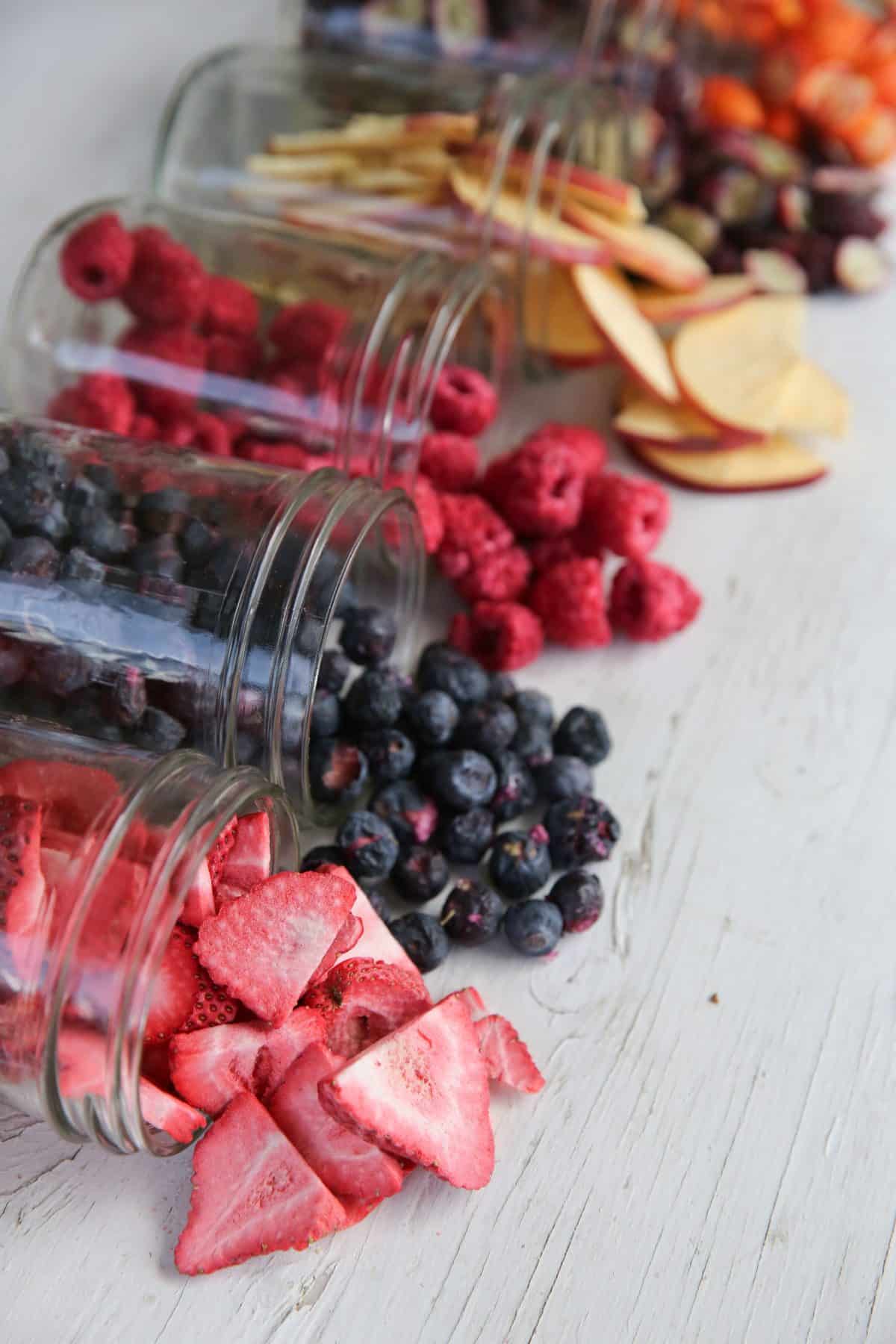
Freeze dried fruits and vegetables (those with less sugar) get so dry they are easily crushed into a powder in a blender or food processor. The resulting powder is bright in color and intensely flavored. You can use this powder in smoothies, or for flavoring. For instance, add strawberry powder to make strawberry flavored whipped cream.
How do I store the freeze dried food?
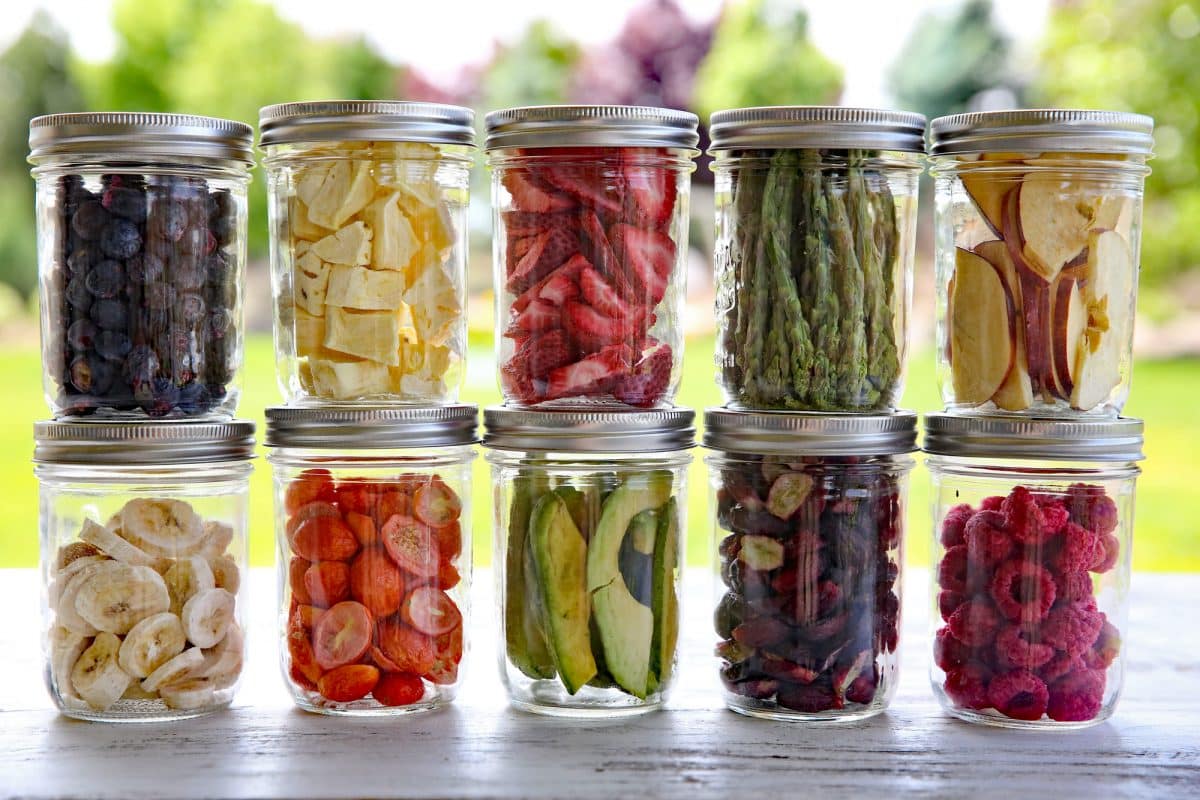
THIS IS VERY IMPORTANT! Once the freeze dry cycle is complete, you must package the food in containers that moisture and oxygen proof, such as Mylar, mason jars or cans. Adding an oxygen absorber helps to ensure freshness.
Meat with any amount of fat will go rancid in a matter of weeks if not properly sealed in an airtight container with oxygen absorber. Putting it in a mason jar and screwing on the lid won’t cut it. (We made that mistake only once.)
We use Mylar bags for most of our long term storage because they are light and durable. You can reuse Mylar, but of course the bag will be slightly smaller. Mylar is great for camping and travel.
Mason jars are a good choice if you:
- Aren’t concerned about the weight
- Have room for glass jars
- Don’t deal with tectonic disturbances or any type of disasters that might tip over your storage
You can use a Foodsaver attachment to vacuum seal jars, or remove the shelving from your Harvest Right freeze dryer and use the vacuum cycle. For long term storage, food is vacuum packed with oxygen absorbers in the jars. For short term storage, I vacuum seal without oxygen absorbers.
Can I use FoodSaver plastic bags for storing freeze dried foods?
No, not for long term.
Would you like to save this?
My friend Gale discusses the difference between Mylar and foodsaver bags in her post “Using Mylar Bags for Food Storage“:
First and foremost, the term “Mylar” is actually one of many trade names for a polyester film called BoPet film. For the technically inclined and the curious, that stands for “Biaxially-oriented polyethylene terephthalate”. This film was developed by DuPont in the 1950’s and was first used by NASA for mylar blankets and long term storage as it increases the shelf life of food by eliminating oxygen. Think superpowered aluminum foil.
Since then, many uses for Mylar have been embraced due to its high tensile strength and its moisture, light, gas and aroma barrier properties. Mylar is also a good insulator against electrical disturbances, which is why it is used for making emergency blankets.
For all of these reasons and more, Mylar bags are considered the gold standard when it comes to long-term food storage.
What about Vacuum Sealed Bags?
Vacuum seal bags, such as those for the FoodSaver are a wonderful convenience and easy to use. But alas, they do not have the thickness nor the strength of Mylar bags and they may start to leak after 3 or 4 years.
They are still a great alternative for your short-term and mid-term storage items, especially if you are diligent about rotating foods and using them for your normal meal preparation activities.
Your FoodSaver bags do not need to be improperly sealed to let air and moisture in. They are simply not as thick or as tough as Mylar.
Alternatives to the HarvestRight Freeze Dryer
There are knockoffs available from China. Based on reviews, they are inconsistent in quality and operations. Although they are cheaper we do not recommend them. We only recommend HarvestRight.
How much is a freeze dryer?
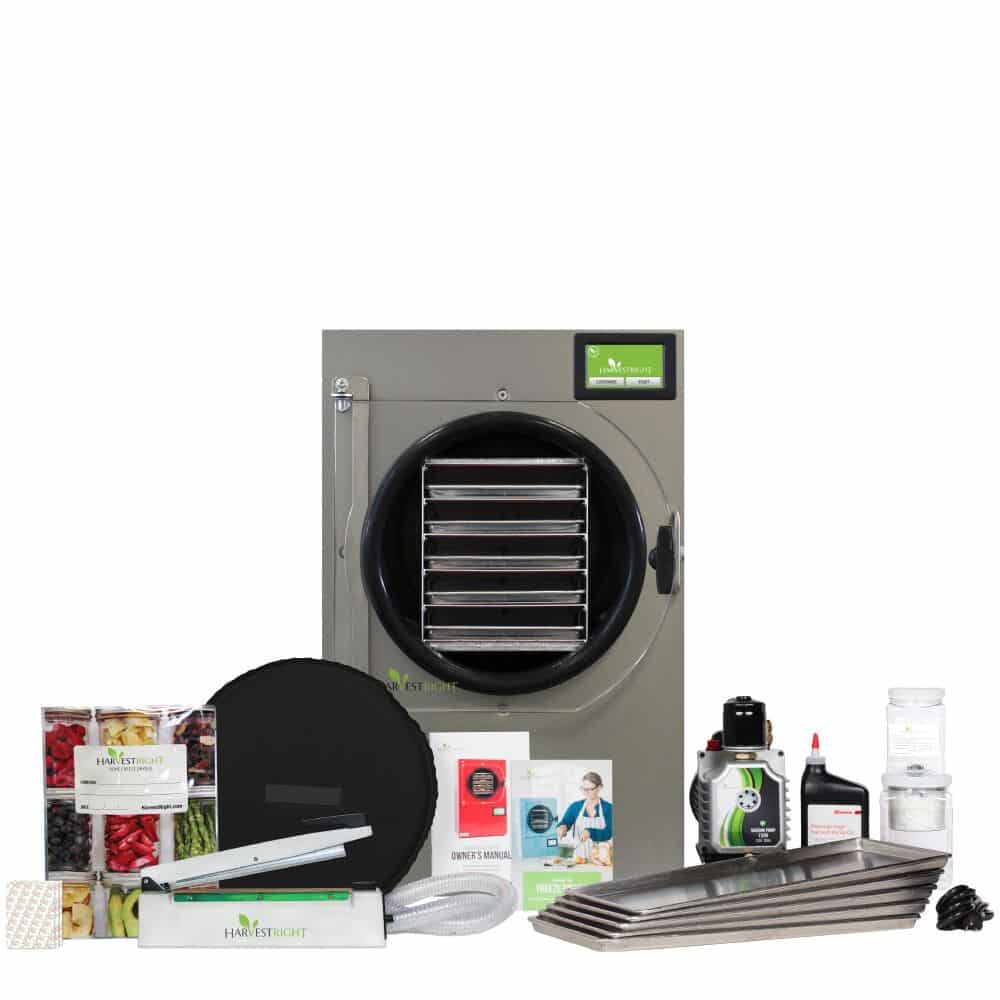
Home freeze dryers range in price from $1,995 to $3,495, depending on size and exterior finish. This cost includes the Freeze Dryer, Vacuum Pump, Vacuum Pump Oil, Oil Filter, Stainless Steel Trays, Mylar Bags (50 ct), Oxygen Absorbers (50 ct), Impulse Sealer, and HR Guide to Freeze Drying.
All units have a 3 year Limited Warranty, versus the one year warranty on many appliances.
Harvest Right also offers 0% interest financing, allowing you to lock in sale prices with a $250 minimum down payment. You pay as much as you want, when you want.
When you reach the designated down payment for the unit of your choice, they ship your unit. You then pay the remaining balance over 12 months with 0 interest.
Harvest Right also offers different accessories separately, such as extra trays, mats, Mylar bags and oxygen absorbers.
These units are a big investment. If you know you’re only going to use it a couple times per year (or not at all), spend the money on something else you know that you will use.
If you want more food security and food preservation options, read on. Home freeze drying is more affordable than ever.
Layaway Option
Harvest Right offers a layaway option so you can lock in sale prices or reserve your machine. (They are experiencing a backlog in orders right now.)
How the layaway works:
- Lock in your sale price with a downpayment ($250 minimum)*
- Pay as much as you want, when you want
- Receive 0% interest until paid in full. Your freeze dryer will ship after you’ve made your final payment.
Locating your Freeze Dryer
Freeze drying machines eat up a fair amount of real estate. This is not a toaster oven or blender. The main unit is about the size of a dorm fridge, plus it has a hose and vacuum pump. Many owners buy a heavy duty rolling table to hold the unit, but a counter top or table can get the job done.
I currently have mine on a counter in the garage, against a wall. The on/off switch is at the rear of the unit, plus the pump has its own on/off switch. You need to be able to access both of those and have clearance for power cords.
Power requirements: The small and medium units use a standard 110 volt outlet, but it’s best to have it on its own circuit if possible. If you try to pair it with another heavy load appliance, you’re likely to trip a breaker. (I found that out the hard way, and we installed a dedicated circuit.)
The large unit requires a 110 volt (NEMA 5-20) outlet and a dedicated 20 amp circuit.
Watch the temperature. The recommended temperature range for operation is 35-90°F. The most efficient temperature range is between 50-75°F.
Although safe, operating your freeze dryer in temperatures above 90°F will affect batch times and reduce the life of the condensing unit (freezer).
As the temperature rises where your freeze dryer operates, so does the length of time it takes to finish batches of food. This happens because with hotter operating temperatures it is harder to reach the extreme cold required by freeze drying.
Don’t operate the unit below freezing. You are likely to have water within the compressor, and it can freeze and destroy your compressor.
Home Freeze Dryer Noise
During the first part of the cycle, the refrigeration unit is running. During the second part of the cycle, the vacuum pump is running. The noise isn’t super loud – think vacuum cleaner, not jackhammer – but it is noticeable. I’d highly recommend planning to have it in an area where the door can be closed.
Freeze Dryer Maintenance
As I mentioned earlier, the freeze dryer does a complicated job, so there’s a little more to it than just flipping a switch.
Think lawn mower, not kitchen mixer. If you regularly abuse your power tools and don’t do basic maintenance, don’t get a freeze dryer. I know many of my readers fix and maintain not only their own things, but other’s people’s equipment, too, so I’m not too concerned about this.
We drain the oil after each use and refill the vacuum pump with clean oil. Oil is filtered and reused. Before filtering, we freeze the oil. After freezing, we pour the oil off the top of the container into the filter. The water (as ice) sits in the bottom of the container.
Visit “Harvest Right Freeze Dryer Oil Change and Filtering” to see a video of the oil change itself and the use of an inexpensive homemade oil filter that works.
Oil-Free Freeze Dryer Pumps Now Available
Harvest Right listened to customer feedback, and they’ve developed a premium oil-free pump. All new freeze dryers ship with standard Harvest Right brand pumps, but the oil-free pumps may be purchased at an additional cost.
If doing an oil change every time you’re freeze drying sounds like a bit of a hassle, the oil free pump may be right for you.
Note that the oil free pump does use slightly more electricity than the default vacuum pump.
Things I Love About the Harvest Right Freeze Dryer
Home Freeze Dried Food is Tasty
Hands down, my favorite thing about the Harvest Right freeze dryer is the quality of the food. The commercial freeze dried food I’ve tried has been okay, but our home freeze dried products are amazing. I mailed some to a friend recently as part of a gift exchange, and she wrote back, “Okay, Laurie, spill the beans on how you freeze dried the fruits. My kids are absolutely in love with them!”
The texture of freeze dried food is light and crisp – more like chips than jerky – even freeze dried meat. We freeze dried fajita meat strips, and they tasted like crunchy little meat flavored Cheetos, the boys called them Meatos.
When we prepped freeze dried fajita filling for dinner, all we did was add a little water to the pan with the food, cover and heat through. Dinner was ready in less than 5 minutes. (If you happen to have a Sun Oven, they work well for rehydrating freeze dried meals.)
The fruit is so good – absolutely, intensely fruity, light and crisp. You can also powder your freeze dried fruits and veggies and use them as natural food colors (and flavors), as noted above.
Home Freeze Dried Food is Easy to Make
Filling the unit is easy. For meals or other prepared food items, simply cook your food and let it cool. Cut into small piece, or thin slices (if needed). Load the food on the trays; place the trays in the unit.
For freeze drying fruits and vegetables, I prep them as I would for freezing or dehydrating. Blanching is recommended for vegetables, especially for cabbage family crops like broccoli. Without blanching, they may outgas during storage, potentially bursting the storage seal.
If you want to freeze dry soup or liquids (like milk), you can do that, too. It helps if you reduce the amount of water to cut drying time, but you can freeze dry “as is”.
You Can’t Beat Freeze Drying for Long Term Food Storage
The shelf life of properly stored freeze dried foods is amazing. Low fat content foods like fruits, vegetables, lean meat, rice, noodles, etc. have a shelf life of 20+ years when packaged properly. Higher fat foods have a 10-15 year shelf life. No other food supply compares for long term food storage.
Why bother with food storage that lasts so long? Because life happens. One year I might have an amazing crop of a particular item, then crop failures for several years. If there’s a job loss or an emergency, with my freeze dried food I know we’ll have a stash of food we actually like to eat.
Food prices keep creeping up, so why not preserve food now to take advantage of lower prices?
Freeze Drying at Home Can Be Allergy Friendly
Food allergies and sensitivities are becoming more and more common. Freeze drying allows you to safely preserve a wider variety of foods than any other food preservation technique. You know you’re only minutes from a safe meal. When traveling, you don’t need to keep food in a cooler.
I have a friend whose daughter has EoE (an allregic swallowing disorder). She found that freeze dried foods didn’t trigger her gag reflex, and was finally able to eat more of a variety of foods.
Home Freeze Drying is Cool
Pun or no pun, home freeze drying allows you to experiment with options you won’t see with commercial freeze dried foods – or other food preservation techniques.
One member of an online forum had his aging grandmother cook her favorite meals. He then freeze dried them to share with the family after she was gone. What an amazing gift to be able to taste a loved one’s cooking one more time.
Another couple was freeze drying some of their wedding cake and the bride’s bouquet. Still another took meal pouches to work and just added hot water to have a real meal while her co-workers were gnawing on granola bars as they worked through lunch.
My boys love crunchy snacks, so we’ve freeze dried things from sweet potato fries to pickled beet slices as chip and cracker alternatives. Freeze dried yogurt drops turn bulk yogurt into a special treat. Combining berries and yogurt into cute silicon molds makes a melt in your mouth dessert bursting with creamy berry flavor.

Are you ready to invest in a Home Freeze Dryer?
Do you:
- Want more options for long term, healthy food storage that your family will enjoy eating?
- Have someone with allergies who needs safe food options?
- Need ready made meals to go?
- Try to store abundant produce for when harvests aren’t so good?
- Get excited about trying new food options and preserving special memories?
If any of these sounds like a fit, take a closer look at freeze drying. I’m happy to answer any questions you may have. If I can’t answer them, I’ll find someone who can. Leave a comment and let me know your thoughts!

My referral link: https://affiliates.harvestright.com/115.html
If you choose to purchase a Harvest Right freeze dryer through my site, I receive a commission at no extra cost to you. (Thank you!)
You can watch the video below to see how I freeze dry strawberries. (These are the berries that had my friend’s kids raving about them.)
You may also find useful:
- The 5 Best Freeze Dried Foods
- Dehydrator Versus Freeze Dryer – What’s the Difference?
- 11 Freeze Drying Mistakes to Avoid for Best Storage Quality
- Harvest Right Freeze Dryer – Cost Analysis and Optimizing Load Size
- Home Food Preservation – 10 Ways to Preserve Food at Home
Originally published in 2016 with the title “Home Freeze Drying – The Good, the Bad and the Ugly”, updated in 2019 to current title. Harvest Right fixed “the ugly”, which was the original messy pump, so I took that out of the title. I’ve also added information based on reader feedback. Please scroll through the comments for more Q&A!
Kinda like building a building…as soon as your done, you realize it could have been bigger. Go as big as you can afford
Hello, thank you for sharing. I am interested in purchasing a freeze dryer, but I can’t decide between the small or standard size. Can you tell me what size unit that you have?
I have the mid-size unit, which holds a quart in each of four trays. I haven’t used the smaller unit, but I think the mid-sized unit is a good size. If I’m going to put up food for storage, I like to process a fair amount at one time, so for me, going smaller wouldn’t be my choice.
I bought a Harvest Right freeze dryer a few months ago and love it. We have to eat organically as we are intolerant to pesticides, and also have allergies to gluten, dairy and soy in our house. We also try to eat sugar free – that really reduces what we can eat!! We found that organic long-term food storage items were few and far between and often just included things like organic quinoa and rice. I know we’re trying to be healthy, but that would get a bit old after a while. We eat Mary Jane’s meals for camping and hiking, but they’re expensive. The freeze dryer allows us to make both hiking foods and long-term storage foods at our convenience to our standards. A store we bought meat from closed down recently and we had the opportunity to buy huge turkeys at half price (it was June/July!). My freezers were full and I didn’t have room for them, but was able to freeze dry 7 turkeys (one turkey, cooked and chopped filled my large freeze dryer perfectly). We can use them any time over the next few years and they won’t take up my freezer space. We love eating freeze dried sweet potato mash as a snack – looks like Cheetos, tastes wonderful. Also strawberries are a favorite. Our local farms are producing case lots of organic cherries and apricots for big discounts now and I get to freeze dry them for a future time. We went hiking today and ate some home made freeze-dried pasta bolognaise that tasted great. Am super happy!
Thanks for sharing your experience, Kate. You’re making me hungry!
I have read the majority of the comments including those from last year. There are some major and minor points that I have not seen discussed but again I may have missed some. I may be brief on some points, however this might get long so grab something to drink first. 😀
The gentleman that thinks that we should all shop at Walmart forgot a few things to factor into his cost analysis. The cost to go shop for said items is one. Fuel, bus or taxi fare all cost money. Even ordering items online cost shipping. The ones that are “free shipping” have the shipping cost figured into the purchase price. Many items do not have a big enough profit margin to allow the company to cover the cost of shipping from their pocket.
There is what are you getting for your money cost factored into commercially canned items. It is getting harder and harder to find a 16 oz can. They are now 14 oz or less but still cost the same as what the 16 oz can used to. Can size is the same but less contents. Speaking of contents, anyone else notice that there is more water in commercially canned products compared to a few years ago? A few years ago, I was wondering if my time was being well spent canning my own produce. Some in my family said it was a waste of time and money. So I asked said person to go to the store and buy me the cheapest 16 oz can of carrots they could buy and the most expensive in the same size. Why carrots? It was what I was canning at the time. I had a couple of pint jars that failed to seal. There are 16 oz in a pint. See where this is going? I then had said family member drain each of the three items just like she would to use them. I still had yet to reveal why we were doing this to avoid bias. We together then weighed each of the amounts of carrots on my digital scale. I then asked her to figure out averaging high, what my utility costs were for each canner full including electric to run the AC and processing equipment, the natural gas for the stove and all the water that is used in prep, canning, and in clean up. Then what one jar costs divided by 6. I figure I get a minimum of 6 uses out of a jar before it becomes ineligible to can with. These costs are similar to what a commercial canner has to factor in expect the reuse of the jars. However, they can buy in wholesale/bulk and I must pay retail and taxes so I am already behind in costs. I will use the defective jars elsewhere but not for canning. Then figure out the cost of the flat that goes under the ring as these must be replaced every year. I did not include the cost of the canner as my grandmother gave it to me and I will pass it on to my kids. I took one pint jar that was packed and ready to can. I dumped out the water and weighed what the weight was in raw carrots to make sure the numbers are correct. As I buy my carrots from local farmers, we figured out my cost per bushel. Figured out how much is waste. It was all in buckets just needed to weigh it and then figured out the actual price per ounce I paid for the carrots including the fuel to go get them and return. Factored all of that to figure out the cost per ounce of home canned carrots. Then factored in the cost of the store bought carrots including taxes and fuel. The winner by almost double was my home canned carrots. If I get more than 6 uses out of a jar then it is more. Since I often buy jars at thrift stores and rummage sales, I am even further ahead. However, we used actual retail prices for the cost of the jars and flats. Some have even been gifted to me as everyone that knows me knows how I love to can. I did buy my carrots directly from the grower in a bushel amount. This is typically cheaper than buying by the pound in the local grocery, however I did factor the 30 miles round trip in fuel that it cost me to go get them. Plus I know how they were grown and now what exactly is in the jar. I should mention that the family member in question works in the accounting field. She loves numbers and will do math problems for fun. She did her work on three separate sheets of paper without looking at previous one just to triple check her numbers. We did use actually utility bills for costs.
There is also the labor that goes into preserving the harvest. There is going to be that no matter how one chooses to preserve the harvest so I did not fact the cost. The time it takes to process carrots is roughly the same for canning, dehydrating, or freeze drying with the exception of blanching them if one chooses to.
I have been disabled for almost 10 years now due to someone cutting corners at my job. I was injured and it destroyed both of my knees. I am between 40-50 years old and already need a knee replacement. The time it takes me to process a bushel of carrots from purchase to full jars on a shelf is much longer than it was 10 years ago. I tell you this to throw this thought out at you. We are all getting older. Some of use are aging a bit faster due to a variety of reasons. I would much rather load a freeze dryer and walk away then slave over a hot stove all day/night. I could be much more productive without the wear and tear on my knees by not standing in the kitchen canning. Plus I don’t have to order pizza so my family has something to eat while I use the whole kitchen canning. Also think about how heavy a canner is once it is loaded. Sure you can put it on the stove and add water to it from the sink. That is often a lot of steps depending on how your kitchen is laid out. One must also consider the weight of full jars themselves. Heavy duty shelves must be purchased or built to accommodate the weight of both full jars or cans from the store. Jars that are full of freeze dried items weight barely more than an empty jar.
Quality of product is also a concern. By preserving food myself, I know exactly what is in the jar. For a multitude of reasons, produce that I purchase is grown organically. Certainly there will always be things I will can. Actually, I have to can it all right now until I save enough up for a freeze dryer. I think of it this way – traditional canning is like an old fashioned wringer washer where freeze drying is like a modern washing machine. I compare these as I have and do use both kinds of machines to do laundry. The time factor alone is a big difference between the two.
Now I come to what seems to be a family quirk that would make freeze drying beneficial to my family and I. Neither my mother or I can handle any green beans that are to be canned. We can not pick them, snap them, place them into jars – nothing! Doing so will cause said beans to sour in the jar. Beans canned today when opened tomorrow will be sour if my mother or I touched them, even with multiple layers of disposable gloves on. We can pick them and snap them for fresh eating but that is all. Even blanching and freezing will result in sour beans. Why only beans we have no idea. I can cook them for fresh eating and then freeze them – other than being nothing but mush they are ok. This leads me to believe that I can do the same with the freeze dryer without issue. Although once I have one, I will experiment to see what happens. So in order to preserve green beans right now, I must rely on others to help me get the job done.
Most of my family packs a lunch to work. When it is hot out, that means ice packs as well. It would be much nicer to send the same kind of leftovers only freeze dried when it is hot out. As they have to be reheated anyways, adding a bit of water at work before putting it in the microwave is not a big deal. It would also give them the opportunity to each it as is and stay a bit cooler. Some family members have food allergies as well that mean I cook from scratch. It is vital to their health that I know exactly what is in the food they are eating. Being able to make enough for 7-10 meals vs 3-4 is no bigger mess in the kitchen. I don’t have to tie up valuable freezer space either.
Losing power and potentially losing what is in the freezer is a big concern here. We do lose power various time all year round. A small price to pay for the beauty and remoteness of where we live. Yes, we have generators. Those can keep us warm or cool depending on the time of year or keep the freezers cold. A juggling act to be certain. Just another reason that having at least some of one’s typical freezer items freeze dried. Space no longer becomes an issue if one finds a great deal on 5 lb bags of cheese.
Like many rural families, mine loves to go camping and hunting. We spend 1 to 2 weeks every year, elk hunting alone. This equals a lot of food that must be packed in and waste packed out. Plus one must always over pack on food since we are hunting in the mountains. Getting snowed in for longer is a real possibility. The regulars in our camping area also know they are always welcome to eat for us. One day I may be cooking for 6, the next for 20. It pays to be prepared and neighborly. We take care of our own out here as it is two hours by 4 wheeler to get back to the pickup and then another hour or so to town depending on the weather and roads. This all equals to a large amount of meals that must be packed for. That all weighs down our vehicles a lot. We also have to take large coolers to keep meat cold in. If there isn’t a ton of snow, that also means loading them full of ice as well. I would much rather make large batches of meals at home – where I have time and freeze dry them. Don’t get me wrong, I love cooking on a wood stove!!! I am strange I know. However, there are other things I would rather do than cook all day. As I don’t hunt much do to my knees, I do the majority of the cooking. Again, being able to bring in freeze dried items would certainly lessen my work load and allow more time for fun things. I could also send a better quality of snacks with the hunters by making my own freeze dried items. There is a reason that most sporting goods stores sell freeze dried meals – ease of use and light on weight. When we go camping in the summer time, we might tent it or we might pull the camper. Either way, space and weight are an issue.
Something else to consider is – what can be grown where you live? Where I live, if you don’t do raised beds, not much. The ground grows very little as it stands. Due to the growing zone plus the elevation that I live, many fruits and veggies are not able to be grown here without the help of a greenhouse/grow tunnel of some sort along with basically removing the existing soil and replacing it with something better. A couple hours from me there is a very large mushroom farm. An hour in a different direction puts in some river bottom land where they grow amazing sweet corn. Timing a visit on the west coast to fall during fruit harvest time is also a possibility. I must buy in very large amounts to make the trips worth while for the things I can not grow. Since I do most of the preserving myself, being able to freeze dry large amounts of food at one time would make it more cost effective than just canning alone. I am not complaining that my family doesn’t help. They all have work and/or school that take up much of their time. They do help when they can.
I will step off my soapbox now. If you made it through all of this, thank you for reading. I just wanted to throw out some ideas that I had not yet seen mentioned. Reasons that make it a worthwhile investment for someone like me. Maybe not for others. It is up to each individual if the investment is worth it for their family.
Thanks for your thoughtful comment and many well made points, Carrie. We rarely buy canned vegetables, but I’ve certainly noticed the shrinking package size in dry goods. It seems like you’d have plenty of opportunities to put a freeze dryer to good use.
Laurie,
I want to Freeze dry a homemade baby formula. I make the baby formula daily. Each batch is about 65 oz., making one batch a day. After reading your article I wondered if this would be a good product for me. The formula contains 60% barley water, 35% milk and 5% non-GMO organic corn syrup.
I didn’t see how much time the Freeze Dryers require to finish each batch of food/liquid.
Any advice or direction you could give is most welcome. I’d prefer to make and freeze dry and then simply reconstitute this that to go through the 6 1/2 hour process required each morning.
Freeze drying time will vary depending on food/liquid being dried, amount of food being freeze dried, and ambient conditions of the area the freeze dryer location. I’d suspect 24 – 36 hours in “average” conditions.
Given that dairy and grains freeze dry well and the sugar content is fairly low, I would think that the formula would freeze dry well, and the current sale is the lowest prices I’ve seen on the units to date.
Thank you. Laurie. I appreciate the time and help!!!
You’re welcome.
Something I have not seen discussed is the nutritional value of the freeze dried foods. Also, I juice my veggies with an omega very juicer. Can you freeze dry juiced veggies and if so, what nutrition do u lose? I ask because my husband and I have long term sailing ahead of us and I’m wondering if I could take my freeze dried juice with me.
If you’re freeze drying liquid (in this case, juice), you’d end up with powder. I’m sure you could do it, as long as you didn’t overload the unit. Your dry time would be fairly long to remove all that liquid.
As for nutrients, the article “Nutrition of freeze-dried vs. raw fruits and vegetables” at columbia.edu notes:
I’m sure that any heat sensitive vitamins, like vitamin C, would be slightly reduced because of the temperature cycling during the freeze drying process. That said, the freeze drying process does not cook the food, so it would still be raw and the majority of vitamins should be intact.
I bought a freeze drier and it’s worth every cent and far better than I imagined. I love the thing. Run it every day. Start at bout 10 pm so freezing last till 7am and noisy drying part usually ends before bedtime next eve. Funny nobody would consider driving with no spare, but no spare food or water, no problem. Go figure. PS: your site is great Laurie. Thanks again
Thanks for sharing your experience and note on timing, and thank you you for your kind words. I agree – sometimes people’s priorities don’t make a ton of sense, but we live in a world where the supermarket has always been stocked, at least for most people reading this site. Heck, whole meals are just a mouse click away in many areas. Living out in the country and being snowed in on occasion, as well as job loss, have helped me to appreciate a well stocked pantry.
Amen to that William Parker and Laurie Neverman. In 2009 massive ice storms in our neighborhood here in the Ozarks knocked out power for up to a month, now just about everybody in this region keeps at least several weeks of food on hand. We didn’t move here until 2011 but heard so many stories of families caught without enough food and nobody able to reach them due to all the trees down that we’ve made food storage a top priority.
We just set up our brand new Harvest Right freeze drier and with 16 raised garden beds (4’x8′ each) plus huge berry patches and a fruit orchard we’re gearing up to freeze dry around the clock. The blackberries are going crazy! Zucchini and peppers and beets are already ready to harvest! It’ll be a long summer all right, and if everything goes well we’ll be enjoying our own produce in the middle of winter.
Freeze dried pickled beets make a great snack food. 🙂
ChrisF, you are a couple months ahead of us. We had been looking at the Harvest Right Freeze Dryers for some time due to the initial cost, but our organic garden was just crazy this year. So we purchased the large stainless unit in August and the power switch has not been turned off yet. If you want the very best nutrition, taste, extended shelf life for family, kids and grandkids…the choice was very clear. Our unit will pay for itself in a year or 2 if you look at the cost of commercially freeze dried food….but the quality of the commercial stuff is not as good as what I’m freeze drying….local grass fed beef roasts, steaks, veg beef soup, free ranges scrambled eggs with our own garden peppers and onions, chicken corn soup from our own meat birds…getting hungry yet?
Our freeze dryer is awesome…if you are concerned about the best quality food for any real world scenarios – and there are a ton of them, a Harvest Right Freeze Dryer is the clear choice…its all about family priorities.
Hi Laurie. Thank you for the above and the courage to answer a variety of questions. I began this morning with discussing food storage with my sister – for an emergency and even a potential financial crisis that I am convinced will happen. Yes, I thought Y2K would take place. It would have caused issues but entities prepared early enough. Now, that is what I would like to do. I know units can cost a lot of money. I considered what my interests are and that is food value (nutrition) and also taste. Ever eaten C or K rations for any length of time? I have and even MREs get somewhat boring. As you point out, canned foods are less expensive but shelf like is a definite consideration as well as nutrition. It has been pointed out that you need a source of good water to rehydrate. Isn’t that the case with even desiring to drink water in any potential emergency? So, plan for that also. I don’t really know why some are so insistent to argue a point, but I now believe you have answered my concerns. Again, thank you for a well prepared article and planting the idea that I need to seriously consider purchasing a freeze drier for my food storage.
Hi Neil. Glad you found the discussion useful. For my part, even if something huge doesn’t happen, there’s peace of mind in knowing you have food on hand that is good quality and something that you want to eat. I’ve eaten MREs and ration bars. As my nephew would say, “They’ll make a turd”, but eating them for any amount of time would be something I’d do only if I were truly hungry and had no other options.
I haven’t seen food prices trend down, except for incidental sales here and there. I consider the time, effort and money we put into our food storage to be a worthwhile investment, just like the different options we now have for providing fresh water. We’ll always have a use for both. Before we invested in the freeze dryer, we invested in several different water filtration and purification options, and several water storage options. So far our well water is safe to drink, but many in our area have had their wells contaminated by factory farms.
Hello. Which system, in your expertise, would work better for fruits such as lemons, limes, lychee, pineapple, mango…in other words, tropical fruit…freeze-drying or dehydration?
Thank you.
Because of the membranes in the citrus and the extremely high sugar content of the other fruits, dehydrating would probably be easier to work with, but patient folks have freeze dried pineapple and mango in small/thin pieces with good results and the taste is amazing.
Thank you. As I’m a total newbie, I think I might try the dehydration first as the overhead is much lower (as per my research). Dehydrated food can also be vacuum-packed with the “oxygen” packets as well, correct?
Sure, vacuum sealing with oxygen absorbers will extend the shelf life for dehydrated foods, too. (Not as much as freeze dried, but it will help.)
Thank you!
You’re welcome.
I would like to know if you have done any research with desserts. I bake certain things every year and sometimes multiple times in a year. I would use a food dehydrator mainly for that, however your posts indicate that sugars do not do well. Just curious as I am a manic baker and using a dehydrator for this purpose would surely lighten my load. Thanks in advance.
Some sugar isn’t a problem, unless there’s a very high amount of sugar. For instance, members of the groups I’m in have done cake, cheesecake and a variety of other baked goods. The consistency isn’t the same after freeze drying – foods become very light and airy – but they are still tasty.
Thank you for the thorough review! I recently started thinking about freeze drying at home because of (my food issues – celiac) and for our cats dietary needs. Just like human food, most commercial pet food makers fill the cans with unnecessary additives like carrageenan, even those marketed as limited ingredient, for sensitive tummies, when it’s a known digestive irritant for people and animals (I’m looking at you Nestle ProNourish for people and Canidae Pure for kitties), I could rant on and on about it, the subject makes me so angry.
Anyway, like most things, it’s best to do it yourself. After researching grain free raw food diets for cats, I started thinking about dry food, bc the cats like to eat the crunchy stuff every so often too. So I thought freeze drying would do the trick since they love the freeze-dried Halo wild salmon. I looked up commercially produced freeze-dried raw foods and sure enough I was disappointed with everything I found in the ingredient lists. So again, like most things, it’s best to do it yourself.
I scrolled through some comments (and wow was that Jay guy argumentative, I ran out of steam after that), but I have to agree with the reasons listed for not eating from metal cans, like toxins and other unsavory things packaged up with the food. Not to mention the flavor and mushy texture of canned food, and the fact that most cans inherently are lined with the estrogen disruptor- BPA. That’s another one that gets me fired up, especially for those of us with compromised methylation processes from MTHFR SNP mutations. But that’s another rant… So I’ll skip the Mylar pouches and continue to store my food in glass for ours and our fur babies safety!
Some manufacturers have now replaced BPA – but the jury’s still out on the replacements. Glass jars are fine if you have the storage space and the jars, although I do think that O2 absorbers are a must for longer storage of any meat products. From what we’ve seen, fruits and veggies are more forgiving, but open a jar with any type of meat product and it should be used ASAP.
It’s so frustrating reading labels nowadays. As you said, even the “good stuff” often has an excess of questionable ingredients.
Another question for you. We have a small home and we’re thinking about putting our freeze dryer in the basement. I was talking to someone and she said it was very loud. Now I’m worried that it will be too loud to sleep. What is your experience?
It is fairly loud – think vacuum cleaner. If there’s a door that can be closed to isolate the sound, it will probably be okay. If it was right under your bedroom, running while you’re trying to sleep, noise baffling might be required.
Hey Laurie,
That elbow swivel I was talking about goes on 3/4″ hose outlet on unit and points down so large hose connects to unit hanging vertical instead of sticking out and bending, thus taking up less space and probably longer hose life.
Ah – following now, and your emailed photo came through. Most folks add adapters to the pump drain, so that’s where my thoughts jumped right away. Our pump is on the same counter with our freeze dryer, sitting just behind it, so the vacuum hose forms a gentle s-curve – no pinch. We also rearranged the drain hose underneath so it exits out the right side of the unit instead of left. The left side of the unit faces the wall, and everything we need to access is now on the right side.
A little advice that I’m sure Laurie must know because you seem brilliant, yet so nice, is that if you drain any oil into a measuring cup and return the exact amount of new oil to pump, level seems to stay correct thus avoiding any spray mishaps; and also, NAPA Auto Supply sells a 90′ swivel elbow which attaches to hose outlet on unit allowing hose to go straight down instead of sticking out. Thanks.
Oh, and disregard earlier message. No way I can unsubscribe to this site. Feel guilty using it and not paying for it, it’s that good.
You’re too kind, Bill. I probably should have supervised the pump draining and refilling myself so we came up with the “fill with exact amount” option sooner, but as with any new contraption that enters the house, there was an “unknown” factor that had us following the user’s manual instead of using common sense.
The owner’s manual says to watch the site glass, so that’s what the boys did. “Drain x amount and refill x amount” would have been much easier. There is some potential loss to spills, and we found that tipping the pump on it’s side for about 30 seconds and then putting it upright again helps to get more oil out, but overall the 700 ml volume works well.
Since the guys do the draining, I haven’t worried about an elbow or other extension to make the drain easier to use. (Bad mom!) They still have young, nimble fingers. With the way ours is set up, I think I’d like to have an extension to get it past the end of the counter, key-style valve (not sure of proper name, but I’ve seen them online) and then drain. I’m better with plants than machinery, but work things out eventually.
If you want to get regular emails instead of just post comments, you can subscribe to the newsletter at https://commonsensehome.com/subscribe/. Saturdays are typically homestead updates, musings and seasonal links. Midweek I usually send out some sort of promotion from one of groups/businesses I partner with on the site. Someone’s always offering a deal on something. Speaking of which, I need to go finish defrosting my freezer and then pull together this week’s email. Thanks for the tips!
How can I get off of the notify me of new comments line? I love this site but phone goes off too much. Would rather just check site every so often as it is a very informative site. Thank you very much.
Bill – There should be a line in the messages that you’re getting that says, “Manage your subscriptions” with a link following it. Click on the link, and it will take you to page that has “Manage Subscriptions” at the top. Check the post you want to unsubscribe to (I’m guessing there’s only one), and then use the drop down below where it says “Action” and select “Suspend”. Then click “update subscriptions” at the bottom. That should stop notifications. There’s are other options that allow you to see replies to your comment only, if you prefer. Thanks for asking instead of doing something like marking it as spam. 🙂
I’ve had my finger near the Buy trigger for sometime now, like some others the cost is what’s holding me back.
I would love to hear some owners comments on durability, what issues have been had and replacement parts cost.
Another question I have is in regards to the vacuum pump, could I use an oil free Teflon ring pump instead?
I have a couple constant duty ones that generally run 10k hours before new rings are needed, and they are cheap and takes 30 minutes to do the job.
I would need to know the specs of the Harvest Right one to compare and or adjust the suction required.
Thank you to anyone who replies!
We’ve had our unit for around a year. So far we’ve replaced a splash guard and some screws in the pump with stainless steel versions. I’d have to dig to find my receipt, but I think the cost was around $20. (Long day, I’m exhausted, and computer keeps randomly shutting down, so I’m not going to dig at the moment.)
We’ve filtered the oil from the start, so we’re only on our second gallon of oil. We use an old Brita filter with a toilet paper and coffee filter combination filter. Works well.
As for the pump, you’d have to talk directly to Harvest Right about that.
I am pretty certain I have seen a photo of a Harvest Right freeze dryer with a Platinum vacuum pump instead of the Eliminator, but I can’t find it again. The Platinum pump has a gas ballast valve that should reduce the contamination of the oil. It costs a bit more, but if it works well it would be worth it.
Does anyone know if the Platinum pump is supplied with the larger Harvest Right freeze dryers?
Does the gas ballast valve reduce contamination of the oil enough to make it worth extra money?
I haven’t seen or heard of a different pump bring provided with the units. I do know that Harvest Right is now recommending that users drain the oil with each use and filter it.
harvest right comes today….I have a ton of greek yogurt…I see your boys love yogurt drops which I will do….question can I fill the other 2 drawers full of yogart and once FD can I break them into sections? and with yogurt drops can I add a slice of strawberries in each one? or can I add a dehydrated peach in each one….peaches are from last fall so I still have color
I’m sure a tray of yogurt could be broken into sections. It will shed a lot of crumbs, but you could do it. Just make sure to line the tray so the yogurt comes out more easily. You could add a slice of fruit on each yogurt drop, fresh or dried. I would make sure to allow plenty of drying time, because drops without added fruit will be done more quickly than those with fruit.
Laurie can you reuse mylar bags? I know my vacuum seal bags once washed are reusable
also when you vacuum seal the glass jars can you use the metal lid again or no
The Mylar bags can be reused (of course,capacity will be reduced). O2 absorbers are one time only – no way to refresh those at home. Lids can be reused for vacuum sealing, assuming the edge/seal isn’t damaged.
Thank you! I really appreciate your observations. I’ve been watching them for a year now! I too am having a hard time with the cost, but, we just switched some of our canning (fish) to a Can Canner. Those are really expensive but are great in transport and shelf life. I’m very interested in the food preservation of this. I like it! I’d love to get away from the freezer and jars for the bulk of our processing. Thank you again! I’m sure I’m going to make the plunge soon!
You’re welcome. We still use a mix of food preservation options, but the freeze dryer has become an option that we are using year round instead of just harvest season. For instance, right now our neighbors have many extra eggs (spring production is going crazy). I like to support their farm, but we can only eat so many eggs at one time. We’ve been scrambling up 4 dozen eggs with cheese per freeze dryer load and putting them in storage. Now we have a stash for when production drops, for emergencies, or quick meals. They can also be rehydrated for “fancier” meals, like breakfast burritos. Because we’re using farm fresh eggs raised on organic feed and forage, paired with real butter and cheese during cooking, the flavor beats the pants off of the commercial scrambled eggs you find at most breakfast buffets. They taste like eggs, not foam rubber. (Confession – I think my husband used a little too much butter with the last batch he prepped, as the freeze dried egg bits tasted a little like buttered popcorn. I marked those to eat sooner instead of later because of the higher fat content.)
The freeze dryer also gets the boys to eat more veggies. Freeze dried sweet potato fries and sliced pickled beets disappear when I leave them in the pantry near the chips and crackers. It’s a small thing, but I figure it’s a step in the right direction.
can you scramble the eggs with bacon in them or sausage ? and then freeze ? also we like eggs mundel which is caramelized onions, scrambled eggs and at the end add cottage cheese….it makes the eggs so soft …could I freeze dry that combo?
You should be able to free dry all of the above, as long as the bacon and sausage aren’t too fatty. The fat makes a mess in the freeze dryer and has a tendency to go rancid over time. (O2 absorbers/vacuum sealing will help.) I’d estimate shelf life in 5-10 year range for best quality on the higher fat foods. Gotta try the eggs mundel. It sounds good!
top that combo on toast…when our friends first made it ….sounded yucky but I will never do plain scrambled eggs…the cottage cheese disappears and makes eggs so soft.
I haven’t met many cheeses I don’t like.