
Home Freeze Drying – Read this Before You Buy a Freeze Dryer

This post may contain affiliate links. Read my full disclosure here.

Thinking about getting a freeze dryer? We’ll explain how home freeze drying works, and answer questions about freeze dried food storage for emergencies and more.
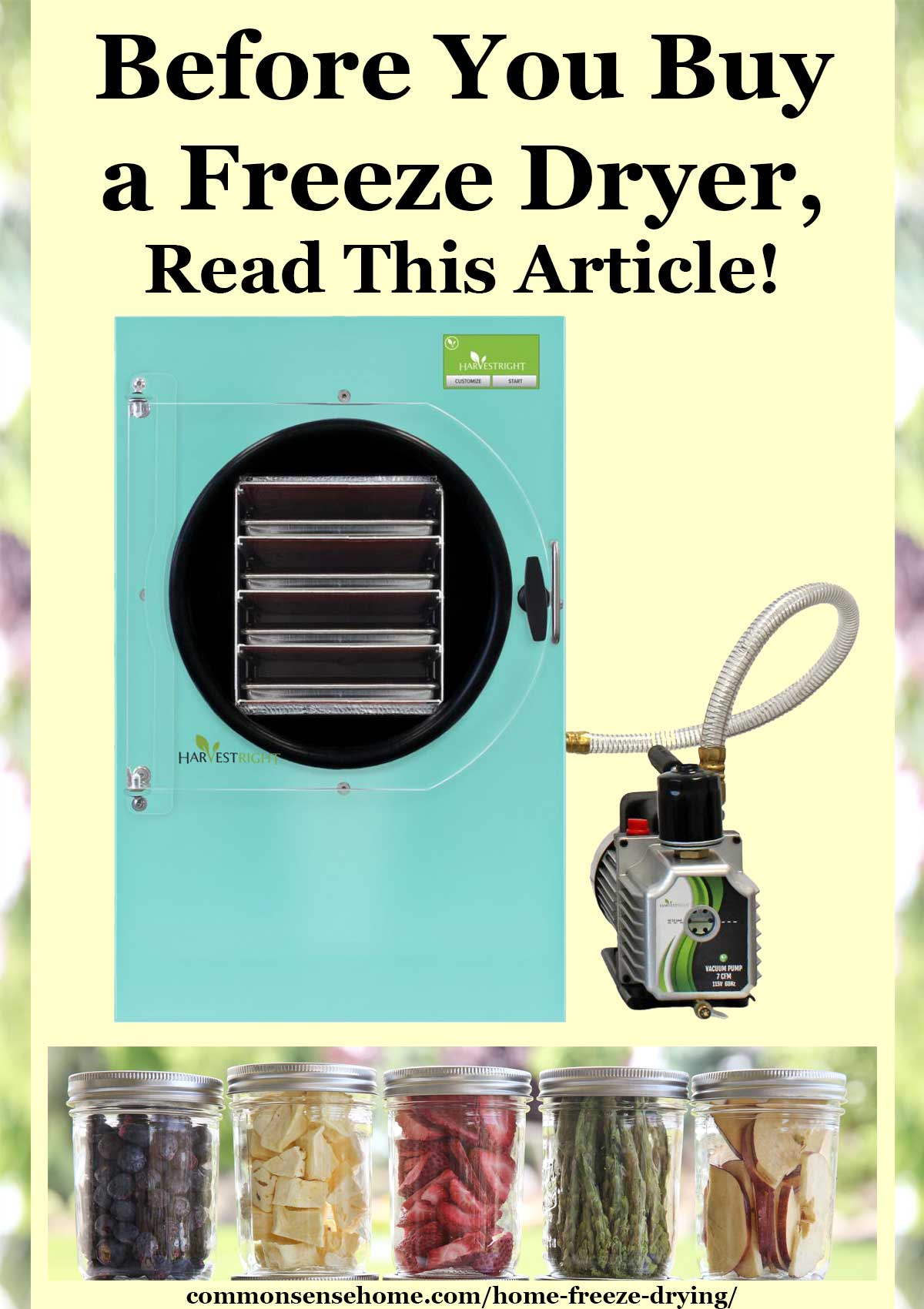
Why get a freeze dryer?
I’ve been curious about home freeze drying ever since I did an interview with Dr. Prepper back in 2015. The doc raved about his home freeze dryer. He loved the quality of the food, how much money it saved him, and what a great addition it was to his preps.
In early 2016 Harvest Right home freeze dryers contacted me to do a review of their product. I could purchase it at a discount, as long as I did a review. My other option was to get it for free, if I committed to a series of endorsements.
Being the stubborn individual that I am, I didn’t want to commit to selling you something that was such a big investment without thoroughly testing it. I purchased a freeze dryer and have been using it since May 2016.
My conclusion – if you want long term food storage or portable food storage, check out freeze drying. Commercial freeze dried foods are pricey and often have questionable ingredients. Home freeze drying puts you in control.
How Does Freeze Drying Work?
Here’s the official definition of freeze drying (Lyophilization) from the FDA:
Lyophilization or freeze drying is a process in which water is removed from a product after it is frozen and placed under a vacuum, allowing the ice to change directly from solid to vapor without passing through a liquid phase.
The process consists of three separate, unique, and interdependent processes; freezing, primary drying (sublimation), and secondary drying (desorption).
So, how do we do that at home?
- First, you get a heavy duty freezer (the Harvest Right units drop to -30°F (-34°C) or colder).
- Second, you pair this up with a completely airtight chamber that can hold a vacuum (no oxygen) every single time you use it.
- Third, you tie in a high end vacuum pump strong enough to suck the stripes off a zebra.
- Fourth, you add a heater and thermostat, so you can cycle the temps up and down, repeating the sublimation process for hours on end.
- Fifth, tie in a humidity sensor to make sure the water is out, triggering the cycle completion.
There’s a reason the big commercial freeze drying units are priced from $5000 to over $100,000 – the freeze drying process is significantly more complicated than other home food preservation options.
If you’re wondering how freeze drying compares to dehydrating, you can read more about that in the post “What’s the Difference Between Dehydrating and Freeze Drying?“
Harvest Right Home Freeze Dryer Basic Information
Here’s some information everyone should know before buying a Harvest Right freeze drying machine. Since the time this review was originally posted, Harvest Right made a number of upgrades. They now have HR pumps in two different styles, slight design changes in the main units, and new software that speeds up freeze drying times.
Freeze Dryer Dimensions
Harvest Right has three sizes of home freeze dryers – large, medium and small.
Each unit includes a detachable vacuum pump weighing 35 lbs that sits outside the freeze dryer. They also have a drain hose that routes below the unit. Oil free pumps are available at an additional cost. (More on this below.)
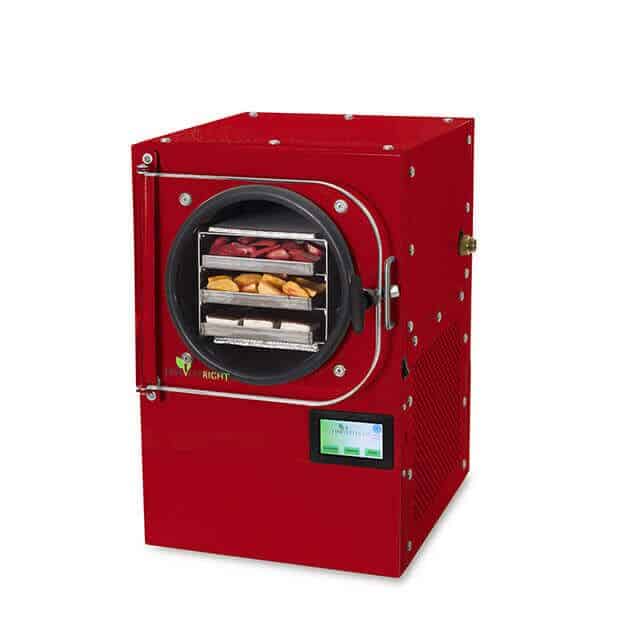
Small Freeze Dryer
- Overall product dimensions: 16.5″ W x 18.5″ D x 25″ H
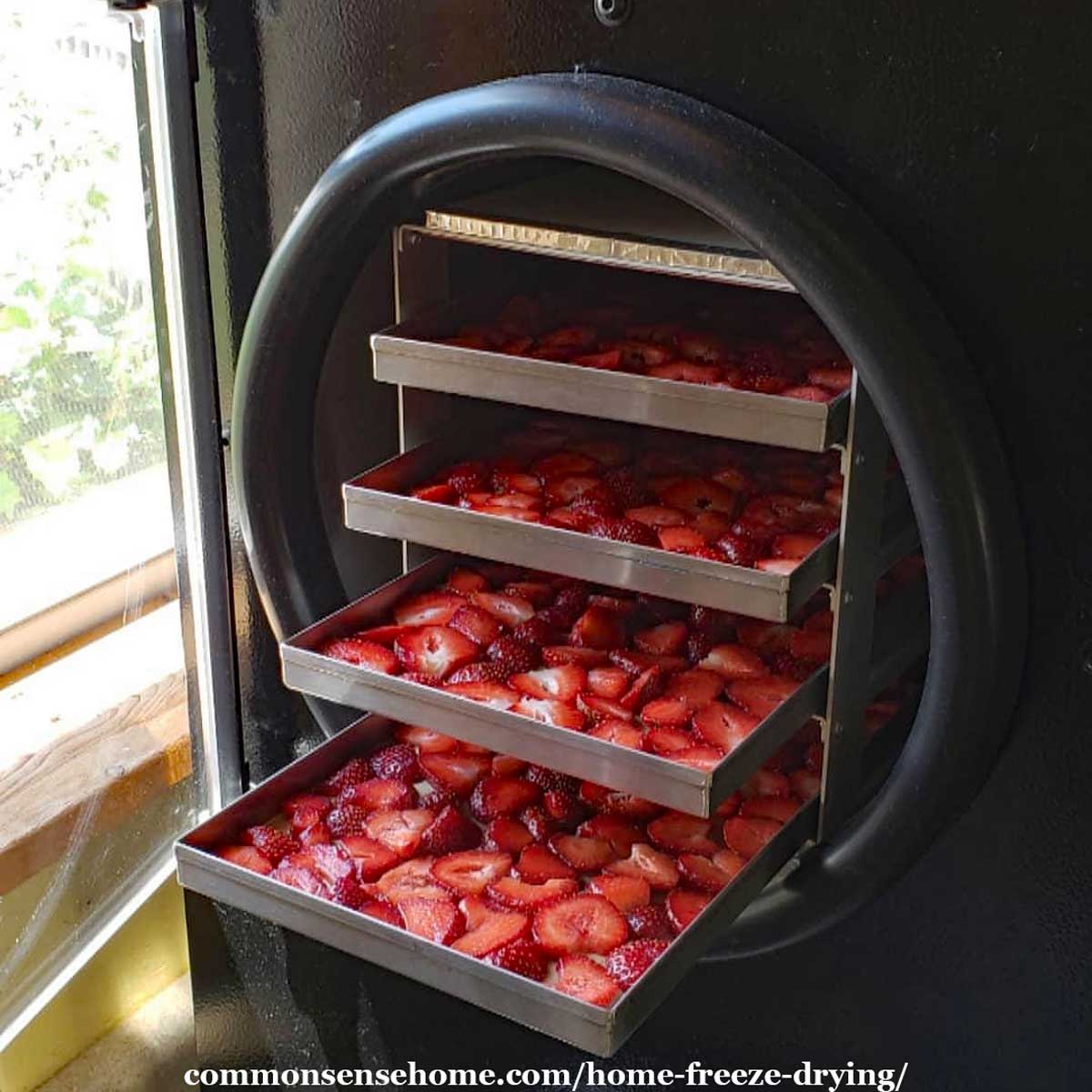
- 3 trays (7.75″ W x 14″ L x 0.75″ H)
- 61 lbs.
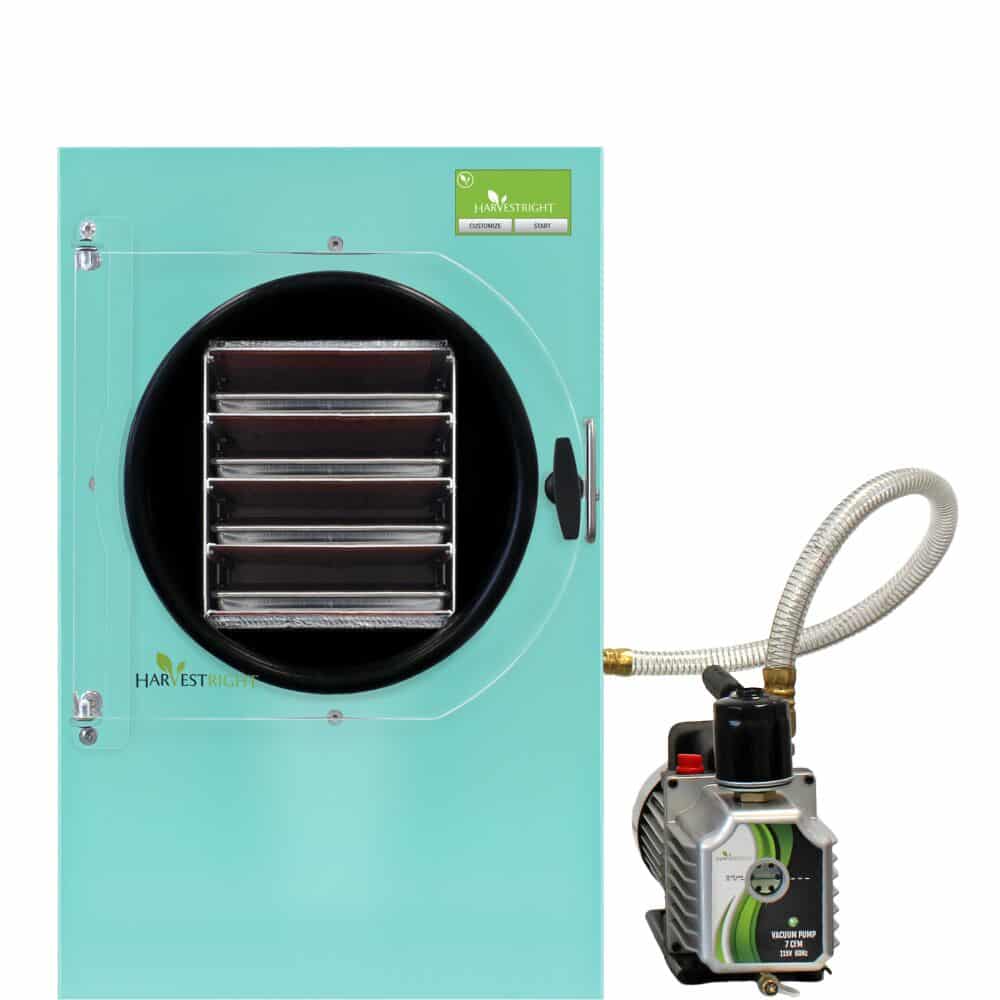
Medium Freeze Dryer
- Overall product dimensions: 18″ W x 21.25″ D x 28.5″ H
- 4 trays (7.5″ W x 18″ L x 0.75″ H)
- 112 lbs.
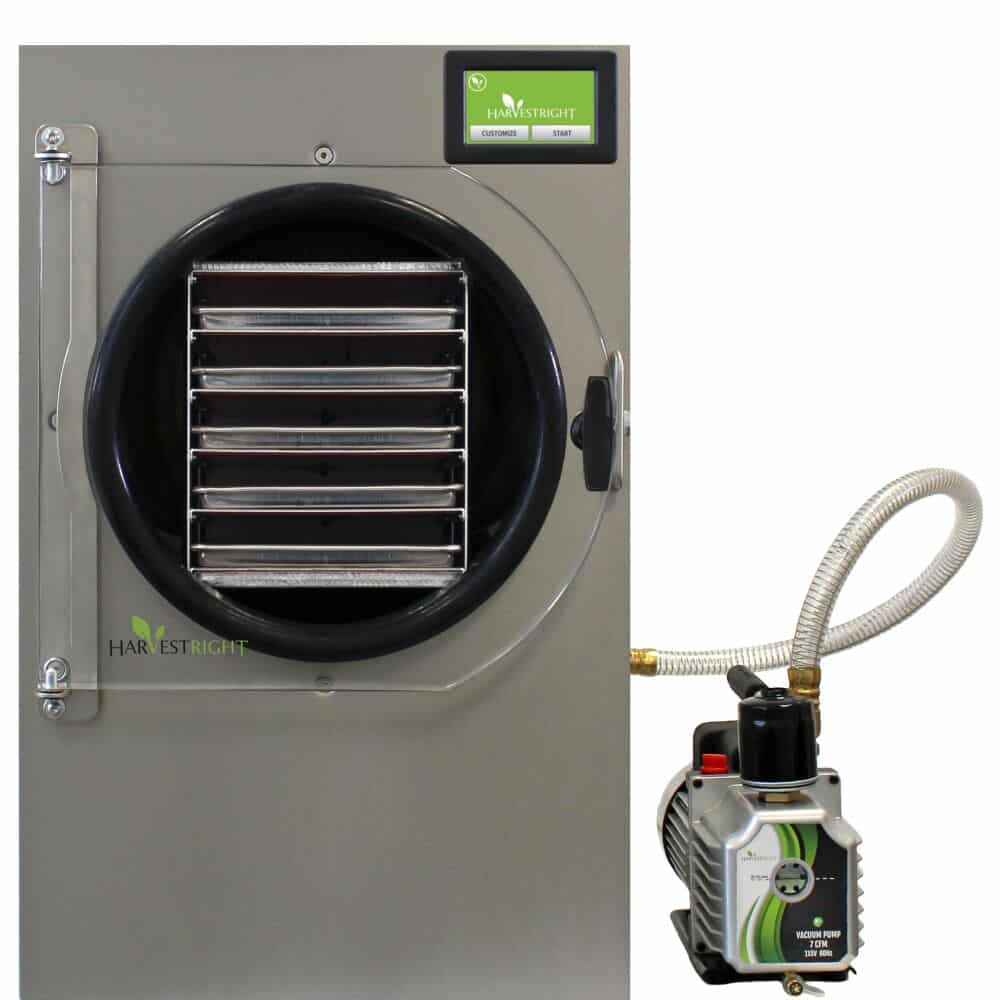
Large Freeze Dryer
- Overall product dimensions: 20.25 ” W x 23.75″ D x 30.75″ H
- Perfect for counter top, cart, or table.
- 5 trays (9″ W x 20.5″ x 0.75″ H)
- 138 lbs.
Moving these units is a two person job, unless you put it on a rolling cart, which many owners do.
I have a mid-sized unit of the old design, updated with new software.
How much food can you freeze dry?
Small Freeze Dryer
- Freeze dry 840 pounds of fresh food per year (4-7 pounds per batch).
- In a year’s time, you can freeze dry 195 gallons of food.
Medium Freeze Dryer
- Freeze dry 1,450 pounds of fresh food per year (7-10 pounds per batch, roughly equal to 1.5 to 2 #10 cans).
- In a year’s time, you can freeze dry 312 gallons of food.
Large Freeze dryer
- 2,500 pounds of fresh food per year (12-16 pounds per batch).
- In a year’s time, you can freeze dry 546 gallons of food.
Why can’t I stuff more food in, and stack those trays fuller? During the freeze drying process, ice builds up on the walls of the freeze drying chamber. Add too much food, and the ice buildup will get too thick for the unit to work properly.
Freeze Dried Food Q&A
What foods can you freeze dry?
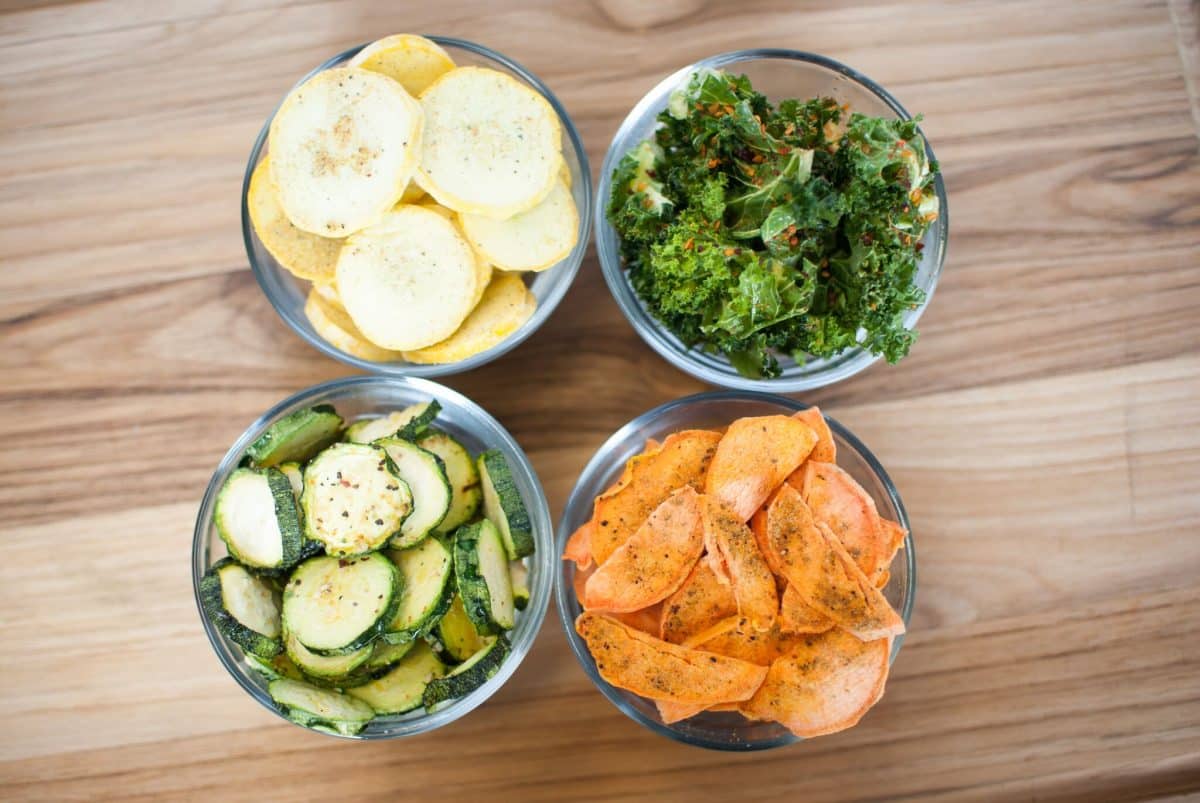
Fruits, vegetables, meats, dairy products, meals, desserts, and more. Freeze drying is safe for preserving cooked pasta and grains, unlike canning.
Those of you who follow me on Instagram know that I’ve freeze dried plenty of fruits and veggies, but I also tried some more interesting items like scrambled eggs and fajita filling.
What foods can’t you freeze dry?
Anything that’s mostly fat or mostly sugar will not freeze dry well. Fat won’t dry – but it can heat up and melt in the unit and coat every surface. When I tried pre-cooked pork sausage patties, they made a big mess.
Sugar binds to water, trapping it in the food. This is great for inhibiting bacteria growth, but it means you can’t freeze dry jams and jellies that are mostly sugar. Plain fruit and most desserts are fine.

How long does freeze drying take?
Around 24 hours was the estimated freeze drying time for an average load, but with the new software, I’ve freeze dried loads in as little as 13 hours. Warm, humid conditions increase drying time.
When you load up your home freeze dryer and hit “Start”, the unit takes you through a short menu. You select whether the food going in is already frozen (or not), and whether it is solid or liquid. Then the freeze dryer prompts you to close the drain valve and begin the cycle.
The new software is smart. The main differences between the old and new software are as follows:
- It measures the freezing temperatures (it used to only measure the warming temps)
- The vacuum pump is used as part of the freeze (when the temp of the food hits 0 degrees F, the pump turns on). This is important because the food gets colder faster.
- Once the food is frozen cold enough, it clicks immediately into drying (it doesn’t wait for the full freeze time to finish)
- The drying phase ramps up to the specified shelf temperature (this helps you get a better finished product)
- The final dry is the same
The biggest benefits occur if you put pre-frozen food it. However, there is still a decrease in the processing times for foods that aren’t pre-frozen. Anyone who gets a new freeze dryer also gets the new software.
The new software will be sold as an upgrade to older users, due to the customer service involved with it. Harvest Right has almost 50,000 freeze dryer customers. I received a copy of the new software to test and review.
Can you mix foods in the freeze dryer?
Yes, but watch placement. The website claims that flavors don’t mix, but we have found that they do. We ended up with freeze dried kiwis with a hint of green beans. Advice from the freeze drying groups suggests placing stronger flavored items on the upper shelves, milder items on the lower shelves.
As always, proper food safety rules should be observed. Avoid cross contamination, dry thoroughly, and package promptly.
How do I know the food is done freeze drying?
The freeze dryer senses the moisture content of the food and finishes the cycle automatically, but sometimes it’s a little off and you need to add extra time.
When you first remove food from the dryer, it will be a little cool from the ice buildup inside the chamber, but not “cold”. I always break open some larger pieces and check inside for cold spots. If you find cold spots, put the trays back in and add time to the drying cycle. Your freeze dryer will prompt you to check for dryness.
One of our readers, Rose, shares what she does to check dryness:
One thing I did choose to add to my arsenal for safety was a FLIR thermal imaging camera. With one easy picture, I can quickly identify areas on the tray that might not be completely dry, and pose an issue for long term storage. The image will show as being “cold” in the area that is not completely dry.
In the MANY loads I have done, I have only had one that didn’t pass (the pre-mashed potatoes) the very center of the tray was still cold. I was able to quickly extend the dry period for a couple more hours and produce a perfectly done product with no fear!
FLIR ONE IOS Thermal Imaging Camera for iPhone – works with the phone
FLIR C2 Compact Thermal Imaging System – standalone camera
How do I use freeze dried foods in recipes?
The book “Freeze-Drying the Harvest” provides detailed guidance for using your freeze dryer and rehydrating your freeze dried foods.
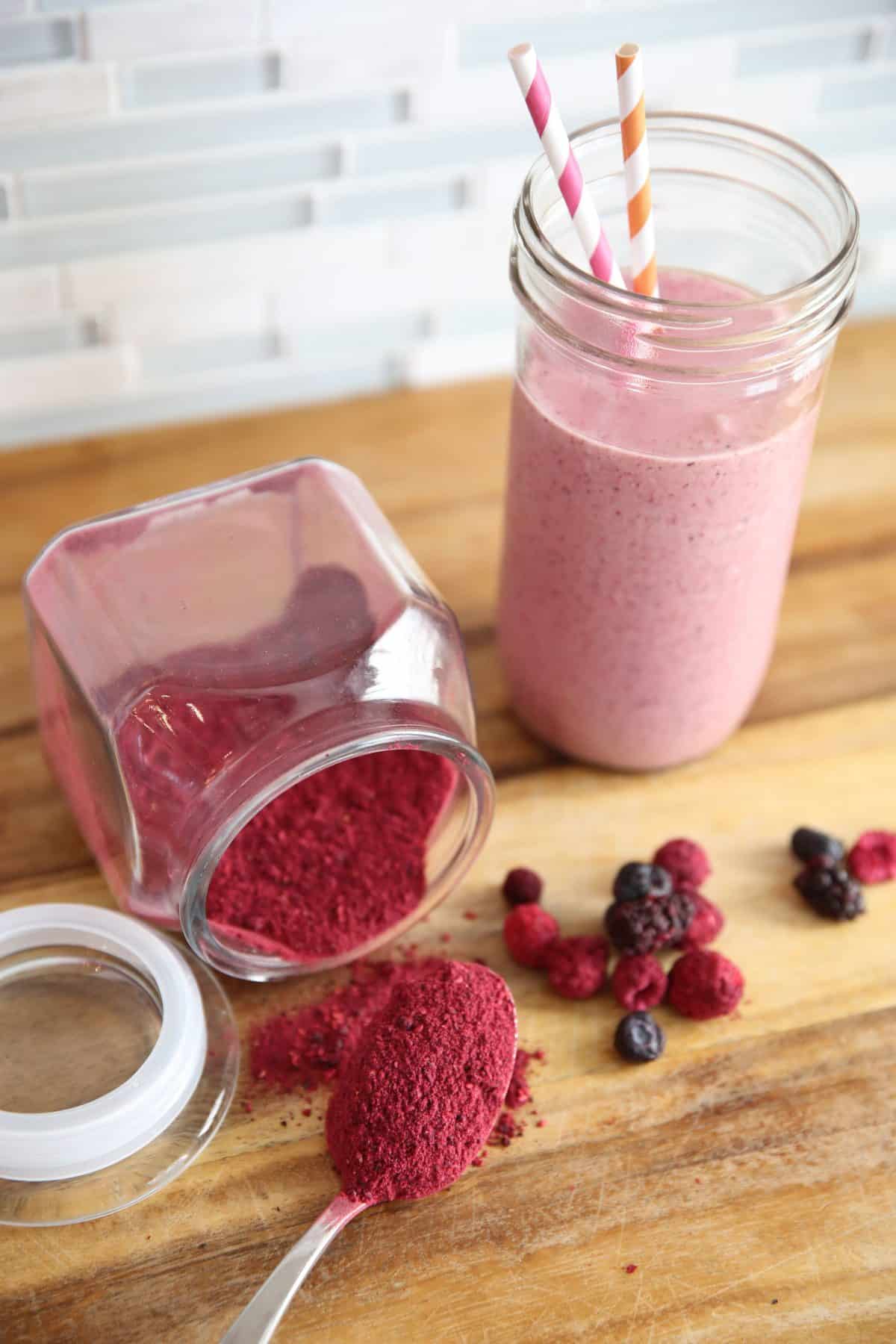
Freeze dried fruits and vegetables (those with less sugar) get so dry they are easily crushed into a powder in a blender or food processor. The resulting powder is bright in color and intensely flavored. You can use this powder in smoothies, or for flavoring. For instance, add strawberry powder to make strawberry flavored whipped cream.
How do I store the freeze dried food?
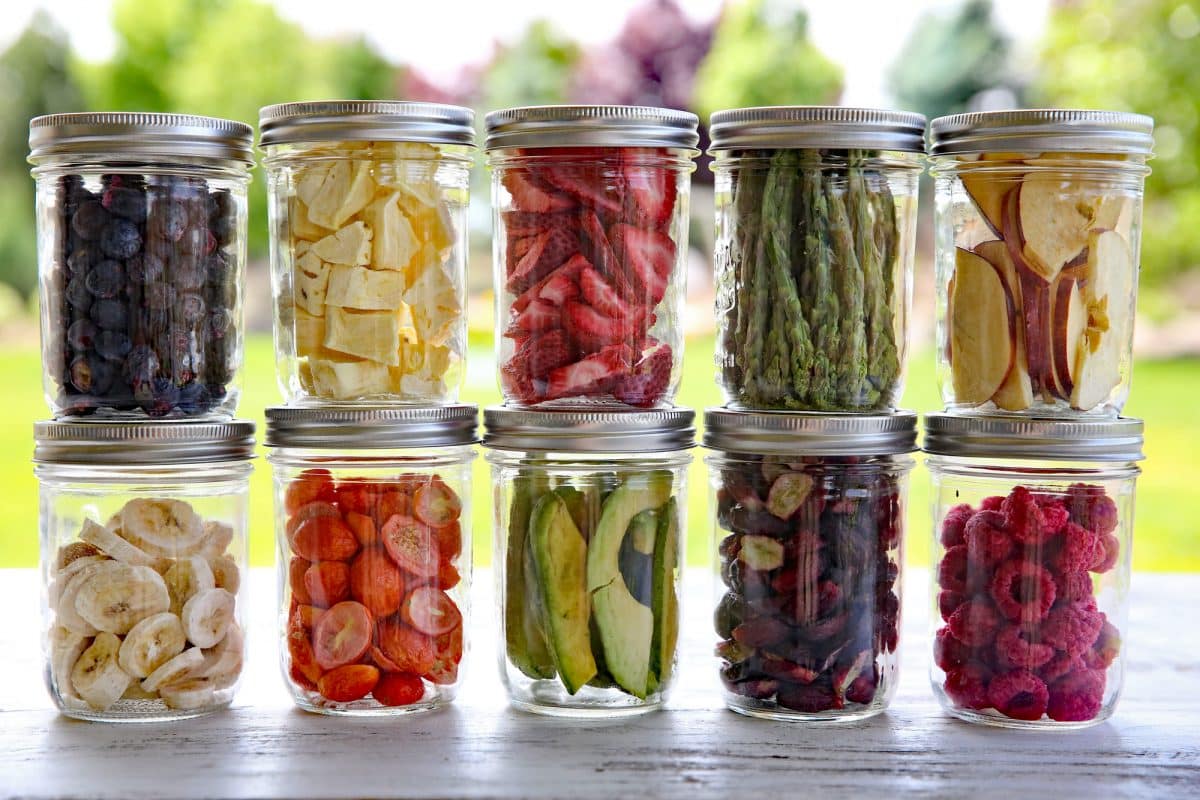
THIS IS VERY IMPORTANT! Once the freeze dry cycle is complete, you must package the food in containers that moisture and oxygen proof, such as Mylar, mason jars or cans. Adding an oxygen absorber helps to ensure freshness.
Meat with any amount of fat will go rancid in a matter of weeks if not properly sealed in an airtight container with oxygen absorber. Putting it in a mason jar and screwing on the lid won’t cut it. (We made that mistake only once.)
We use Mylar bags for most of our long term storage because they are light and durable. You can reuse Mylar, but of course the bag will be slightly smaller. Mylar is great for camping and travel.
Mason jars are a good choice if you:
- Aren’t concerned about the weight
- Have room for glass jars
- Don’t deal with tectonic disturbances or any type of disasters that might tip over your storage
You can use a Foodsaver attachment to vacuum seal jars, or remove the shelving from your Harvest Right freeze dryer and use the vacuum cycle. For long term storage, food is vacuum packed with oxygen absorbers in the jars. For short term storage, I vacuum seal without oxygen absorbers.
Can I use FoodSaver plastic bags for storing freeze dried foods?
No, not for long term.
Would you like to save this?
My friend Gale discusses the difference between Mylar and foodsaver bags in her post “Using Mylar Bags for Food Storage“:
First and foremost, the term “Mylar” is actually one of many trade names for a polyester film called BoPet film. For the technically inclined and the curious, that stands for “Biaxially-oriented polyethylene terephthalate”. This film was developed by DuPont in the 1950’s and was first used by NASA for mylar blankets and long term storage as it increases the shelf life of food by eliminating oxygen. Think superpowered aluminum foil.
Since then, many uses for Mylar have been embraced due to its high tensile strength and its moisture, light, gas and aroma barrier properties. Mylar is also a good insulator against electrical disturbances, which is why it is used for making emergency blankets.
For all of these reasons and more, Mylar bags are considered the gold standard when it comes to long-term food storage.
What about Vacuum Sealed Bags?
Vacuum seal bags, such as those for the FoodSaver are a wonderful convenience and easy to use. But alas, they do not have the thickness nor the strength of Mylar bags and they may start to leak after 3 or 4 years.
They are still a great alternative for your short-term and mid-term storage items, especially if you are diligent about rotating foods and using them for your normal meal preparation activities.
Your FoodSaver bags do not need to be improperly sealed to let air and moisture in. They are simply not as thick or as tough as Mylar.
Alternatives to the HarvestRight Freeze Dryer
There are knockoffs available from China. Based on reviews, they are inconsistent in quality and operations. Although they are cheaper we do not recommend them. We only recommend HarvestRight.
How much is a freeze dryer?
Home freeze dryers range in price from $1,995 to $3,495, depending on size and exterior finish. This cost includes the Freeze Dryer, Vacuum Pump, Vacuum Pump Oil, Oil Filter, Stainless Steel Trays, Mylar Bags (50 ct), Oxygen Absorbers (50 ct), Impulse Sealer, and HR Guide to Freeze Drying.
All units have a 3 year Limited Warranty, versus the one year warranty on many appliances.
Harvest Right also offers 0% interest financing, allowing you to lock in sale prices with a $250 minimum down payment. You pay as much as you want, when you want.
When you reach the designated down payment for the unit of your choice, they ship your unit. You then pay the remaining balance over 12 months with 0 interest.
Harvest Right also offers different accessories separately, such as extra trays, mats, Mylar bags and oxygen absorbers.
These units are a big investment. If you know you’re only going to use it a couple times per year (or not at all), spend the money on something else you know that you will use.
If you want more food security and food preservation options, read on. Home freeze drying is more affordable than ever.
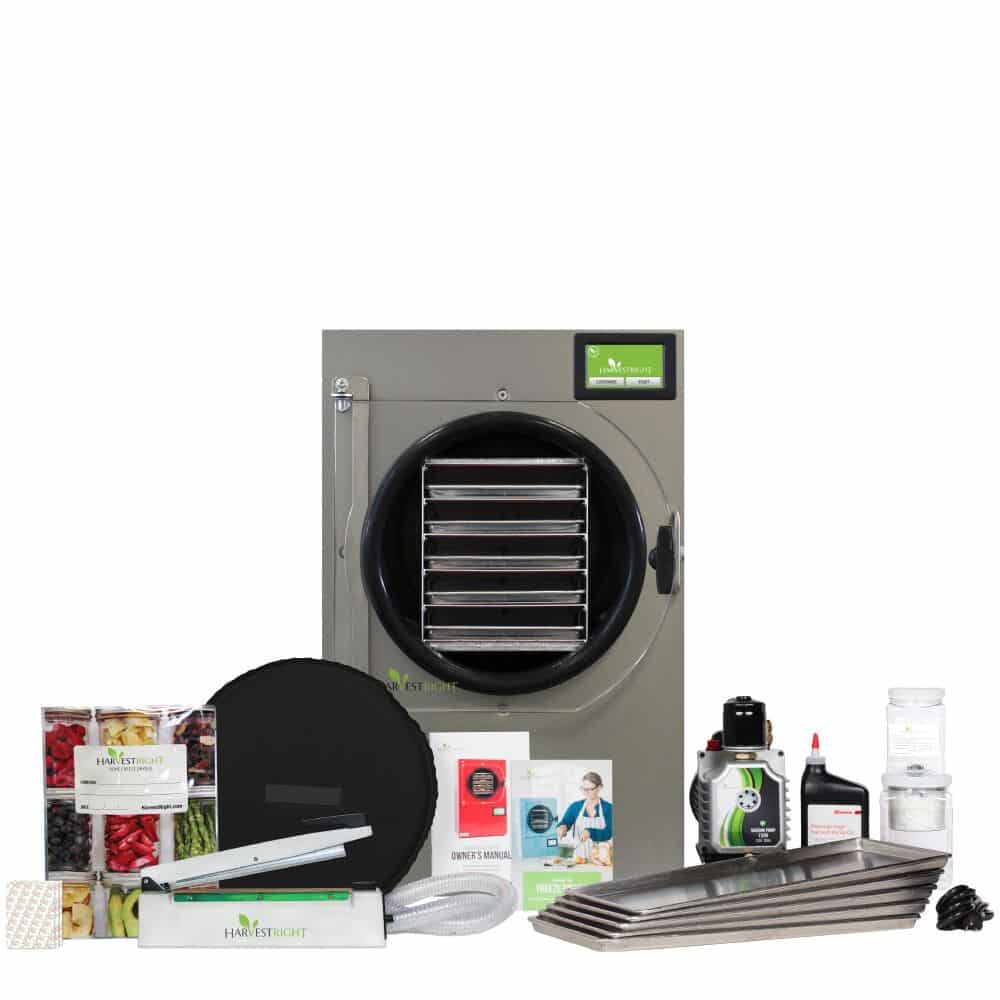
Layaway Option
Harvest Right offers a layaway option so you can lock in sale prices or reserve your machine. (They are experiencing a backlog in orders right now.)
How the layaway works:
- Lock in your sale price with a downpayment ($250 minimum)*
- Pay as much as you want, when you want
- Receive 0% interest until paid in full. Your freeze dryer will ship after you’ve made your final payment.
Locating your Freeze Dryer
Freeze drying machines eat up a fair amount of real estate. This is not a toaster oven or blender. The main unit is about the size of a dorm fridge, plus it has a hose and vacuum pump. Many owners buy a heavy duty rolling table to hold the unit, but a counter top or table can get the job done.
I currently have mine on a counter in the garage, against a wall. The on/off switch is at the rear of the unit, plus the pump has its own on/off switch. You need to be able to access both of those and have clearance for power cords.
Power requirements: The small and medium units use a standard 110 volt outlet, but it’s best to have it on its own circuit if possible. If you try to pair it with another heavy load appliance, you’re likely to trip a breaker. (I found that out the hard way, and we installed a dedicated circuit.)
The large unit requires a 110 volt (NEMA 5-20) outlet and a dedicated 20 amp circuit.
Watch the temperature. The recommended temperature range for operation is 35-90°F. The most efficient temperature range is between 50-75°F.
Although safe, operating your freeze dryer in temperatures above 90°F will affect batch times and reduce the life of the condensing unit (freezer).
As the temperature rises where your freeze dryer operates, so does the length of time it takes to finish batches of food. This happens because with hotter operating temperatures it is harder to reach the extreme cold required by freeze drying.
Don’t operate the unit below freezing. You are likely to have water within the compressor, and it can freeze and destroy your compressor.
Home Freeze Dryer Noise
During the first part of the cycle, the refrigeration unit is running. During the second part of the cycle, the vacuum pump is running. The noise isn’t super loud – think vacuum cleaner, not jackhammer – but it is noticeable. I’d highly recommend planning to have it in an area where the door can be closed.
Freeze Dryer Maintenance
As I mentioned earlier, the freeze dryer does a complicated job, so there’s a little more to it than just flipping a switch.
Think lawn mower, not kitchen mixer. If you regularly abuse your power tools and don’t do basic maintenance, don’t get a freeze dryer. I know many of my readers fix and maintain not only their own things, but other’s people’s equipment, too, so I’m not too concerned about this.
We drain the oil after each use and refill the vacuum pump with clean oil. Oil is filtered and reused. Before filtering, we freeze the oil. After freezing, we pour the oil off the top of the container into the filter. The water (as ice) sits in the bottom of the container.
Visit “Harvest Right Freeze Dryer Oil Change and Filtering” to see a video of the oil change itself and the use of an inexpensive homemade oil filter that works.
Oil-Free Freeze Dryer Pumps Now Available
Harvest Right listened to customer feedback, and they’ve developed a premium oil-free pump. All new freeze dryers ship with standard Harvest Right brand pumps, but the oil-free pumps may be purchased at an additional cost.
If doing an oil change every time you’re freeze drying sounds like a bit of a hassle, the oil free pump may be right for you.
Note that the oil free pump does use slightly more electricity than the default vacuum pump.
Things I Love About the Harvest Right Freeze Dryer
Home Freeze Dried Food is Tasty
Hands down, my favorite thing about the Harvest Right freeze dryer is the quality of the food. The commercial freeze dried food I’ve tried has been okay, but our home freeze dried products are amazing. I mailed some to a friend recently as part of a gift exchange, and she wrote back, “Okay, Laurie, spill the beans on how you freeze dried the fruits. My kids are absolutely in love with them!”
The texture of freeze dried food is light and crisp – more like chips than jerky – even freeze dried meat. We freeze dried fajita meat strips, and they tasted like crunchy little meat flavored Cheetos, the boys called them Meatos.
When we prepped freeze dried fajita filling for dinner, all we did was add a little water to the pan with the food, cover and heat through. Dinner was ready in less than 5 minutes. (If you happen to have a Sun Oven, they work well for rehydrating freeze dried meals.)
The fruit is so good – absolutely, intensely fruity, light and crisp. You can also powder your freeze dried fruits and veggies and use them as natural food colors (and flavors), as noted above.
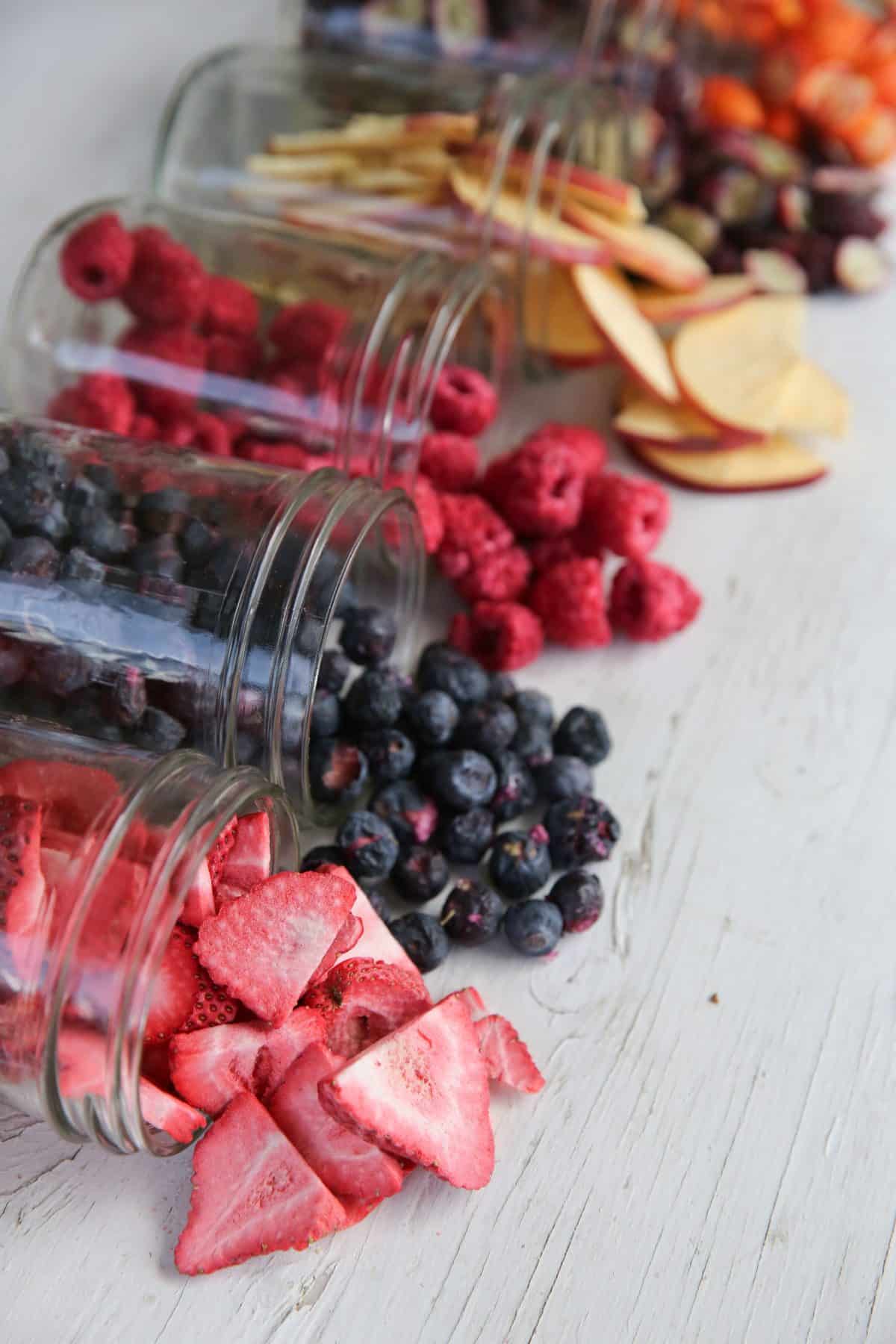
Home Freeze Dried Food is Easy to Make
Filling the unit is easy. For meals or other prepared food items, simply cook your food and let it cool. Cut into small piece, or thin slices (if needed). Load the food on the trays; place the trays in the unit.
For freeze drying fruits and vegetables, I prep them as I would for freezing or dehydrating. Blanching is recommended for vegetables, especially for cabbage family crops like broccoli. Without blanching, they may outgas during storage, potentially bursting the storage seal.
If you want to freeze dry soup or liquids (like milk), you can do that, too. It helps if you reduce the amount of water to cut drying time, but you can freeze dry “as is”.
You Can’t Beat Freeze Drying for Long Term Food Storage
The shelf life of properly stored freeze dried foods is amazing. Low fat content foods like fruits, vegetables, lean meat, rice, noodles, etc. have a shelf life of 20+ years when packaged properly. Higher fat foods have a 10-15 year shelf life. No other food supply compares for long term food storage.
Why bother with food storage that lasts so long? Because life happens. One year I might have an amazing crop of a particular item, then crop failures for several years. If there’s a job loss or an emergency, with my freeze dried food I know we’ll have a stash of food we actually like to eat.
Food prices keep creeping up, so why not preserve food now to take advantage of lower prices?
Freeze Drying at Home Can Be Allergy Friendly
Food allergies and sensitivities are becoming more and more common. Freeze drying allows you to safely preserve a wider variety of foods than any other food preservation technique. You know you’re only minutes from a safe meal. When traveling, you don’t need to keep food in a cooler.
I have a friend whose daughter has EoE (an allregic swallowing disorder). She found that freeze dried foods didn’t trigger her gag reflex, and was finally able to eat more of a variety of foods.
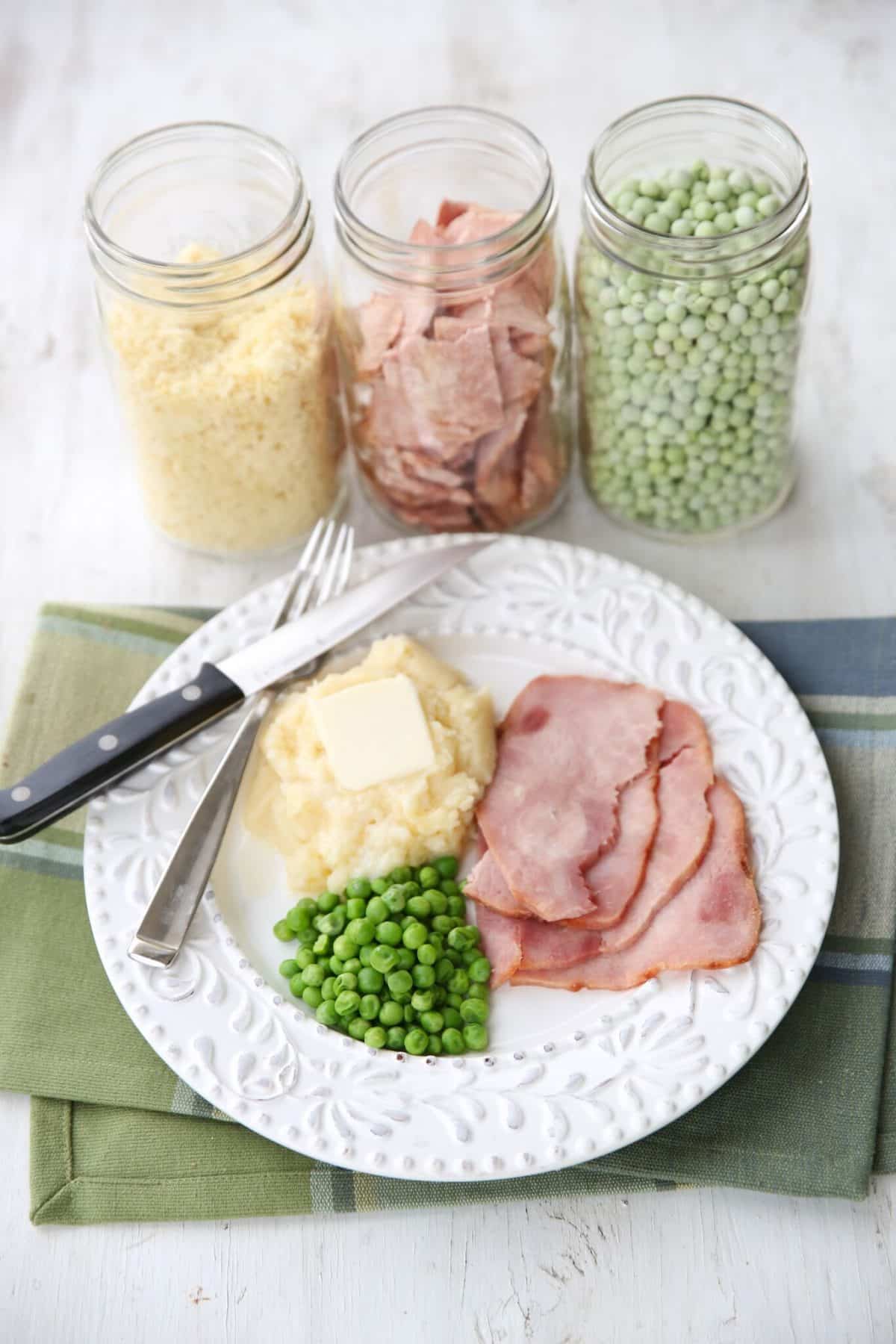
Home Freeze Drying is Cool
Pun or no pun, home freeze drying allows you to experiment with options you won’t see with commercial freeze dried foods – or other food preservation techniques.
One member of an online forum had his aging grandmother cook her favorite meals. He then freeze dried them to share with the family after she was gone. What an amazing gift to be able to taste a loved one’s cooking one more time.
Another couple was freeze drying some of their wedding cake and the bride’s bouquet. Still another took meal pouches to work and just added hot water to have a real meal while her co-workers were gnawing on granola bars as they worked through lunch.
My boys love crunchy snacks, so we’ve freeze dried things from sweet potato fries to pickled beet slices as chip and cracker alternatives. Freeze dried yogurt drops turn bulk yogurt into a special treat. Combining berries and yogurt into cute silicon molds makes a melt in your mouth dessert bursting with creamy berry flavor.

Are you ready to invest in a Home Freeze Dryer?
Do you:
- Want more options for long term, healthy food storage that your family will enjoy eating?
- Have someone with allergies who needs safe food options?
- Need ready made meals to go?
- Try to store abundant produce for when harvests aren’t so good?
- Get excited about trying new food options and preserving special memories?
If any of these sounds like a fit, take a closer look at freeze drying. I’m happy to answer any questions you may have. If I can’t answer them, I’ll find someone who can. Leave a comment and let me know your thoughts!

My referral link: https://affiliates.harvestright.com/115.html
If you choose to purchase a Harvest Right freeze dryer through my site, I receive a commission at no extra cost to you. (Thank you!)
You can watch the video below to see how I freeze dry strawberries. (These are the berries that had my friend’s kids raving about them.)
You may also find useful:
- The 5 Best Freeze Dried Foods
- Dehydrator Versus Freeze Dryer – What’s the Difference?
- 11 Freeze Drying Mistakes to Avoid for Best Storage Quality
- Harvest Right Freeze Dryer – Cost Analysis and Optimizing Load Size
- Home Food Preservation – 10 Ways to Preserve Food at Home
Originally published in 2016 with the title “Home Freeze Drying – The Good, the Bad and the Ugly”, updated in 2019 to current title. Harvest Right fixed “the ugly”, which was the original messy pump, so I took that out of the title. I’ve also added information based on reader feedback. Please scroll through the comments for more Q&A!
Great review, thanks! Now if someone asked you to freeze dry a load of food, what would you charge?
I’m still busy freeze drying things for our own use, so I don’t have plans to sell any freeze dried food any time soon. The food tastes very good, and I have teen boys in the house. If I had to put a price on it, I’d start with the base price of the food, some amount for prep time (for instance, if it was cooking a recipe) and also check pricing on comparable commercial freeze dried foods.
I guess I asked wrong, sorry. I meant what if someone came to you with things from their garden, all cleaned, cut and blanched and wanted to freeze dry them in your machine. How would you go about calculating it?
It depends on how technical you want to get. Here are estimated electrical costs from the Harvest Right website:
If you wanted to consider it as a business investment, you’d first have to estimate a life on the unit. The warranty is one year, but I have a friend who’s been operating his for over 5 years. I honestly don’t know how long a unit might last with proper care, but I’m hoping for 5-10 years. Then you’d need to calculate how many loads you could reasonably expect to do during that time, and divide the unit cost by the numbers of loads. During winter, I’ve been getting cycles that are around 24 hours on produce, less on meats (23 – 23.5), but in warmer temps or with wetter foods, cycle time is longer. Figure in your electrical costs, the unit cost per load, something for your time, some money for oil and filters, and then you probably want to add some padding to the cost if you actually want to make money doing it.
Thanks!
Hi Laurie
Great review and Q&A. I had a few questions…
You touched briefly on “fish”. Being from Alaska I expect that fish might be one of the main ways we will want to use the unit… for both fresh fish and smoked fish. I’m wondering about the rehydrated consistency of salmon/halibut fillets? Would we cook it (after rehydration) just like we cook normal frozen (&thawed) fillets? (ie. does it stay together or crumble into a powder?)
I was wondering about the foodsaver that we already have. We can seal without “vacuuming” …so even though it would not last as long as the mylar bags, if it lasted 2-3 years in those bags, it would probably be enough for our needs. Guess we’ll just have to look at the relative price between the plastic and mylar… and i presume that the sealer on the foodsaver would likely work for the mylar bags.
We are working on getting into “retirement gardening” and so far have started apple, cherry, and plum trees and have planted raspberry, rhubarb, and gooseberries and want to start haskaps, black currents, and perhaps other fruits this summer. If I had a concern, it might be in terms of the volumetric limitations once the trees & bushes get mature 🙂
…another question that I was wondering about is about fruit “skin”. the video I watched showed the fruit cut into slices or halves. This would be understandable for the larger fruit… but I would hope that small fruits like gooseberries, currents, blueberries, etc… would not need to be “sliced”??
The trouble with free drying smaller fruits (and this goes for dehydrating, too), is that the fruit skins are designed to keep the fruit from drying out. Theoretically you could dry them without pretreatment, but it would take much longer and they might still be prone to damp centers. As I mention in the Freeze Drying Mistakes post (https://commonsensehome.com/freeze-drying-mistakes/), there’s several ways to pretreat.
“Grapes are typically sliced in half lengthwise (like folks with smaller kids probably already prep them). We prep cherry tomatoes the same way. For blueberries and cranberries, I freeze them on a baking sheet before freeze drying, and then give them a very brief spin in a food processor. The goal is to nick the skins ever so slightly so water can escape, while leaving the fruit intact. I’ve also seen folks poke holes in individual berries, but the pre-freeze method is much faster.”
I haven’t done fish yet (my husband had a bad experience with a tapeworm in fish as a boy and hasn’t been able to enjoy them since), but based on video shared from other users, fish fillets can be dried intact and rehydrated whole. You wouldn’t want to bang them around like you could jerky, but the fillets I saw looked good. The person making them mentioned that the biggest concern (which is important cooking any fish, of course) is not to overcook, or it will get rubbery. It does tend to be a little drier, too.
The Foodsaver will seal Mylar, it just won’t vacuum seal it unless you get creative. Whichever way you plan to store, oxygen will turn the fat rancid, so either vacuum sealing or O2 absorbers would be a good choice.
If you can’t process the fruit fast enough, there’s always homemade wine!
Trying to figure out why the foodsaver won’t vacuum vacuum seal mylar since that is what my foodsaver does. It vacuums out the air and then seals the plastic. Am I missing something?
Foodsavers need texture on the bags so that the air can be vacuumed out through those little dimples. Mylar presses flat, preventing air from being sucked out. If you want to vacuum seal Mylar bags, you can do a work around by inserting about an inch wide strip of the textured part of a FoodSaver bag into the edge of the bag that’s being sealed. People have also used attachments and straws and all sorts of other bizarre approaches, but the strip is the easiest. That said, if your O2 absorbers are working properly, sucking air out is redundant. I did it a few times, but now I don’t bother.
Have you ever used your FoodSaver to seal a chip bag? Same concept. It’ll seal it, but you can’t pull a vacuum on the chip bag.
Hi Laurie,
I just took the leap tonight and purchased a red regular sized Harvest Right freeze dryer. Whew! It was not an easy purchase and now my husband is angry with me. Nothing new, he fought me for 2 years on getting rid of cable t.v. and now can’t stop telling everyone he meets about how much money he’s saving. Yet, the initial output for the new T.V.s and streaming units was a little pricy, just like the freeze dryer, it will pay for itself in no time????.
I can’t wait to get started saving even more money by freeze drying grass fed meats and organic produce and his favorite cheese!
He doesn’t do the grocery shopping and has no clue as to how much things have gone up, which is my main reason for this extravagant purchase, along with having foods in case of emergencies and lightweight easy storage.
I really appreciate your site and all the honestly answered questions, this will be a big help in the future when I receive my unit.
My daughter is hiking the Pacific Trail this summer and I’m can’t wait to send her off with nutritious & delicious food that won’t weigh her backpack down! Her last trip she lived on granola bars which to me is just gross, with all the garbage they put in them. She’ll be in heaven with fresh fruits, eggs and meats.
So, to make a long story short I’m excited to get my journey started with freeze drying and your site is what swayed me to go for it.
Thank you!
Hi Nanc, and congratulations on your freeze dryer purchase. Don’t forget to check out “11 Freeze Drying Mistakes to Avoid for Best Storage Quality” for some tips I’ve learned while using mine.
Freeze dried fruit is amazing, and freeze dried just about everything else tastes like FOOD instead of preservatives and fillers. Freeze dried cheese is intensely cheesy. If you cut it in thin slices and freeze dry, they taste like cheese crackers – except no cracker! I watch for sales and buy in bulk so I have enough to freeze dry. Pickled beets and sweet potato fries make excellent snack food. So many tasty things to try….
I am learning sooo much from reading the questions and your comments. Thank you all who share.
I read the ‘cost analysis’ ideas, but how do you put a price on the nutritional and energy value that home-grown, organic, fresh from-the-back-yard food, herbs and foraged edible ‘weeds’ can provide? I don’t have to read labels with coded names and unpronounceable chemicals, eat hidden GMO’s, wash off pesticides, insecticides or herbicides, or wonder what petroleum residues are leaching out of plastic packaging and the BPA (or ‘new-and improved’ BPS) lining the cans.
FYI: I just happened to be in our local ‘preparedness/prepper’ store and picked up Katrina Blair’s book, The Wild Wisdom of Weeds, and found it fascinating. I have a new appreciation about my ‘weeding’ chores. She has learned how to hike for days, taking no packaged foods or water, just living off the land. The 13 plants she features are found everywhere humans are on all continents around the world (coming quickly to Antarctica as the ice melts).
Thank you Laurie for all you do,
Marsha
Hi Marsha! Katrina’s book is fascinating, isn’t it? Her palate is wilder than mine, though. Some of her plant suggestions I enjoy, but with others the bitterness is too much for me yet. I can’t imagine gathering enough dandelion seeds to make dandelion “seed milk”, but they’re fun to nibble as I work in the garden.
It sounds like you, too, have been doing your research on the quality of the food supply, and are looking for better options than the current status quo. Sometimes it all just makes me shake my head – how can we have such an abundance of cheap calories, and still be suffering from malnutrition? But then you look at the dead soil, how far the food travels to the table, the high level of processing, all the additives and preservatives… we can do better.
Oh, one other thing. Salmon and golden chanterelle mushrooms? The salmon I am guessing would not be ideal to freeze dry due to the fish oil? And any experience freeze drying Chantrelle mushrooms or any mushrooms for that matter?
Thanks
I have not tried fish (because my husband isn’t a big fish guy), but others have freeze dried it successfully. Most seem to freeze dry fish raw. The storage life would be shorter (5-10 years?), but it’s still a viable product.
People also freeze dry mushrooms. They turn the oil black (from the spores), but it works. They can be freeze dried cooked or raw.
I am becoming intrigued with this whole freeze drying concept. What concerns me is the oil refill. How often do you replace the oil in a typical month? How much does it cost to replace the oil? Also, after reading that the freeze dryer pulls in about 1300 watts an hour got me wondering about the added cost of running the dryer. In my area, the electricity costs 8.16 cents per KWhr or about 11 cents per 1300 kwhr. Since it takes a typical 24 hours (no?) to freeze dry a single batch that amounts to about $2.60 for a full day of use. It might not seem much but if you use it on a regular basis that might add another $40 to $70 to your electric bill each month (depending on season and amount of food freeze dried). Of course, having food around that can last 10, 15 or 20 years is a comforting feeling and you really cannot put a price on that when things do turn south.
One of the first things I did was buy an oil filter, which allows me to reuse the oil safely. We drain after each batch and freeze it, then filter. It’s been almost a year that I’ve had the unit, and we just opened our second gallon this week. (We’d been using the same gallon of oil since the beginning.) I did buy a Harvey filter, but many people just use simple toilet paper filters and those also seem to work well.
Yes, the electric costs could add up if you were to run non-stop. For us, we typically end up doing a batch of something every other day or every two days at most, and there hasn’t been a massive jump. There’s a power spike when the pump each device kicks on, then the load levels out. (Which reminds me, I should dig out the Kill-a-watt meter and hook it up to see how much I draw for a full load.) Now, if you wanted to have a set up like a lady I know in Florida who has a dedicated room with four freeze dryers and at least two of them running at all times, that would be a jump in the electric bill. (I’m sure it impacts her AC, too.) We really love the flavor of the freeze dried foods we’ve done at home. It’s emergency food you’d want to eat instead of food you have to eat because that’s all you have. Plus, food prices just keep creeping up. I know I’ll get a return on my investment if I stock up on food on sale now.
Interesting article. When was it written?
Was wondering how thick your Mylar bags are. Also, what sizes do you find are the most practical for storing food. I know there are gallon, quart and smaller ones, but which size do you use the most.
Thanks.
We update the article regularly. We use almost exclusively mylar quart bags for freeze drying with O2 absorbers. We use 5gallon mylar bags cut in 1/2 for bulk items like rice, beans, salt, and sugar and place those in 5gal food grade buckets but those are not freeze dried foods.
We update the article on a regular basis. We pretty much exclusively use mylar quart bags for freeze dried food.
The 5gallon bags are for beans, rice, flour, salt, sugar in 5 gallon buckets (regularly dried not freeze dried foods).
My wife and I have had one of these machines for about a month. We had been saving a little each month in order to buy a year’s supply of food storage when we stumbled across this. For the same money as a year’s supply of freeze dried food for one person, we can make whatever we want now. We love this machine, the kids love the food. My favorite part is to take dinner leftovers at the end of the week and dry them, then we reconstitute them to see if we like it. Everything tastes just the same as it did the first time! I would definitely recommend it to anyone.
Glad that it’s worked out well for you, Hershel.
We have found that freezing our food before putting it into the Harvest Right really helps cut down on the cycle time. Also, using parchment paper under the food is very helpful.
I think pre-freezing is especially helpful with high moisture foods, and I wouldn’t ever do a load again without lining the trays.
Hi, Glad you put the pro’s and con’s on here. Do you think that you could hook it up to solar panels? If so I wonder how many you would have to get and how many batteries? If you could find out for me, I would be grateful. Thanks, cat
Given that it’s recommended that the units have their own dedicated circuit due to power spikes at certain times during operation, I don’t think they would be a good fit for solar. I am double checking with Harvest Right to see what they recommend. As for specific panel and battery requirements, you’d need to evaluate your available solar resource and do some calculations or work with a solar contractor to see how many panels would be needed in your area. Sunlight intensity and availability varies greatly.
From Dan at Harvest Right: “The freeze dryer pulls on average about 10 amps per hour or 1300 watts per hour so we don’t recommend only having solar power to run the freeze dryer.”
You might have covered this so sorry if you did. We were recently given the harvest right dryer and I was wondering where you read up on oil filtering.
There are discussion threads in various online groups. I first read about it in Betty’s Harvest Right Freeze Dryer Group on Facebook. I use a Harvey Filter.
We prefer the flush kit for filtering oil. Its the only product out there that is mess free, and pretty simple to use and install. They also warranty your pump for a year. Which is nice. Here’s their link https://www.freezedryeraccessories.com
Does that kit void the original pump warranty? (Not that that would be an issue if they take on the pump warranty.)
That canister filter is a good idea, but how many batches can be dried in the Harvest Right before the filter canister fills with water? How do you know when it’s full of water and needs to be changed? Water is the main contaminant as far as volume is concerned. It needs a water separator with visual indication so you can see when it needs to be changed or emptied.
Hi
great article !
How would I be able to freeze dry liquids such as flavouring extracts ( banana extract, strawberry extract etc) , sometimes they contain oil as well so could anyone shed some light on how I could turn these liquids in to powder forms.
thank you !!
I’m sorry, but you wouldn’t be able to freeze dry oil based flavorings – because they are oil based. You could freeze dry the fruits themselves, powder them, and use them for flavoring. Freeze dried fruit powder is very delicious, and adds color as well as flavor.
I’ve not seen any discussion about storage environment. For one that lives in Southern Arizona, it is not unusual for the internal temperature of our home to be 80 to 82 degrees for 3 to 4 months of the year during the summer. How does temperature impact the life and quality of the freeze dried food?
There’s no specific increase in rate of spoilage (handy reference chart), but higher temps will decrease shelf life. The worst option is extreme temperature swings, which may cut storage life in half (possibly even worse). Anything that you could do to reduce the temp and keep it steady would help. My husband suggested under bed storage, since it would be likely to stay cooler there, or a root cellar type setup where you could use earth temp to keep your storage cooler.
I bought one of these freeze dryers a month ago and have run 21 loads thru it with not much difficulty. I, like you, drain all the hot oil from the pump right after the freeze drying cycle completes. I then add exactly 23 oz of vacuum oil to the pump and never have an overfill misting problem as you describe. So far I have freeze dried chicken, turkey, ham, apples, bananas, potatoes and a couple of different entrees. I tried to freeze dry hot dogs that I had previously boiled and made a giant mess out of the inside of the chamber. To make matters worse, the hot dogs refused to completely dry. I have successfully freeze dried brown hamburger but you need to be diligent in removing the fats and oils and put into the drier ground beef that is dry or you get grease on the interior of the freezing chamber as well. I have been keeping track of weights into and out of the drier so I know what percentage of water each food is. I have also been slowly increasing the size of the loads I put into the drier and I am currently up to about 4.5 lbs of removed water. This machine is great and I have also found the customer service very helpful.
Thanks for your feedback, Dennis. I’m sure part of our issue was teenage boy lack of attention to detail on the oil filling. I applaud you on your dedicated record keeping. I’ve had no problem with ground beef, but we use grassfed beef that is naturally very lean. Hot dogs – not surprised they didn’t dry, but I appreciate the warning.
Hi Laurie
I am a flower lover and would like to know if there is a chance to process some flowers like roses same as food stuff with this system?
Rgds
Abby
Yes, the home freeze drying unit can be used to freeze dry flowers. I’ve seen a number of members in online groups preserve blossoms.
Great information. I went on a weight program and lost about 60 pounds, but it was costly. Part of the product was freeze dried meals. I then found replacement products, bars and shakes and through a food storage site, I purchased freeze dried meals in the #10 cans. I have about ten cans, and they cost about 25.00 and last about 3-4 months. So that is $1000 a year at this rate and some I don’t care for. When we move to another house, I will for sure be getting one of these, I will be living closer to my step daughter and step daughter in law. It will be nice to share with them.
I have been thinking about a freeze dryer for awhile now. I consider myself to be somewhat of a prepper. I have purchased some dried foods from commercial sources and you are right, it’s quite expensive. I pick up a few cans here and there but not nearly as much as I think I may need if disaster were to strike. I also hate the produce aisle in the winter months. All you see is produce from foreign countries which isn’t too trustworthy and sometimes not the best condition because of the travel time to get to our markets. I also prefer to buy organic produce. Like others, the cost has been a deterrent for me.
I do have a couple questions. Are butter and milk to fat laden to freeze dry into powder? I’ve seen them for sale at the commercial companies. Also you mentioned mylar, I have a foodsaver would that work the same for preservation if I put and oxygen absorber in it? Does the machine come with drying times for different foods and a list of foods that can be dried? Or is there a book somewhere with directions? I’m thinking of asking for a freeze dryer for Christmas, do you think they might have another sale? Sorry for all the questions but I am really interested in this. Thanks
Hi Ginger. No need to apologize at all.
Butter is a “no” for home freeze drying, since it’s almost entirely fat. Milk and other milk products like cheese, sour cream and yogurt work just fine. (My boys inhaled the yogurt drops that I made.)
Foodsaver bags, while useful for a great many things and the preferred option for freezer storage, are not recommended for long term storage (over 2 years). With time (3+ years) they are more likely to allow air in and have seal failures. Freeze dried food can also become brittle and powdery, which could gum up your vacuum sealer.
The unit does include a how to manual and basic drying instructions – what can be dried and what shouldn’t be. Drying times vary widely depending on ambient conditions, so there is no “exact drying time” for different foods. Our unit is in our attached insulated garage, and I’ve noticed a big difference in drying times from summer to fall.
How long does the drying process take. I’m sure it is different from food type to food type; but how long does a machine full of fruit take vs a machine full of meat? Thanks!
Meat will generally go more quickly than fruit because it has a lower water content. Drying times vary dramatically with temperature and humidity levels in the room the freeze dryer is in, too. I have my freeze dryer in an insulated attached garage (not air conditioned). In warmer weather, I was seeing drying times over 30 hours. Now most loads are around 24 or less.
These are on sale at $500 off for Thanksgiving, very tempting! I like these kind of products, I have a water generator, coffee bean roasting whirley popper, would really like to add to my unique kitchen with this unit. Regardless, not sure this would be practical for apartment dwellings. I’m brainstorming about community participation in agreement with the concept for long term food storage in our building community.
They’ve also including $300 worth of storage supplies, too, until the end of the month, which is a nice bonus.
Dear Laurie,
Great article on freeze drying. If a person wanted to kick it up another notch, or two, a refrigerated cold trap inline between the vacuum pump and the freeze dryer unit would capture most of the water vapor and particulates, (they chill to -55 C or -105 C depending on model), thereby protecting the vacuum pump and oil. This would make a big difference in extending the life of the vacuum pump, pump oil, maintaining the low vacuum, and lessening maintenance on the vacuum pump/oil changes. Having to constantly drain the oil, freeze it to freeze out the water, and filter to remove ice and particulates, would be unnecessary or greatly reduced. Traps can be found on the used market to reduce costs, but they are still a significant investment. And, replacing the provided vacuum pump with a much higher quality corrosion resistant pump with an integral recirculating oil filter system and exhaust oil mist filter, would greatly improve performance and durability. While very serviceable, the included vacuum pump is not corrosion resistant, and will eventually wear out with subsequent loss in vacuum ability. The inclusion of an exhaust oil mist filter greatly reduces the escape of oil mist by allowing the exhaust oil mist to re-condense and return into the pump. Furthermore, oversized oil mist filters are available that really do an amazing job of capturing practically all of the oil mist. Either way no more oil soaked messy sock filters! And with the recirculating oil filter it does not get much better. High quality pumps are quite expensive, but they last a long time with proper periodic maintenance (that equates to using a cold trap and periodically changing oil). Often they can be found on the used market. These upgrades do cost, but they make for a very nice dependable system. The Welch Freeze Dryer Pump System 8917A-80 is one such pump. A used pump without the oil filtration accessory can be more easily found, with great savings in price, and retrofitted with a new oil filter accessory. Such a system with a good cold trap and corrosion resistant vacuum pump with recirculating oil filter would be the cat’s meow. Just a thought…
Say David, sounds like you have some experience with vacuum pumps. Can I contact you when I need to replace mine? Where would one find a used refrigerated cold trap?
Hi Laurie,
Vacuum technology is a huge field with countless applications, and while I’m no expert by any means it does make for fascinating study for the technically curious among us. Sure, contact me when you are ready to replace your vacuum pump and I’ll point out some options.
Ebay is a good place to start. Right now there happens to be a used Welch 8917A-80 listed. As far as used refrigerated cold traps go, or vacuum pumps as well, there are lots of used scientific equipment sellers. If you are near a major big city there may very well be some local sellers. Its almost a certainty. Otherwise the internet of course. A search using the model name and number, with ‘used’, is very effective. Ebay again is a good start.
The Thermo Savant ( older models have the brand name Savant) RVT4104 Refrigerated Vapor Trap goes to -104 C or -105 C, and they are common on Ebay and with numerous sellers. They have a digital temperature gauge, which is essential to know what the temperature is and see it is working properly while in use. They are very heavy. Two strong people to lift it. Be aware there are 115 volt and 230 volt models. Google the model to find all the technical info. They require a silicone heat transfer fluid called Cryocool (expensive, but shop around on google- around $147.00/liter) that is contained in the refrigerated stainless steel reservoir, and a removable glass trap (4 liter size) sits in that which connects to the vacuum line in and out. A liter of Cryocool lasts a long time (part number SCC1). There is an old style glass trap insert, and a new style. New style seems more common. Old style simpler but more delicate glass connections to the vacuum line (which requires thick walled rubber vacuum hose, Savant quick connects are not necessary but are very convenient). Some used chillers come with a glass trap, some don’t. The glass traps are very expensive new.
Another source is on Labx.com where lots of used equipment dealers advertise. Just looking around that website provides lots of leads for used equipment sellers. Freight costs add to the price. Finding a local dealer is nice to help in case there is any problem with a unit. Just make sure the unit has been tested and reaches its low temp of -104 C/-105 C as getting repairs done can be very expensive and requires a specialist. A good unit should last a long time-years of service. But there are plenty of “parts only” non-working units that require fixing. Avoid those. Incidentally, some units happen to chill to a lower temperature than others-luck of the draw. All go to -104 C, some even reach a bit colder (even to -111 C/-112 C but that is not common) .
The Thermo Savant RVT400 Refrigerated Vapor Trap goes to -50 C and is smaller (about by half in foot print) and much less weight (still heavy), and cheaper. But it does not have a digital temperature gauge, so impossible to monitor temperature while in use. One can test the unit by immersing a suitable thermometer in the Cryocool fluid with the glass trap removed. Also, a colder trap works even better for removing water vapor (review cryopumping for explanation). Your choice if you decide to go with Savant. The RVT4104-120 (120 volt version) with the digital thermometer is a better choice I think. Search online for the instruction manual to familiarize yourself with operation and simple maintenance. Older model manuals will refer to old style glass trap use. Newer manual for use with newer glass trap design. Have fun.
Those sound pretty huge. I’m not sure where I could put something that big near my unit.
David, depending on the oil in the vacuum pump, a cold trap could get cold enough to cause back streaming from the pump. Pressures (500mT) aren’t low enough for the oil itself to be cryopumped (~1mT), but contaminants in the oil might. That might actually be an advantage in that it would clean up the oil a bit. I don’t know what temperature would be optimum, but I suspect that -30 would be cold enough to prevent most of the water from reaching the pump.
I think it’s too bad the designer of this unit didn’t include a cold trap on the vacuum line. It could easily be cooled to -30 by the refrigerator they already have. That would probably prevent most of the water contamination of the pump oil.
The oil demister is really weak. Even using a larger PVC fitting would potentially be a great improvement.
Just curious does it run your electric bill up super high? I’m interested in buying one to make dog/cat food. Mine already eat a freeze dried food from the store and it gets expensive. Wondering if this would be worth it.
No, it doesn’t draw a lot of juice. I haven’t noticed a significant shift in our electric bills (nothing like running the AC, for instance). I’ll make a note to hunt down the Kill-a-Watt meter and hook it up to see what the load is.