
2 Homemade Ketchup Recipes – One for Canning, One Probiotic

This post may contain affiliate links. Read my full disclosure here.
Homemade ketchup seems somehow mysterious, but once you find a good recipe, it’s not complicated to make. My youngest loves ketchup, so I tried out several homemade ketchup recipes until we found some he liked.
The first ketchup recipe uses fresh tomatoes, and is suitable for canning or freezing for long term storage.
The second ketchup recipe is lacto-fermented, so you get some probiotics with your burger and fries. It starts with tomato paste, so it’s a cinch to whip up.
Would you like to save this?
Homemade Ketchup Canning Recipe
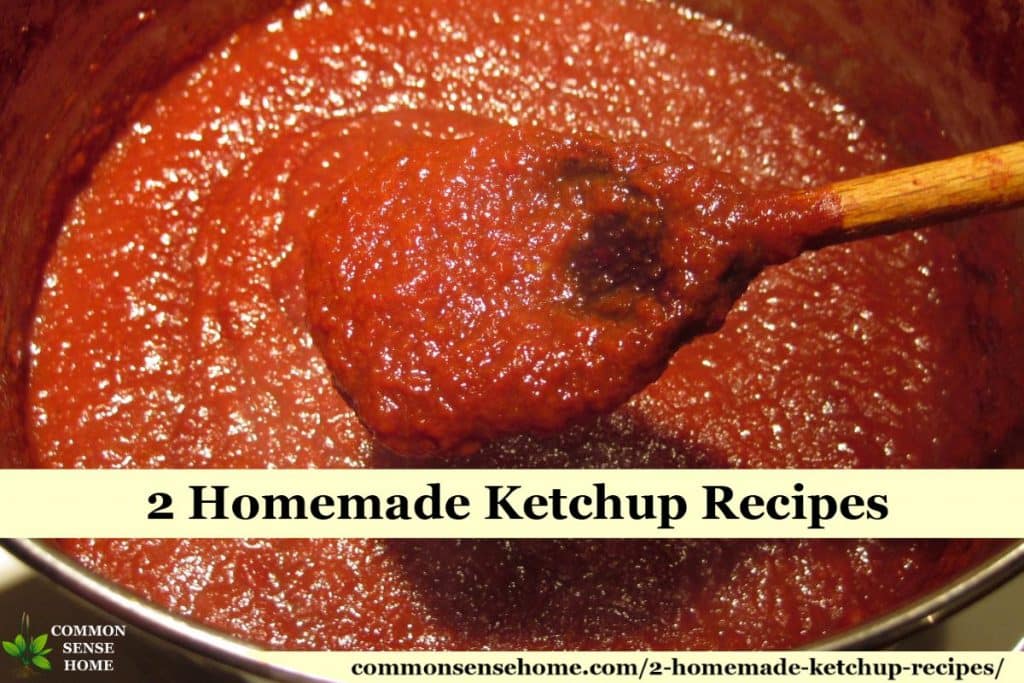
The key ingredient to this homemade ketchup recipe is patience. To get a nice, thick ketchup from fresh tomatoes without adding any thickeners, you need to cook it down slowly.
Early on, you can keep the heat a little higher and simply stir frequently, but as the sauce gets thicker, you need to keep the heat lower, as it will be more prone to scorching and bubbling all over the place.
Because I save my paste tomatoes for salsa, I usually use juicier tomatoes for this recipe and more of them. Paste tomatoes will cut cooking time and you can use less of them.
When I make homemade ketchup for canning, I generally use it as a means to use up all the odds and ends of tomatoes rolling around, such as excess cherry tomatoes or slicing tomatoes that have split.
I’ll put a pot on the back of the stove and keep measuring tomatoes into it over a day or two, slowly cooking them down while I’m working on other projects in the kitchen. (You could also use a slow cooker or Instant Pot.)
The taste of this homemade ketchup recipe is similar to a popular national brand – no big range of added spices – but like most home processed products, the flavor is richer and deeper.
You can really taste the fresh tomatoes, onions and garlic. Because there is added vinegar, this ketchup is safe to can in a water bath canner.
Ingredients
Tomatoes – about 25 lbs paste tomatoes or 30 pounds mixed tomatoes (cherry tomatoes are fine)
1 cup onions, finely chopped
1 teaspoon salt (optional)
1 cloves of garlic, minced
1 teaspoon black pepper
1/2 teaspoon cayenne pepper
1 cup cane sugar (white or brown)
1 cup apple cider vinegar
Directions
Core and quarter tomatoes and place them in a heavy bottom pot (or pots) or slow cooker on low/medium heat, stirring frequently.
Cook until soft and run through a food strainer, food mill or chinois to remove seeds and skins, or cook down until volume is roughly half of original volume and then run through food strainer, food mill or chinois.
As I mentioned, I usually make this while working on other things, so I do my straining when time allows.
Continue cooking tomato puree until volume is roughly 1/4 of original volume.
Add remaining ingredients, cook until onion and garlic are soft. Puree with hand blender or food strainer, or leave lumpy – your choice.
Cook on low until desired consistency is reached.
While the homemade ketchup recipe is cooking down, prepare your canner, jars and lids. The water bath canner should be filled enough to cover your jars with two inches of water.
Jars should be sterilized and kept hot. I run mine through the dishwasher. Some people heat them in their canning water or in a warm oven.
Ladle into prepared jars, leaving 1/4 inch headspace. Wipe jar rims and threads. Cover with two piece lids. Screw bands until finger tight.
(Air exits from above the food during processing to leave a vacuum behind, and the vacuum creates the final seal, not you. Just FYI to those who are new to this.)
Process for 15 minutes in a water bath canner. Turn off heat, remove canner lid, let sit five minutes.
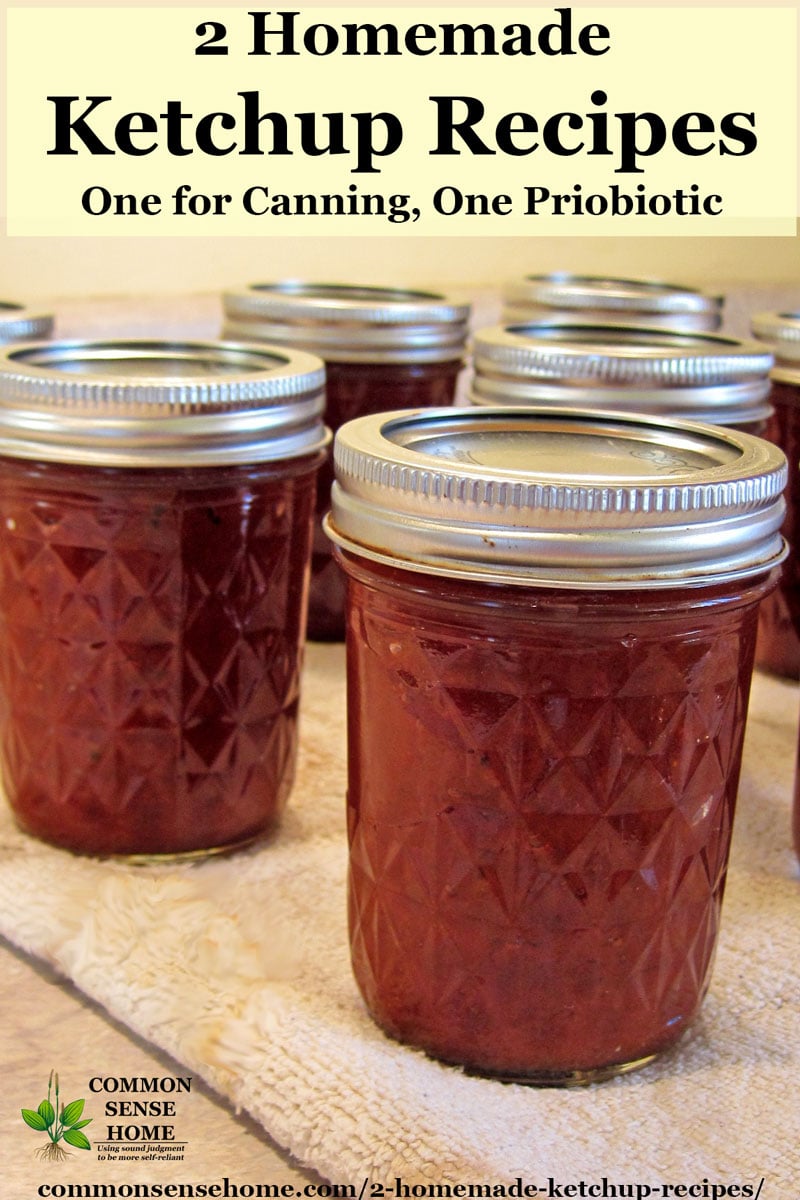
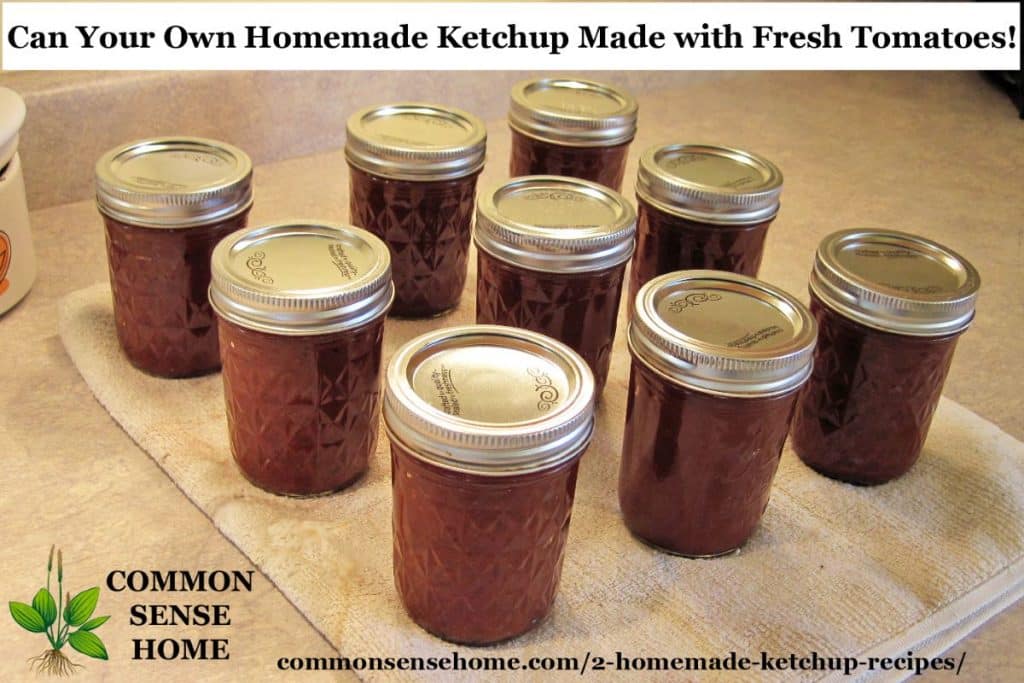
Remove from canner and place on kitchen towel on counter top. After jars are cool, check seals.
Refrigerate jars (if any) that did not seal and use them first. Makes around 9 cups for me when I cook it to the thickness we like.
Homemade Tomato Ketchup for Canning
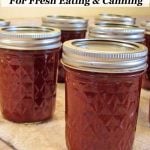
Easy homemade ketchup recipe, slow cooked with fresh tomatoes, garlic and onions.
- Prep Time: 20 minutes
- Cook Time: 12 hours
- Total Time: 12 hours 20 minutes
- Yield: 9 cups 1x
- Category: condiment
- Method: canning
- Cuisine: American
Ingredients
- Tomatoes – about 25 lbs paste tomatoes or 30 pounds mixed tomatoes (cherry tomatoes are fine)
- 1 cup onions, finely chopped
- 1 teaspoon salt (optional)
- 1 cloves of garlic, minced
- 1 teaspoon black pepper
- 1/2 teaspoon cayenne pepper
- 1 cup cane sugar (white or brown)
- 1 cup apple cider vinegar
Instructions
- Core and quarter tomatoes and place them in a heavy bottom pot (or pots) or slow cooker on low/medium heat, stirring frequently.
- Cook until soft and run through a food strainer, food mill or chinois to remove seeds and skins. Return puree to pot and continue cooking tomato puree until volume is roughly 1/4 of original volume.
- Add remaining ingredients, cook until onion and garlic are soft. Puree with hand blender or food strainer, or leave lumpy – your choice.
- Cook on low until desired consistency is reached.
- While the homemade ketchup is cooking down, prepare your canner, jars and lids. Water bath canner should be filled enough to cover your jars with two inches of water. Jars should be sterilized and kept hot.
- Ladle ketchup into prepared jars, leaving 1/4 inch headspace. Wipe jar rims and threads. Cover with two piece lids. Screw bands until finger tight. Process for 15 minutes in a water bath canner.
- Turn off heat, remove canner lid, let sit five minutes. Remove from canner and place on kitchen towel on counter top.
- After jars are cool, check seals. Refrigerate jars (if any) that did not seal and use them first.
Nutrition
- Serving Size: 1 tablespoon
If you need more tomato canning recipes, check out:
- Home Canned Salsa Recipe – Plus 10 Tips for Safe Salsa Canning
- Spaghetti Sauce for Canning
- Home Canned Tomato Soup – Tastes Like a National Brand, Except Better
- Pickled Cherry Tomatoes for Canning, Plus More Cherry Tomato Ideas
- How to Can Tomatoes in a Canner or Large Pot
Probiotic Homemade Ketchup Recipe
If you’d like a smaller, quicker recipe that also packs a probiotic punch, check out this easy lacto-fermented homemade ketchup recipe from Traditional Cooking School by GNOWFGLINS.
Wardee said she kept an unopened jar in the back of her fridge for 6 months. An opened container would have a shorter shelf life.
If you use water instead of whey, double the salt or use a non-whey culture (not both). The whey referred to in the recipe would be obtained by straining live culture yogurt or milk kefir.
If you don’t have whey, you can substitute sauerkraut juice from live kraut or other cultured vegetable juice, or kombucha. This will change the flavor, so feel free to experiment and see which flavor you like best.
Recipe reprinted with permission from Traditional Cooking School by GNOWFGLINS.
PrintProbiotic Homemade Ketchup

Simple fermented homemade ketchup recipe for a probiotic punch.
- Prep Time: 5 minutes
- Total Time: 5 minutes
- Yield: 2 cups 1x
- Category: condiment
- Method: Fermenting
- Cuisine: American
Ingredients
- 12 ounces organic tomato paste (no salt added)
- 5 tablespoons water
- 1/8 cup whey (or water)
- 2 Tablespoons apple cider vinegar
- 1/4 teaspoon mustard powder
- 1/4 teaspoon cinnamon
- 1/8 teaspoon cloves
- 1/8 teaspoon allspice
- 1/8 teaspoon cayenne
- 1/2 teaspoon salt
- 1/4 cup honey
Instructions
- In a medium sized bowl, whisk together all ingredients. Pour sauce into a storage container (such as a pint mason jar). Cover and leave at room temperature for two days. Move to the refrigerator for longer storage.
Nutrition
- Serving Size: 1 tablespoon
Why Make Probiotic Homemade Ketchup?
Did you know that our gut is often referred to as “our second brain”, and is a major part of our immune systems?
Instead of popping a probiotic pill, how about incorporating live culture (probiotic) foods into what we eat every day? As you can see from the recipe above, it doesn’t have to be complicated.
In her e-books and e-courses, Wardee and the Traditional Cooking School crew make fermenting easy and delicious.
I have yet to try a recipe of hers and have it taste nasty – honest! She’s my go-to person when I have questions about this sort of thing.
If you’d like to learn more about her Lacto-Fermentation E-book, click here or on the image below. If you purchase through my site, I receive a commission and you get a great product from people I trust. Thank you!
Thank you for visiting, and don’t forget to Pin and Share.
For those who are new to canning (or would like a refresher) check out, “How to Can Food at Home – Quick Guide to Safe Home Canning“.
You may also enjoy:
- Pickle Relish Sweetened With Honey
- No Canning Required Dill Pickles
- Easy Horseradish Sauce with Fresh Horseradish Root – Hot or Cream Style
Originally published September 2013, last updated in 2018.
This ketchup recipe definitely cannot be water bath canned, and in fact, can’t be canned using pressure canner, either, even thought the recipe proportions of acidic to base ingredients is a bit similar to the standard non-meat tomato sauce recipe approved by FDA testing, that is PRESSURE CANNED at 10 pounds for 20 minutes a pint.
Actually, the proportions in the ketchup are more similar to a tomato jam than spaghetti sauce. Tomato jam is listed on the National Center for Home Food Preservation.
The difference is that the ketchup has a lot more tomatoes and a lot more vinegar. This lowers the pH, making it perfectly safe for water bath canning. Their processing time (in a water bath canner) for tomato jam is only 5 minutes if you’re using sterilized jars. I don’t always sterilize my jars, so I use a processing time of 10 minutes. Without added pectin, the ketchup is more free flowing than jam, which also increases the heat transfer.
Great ketchup recipe – I was tired of the cinnamon/cloves etc one I did last year. This is the one I,m going to do from now on! Thanks very much – great website!
We like different spicy sauces, but I like to keep ketchup simple, so this recipe works for us. It makes a good cocktail sauce base, too. Glad you like the site and the recipe.
Thank you Laurie: I’ve seen recipes online for 2 or 3 lbs but they use dried seasoning. I wanted to use fresh ingredients but I agree that there’s not much to it to cut it that much but I’m going to try.
Love your posts!
Hi Laurie! What would the recipe be for 2 lbs. tomatoes? I tried this a couple weeks ago but I only had 2 lbs. tomatoes. I just wanted to make a small batch with extra tomatoes from my small garden. Well, I messed it up. I didn’t get the adjustments right and it never cooked down. I cooked it 36 hours in my slow cooker. It was horrible…burnt. I am going to try it again with the very last of my tomatoes. I have 4lbs. of whole tomatoes and this time I will not use the slow cooker.
Thanks for your help and all you do! I grew up a city girl and this helps me a lot!
Mary Ellen
Hi Mary Ellen. It doesn’t make sense to try and cut the recipe down that much, because there wouldn’t be much to it by the time you were done. If you’re only using 2 pounds of tomatoes, you’d need to divide all the other ingredients by 15. To make it easier, you could divide by 16 so it comes out evenly, then store in the refrigerator. So anything that’s a cup would be a tablespoon. Anything that’s a teaspoon would be more like a pinch.
Hello!
I am excited to try the canned ketchup recipe, but wondering if I can sub the sugar in the first recipe with honey? Will this affect the ph?
Thank you!
Honey won’t shift the pH, but it adds roughly twice the sweetness of sugar, and changes the consistency a bit. To substitute, use half as much honey.
As a microbiome therapist I work a lot with probiotic foods. So I was excited to find your recipe. The only thing is….. honey kills bacteria. So if you add honey to any fermented food you kill those good guys, the probiotic bacteria. Is it possible to use something else instead and what would you recommend?
While concentrated honey is mildly acidic and naturally anti-bacterial, when diluted as it is in the recipe, the sugars in it act as food for the good microbes and it is not an issue.
Consider raw honey mead. Definitely fermented, fizzy and still probiotic.
I am trying to understand yields here, so please help me. =) For 1X you call for 30# of tomatoes cooked down to 1/4 volume. Assuming a pints a pound, and I lose 2# of skin and seed in the food mill (usually it is less), I end up with 28#/4 =7# or 7 pts or 14 cups. I haven’t even added the vinegar, onion, and sugar; another 2 cups less what is cooked down. 14+2=16 cups which is way over the 9 cups yield.
Also noticed that if I do 2X or 3X the recipe, the amount of tomatoes doesn’t change, still 30#.
By the way, I made ketchup several years ago, and I think I used this recipe. I know, I know…LOL! It was a favorite, so I am back for more, but can’t remember what I did. My pot of the last of the tomatoes is simmering on the stove.
The multiplier is a default function of the recipe plugin software and doesn’t always cooperate. In this case, because I’ve written out “25 lbs paste tomatoes or 30 pounds mixed tomatoes”, it’s completely confused.
You lose some liquid cooking down the other ingredients, and chopped and loosely packed ingredients measure differently than cooked down and pureed ingredients. Sugar goes into solution, so adding one cup of sugar doesn’t increase the volume by a full cup.
Note line #4 – “Cook on low until desired consistency is reached.”
Once all the things are in the pot and pureed (or not), you cook it all down until it’s as thick as you like. This takes it from the larger volume to the 9 cups, or thereabouts. If you don’t want it as thick, you could cook for a shorter amount of time and use more jars.