
Horseradish Sauce – Easy Recipes with Fresh Horseradish

This post may contain affiliate links. Read my full disclosure here.


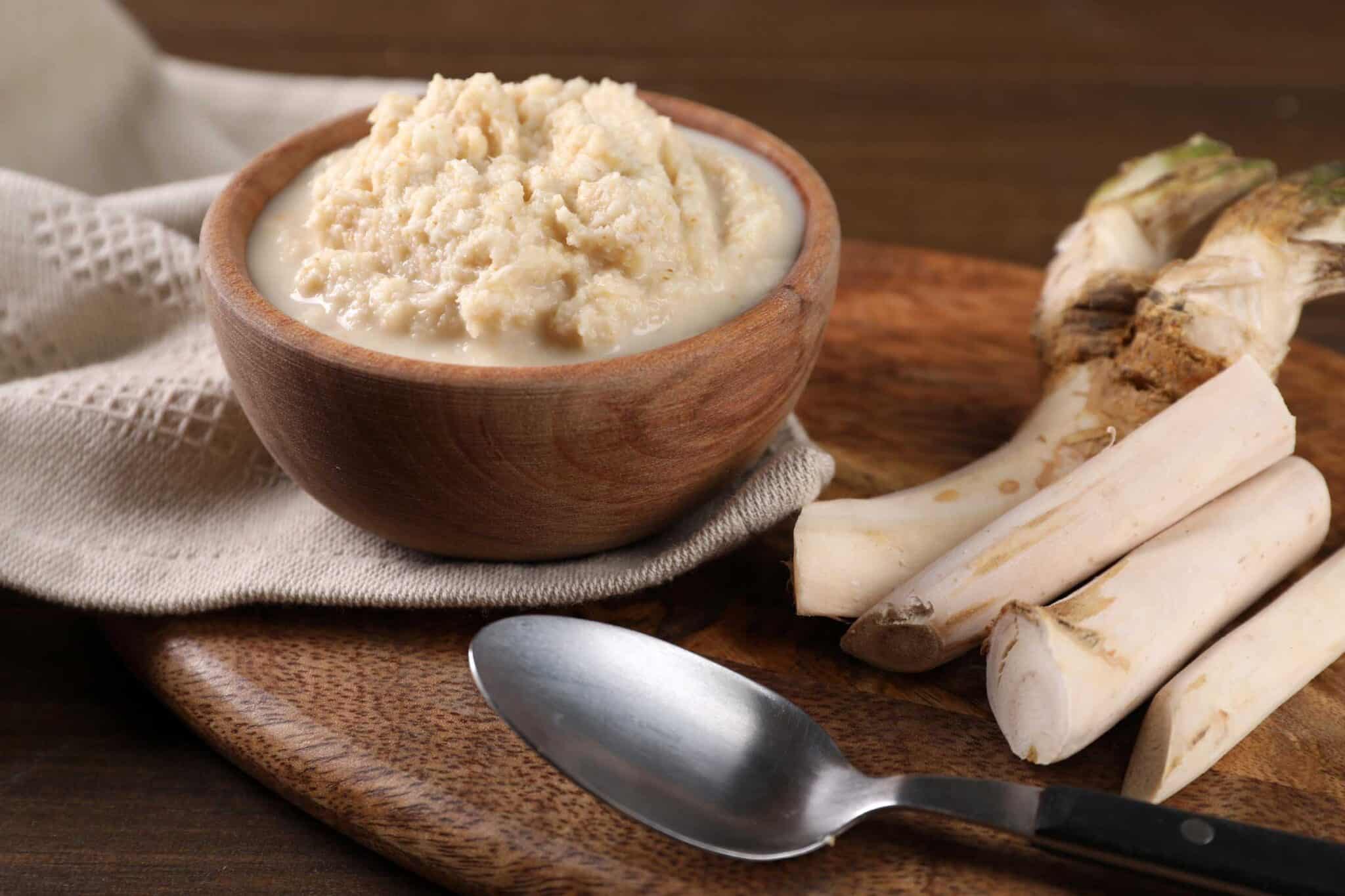
Homemade horseradish sauce is surprisingly easy to make with fresh horseradish root, vinegar, salt, and a little sugar. Once you taste fresh horseradish, it’s hard to go back to the store bought stuff.
We’ll show you how to make classic prepared horseradish, plus creamy horseradish sauce and an easy homemade cocktail sauce. You’ll also learn how to adjust the heat, store your horseradish, and put it to good use.
If you like your horseradish hot, there’s one important trick: grind the root first and wait a few minutes before adding the vinegar. Just be prepared for the fumes. Freshly ground horseradish can clear your sinuses in a hurry.
Would you like to save this?
Table of Contents
How to Make Horseradish Sauce Hotter or Milder
Fresh horseradish gets its characteristic heat when the root is cut or crushed. Breaking open the plant cells allows naturally occurring compounds to react and produce the pungent mustard oils that give horseradish its kick.
Vinegar slows down this reaction.
For milder horseradish: Add the vinegar shortly after grinding.
For hotter horseradish: Grind the root and let it sit for several minutes before adding the vinegar. Around 3 to 5 minutes is a good starting point.
How hot a particular root gets can vary, so don’t expect every batch to be exactly the same.
A word of warning: Don’t lean over the food processor when you take the lid off. Freshly ground horseradish fumes are powerful.
I learned this the watery-eyed way. I’ve chopped plenty of onions without a problem, but freshly ground horseradish cleared sinuses I didn’t know I had. Good ventilation is your friend.
Easy Horseradish Sauce Recipe
This is the basic prepared horseradish recipe we use at home. You can serve it as is or use it as the base for creamy horseradish sauce and cocktail sauce.
Ingredients
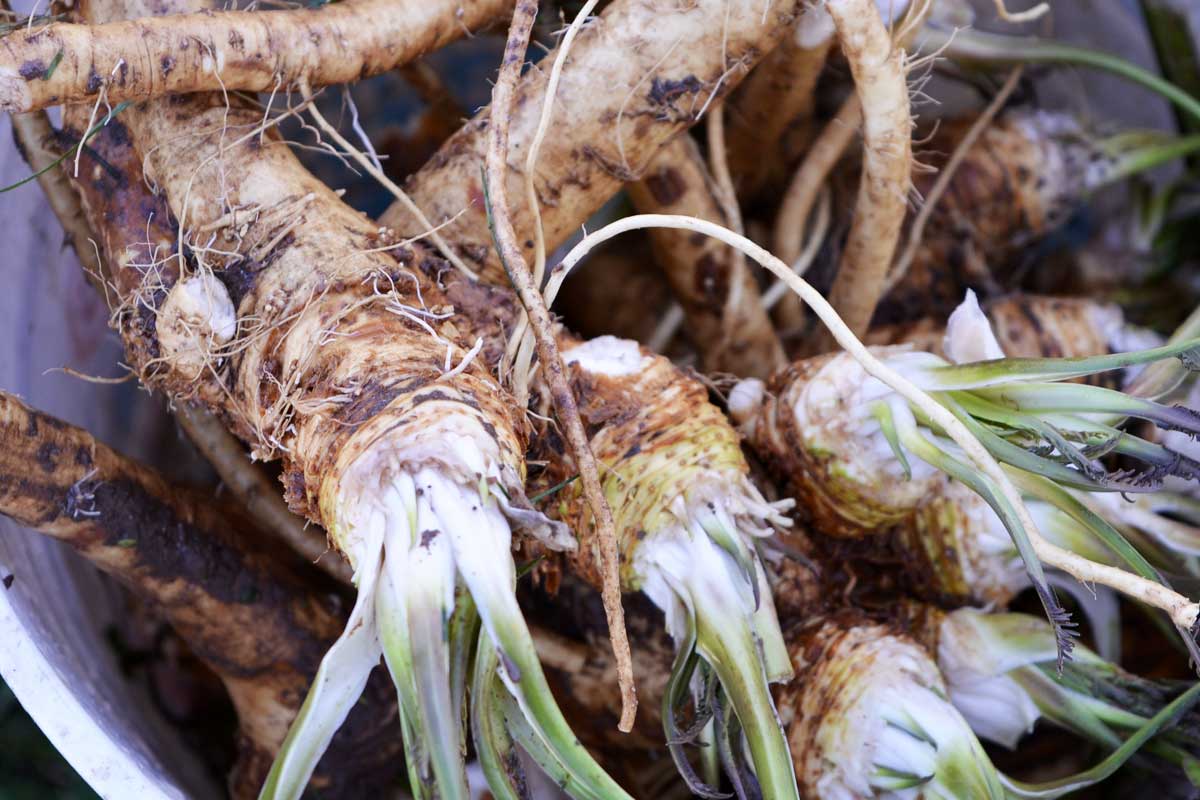
- 1 cup horseradish, peeled and cut into 1/2″ cubes
- 1/2 cup white vinegar
- 2 tablespoons sugar
- 1/4 teaspoon salt
Directions
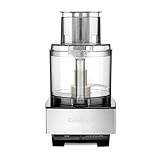
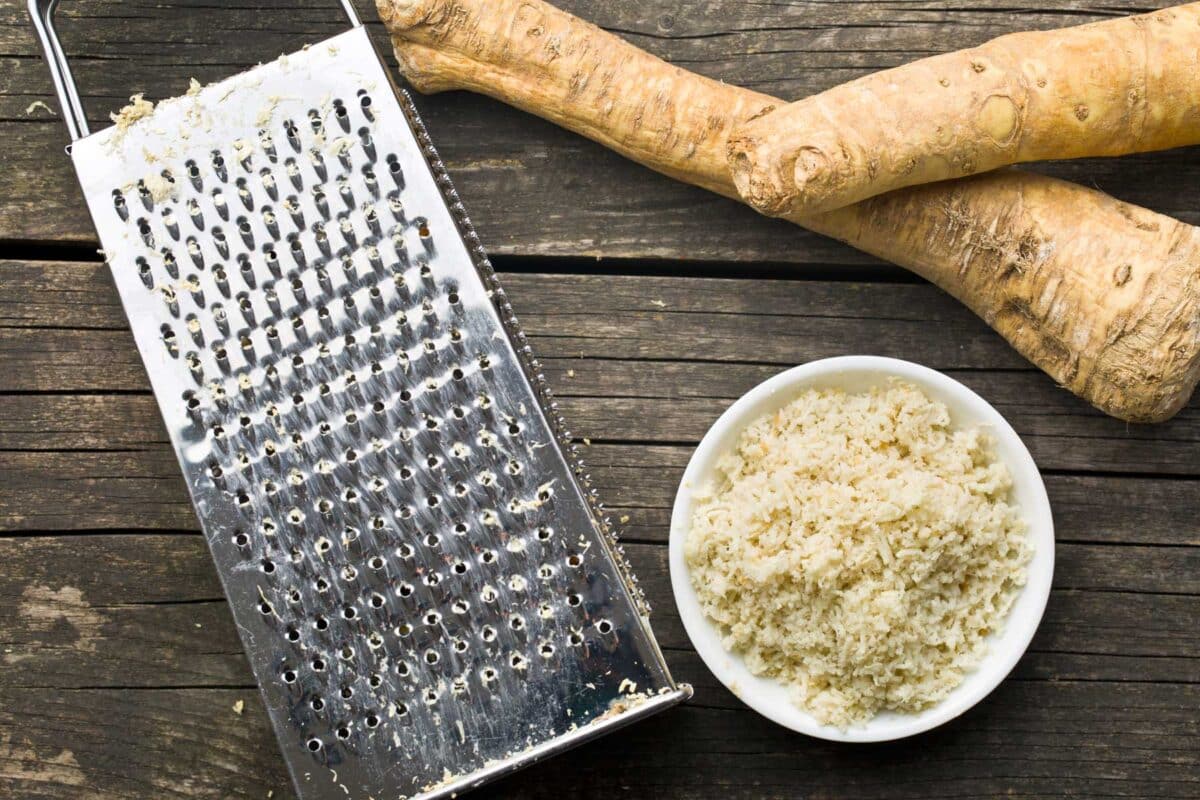
Place the horseradish in a food processor and process until finely chopped.
- For a hotter sauce, wait 3 to 5 minutes before adding the vinegar. For a milder sauce, add the vinegar right away.
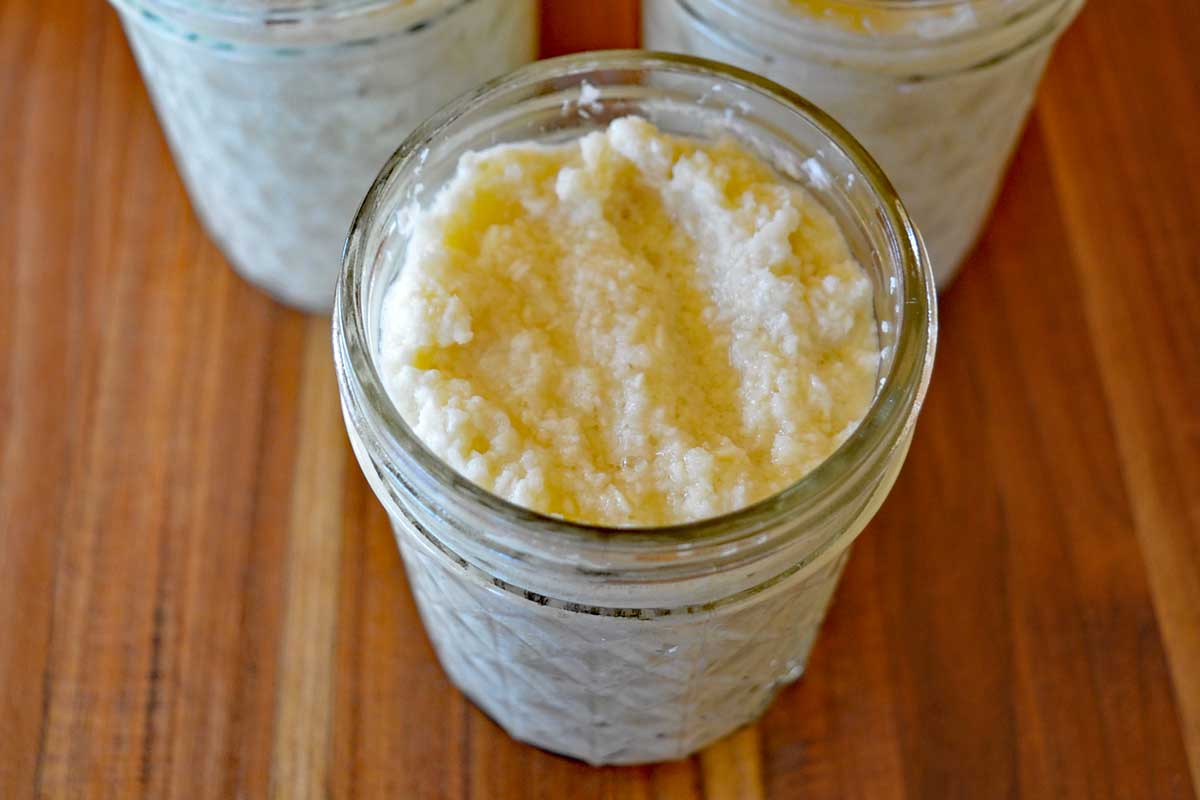
Add the vinegar, sugar, and salt. Process again until you reach the consistency you prefer. Transfer the prepared horseradish to a clean jar, cover, and refrigerate.
If you want to mix up the flavor, try adding a bit of lemon juice and reducing the vinegar by the same amount.
Note: Fresh horseradish is potent. Work in a well-ventilated area and keep your face away from the food processor when you remove the lid.
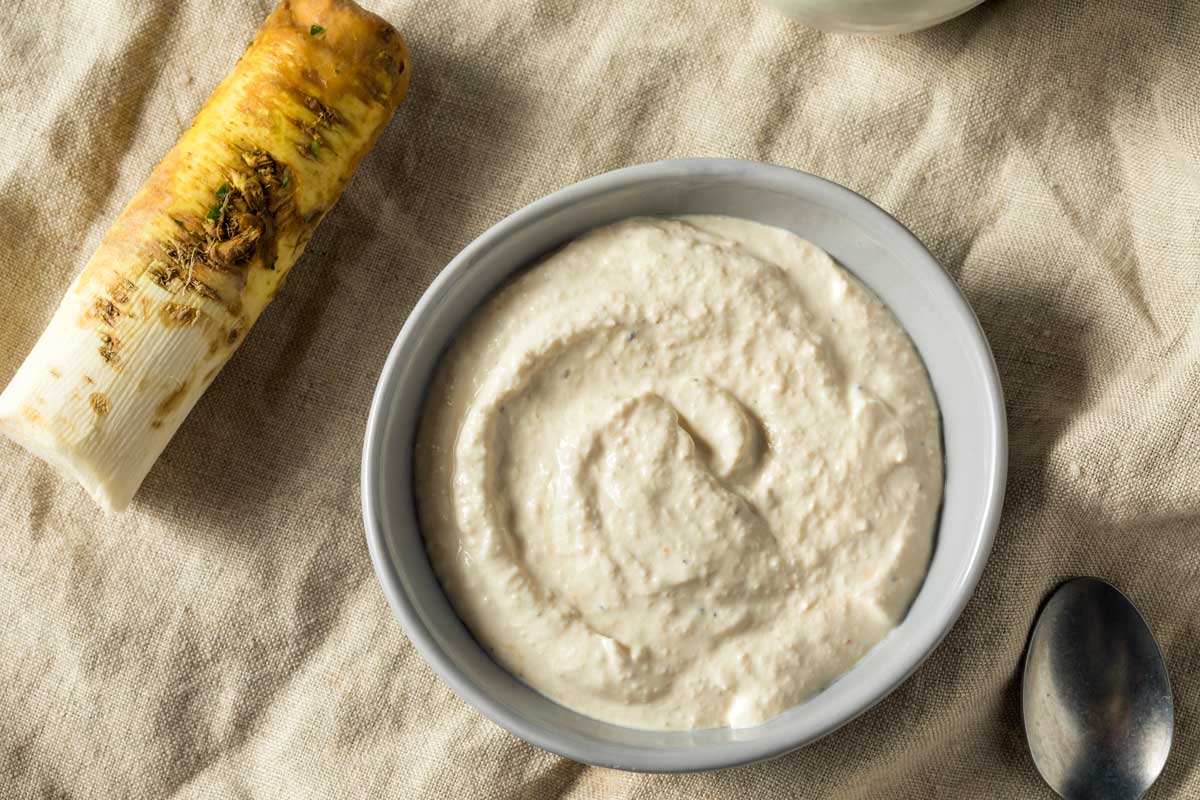
Horseradish Cream Sauce
For a creamy sauce that’s wonderful with roast beef, prime rib, sandwiches, or grilled meats, mix:
- 2 tablespoons prepared horseradish sauce
- 1/2 cup mayonnaise or sour cream
- 1 tablespoons Dijon mustard
- Salt and pepper to taste
Stir everything together and refrigerate until serving. You can adjust the amount of horseradish to suit your taste.
Serve with beef, standing rib roast, burgers, seafood – wherever you can use a little kick.
Easy Homemade Cocktail Sauce
Once you have prepared horseradish in the refrigerator, homemade cocktail sauce takes about a minute.
Start with:
- 1/2 cup ketchup
- 1 to 2 tablespoons prepared horseradish
Mix well and taste. Add more horseradish if you want extra kick. That’s it. This is my sons’ favorite way to eat horseradish.
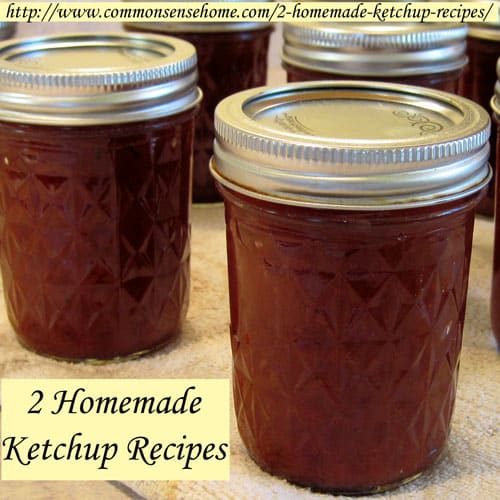
If you already make your own ketchup, this is another easy way to turn one homemade staple into another.
Ways to Use Horseradish Sauce
Horseradish and roast beef are a classic combination, but there’s no reason to stop there.
Try prepared or creamy horseradish with:
- Roast beef or prime rib
- Beef tenderloin
- Beef tongue (learn how to cook it here)
- Roast beef sandwiches
- Burgers
- Ham
- Deviled eggs
- Chicken or ham salad
- Macaroni and cheese
- Mashed potatoes
- Seafood, mixed with ketchup as cocktail sauce
- Mayonnaise or sour cream for sandwich spreads and dips
My boys have even been known to mix horseradish into macaroni and cheese. Once you have a jar in the refrigerator, you’ll probably find your own favorite uses.


How to Store Homemade Horseradish Sauce
Keep homemade prepared horseradish in a tightly covered container in the refrigerator.
The flavor and heat are strongest when it’s fresh and gradually fade during storage. If you have more fresh horseradish than you can reasonably use, freezing is a better choice for longer storage.
Can You Can Horseradish Sauce?
Don’t can this recipe. There is no tested home-canning process for this homemade horseradish sauce. Keep it refrigerated or freeze horseradish for longer storage.
Horseradish is a good reminder that the best preservation method depends on the food. Some foods are well suited to canning, while others keep better frozen, dried, fermented, refrigerated, or stored fresh.
For an overview of the different methods we use, see Food Preservation Methods – 11 Ways to Preserve Food at Home.
How This Horseradish Recipe Came to Our Kitchen
Our horseradish plants and this recipe both came from my youngest son’s former piano teacher, Miss Betty. Betty and her husband had grown horseradish for years, and she was kind enough to share some roots with us so we could start our own patch.
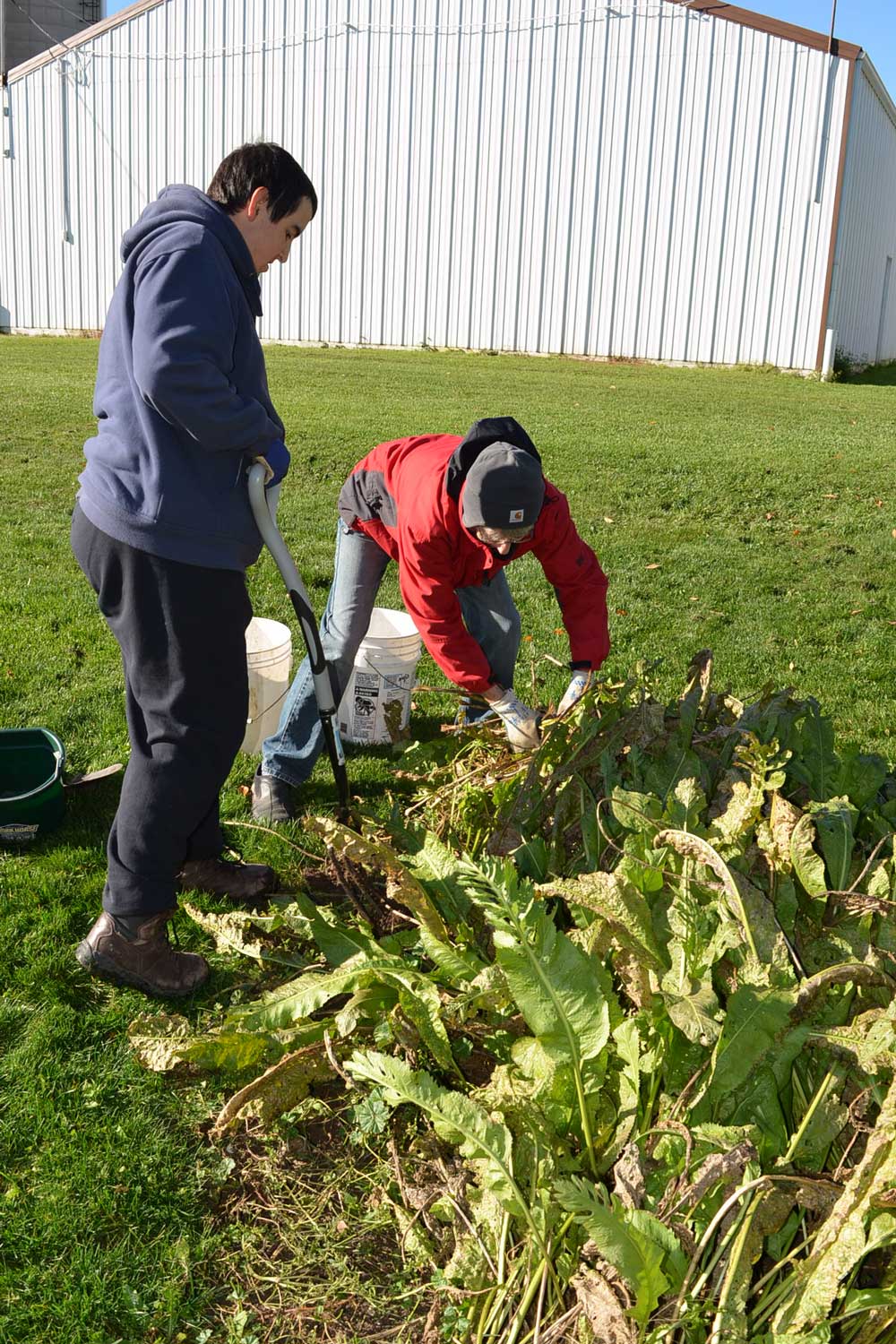
Horseradish is a hardy perennial, and once it’s happy in a spot, it’s generally quite determined to stay there. That’s a useful trait when you want a dependable food plant, although it’s worth choosing your planting location carefully. Harvesting it can also turn into more of a workout than you might expect.
Warning – horseradish roots can be deep and strong!
While attempting to muscle the roots out of the ground, my son managed to bend the handle of our steel garden fork. The horseradish was unimpressed.
Fortunately, you don’t need to remove every bit of root when harvesting. Pieces left in the soil generally produce the next crop.
If you’d like to add horseradish to your garden, see How to Grow Horseradish for Food, Pest Control, & More for planting, growing, harvesting, and storage tips.
More Than a Condiment
Horseradish has a long history of use as both food and traditional medicine. The same compounds responsible for its distinctive heat have attracted interest for other uses, too.
Historically, it’s been used to fight bacterial and fungal infections, improve breathing issues, detoxify the liver, and more. Rather than trying to cover all of that in a recipe article, we’ve put the details in Horseradish Medicinal Benefits, including traditional uses and precautions.
A Note on Horseradish
Betty and I were talking about how few people make homemade horseradish sauce anymore, even when they have access to a horseradish patch. I wonder if that’s partly because modern grocery stores give us such an abundance of choices, including fresh produce and favorite flavors year-round.
In the old days, that wasn’t the case. After months of relying on stored winter foods, the sharp zip of horseradish must have been a welcome change. The same may be true of the heavily spiced cakes and cookies traditionally served during the colder months, when fresh fruit and other bright flavors were harder to come by.
I’ve noticed that older folks often seem especially fond of those traditional flavors, while younger people may be more accustomed to familiar favorites like chocolate and vanilla.
There’s certainly nothing wrong with chocolate or vanilla—I enjoy both. But there’s something satisfying about keeping these older flavors and food traditions alive, too.
Growing, making, and eating a wider variety of foods gives us more than something to put on the table. It gives us more to experience and enjoy.
That’s part of living abundantly in your own kitchen.
Grow It, Make It, Use It
One of my favorite things about growing our own food is seeing how one skill naturally leads to another. You grow a plant, learn when and how to harvest it, figure out how to preserve it, and turn it into something your family can use and enjoy.
Horseradish is just one small example, but those practical skills add up. They help us waste less, make better use of what we have, and become a little more resilient along the way.
That’s what we focus on at Common Sense Home—practical recipes, gardening, food preservation, preparedness, and old-fashioned know-how that works in the real world.
If that sounds like your kind of thing, join us for the Good News Letter and get new articles, seasonal tips, and practical ideas delivered to your inbox.
PrintEasy Horseradish Sauce
Simple recipes for homemade horseradish sauce – plain or cream style – made with fresh horseradish root.
- Prep Time: 5 minutes
- Total Time: 5 minutes
- Yield: 1.5 cups 1x
- Category: Condiment
Ingredients
- For basic sauce:
- 1 cup horseradish, peeled and cut into 1/2″ cubes
- 1/2 cup white vinegar
- 2 tablespoons sugar
- 1/4 teaspoon salt
- For creamed sauce:
- 2 tablespoons prepared horseradish sauce
- 1/2 cup mayonnaise or sour cream
- 1 tablespoon Dijon mustard
- Salt and pepper to taste
Instructions
- For Basic Sauce:
- Put all ingredients into a blender or food processor at high speed. Blend until creamy. Put in a jar and store in the refrigerator.
- For Creamed Sauce:
- In a small bowl, blend all ingredients. Makes about 1 cup. Store in refrigerator.
Notes
- If you don’t have a food processor or blender, grate the horseradish root as finely as possible and blend with other ingredients for the basic sauce. For a hotter sauce, grind horseradish separately. Wait 3 to 5 minutes before adding the rest of the ingredients. For a milder sauce, blend as directed.
For homemade cocktail sauce, start with:
-
1/2 cup ketchup
-
1 to 2 tablespoons prepared horseradish
Mix well and taste. Add more horseradish if you want extra kick.

This article is written by Laurie Neverman, author of Common Sense Preparedness and Never Buy Bread Again. Laurie grew up cooking and baking alongside her momma and, at age 15, helped start Irene’s Custom Cakes & Catering with her mom and two sisters. She has more than 40 years of hands-on experience cooking, baking, gardening, and preserving food, and has shared tested recipes and practical food-storage techniques with Common Sense Home readers since 2011.
Originally posted in 2016, last updated in 2026.
I dug a lot of horseradish a few years back from a neighbor’s patch and cleaned, chopped and freeze dried it because I didn’t know what to do with it at the time. I’m assuming if I want to use it in recipes I would need to lightly hydrate it first? I could also pulverize/powder it in the freeze dried state, but I’m not very creative in how to use it.
To turn the powder into a sauce/spread, mix 1 part powder with 1 part water and 1 part vinegar, then add salt to taste; start with small amounts of liquid to avoid it becoming too runny.
You can also mix it into recipes. Add directly to dressings, burgers, and deviled eggs for a spicy kick. Heat diminishes the sharp flavor, but it’ll still have some spiciness.
I made this (sort of) last year and mixed the horseradish with ACV after its time in the food processor. I then froze all but a small jar. We kept the fresh horseradish in ACV in the fridge and it lasted quite well. I was able to scoop out a tablespoon or two at a time and blend with sour cream or clabber with homemade garlic mayonnaise for enhancing prime rib or ketchup and a dash of Worcestershire and a dash of lemon to go with seafood and it made for some sauces that were far better than store bought.
I found that if you blend the Horseradish by itself first then add the other ingredients then it gave a better kick, don’t pass out when you get too close.
lol – thanks for the tip and the warning.
I loved your recipes and will add them to my list of staples. Thank you! I use less horseradish sauce these days because my Cypriot wife does not like the “kick”. Your article reminded me of an experience I had in 1983. I worked with a butcher in Cyprus to show some friends what a U.S. steak might look like. Of course I needed some horseradish sauce. In the past I had made it with my father who grew some roots in Central NY. I bought the root at an open farmer’s market in Nicosia and brought it back to my room. Washed and peeled I started to grate it. A few minutes later, when I could breathe again, I put on my scuba mask to finish the task. I can testify that horseradish grown under the Middle Eastern sun is MUCH stronger than anything I had found in the United States (I have not tried buying in the Southwest.) So, if you get the opportunity, try it, but be very careful!
I’m not sure I’d be comfortable with that much heat, but I’m sure it would be a memorable experience.
You mentioned your boys adding horseradish to their mac’n’cheese. (I’ll have to give that a try!) I like to add a tablespoon or two when I mix up some chicken salad, or ham salad. Just enough to get the taste and a bit of zing. My daughters won’t touch it, but I’ve won a couple of the grand-kids over.
My boys were leery of it early on, but they’ve learned to appreciate it.
I am 70 years old now, but when I was in my early 20s I briefly worked at a pricey restaurant, where the kitchen was on the second floor, requiring the servers to go up and down constantly to retrieve customer’s dishes and assorted other things. This became a problem one day, as it was horseradish sauce making day, and we all had red eyes and noses after each visit to the kitchen! LOL
Happily I was already a fan of the flavor, and enjoy it to this day! My life was too hectic for many years to try growing it, and then health issues became an impediment.
Nowadays I am healthier than in years, but I now live in central Gulf coast Florida, on a postage-stamp sized lot in a 55+ community, so I’m not sure I can grow it now, but I’m seriously considering trying it in a spot behind the trailer that gets morning sun, but is shaded during the worst of the heat. In the meantime I have seen raw root available at a couple local stores, so I definitely plan to put my blender to good use one of these days! That creamy style is so good as a condiment with cold sliced beef!
Thanks for sharing your horseradish story. At least that way, the customers had proof that the sauce was fresh.
Given that you live in a hot climate, I bet the horseradish would do well in that spot.
I really like horseradish and hope to grow my own this year.
I have always used a very similar recipe. Question is can I substitute honey for the sugar.
Yes, it should work. Honey provides more sweetness per unit volume than sugar, so you may want to reduce the amount. For jam and jelly making, we use half as much honey as sugar to get the same level of sweetness.
Honey, like sugar, is hygroscopic, which means that is absorbs and binds water. It’s also slightly acidic, which aids in preservation.
Oh MY, it looks great! Can’t wait to cook em this Sunday!