
Water Kefir Versus Kombucha – Which one is better?

This post may contain affiliate links. Read my full disclosure here.
Would you like to save this?
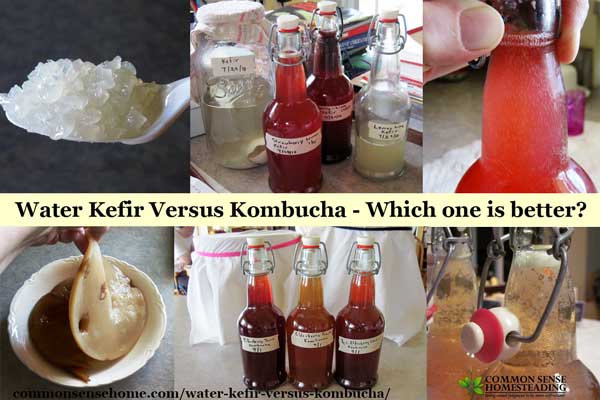
Water kefir verus kombucha, which is better?
This is a question I’ve heard a number of times. My kids like the flavor of water kefir soda better than kombucha tea, but I generally prefer the kombucha myself, and my husband will drink either, depending on the flavor.
Water kefir is quicker to brew than kombucha tea – unless you do a continuous ferment, in which case you can draw off kombucha every day. Some people find water kefir is more consistent, my kombucha tends to be more consistent. Some people feel guilty about excess scobys, I have been able to give most of mine away, or I simply compost them. A few I’ve used to treat skin ailments, such as my son’s cradle cap. (Read The SCOBY Cure.) (DON’T FLUSH YOUR SCOBY! It may just be able to grow in your septic system and cause big problems.)
So, other than personal preference, what is the real difference between water kefir and kombucha? Both start with a base of sweetened liquid (kombucha with sweetened tea, water kefir with sweetened water). I did a lot of hunting, and what follows are some of the best explanations I found on the Net. First up, kombucha.
What is Kombucha?
Kombucha is also known as Kombuchal, Gerbstoffe, Combucha, Kum-Cha, Fungus japonicas, Fungojapon, Indo-Japanese tea fungus, Pichia fermentans, Cembuya orientalis, Combuchu, Tschambucco, Volga spring, Mo-Gu, Champignon de longue vie, Tea Kvas, Teakwass, Kwassan, Kargasok, Kocha kinoko, Tibetian mushroom and more.
From the forums at Wild Fermentation:
The bacterial component of a kombucha culture usually consists of several species, but will almost always contain Gluconacetobacter xylinus, which ferments the alcohols produced by the yeast(s) into acetic acid. This increases the acidity while limiting the alcoholic content of kombucha. G. xylinum is responsible for most or all of the physical structure of a kombucha mother, and has been shown to produce microbial cellulose.
From the Happy Herbalist (which I highly recommend – tons of great information):
The classification of kombucha vinegar according to Traditional Chinese Medicine is Sour, Bitter and Warm, and milder than alcohol which is Hot (alcohol contributes to phlegm and stagnation). TCM uses vinegar (kombucha) to break stagnation and to move the blood and Qi. Thus improving circulation and contributing to the general feeling of well-being.
As a Pro-biotic: Acidic kombucha, pH 2-3.5 aids the Stomach (both in the TCM and western sense) in the breakdown and digestion of food ingested. Beneficial bacteria and yeasts, that comprise the Live K-T or Pressed Extract (as opposed to pasteurized, neutralized, alcoholic or dead kombucha) compete with and help remove (suppress) harmful bacteria, yeast, parasites. … Then due to the synergism of the stomach acids and kombucha (Acid and Alkaline meets Yin and Yang, Herman Aihara ISBN 0-918860-44-x), kombucha transforms into an alkaline forming substance. Now the transformed Alkaline kombucha pH 7+, aids the Spleen (function in TCM), intestines, gall bladder and pancreas (function in western speak) in metabolizing and distributing that digest throughout the body. Thus IMHO, kombucha truly holistically balances and harmonizes the body.
And finally, from the Heal Thyself Forums:
Kombucha also has the effect of increasing detoxification in the liver. This is beneficial, unless pregnant or nursing, or excess mercury stores. You also need your detox pathways to be open first for effective detox.
So, kombucha acts as an immediate digestive tonic, much like apple cider vinegar. It colonizes the guts with friendly bacteria and yeasts. It detoxifies the liver, and generally cleans and rejuvenates the digestive system as a whole.
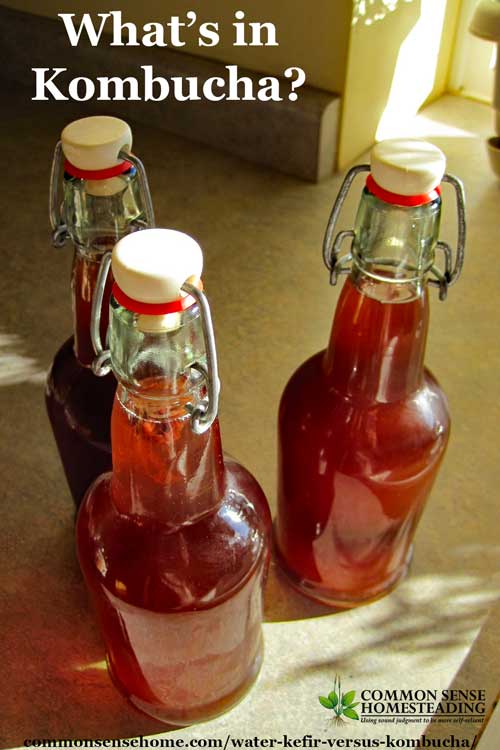
What’s in Kombucha?
The Happy Herbalist contains links to a number of kombucha studies at http://www.happyherbalist.com/analysis_of_kombucha.htm. On this page, they state that the typical composition of kombucha may include:
Bacterium gluconicum
Bacterium xylinum
Acetobacter xylinum
Acetobacter xylinoides
Acetobacter Ketogenum
Saccharomycodes ludwigii
Saccharomycodes apiculatus
Schizosaccharomyces pombe
Zygosaccharomyes
Saccharomyces cerevisiae
Acetic acid
Acetoacetic acid
Benzoic acid
propenyl ester
Benzonitrile
Butanoic acid
Caffeine
Citric acid
Cyanocobalamin
Decanoic acid
Ethyl Acetate
Fructose
d-Gluconic acid
Glucose
Hexanoic acid
Itaconic acid
2-Keto-gluconic acid
5-Keto-gluconic acid
2-Keto-3-deoxy-gluconic Lactic acid
Niacinamide
Nicotinic acid
Pantothenic acid
Phenethyl Alcohol
Phenol, 4-ethyl
6-Phospho gluconate
Propionic acid
Octanoic acid
Oxalic acid
Riboflavin
d-Saccharic acid
(Glucaric acid)
Succinic acid
Thiamin
plus 40 other acid esters in trace amounts.
Cultures for Health Kombucha Discussion
Cultures for Health highlights key kombucha elements in their Q &A section:
Not all kombucha cultures will contain the exact same strains, but generally, these are some that you might expect:
Acetobacter: This is an aerobic (requiring oxygen) bacteria strain that produces acetic acid and gluconic acid. It is always found in kombucha. Acetobacter strains also build the scoby mushroom. Acetobacter xylinoides and acetobacter ketogenum are two strains that you might find in kombucha.
Saccharomyces: This includes a number of yeast strains that produce alcohol, and are the most common types of yeast found in kombucha. They can be aerobic or anaerobic (requires an oxygen-free environment). They include Saccharomycodes ludwigii, Saccharomycodes apiculatus, Schizosaccharomyces pombe, Zygosaccharomyes, and Saccharomyces cerevisiae.
Brettanomyces: Another type of yeast strain, either aerobic or anaerobic, that are commonly found in kombucha and produce alcohol or acetic acid.
Lactobacillus: A type of aerobic bacteria that is sometimes, but not always, found in kombucha. It produces lactic acid and slime.
Pediococcus: These anaerobic bacteria produce lactic acid and slime. They are sometimes, but not always, found in kombucha.
Gluconacetobacter kombuchae is an anaerobic bacteria that is unique to kombucha. It feeds on nitrogen that is found in tea, and produces acetic acid and gluconic acid as well as building the scoby mushroom.
Zygosaccharomyces kombuchaensis is a yeast strain that is unique to kombucha. It produces alcohol and carbonation as well as contributing to the mushroom body.
Kombucha also contains a variety of other nutrients, particularly various acids and esters that give the drink its characteristic tang and fizz. Included in these components is gluconic acid, which is the primary difference between the makeup of kombucha and the makeup of apple cider vinegar!

Now, water kefir:
What is Water Kefir?
Water Kefir is also known as Japanese Water Crystals, sugary-kefir grain (SKG), Sugary Fungus, Tibicos, Ginger Beer Plant, California Bees, Water Kefir Grains, tibetan mushroom grains, snow lotus, water crystals, tibi, Kephir, Paris, Kephir, kefir fungus, kefir d’aqua, and more.
From Yemoos Nourishing Cultures:
(Water kefir) is loaded with valuable enzymes, easily digestible sugars, beneficial acids, vitamins and minerals. Water kefir is also generally suitable for some diabetics (though personal discretion is advised). It also is a nice option if you are trying to avoid the caffeine present in kombucha, but still seeking a probiotic drink. Water kefir supplies your body with billions of healthy bacteria and yeast strains. Some store-bought probiotic foods or supplements can help, but they are not as potent, and do not contain the beneficial yeasts usually (just bacteria).
Within your body there are already billions of bacteria and yeast. Your internal microflora support proper digestion, synthesis of vitamins and minerals, and your immune system by warding off foreign and harmful bacteria, yeast and viruses. It has thus long been known to promote and aid in digestion and overall health. Some studies show it may be anti-mutagenic and help manage free radicals in the body. Folic acid (and B vitamins) increases as the length of the ferment increases. Some people let the strained kefir sit on the counter or the fridge another day to increase the folic acid and B vitamin content before drinking (this will increase the acidity too).
Kefir may also help reduce blood pressure and cholesterol. As with most things we’ve personally found, food and health is too difficult to reduce to facts and statistics. While kefir is not a magic bullet for health (what is) we believe kefir has a myriad of possible health benefits, and those will be individual for everyone. Some feel it helps them digest better, others get colds and viruses less often, some get more energy, and some people feel nothing much in particular, but enjoy the taste and value of it over store-bought yogurt, kombucha or kefir.
From Heal Thyself
Pat at Heal Thyself includes more information and a word of caution (she leans to the kefir side of the discussion):
Kombucha has Saccharomyces boulardii which displaces and replaces candida albicans in the gut. Candida binds mercury to keep it out of circulation. When you kill off candida in the gut, stored mercury is released back into circulation to redeposit into other organs and the brain.
Kefir does not do this similarly. Some people get GI symptoms if they start kefir too much too fast due to the microbial shift in the gut. Kefir has many beneficial microbials. You only need 1 tablespoon to equate to a whole bottle of probiotics.
So, water kefir is loaded with probiotics that colonize the entire digestive tract, doesn’t contain caffeine (although if you use continuous brewing, caffeine in kombucha can be significantly reduced), may help with free radicals and boost the immune system. It doesn’t produce a significant detox effect.
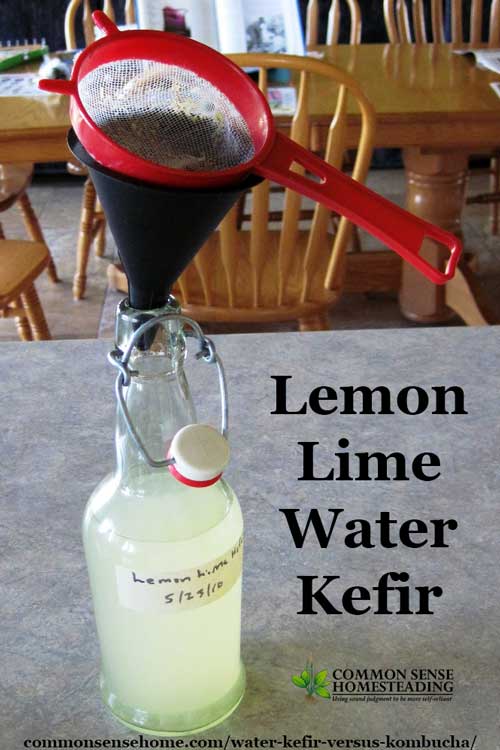
What’s in Water Kefir?
So what do you find in a typical glass of water kefir or kombucha?
Cultures for Health lists the following bacteria and yeasts as potentially occurring in water kefir:
Bacteria
Species Lactobacillus
L. acidophilus
L. alactosus
L. brevis
L. bulgaricus
L. casei subsp. casei
L. casei subsp. pseudoplantarum
L. casei subsp. rhamnosus
L. casei subsp. tolerans
L. coryneformis subsp. torquens
L. fructosus
L. hilgardii
L. homohiochi
L. plantarum
L. psuedoplantarum
L. reuterietc
L. yamanashiensis
Species Streptococcus
S. agalactiae
Sr. bovis
S. cremeris
S. faecalis
S. lactis
S. mutans
S. pneumoniae
S. pyogenes
S. salivarius
S. sanguinis
S. suis
S. viridans
Species Pediococcus
P. damnosus
Species Leuconostoc
L. mesenteroides
Species Bacillus
B. subtilis
B. graveolus
Yeast
Species Saccharomyces
S. bayanus
S. boullardii
S. cerevisiae
S. florentinus
S. pretoriensis
S. uvarum
Species Kloeckera
K. apiculata
Species Hansenula
H. yalbensis
Species Candida
C. gueretana
C. lamica
C. valida
Species Torulopsis
T. insconspicna
Basically, when you compare water kefir versus kombucha, it seems to me that water kefir acts primarily as a wide spectrum probiotic, whereas kombucha acts as a digestive aid, a probiotic and detoxifier.
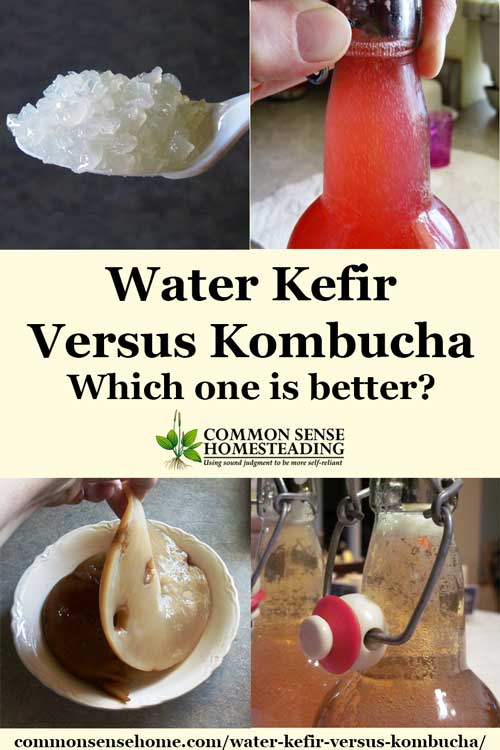
Water Kefir Versus Kombucha – Which one do I prefer?
I think both are valuable, but if I only had to choose one I would probably stick to kombucha. Both of them simply help your body to do what it needs to do – they are not miracle cures. Some sites warn not to use both, so keep that in mind. It’s best to start with small doses until you body acclimates to the new inhabitants. I think it gets down to individual taste preference, and individual body chemistry. I encourage you to try both if you have the opportunity and see which works better for you.
Note: If you are dealing with candida overgrowth, note that ferments may contain candida species. Ferments may make some sensitive individuals worse, and some individuals better. Pay attention to how your body responds and adjust accordingly. Please check with your healthcare provider if you are on prescription medications, as fermented foods may affect how your medication is absorbed.
You may also enjoy:
- Healthy Homebrew – Kombucha – How to brew kombucha
- Kombucha Q and A and More Flavoring Ideas – More flavoring ideas and all the Q and A from the comments in a more readable format
- How to Make Coffee Kombucha – Using coffee instead of tea to brew kombucha
- Holiday Kombucha Flavors– Ideas for holiday flavor blends such as pumpkin spice and cranberry collins
- How to Brew and Flavor Water Kefir
- The Dark Side of Water Kefir – Root Beer Water Kefir
Originally posted in 2011, updated in 2017.
So…am I the only one to notice the little joke in the Kombucha ingredients list? Um…Lb. hilarities
Lb. homophobia
Lb. plantarum
Lb. pseudo plantarum
Lb. admonishes
Riiiiiight. I think I know what website that was gleaned from! Dom has a sense of humor! Hehehehe. I, for one, do not want to consume Lacto-bacillus Homophobia!!! Hohohoho hehehehe hahahahaha!!!
😂 I hadn’t noticed but went back to look, that’s hysterical!
I have a totally off-topic, superficial question–What is the china pattern of the bowl in the kombucha photo?
Jean – I don’t know. It was my grandmother’s, and there are no markings on it. The bowls have been in the family for decades.
Milk kefir can also help with allergies, recolonize the gut and increase bifidum in the gut: http://heal-thyself.ning.com/profiles/blogs/probiotics-pusher
Pat
Absolutely, Pat. I chose to focus on these two in this post, because I had heard this question many times, but all live culture foods are beneficial.
Is Kombucha actually alkaline-forming? We know that lemons are alkaline forming but has anyone ever tested to confirm that Kombucha is too? I hope so but do you know if this is hearsay or based on study?
I can’t find conclusive data proving that it is acid forming, but I find many sites say that it is acid forming, including this one – http://happyherbalist.com/alkaline_acid_balance.htm
They seem to be very fact oriented and not prone to hyperbole.
That article seems to me to say that it is alkali forming in the body after digestion though it is acid in ‘nature,’ I guess it could be put. Same as a lemon is acidic in character but produces an alkali reaction in the body.
I asked my doctor about all of these probiotic foods. He says the jury is still out on the benefits but that it can’t hurt.
My father loves this sort of stuff. I’d really like a book that i could get him for christmas associated to this topic.
Donna at Cultured Food Life just came out with a book recently that you can find on her site, http://culturedfoodlife.com/
The book is called “Cultured Food Life: Learn to make probiotic foods in your home”. I haven’t read it yet, but she’s wonderfully creative on her site, so I expect that it’s very good.
Hi. On this same site she also says that water kefir has much less strains of bacteria than the milk kefir. She says that there are only about 10 strains in water kefir as opposed to over 50 in milk kefir. If was for this reason I’ve just ordered a kombucha kit. Do you disagree.? Thanks, I’m confused.
I don’t understand the question. If you are asking about kombucha over water kefir, that would be my personal preferred option, but all of them are good. Each person and each digestive tract is different, so it’s best to try different things and find out what works best for your body.
Thank you, Pam, for taking time share your thoughts. My boys prefer kefir and I prefer kombucha, so we keep both in the house.
This was a very informative post. I have recently begun drinking water kefir and have wonder about the differences between it and kombucha. This has helped a lot. Thank you.
Thanks for linking your great post to FAT TUESDAY. This was very interesting! Hope to see you next week!
Be sure to visit RealFoodForager.com on Sunday for Sunday Snippets – your post from Fat Tuesday may be featured there!
http://realfoodforager.com/2011/11/fat-tuesday-november-15-2011/
So many Facebook pages, so little time. 🙂 I have tried the kombucha bandage – I just cut a larger SCOBY to size. I haven't tried the cream, but I have eaten small SCOBYs. They remind me of oysters.
This is really interesting. Thanks for posting it. It seems there is a lot of anecdotal info about these fermented beverages. By the way, there is a yahoo group called original-kombucha. They talk about all kinds of kombucha uses. To make a scoby cream, you can just stick a scoby and some kombucha in a blender and whip. Some people leave kombucha in narrow glasses so that a small scoby forms for band-aid uses. Some people eat them.
I think that introducing friendly microflora and microfauna is a good idea for most people, as our SAd is sadly lacking in probiotic foods.
I'm glad that you're finding options that work for you!
Thanks again! Your information is very helpful. I make my own yogurt without fruit or sweeteners. I am lactose intolerant but the yogurt has not caused any problems. I use a long fermentation time (of 24 hours or longer) for the production of yogurt. I find that this long fermentation provides the ability for the milk sugar, lactose to be optimally degraded/broken down. I do the same for water kefir if using juice for flavor during the second fermentation. The longer fermentation produces a less sweet taste. For Kefir I find it to be more like Kombucha. However for my family I have to use a shorter fermentation for the sweetness that they prefer. I have had a very significant improvement in my health since adding homemade yogurt and kifer to my diet. For me the key was making it myself. I did not experience any change when I used the store products. This along with addressing diet changes for leaky gut and food allergies has got me back on the path of healing. Each of us is unique and I believe that there is no one diet that can suit every person’s health needs. No one size fits all. That is one of the reasons I am grateful for sites such as this one. I have learned so much valuable information that I would have never been aware of without the help of people like Laurie and others sharing what they have learned. Thank you again!
From curezone.com (http://curezone.com/forums/fm.asp?i=1792973):
The strain that causes us all the problems is Candida albicans…the strain in Water Kefir is Candida valida.
Food matters (http://www.foodmatters.tv/_webapp_348606/How_to_Overcome_Candida_Naturally) suggests some cause for concern with teh consumption of yogurt or kefir: Usually yogurt or kefir would be good sources of probiotics, however many Candida sufferers are intolerant of their lactose (sugar) content. They are not recommended as a good source of probiotic therapy but good quality yogurt free of sugar or Kefir made with raw milk would be ideal to include in the diet once Candida is again in balance.
The Food Matters article has a lot of good information on treating candida overgrowth naturally.
Thank you for this information! I have been wondering if Kefir was better or different from Kombucha. Mainly one appealing to those that prefer fruit juice versus tea. Your information was very helpful. I noticed that Candida valida is listed under the Kefir section under the What Do You Find in a Typical Glass of water Kefir/Kombucha? I thought Candida was bad for our body? Unfortunately I have taken antibiotics many times and have symptoms of Candida. I've been following a anti-candida diet with very good results. At this stage of the diet I was told that I could probably consume Kefir because the sugar is greatly reduced in the final product. So far I haven't had any problems or change in the improvements with the Candida symptoms. However, after seeing it listed here I am a bit concerned. Is all Candida the same or is C. valida different from the one that normally causes problems?
You're very welcome, Heidi, and thank you for your kind words.
Thanks for this informative comparison Laurie. Your blog is full of so much helpful information. I sure appreciate it.
Danielle – thanks for pointing this out. I love my kombucha, but it's not for everyone.
I know you posted this a long, long time ago, but I couldn't help adding my two cents. The Happy Herbalist website you recommended cautions against pregnant or nursing mothers and kids under age 4 drinking kombucha! That made my decision easy. 🙂 Thanks for putting all the information together to make the decision-making easy for the rest of us!
I just want to point out that I drank kombucha all the way through my last pregnancy and nursing, and my little guy drinks it every day at 19 months old. He and my older kids have been drinking it for quite a while now and love it. I can’t imagine why someone would say it would not be recommended in those circumstances.
You know how it is – there is a minute possibility of someone having a reaction of some sort, so in order to protect from liability, pretty much everything has to be labeled “use caution when pregnant”. As a long time kombucha drinker, I’d personally have no concern about drinking it while pregnant, either.
You should be okay drinking both, as long as you don't do too much – maybe no more than 120 ml kombucha per day, and a similar amount of kefir. Each person's body is different, and I don't have experience being on a raw food diet, so I'm not sure how your internal flora and fauna will react. Start slow and pay attention to how your body feels. The apple kefir sounds delicious!
Hi there Laurie,
Thank you so much for your in depth information, I just got Water Kefir grains last week and I am currently making my third Apple Kefir, made from 2 liters of unfiltered coldpressed applejuice, 2 tablespoons of Organic sugar and 2 tablespoons of Kefir grains, they love applejuice! Ordered Kombucha Yesterday, and was wondering if it is at good idea to drink both or is it too much for my body at the same time. I also eat a lot of Rawfood (that is 50% raw and 50% vegetarian!) and make green juices, and am thinking of blending Apple Kefir or Kombucha Tea with a green juice. Love waves from Isabella Sofia, Denmark. sofiasheaven.blogspot.com