
How to Brew and Flavor Water Kefir “Soda Pop”

This post may contain affiliate links. Read my full disclosure here.
Water kefir is a great way to kick the soda habit, and an easy way to get more probiotics into your diet. My kids like it better than kombucha, because it has a milder, less acidic flavor. (Compare water kefir and kombucha.) There’s still a certain muskiness to it from the fermentation. You’re not going to pass this off as regular soda, but it makes a nice, naturally carbonated option for those of us who avoid sugary drinks and artificial sweeteners. Once you purchase your grains, you should be able to continue culturing indefinitely. It’s much cheaper than buying soda or carbonated water, and healthier, too.

Would you like to save this?
Here’s what my kefir grains look like…
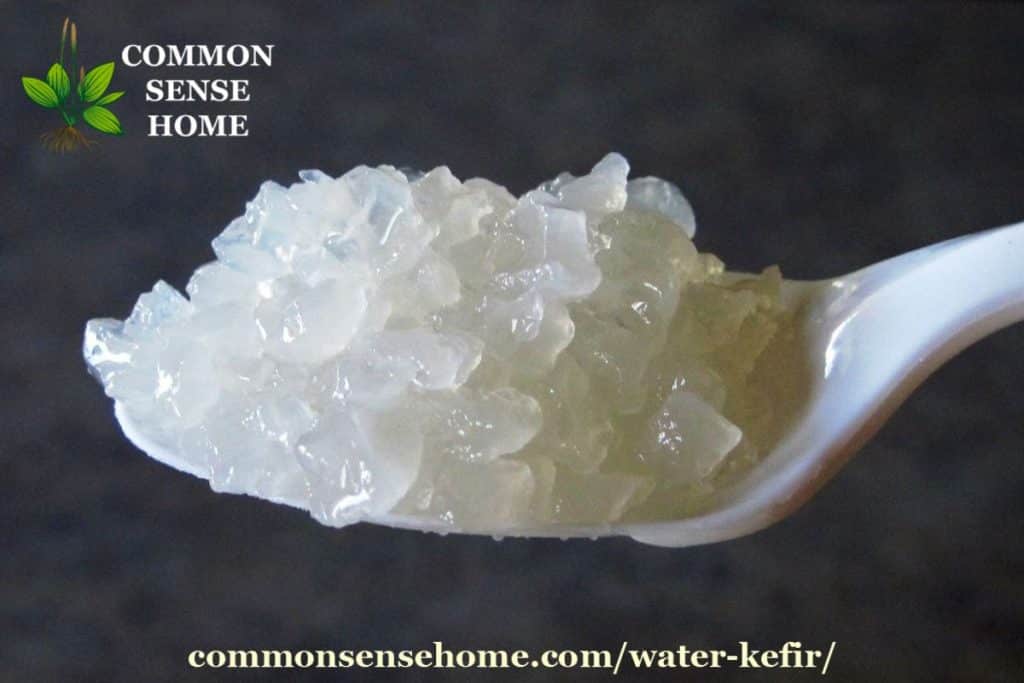
Plastic, glass or wooden utensils are recommended with working with water kefir grains. Metal is supposed to burn them. (Order a set of small nylon strainers here.)
Which Water to Use for Water Kefir
You can use filtered or unfiltered water, but you must avoid chlorine, nitrates and other toxic compounds. These are bad for both you and your kefir grains. I use our unfiltered well water, which is high in minerals. If you use filtered water, such as RO water, you should add back in some mineral drops. Alternatively, you can add a pinch of sea salt, a pinch of baking soda and a clean shell from a pastured egg. When I first started brewing, I always added the egg shell, but later I found out too much calcium will make your kefir grains slimy and your brew stinky.
Which Sweetener to Use for Water Kefir
When brewing your water kefir, it’s better to use less refined sugar because the trace minerals feed the kefir grains.Don’t use honey, because it is naturally antibacterial and may negatively affect your kefir grains. The flavor of rapadura sugar was too strong for our family (at least so far). My sons didn’t care for palm sugar, either, although I thought it worked just fine. Lately I’ve been using Florida Crystals, which are less refined organic cane sugar.
How to Make Water Kefir
Ingredients:
- 1/4 cup sugar
- 1 quart water
- 1 tablespoon (or more) kefir grains
Directions:
To make one quart of water kefir, dissolve 1/4 cup sugar in one cup of warm water. Mix in the rest of the water. Check to make sure the liquid isn’t too hot, and then add the kefir grains. We’ll typically mix the sugar and water in a pyrex cup, then pour the sugar water in a quart mason jar and fill the jar to near the top. Cover and let sit, out of direct sunlight, for 24-48 hours.
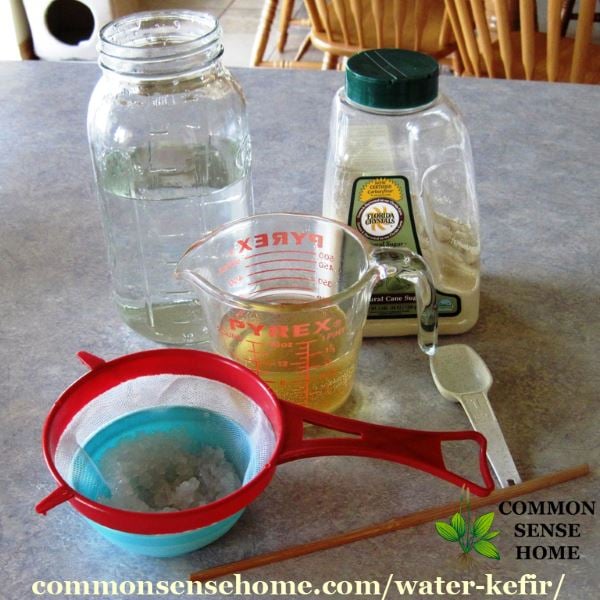
When the ferment is finished, I strain the grains out and transfer them into the next batch, or into some sugar water in the fridge. I’ve tried holding a finished brew in the fridge, but to me the flavor becomes less pleasant as it sits with the grains in. It’s best to culture it out every 24-24 hours to keep your grains happy and healthy.
After the grains have been strained out, you can flavor the finished brew. Some of our favorite water kefir flavors are listed below.
If you need water kefir grains or other home fermentation supplies for water kefir or kombucha, I highly recommend Kombucha Kamp.

How To Flavor Water Kefir
Lemon Lime Water Kefir
For lemon-lime water kefir, I use the zest and juice from one lemon and one lime (preferably organic) for five to six cups of water kefir. I like to zest my citrus with my Microplane grater. (Thanks to my friend, Julie, for this handy gift).
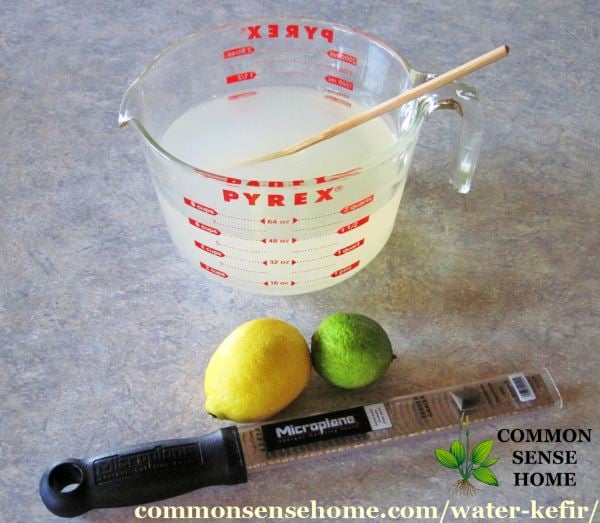
I add the juice and zest, give it a mix, and cover and let it sit on the counter top for another day.
Shortcut Lemon Lime water kefir: While I love the depth of flavor I get from the fresh fruit, sometimes I just want something QUICK! So, I bought a bottle of organic lemon juice and organic lime juice, and use two tablespoons of each per quart of finished water kefir. Vitamin C is light sensitive, so you have better odds of getting vitamin C in your drink when you use the fruit and keep your bottles covered, but in this case my main concern is the probiotics.
Raspberry Lemonade Water Kefir;
For raspberry lemonade water kefir, I use the juice and zest of one lemon along with a handful of fresh or frozen raspberries, lightly crushed.
Root Beer Water Kefir
I’ve also experimented with a more “kid friendly” root beer water kefir by using root beer extract and a little extra sweetener. I used one teaspoon of root beer extract combined with one tablespoon of sugar dissolved in 1/4 cup warm water, and mixed both into one quart of finished kefir. It makes a drink very much like minimally carbonated root beer. The longer it ages, the less sweet it will be. We use it on sno-cones, too. (See my youngest with the sno-cone maker here.)
Fuzzy Navel Water Kefir
We’ve found another fun flavor combination that we like a lot. To each quart water kefir, add 1 cup orange juice and 1/2 cup syrup from homemade canned peaches. This one is really good! I love this because the kefir ferments the sugar into bubbles, so you get less sugar but all the flavor. I think this would be a great way to use the syrup from other home canned fruits, too. If you’ve got a juicer, you could substitute fresh peach juice for the peace syrup, in season.
I’ve also tried various fruit juices. The I Love Water Kefir group on Facebook has some creative ideas, too. The strangest combo I’ve tried to date is pomegranate juice with nettle and rose hips. The flavor was a pleasant twist on an herbal infusion.
Bottling Your Water Kefir
When you’re ready to bottle, strain out any fruit or herbs bits before bottling. I like to place a small strainer right into my funnel as I fill.
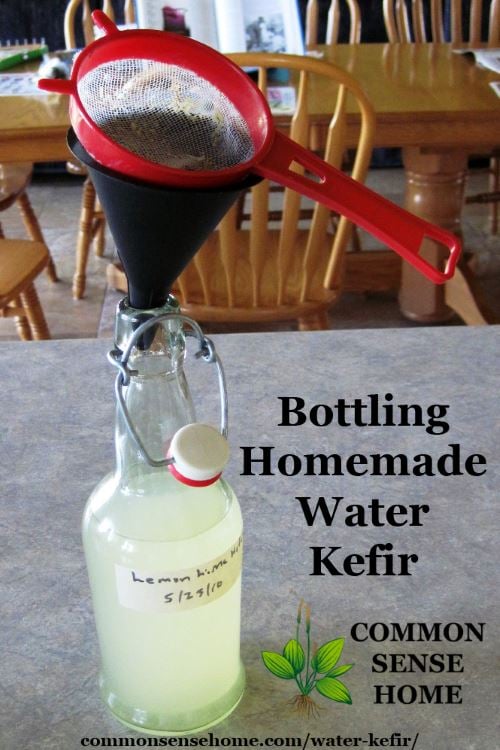
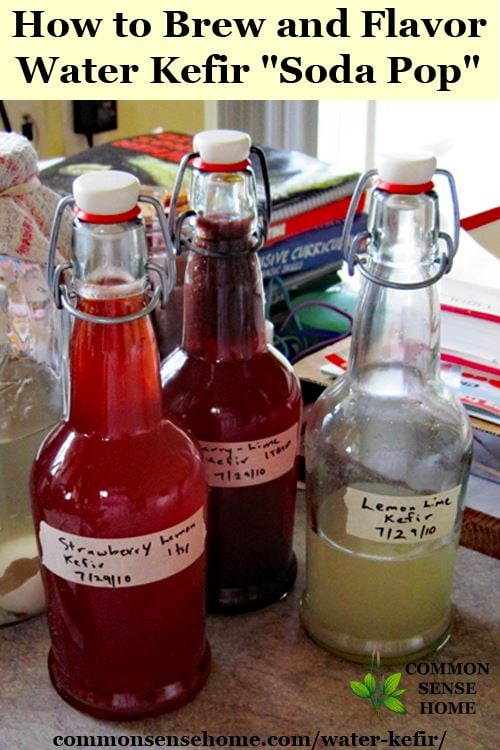
I purchased my bail top bottles locally at the House of Homebrew, but they are available online. (Order a set of bail top bottles here.) I write the flavor and date bottled on masking tape and stick it on the jar to keep track of my various brews.
The more sugar in your second ferment, the more fizz you’re likely to get. My lemon lime batches don’t tend to get too fizzy (unless it’s warm or they sit a long time), but the raspberry lemonade and fruit juice batches can get quite explosive. See the bubbles? Leave these too long or leave them in a warm place, and you’ll have a geyser. I still have a bit of raspberry stuck under my cabinets from a crazed bottle of kombucha.
Have you tried water kefir? What flavors do you recommend? Any other tips you’d like to share?
You may also find useful:
- How to Homebrew Kombucha – Save Money and Enjoy a Healthy Drink
- Probiotics for Colds and Flu – Fewer Symptoms, Faster Recovery Time
- How to Make Hard Cider
Originally published in 2010, updated in 2017.
Hello, I’ve just made water kefir for the first time 🙂 I didn’t get much fizz at all even though I left it on the bench after straining the grains out for 2/3 days. I used 1/4-1/2c of grains, 1L water and 1/4c golden sugar. Then for flavour I added blueberries and lemon juice. Tastes beautiful though. Also when you put your grains in the fridge for a break do you need to put sugar in and for how long can they sit in the fridge or do you still need to change the water (and sugar) every 24-48 hours or so??? Thanks heaps, loving this healthy drink 🙂
Did you have it in a tightly sealed container for the second ferment? That will help trap the carbonation, but over years of brewing mine hasn’t always been consistently fizzy. As the grains become more active, the fizz level tends to improve.
It’s best to keep brewing for a while to make sure the grains are fully active before storing, if possible. You can leave them up to a week in the fridge in a sugar solution, but using them regularly is best for the health of the grains.
Hi Laurie
Thanks so much for your reply. Yes they were in a tightly sealed container for the second ferment. I saw one or two bubbles but that was it. I’m hoping as each batch goes by it will get fizzy? So that’s two now that haven’t been so maybe like you say they are just not active enough yet – I’ll keep going and see what happens!! Thanks again, Liz
Good luck!
Does it matter how full you fill the bottle? I am trying to get the most carbonation. Thank you
You probably want to leave at least a little room at the top so that if you get carbonation and the liquid foams it has somewhere to go. Room in the bottle will no influence carbonation very much, if at all. Carbonation will be determined by how active the culture is.
Why can’t you directly first ferment kefir grains in fruit juice?
If you had excess grains, you could ferment them directly in the juice. Over time, continued fermentation in juice may produce an off flavor to the grains, as whatever medium they’re fermenting in becomes part of the grains themselves. Pulp and other chunks from freshly squeezed juice tends to get mixed in with the grains, and will rot over time.