
Rose Petal Tea: Benefits, Recipe, and Brewing Tips

This post may contain affiliate links. Read my full disclosure here.
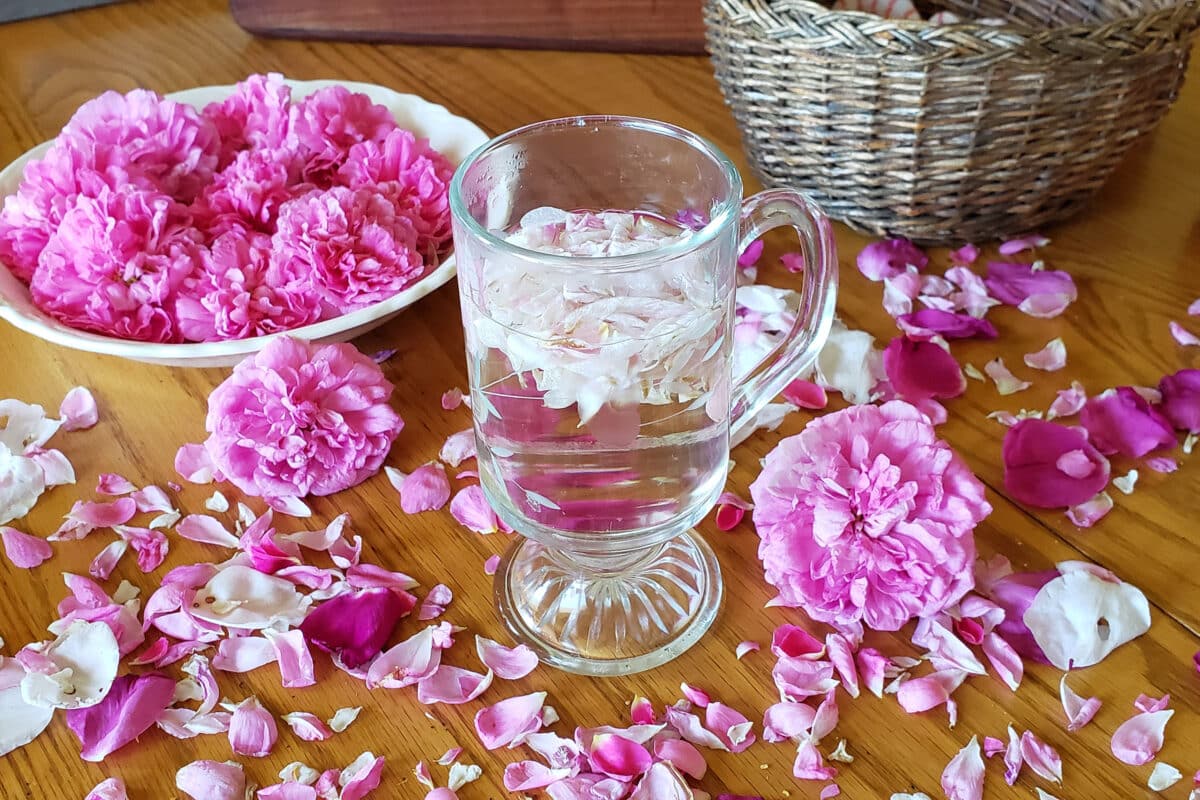
Few things capture the fragrance of summer quite like a cup of rose petal tea. Made from fresh or dried edible rose petals, this naturally caffeine-free herbal tea has been enjoyed for centuries. It has a light floral flavor, beautiful color, and pairs well with many other garden herbs.
Whether you’re brewing garden roses or a blend from your favorite tea shop, rose petal tea adds a bit of whimsy to your day.
Would you like to save this?
Table of Contents
Can You Make Tea from Rose Petals?
Yes—as long as you’re using petals from unsprayed, edible roses. Avoid florist roses or plants treated with pesticides, fungicides, or systemic insecticides.
Highly fragrant garden roses generally produce the best tea.
What Does Rose Petal Tea Taste Like?
Rose tea has a delicate floral flavor that is lighter than many people expect.
Depending on the variety, you may notice notes of:
- Honey
- Apple
- Citrus
- Strawberries
- Mild spice
The flavor should be pleasant and refreshing, never overpowering. If your tea tastes bitter, trim away the small white base where each petal attached to the flower before brewing.
Rose Petal Tea Benefits
Rose petals have been used in traditional herbal preparations for centuries, both for their pleasant flavor and their gentle, soothing qualities.
Research has found that rose petals contain naturally occurring plant compounds, including:
- Polyphenols
- Flavonoids
- Anthocyanins (especially darker-colored roses)
- Small amounts of vitamin C
These plant compounds that have been studied for their antioxidant and anti-inflammatory activity. Research suggests these compounds may help support the body’s normal response to oxidative stress and inflammation.
While most of the research has been conducted using concentrated rose extracts rather than brewed tea, enjoying rose petal tea is an easy way to include these beneficial plant compounds in your daily routine.
For many people, one of the greatest benefits comes from replacing a sugary beverage with a naturally caffeine-free herbal tea. A warm cup of rose tea can encourage you to slow down, stay hydrated, and enjoy a quiet moment. That’s something that’s often good for both body and mind.
Fresh Rose Petal Tea Recipe
Simple to make, pleasant to pair with other favorite herbs.
Ingredients
- 1 cup boiling water
- 1 tablespoon fresh rose petals
- Honey (optional)
- Lemon slice (optional)
Instructions
- Place fresh petals in a teacup.
- Pour boiling water over the petals.
- Cover and steep for 5 to 10 minutes.
- Strain.
- Sweeten with honey if desired.
Serve warm or chilled over ice.
Dried Rose Petal Tea
Dried petals have a slightly more concentrated flavor.
Use:
- 1 teaspoon dried petals
- 1 cup boiling water
Steep for 5 to 8 minutes.
Store dried petals in airtight jars away from heat and light for the best flavor. See How to Dry Rose Petals.
Rose Tea Blends
Rose pairs beautifully with many herbs from the garden.
Try combining it with:
- Mint – Refreshing and cooling during hot weather.
- Chamomile – A gentle evening blend.
- Lemon Balm – Bright citrus flavor with calming qualities.
- Lavender – A little goes a long way. Use sparingly so it doesn’t overpower the roses.
- Green Tea – For those who enjoy caffeine, a pinch of green tea complements rose petals nicely.
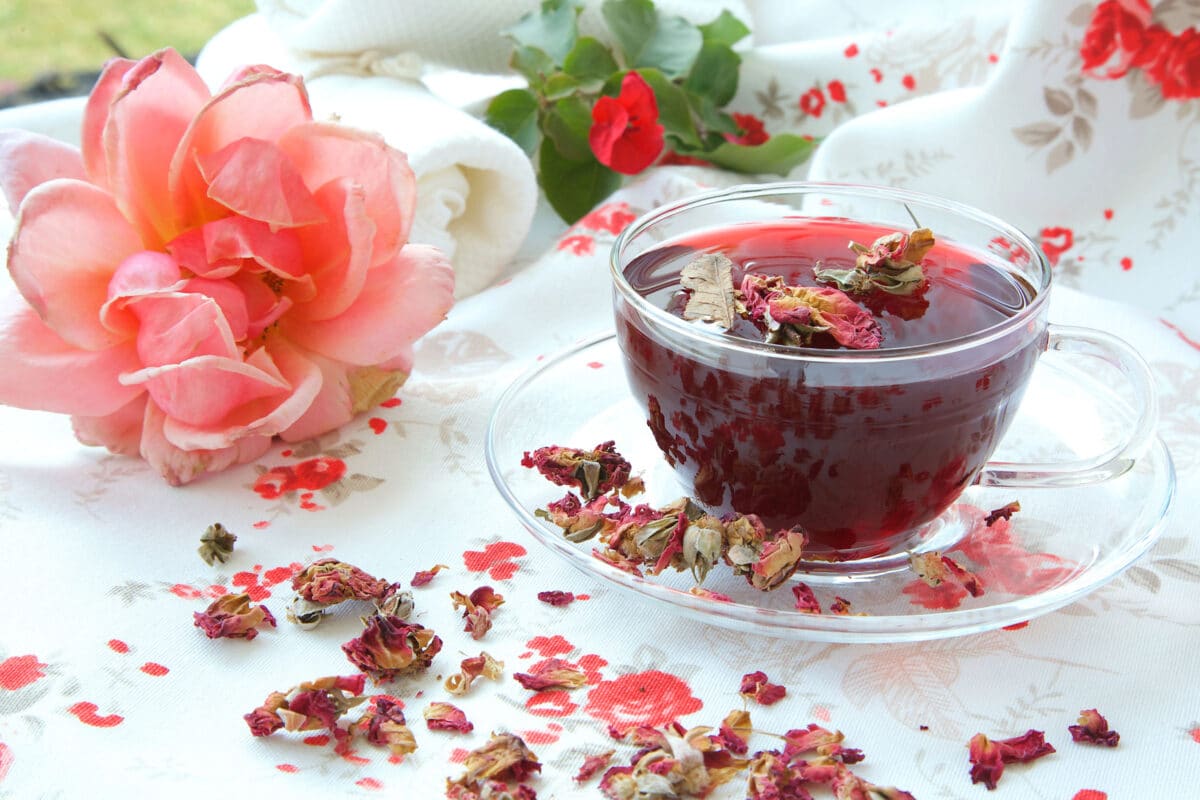
- Hibiscus – Adds a beautiful ruby color and pleasant tartness.
Hot or Iced?
Both are excellent.
For iced tea:
- Brew the tea slightly stronger.
- Chill completely.
- Pour over ice.
- Garnish with a few fresh petals or a slice of lemon.
How Much Rose Petal Tea Can You Drink?
There isn’t an official recommended daily amount for rose petal tea. Like most herbal teas, it’s generally best enjoyed as part of a varied diet.
For most healthy adults, 1 to 3 cups per day is a reasonable amount. If you’re trying rose tea for the first time, start with one cup to make sure you tolerate it well.
Because rose tea is naturally caffeine-free, it can be enjoyed morning or evening. If you like, rotate it with other herbal favorites such as chamomile, lemon balm, peppermint, or hibiscus for a variety of flavors and plant compounds.
As with any herbal tea, if you’re pregnant, nursing, have known allergies to roses or other members of the rose family, or take prescription medications, check with your healthcare provider before making it a regular part of your routine.
Frequently Asked Questions
Can I use dried rose petals?
Absolutely. Many people prefer dried petals because they’re available year-round.
What roses make the best tea?
Highly fragrant heirloom roses, rugosa roses, and many old garden roses are excellent choices.
Does rose tea contain caffeine?
No. Rose petals are naturally caffeine-free.
Can children drink rose tea?
A mild cup made from unsprayed edible roses is generally suitable for most children. It’s always wise to introduce herbal teas gradually.
Can I sweeten rose tea?
Honey is the traditional choice, but maple syrup or a little rose sugar also works well.
More Ways to Use Rose Petals
If your roses are producing more blooms than you can drink, there are plenty of other ways to enjoy them.
Fresh and dried petals can be used for:
- Rose sugar
- Rose-infused honey
- Potpourri
- Bath salts
- Homemade soap
- Candied petals
- Baking
- Herbal sachets
See What to Do With Rose Petals.
You may also enjoy Are Rose Petals Edible? It covers the best varieties for cooking, harvesting tips, and safe preparation.
A Cup of Summer
Every June, I find myself lingering a little longer near the roses. The fragrance drifting across the garden reminds me of summers at my grandmother’s house, where the same heirloom roses bloomed beside the porch.
A spoonful of petals in a teacup won’t preserve summer forever, but it comes surprisingly close. On a cold winter afternoon, one cup brings back the scent of sunshine, buzzing bees, and warm garden paths.
That’s one of the quiet pleasures of growing herbs and flowers. We aren’t just preserving plants—we’re preserving seasons, memories, and a little bit of home.
PrintRose Petal Tea
Enjoy this delicate herbal tea hot or cold, alone or blended with other complimentary herbs.
- Prep Time: 2 minutes
- Cook Time: 5 minutes
- Total Time: 7 minutes
- Yield: 1 cup 1x
- Category: Beverage
Ingredients
- 1 cup boiling water
- 1 tablespoon fresh rose petals or 1 teaspoon dried rose petals
- Honey (optional)
- Lemon slice (optional)
Instructions
- Place rose petals in a teacup.
- Pour boiling water over the petals.
- Cover and steep for 5 to 10 minutes.
- Strain.
- Sweeten with honey if desired
Notes
Rose petals pair well with mint, chamomile, lemon balm, lavender, hibiscus, or green tea.

This article is written by Laurie Neverman. Laurie and her family have 35 acres in northeast Wisconsin where they a food forest and an annual garden. Along with her passion for growing nutrient dense food, she also enjoys ancient history, adorable ducks, and lifelong learning.