
How to Dry Rose Petals for Tea, Crafts, & More

This post may contain affiliate links. Read my full disclosure here.

Drying rose petals is one of the easiest ways to preserve the beauty and fragrance of your summer roses. Once dried, they can be used in herbal tea, potpourri, bath products, sachets, soaps, homemade paper, and countless other projects.
Whether you’re harvesting roses from your garden or gathering petals from wild roses, drying them lets you enjoy your harvest long after the blooms have faded.
Here’s how to dry rose petals successfully.
Would you like to save this?
Table of Contents
Choose the Right Roses
For the best results, harvest only healthy, freshly opened flowers.
If you plan to use the petals in food or skin care products, be sure they’re from roses that have not been treated with chemicals. This includes pesticides, fungicides, or systemic insecticides.
Highly fragrant roses generally retain more scent after drying than varieties with little fragrance.
When Is the Best Time to Harvest?
Pick flowers:
- In the morning after the dew has dried
- Before the hottest part of the day
- Just after the flowers have fully opened
Avoid harvesting after heavy rain, which can wash away some of the natural aromatic oils.
Preparing Rose Petals
Remove the petals gently from the flower. Inspect them for insects or damaged spots.
If needed, rinse briefly in cool water and pat dry thoroughly with a towel before drying. Excess moisture slows drying and increases the chance of mold.
Method 1: Air Drying (Best for Most Gardeners)
Air drying is simple, inexpensive, and preserves color and fragrance well. Petals are thin and usually dry fairly quickly.
How to Air Dry Rose Petals
- Spread petals in a single layer on a drying screen, mesh rack, or clean window screen.
- Place them in a warm, dry area with good air circulation.
- Keep them out of direct sunlight, which fades color.
- Turn the petals once a day for even drying.
Depending on humidity, petals usually dry in 3 to 7 days. The petals are ready when they feel crisp and crumble easily.
Pros
- Excellent fragrance retention
- No electricity needed
- Gentle on delicate petals
Cons
- Takes several days
- Humidity can slow drying
Method 2: Dry Rose Petals in a Dehydrator
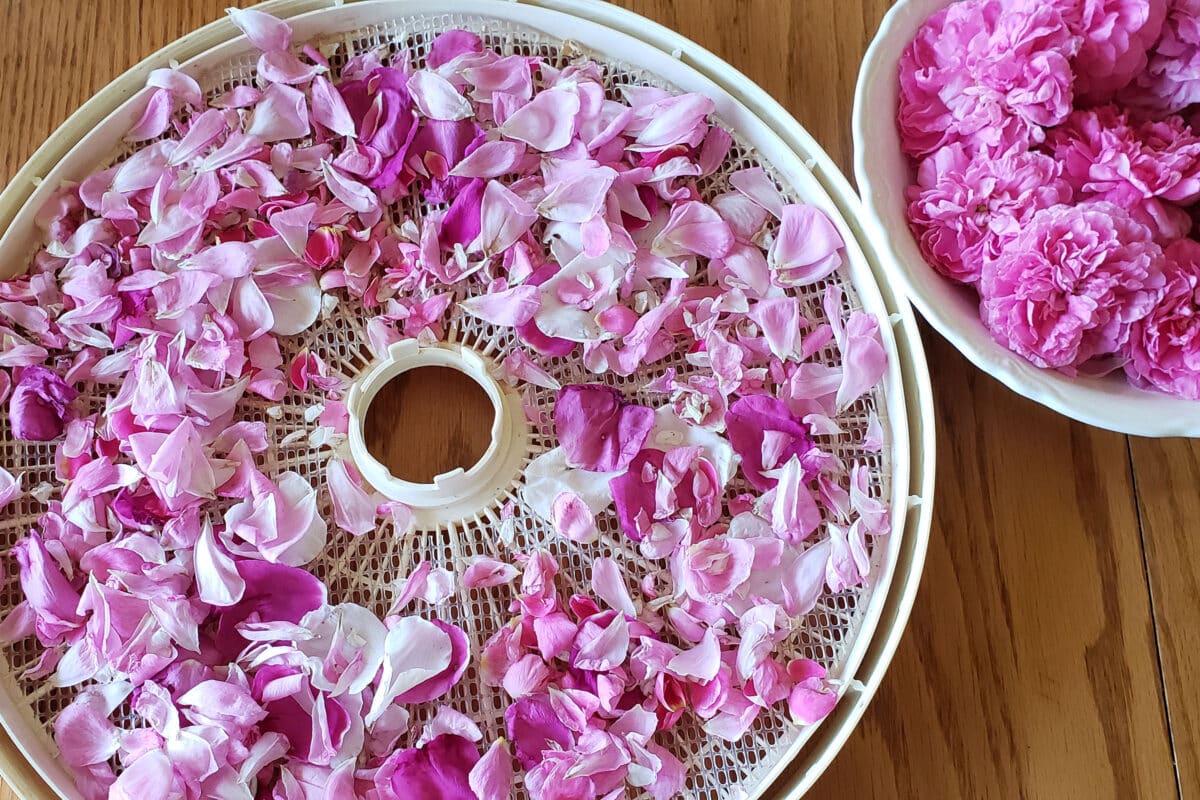
A food dehydrator is one of the fastest and most reliable methods, especially in humid climates.
Arrange petals in a single layer on dehydrator trays. Set the temperature to 95°F to 105°F (35°C to 40°C). Most petals dry within 2 to 4 hours, depending on thickness and humidity.
Check frequently during the last hour so they don’t become overly brittle.
Method 3: Oven Drying
An oven works if you don’t have a dehydrator, although it requires careful attention. I highly recommend air drying over oven drying, unless you’re dealing with excessive humidity.
Spread petals on a parchment-lined baking sheet. Set the oven to its lowest temperature—ideally below 170°F.
Leave the oven door slightly open to allow moisture to escape. Turn petals occasionally and begin checking after about 30 minutes. Because ovens vary so much, watch carefully to prevent scorching.
Method 4: Microwave Drying
C’mon – do you really want to take the time to harvest all those delicate petals, and then zap them in the microwave? If you feel you must…
Place petals between two paper towels on a microwave-safe plate. Microwave in short 20- to 30-second intervals, checking frequently until dry.
Since microwave power varies greatly, it’s easy to overheat petals. Use the lowest effective setting if your microwave allows it.
Which Drying Method Is Best?
For most home gardeners:
- Best overall: Air drying
- Fastest with excellent quality: Food dehydrator
- Works in a pinch: Oven
- Small batches: Microwave
How Do You Know They’re Fully Dry?
Properly dried petals should:
- Feel crisp, not leathery
- Break apart easily
- Show no cool or damp spots
- Have no musty odor
If there’s any remaining moisture, continue drying before storage.
How to Store Dried Rose Petals
Once completely dry:
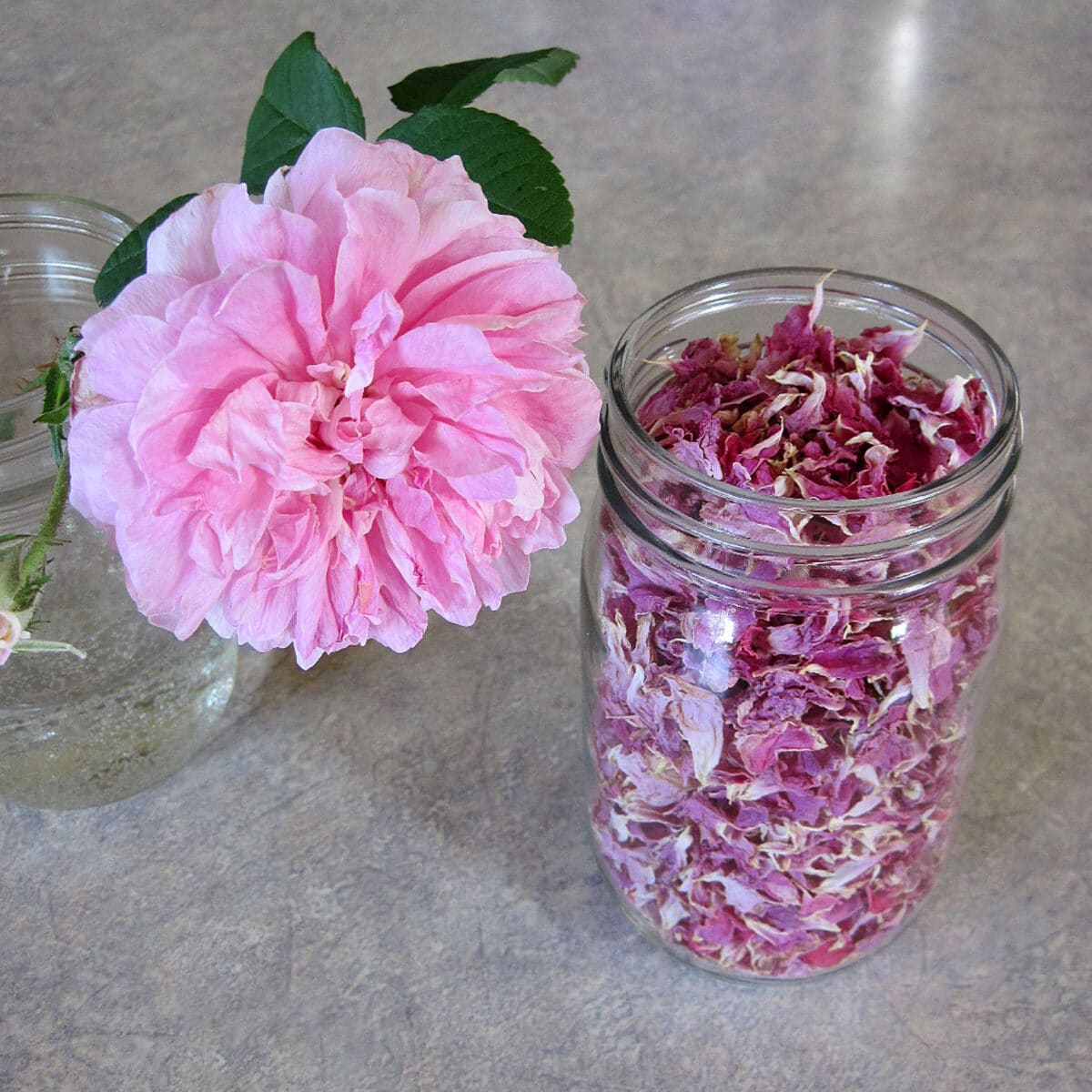
- Store in airtight glass jars.
- Keep in a cool, dark cupboard.
- Avoid humid locations.
- Label jars with the harvest date.
For the best fragrance, use within one year.
Why Did My Rose Petals Turn Brown?
Some color change is normal, especially with darker-colored roses.
Excessive browning is usually caused by:
- Drying too slowly
- Drying in direct sunlight
- High drying temperatures
- Storing petals before they were completely dry
Pink and red roses often darken slightly, while white petals may develop a cream color.
Why Don’t My Dried Petals Smell Like Fresh Roses?
Drying naturally reduces some of the volatile oils responsible for a flower’s fragrance.
To preserve as much scent as possible:
- Harvest highly fragrant varieties.
- Dry them quickly.
- Keep them out of direct sunlight.
- Store them in airtight containers.
Older heirloom roses and rugosa roses often retain fragrance better than many modern hybrid varieties.
What Can You Make with Dried Rose Petals?
Dried petals have dozens of uses, including:
- Herbal tea
- Potpourri
- Bath salts
- Bath tea bags
- Soap
- Lotion bars
- Herbal sachets
- Homemade paper
- Candles
- Rose sugar
- Baking
- Wedding confetti
- Decorative crafts
See What to Do With Rose Petals.
If you’re interested in cooking with roses, see Are Rose Petals Edible? for tips on choosing the best varieties and preparing them safely.
You can also explore my guide to Edible Flowers for more blossoms you can grow and enjoy in the kitchen.
Frequently Asked Questions
How long do dried rose petals last?
When stored in airtight containers in a cool, dark place, dried petals generally maintain their best quality for about one year. They’re often still usable after that, but the fragrance and color gradually fade.
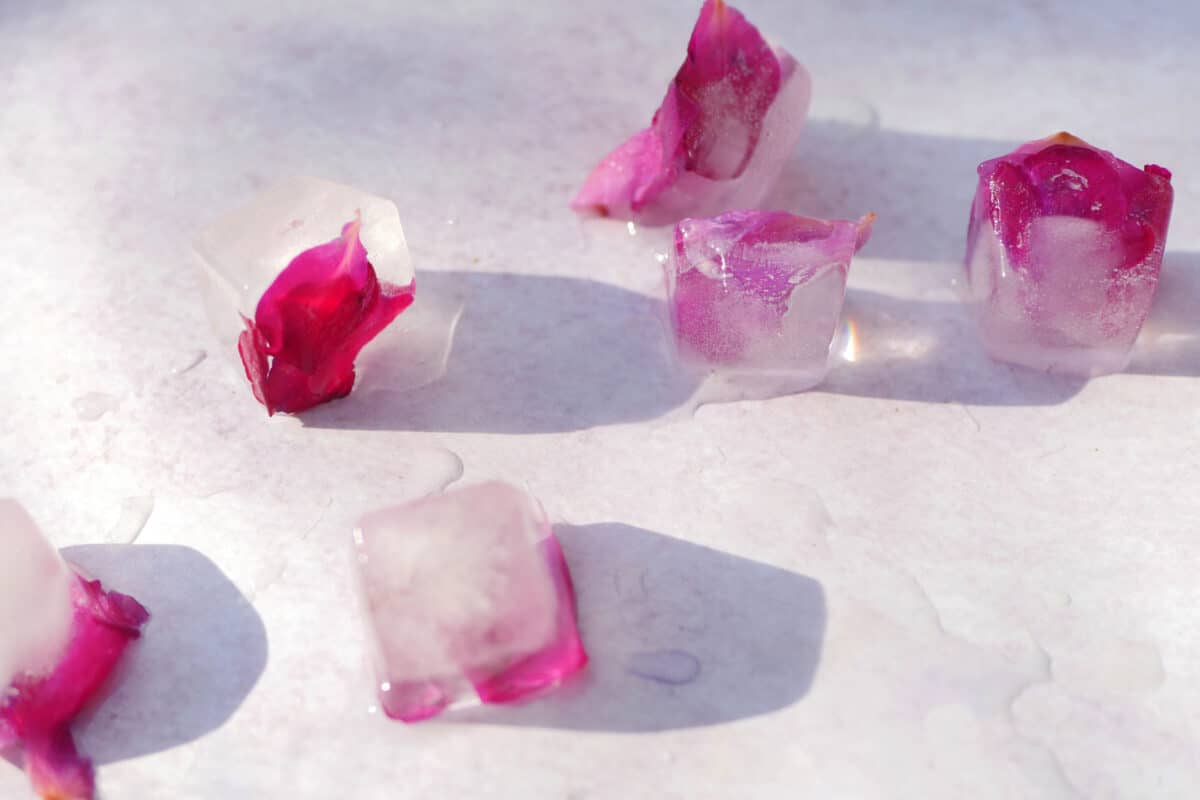
Can you freeze rose petals instead?
Yes. Freezing works well if you want to preserve fresh petals for cooking rather than drying them. Freeze them in airtight containers or ice cube trays.
Should I remove the white base of the petals?
If you’re drying petals for tea or recipes, trimming off the small white base helps reduce bitterness. For crafts and potpourri, it’s usually unnecessary.
Can I dry whole rose flowers?
Yes, but whole blooms take much longer to dry and are more likely to develop mold. Drying individual petals is faster and gives you more flexibility for future projects. For whole blooms, try the dehydrator to help avoid mold.
A Little Summer to Enjoy All Year
One of my favorite parts of harvesting roses is knowing that I don’t have to enjoy them only while they’re blooming. A few trays of drying petals in midsummer become fragrant tea, homemade gifts, and reminders of warm garden days throughout the winter.
For me, that’s part of what gardening is all about—making the most of each season and carrying a little of its abundance forward.

This article is written by Laurie Neverman. Laurie and her family have 35 acres in northeast Wisconsin where they a food forest and an annual garden. Along with her passion for growing nutrient dense food, she also enjoys ancient history, adorable ducks, and lifelong learning.