
Are Rose Petals Edible? Safe Varieties & Tips

This post may contain affiliate links. Read my full disclosure here.
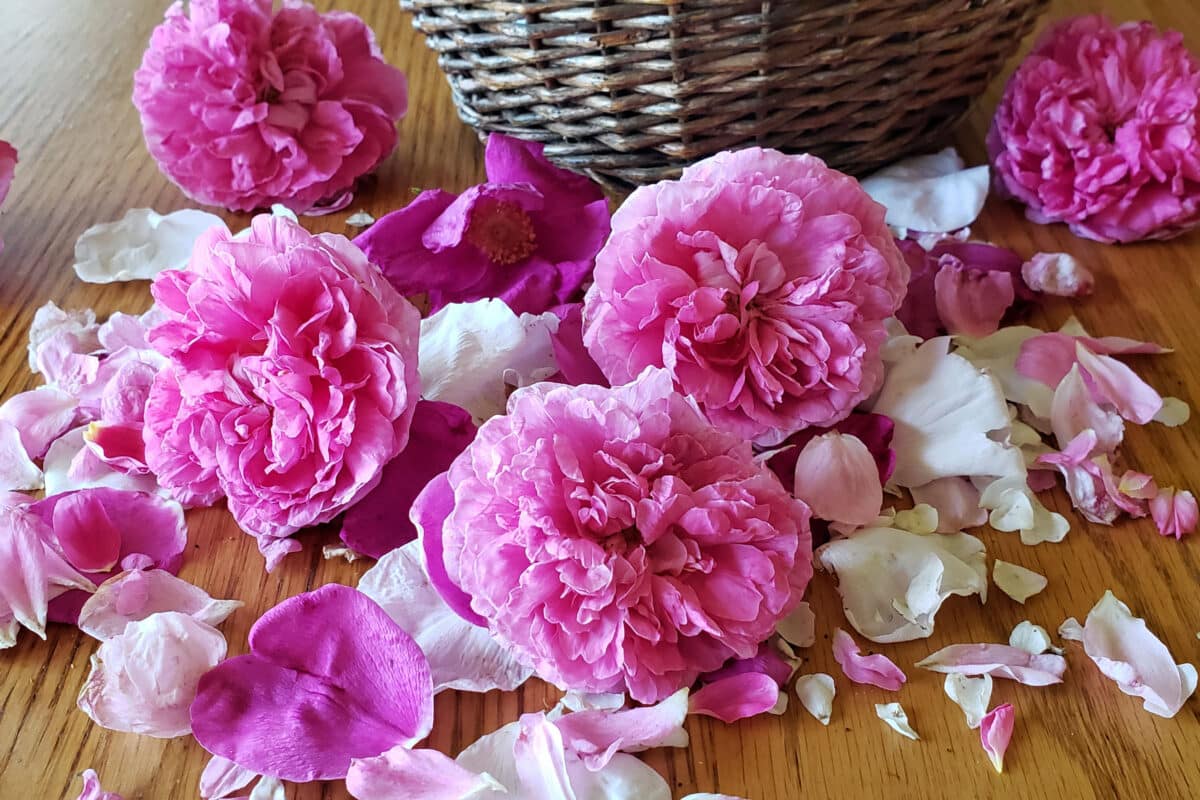
Yes, rose petals are edible—provided they come from unsprayed plants. In fact, people have been using roses in cooking for centuries. Their delicate floral flavor adds something special to teas, desserts, syrups, jams, salads, and baked goods.
Not every rose tastes the same, though. Some are intensely fragrant and sweet, while others have very little flavor. (And some should be avoided completely.) Knowing which roses to choose makes all the difference.
Here’s what you need to know before harvesting rose petals for the kitchen.
Would you like to save this?
Table of Contents
Can You Eat Rose Petals?
Most true roses (Rosa species) have edible petals. The petals contain small amounts of antioxidants, including polyphenols and vitamin C. They’re generally enjoyed more for their fragrance and flavor than as a significant source of nutrients.
The most important consideration isn’t the variety—it’s how the roses were grown.
Use only petals from roses that:
- Have never been sprayed with pesticides or fungicides
- Have not been treated with systemic insecticides
- Are grown specifically for the garden or landscape—not purchased from a florist
Many florist roses receive post-harvest chemical treatments to extend vase life and should not be eaten. They are often sprayed while growing, too, to keep them pest free. These rules hold for other edible flowers, too.
What Do Rose Petals Taste Like?
Rose petals have a light floral flavor with subtle sweetness.
Depending on the variety, you may notice hints of:
- Honey
- Apple
- Strawberry
- Citrus
- Spice
Some varieties are almost perfume-like, while others have very little flavor. If the petals taste bitter, you’ve probably included too much of the white base where each petal attaches to the flower. Simply trim off that small white section before using them in recipes.
Which Roses Are Best to Eat?
The best edible roses are usually the most fragrant ones.
Heirloom Roses
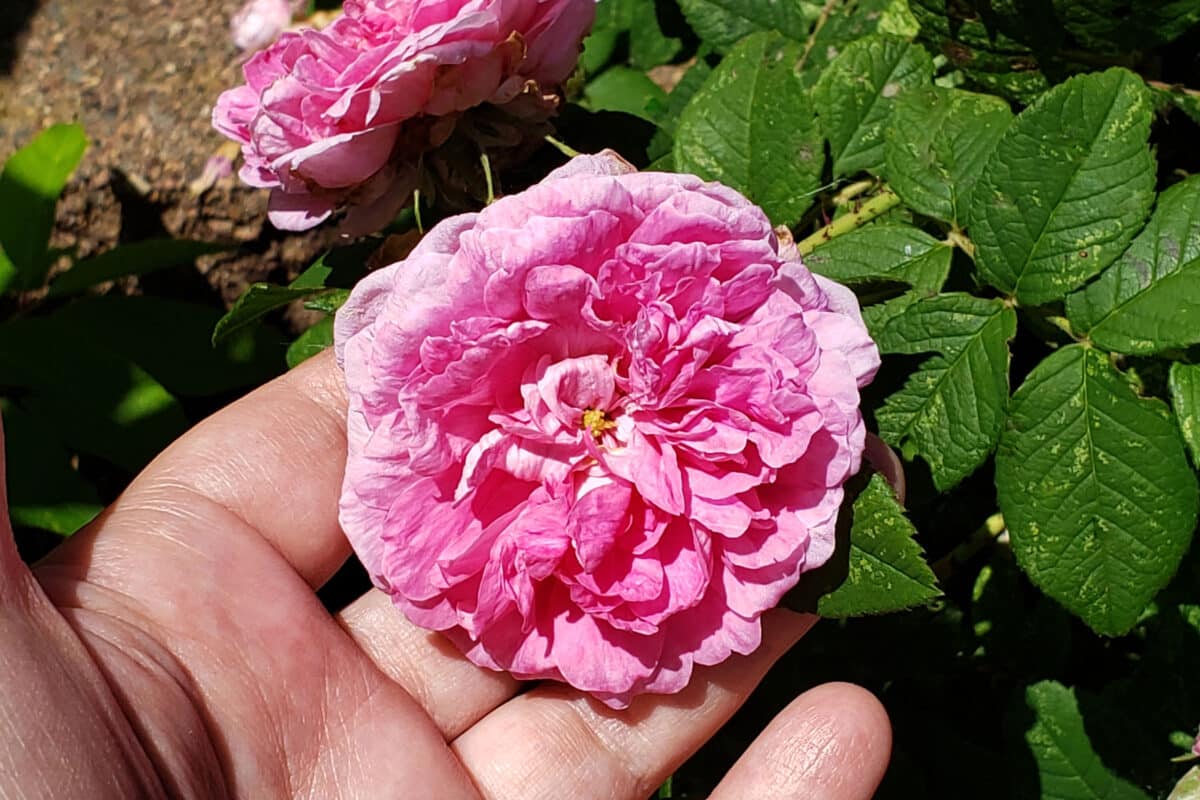
Old-fashioned garden roses often have rich fragrance and excellent flavor. Many have been grown for generations specifically because they smell wonderful—not just because they look pretty.
Some of my favorite roses are heirloom plants that were passed down from my grandmother to my mother to me. Harvesting petals while enjoying their beautiful scent feels like preserving a little piece of family history.
Rugosa Roses
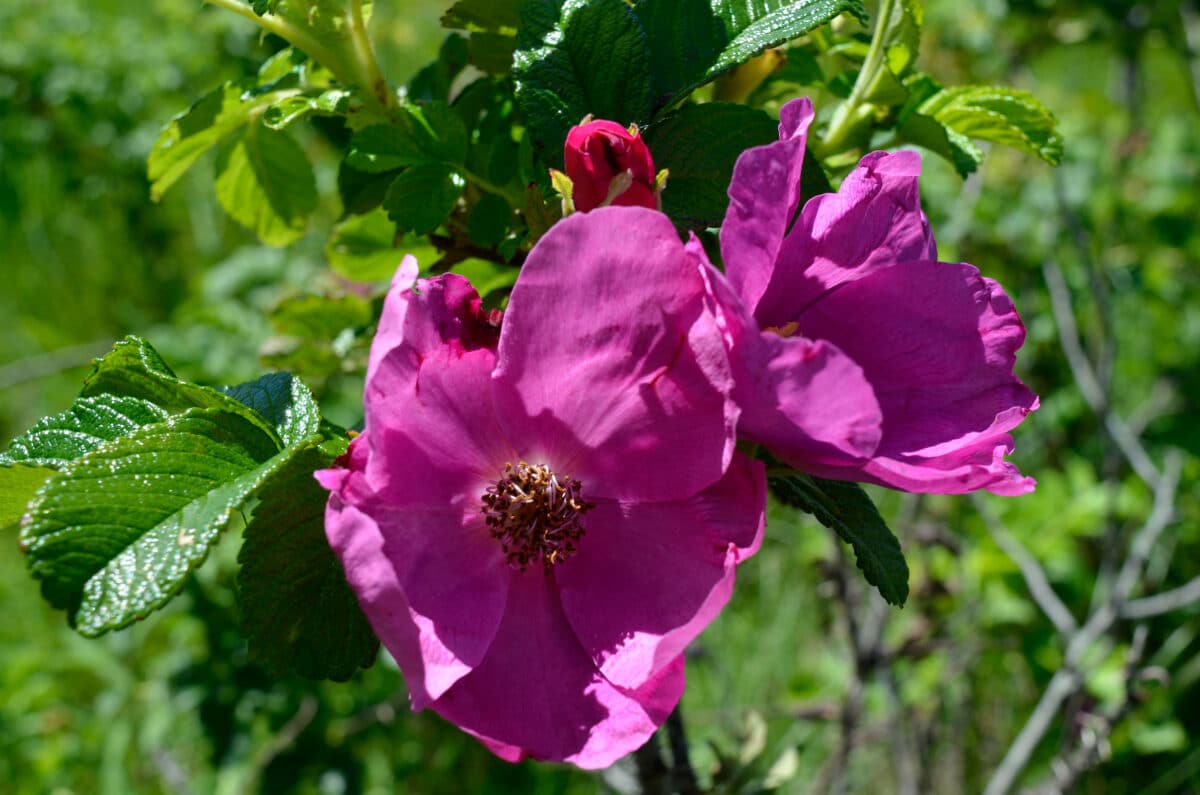
Rugosa roses (Rosa rugosa) produce wonderfully fragrant petals and are among my favorite multipurpose roses, depending on the variety. We planted ours for the large rose hips they produce in autumn, and they have only a few petals. Other varieties have more densely packed petals, more similar to my mother’s heirloom roses.
Wild Roses
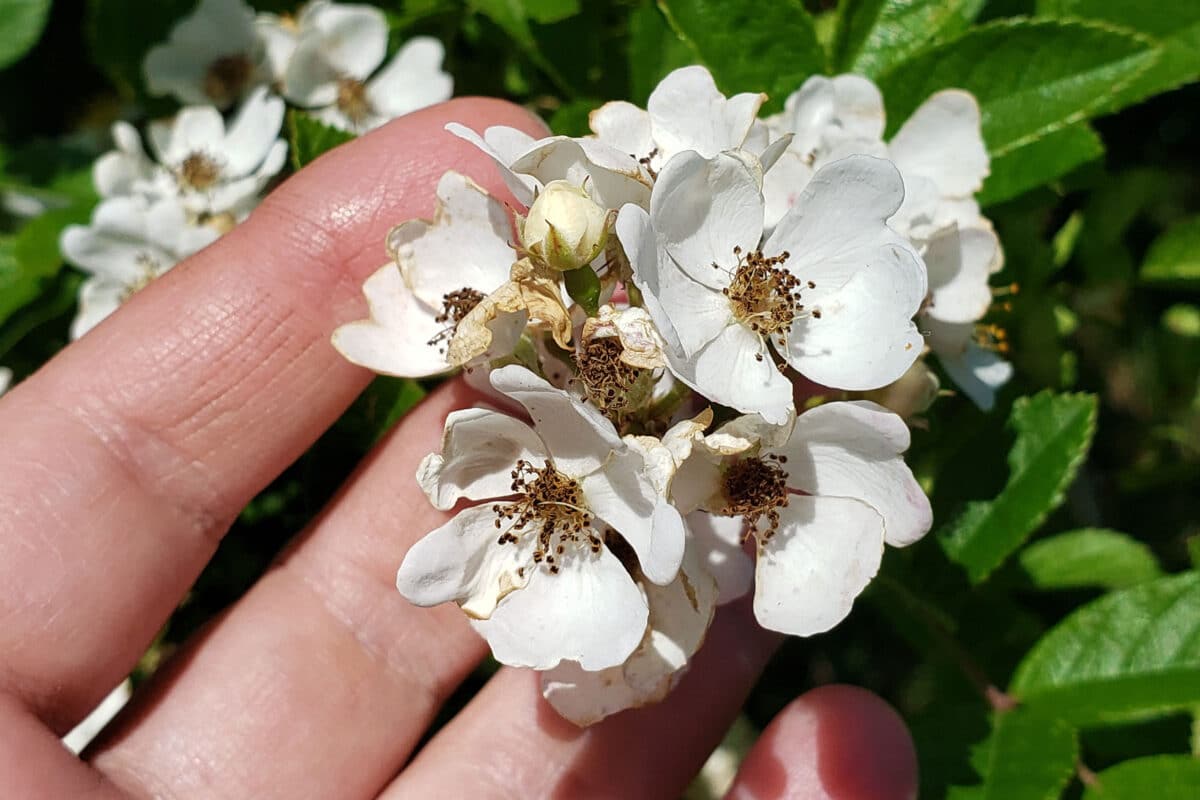
Wild roses usually have fewer petals than cultivated varieties, but they often make up for it with exceptional fragrance. Our wild roses are tiny and white, but there’s no mistaking that distinctive rose scent. If you’re harvesting from wild plants, leave plenty of blossoms behind for pollinators.
Modern Roses
Many modern cultivars are technically edible if they haven’t been sprayed, but have been bred more for appearance than fragrance. Taste a petal before harvesting a large batch. Even if they don’t have much fragrance, you can still use them for crafts.
How to Harvest Rose Petals
For the best flavor:
- Harvest in the morning after the dew has dried.
- Pick flowers that have just fully opened.
- Choose blooms with a strong fragrance.
- Avoid flowers after heavy rain, which can wash away aromatic oils.
Remove the petals gently from the flower and inspect them for insects before using.
Should You Wash Rose Petals?
If your roses are growing in a clean garden, a gentle shake may be all they need.
Otherwise:
- Rinse briefly in cool water.
- Pat dry with a clean towel.
- Use immediately or refrigerate until needed.
Handle the petals gently so they don’t bruise. Work as quickly as possible after picking, as the petals do go limp over time.
Fresh or Dried Rose Petals?
Both work well.
Fresh petals are best for:
- Salads
- Garnishes
- Ice cubes
- Rose sugar
- Infused honey
- Syrups
Dried petals are ideal for:
- Herbal tea
- Potpourri
- Bath products
- Baking
- Spice blends
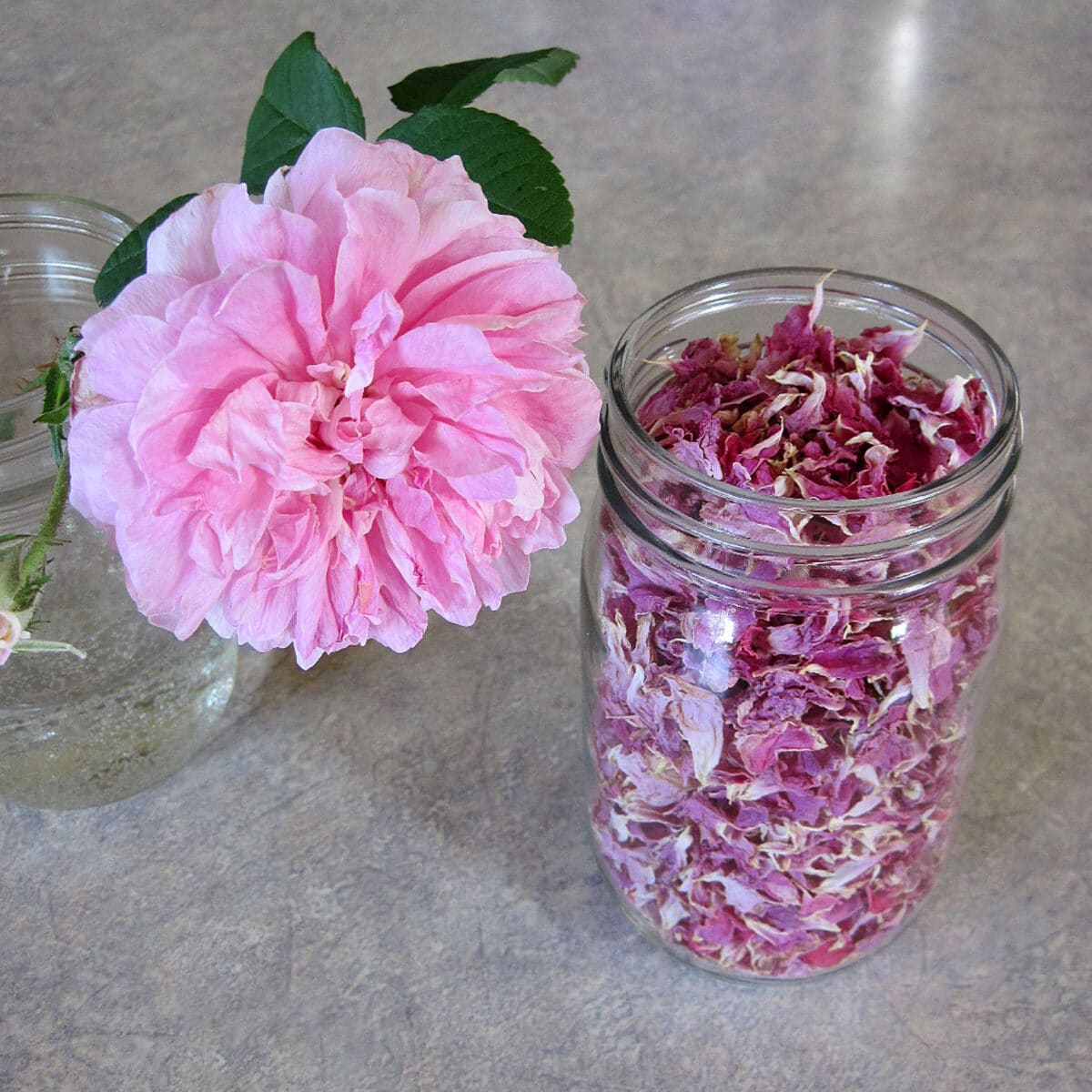
Dry petals on screens or in a dehydrator at low temperature until crisp, then store in airtight jars away from sunlight.
What Can You Make with Rose Petals?
There are countless ways to enjoy edible roses.
Some favorites include:
- Rose petal tea
- Rose sugar
- Rose-infused honey
- Rose syrup
- Rose jelly
- Rose water
- Cookies and cakes
- Shortbread
- Homemade ice cream
- Lemonade
- Fruit salads
- Candied rose petals
- Herbal bath salts
See What to Do With Rose Petals.
Are Rose Leaves and Rose Hips Edible?
Rose hips are one of the most nutritious parts of the plant. Once the flowers fade, many varieties develop bright red or orange hips that are naturally high in vitamin C. They can be made into teas, syrups, jellies, and jams.
Rose leaves have occasionally been used in herbal preparations, but they’re much less common in the kitchen than petals or hips.
See Harvesting Rose Hips for Food and Medicinal Uses.
Frequently Asked Questions
Are all roses edible?
Nearly all true roses have edible petals. Only use flowers that haven’t been treated with pesticides or other chemicals.
Can you eat roses from a flower shop?
No. Florist roses are often treated with pesticides and preservatives that make them unsuitable for eating.
Which color rose tastes best?
Fragrance matters more than color. White, pink, yellow, and red roses can all be delicious if they’re highly scented.
Do rose petals have health benefits?
Rose petals contain antioxidants and small amounts of vitamin C and other plant compounds. They’re also naturally caffeine-free, making them a pleasant addition to herbal teas.
Can you freeze rose petals?
Yes. Freeze whole petals for later recipes or freeze them inside ice cubes for an attractive addition to summer drinks.
Edible Roses – A Feast for the Senses
Every summer, I look forward to the first flush of roses. The blooms brighten the garden, attract pollinators, and fill the air with fragrance. Some become tea or rose sugar, while the remaining flowers eventually develop into rose hips for autumn harvest.
It’s one more reminder that when we choose plants that are both beautiful and useful, our gardens can feed more than just our eyes.

This article is written by Laurie Neverman. Laurie and her family have 35 acres in northeast Wisconsin where they a food forest and an annual garden. Along with her passion for growing nutrient dense food, she also enjoys ancient history, adorable ducks, and lifelong learning.