
Best Home Remedies for Coughs – Natural Options that Work

This post may contain affiliate links. Read my full disclosure here.

Coughing can make you miserable, whether it’s from dry indoor air, the tail end of common colds, or cold and flu season. A cough is your body’s way of clearing irritants, but when it hangs around for days (or keeps you awake half the night), enough is enough. Simple home remedies can go a long way to relieve a cough naturally.
If you need relief, try these time-tested herbal and old-fashioned remedies that work surprisingly well.

Would you like to save this?
Note: In the photo above, I’m demonstrating coughing into your arm. This is the preferred option to keep your cough to yourself.
Table of Contents
The Simplest Home Remedies for Coughs – Hydration and Warmth (or Cold!)
One of the easiest ways to treat a cough is simply keeping your throat moist. Sipping warm water, herbal tea, or broth throughout the day helps calm a dry cough and keeps mucus moving.
At night, a warm drink with a spoonful of honey—if you tolerate it—can feel like someone has wrapped your throat in a soft blanket.
That said, one unexpected remedy is cold air. If you’ve ever stepped outside on a crisp winter night and suddenly stopped coughing, you know the trick. The cold air helps reduce the swelling and inflammation in the throat.
We came across this remedy by accident when our youngest had a croupy cough as a baby. While taking him in to the ER one night, we found that transporting him in the cold air helped to relieve his cough.
The doctor advised us to use this trick again as needed if he was hit with another coughing attack.
Honey, Ginger Honey, Cinnamon Honey
Honey is an old favorite for gently suppressing coughs without the side effects of over-the-counter cough syrup. Studies confirm that honey works as well or better than dextromorphin. You can take a spoonful straight, stir it into tea, or try something even better: ginger honey.
To make ginger honey, chop fresh ginger and cover it with raw honey. Let it sit for a few hours (or days) to infuse. Ginger helps warm the body and calm irritation. Ginger tea with honey is a classic for a reason.
Cinnamon honey is another good combination, since both are anti-microbial. Just mix in about ¼ teaspoon of cinnamon to 1/2 cup honey. Use a spoonful as needed for coughs.
Herbal Help: Marshmallow Root, Thyme, and More
If you’re dealing with a stubborn dry cough, marshmallow root is one of the best herbs out there. Its natural mucilage coats irritated tissues the way a soft scarf wraps your neck on a blustery day. A cold infusion works beautifully—just soak the root in cool water and sip as needed.
Thyme is another long-standing favorite, especially for spasmodic or barking coughs. It’s naturally antimicrobial and helps relax the throat and bronchial muscles. A simple thyme tea or thyme-infused honey works well.
Hot herbal tea helps to ease congestion, keep you hydrated and soothe irritated tissues. Some more herbal tea options for cough include:
- Sage
- Linden (also known as tilia or basswood)
- Lemon balm
- Horehound (more commonly used in cough and sore throat lozenges and syrups)
- Rosemary
- Peppermint
To make herbal tea, place one teaspoon of dried herb in a mug and cover with eight ounces of warm water. Cover with a lid or plate to trap the steam and steep for about 10 minutes. Strain and add honey and lemon if desired.

If cough is accompanied by mild upset stomach due to sinus drainage, peppermint tea helps calm the stomach upset.
Here is a great tutorial recently with two easy homemade herbal cough lozenge recipes.
Steam/Humidity
When coughing gets worse in dry winter air, moisture often makes the difference. A warm shower or a humidifier by the bed can help loosen mucus and calm irritation.
Keeping a humidifier running to add moisture to the air will also help a dry cough/itchy throat. This is one of the safest cough remedies for small children. Make sure to keep your humidifier clean, so you’re not growing mold or bacteria.


Saltwater Gargles
Saltwater gargles aren’t fancy, but they’re effective. A simple mix of salt and warm water helps reduce inflammation and wash away irritants. If your cough is triggered by a scratchy or sore throat, gargling can give quick relief.
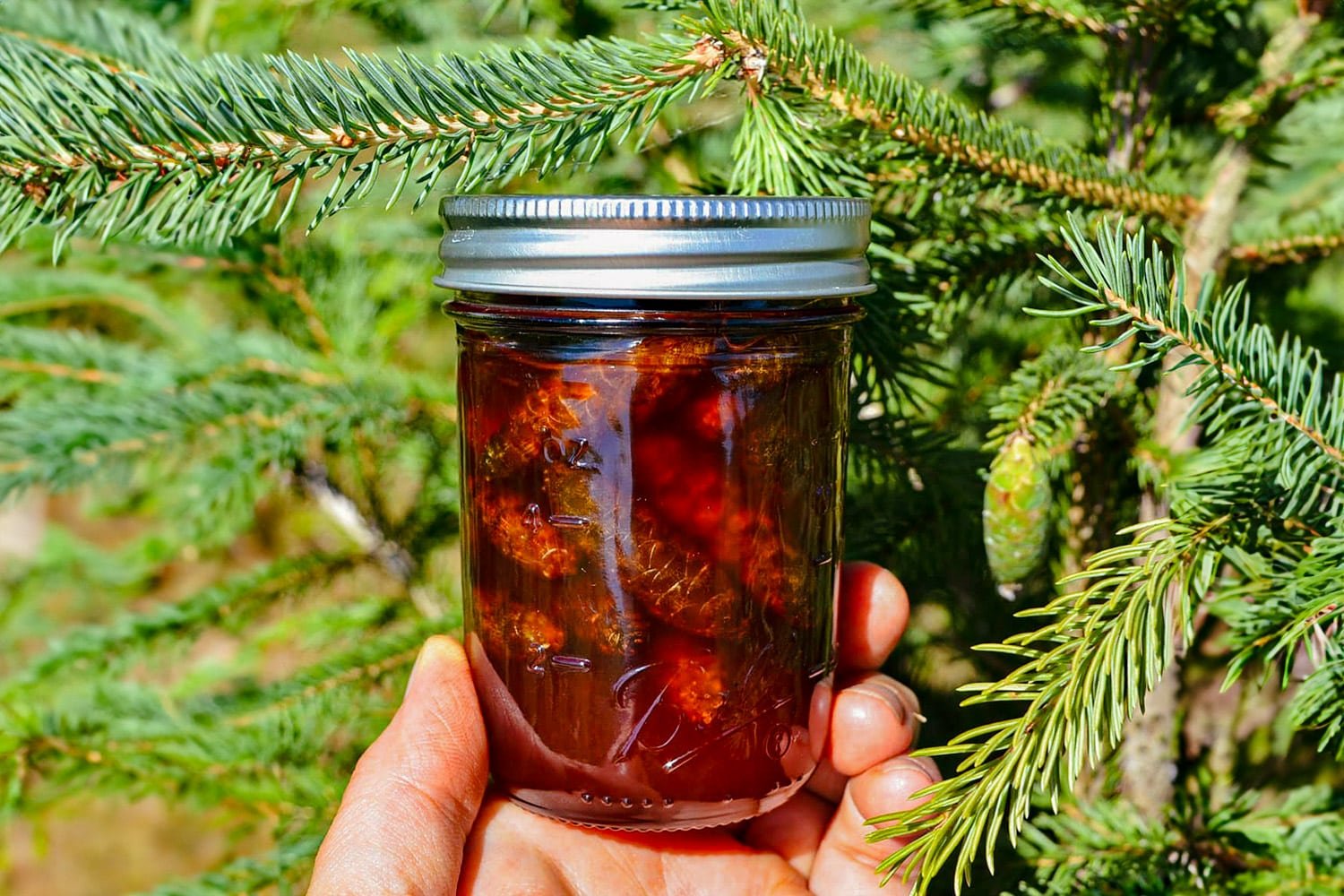
Pine Cone Jam (Old Northern Remedy)
If you grew up in a northern climate, you might have heard of pine cone jam or syrup. Young, green pine cones are steeped in sugar until they release a resin-rich syrup that soothes the throat and supports the respiratory system. It has a forest-sweet flavor and works similarly to herbal cough drops, just in syrup form.
It’s especially nice for wet, rattly coughs. Get the recipe for pine cone jam here.
Tomato Tea (A Surprisingly Effective Remedy)
Tomato tea is one of those strange-sounding remedies that actually works well for congestion and coughs. Warm tomato juice, garlic, lemon, and a bit of hot sauce create a steam-like effect from the inside out. It opens the sinuses, warms the chest, and often brings quick relief.
It’s especially helpful when a cough is tied in with sinus drainage. Learn how to make tomato tea.
Elderberry Syrup
Many families reach for elderberry syrup as a home remedy for coughs. Elderberries may help shorten viral infections, and the syrup soothes the throat in the same way honey does. It’s gentle, pleasant tasting, and kid-friendly (for ages 1+).
We have two different elderberry syrup recipes on the site. See “How to Make Elderberry Syrup with Fresh or Dried Elderberries” for the recipes.

Lemon Juice
Lemon juice helps to loosen and clear phlegm, and provides immune boosting vitamin C. To use lemon as a cough remedy, you can mix it with your honey, make a lemon gargle (1/4 cup water plus 2 tablespoons lemon), or mix up a cup of warm honey sweetened lemonade.
Milk and Butter or Golden Milk
Combine 1 cup of warm milk with two tablespoons sweet butter to relieve dry coughs. This works better for a dry, unproductive cough (not much mucus), because it coats and relaxes the throat.
Warm coconut milk blended into golden milk with turmeric and other spices coats the throat and reduces inflammation. My friend Jessica has three recipe variations for golden milk on her website.
Foods That Settle a Cough
Soups, broths, garlic, onions, pears, pineapple, and warm herbal drinks all help the body recover from illness. These foods aren’t magic bullets, but they support healing and ease irritation.
Coughing in Children (Special Considerations)
Children are more sensitive to strong essential oils, alcohol-based products, and many OTC cough syrup blends. For littles, keep things simple:
- Moisture (humidifier or steamy bathroom)
- Warm drinks (or cold air)
- Honey for children over one year
- Gentle herbs like chamomile, thyme, or marshmallow
Nighttime coughing is often worse when kids lie down. Slightly elevating the head of the bed or offering a warm drink before sleep can help.
Cough Remedies Best Avoided
Not every remedy is a good remedy—especially when side effects outweigh benefits. Use caution with:
- Strong essential oils on young children (just don’t do it)
- Multi-symptom cold medicines
- Alcohol-based or numbing sprays
- Sugary store-bought cough drops with dyes
What helps one person can irritate someone else, so pay attention to how your body responds.
When to Seek Medical Care
Most coughs from common colds resolve with rest, hydration, and simple care. But it’s time for medical attention if a cough:
- Lasts more than two or three weeks
- Comes with persistent fever
- Produces blood
- Causes wheezing or trouble breathing
- Occurs in an infant under three months
Trust your instincts—if something feels off, get it checked.
A German New Medicine Interpretation of Coughing
For those interested in a different perspective, German New Medicine (GNM) views coughing not as a malfunction but as part of a biological program. In this model, a cough may appear during a “healing phase” after a conflict involving fear, territory, or feeling unable to get enough air or space. The body uses coughing to help clear or repair tissues affected during that conflict.
I find GNM to be a useful reminder that the body often tries to heal itself, not work against us.
What are your preferred home remedies for coughs?
Most coughs—whether dry, tickly, or part of cold and flu season—respond well to simple natural remedies. These gentle, time-tested options support your body instead of simply shutting down symptoms, helping you feel better sooner and rest more easily.
What’s your preferred cough remedy? Share your thoughts in the comments.

This article is written by Laurie Neverman. Laurie is a lifelong learner with a passion for natural remedies and holistic healing. She’s successfully improved her eyesight and cleared her psoriasis.
Originally posted in 2012, last updated in 2025.
Three thoughts if I can remember them all.
1 – to sooth cough etc. Hot jello. Not the way you normally would. Just heat a cup of water and stir in 3 or 4 teaspoons, or more, to taste and sip to enjoy. I prefer raspberry or strawberry but any flavor would work. Lemon might even help the congestion a bit more. Just be careful of the hot liquid especially with younger children. I keep a small sealed container of dry jello powder in pantry for use anytime.
2 – a trick from my physical therapist. For a one sided headache or neck ache or spasm, wrap a heating pad or hot wrap around the opposite foot. It really works. I have even heated both feet when my whole head aches.
3 – still cannot remember this one.
4 – just remembered this one though. When sinuses are really congested, if I take the time and vocalize (like singers do), especially in the upper registers, the vibrations can help loosen things up so they can drain. I haven’t thought about for chest congestion, but localizing in the lower tones might help.
Yes, I can agree with the earlier comment about sugar curing hiccups too.
Hope I haven’t been too wordy or off topic.
Thanks, Carol.
New Mom
My 6 mtn old has had a very bad cold for little over a month.when I take him to his pediatrician they just give him zarbees and send us home..it will work for like a few days ..but then his cough comes back 5 times worse.what can I give him that is natural and will help with his cold cough chest congestion.nasal congestion.please help
New Mom
I think you need to have a talk with your pediatrician and make sure they know how long he’s been having trouble. This does not sound like a normal cold/cough. It’s lasted way too long. He may have walking pneumonia, or allergies causing post nasal drip that triggers the cough, or something else entirely. Either way, please take him in and make sure they know how long he has been sick.
For symptom relief while you wait for your appointment, #1, 2, 3, #5, #6, #7 and #10 may help, but please get professional care.
For dry cough you can use black pepper with Honey, It is really helpful in lubricating throat.
My Mom used granulated sugar and black pepper to calm a cough. I don’t know the measurements. Just a small amount worked.
Thank you, Shirley. A friend one mine used to use sugar to cure hiccups, but no pepper.
If you or your child are asthmatic or have regular breathing problems DO NOT try the cold air thing of its really cold for the are in which you live…. it doesn’t work and makes coughs worse
I have always found good luck with Ricola lemon with echinacea. It can usually stop my colds/bugs in their tracks. However, this time, I got something a little rougher that turned into a deep sinus infection with bronchitis. I used doTerra eucalyptus oil mixed with fractionated coconut oil and rubbed it on my chest several times a day. It soothed my bronchial tubes and kept my cough loose….but in this case in the end I needed antibiotics. I had too many things attacking my body at one time.
I’m glad you got help when you needed it. There have been a lot of nasty bugs making the rounds this year.
All the above tips are true for the cough. I used to have another variant, which can be easily given to the kids too. Take half bottle of honey, add ginger pieces and garlic to make up to 80% of the bottle. Keep it room temperature. This mixture is ready to use in a week. When someone getting the symptoms of sour throat or cough, have one spoon of honey from the mixture. Repeat two three times if required. This mixture has a long shelf life, so this could be very handy when required. I stopped giving antibiotics to my children after trying this.
Thanks for sharing all these remedies! very helpful.
What a great catch. Have used many of these at various times. Use of honey and slippery elm as a base are in my favorites.
Couldn’t agree more on the herbal teas part- ginger tea works the best!
Hi, thanks for sharing these remedies. I use a mixture of 2 teaspoons turmeric powder,3 or 4 tablespoons honey and 3 tablespoons apple cider vinegar. I adjust the honey according to taste. Mix it up and have a teaspoon 2 or 3 times daily. It breaks up the phlegm in a day. I used this mixture minus the honey for my infant son as well when he got real bad cough and flu.
Take care
Thanks for sharing, Sally. Turmeric is a great anti-inflammatory.
I’ve recently caught a cold and I’m coughing all the time. 🙁 I hope some of those home remedies will help me. Thanks for the tips!
I hope you feel better soon.
Great Article
Thanks for the information 🙂
Thanks for sharing all these natural home remedies! I can’t wait to try them out! I am always on the look out for great remedies 🙂
Thanks for taking the time to comment, Michelle. 🙂
Well I will say that all of these remedies are marvelous. Especially the booze lol im totally kidding. Anywho I did the honey and cinnamon and mixed lemon with it and it soothed my cough within about 10 minutes.
I’m a tea-totaler, so booze is a rare option for me, too.
A cough can be caused by a number of factors: illness, environment, or simple throat irritation. When you cough, it is your body’s way of trying to expel phlegm or other irritants that are in your respiratory system. Most conditions that can cause a cough are not life-threatening. There are many over-the-counter and prescription treatments for cough, but you might start with a tried and true home remedy for this ailment: honey and lemon!
Benefits of Honey and Lemon for Cough
The combination of honey and lemon is a traditional cure for cough that has gained a great deal of respect in the medical community due to the individual and combined power of the ingredients.
Honey has known antibacterial properties that can rid your body of the harmful bacteria causing the cough. Honey is full of vital nutrients including calcium, iron, magnesium, phosphorus, potassium, sodium, zinc, copper, manganese, selenium and fluoride that repair and stimulate tissue growth and act as anti-oxidants to remove the harmful free radicals that are in your body. The best honey is low in water content so naturally attracts water to be used in surrounding tissues.
Lemon is very high in vitamin C; in fact, the juice of one lemon contains 1/3 of the recommended daily allowance for an adult. Vitamin C is one of the most important vitamins to help the immune system and it also acts as another powerful anti-oxidant. Lemons also have been shown to have very strong antibacterial and antiviral properties.
Recipes of Honey and Lemon for Cough
There are several easy-to-make “recipes” for cough using ingredients you probably have at home. The basis for each of these recipes is, of course, honey and lemon, so be sure to keep local honey and fresh lemons on hand.
Recipe
Comment and Instruction
Honey and Lemon Juice
The simplest recipe is a combination of 1-cup of warm, local honey and 3-tablespoons of freshly squeezed lemon juice.
Add ¼ cup of warm water the mixture and then stir until smooth.
Take 1-2 tablespoons of the mixture at the first sign of cough and be sure to take a dose before bed for a good night’s sleep.
Refrigerated, the leftover mixture so be fine for up to a month.
Honey and Lemon Juice with Vegetable Glycerin
Although you may not have Vegetable glycerin at home, it is a good ingredient because it has great moisturizing properties. This recipe is particularly good if you have a raw, scratchy throat.
In a saucepan, boil an uncut lemon in water for 10 minutes.
Cut the lemon and squeeze the juice.
Mix in 2 tablespoons of honey and 2 tablespoons of Vegetable glycerin.
Take 1 teaspoon of this mixture to relieve a cough and scratchy throat.
Refrigerate the leftovers for later use.
Honey and Lemon Juice with Garlic
If you have congestion that is causing your cough, add some garlic to help break down the phlegm causing the congestion.
Squeeze the juice from half a lemon into a sauce pan.
Finely grate about 1/8 teaspoon of garlic into the lemon.
Add one cup of water and bring the mixture to a boil.
Pour the mixture into a cup, mix in 1 tablespoon of honey, and drink the mixture.
If you want to make a larger quantity, double or triple the recipe and refrigerate the leftover mixture for future use.
Honey and Lemon Juice with Ginger
For a cough you just cannot get rid of, add some ginger! Ginger contains many essential oils and antioxidants but also contains oleoresin which is a great cough suppressant.
Grate about 1 tablespoon of ginger root into a sauce pan with 2 cups of water.
Squeeze the juice of ½ lemon into the mixture and bring it to a boil.
After boiling, take the pan off the heat and let it cool for 20 minutes.
Add 1-2 tablespoons of honey and drink the mixture.
Honey and Lemon Juice with Coconut Oil
Another ingredient you may have to purchase is coconut oil. Rich in antioxidants, antibacterial, and antiviral substances, coconut oil may provide a boost to the immune system and may help decrease the severity and length of an illness.
Mix 3 tablespoons of lemon juice, ¼ cup of honey and 2 tablespoons of coconut oil in a sauce pan.
Heat until the coconut oil is melted; do not boil this mixture!
Take a tablespoon of the mixture and refrigerate the rest for later.
NOTE: Because the coconut oil will harden, you will have to heat the mixture each time you want to use it.
Warnings of Using Honey and Lemon for Cough
Before using honey and lemon as a home remedy for cough, there are a few warnings you should be aware of:
If you are allergic to either ingredient, do NOT use these recipes!
If you have heartburn or gallbladder disease, consult your healthcare provider before using concentrated lemon.
Wsh your teeth 40 minutes after the use of Lemon juice because its acidity can harm the enamel of your teeth.
Before using this remedy on your child, consult the pediatrician.
Honey contains a form of botulism that may be deadly to children under the age of 12 months old. Do NOT give honey to these children! Try to always buy local or pure honey (lets save the bees)
If you cough up green, yellow or blood-streaked phlegm, you should consult your doctor.
If your cough is accompanied by fever, shortness of breath, or noisy breathing, consult your doctor.
Best solution for me is manuka honey. One tablespoon before bed. Take it without water. Works every time.
Thanks for sharing your experience, Kenny.
Thanks Kenny, pls may i ask which type of honey is manuka honey, and where can i fine it.
Manuka is a specific type of honey (manuka honey). You can learn more about it here: https://commonsensehome.com/honey-as-medicine/
Laurie, You have some excellent suggestions for cough relief. So many people have to deal with coughing and it can really make you feel bad. Thanks and I will be sharing this for sure!
Thanks, Shelley. Unfortunately, it’s that time of year when people are coming down with an assortment of ailments, so I hope this post will be helpful to many.
I have asthma and my chiropractor advised when I get an attack or my chest is tight, take a shower and make the water as cool as you can. Stay there for a few minutes…..this truly works GREAT! Sometimes in the morning, I will take a “cold” shower to start my day.
I didn’t see corn bags mentioned. When my throat is scratchy I will warm up a corn bag and lay down with it on my neck, at night, when I go to bed. It is usually gone the next morning.