
Best Home Remedies for Coughs – Natural Options that Work

This post may contain affiliate links. Read my full disclosure here.

Coughing can make you miserable, whether it’s from dry indoor air, the tail end of common colds, or cold and flu season. A cough is your body’s way of clearing irritants, but when it hangs around for days (or keeps you awake half the night), enough is enough. Simple home remedies can go a long way to relieve a cough naturally.
If you need relief, try these time-tested herbal and old-fashioned remedies that work surprisingly well.

Would you like to save this?
Note: In the photo above, I’m demonstrating coughing into your arm. This is the preferred option to keep your cough to yourself.
Table of Contents
The Simplest Home Remedies for Coughs – Hydration and Warmth (or Cold!)
One of the easiest ways to treat a cough is simply keeping your throat moist. Sipping warm water, herbal tea, or broth throughout the day helps calm a dry cough and keeps mucus moving.
At night, a warm drink with a spoonful of honey—if you tolerate it—can feel like someone has wrapped your throat in a soft blanket.
That said, one unexpected remedy is cold air. If you’ve ever stepped outside on a crisp winter night and suddenly stopped coughing, you know the trick. The cold air helps reduce the swelling and inflammation in the throat.
We came across this remedy by accident when our youngest had a croupy cough as a baby. While taking him in to the ER one night, we found that transporting him in the cold air helped to relieve his cough.
The doctor advised us to use this trick again as needed if he was hit with another coughing attack.
Honey, Ginger Honey, Cinnamon Honey
Honey is an old favorite for gently suppressing coughs without the side effects of over-the-counter cough syrup. Studies confirm that honey works as well or better than dextromorphin. You can take a spoonful straight, stir it into tea, or try something even better: ginger honey.
To make ginger honey, chop fresh ginger and cover it with raw honey. Let it sit for a few hours (or days) to infuse. Ginger helps warm the body and calm irritation. Ginger tea with honey is a classic for a reason.
Cinnamon honey is another good combination, since both are anti-microbial. Just mix in about ¼ teaspoon of cinnamon to 1/2 cup honey. Use a spoonful as needed for coughs.
Herbal Help: Marshmallow Root, Thyme, and More
If you’re dealing with a stubborn dry cough, marshmallow root is one of the best herbs out there. Its natural mucilage coats irritated tissues the way a soft scarf wraps your neck on a blustery day. A cold infusion works beautifully—just soak the root in cool water and sip as needed.
Thyme is another long-standing favorite, especially for spasmodic or barking coughs. It’s naturally antimicrobial and helps relax the throat and bronchial muscles. A simple thyme tea or thyme-infused honey works well.
Hot herbal tea helps to ease congestion, keep you hydrated and soothe irritated tissues. Some more herbal tea options for cough include:
- Sage
- Linden (also known as tilia or basswood)
- Lemon balm
- Horehound (more commonly used in cough and sore throat lozenges and syrups)
- Rosemary
- Peppermint
To make herbal tea, place one teaspoon of dried herb in a mug and cover with eight ounces of warm water. Cover with a lid or plate to trap the steam and steep for about 10 minutes. Strain and add honey and lemon if desired.

If cough is accompanied by mild upset stomach due to sinus drainage, peppermint tea helps calm the stomach upset.
Here is a great tutorial recently with two easy homemade herbal cough lozenge recipes.
Steam/Humidity
When coughing gets worse in dry winter air, moisture often makes the difference. A warm shower or a humidifier by the bed can help loosen mucus and calm irritation.
Keeping a humidifier running to add moisture to the air will also help a dry cough/itchy throat. This is one of the safest cough remedies for small children. Make sure to keep your humidifier clean, so you’re not growing mold or bacteria.


Saltwater Gargles
Saltwater gargles aren’t fancy, but they’re effective. A simple mix of salt and warm water helps reduce inflammation and wash away irritants. If your cough is triggered by a scratchy or sore throat, gargling can give quick relief.
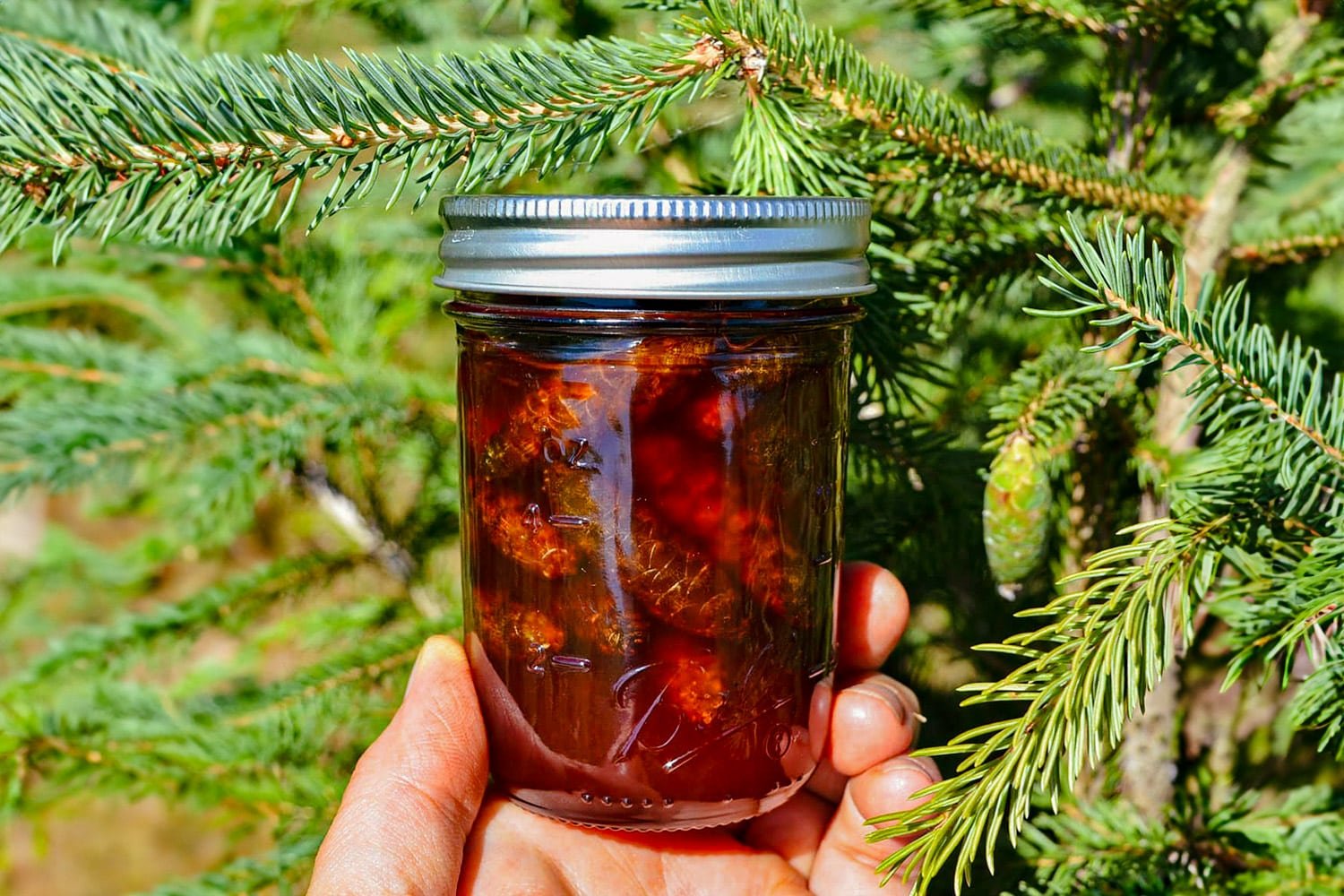
Pine Cone Jam (Old Northern Remedy)
If you grew up in a northern climate, you might have heard of pine cone jam or syrup. Young, green pine cones are steeped in sugar until they release a resin-rich syrup that soothes the throat and supports the respiratory system. It has a forest-sweet flavor and works similarly to herbal cough drops, just in syrup form.
It’s especially nice for wet, rattly coughs. Get the recipe for pine cone jam here.
Tomato Tea (A Surprisingly Effective Remedy)
Tomato tea is one of those strange-sounding remedies that actually works well for congestion and coughs. Warm tomato juice, garlic, lemon, and a bit of hot sauce create a steam-like effect from the inside out. It opens the sinuses, warms the chest, and often brings quick relief.
It’s especially helpful when a cough is tied in with sinus drainage. Learn how to make tomato tea.
Elderberry Syrup
Many families reach for elderberry syrup as a home remedy for coughs. Elderberries may help shorten viral infections, and the syrup soothes the throat in the same way honey does. It’s gentle, pleasant tasting, and kid-friendly (for ages 1+).
We have two different elderberry syrup recipes on the site. See “How to Make Elderberry Syrup with Fresh or Dried Elderberries” for the recipes.

Lemon Juice
Lemon juice helps to loosen and clear phlegm, and provides immune boosting vitamin C. To use lemon as a cough remedy, you can mix it with your honey, make a lemon gargle (1/4 cup water plus 2 tablespoons lemon), or mix up a cup of warm honey sweetened lemonade.
Milk and Butter or Golden Milk
Combine 1 cup of warm milk with two tablespoons sweet butter to relieve dry coughs. This works better for a dry, unproductive cough (not much mucus), because it coats and relaxes the throat.
Warm coconut milk blended into golden milk with turmeric and other spices coats the throat and reduces inflammation. My friend Jessica has three recipe variations for golden milk on her website.
Foods That Settle a Cough
Soups, broths, garlic, onions, pears, pineapple, and warm herbal drinks all help the body recover from illness. These foods aren’t magic bullets, but they support healing and ease irritation.
Coughing in Children (Special Considerations)
Children are more sensitive to strong essential oils, alcohol-based products, and many OTC cough syrup blends. For littles, keep things simple:
- Moisture (humidifier or steamy bathroom)
- Warm drinks (or cold air)
- Honey for children over one year
- Gentle herbs like chamomile, thyme, or marshmallow
Nighttime coughing is often worse when kids lie down. Slightly elevating the head of the bed or offering a warm drink before sleep can help.
Cough Remedies Best Avoided
Not every remedy is a good remedy—especially when side effects outweigh benefits. Use caution with:
- Strong essential oils on young children (just don’t do it)
- Multi-symptom cold medicines
- Alcohol-based or numbing sprays
- Sugary store-bought cough drops with dyes
What helps one person can irritate someone else, so pay attention to how your body responds.
When to Seek Medical Care
Most coughs from common colds resolve with rest, hydration, and simple care. But it’s time for medical attention if a cough:
- Lasts more than two or three weeks
- Comes with persistent fever
- Produces blood
- Causes wheezing or trouble breathing
- Occurs in an infant under three months
Trust your instincts—if something feels off, get it checked.
A German New Medicine Interpretation of Coughing
For those interested in a different perspective, German New Medicine (GNM) views coughing not as a malfunction but as part of a biological program. In this model, a cough may appear during a “healing phase” after a conflict involving fear, territory, or feeling unable to get enough air or space. The body uses coughing to help clear or repair tissues affected during that conflict.
I find GNM to be a useful reminder that the body often tries to heal itself, not work against us.
What are your preferred home remedies for coughs?
Most coughs—whether dry, tickly, or part of cold and flu season—respond well to simple natural remedies. These gentle, time-tested options support your body instead of simply shutting down symptoms, helping you feel better sooner and rest more easily.
What’s your preferred cough remedy? Share your thoughts in the comments.

This article is written by Laurie Neverman. Laurie is a lifelong learner with a passion for natural remedies and holistic healing. She’s successfully improved her eyesight and cleared her psoriasis.
Originally posted in 2012, last updated in 2025.
my body emissions and when speaking the breathe from my mouth makes people cough or sneeze. whenever this is happen I discover I might fall sick. what’s the cause?
Often when we are unwell or our bodies are fighting off illness, our breath or other body odor changes as part of the natural immune response. if you notice this happening, extra self care like rest, probiotics or immune strengthening foods and herbs may be a good idea.
My grandmother best, confirmed by my family and friends
Take a radish with a diameter bigger than a cup to have it sitting stable. In the bottom side cut to have 12 mm circle without peel. In the upper part make a conical “crater” 30 mm in diameter and about 40-50 mm deep. Fill the crater with sugar, place the “processed” Radish on top of the glass. Leave overnight and you’ll get in the morning the elixir. Drink as is and repeat if necessary. Good health.
Hmmm…interesting. This is the first time I’ve heard of this remedy.
I use rum and coffee liquor, 20% alcohol. I just take a very tiny sip. The downside, when you drive, you can’t have an open container in the car. So I will try peppermint tea mixed with molasses(I really like straight molasses, probably why I enjoy evenings with Capt Morgan).
Aye, aye, sir, small sips.
For night time hacking cough quarter an onion and put it on your night stand. Relieves coughing and you get a good nights sleep.
Have you actually tried this? I’ve seen this passed around on social media, but have never seen a logical explanation of how it works. Onions to not attract germs, and the sulfenic acid gas they emit causes tearing and irritation, but I’ve never heard of it calming a cough. There’s more info in the post “Why Do Onions Make You Cry?“.
Ice pack on the skin of your throat. Reduces swelling and inhibits need to cough.
Thanks, Chris.
We are planning to try a pine needle cough syrup made with honey as we are surrounded by pine trees.
I know my friend, Colleen, over at Grow, Forage, Cook, Ferment does a lot with evergreens, including teas.