
Home Freeze Drying – Read this Before You Buy a Freeze Dryer

This post may contain affiliate links. Read my full disclosure here.

Thinking about getting a freeze dryer? We’ll explain how home freeze drying works, and answer questions about freeze dried food storage for emergencies and more.
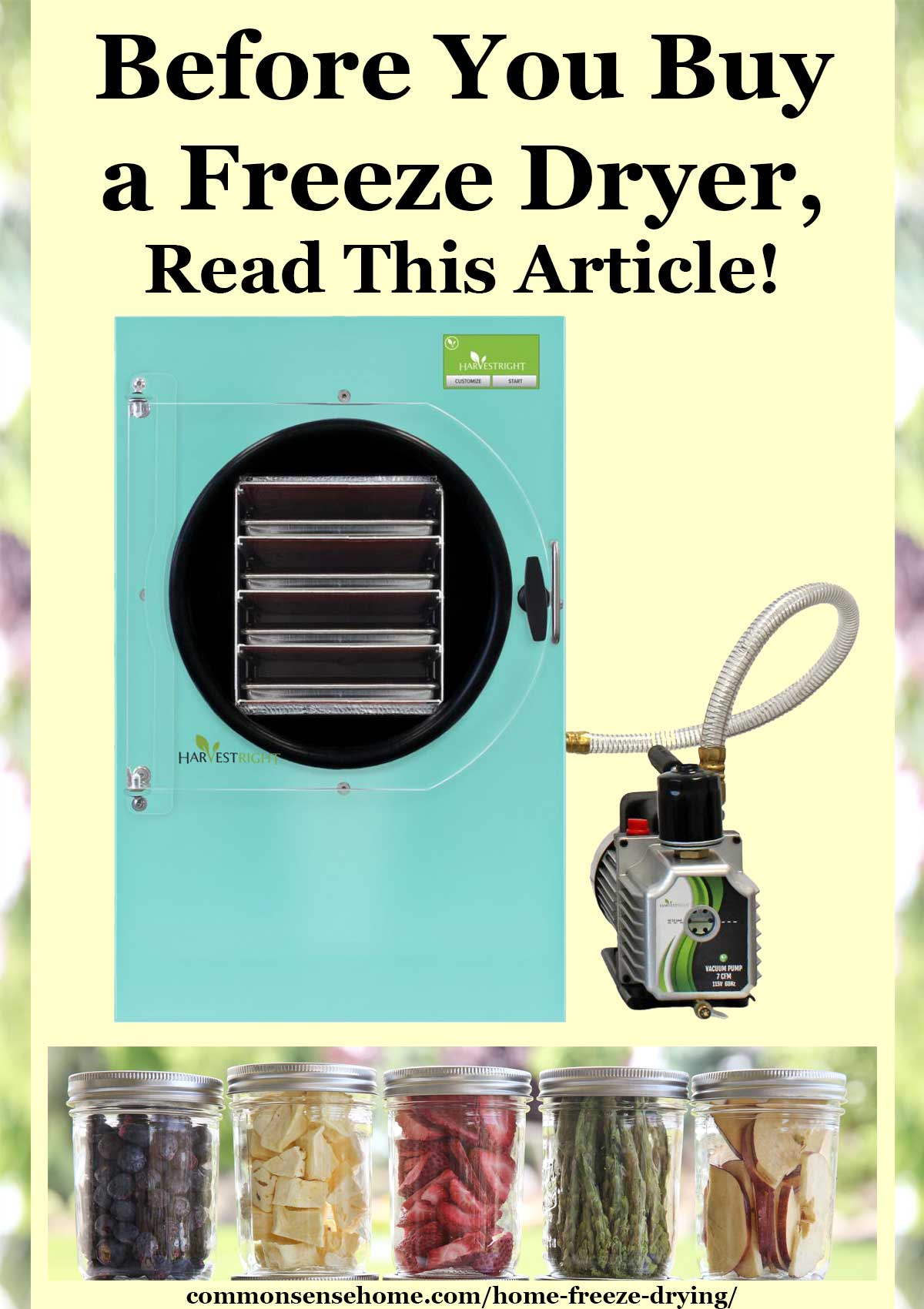
Why get a freeze dryer?
I’ve been curious about home freeze drying ever since I did an interview with Dr. Prepper back in 2015. The doc raved about his home freeze dryer. He loved the quality of the food, how much money it saved him, and what a great addition it was to his preps.
In early 2016 Harvest Right home freeze dryers contacted me to do a review of their product. I could purchase it at a discount, as long as I did a review. My other option was to get it for free, if I committed to a series of endorsements.
Being the stubborn individual that I am, I didn’t want to commit to selling you something that was such a big investment without thoroughly testing it. I purchased a freeze dryer and have been using it since May 2016.
My conclusion – if you want long term food storage or portable food storage, check out freeze drying. Commercial freeze dried foods are pricey and often have questionable ingredients. Home freeze drying puts you in control.
How Does Freeze Drying Work?
Here’s the official definition of freeze drying (Lyophilization) from the FDA:
Lyophilization or freeze drying is a process in which water is removed from a product after it is frozen and placed under a vacuum, allowing the ice to change directly from solid to vapor without passing through a liquid phase.
The process consists of three separate, unique, and interdependent processes; freezing, primary drying (sublimation), and secondary drying (desorption).
So, how do we do that at home?
- First, you get a heavy duty freezer (the Harvest Right units drop to -30°F (-34°C) or colder).
- Second, you pair this up with a completely airtight chamber that can hold a vacuum (no oxygen) every single time you use it.
- Third, you tie in a high end vacuum pump strong enough to suck the stripes off a zebra.
- Fourth, you add a heater and thermostat, so you can cycle the temps up and down, repeating the sublimation process for hours on end.
- Fifth, tie in a humidity sensor to make sure the water is out, triggering the cycle completion.
There’s a reason the big commercial freeze drying units are priced from $5000 to over $100,000 – the freeze drying process is significantly more complicated than other home food preservation options.
If you’re wondering how freeze drying compares to dehydrating, you can read more about that in the post “What’s the Difference Between Dehydrating and Freeze Drying?“
Harvest Right Home Freeze Dryer Basic Information
Here’s some information everyone should know before buying a Harvest Right freeze drying machine. Since the time this review was originally posted, Harvest Right made a number of upgrades. They now have HR pumps in two different styles, slight design changes in the main units, and new software that speeds up freeze drying times.
Freeze Dryer Dimensions
Harvest Right has three sizes of home freeze dryers – large, medium and small.
Each unit includes a detachable vacuum pump weighing 35 lbs that sits outside the freeze dryer. They also have a drain hose that routes below the unit. Oil free pumps are available at an additional cost. (More on this below.)
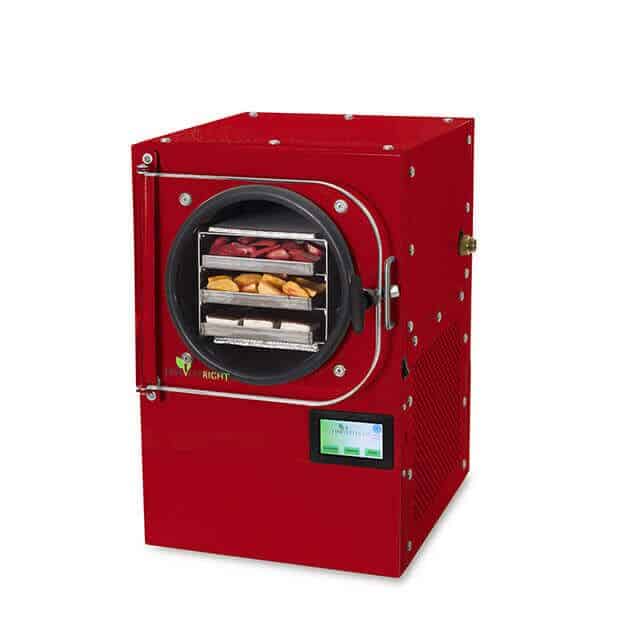
Small Freeze Dryer
- Overall product dimensions: 16.5″ W x 18.5″ D x 25″ H
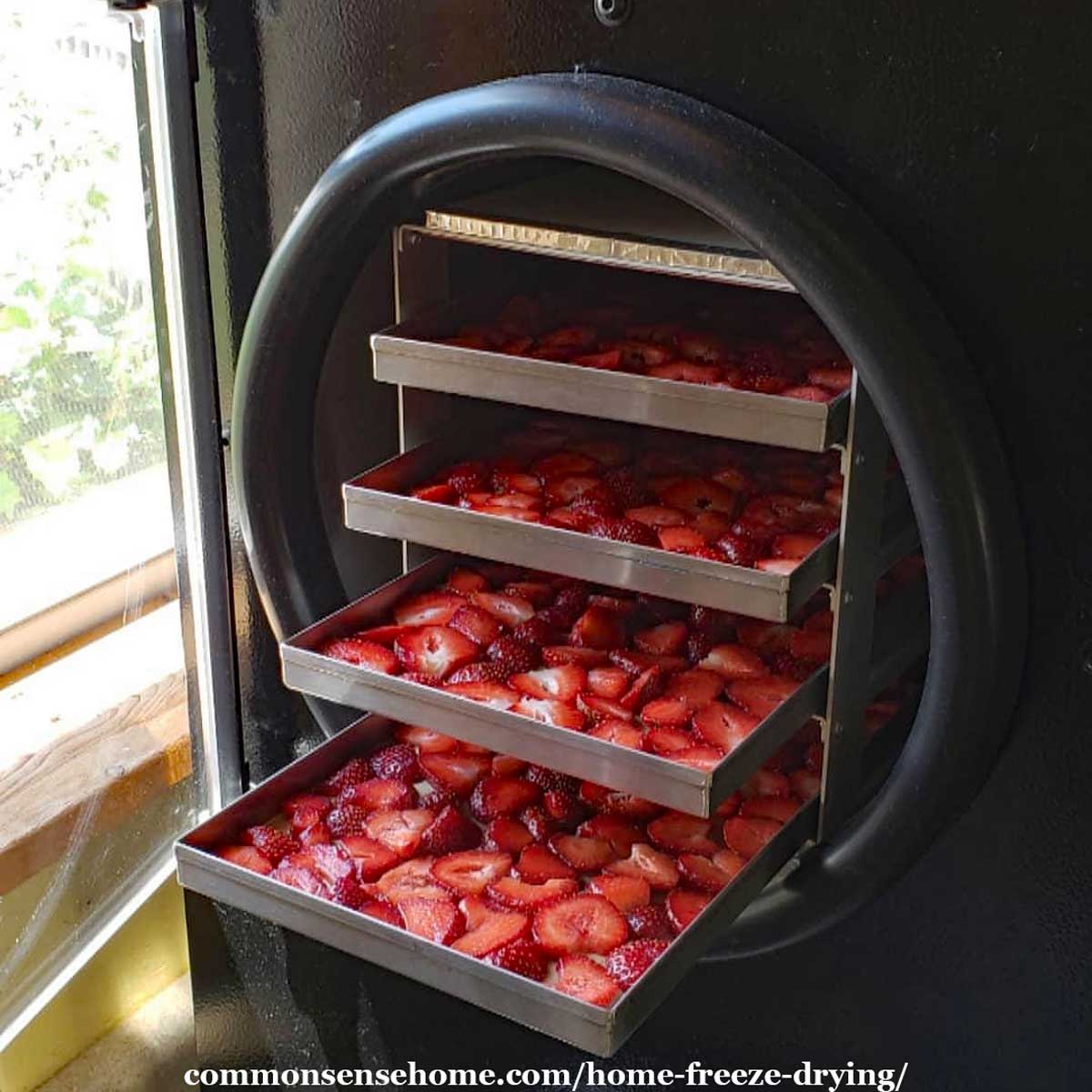
- 3 trays (7.75″ W x 14″ L x 0.75″ H)
- 61 lbs.
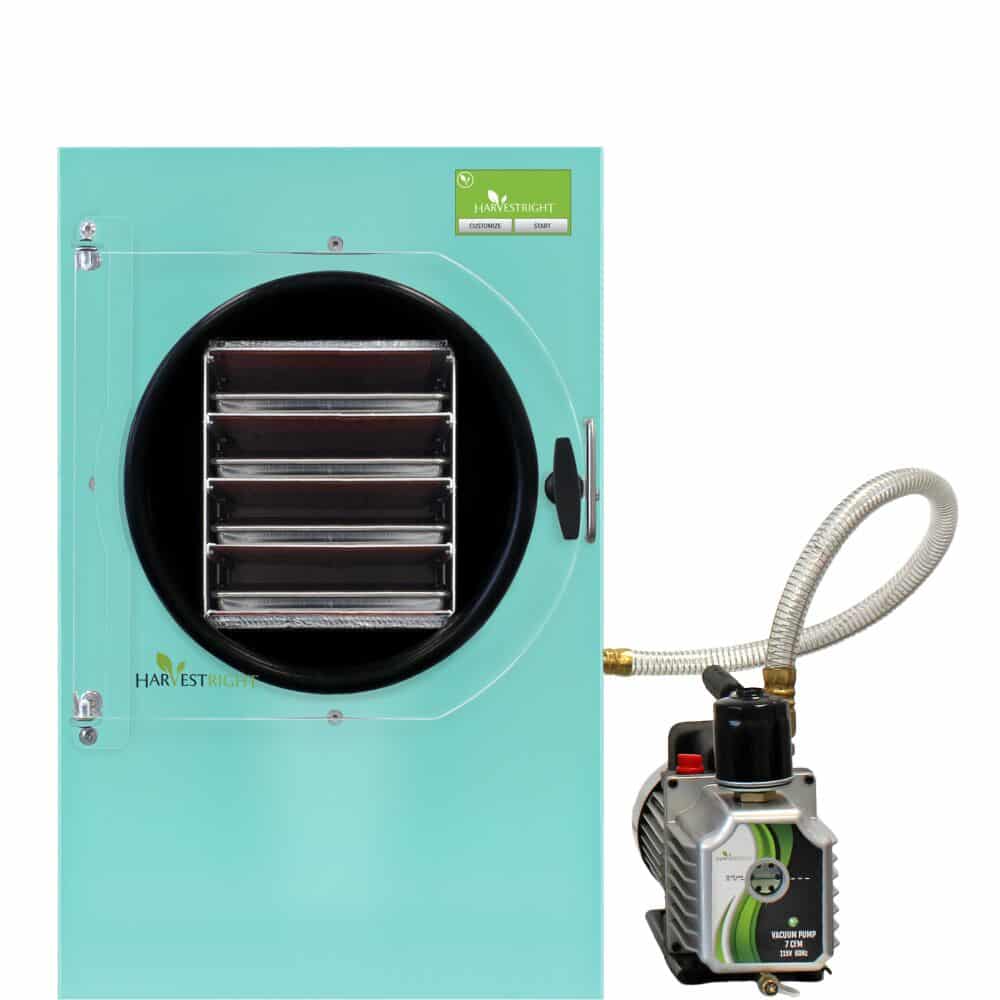
Medium Freeze Dryer
- Overall product dimensions: 18″ W x 21.25″ D x 28.5″ H
- 4 trays (7.5″ W x 18″ L x 0.75″ H)
- 112 lbs.
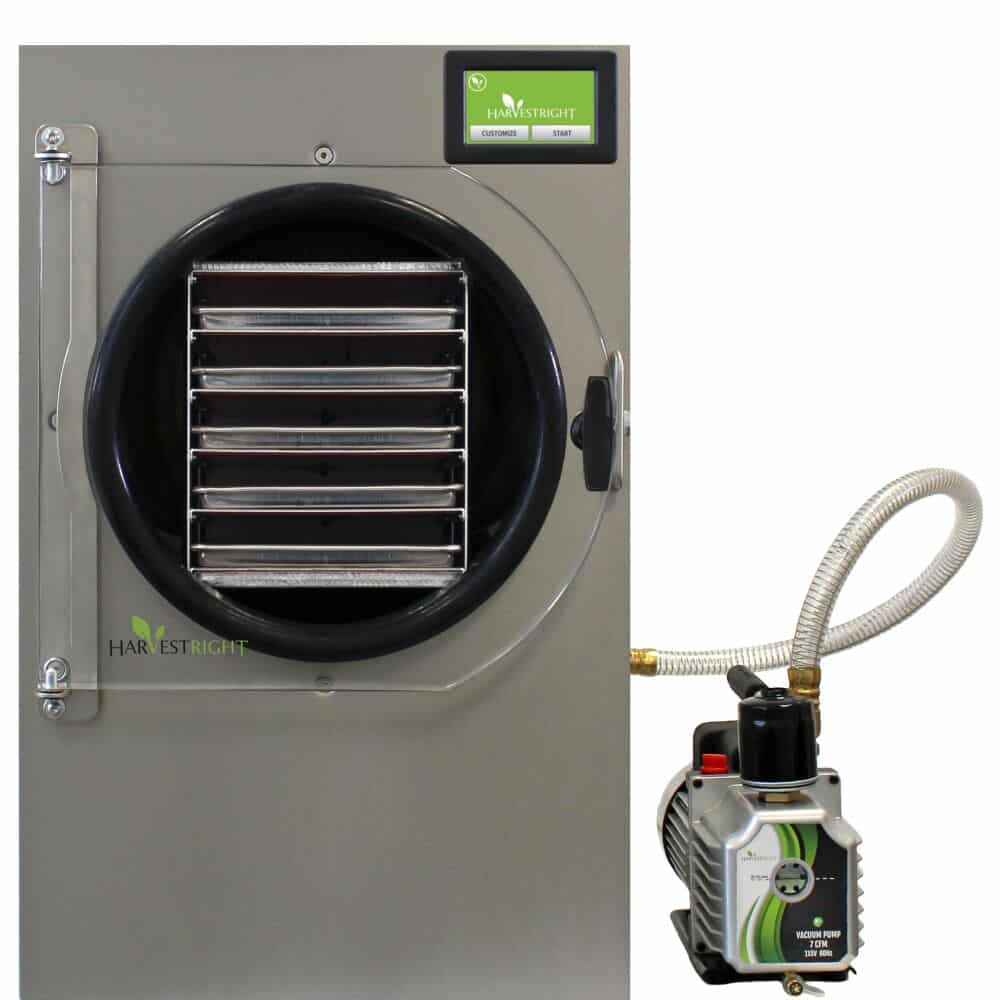
Large Freeze Dryer
- Overall product dimensions: 20.25 ” W x 23.75″ D x 30.75″ H
- Perfect for counter top, cart, or table.
- 5 trays (9″ W x 20.5″ x 0.75″ H)
- 138 lbs.
Moving these units is a two person job, unless you put it on a rolling cart, which many owners do.
I have a mid-sized unit of the old design, updated with new software.
How much food can you freeze dry?
Small Freeze Dryer
- Freeze dry 840 pounds of fresh food per year (4-7 pounds per batch).
- In a year’s time, you can freeze dry 195 gallons of food.
Medium Freeze Dryer
- Freeze dry 1,450 pounds of fresh food per year (7-10 pounds per batch, roughly equal to 1.5 to 2 #10 cans).
- In a year’s time, you can freeze dry 312 gallons of food.
Large Freeze dryer
- 2,500 pounds of fresh food per year (12-16 pounds per batch).
- In a year’s time, you can freeze dry 546 gallons of food.
Why can’t I stuff more food in, and stack those trays fuller? During the freeze drying process, ice builds up on the walls of the freeze drying chamber. Add too much food, and the ice buildup will get too thick for the unit to work properly.
Freeze Dried Food Q&A
What foods can you freeze dry?
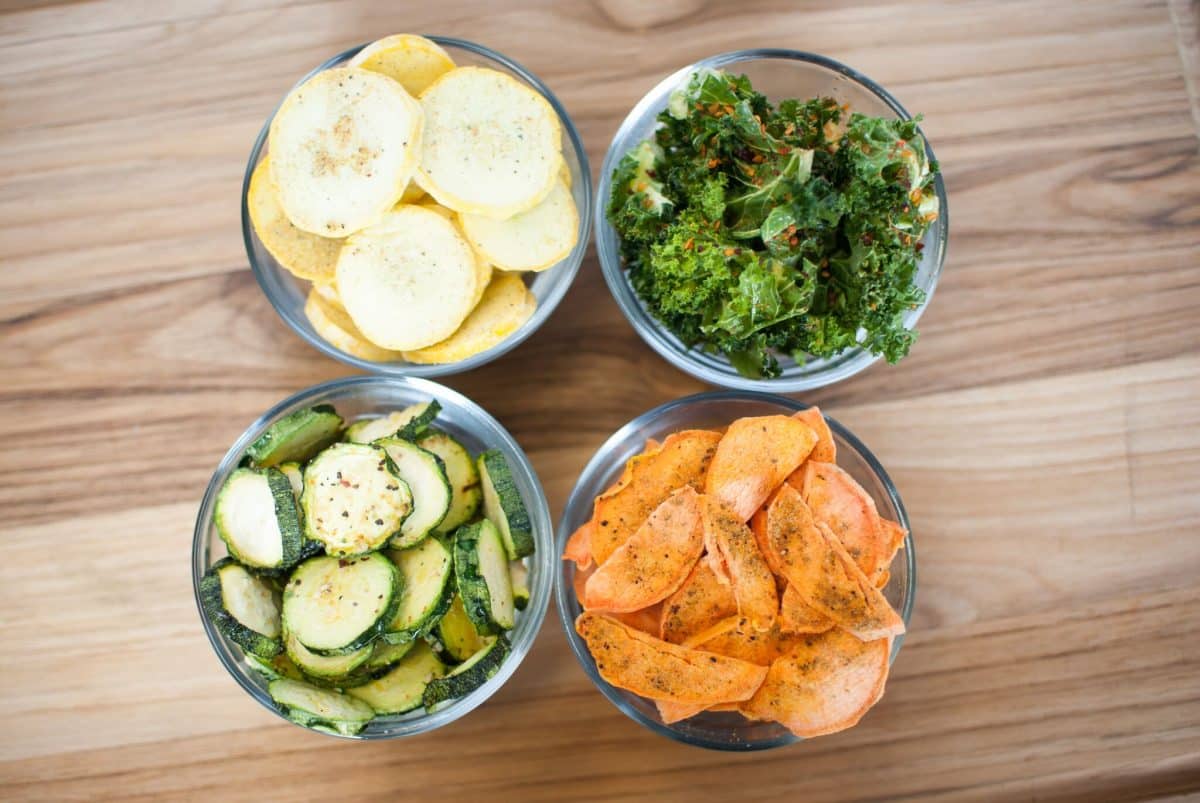
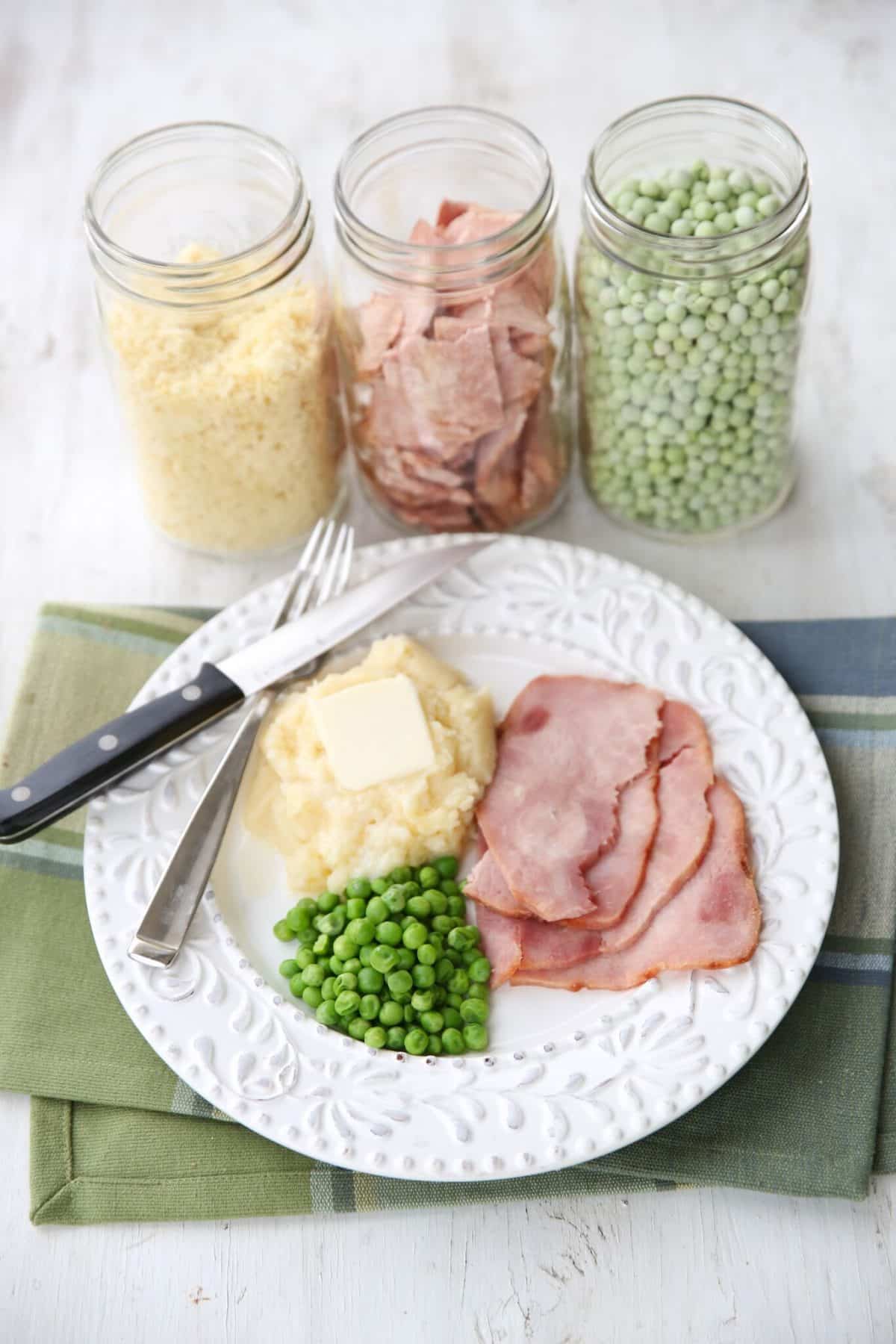
Fruits, vegetables, meats, dairy products, meals, desserts, and more. Freeze drying is safe for preserving cooked pasta and grains, unlike canning.
Those of you who follow me on Instagram know that I’ve freeze dried plenty of fruits and veggies, but I also tried some more interesting items like scrambled eggs and fajita filling.
What foods can’t you freeze dry?
Anything that’s mostly fat or mostly sugar will not freeze dry well. Fat won’t dry – but it can heat up and melt in the unit and coat every surface. When I tried pre-cooked pork sausage patties, they made a big mess.
Sugar binds to water, trapping it in the food. This is great for inhibiting bacteria growth, but it means you can’t freeze dry jams and jellies that are mostly sugar. Plain fruit and most desserts are fine.

How long does freeze drying take?
Around 24 hours was the estimated freeze drying time for an average load, but with the new software, I’ve freeze dried loads in as little as 13 hours. Warm, humid conditions increase drying time.
When you load up your home freeze dryer and hit “Start”, the unit takes you through a short menu. You select whether the food going in is already frozen (or not), and whether it is solid or liquid. Then the freeze dryer prompts you to close the drain valve and begin the cycle.
The new software is smart. The main differences between the old and new software are as follows:
- It measures the freezing temperatures (it used to only measure the warming temps)
- The vacuum pump is used as part of the freeze (when the temp of the food hits 0 degrees F, the pump turns on). This is important because the food gets colder faster.
- Once the food is frozen cold enough, it clicks immediately into drying (it doesn’t wait for the full freeze time to finish)
- The drying phase ramps up to the specified shelf temperature (this helps you get a better finished product)
- The final dry is the same
The biggest benefits occur if you put pre-frozen food it. However, there is still a decrease in the processing times for foods that aren’t pre-frozen. Anyone who gets a new freeze dryer also gets the new software.
The new software will be sold as an upgrade to older users, due to the customer service involved with it. Harvest Right has almost 50,000 freeze dryer customers. I received a copy of the new software to test and review.
Can you mix foods in the freeze dryer?
Yes, but watch placement. The website claims that flavors don’t mix, but we have found that they do. We ended up with freeze dried kiwis with a hint of green beans. Advice from the freeze drying groups suggests placing stronger flavored items on the upper shelves, milder items on the lower shelves.
As always, proper food safety rules should be observed. Avoid cross contamination, dry thoroughly, and package promptly.
How do I know the food is done freeze drying?
The freeze dryer senses the moisture content of the food and finishes the cycle automatically, but sometimes it’s a little off and you need to add extra time.
When you first remove food from the dryer, it will be a little cool from the ice buildup inside the chamber, but not “cold”. I always break open some larger pieces and check inside for cold spots. If you find cold spots, put the trays back in and add time to the drying cycle. Your freeze dryer will prompt you to check for dryness.
One of our readers, Rose, shares what she does to check dryness:
One thing I did choose to add to my arsenal for safety was a FLIR thermal imaging camera. With one easy picture, I can quickly identify areas on the tray that might not be completely dry, and pose an issue for long term storage. The image will show as being “cold” in the area that is not completely dry.
In the MANY loads I have done, I have only had one that didn’t pass (the pre-mashed potatoes) the very center of the tray was still cold. I was able to quickly extend the dry period for a couple more hours and produce a perfectly done product with no fear!
FLIR ONE IOS Thermal Imaging Camera for iPhone – works with the phone
FLIR C2 Compact Thermal Imaging System – standalone camera
How do I use freeze dried foods in recipes?
The book “Freeze-Drying the Harvest” provides detailed guidance for using your freeze dryer and rehydrating your freeze dried foods.
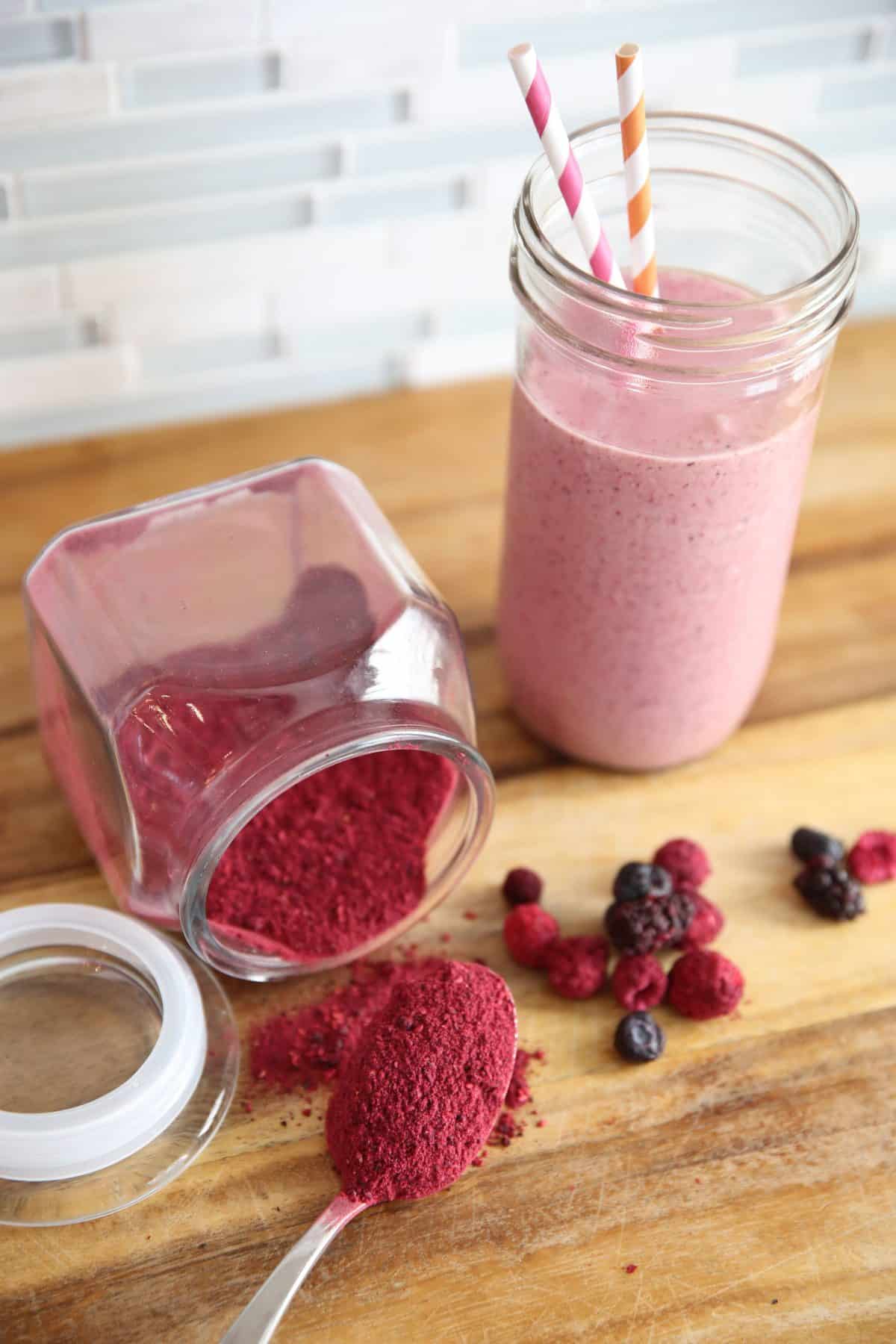
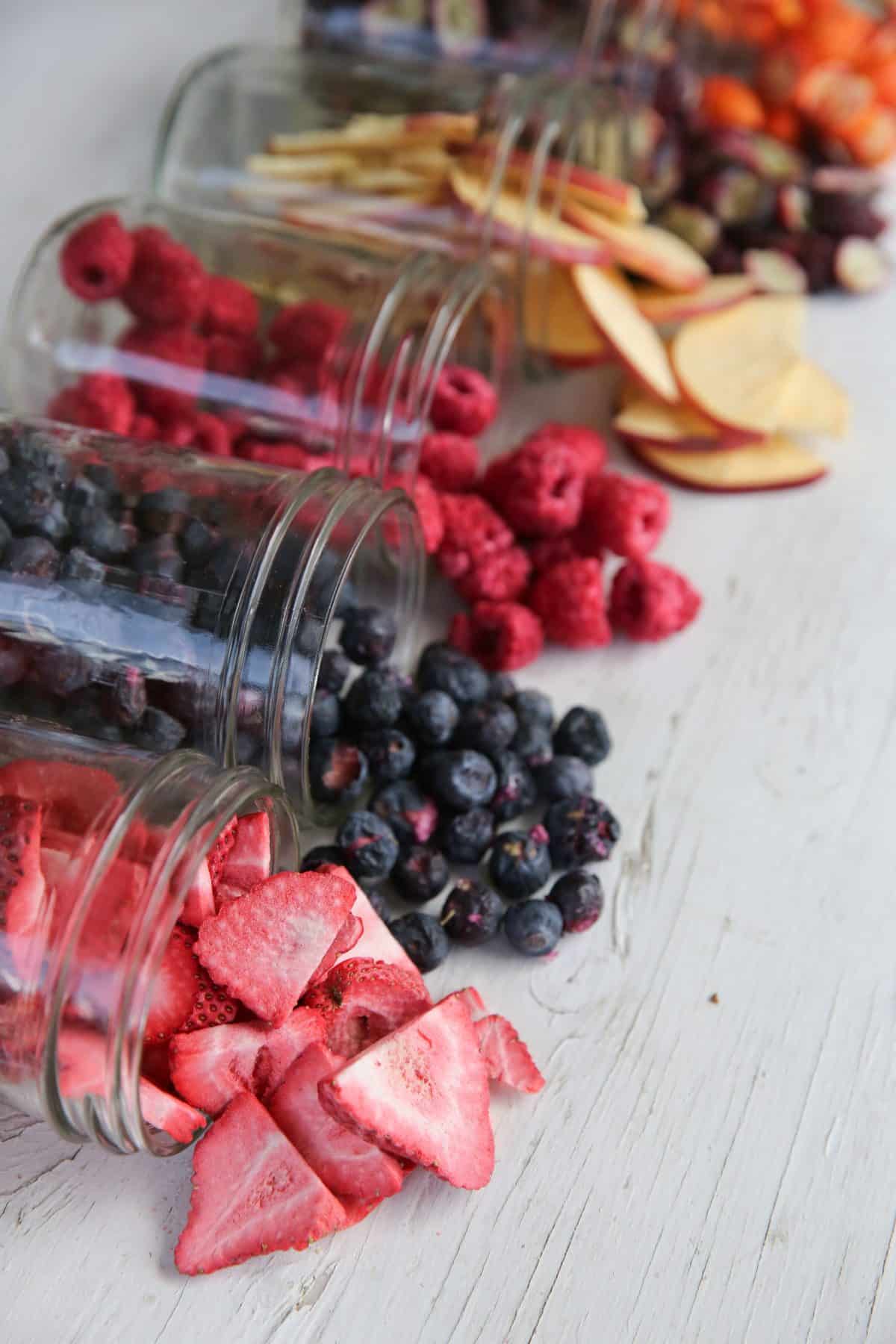
Freeze dried fruits and vegetables (those with less sugar) get so dry they are easily crushed into a powder in a blender or food processor. The resulting powder is bright in color and intensely flavored. You can use this powder in smoothies, or for flavoring. For instance, add strawberry powder to make strawberry flavored whipped cream.
How do I store the freeze dried food?
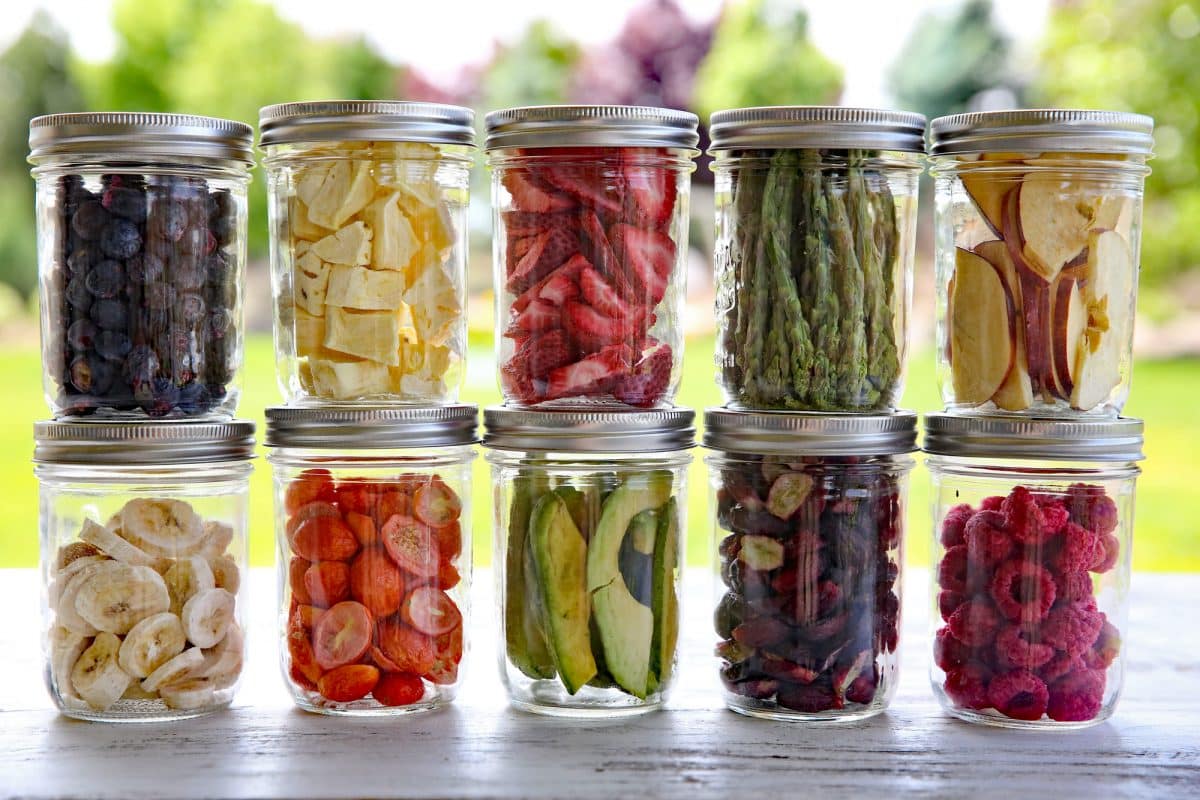
THIS IS VERY IMPORTANT! Once the freeze dry cycle is complete, you must package the food in containers that moisture and oxygen proof, such as Mylar, mason jars or cans. Adding an oxygen absorber helps to ensure freshness.
Meat with any amount of fat will go rancid in a matter of weeks if not properly sealed in an airtight container with oxygen absorber. Putting it in a mason jar and screwing on the lid won’t cut it. (We made that mistake only once.)
We use Mylar bags for most of our long term storage because they are light and durable. You can reuse Mylar, but of course the bag will be slightly smaller. Mylar is great for camping and travel.
Mason jars are a good choice if you:
- Aren’t concerned about the weight
- Have room for glass jars
- Don’t deal with tectonic disturbances or any type of disasters that might tip over your storage
You can use a Foodsaver attachment to vacuum seal jars, or remove the shelving from your Harvest Right freeze dryer and use the vacuum cycle. For long term storage, food is vacuum packed with oxygen absorbers in the jars. For short term storage, I vacuum seal without oxygen absorbers.
Can I use FoodSaver plastic bags for storing freeze dried foods?
No, not for long term.
Would you like to save this?
My friend Gale discusses the difference between Mylar and foodsaver bags in her post “Using Mylar Bags for Food Storage“:
First and foremost, the term “Mylar” is actually one of many trade names for a polyester film called BoPet film. For the technically inclined and the curious, that stands for “Biaxially-oriented polyethylene terephthalate”. This film was developed by DuPont in the 1950’s and was first used by NASA for mylar blankets and long term storage as it increases the shelf life of food by eliminating oxygen. Think superpowered aluminum foil.
Since then, many uses for Mylar have been embraced due to its high tensile strength and its moisture, light, gas and aroma barrier properties. Mylar is also a good insulator against electrical disturbances, which is why it is used for making emergency blankets.
For all of these reasons and more, Mylar bags are considered the gold standard when it comes to long-term food storage.
What about Vacuum Sealed Bags?
Vacuum seal bags, such as those for the FoodSaver are a wonderful convenience and easy to use. But alas, they do not have the thickness nor the strength of Mylar bags and they may start to leak after 3 or 4 years.
They are still a great alternative for your short-term and mid-term storage items, especially if you are diligent about rotating foods and using them for your normal meal preparation activities.
Your FoodSaver bags do not need to be improperly sealed to let air and moisture in. They are simply not as thick or as tough as Mylar.
Alternatives to the HarvestRight Freeze Dryer
There are knockoffs available from China. Based on reviews, they are inconsistent in quality and operations. Although they are cheaper we do not recommend them. We only recommend HarvestRight.
How much is a freeze dryer?
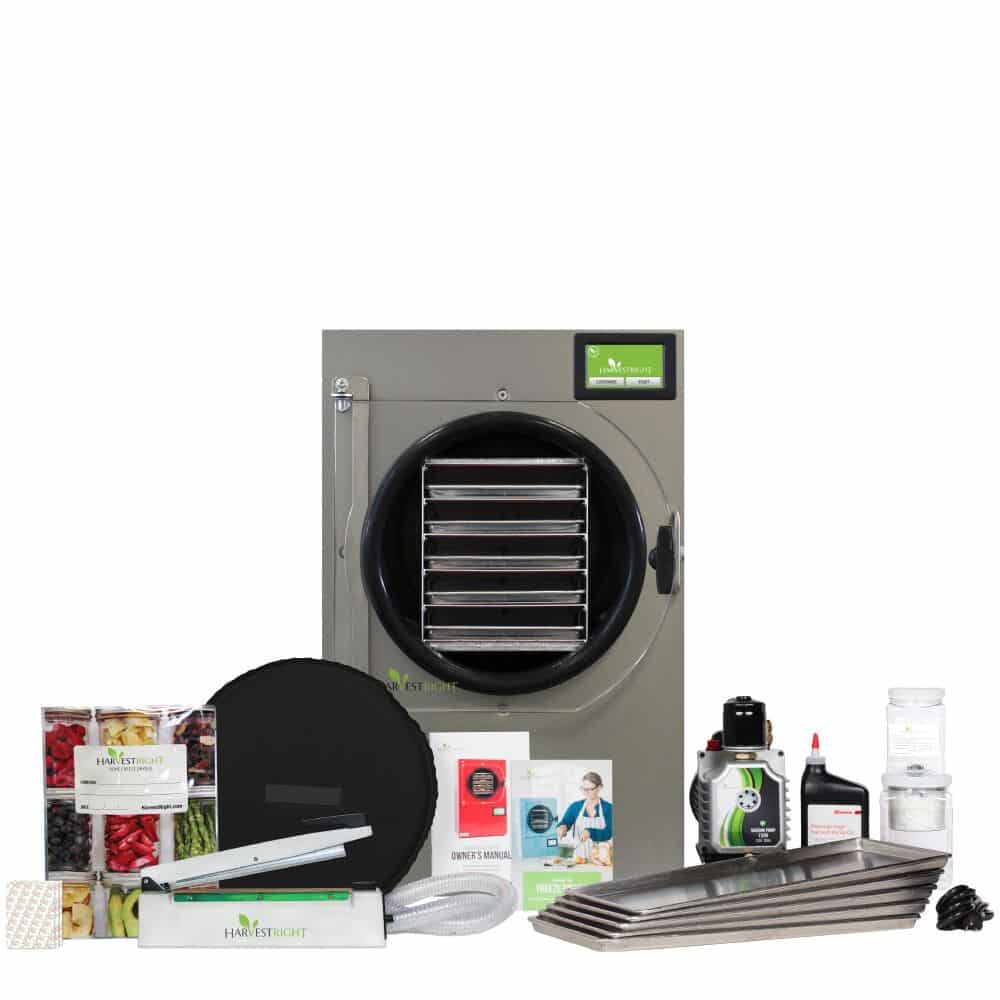
Home freeze dryers range in price from $1,995 to $3,495, depending on size and exterior finish. This cost includes the Freeze Dryer, Vacuum Pump, Vacuum Pump Oil, Oil Filter, Stainless Steel Trays, Mylar Bags (50 ct), Oxygen Absorbers (50 ct), Impulse Sealer, and HR Guide to Freeze Drying.
All units have a 3 year Limited Warranty, versus the one year warranty on many appliances.
Harvest Right also offers 0% interest financing, allowing you to lock in sale prices with a $250 minimum down payment. You pay as much as you want, when you want.
When you reach the designated down payment for the unit of your choice, they ship your unit. You then pay the remaining balance over 12 months with 0 interest.
Harvest Right also offers different accessories separately, such as extra trays, mats, Mylar bags and oxygen absorbers.
These units are a big investment. If you know you’re only going to use it a couple times per year (or not at all), spend the money on something else you know that you will use.
If you want more food security and food preservation options, read on. Home freeze drying is more affordable than ever.
Layaway Option
Harvest Right offers a layaway option so you can lock in sale prices or reserve your machine. (They are experiencing a backlog in orders right now.)
How the layaway works:
- Lock in your sale price with a downpayment ($250 minimum)*
- Pay as much as you want, when you want
- Receive 0% interest until paid in full. Your freeze dryer will ship after you’ve made your final payment.
Locating your Freeze Dryer
Freeze drying machines eat up a fair amount of real estate. This is not a toaster oven or blender. The main unit is about the size of a dorm fridge, plus it has a hose and vacuum pump. Many owners buy a heavy duty rolling table to hold the unit, but a counter top or table can get the job done.
I currently have mine on a counter in the garage, against a wall. The on/off switch is at the rear of the unit, plus the pump has its own on/off switch. You need to be able to access both of those and have clearance for power cords.
Power requirements: The small and medium units use a standard 110 volt outlet, but it’s best to have it on its own circuit if possible. If you try to pair it with another heavy load appliance, you’re likely to trip a breaker. (I found that out the hard way, and we installed a dedicated circuit.)
The large unit requires a 110 volt (NEMA 5-20) outlet and a dedicated 20 amp circuit.
Watch the temperature. The recommended temperature range for operation is 35-90°F. The most efficient temperature range is between 50-75°F.
Although safe, operating your freeze dryer in temperatures above 90°F will affect batch times and reduce the life of the condensing unit (freezer).
As the temperature rises where your freeze dryer operates, so does the length of time it takes to finish batches of food. This happens because with hotter operating temperatures it is harder to reach the extreme cold required by freeze drying.
Don’t operate the unit below freezing. You are likely to have water within the compressor, and it can freeze and destroy your compressor.
Home Freeze Dryer Noise
During the first part of the cycle, the refrigeration unit is running. During the second part of the cycle, the vacuum pump is running. The noise isn’t super loud – think vacuum cleaner, not jackhammer – but it is noticeable. I’d highly recommend planning to have it in an area where the door can be closed.
Freeze Dryer Maintenance
As I mentioned earlier, the freeze dryer does a complicated job, so there’s a little more to it than just flipping a switch.
Think lawn mower, not kitchen mixer. If you regularly abuse your power tools and don’t do basic maintenance, don’t get a freeze dryer. I know many of my readers fix and maintain not only their own things, but other’s people’s equipment, too, so I’m not too concerned about this.
We drain the oil after each use and refill the vacuum pump with clean oil. Oil is filtered and reused. Before filtering, we freeze the oil. After freezing, we pour the oil off the top of the container into the filter. The water (as ice) sits in the bottom of the container.
Visit “Harvest Right Freeze Dryer Oil Change and Filtering” to see a video of the oil change itself and the use of an inexpensive homemade oil filter that works.
Oil-Free Freeze Dryer Pumps Now Available
Harvest Right listened to customer feedback, and they’ve developed a premium oil-free pump. All new freeze dryers ship with standard Harvest Right brand pumps, but the oil-free pumps may be purchased at an additional cost.
If doing an oil change every time you’re freeze drying sounds like a bit of a hassle, the oil free pump may be right for you.
Note that the oil free pump does use slightly more electricity than the default vacuum pump.
Things I Love About the Harvest Right Freeze Dryer
Home Freeze Dried Food is Tasty
Hands down, my favorite thing about the Harvest Right freeze dryer is the quality of the food. The commercial freeze dried food I’ve tried has been okay, but our home freeze dried products are amazing. I mailed some to a friend recently as part of a gift exchange, and she wrote back, “Okay, Laurie, spill the beans on how you freeze dried the fruits. My kids are absolutely in love with them!”
The texture of freeze dried food is light and crisp – more like chips than jerky – even freeze dried meat. We freeze dried fajita meat strips, and they tasted like crunchy little meat flavored Cheetos, the boys called them Meatos.
When we prepped freeze dried fajita filling for dinner, all we did was add a little water to the pan with the food, cover and heat through. Dinner was ready in less than 5 minutes. (If you happen to have a Sun Oven, they work well for rehydrating freeze dried meals.)
The fruit is so good – absolutely, intensely fruity, light and crisp. You can also powder your freeze dried fruits and veggies and use them as natural food colors (and flavors), as noted above.
Home Freeze Dried Food is Easy to Make
Filling the unit is easy. For meals or other prepared food items, simply cook your food and let it cool. Cut into small piece, or thin slices (if needed). Load the food on the trays; place the trays in the unit.
For freeze drying fruits and vegetables, I prep them as I would for freezing or dehydrating. Blanching is recommended for vegetables, especially for cabbage family crops like broccoli. Without blanching, they may outgas during storage, potentially bursting the storage seal.
If you want to freeze dry soup or liquids (like milk), you can do that, too. It helps if you reduce the amount of water to cut drying time, but you can freeze dry “as is”.
You Can’t Beat Freeze Drying for Long Term Food Storage
The shelf life of properly stored freeze dried foods is amazing. Low fat content foods like fruits, vegetables, lean meat, rice, noodles, etc. have a shelf life of 20+ years when packaged properly. Higher fat foods have a 10-15 year shelf life. No other food supply compares for long term food storage.
Why bother with food storage that lasts so long? Because life happens. One year I might have an amazing crop of a particular item, then crop failures for several years. If there’s a job loss or an emergency, with my freeze dried food I know we’ll have a stash of food we actually like to eat.
Food prices keep creeping up, so why not preserve food now to take advantage of lower prices?
Freeze Drying at Home Can Be Allergy Friendly
Food allergies and sensitivities are becoming more and more common. Freeze drying allows you to safely preserve a wider variety of foods than any other food preservation technique. You know you’re only minutes from a safe meal. When traveling, you don’t need to keep food in a cooler.
I have a friend whose daughter has EoE (an allregic swallowing disorder). She found that freeze dried foods didn’t trigger her gag reflex, and was finally able to eat more of a variety of foods.
Home Freeze Drying is Cool
Pun or no pun, home freeze drying allows you to experiment with options you won’t see with commercial freeze dried foods – or other food preservation techniques.
One member of an online forum had his aging grandmother cook her favorite meals. He then freeze dried them to share with the family after she was gone. What an amazing gift to be able to taste a loved one’s cooking one more time.
Another couple was freeze drying some of their wedding cake and the bride’s bouquet. Still another took meal pouches to work and just added hot water to have a real meal while her co-workers were gnawing on granola bars as they worked through lunch.
My boys love crunchy snacks, so we’ve freeze dried things from sweet potato fries to pickled beet slices as chip and cracker alternatives. Freeze dried yogurt drops turn bulk yogurt into a special treat. Combining berries and yogurt into cute silicon molds makes a melt in your mouth dessert bursting with creamy berry flavor.

Are you ready to invest in a Home Freeze Dryer?
Do you:
- Want more options for long term, healthy food storage that your family will enjoy eating?
- Have someone with allergies who needs safe food options?
- Need ready made meals to go?
- Try to store abundant produce for when harvests aren’t so good?
- Get excited about trying new food options and preserving special memories?
If any of these sounds like a fit, take a closer look at freeze drying. I’m happy to answer any questions you may have. If I can’t answer them, I’ll find someone who can. Leave a comment and let me know your thoughts!

My referral link: https://affiliates.harvestright.com/115.html
If you choose to purchase a Harvest Right freeze dryer through my site, I receive a commission at no extra cost to you. (Thank you!)
You can watch the video below to see how I freeze dry strawberries. (These are the berries that had my friend’s kids raving about them.)
You may also find useful:
- The 5 Best Freeze Dried Foods
- Dehydrator Versus Freeze Dryer – What’s the Difference?
- 11 Freeze Drying Mistakes to Avoid for Best Storage Quality
- Harvest Right Freeze Dryer – Cost Analysis and Optimizing Load Size
- Home Food Preservation – 10 Ways to Preserve Food at Home
Originally published in 2016 with the title “Home Freeze Drying – The Good, the Bad and the Ugly”, updated in 2019 to current title. Harvest Right fixed “the ugly”, which was the original messy pump, so I took that out of the title. I’ve also added information based on reader feedback. Please scroll through the comments for more Q&A!
Freeze drying is on my list of things I would like to do. I’ve had some freeze dried foods and really enjoyed the versatility.
We have been trying all kinds of foods to freeze dry. We purchased a large stainless steel model to freeze dry all the gardens vegetables we grew this summer. We expanded into all kinds of fruit – apples/applesauce, bananas, blueberries, strawberries, mangoes, peaches, watermelon, cantaloupe and pineapple (we did Christmas jars full of freeze dried fruit to friends and family today – very popular). The fruit is extremely tasty -watermelon is like cotton candy – it melts in your mouth. Blueberries are so light they remind me of cocoa puffs. The grandkids really devour these fruit snacks. Today for lunch we rehydrated Beef Vegetable Soup – this is the first attempt at rehydrating – I was very pleased with the taste. I really couldn’t tell any difference from fresh off the stove. Vegetables from our garden and local grass fed beef. It has been a fair amount of work cooking lots of extra food but extremely satisfying. Of course the fruit does not require cooking except for the applesauce.
We just finished 2 batches of organic spinach and kale (for breakfast smoothies) and now have 5 trays of butterfinger candy bars near completion – haven’t tried candy bars yet. I am not a big candy bar fan but they were on bulk sale and sure would be a great treat when times get tough. The ice cream batches grew some bubbles but freeze dried quite nicely. We are very happy with our freeze dryer.
Ordered my unit and the coupon code never did come up so that I could type in commonsense50 at checkout. Just saying, so you’ll know.
Thanks for letting me know, Gil. I’ll get a hold of Matt at Harvest Right first thing Tuesday and see what’s going on. If you call the 800 number and tell them Matt Neville set up the coupon code but you didn’t see a place to enter it, they should give you the discount. I really hope they make some changes to make the website checkout process easier to use in 2018.
I think I’d definitely use it to make snacks for my girls. The older one would lovev to help!
I’d use it to freeze dry our garden produce for sure. My kids would be most thrilled about the fruit options! I would love having prepped meals that were so quick and easy to prepare, but still our good home grown stuff. Thanks for the giveaway!
I’d love to try my hand at freeze drying foods. With a big family, I think we would use this to reduce our food bills and eat healthier. Thanks for so much information!!
ever since I first heard about a home freeze drying system I have wanted to try one. I would try drying about everything I possibly could.
Great information. Glad you added the “ugly”.
It’s a great machine, but there was a learning curve. I’m glad the company listened to customer feedback and made changes.
Laurie,I noticed that no one that looked at a freeze dryer has mentioned that they have a layaway plan on them with a min of $250.00 down ans make your own payment plans and the price is locked in at the time of your deposit.That is the way I bought mine ,I live in Tx and 2 months before I came to Washington State to visit and set every thing up and when I left for Washington I paid it off so it would be delivered when I got here.I bought my Green House the same way,the only thing is the Green house was shipped free, and the freeze dryer did not,and when I complained it,they gave me the sealer and the Mylar and oxygen Absorbers at N/C.
They will work with you on terms if you ask,but you have to ask.
Thanks for pointing that out. I was so focused on the freeze dryer itself that I didn’t think to add that to the post, but I will now.
Laurie,some companies will work with a person so they can budget what they cant afford out right,I talked directly to Scott Neville on both purchases and we set it up on the phone no problem at all.After all they as in the bizz to sell to the consumer,and by having a lay away plan,in the long run they will sell more,and happy customers that will further spread the word about how the company is so helpful,and willing to work with the customers.
I did the same on buying one of my thermal scopes from that I bought from Sportsman Guide,paid it out in 3 payments and use it to ck the dryness of the food when done that I did not even think about until I read it on here,never even thought about it,but it does work real good,if the food is dry it is a light brown color and the liners and tray’s are blue so you know the food is dry.
Everything..why not? Experimenting is half the fun! Ok so I’d start with my herbs and move into what’s in the garden.
Wow! I want to make those berry yogurt treats.
I have thought about freeze drying produce or meat separately, but after reading your article I am now wondering about freeze drying complete meals or favorite dishes. I wonder how leafy greens would work…. You’ve got me thinking now! 🙂
Leafy greens look almost the same coming out, but they turn to powder when handled. Sturdier greens like cabbage hold up better. Cooked cabbage resembles parchment paper after freeze drying.
Wishing a Merry Christmas and a very healthy, prosperous, and Happy New Year to Laurie and August and all y’all. Thank you so much for all I’ve learned from your excellent site about freeze drying and other things. The world needs more people like y’all and more news like your newsletter. Thanks again. I know you’re slammed, so don’t worry bout taking time to reply. Keep up the great work.
Thank you for your kind words, Bill. I popped onto the computer for a few minutes to check on a software update download (it keeps failing because of our choppy internet connection, but I’m getting close).
Let me know if you have specific content requests for the coming year. My other half is wondering what he should tackle next while I keep working my way through updating everything on the site. Things sure have changed since I started doing this almost 10 years ago.
I have been looking at purchasing one of these. However, the warranty has scared me a bit. You did a wonderful job on your review.
Thank you for all of this amazing information. Quite a bit to process, but I am willing to learn.
I would use a Harvest Right Freeze Dryer for pretty much all my food preservation. With a few exceptions – fresh canned peaches come to mind – most of my home grown produce would taste as good or better freeze dried. Plus the resulting product is easier to store long-term. So far I’ve never heard of a Mylar bag shattering when it hits the floor, the way glass jars will sometimes do! But the best part, I think, is it would be so much easier to process abundant harvests by freeze-drying. Good intentions notwithstanding, long hours spent canning fruits and veggies too often ends with some of the surplus going to the chickens or the compost pile. Freeze-drying would seem to eliminate that waste.
I would love to use it for all the fruits and veggies we like that go bad before we can eat them sometimes. Plus, make ahead camping meals would be awesome. There are so many things we would use our freeze dryer for if we had one. Thank you for such a great review, really answered a lot of questions I had.
I always wondered about JB’s pumps. Most people that use them are in the HVAC business and they use them to pull vacuums on AC systems. I don’t know if they are designed and built to run them the hours that we put on them. I have an hour meter on my pump and it is right at 2300 hours. That is the equivalent of driving your car 100,000 miles. I know that HR has been rebuilding JB pumps and testing them before they send them out. They charge $200 for the rebuilt pump and they don’t want your old pump in trade. If HR has a better pump I will be first in line to get one. It would be really nice if the new pumps are quieter than the old ones and maybe my wife would let me bring the setup back into the house.
The new pump is available now if you call the 800 number. I haven’t started promoting it yet since there’s no information online that I can direct customers to easily to purchase.
Some notes on the new pump:
The are cooling fins covering most of the pump, which should help a little when dealing with the high temps of extended runs.
The oil drain valve sticks out just a smidgen past the body of the pump, instead of hiding underneath the oil basin, making it easier to access.
Noise level – officially, the decibel level is slightly lower, but the pitch of the noise is also lower. Our unit is in the garage, too, and we can hear the new pump slightly more than we could here the old pump because of the pitch.
The vent is on the oil chamber and has its own built in filter. No spraying oil.
More oomph – the new pump is a 7 CFM compared to the old 6 CFM
Epicenter Brian has several youtube reviews of the new pumps – the HR one (shipping standard since Nov 20th for new freeze dryers) and the oil less one as well. He does a nice noise comparison and test batches with each one head to head. Worth a look.
Laurie, you said in a prior post that you are using a newer pump that has less issues with corrosion. I had talked to Matt awhile back and he indicated that they were testing different pumps. I am using an Eliminator made by JB industries. What are you using?
Harvest Right has developed their own line of pumps. There’s one with oil and one that’s oil-free. The HR pump with oil is now the default for all new units shipped, but you can also purchase it as an upgrade by calling in. It’ll be officially launched in early 2018. I think the list price is around $300. The oil free is more, but I don’t know if they’ve set a price on that yet. From what I’ve seen on social media, most early testers are loving the new pumps. One of them posted an image showing the oil from the JB pump after one use – cloudy and dark with a fair amount of chunks in the bottom – you know the drill. They showed that next to oil from the new pump that they ran for 10 loads without changing. It was hardly cloudy at all. (I don’t know if they drained a bit off and added a bit with each load. That was unclear from the post.) I know we’ve been meticulous about draining and filtering with every load, and replaced some internal bits with rust resistant alternatives, and we still had discoloration and chunks with every single load with the JB pump.
Any more updates on the performance After the oil spraying issue was addressed?
The unit is still working well. Drying time seems a little shorter on average with the new pump.
The filter that I use was originally recommended by Harvest Right before they started selling their own. It is a Harvey Filter. It does a good job. I use the Wix 51525 filter cartridge that he recommended which is a 20 micron filter. I also follow that up with a 10 micron filter that I found.
It is good to hear that Wild Bill gets a year of use from one gallon of oil. I have only noticed recently that after 6 loads of use on my oil it is getting a little hazy which my 10 micron filter will not remove. I have 4 gallons of oil. I get almost 6 loads of food from one usage of a gallon of oil. I have all four gallon is use so I get roughly 23 loads of food out of 1 pass through the four gallons. All four gallons have been used 6 times. I have noticed that recently the oil getting a little hazy and have not observed any deterioration in pump performance and I am going to keep using this oil until I do. I am using VacOil Ecco Grade Freeze Drying Vacuum Pump OIl which was recommended by Harvest Right when I purchased my dryer. Hopefully, I will get similar longevity out of my oil as Wild Bill is getting out of his.
I used the Harvey Filter for a while, and at first it worked well. Then I ordered replacement filters (directly from the Harvey Filter people, so they were the right ones), and since then it hasn’t worked correctly. My oil was still cloudy after filtering. We’ve now switched to an old Brita filter with rolled up toilet paper and a coffee filter, and that works beautifully.
In response to Mr. Alexander’s info, most everything was good, but I got totally lost on the part about 6 loads on 4 gallons of oil and it’s starting to show signs and works out to 35 loads per gallon if used for 6 cycles. I run my unit, standard size, 24/7 probably 360 days a year and one gallon of oil lasts me about one year. I have 2 containers of oil so I can drain after every batch and put in 2nd container of oil to run while freezing and filtering other batch. What am I misunderstanding bout your oil usage? Thank you
Wild Bill, I am doing something similar to you, I believe. I also have 4 gallons of JB oil but am still on the first gallon. I filter the oil through my Harvey filter twice and fill up the pump after the dirty oil is drained. I replace the oil each batch with the twice filtered oil. I have 5 months on our freeze dryer with about 60-70 batches. I did replace the filter on the Harvey filter after about 50 batches when it really slowed down….looking at 2-3 filters and 1-2 gallons of oil per year at the current rate (15-20 batches per month). I did toss the first round of oil when I replaced the Harvey Oil Filter at 50 batches – about a half gallon. It was tough to get it clear and started smelling strong. I have cleaned my pump once so far. Keeping the cleanest oil in every batch seems to work well for me. I am also very careful to not dump any water into the Harvey filter. I do not take time to freeze the water from the oil….Laurie – really good discussions – thank you for an awesome blog….
Thanks for sharing your experience, Tom.