
The Market Gardener – Make Money Farming on Small Acreage

This post may contain affiliate links. Read my full disclosure here.

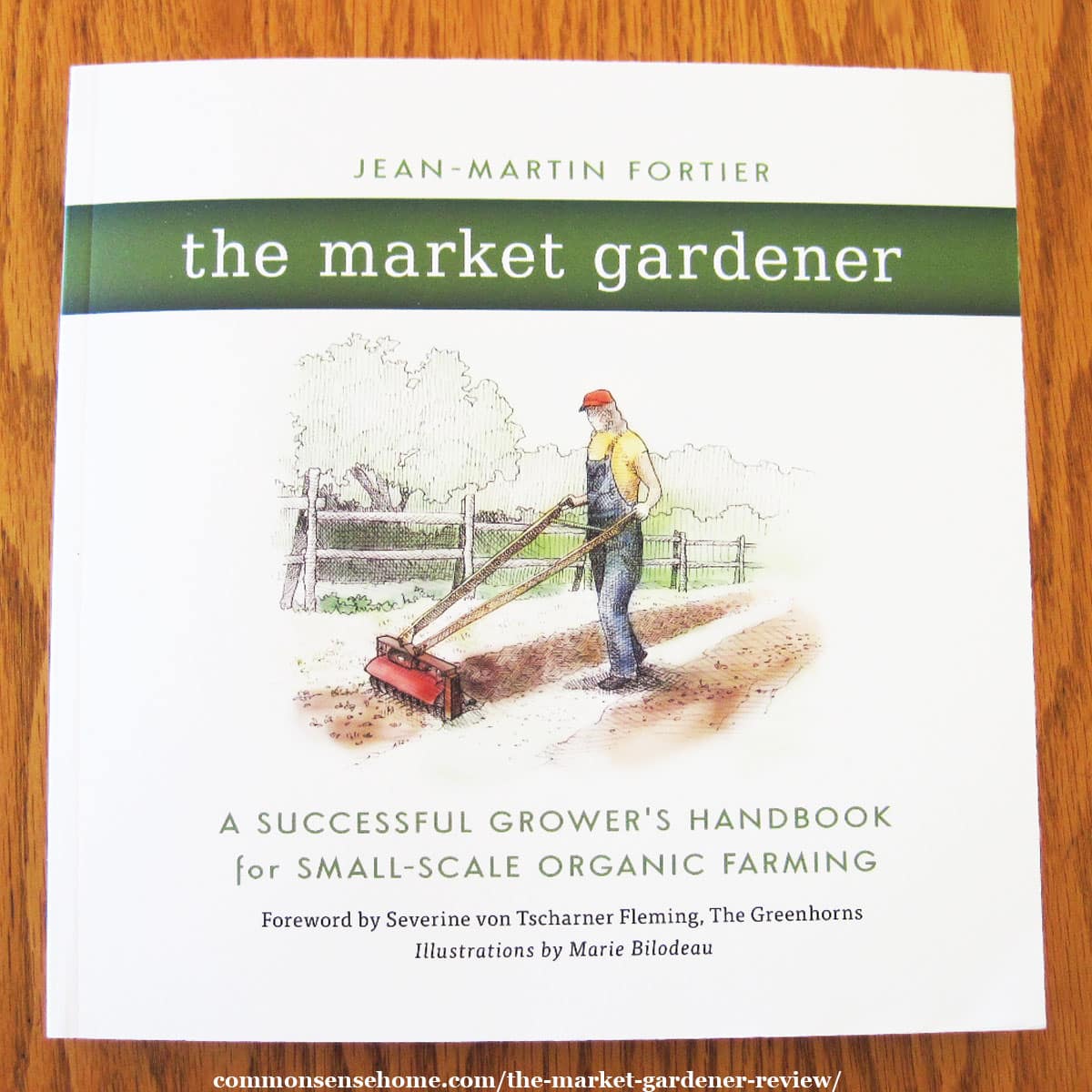
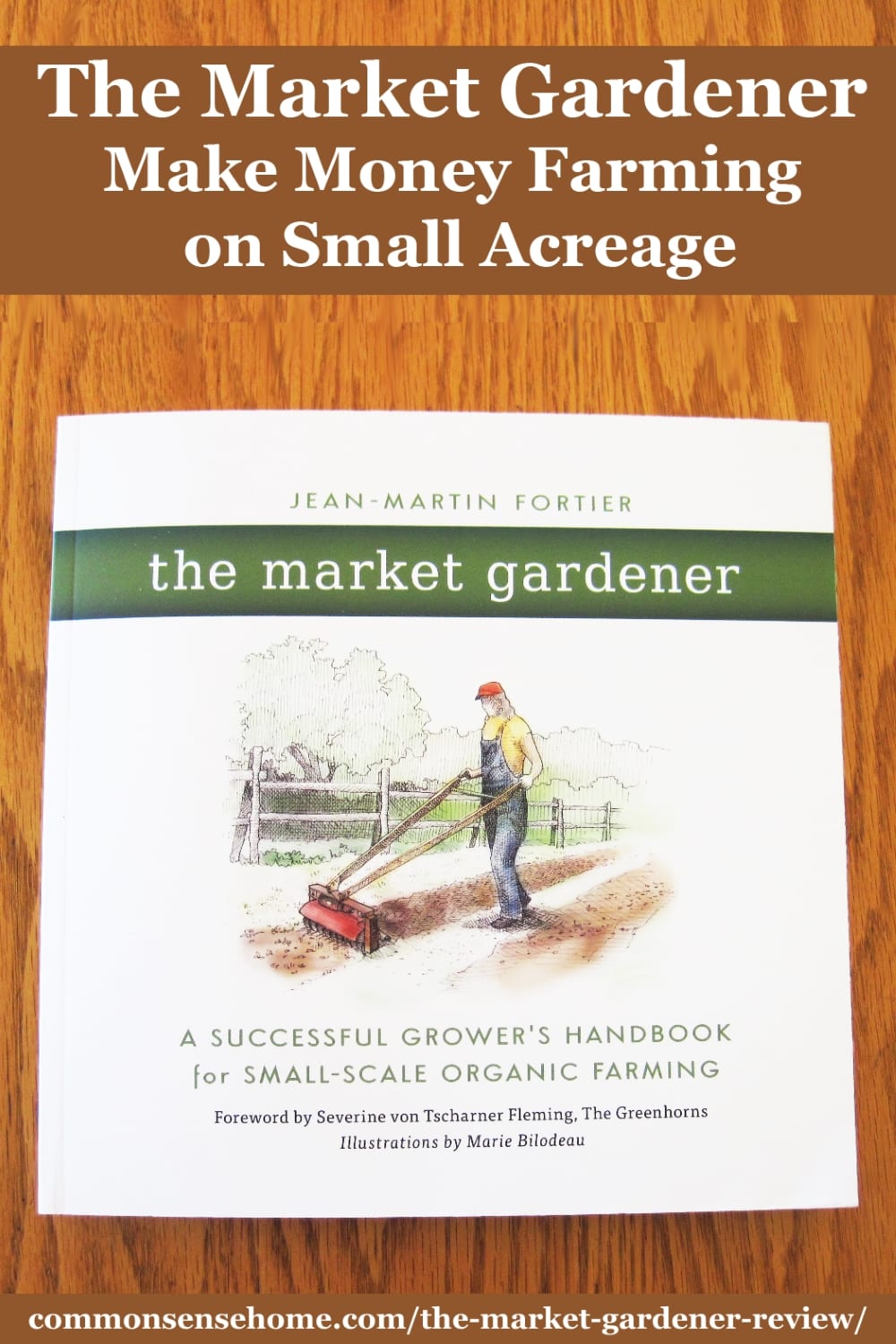
The Market Gardener: A Successful Grower’s Handbook for Small-Scale Organic Farming by Jean-Martin Fortier demonstrates that it is possible to earn a good living on a small piece of land, and provides the reader with the tools they need to do it.
Would you like to save this?
With under 2 acres of cultivated land, Jean-Martin and his wife aren’t just small farmers, they’re micro-farmers. They have been supporting their family for the last ten years with just 1 1/2 cultivated acres , and achieving a profit margin of over 40%. I live in a state with large amounts of agriculture, and I know most farmers around here are struggling just to break even, let alone post that sort of profit.
How do they achieve these results? Through strategic planning.
Table of contents
The Market Gardener Success Strategy
- Garden Intensively – Maximize production by optimizing soil fertility, determining the best return per square foot of garden crop, reducing non-productive space and gathering multiple crops per season from the same soil
- Minimize Start Up Cost – Micro-scale production eliminates the need for large, expensive machinery, which is a huge expense for many produce growers. Additional tools/materials can be added over time and sometimes purchased used. Appropriate sizing and uniform sizing between beds allows production enhancers such as tarps, row covers and hoops to be moved within the garden with minimum effort, and allows a single item to be used in multiple locations over the course of the season.
- Minimize Production Cost – by operating on a micro-scale and planning for efficiency of labor, Jean-Martin and his wife minimize the need for outside labor, which typically accounts for 50% of costs of market growers.
- Sell Direct and Add Value – By cutting out the middle man, direct to consumer sales generate maximum return for the market gardener. Focusing on details that add value to the consumer, such as early season vegetables and unique vegetable cultivars, means that their produce can garner a premium price.
What’s In The Market Gardener
The book opens with a general overview, and then takes the reader step by step through the process of creating a successful market garden, including:
- Finding the Right Site
- Designing the Market Garden
- Minimum Tillage and Appropriate Machinery
- Fertilizing Organically
- Starting Seeds Indoors
- Direct Seeding
- Weed Management
- Insect Pests and Disease
- Season Extension
- Harvest and Storage
- Crop Planning
Planned Vacation!
One particular aspect of their cropping strategy that I found personally appealing was that they do not try to harvest a crop year round. This provides them with a couple of months in deep winter to relax and recharge – even take a vacation – before heading back to work with fresh enthusiasm. It allows reduces the need for supplemental light and heating. (They are located in Canada, so some supplemental heating for early season seed starting is a must.)
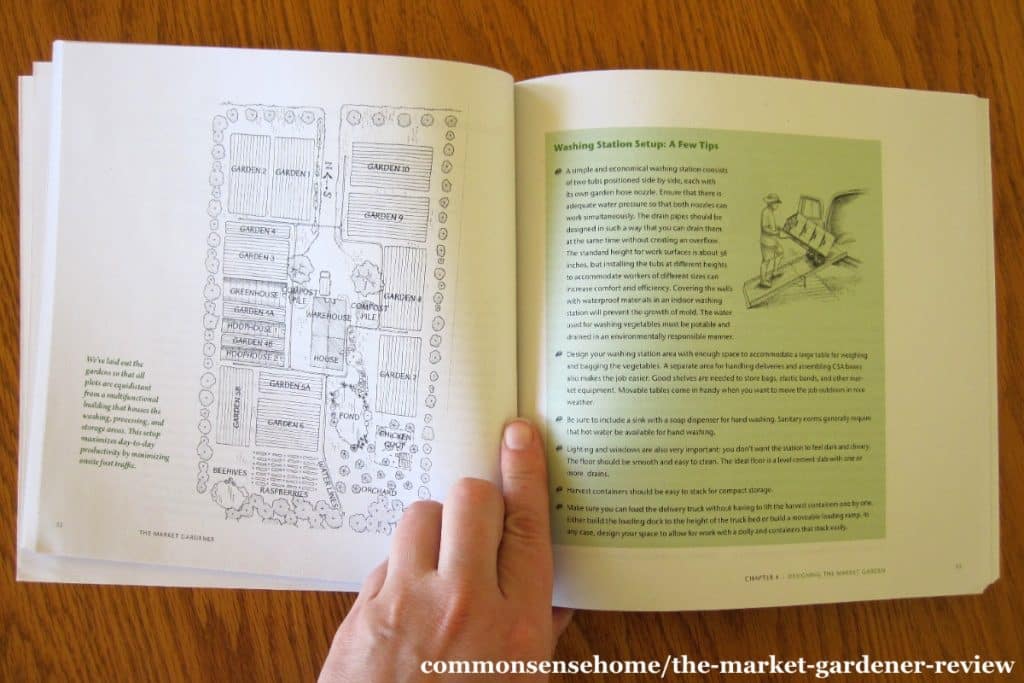
There are also detailed crop growing notes, sources for tools and supplies, planting schedules and crop rotation charts. Simple line drawings help to illustrate key points throughout the text.
You can hear from the author himself talk about his inspiration for writing “The Market Gardener”:
Conclusion
If you’re ready to “grow better instead of growing bigger”, this may be the right book for you. It’s possible to make a living off the land without a large amount of land. Jean-Martin Fortier and his wife have proved it.
Buy The Market Gardener: A Successful Grower’s Handbook for Small-Scale Organic Farming now.
I received a copy of the book for review. As always, my opinions are my own.
If you have a favorite book for profitable small farming, please share your suggestion in the comments.
Related Articles


Originally published in 2014, updated May 2016. Giveaway was held back in 2014 and is now closed.
I was just wondering if there is any manure you can add directly to your garden without aging it first?
What an inspiring book! Wonder how I can get my husband onboard with expanding beyond our little backyard veggie and herb patch to the whole yard!
I’m expanding my garden space this spring and this book should have some useful info!
book looks promising. are there permaculture/sustainable ideas in the book?
This book is focused on traditional market gardening on a micro-scale, not permaculture.
If you’re looking for permaculture, I highly recommend Restoration Agriculture: Real World Permaculture for Farmers. Excellent book by a man who has transformed his farm in southwest Wisconsin to a sustainable polyculture.
We have a lot of clay in our soil. We have been considering adding our veggie scraps directly to the garden. Any experience with this?
I tried it for a while at our last place, until the skunks or racoons (not sure if it was one or both, since both were in the area) came in and started digging holes in my garden to dig them up.
Planning on moving to a small piece of land and would love to have this book as a reference!
I am excited to read this book! Like said before, I have a lot of questions and I guess the biggest one would how to get started without getting overwhelmed.
I’d love to learn how to garden and make a living on such a small piece of land!
this book looks very inspiring. 🙂
As someone from the country and moved to a city, I am so looking forward to this book.
My 5 a. garden went down to 1/2 a. so I can use the help.
Can’t wait to see how this works for a Snow-Bird’!
I am so excited to read this book. Imagine living off of 2 acres of land AND making a profit. This is my dream!!
Very interested in all your methods.
Seems like a book packed with useful information. Thanks
would love this guide, i have been doing the Eden garden, this will be my second year.
With all the critters I have that eat all my kitchen scraps, how do I make compost. My garden needs it, but my compost bin is now empty.
That’s a common problem of chicken owners. 🙂 There are two main options – compost the chicken manure, or bring in out side compost or materials to compost.
Gardening becomes more difficult with age and health issues, so being more efficient is more important than ever. Some tips would be great.
Hopefully this will be useful in Australia too
This book sound great! might learn a few more good things on gardening which I love.
As a lifelong gardener with access to my own land only in retirement, coupled with a need to supplement my retirement income, I have been looking for just such a book. It will be a great addition to my micro-farming library. I hope the authors address the issue of stony ground, since my land consists of 2 acres of it;-)