
The Market Gardener – Make Money Farming on Small Acreage

This post may contain affiliate links. Read my full disclosure here.

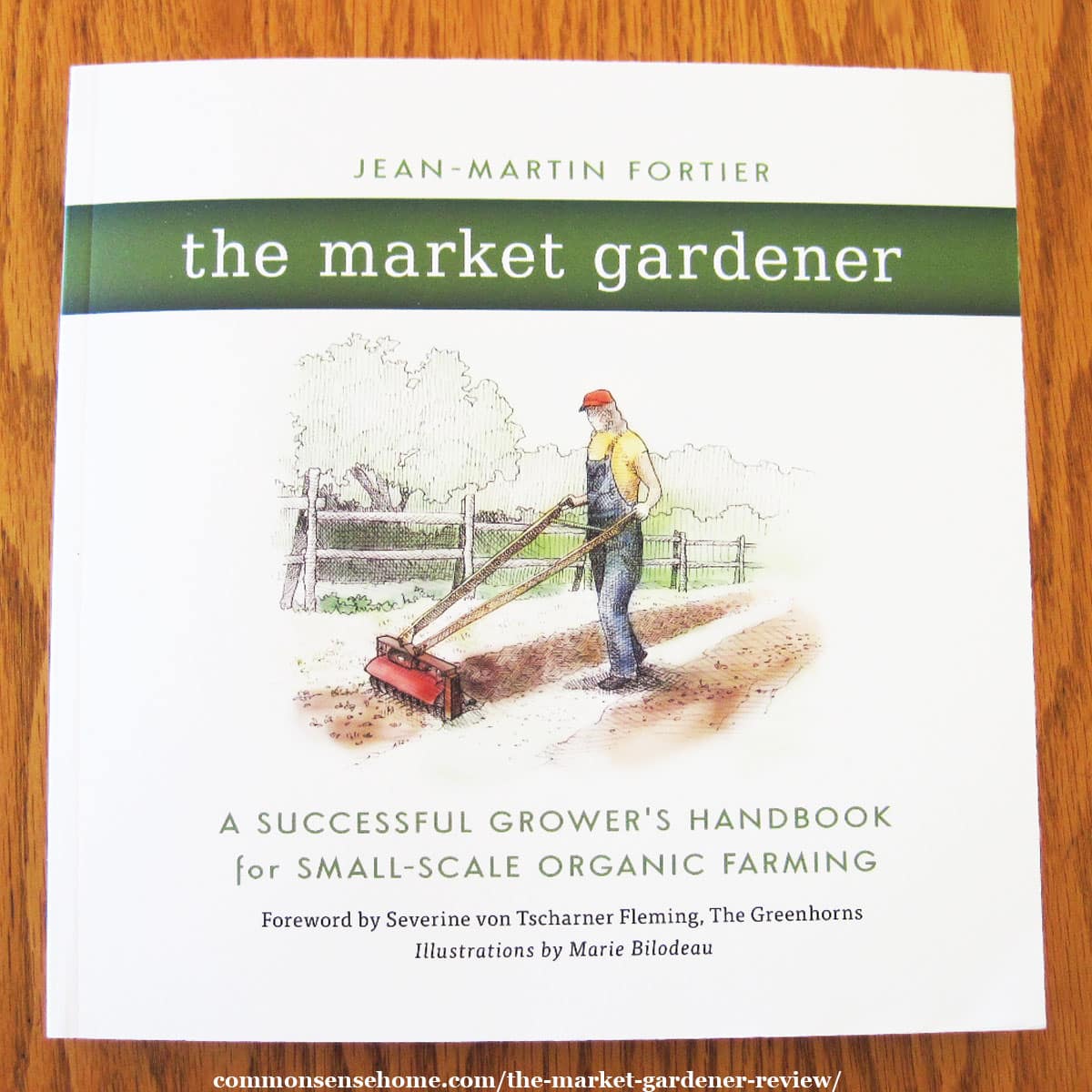
The Market Gardener: A Successful Grower’s Handbook for Small-Scale Organic Farming by Jean-Martin Fortier demonstrates that it is possible to earn a good living on a small piece of land, and provides the reader with the tools they need to do it.
Would you like to save this?
With under 2 acres of cultivated land, Jean-Martin and his wife aren’t just small farmers, they’re micro-farmers. They have been supporting their family for the last ten years with just 1 1/2 cultivated acres , and achieving a profit margin of over 40%. I live in a state with large amounts of agriculture, and I know most farmers around here are struggling just to break even, let alone post that sort of profit.
How do they achieve these results? Through strategic planning.
Table of contents
The Market Gardener Success Strategy
- Garden Intensively – Maximize production by optimizing soil fertility, determining the best return per square foot of garden crop, reducing non-productive space and gathering multiple crops per season from the same soil
- Minimize Start Up Cost – Micro-scale production eliminates the need for large, expensive machinery, which is a huge expense for many produce growers. Additional tools/materials can be added over time and sometimes purchased used. Appropriate sizing and uniform sizing between beds allows production enhancers such as tarps, row covers and hoops to be moved within the garden with minimum effort, and allows a single item to be used in multiple locations over the course of the season.
- Minimize Production Cost – by operating on a micro-scale and planning for efficiency of labor, Jean-Martin and his wife minimize the need for outside labor, which typically accounts for 50% of costs of market growers.
- Sell Direct and Add Value – By cutting out the middle man, direct to consumer sales generate maximum return for the market gardener. Focusing on details that add value to the consumer, such as early season vegetables and unique vegetable cultivars, means that their produce can garner a premium price.
What’s In The Market Gardener
The book opens with a general overview, and then takes the reader step by step through the process of creating a successful market garden, including:
- Finding the Right Site
- Designing the Market Garden
- Minimum Tillage and Appropriate Machinery
- Fertilizing Organically
- Starting Seeds Indoors
- Direct Seeding
- Weed Management
- Insect Pests and Disease
- Season Extension
- Harvest and Storage
- Crop Planning
Planned Vacation!
One particular aspect of their cropping strategy that I found personally appealing was that they do not try to harvest a crop year round. This provides them with a couple of months in deep winter to relax and recharge – even take a vacation – before heading back to work with fresh enthusiasm. It allows reduces the need for supplemental light and heating. (They are located in Canada, so some supplemental heating for early season seed starting is a must.)
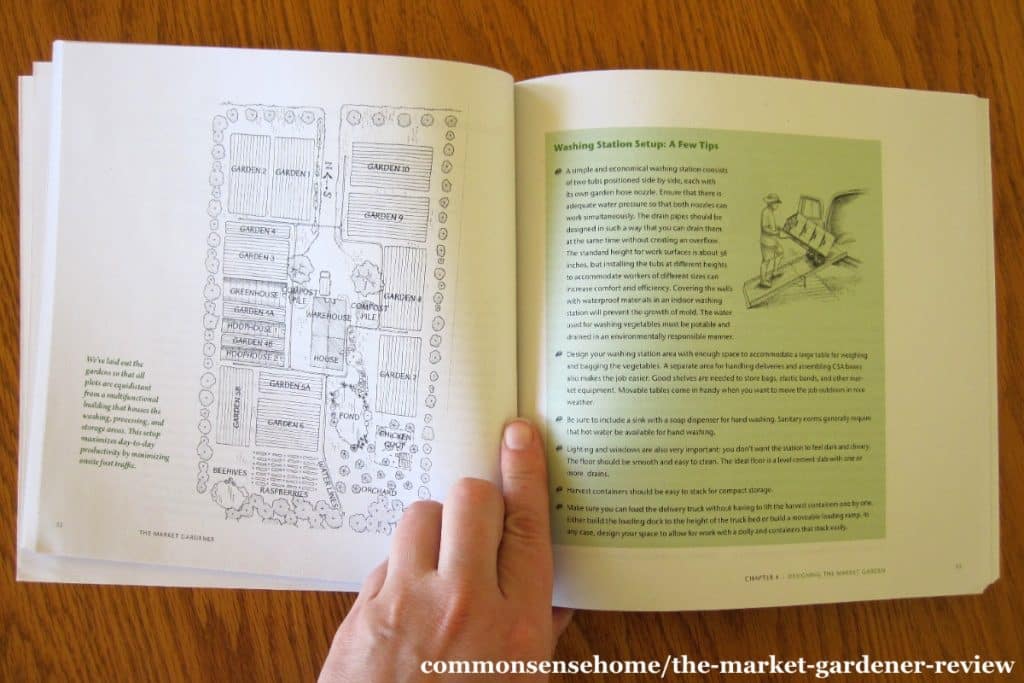
There are also detailed crop growing notes, sources for tools and supplies, planting schedules and crop rotation charts. Simple line drawings help to illustrate key points throughout the text.
You can hear from the author himself talk about his inspiration for writing “The Market Gardener”:
Conclusion
If you’re ready to “grow better instead of growing bigger”, this may be the right book for you. It’s possible to make a living off the land without a large amount of land. Jean-Martin Fortier and his wife have proved it.
Buy The Market Gardener: A Successful Grower’s Handbook for Small-Scale Organic Farming now.
I received a copy of the book for review. As always, my opinions are my own.
If you have a favorite book for profitable small farming, please share your suggestion in the comments.
Related Articles


Originally published in 2014, updated May 2016. Giveaway was held back in 2014 and is now closed.
I heard him speak last summer at the Mother Earth News Fair. He was very inspiring. But he admits, it is very hard work!
Yes, no matter what the scale, farming is not a job for the lazy!
As first year market gardeners in our 50s, I’d love more info on how to approach buyers. Thanks for the chance to get this good looking book.
Looks like a very informative book. I’ll have to see if we can get it in at the local library!
Looks like a great and very informative book! As a side note, was born and raised in Wisconsin and folks currently live in Wausau. I moved down to Central Texas from Madison going on six years ago. My husband and I get up there though as often as we can (though prefer to do it in the summer months when the weather is nice and we can camp).
Jessica
One of my closest friends was born and raised in Wausau and now lives in Verona. 🙂
Such a small world! 🙂
One of my gardening questions that seems VERY common sense but I can’t figure it out: do you plant seeds throughout spring/summer/fall? I’m curious because I’m starting crops this year, but have only gardened on a small scale before. I’m not sure if I’m supposed to plant seeds sporadically according to their germination period so I have crops to harvest throughout the year? Or if you only harvest when each plant is ready, and whatever you get, you get? (I hope this makes sense!)
It depends on the length of your growing season and what you are trying to grow. I am in zone 5, so I do the bulk of my planting in spring to give crops time to mature, but I do plant a few things later for fall crops, such as some greens and root vegetables. cold tolerant crops go in first, then warm weather ones after danger of frost has passed. Seeds are started inside for transplanting weeks before last frost, based on recommendations on the seed packets and personal experience.
Check “days to maturity” on the seed package to get a rough estimate of time the plant will need to produce.
always looking forward to learning new and exciting ways to benefit our family of 7 thank you for sharing.
Sounds very interesting and useful… would love to win a copy.
I am constantly looking for ways to improve my own gardening techniques to supplement my own diet and friends. Thanks
I need this book! Thanks for the great information on your blog!