
How to Make Hard Cider (The Easy Way)

This post may contain affiliate links. Read my full disclosure here.
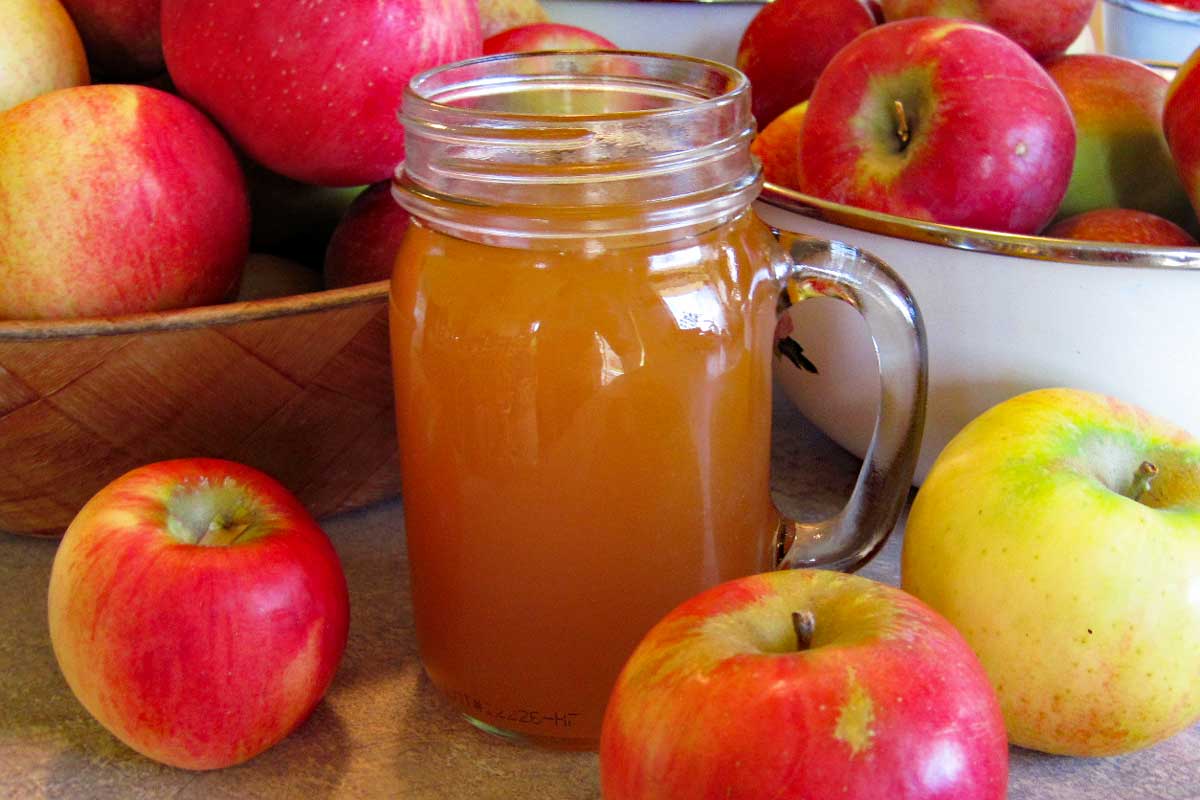
I enjoy a glass of hard cider now and then, but I can’t drink commercial stuff because of the sulfites. (They give me a headache. ) Thankfully, making homemade hard cider doesn’t have to be complicated.
The simplest recipe is ready in just a few days, and creates a bubbly, low alcohol beverage. For long term storage, you need a bit more equipment, time and patience, but it’s still a fairly straightforward process. In this article, we’ll share three ways to make hard apple cider. (You can also check the comments for tips on making apple jack, which is considerably stronger.)
Would you like to save this?
Table of contents
What is Hard Cider?
Hard apple cider is simply sweet (non-alcoholic) apple cider that’s been fermented to make it an alcoholic beverage. Fresh pressed cider naturally ferments. If you store it in a sealed container (without oxygen), it forms hard cider. If it’s stays exposed to oxygen, you’re likely to end up with apple cider vinegar instead.
In the United States, back in colonial times, most apples were pressed into cider. Since there was no refrigeration, the only fresh apple cider came right off the press. The rest was served fermented, or “hard”.
Per Wild Fermentation, annual hard cider consumption in Massachusetts in 1767 was greater than 35 gallons per person. Alcohol is a natural preservative, inhibiting microbe growth. In many cases the stored fermented juice was likely safer than the drinking water.
What’s the difference between apple juice and apple cider?
Apple juice is filtered and pasteurized, giving it a clear, smooth look and long shelf life. Apple cider is usually unfiltered and less processed, so it’s cloudier, has a fresher apple flavor. It may be either sweet (non-alcoholic) or hard (alcoholic).
I love fresh cider, but don’t care for most apple juice. It’s too sweet for me.
Make Sure to Start with the Right Sweet Cider
All you need to be a hard cider maker is apples or raw, sweet apple cider. The first two hard cider recipes use the naturally occurring wild yeasts found on the apples and in the air to do the fermenting.
Make sure to read the fine print on purchased sweet cider. Preservatives and pasteurization inhibit fermentation. Do not use sweet apple cider with chemical preservatives such as Potassium Sorbate, Sodium Benzoate, etc. They will not ferment.
UV treated sweet cider will work for fermenting. Blends with vitamin C added are also acceptable.
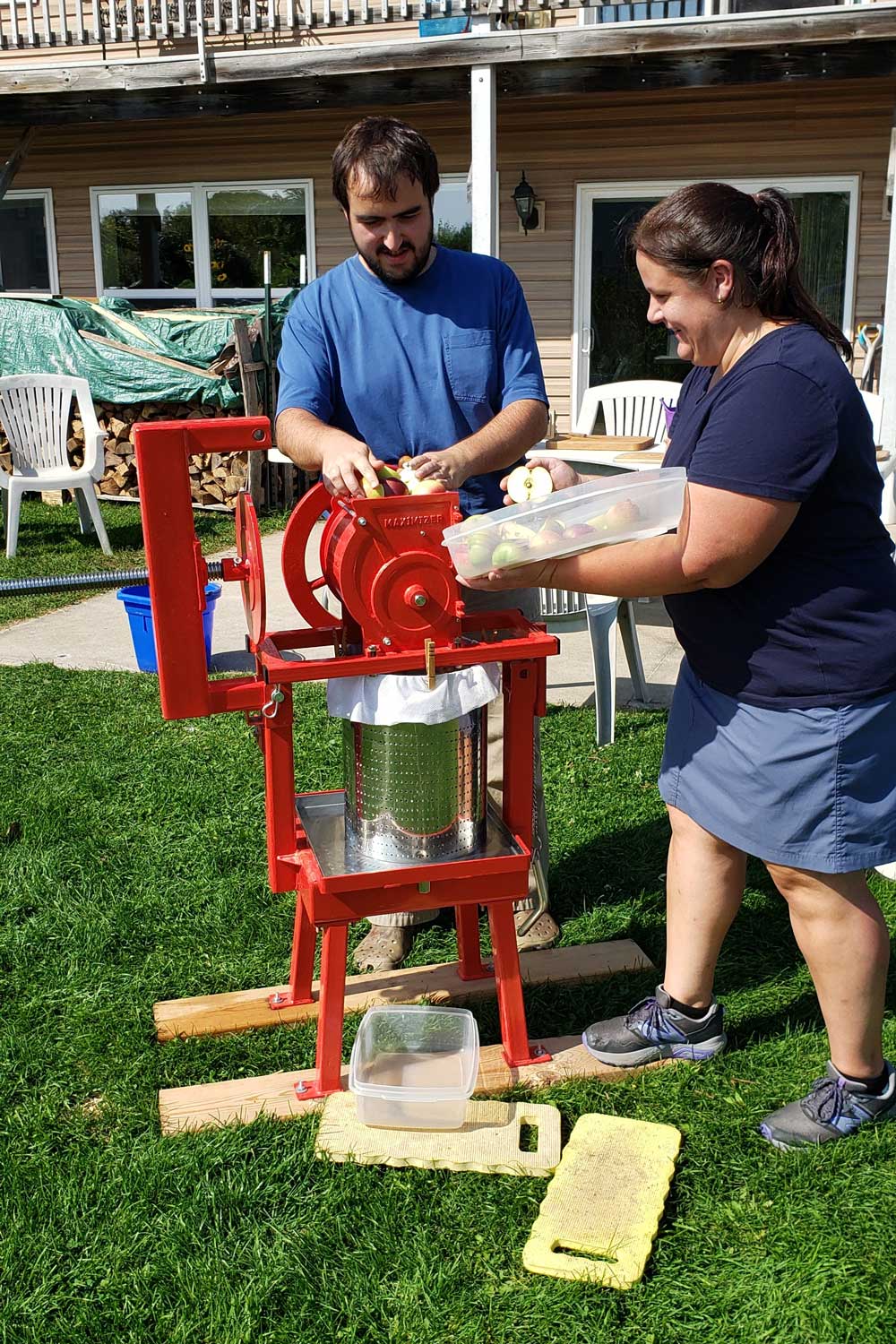
Can’t find raw apple cider with no additives? Go ahead and use your juicer, or if you want to ramp up production, buy or make a cider press. We invested in a heavy duty cider press from Lehman’s that should last for many years with proper care. Here’s a shot of Duncan using the press with a family friend.
Use apples that are clean and unspoiled – rot spots will spoil your ferment. Ugly apples are fine, and may even have more pronounced flavors that picture perfect apples. It’s great to use a mix of apple varieties, so you get a nice balance of tart and sweet.
How to Make Hard Cider – The Easy Way
This method makes a lightly alcoholic drink that’s a bit fizzy, and is ready in just a few days. Adapted from Spontaneous Cider in Wild Fermentation.
Ingredients
1 gallon unpasteurized, preservative free fresh apple cider or apple juice
Directions
You can ferment in a plastic jug, but I highly recommend transferring your fresh cider to a glass gallon jug or carboy. Pour off about a pint of liquid so there is room for the bubbles of fermentation.
Cover the top of your container with a coffee filter or other material that will breathe. You want to allow wild yeast in, but keep fruit flies out. Keep out of direct sunlight. (I keep mine on the kitchen counter and cover with a flour sack towel.)
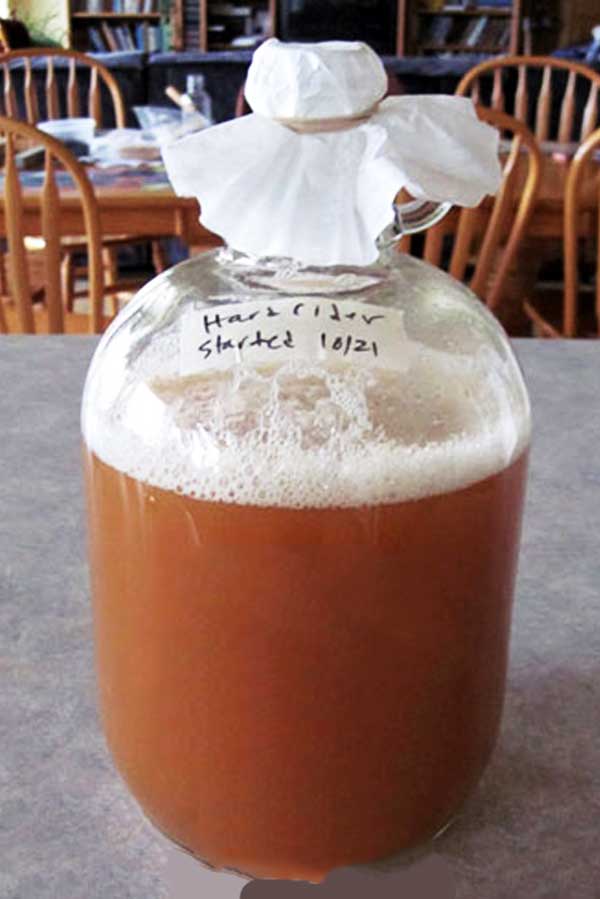
Leave your gallon of cider to ferment at room temperature for two days, and then start tasting at frequent intervals. When it reaches the flavor you prefer, replace lid and place the container in the fridge to slow fermentation.
In my kitchen, three days at room temp gives me a light, sweet, fizzy drink with just a light touch of alcohol. By day five, it’s stronger, and not as sweet. I prefer the younger brew. I keep this brew for up to a month in the refrigerator.
PrintQuick and Easy Hard Cider
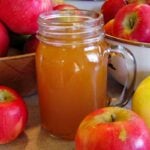
Low alcohol, fresh, and fruity, this hard cider is ready is just a few days.
Ingredients
1 gallon unpasteurized, preservative free fresh apple cider or apple juice
Instructions
- Place the cider in a gallon fermentation vessel, leaving about a pint of clear space at the top. (Drink the extra cider.)
- Cover the top of the container with a coffee filter or tightly woven piece of fabric. Keep the container out of direct sunlight, in a warm location, for 2 days.
- Start tasting. When the cider is as fermented as you prefer, put a lid on and move it to the refrigerator to slow fermentation. I usually refrigerate around day 3.
- If you like, you can transfer your hard cider to smaller bottles or canning jars for storage. Bail-top bottles are strong and help safely contain the CO2 bubbles. The cider should hold in the refrigerator for about a month.
What’s a Carboy?
A carboy is a large bottle with a narrow neck, like an office water cooler bottle. You can buy them at any homebrewing store, or online. When you use an airlock on the bottle, it allows ventilation of carbon dioxide while keeping microorganisms out.
Traditional Farmhouse Cider
Hard, dry cider adapted from Wild Fermentation
Ingredients
1 gallon unpasteurized, preservative free fresh apple cider or apple juice
Directions
Fill your jug or carboy nine-tenths full of sweet cider. (Leave out about a pint per gallon to allow room for the bubbles that will form during fermenting.) Cover the opening of the container loosely with plastic wrap. Place in a cool location out of direct sunlight with a pan or some sort of container below to catch overflow, if any.
After a few days (as with the simple hard cider), your brew will begin to ferment and bubble. If it overflows, remove your plastic wrap and clean up any spills. Cover with fresh wrap if original wrap is sticky. Repeat as necessary.
When vigorous fermentation has stopped (only minimal bubbles should be visible), clean the exterior of container well. This may take several weeks, depending on the temperature. Add fresh cider to the container, leaving about 2 inches of headspace. Seal the jug with an airlock.
Ferment for 1 to 2 more months, until very little carbon dioxide is being released and liquid begins to clear. You will end up with about an inch of yeasty sediment in the bottom of the container.
Rack the fermented beverage into a clean container with a siphon hose, leaving the sediment (lees) behind. Put fresh water in your airlock, and seal the new jug with the airlock. Ferment the cider for an additional one to two months.
Four to five months from when you started, your hard cider should be ready to bottle. You can use regular beer bottles or bail top bottles (like I use for kombucha). Age your bottled cider for another month or two for best flavor. The final product should be dry, i.e., not sweet.
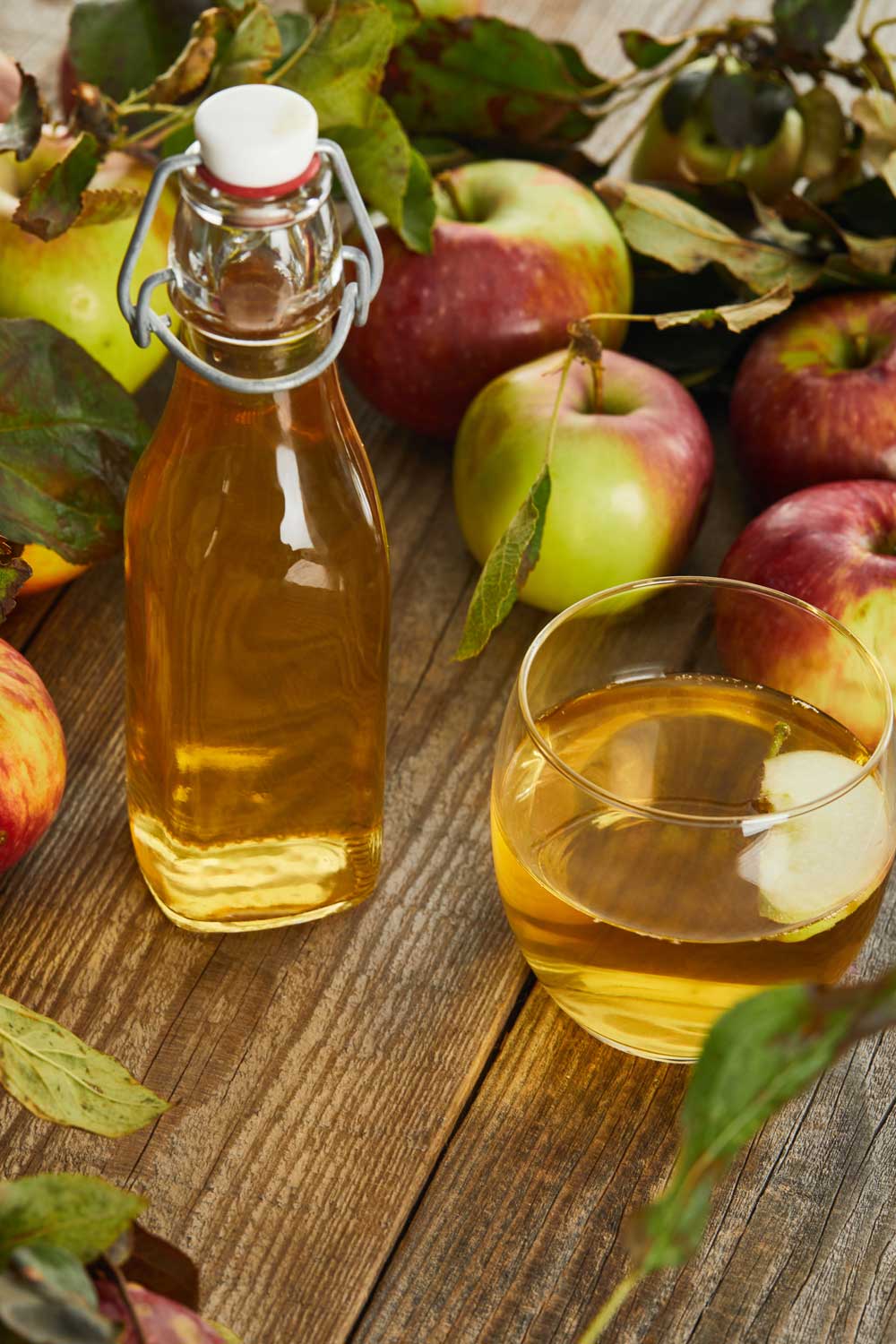
Cidermaking Tips
If you can only obtain pasteurized apple cider, you will need to add yeast. Ale yeast will give you a lower alcohol content (around 1%), while champagne yeast will yield up to 18% alcohol. The different types of yeast tolerate different levels of alcohol before they die off when it gets too high.
Follow package directions to determine the amount of yeast to add. Most packets will provide enough yeast for up to five gallons. If you have a local homebrewing store, they should be able to help you out, or you can order online.
Many recipes add additional sugar or honey. Extra sugar can increase the alcohol content along with the sweetness, since the yeast converts the sugar to booze, but it’s limited by the type of yeast. Wild yeasts can only reach an alcohol content of around 4-5%. Bread yeast can reach around 6-10%.
If you want to experiment with flavored ciders, try adding your flavors during the initial ferment. The book The Wildcrafting Brewer is an amazing resource for the adventurous craft cider brewer. Cider, Hard and Sweet is another excellent reference, including information on apple varieties, cidermaking basics, barrel fermentation, and recipes for cooking with cider.
Always make sure your containers and other equipment are clean and sanitized. Store your brew in a cool, dry location, out of direct sunlight.
Here’s a video showing a hard cider recipe using brown sugar and commercial yeast.
I hope you’ve enjoyed this post, and that you give hard cider a try. Spontaneous cider is a very mild alcoholic drink with a wonderful history.
You may also enjoy:
- Old Fashioned Dandelion Wine
- 2 Ingredient Apple Jelly
- 5 Amazing Spiced Apple Cider Drink Recipes
- Apple Scrap Vinegar – Get More Out of Your Apple Harvest
- Ways to Preserve Apples for Year Round Use

This article is written by Laurie Neverman. Laurie grew up in the kitchen, learning baking and home cooking from her momma. At age 15, she and her mom and two sisters created Irene’s Custom Cakes & Catering. This was her summer job through most of high school and college.
Originally posted in 2014, last updated in 2025.
Oh regarding above message * it was non preservative apple juice
I made hot apple cider for Xmas and its been refrigerated and heated two or three times and then I left it on my counter (warm with lid on) , now it’s started to ferment. Can I let it go and still drink it or is is not a good idea..??
I would do it, provided you don’t see any obvious signs of spoilage. Apples/apple cider generally have a pH below 4, so it is generally resistant to problematic microorganisms.
My apple cider has been sitting for about a month. I haven’t seen any signs of fermentation. I did not add any yeast. It sat the first 2 weeks with a coffee filter over the top and now is covered in plastic. I’m not sure what I need to do. Any advice? TIA
If it’s been sitting for a month and there is no activity, odds are your cider has some sort of preservative in it. Any chance you still have the original container, or could check with a grower if you bought it locally?
The pH of apple juice/fresh cider is typically between 3.5 and 4.25, so it should be safe from dangerous pathogens, but it’s unlikely you’ll be able to make hard cider.
If you like, go ahead and taste a small sample of the cider and see how it smells and what the flavor is like. If it still tastes okay, you could try overriding the preservative by adding commercial yeast and some sugar, but I don’t know if it will work.
If it’s somehow turned to vinegar instead of hard cider, you can still use the vinegar.
If it smells or tastes off/spoiled – compost it.
It’s homemade apple cider I made myself. I did add wine yeast and it is fermenting now. Fingers crossed! Thank you!
Good luck! I would taste test a small amount every so often to check how it’s going, and don’t bottle while it’s still actively bubbling, unless you use something like a bail top bottle that’s made to hold up to higher pressure.
I juiced my fresh apples and have the juice frozen. Will freezing it have killed the natural yeast in it or can I still make hard cider out of it?
If you didn’t cook the apples, odds are there is still some wild yeast hanging around in the juice that will activate as it warms up. If you did cook the apples to juice them, you can probably still catch some wild yeast from the air.
I used my juicer to make apple juice, I’m wondering if I then filter it? There’s a lot of froth in the juice that created a head when I poured it into my bottle like a head on a beer?
That’s up to you, but it would make a cleaner brew in your carboy (or other fermenting vessel). Otherwise you’ll have all those little apple bits stuck to the walls. It all ferments, but fruit bits are messy and need to stay below the liquid line so they don’t develop mold, which means daily mixing.
I’m assuming that by “Bottle” you are referring to a carboy. If that’s the case then it’s fine. It will clear as it ferments. Once you put it into the final bottles it will be clear. (ish)
I froze my apple juice straight from the orchard press. Will it still ferment when I thaw it out?
It’s likely it will still ferment after being frozen.
okay, thanks! I’ll let you know how it works out.
You’re welcome.
At what point can I add herbs or peppers etc to the cider to flavor. And do I just chop them and wrap in cheese cloth. Thank you
Try infusing herbs or peppers for 5-15 minutes before your ready to drink to keep the flavors fresh. You can chop and use cheese cloth, or try one of those infuser bottles, or a French press.
I’m not clear from the article or the comments if there is any way to stabilize and store the results from recipe 1 (the basic “leave it out and let the yeasties have their fun” method) for longer time periods (months up to 1 year)? Bottling? Canning?
Full disclosure: total newbie here, with only the experience of 30 years ago making recipe 1 completely informally – in the plastic jug the cider came in – in my dorm closet on top of a mini-fridge. In that case, we drank the results immediately. Good times! Is there any way to make that same thing and stabilize and store it?
Thanks!
Recipe #1 is meant to be enjoyed young. If there’s enough sugar to drive the alcohol content high enough, it should stabilize and not shift over vinegar. It will also keep in the fridge for months. I have a mason jar in the fridge that’s around 2 months old and has quite a kick.
It’s all about the yeast. Once it has started to ferment, it’s either going to be good to drink or it’ll be vinegar. It doesn’t change from one to the other. Your best bet it always to introduce your own yeast to force it to ferment as alcohol. Once it is finished fermenting it will store for 2 years or more. No “stabilizing” required.
When you’re dealing with wild yeast, you most certainly can shift from booze to vinegar. Been there, done that. Commercial yeasts in a sanitized, sealed fermentation vessel will not readily shift over to vinegar.
In the book, “Wild Wine Making”, the author discusses how wines become shelf stable without sulfites once the alcohol content reaches at least 14%. In the book, “The Wildcrafting Brewer“, the author gives guidelines for experimenting with wild starters and various forms of and concentrations of sweeteners to reach desired alcohol levels.
really enjoyed comments about Apple Jack, I live in TX “hot” so will try making some in freezer, thanks
I made and canned a bunch of cider last fall. Do you know if I can make vinegar out of it? If so, how do I go about it? Thanks.
Since it’s best sterilized during canning, the most reliable way to turn it into vinegar would be to introduce a spoonful of organic apple cider vinegar with the the mother. That way you know you’ll have the right bacteria to convert it to vinegar.
Thanks for sharing! I boiled my UV filtered cider and added piloncillo sugar for extra ABV. It never fermented/bubbled in the carboy from what I could tell so i left it to sit for 12 weeks or so and now it has mold 🙁 Where did I go wrong?? Can I salvage anything from the batch?
Did you add any yeast? You double sterilized it, which would kill any wild yeast, then it sounds like you locked it in a carboy, so it couldn’t be reached by any new wild yeast. Without yeast, it won’t ferment.
Please do not drink the moldy cider. There are likely mold spores that you can’t see in the rest of the cider.
Bummer. I guess I killed the yeast by boiling it. Rookie mistake 🙁 Thanks for your response!
You’re welcome. Next time you’ll know.
It helps to think about yeast being small critters, who like to live in where it’s warm and moist – not hot. You can put your yeast in hibernation in the refrigerator (or deep hibernation in the freezer, which is where I store my bulk yeast). If liquid is too hot for you to comfortably hold your hand in it, then odds are it’s too warm for your yeast beasties.
Natural, wild yeast show up on many fruits and flowers – but unfortunately, many of our fruits and flowers are now sprayed with pesticides or herbicides, which makes using those wild yeasts less appealing. I know the orchard that I pick at avoids spraying when they get closer to harvest. but I look forward to the day when we can harvest our own apples for cider and other apple products.
What happens when you forget to proof the yeast? Also, my kid dumped the entire yeast package into my one gallon jug.
I guess you’ll find out what happens in your situation. It should work, and there shouldn’t be a problem with using a whole package, as the packages “make up to 5 gallons”.
I’ve got a gallon of home pressed cider that’s been sitting in my fridge for about two months now. It’s been bubbling and I’ve been letting the gass off every once and a while (it’s in a plastic milk jug) but I don’t k ow what to do with it now? Can we drink it as is?
It should be safe, although I’d move it to glass for longer storage. Take a small taste and see if it’s gone over to vinegar. If you don’t have any bad reactions, don’t see any mold and it tastes drinkable, you should be fine.
I have successfully made three 5 gallon carboys of hard cider and only lost one due to my inadvertently using store bought apple juice with unlabeled preservatives in it. Rather than throw it away I boiled it down by 80% to make Boiled Cider, a tasty additive syrup to apple pie. I also add 2 lbs of Turbinado sugar to increase the final alcohol level and 5 cans of Tree Tops organic concentrate for more apple taste as I trust them to not add preservatives (hence explaining their higher cost per can). This raises my final abv level to over 8pct. I buy 4 one gallon glass jars of Whole Foods 365 organic pastuerized Apple Juice trusting that it doesn’t contain preservatives. I also siphon from my primary fermenter after two weeks long after the early rapid fermentation is over, having used a commercial cider yeast sold by my local Homebrewing shop for $3 – $4 a packet. By the time it is transferred to my secondary fermenter it has started to clear. The initial harsh taste of this cider mellows out after months of storage but will still taste flat. To get some apple flavor back into this cider I intentionally kill the remaining active yeast with crushed Campden tablets plus Sodium Sorbate and wait a few days before adding apple concentrate until I get the preferred level of sweetness plus some apple taste. Being that I am a home brew hobbyist I have the necessary equipment (Kegerator) to carbonate my Cider. I also have to supply Growlers for my guests to take home some of my just tasted hard Cider which is also why I make it in 5 gallon batches.
Thanks for sharing your experience. It sounds like you enjoy your hobby.
Hi. Good ideas about changing the big bottles.
Iam doing this in Asia so it is a little bit warm here but it goes very good.
What i do is i bye apple juice with nothing else in it.
This is for 4,5 liter of apple juice.
I am using organic sugar around 450 grams.
And i use pure honey from Asian farms about 1,5 dl.
I dont use any yeast whats so ever and it is bubbling.
Takes a week in room temp.25-28 c and then it starts.
Its been bubbling now 4 weeks so iam keeping a eye to see when to change bottle etc.
As airlock i use a small motorbike fuel filter.
All the best from Asia.
Than you for sharing your experience.
Im having a hard time finding unpasturized cider. I can find preservative free but not unpasturized. What is the issue with the pasturized vs unpasteurized?
You’ll likely need to add yeast to jump start the process with pasteurized cider, since the natural apple yeasts will have been sterilized by pasteurization. You might be able to catch wild yeasts to do the job, depending on conditions. I was able to successfully wild brew UV treated cider into hard cider last fall. Our favorite cider place started UV treating their cider. 🙁
What is the alcohol % we are talking here with these ways of ferminting?
It’s hard to say precisely due to variations in the sugar content of the unfermented apple cider and the fermenting process, but without adding sugar I don’t think you could get above 5%. More likely to be in the 1-2% range.
Fantastic. That the area I want to be in. Would rather keep it close to the level kombucha is so that pretty close. Thank you
You’re welcome.
could you give me the easiast 123 of making hard cider
Follow the directions in the post.