
12 Best Tips for Keeping Your House Cool without AC

This post may contain affiliate links. Read my full disclosure here.

Summertime may bring many wonderful things but the extreme heat is not one of them. For many, using air conditioning is not affordable nor available. Here are some tips for keeping your house cool in the summer heat, with or without AC. We use these techniques in steamy South Carolina to reduce our air conditioning bill. Scroll down to see 12 ways to keep house cool without AC.
Note: See the post “Heat Stroke – Symptoms, Treatment and Prevention” for more tips on staying safe in high temperatures.
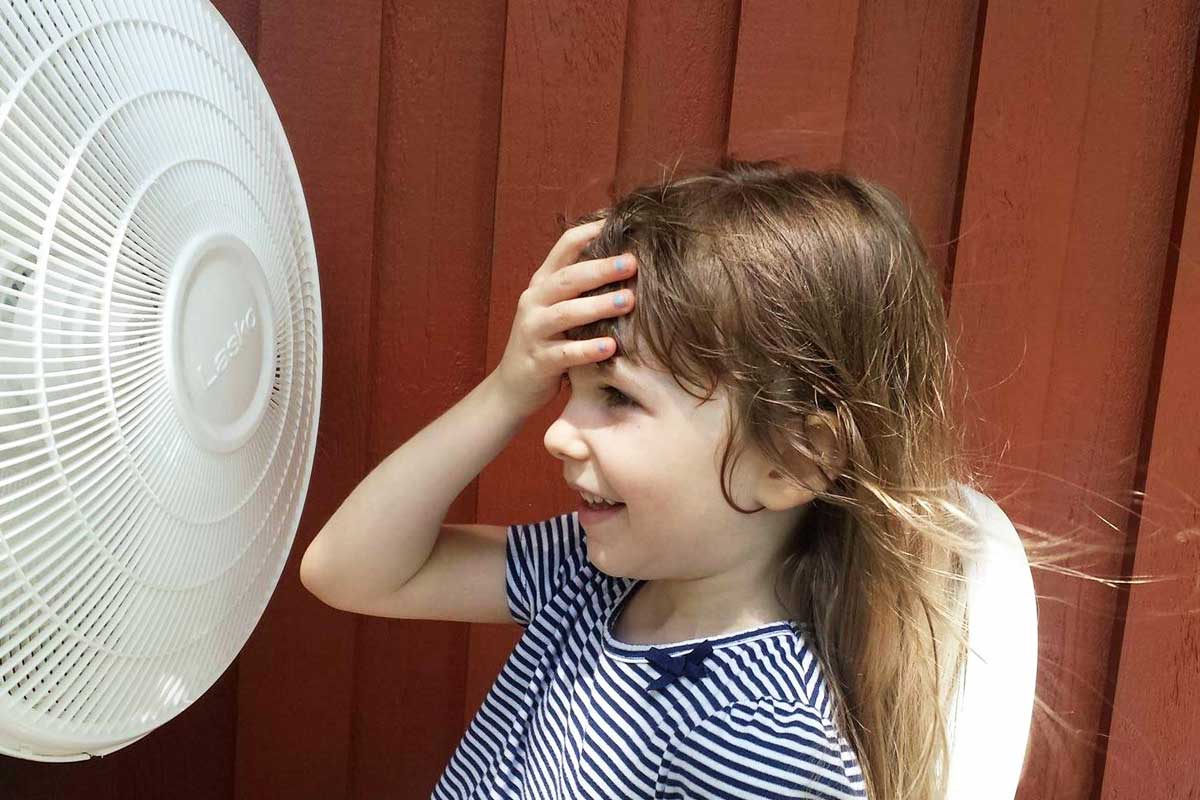
How to Keep House Cool Without AC
#1 – Dehumidify
If you live in an area with dry heat your body perspires, your sweat evaporates, and you cool off – just the way nature intended. If you live in an area with lots of humidity (which I do) you sweat and it doesn’t evaporate. Instead it soaks your clothes leaving you feeling hot, wet, sticky, and miserable.
To feel cooler in high humidity:
- Wear loose cotton or other natural fabric that breathes
- Choose breathable sheets that keep you cool, such as cotton or bamboo
- Use a dehumidifier
A dehumidifier helps remove excess moisture from the air, which leaves you feeling cooler even in hot temperatures. You can find dehumidifiers at most big box stores, Craigslist, classifieds, and online.
See also “Musty Smells in the House – Finding Them and Getting Rid of Them” for help dealing with humidity related odors.
#2 – Unplug
Everything you plug into a socket produces heat. Unplug all unnecessary appliances or electronics when not in use. Even those little red glowing lights that stare at you in the middle of the night indicating the item is turned off drain energy and produce heat. Turning something off is not enough – unplug.
#3 – Use Natural Light and High Efficiency Lighting
Take advantage of daylighting or use energy efficient light bulbs, such as LEDs, in your high use areas. A traditional 1oo watt light bulb can increase the heat by 11 degrees per hour in a small room.
Some utilities offer rebates on LED lightbulbs, making them more affordable. You can view a list of LED rebates by region and bulbs that qualify for rebates here.
Also, consider using lighter paint and finish colors in your home. Light colors reflect more light and reduce your need for extra task lighting (reducing heat generation).
#4 – Don’t Cook or Cook Outdoors
During the summer months, try to pre-plan meals so that you don’t need to use the oven during the day. Either cook on the grill, in a microwave, or in a crock pot. If you have to use the oven, try to cook your meal before noon or after the heat of the day. I would suggest around 4 pm.
Editor’s note: Traditional Cooking School has an e-course on outdoor cooking options include using portable appliances outdoors, propane camp stove cooking/canning, charcoal grill, solar oven, open fire cooking, smoking, and more. If you sign up through links on my site, I receive an affiliate payment at no extra cost to you. You’ll love Wardee’s easy to follow instructions.

#5 – Close your blinds from late morning until early evening
“Let the Sun Shine In” is a cute song for children, but not helpful for keeping your home cool. Close your blinds from late morning until early evening. This simple act can keep a room 10-15 degrees cooler.
You can purchase blackout shades, use window tint film on your windows (easy to install), or good blinds. If covering your windows during the day makes it too dark, you can lower the top of your shades 6″ from the top of the window to let light in but not the heat.
If you can’t shade the outside of a window consider insulating cellular shades. These can keep the heat from penetrating as much into the house.
#6 – Use Ceiling Fans – The Right Way
Did you know there is a right way and a wrong way to use your ceiling fan?
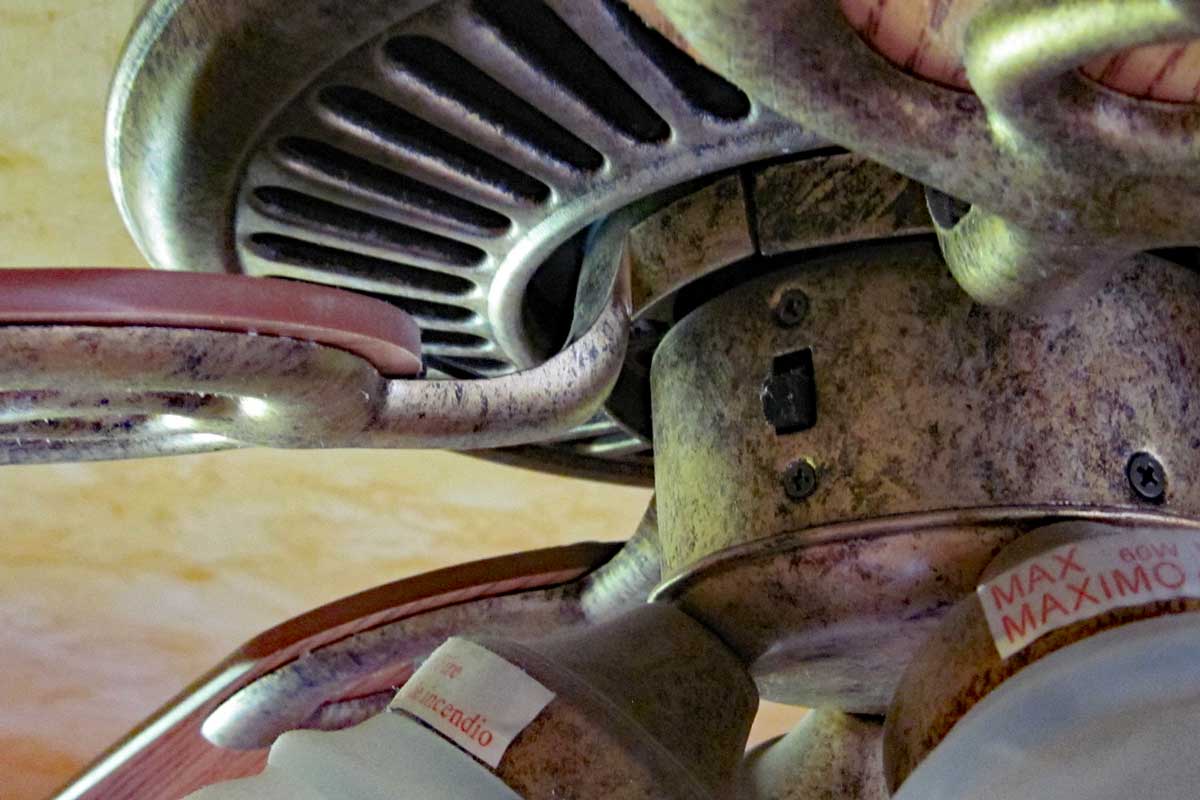
The base of your ceiling has a small switch that changes the direction of the air flow. During the summer months your ceiling fan should blow forward in a counter-clockwise direction, forcing air down and making you feel cooler.
During the winter months your ceiling fan should blow in a clockwise direction, circulating the air through the room without blowing directly on you. This doesn’t necessarily cool down a room, but it increases the evaporative cooling from your skin, making you feel cooler.
Newer homes are very tight, so ceiling fans can also keep the home airflow going without a major expense.
#7 – Shade the outside of your windows
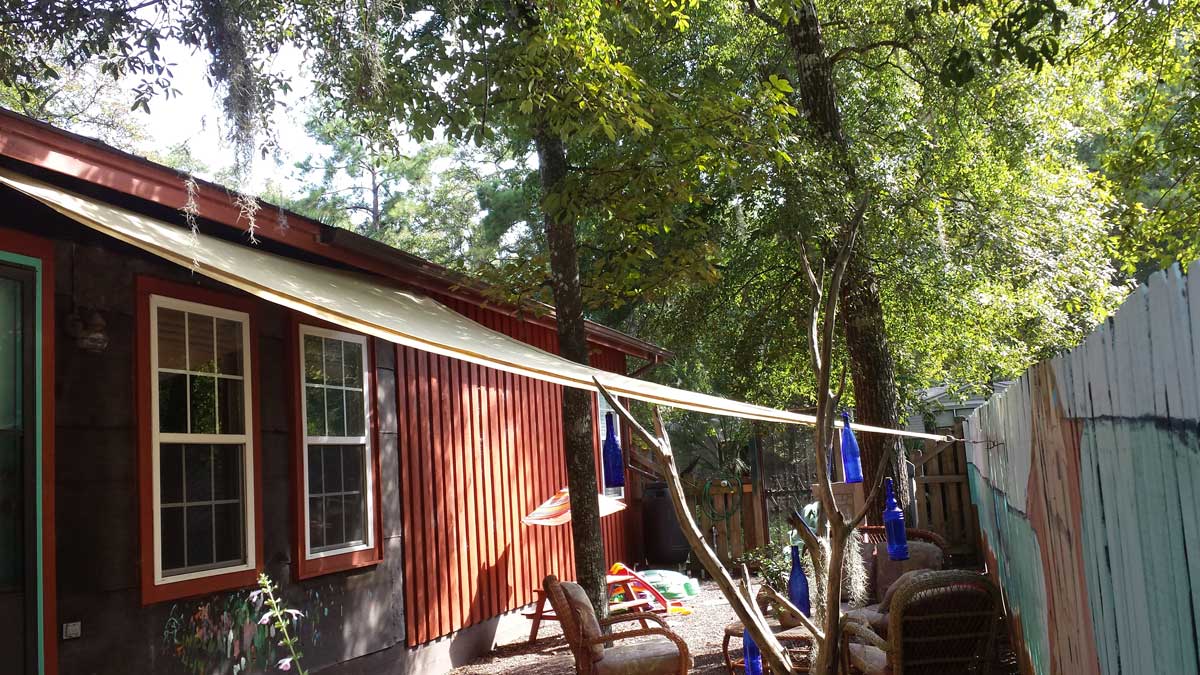
A completely dark house during the summer with all of the shades closed makes me depressed and drives me crazy. My husband, (aka energy police who I swear has some vampire blood running through him) would paint our windows green polka-dots if it saved on our electricity, so we made a compromise. I found this very affordable and stylish shade that we installed on the outside of our house over our windows that still lets the light through, but blocks the heat.
Would you like to save this?
You can also put up an umbrella outside your window to block the afternoon sun and pretend you’re at the beach! Or even install awnings or overhangs. A porch on the 2nd floor can act as an overhang for the 1st floor windows.
#8 – Vent the Hot Air Out
Use stove top vents, bathroom and laundry room vents to dump hot, humid air from cooking and showering outside.
Being frugal and trying to save on your electric bill isn’t just about your wallet. With every watt you save you are reducing your environmental impact.
#9 – Cool Down a Room or Get a Personal Cooling Fan
Close off rooms that are not in use, and focus your cooling efforts only where you need them. Figure out how to cool down a room or cool down people.
Cold air fans and personal fans targeting a small area use a lot less energy than cooling an entire home. This portable handheld fan comes with a rechargeable battery to provide cooling in your home or on the go.
Some of the best rated cooling fans for rooms include:
Vornado Large Whole Room Air Circulator Fan
Klarstein Silent Storm Pedestal Fan
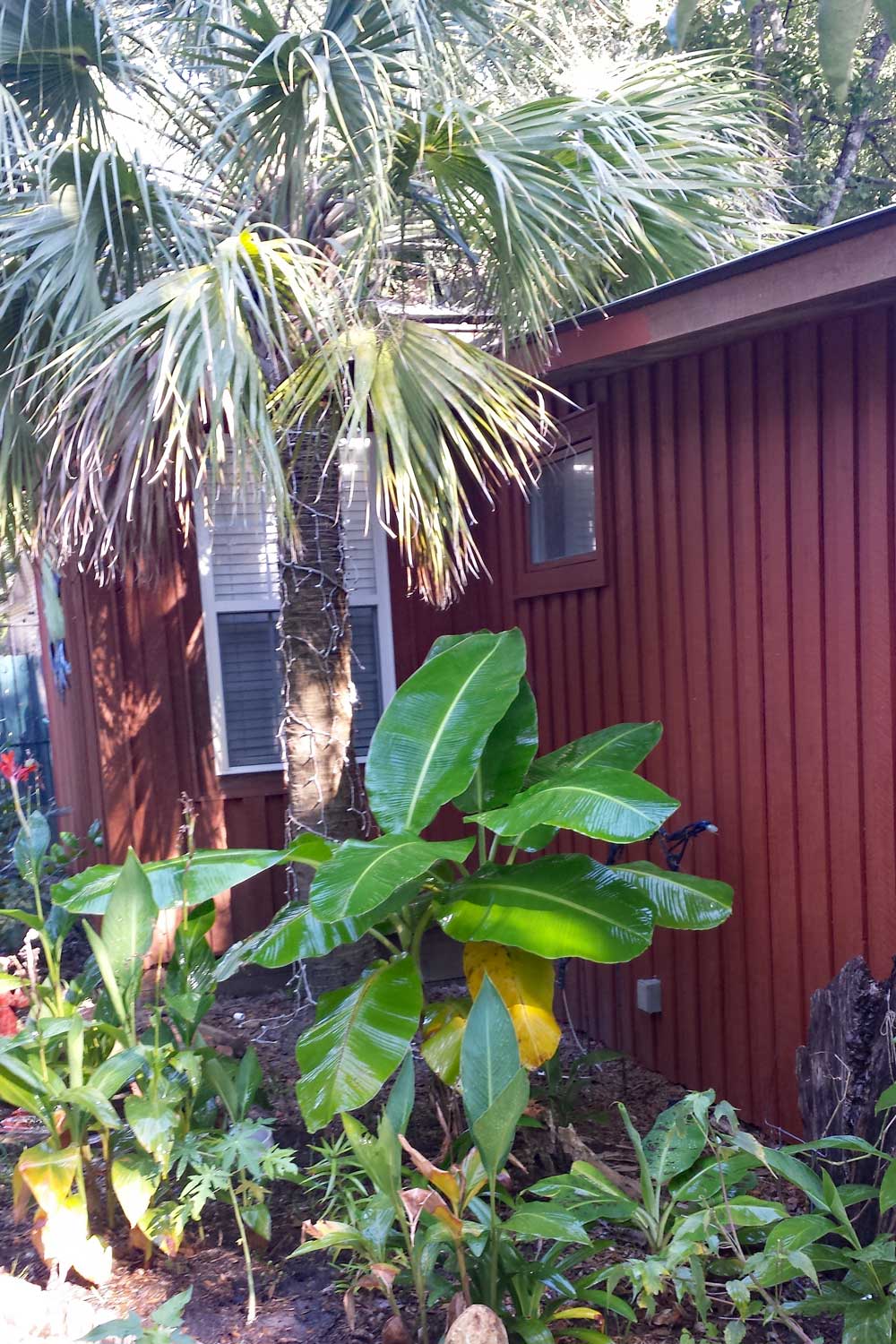
#10 – Plant Shade
This takes some time to establish and a little bit of planning but will provide you win-win results. A tree in full bloom can block over 70% of solar radiation from entering your home. Sun-loving, shade providing plants, trees and shrubs in front of windows that receive the afternoon sun to cool down your house and add beautiful landscaping to your yard.
Trees and foliage also lower surface and air temperatures by providing shade. They also breathe in CO2 and breathe out oxygen and water vapor (called evapotranspiration). Trees and foliage can reduce the temperature by 20 to 45°F (11–25°C) than the highest temper for un-shaded surfaces, such as asphalt. The difference will be less in your home but even a 5 to 10°F drop will make a big difference, a larger area helps increase the shading effect.
Keep any trees/plants in pots that need to be brought in during winter months or that have an aggressive root system.
Heat Tolerant Plants that Help Provide Shade:
- Sunflowers
- Corn
- Banana Plants
- Palms
- Cannas
- Dwarf Fig tree
- Lemon Grass
- Crape Myrtle Tree
- Mimosa tree
Editor’s note: In cooler areas of the country, just about any deciduous plant will do.
#11 – Get a Cool Roof
Have you ever gone out in the sun in a black t-shirt? Or thought about why DIY solar heaters are painted black? Because they absorb heat. So why are all shingles black?
Most shingles are black because they are made out of tar. Cool Roofs are ones that reflect sunlight.
Cool roofs stay cool, and reduce the amount of heat transferred to the home. According to the CRRC (Cool Roof Rating Council) if you do not have air conditioning, Cool Roofs can drastically reduce a home’s internal temperature. If you do have air conditioning, adding a cool roof can save the you up to 15% off your cooling bill.
So how do you get a cool roof? One of the most affordable ways is to paint your roof with a light colored paint specifically for roofs. Almost every type of roofing can be painted, even shingles, but before you start slinging a paint brush make sure you check with your roofing manufacture to see if painting it voids your warranty.
#12 – Invest in Better Doors, Windows and Insulation
While you’re checking out the roof, consider more energy efficient options for windows, doors and insulation. Better insulation and tighter seals will help you keep your home cooler in extreme heat and warmer in winter with less energy.
More Posts On Sustainable Living
- Solar Energy Questions and Answers, Pros and Cons
- What’s the Best Solar Cooker?
- Solar Emergency Gear – Lights, Power, Radios, and Ovens

This post is by Amber Bradshaw of My Homestead Life.
Amber and her family moved from their tiny homestead by the ocean in South Carolina to forty-six acres in the Smoky Mountains in East Tennessee.
While building their off-the-grid homestead, they live like the days of old – cooking without electricity, collecting water from the creek and raising chickens, goats, pigs, turkeys, bees, and guineas. They’ve recently filmed their journey for a TV show on the Discovery Channel and the DIY Network/HGTV called Building Off The Grid: The Smokey Mountain Homestead.
Originally published in 2014, last updated in 2018.
To cool down..put on a wet t-shirt….when it dries, remove it and put on another wet one!
Very good information..I will be following it.
They make roof shading systems, and a double roof works as well as long as both have adequate ventilation. make sure to place metal screening material that hornets and wasps cannot get into to save yourself the trouble of nests in impossible to reach places. You can also add double walls to your home that have space between the main wall and the outer wall. Make sure that they are an off tint of white or light cream color to save even more money and keep temperatures down.
Any idea about the cost to build something like this, and ongoing maintenance? We looked at envelope houses (double exterior walls) back when we built this place (2004), and at that time they were cost prohibitive.
In the thousands range to do it yourself upwards of $10,000 for the double roof because you have to buy the lumbar the metal sheets etc. The cloth system I spoke of costs about $5,000 but personally I would go for something more solid. I got an estimate for roofing with just the aluminum sheeting and it was $19,000.
Thanks a lot for publishing this post! It is very useful!
You’re welcome.
I live in a 1967 concrete block/no insulation house in central Florida- Orlando area- not by the water. Already we are having 100°. No breeze. We cannot have trees within 60′ feet. Of the house due to risk of hurricane winds blowing trees on the houses. The roof is a low slope 5 year old metal (no color, just shiny), 12/1.2 with no attic/crawl space to insulate. I have grown up using all the cooling techniques you mention that I can. It is not financially feasible for me to rebuild the roof to add insulation or add vinyl siding lined with insulation. Any other suggestions? I think you left out using good LED bulbs as they give off minimal heat. Thanks..
RE: LED lighting – see point #3:
Beyond that, I think the post covers most options that are readily available.
If you can’t plant trees, shrubs and shade cloth could still block sun gain from windows and exterior surfaces. Having more taller vegetation in the area (even if you can’t have it right next to the house) tends to create a cooler microclimate than pavement or lawn. This could make your yard slightly cooler than it might otherwise be, indirectly cooling your home.
You can find videos on YouTube on how to refit your home yourself cheaply using geothermal heating and cooling techniques. You can change the temperature inside your home by up to 30° by installing PVC pipes underground in your yard that connects to vents you install inside your home in each room. A small reversible fan inside the pipe allows you to control the airflow direction depending on the season. The cost of running the system is no more than what a small desk fan would cost you to run. This works because the temperature underground is always the same year round and because it is cooler underground during the summer and warmer underground during the winter than it is outside. The intake vents are screened installed with a small drainage box so you don’t have to worry about bugs, vermin, or rainwater getting in the pipes. The depth the pipes must be installed depends on your region and there are charts available online. I hope this helps.
Hey Amber, these are some great tips indeed. While reading tip #12, I remembered an article I saw on The Washington Post stating the The U.S. Department of Energy said that we can reduce our heating and cooling needs by almost 30% if we smartly insulate our homes!
How many people just never think about proper insulation! Anyways, great article!
this is great