
How to Infuse Herbs in Oil, Water, Vinegar, Alcohol or Honey

This post may contain affiliate links. Read my full disclosure here.
Looking for creative, easy ways to use homegrown herbs, or maybe you’ve tried some herb flavored oils or herbal vinegars and wondered about making your own? In this post we’ll cover how to infuse herbs in oils, vinegars, alcohols and honey. With just a few simple steps, you can make your own delicious flavored cooking oils, such as garlic olive oil, quickly and inexpensively.
Would you like to save this?
Remember – always follow basic kitchen safely rules. Containers should be clean and dry. Glass is preferred for storage because it is non-reactive. If you have a concern about your herbal infusion interacting with your jar lid (for instance, with herbal vinegars), place a layer of wax paper between the lid and the jar.
How to Make an Infused Oil, such as Herb Infused Olive Oil
The best oils to use for herbal infusions are pure plant oils such as olive, sunflower, coconut oil, or almond oil. The oil I use most is olive, because it has a longer shelf life at room temperature.
I wouldn’t advise the use of canola, corn oil or “vegetable” oil. Most of these will be made from genetically modified crops, which I do not recommend for consumption. (Read more here.)
Small batches are always best with infused oils, so they can be used quickly before they have a chance to go rancid.
I don’t recommend mineral oils, even for topical use. If I wouldn’t eat it, I try to avoid putting in on my skin.
You can use whatever proportion of herbs to oil you prefer, but if you feel you need a measurement, start with 1 ounce of dried herbs to 10 ounces of oil. Kirkland olive oil tested clean of contaminants, and is reasonably priced.
Solar Herbal Infusion
Solar herb infusions work best with olive oil, which is the most shelf stable liquid oil. To make a solar infused herbal olive oil:
- Finely chop your clean, dry herb. (Wash herbs only if really grimy, and dry well, as excess water can cause the infusion to spoil.)
- Place the finely chopped herb in a lidded glass jar, such as a mason jar or condiment jar. (This is a great use for old jars that can’t be used for canning but have wide mouths and good fitting lids.)
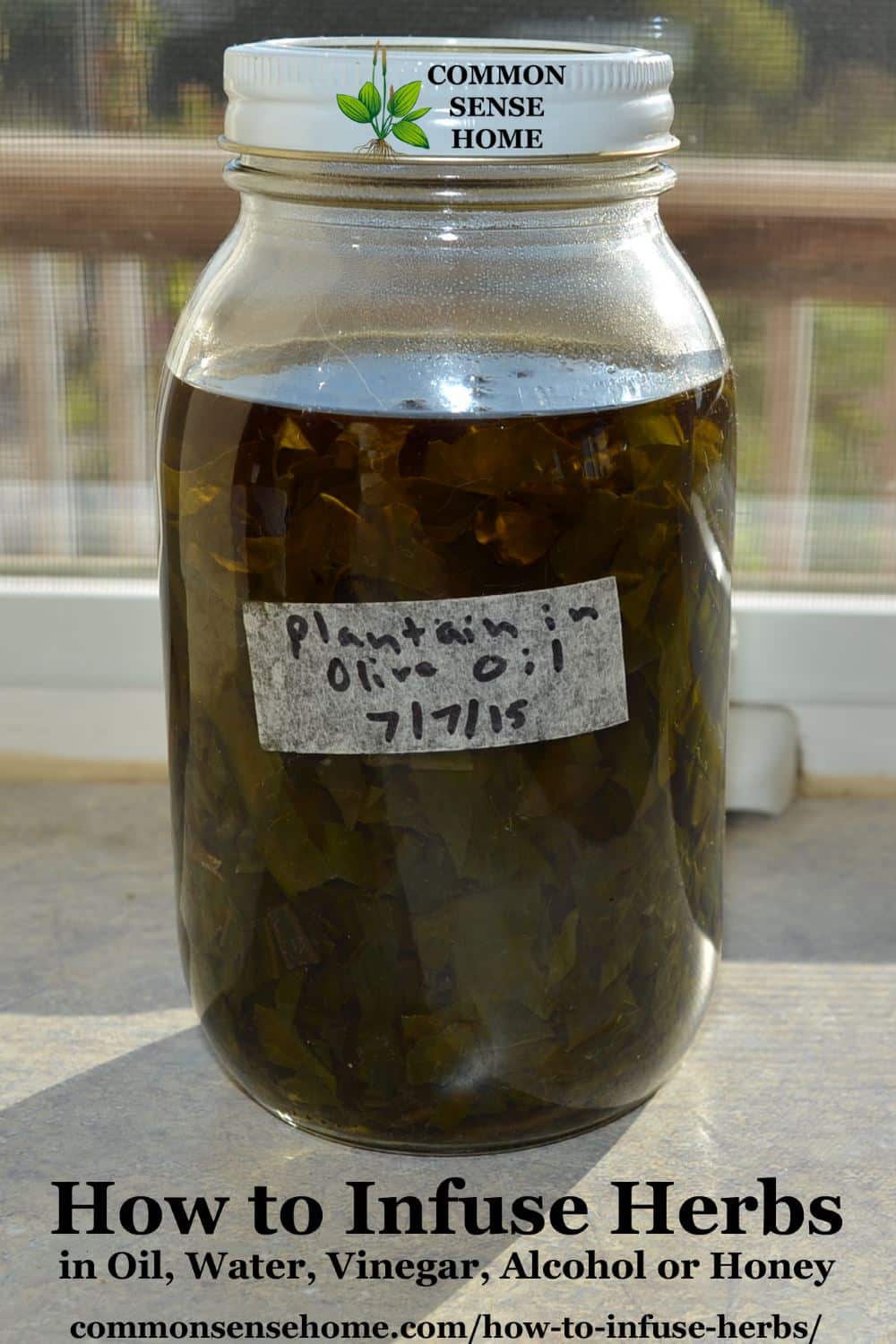
- Label the jar – for instance, “Plantain in Olive Oil’ and the date, as above. You’d be surprised how some chopped plants start to look similar to each other over time.
- Place the jar in a sunny window or other warm location for 2-3 weeks. Stir daily, pushing all plant matter below the level of the oil. Wipe off any condensation from under the lid or above the oil. Exposed plant material or excess water is likely to lead to mold.
- Strain out the plant material and pour oil into a dark glass container. Label with contents and date. Store in a cool location out of direct light to maximize shelf life.
This is the method I was taught by my herbal mentor, and is the method I use. Some people have expressed concerns over botulism because of the low acidity in involved. Botulism toxins exposed to sunlight are inactivated within 1 to 3 hours. If you are still concerned about botulism, I recommend infusing over direct heat following the directions below.
Direct Heat Herbal Oil Infusion
To quickly infuse herbs in oil for medicinal use or flavored cooking oils, you can use direct heat infusion.
For an oil infusion with fresh or dried herbs:
- Place your herbs and oil a double boiler, thick bottomed pot, or clean glass jar set in a pan of water.
- Simmer the herb and oil mixture on low for 4-6 hours for medicinal use, as long as needed for flavoring (30 minutes may be enough for a lightly flavored oil).
- Strain, cool, bottle and label with date and contents.
- Store in refrigerator.
Most people who use this method will only infuse fresh herbs if they are going to be used the same day.
For food items such as garlic or citrus peels, you should only use the direct heat infusion method and make the oil in small batches. Store in the refrigerator, and use within two weeks to eliminate the risk of botulism. Cold will slow, but not eliminate, the development of botulism spores.
Garlic and citrus are both naturally anti-bacterial (as are many herbs and spices), so risks are minimal, but we always want to error on the side of caution. Plus, fresh oils taste better!
Infused oils make a great base for homemade salves, such as plantain salve, which I always keep on hand for bug bites, bee stings and other minor skin irritations. Flavored oils such as chive or basil can be used as cooking oils and make lovely gifts.
Note: If you want olive oil with herbs for dipping, just go ahead and mix your favorite herbs right in your oil and serve, or allow to sit for a few hours before serving to infuse the flavors more strongly. Discard any unused herbal oil.
How to Infuse Herbs in Water
Water based infusions are similar to making tea, except that an infusion steeps longer. Most teas steep for 3-5 minutes to keep them from getting bitter.
Herbal infusions or medicinal herbal teas should steep for a minimum of 10-15 minutes. This will make them stronger and more bitter in many cases, but those bitter compounds are part of the medicine.
Experiment with different herbs and infusion times to see how it influences the flavor. Note: If you are under the care of a trained herbalist, follow their dosing and brewing instructions.
You can use a muslin tea bag or stainless steel tea infuser (this infuser is easy to fill and clean) to hold your herbs, but I generally prefer to leave my herbs loose and then strain after brewing.
To make a water based herbal infusion:
- Place one tablespoon of dried herbs or three tablespoons of fresh herbs into a ceramic teapot, mug or mason jar for each cup of tea you intend to brew.
- Cover herbs with boiling water.
- Place on the lid (or cover your cup with a saucer) and let steep for 10-15 minutes or overnight.
- Strain and drink.
I regularly make infusions of oatstraw and nettles for general health and wellness. Mint is great for soothing sore tummies. You can read about herbs and spices that boost you immune system here.
How to Infuse Herbs in Vinegar or Alcohol
When you infuse herbs in alcohol or vinegar, it is commonly referred to as a tincture when used medicinally, but you can make some very tasty flavored vinegars and drink mixers, too.
Which Alcohol to Use?
For alcohol based infusions, I watch for sales on vodka, and prefer those in glass jars over plastic. I figure if the alcohol can draw compounds out of the herbs, it may attack the plastic, too.
If you want to make baking extracts, vodka has the most neutral flavor, but other alcohol such as rum or brandy pairs well with vanilla and some other flavors.
See How to Make Homemade Extracts – Vanilla, Lemon and Almond and Easy Chocolate Mint Extract Recipe for more info.
Which Vinegar to Use?
Raw apple cider vinegar is a staple in my kitchen (this is our favorite brand of ACV), so I use that for most vinegar infusions. If you want to switch things up, you can use different types of vinegars.
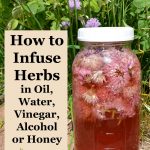
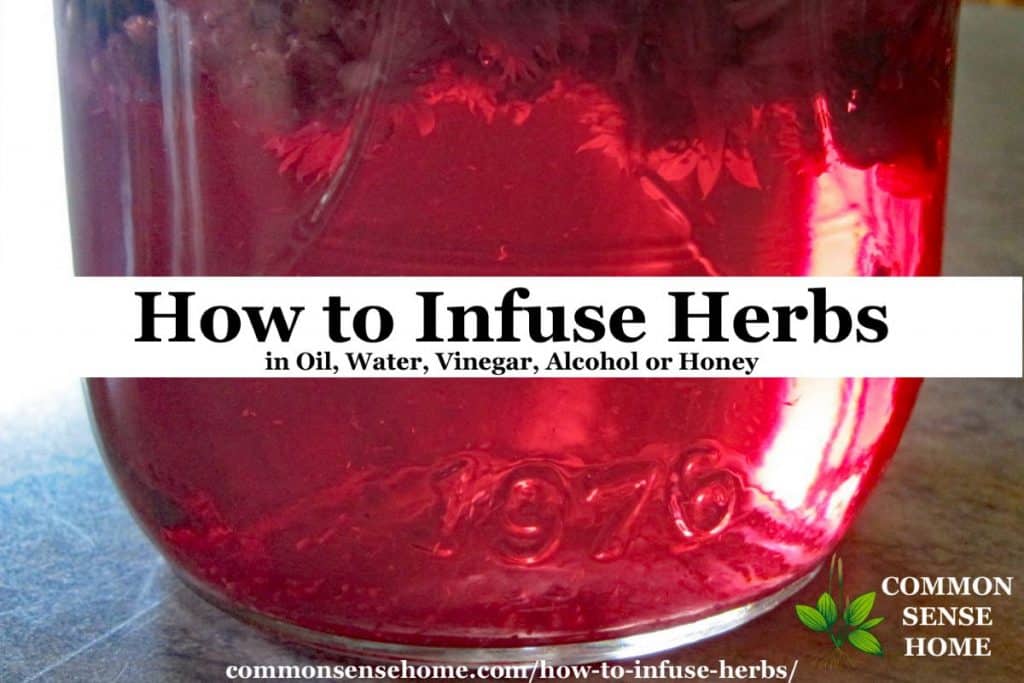
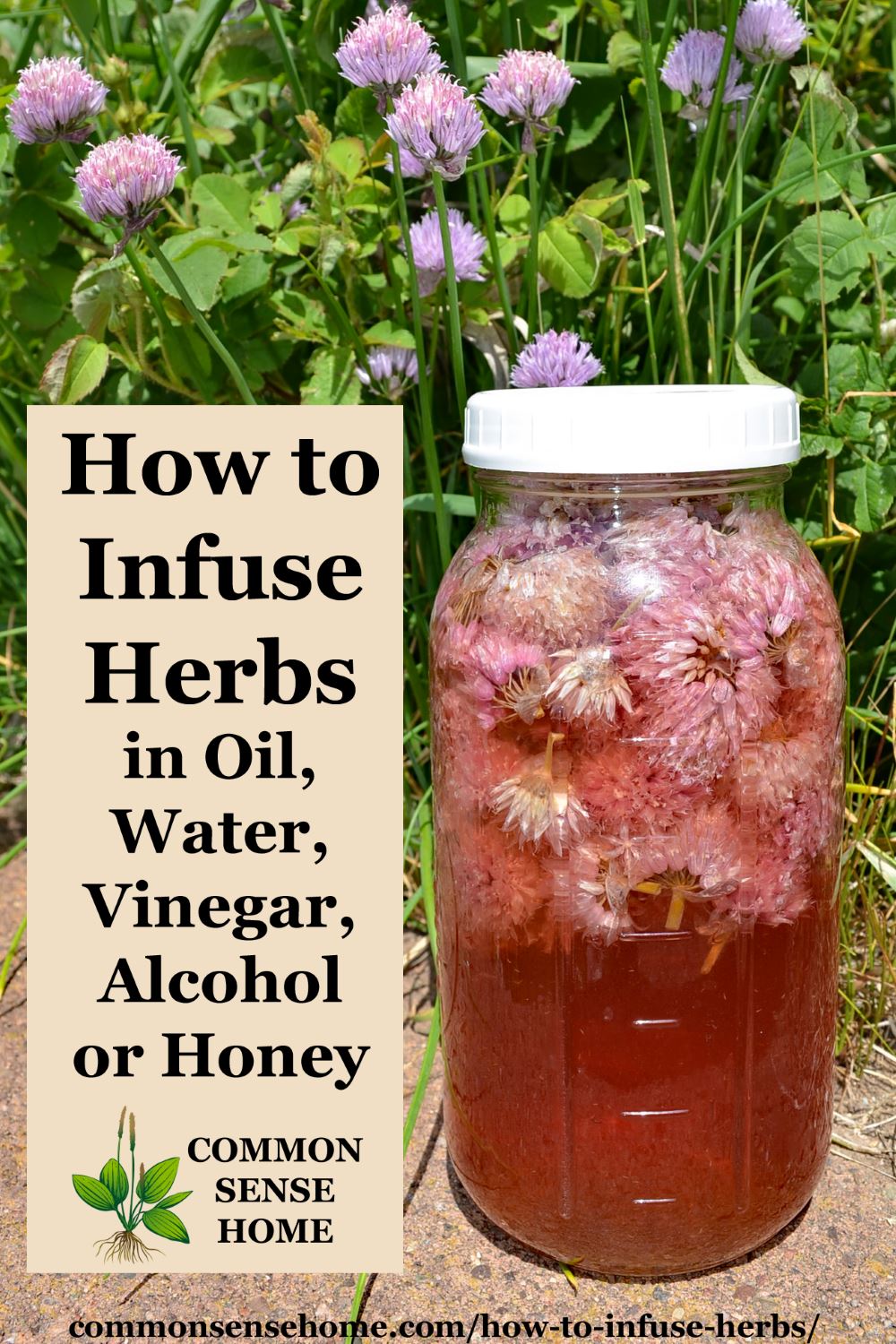
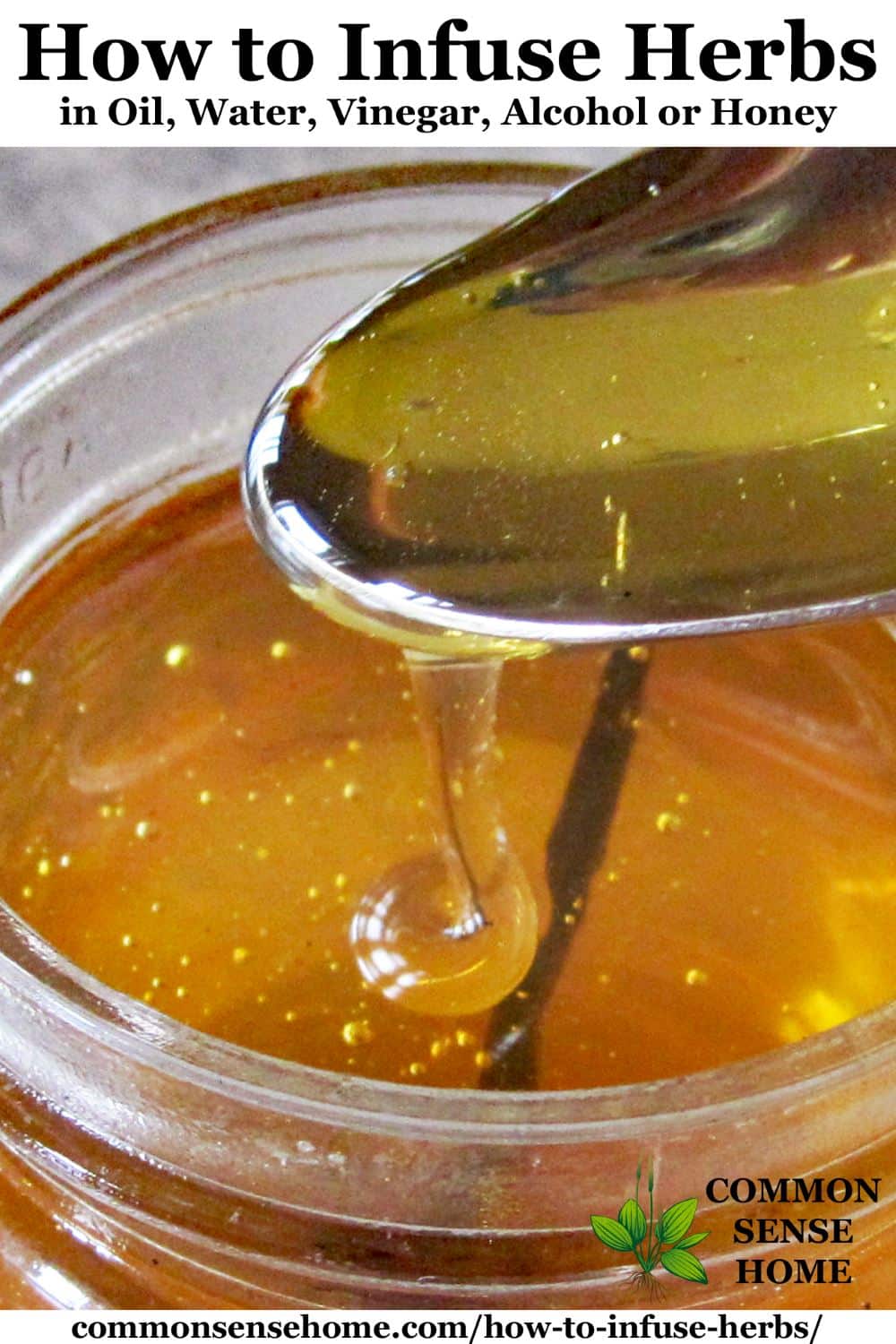
White wine vinegar turns hot pink when infused with chive blossoms. (Photo at top of post is chive blossoms and apple cider vinegar, wide photo is chive blossoms with white wine vinegar.)
I don’t typically use white vinegar for cooking, but it will work if that’s your preferred vinegar. I do sometimes pack a jar with citrus peels and white vinegar to make a natural citrus cleaner.
Herbal vinegar is ready in about two weeks, and is best stored in a bottle with a cork or other non-metallic lid. I often save my vinegar bottle and put the vinegar back in once it’s done infusing.
To make a basic alcohol or vinegar tincture:
(Adapted from Holistic Herbal)
- Place 4 ounces by weight of dried chopped or ground herbs (twice as much for fresh) into a glass jar with lid that can be tightly closed.
- Pour 1 pint of 30% (60 proof) vodka on the herbs, close the container tightly.
- Label with contents and date.
- Keep the container in a warm place for two to six weeks and shake it well twice every day. This one shouldn’t go in direct sun, but on the kitchen counter is fine.
- Strain out the plant material – it makes great compost. Don’t be afraid to squeeze it dry. You can let it settle before bottling or strain through a coffee filter if a clearer product is desired.
- Pour the tincture into a dark bottle (or store out of direct light). Don’t forget to label it with the contents and date. Pretty bottles of food stuffs look lovely on display, but light speeds the breakdown of many compounds in the food/medicine. When you’re trying to break down plant material to transfer its compounds into oil, this makes sense, but not for long term storage.
Susun Weed’s tincture making method recommends filling the jar with fresh herbs, filling it with 100 proof vodka making sure all the herbs are well covered, sealing, labeling and letting it stand for six weeks before straining. Sometimes she doesn’t even strain, just dips some out of the bottle and leaves the plant material in. She says she’s kept some this way for years with no loss of potency. I regularly use this method, because it’s quick and easy.
Is it Better to Infuse Fresh Herbs or Dry Herbs?
Susun Weed prefers fresh herbs, some sites recommend only dry herbs. Some recommend infusing in warmth and light, others recommend cool and dark. I think it’s a matter of working with what you have. I do oils in the sun, tinctures out of direct light, and I typically use fresh herbs for both. With water infusions, I’ll often use dry herbs.
Dandelion Aperitif
Adapted from Healing Wise
Ingredients
- 2-3 cups fresh dandelion blossoms
- 2/3 cup sugar
- rind of half a lemon
- 1 quart vodka
Directions
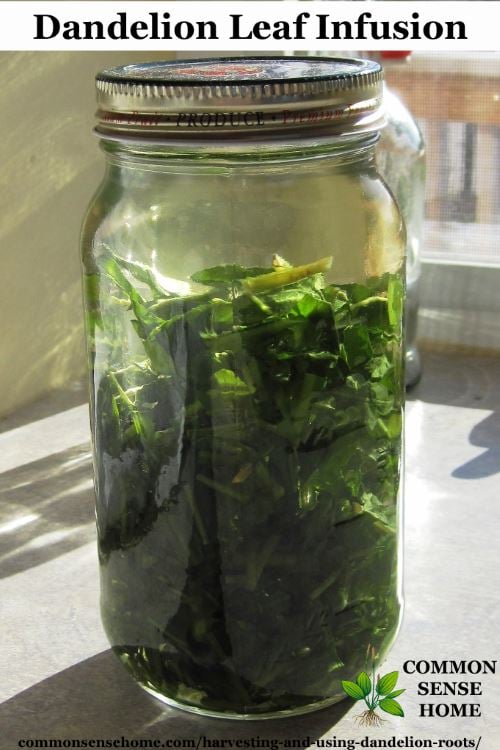
Do not wash flowers. Cut off green. mix all ingredients together into jar; cap. Shake daily. Wait two weeks, then strain and enjoy with ice and lemon, or hot with water and honey, or by itself before or after meals.
This recipe can be made with any edible flower or herb. See Top 10 Edible Flowers Plus Over 60 More Flowers You Can Eat for a list of edible flowers.
How to Infuse Herbs in Honey
You can also infuse herbs in honey. (I made some vanilla honey for Christmas gifts last year – so yummy!)
The flavor takes a little longer to permeate the honey, so I’d recommend a minimum of a month on this one, although if you are using strongly flavored herbs, two weeks may be enough.
For vanilla honey, add one or two chopped vanilla beans per cup jar, depending on the size of the bean and whether they’ve been previously used. (I used beans that had previously been used to make ice cream and let them steep for three months.)
Rose petals, mint, anise, chamomile and lavender are other popular choices for flavoring honey. 1 to 2 tablespoons of herbs per cup of honey should be plenty. Mild honeys, such as clover honey, work best for flavoring.
Want to learn more about how to use herbs? Check out the courses at The Herbal Academy, such as The Introductory Herbal Course or Herbarium online herbal library.
You may also find useful:
- Simmering Potpourri – A Natural Way to Freshen Indoor Air
- How to Make Elderberry Wine
- How to Grow Stevia and Make Homemade Stevia Extract
Originally published in 2012, updated in 2017.
I have been making plantain infused oil, arnica and ginger for another oil as well… ;0)
Hi what do you use the infused oils for. New to this
They’re typically used in cooking – hot or cold, depending on your oil choice and herb choice. You can use as a simple salad dressing with a splash of vinegar or lemon, or sauteing vegetables. Garlic and green beans pair very well.
I have tried to infuse plantain with vinegar. It has worked for itchy spots (such as mosquito bites) and poison ivy.
This is all new to me and I can’t wait to learn more about it. I love using thyme, so maybe would use it first.
There’s so much interesting information here!
It’s hard to decide what to do first but I may try some comfrey because it is something I am finally growing here now. No wait, I have plantain too, maybe I’ll do both first! 🙂
Thanks for the helpful information! I really would like to make some real vanilla extract and some stevia extract..I will give it a try 🙂
I would like to make a comfrey infused oil.
Wow – great info here! I’ve pinned and shared on FB 🙂 As much as I love to cook and make things from scratch, I’ve never actually made an herbal infusion. So I can’t wait to follow the directions you have here for making herbal oils and herbal tinctures. Also really like the book giveaway – thanks for that!
I have some comfrey drying. And I have my first herb garden growing. I’m not sure I’ll be able to harvest anything this year as I would rather have an established herb garden, but we’ll see how it goes. 🙂
I’m growing horehound and will use it in honey for a throat syrup. Thanks to your blog I might even know what I’m doing now 😉 I can’t wait for your post on nettle. I checked out Healing Wise by Susun Weed from the library and LOVED it! I might have to buy it if I don’t win it. Thanks for the opportunity.
Lori – the nettle post is live – https://commonsensehome.com/nettles/
Just wanting to know… How would you go about making an extract or is the process the same as a tincture…??? What about using Everclear as opposed to Vodka for that…??? Is it too strong for extracts…???
Kate – yes, you make extracts the same way. I made a very yummy vanilla extract by mixing a couple different types of beans. Orange and almond extract are also very easy – just use orange zest strips and almonds. Everclear will work, but not exactly the same. It may be more bitter, for instance. More info on that here – http://chowhound.chow.com/topics/732579
How wonderful – gosh I just made some comfrey ointment and really enjoy using it – it is very healing. Plantain salve will be next on my list!
http://africanaussie.blogspot.com.au/2012/04/rainy-day-makes-way-for-experiments-in.html
and then try combinations of your herb.Comfrey and plantain are good together.
The infusion of herbs and honey is very common in Yemen- for adults and children. I use it regularly with my family, especially for coughs and stomach issues. It was so good to see this much ignored practice mentioned here- thank you for a great post!
Hey, thanks for the shout out! We’re brewing up some herbal goodies this week! See you tomorrow for Wildcrafting Wednesday!
I just recently started some vanilla extract in vodka – SO EXCITED! I also made some plantain olive oil a while back that I’ve been meaning to make into some salve with comfrey and calendula. And on my to do list next is to infuse some home made wild-fermented apple cider vinegar with rosemary. I heard recently that rosemary is good for dandruff, and my boyfriend and I have both been having a few more flakes than we’d like lately… But the rosemary vinegar will work perfectly for me because I have switched from shampoo to baking soda followed by cider vinegar. I am so inspired by your chive vinegar! I have some healthy garlic chives growing right now, so I may have to try it myself.
I’ve been making rosemary vinegar for my hair rinse for a few years. But yesterday I just strained out nettle and hibiscus. It is a glorious blood red color.
Great ideas! have to flavor me some vodka:)
I enjoy reading about the how toos of all these things, but once I have them in the jars it’s like—-Now what? I haven’t found a site that will help tell which herbs are best for what as an oil/tincture or best infused with honey/alcohol. It’s all mind boggling to me. Anywhere I can go and sort this all out, or does one just need to hunt here and there?
Judi – if there is one “how to” for all things herbal, I haven’t found it. I discuss two of my favorite books in this post – https://commonsensehome.com/getting-started-herb-gardening/ Susun Weed’s books are more intuitive, but I enjoy them, too, just for that reason.
Different cultures use herbs differently, and of course, different herbs grow around the world. I think it would take a lifetime or two to even make a dent in what can be done with them. Simply start where you are with what you have, and experiment with one new use at a time.
Hi, Judy. All herbs have own health benefits. Whatever herb you used, just google name of herb health benefits. Honey, alcohol and vinegar are extractors of all goodness from a plant, some of them getting more of goodness than others. Personally I thing alcohol would get more out of plant. English is not my first language, sorry for mistakes.
Olia
Hi, Judi. I realize I am replying long after your original question about herbs, but I have recently been taking classes from a woman who teaches herbalism at Bastyr School of Natural Medicine in Seattle. She has strongly recommended Rosemary Gladstar’s books on herbal medicine making, and I have found them to be excellent. They go over which herbs for various symptoms, as well as how to make truly lovely, very high end body creams and lotions with those infused oils, honeys, etc. Good luck!
I say play. what herbs and or spices are around you. do you want honey, or water, or oil…It is going into your body. have fun.
Watch “Green Witch” type videos on YouTube. All will become crystal clear and simplified?
Today I am infusing my own honey with my own herbs. I’m starting with lemon thyme honey for sore throats.
How did it turn out? What amounts of each did you use?
I do not have herbs yet but am very interested in learning what I need to grow to do this.