
Homemade Salsa Recipe for Canning

This post may contain affiliate links. Read my full disclosure here.
‘Tis the season for garden-fresh tomatoes, peppers, and onions. One of our favorite ways to enjoy them all year long is with a tested salsa recipe for canning. This classic tomato salsa is packed with flavor and safe for water bath canning when prepared as written.
We’ve been making this home canned salsa for years, and it’s always a hit. Whether we’re scooping it up with tortilla chips, or spooning it over tacos, it’s always delicious. Once you’ve made homemade salsa, the store-bought versions just don’t compare.
Would you like to save this?
This salsa recipe is similar to a popular commercial brand, but we like ours better. You can taste the difference in canning salsa with your fresh local produce at the peak of ripeness.
Note: Though the recipe contains vinegar, it does not have a strong vinegar flavor like the Ball Blue Book salsa recipes. We tried those and no one in the house liked them.
Table of Contents
Quality Ingredients Count
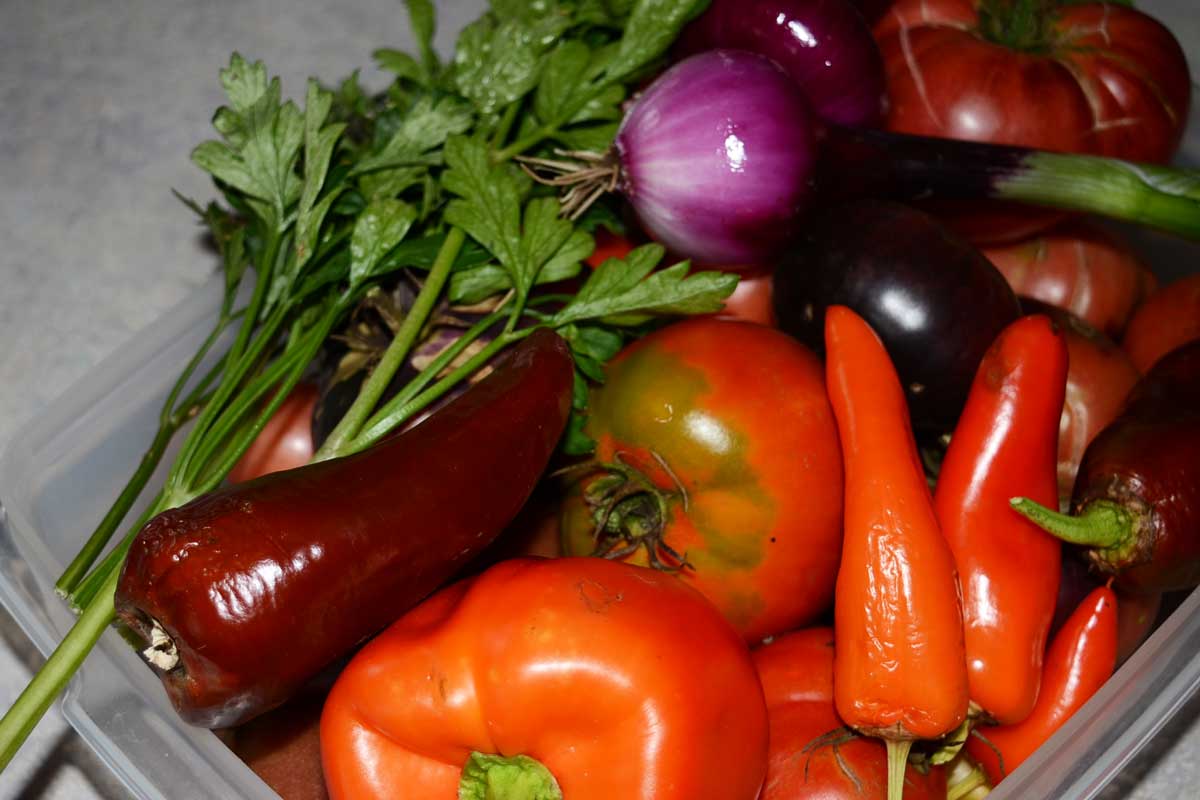
When it comes to making homemade salsa, fresh ingredients are key. Start with the right type of tomato. Paste tomatoes are best, as they have more “meat” and less juice and seeds.
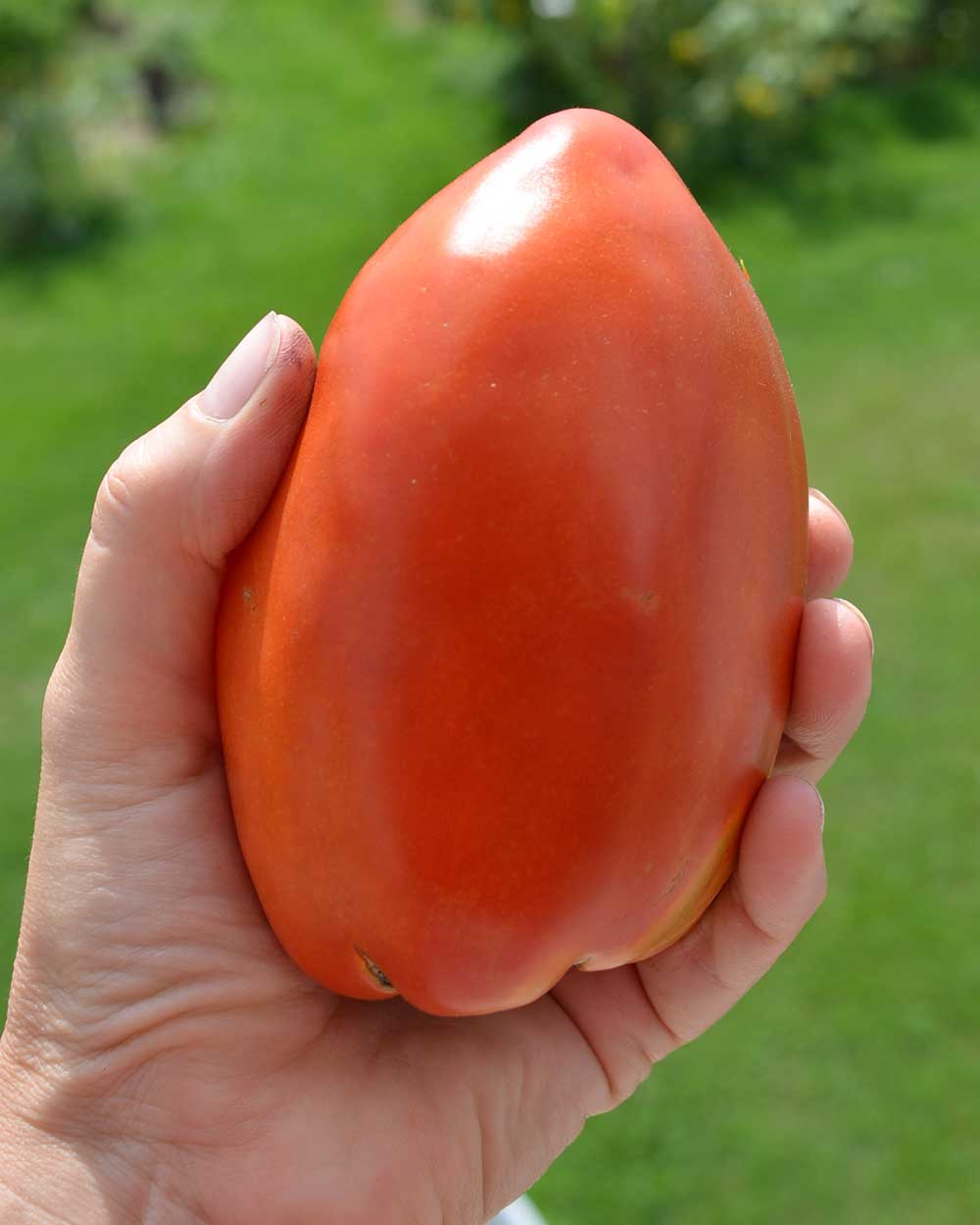
We love salsa so much that we’ve been saving seeds, adapting the variety “Opalka” to local conditions. These beauties are often one to two pounds per fruit, which means a lot less peeling. We keep them isolated in the garden, away from other tomato plants.
Organic spices are great if you can get them. Cilantro gives you a more authentic flavor, but my parsley grows much better than my cilantro. I’m also one of the people who think cilantro tastes like soap, so I usually use parsley.
Use any type of sweet peppers – red, yellow, orange or green bell peppers, or banana peppers. Just don’t exceed one cup chopped per batch. Any type of hot pepper is fine, too. Use what you have, selecting the heat level that’s right for you.
For thickening, either tomato paste or tomato powder will work. Paste is usually easier to find in stores, but powder is a little easier to use. It takes half as much powder as paste.
E-Z Gel and Clear Gel are ultrafine cornstarch, and also help thicken the salsa. They are recommended over corn starch for canning because they don’t form clumps in your recipe. I like E-Z Gel best, as it blends more easily.
Salsa Recipe for Canning
Note: For safety, do not increase the amount of low-acid ingredients like onions, garlic, or peppers. You can safely reduce them if you prefer a milder flavor, but do not reduce the vinegar.
Ingredients
- 20-22 pounds of tomatoes
- 3 cups onions, finely chopped
- 2 cloves garlic, minced
- ¼ cup fresh cilantro or parsley, finely chopped
- ¼ cup celery, finely diced
- 1 cup assorted mild peppers, finely chopped
- 4 hot peppers, finely chopped
- 2 Tablespoons sea salt
- 1 Tablespoon dried oregano leaf
- ½ teaspoon black pepper
- 1 teaspoon ground cumin (optional, but recommended)
- 1 teaspoon chili powder (optional, for more heat)
- 1 cup 5% apple cider vinegar
- 3 6-ounce cans tomato paste, or 9 Tablespoons tomato powder (optional, for thicker salsa)
- ¼ cup E-Z Gel or Clear Gel (optional, for thicker salsa)
Prepping the Tomatoes
Blanch and skin the tomatoes. To blanch tomatoes, place them in boiling water for 30 to 60 seconds, until the skins start to split.
As soon as the skins start splitting, remove the tomatoes and place them in a cold water/ice water bath. This stops the cooking so they don’t get mushy, and makes them cool enough to handle for peeling. Slip off skins.
To finish the tomato prep, dice the tomatoes into chunks and remove seeds. Place in colander to drain off excess juice. If you like, strain the juice and drink it or can it separately. With our Opalka tomatoes, there isn’t much extra juice.
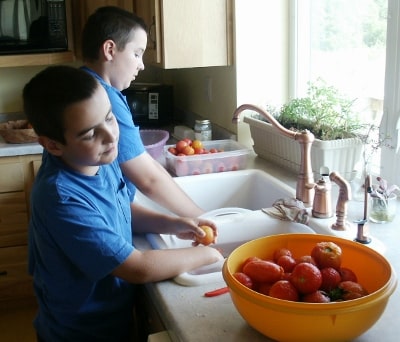
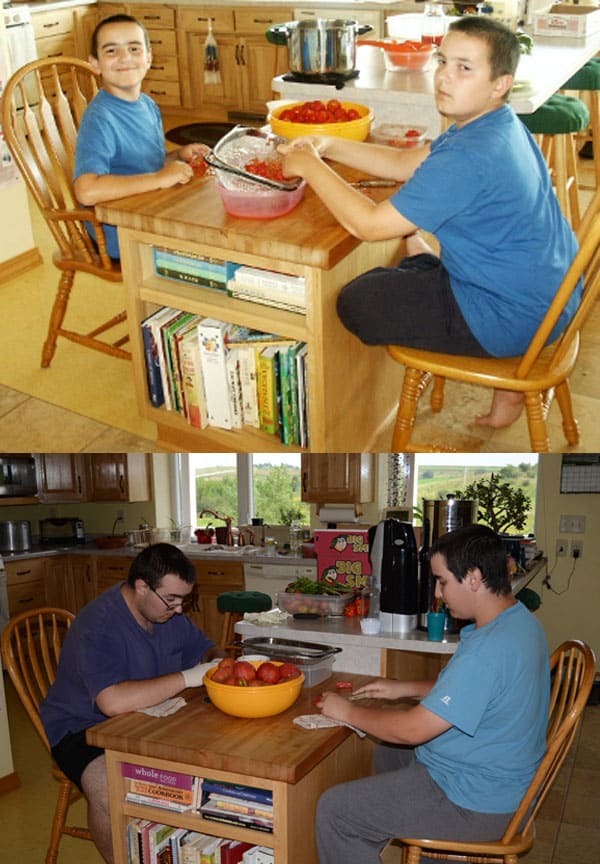
In our kitchen, the boys chop tomatoes while I prep the rest of the ingredients.
Prepping the Rest of the Salsa Ingredients
Finely chop onions, garlic, cilantro (parsley), sweet and hot peppers using a knife or food processor.
Caution: Use gloves when handling and chopping hot peppers. I leave the hot peppers until last to minimize risk of spreading the hot pepper juice around my work area.
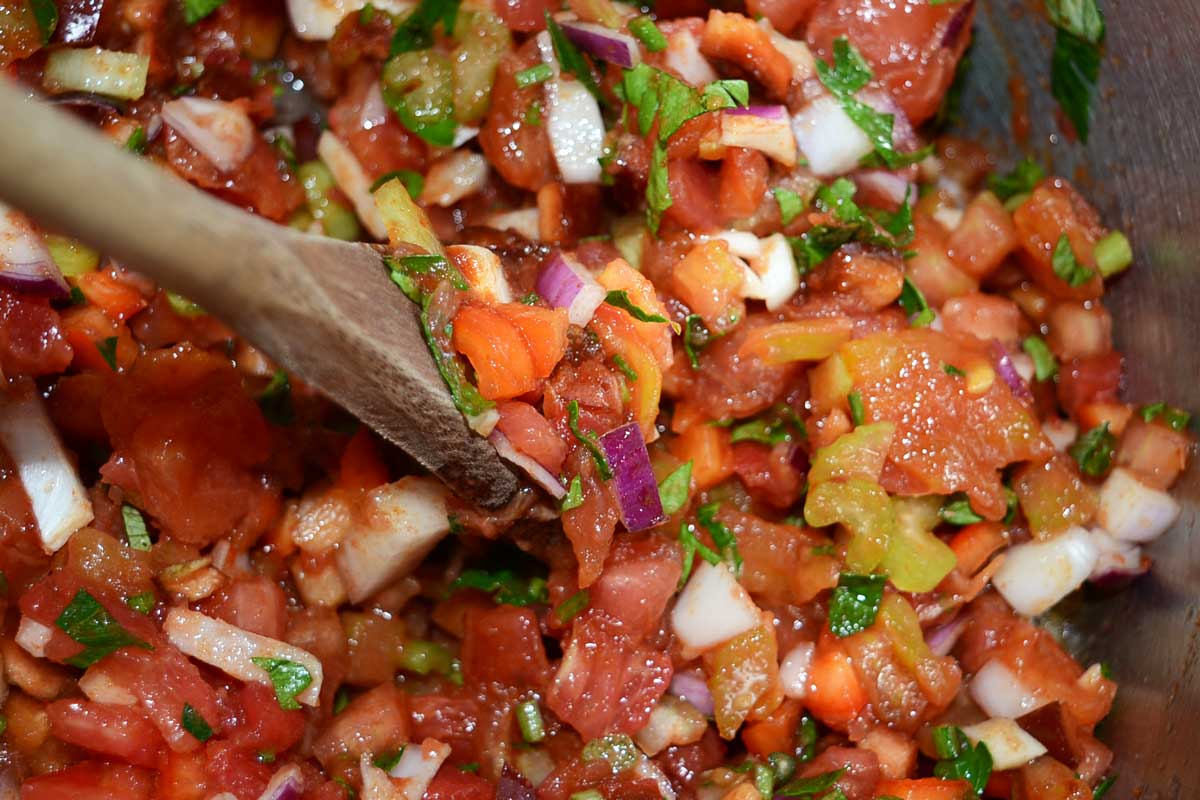
Place all salsa ingredients except vinegar and E-Z Gel in a large stockpot. Dissolve E-Z Gel (if desired) in vinegar, add vinegar mix to stockpot. Mix salsa thoroughly.
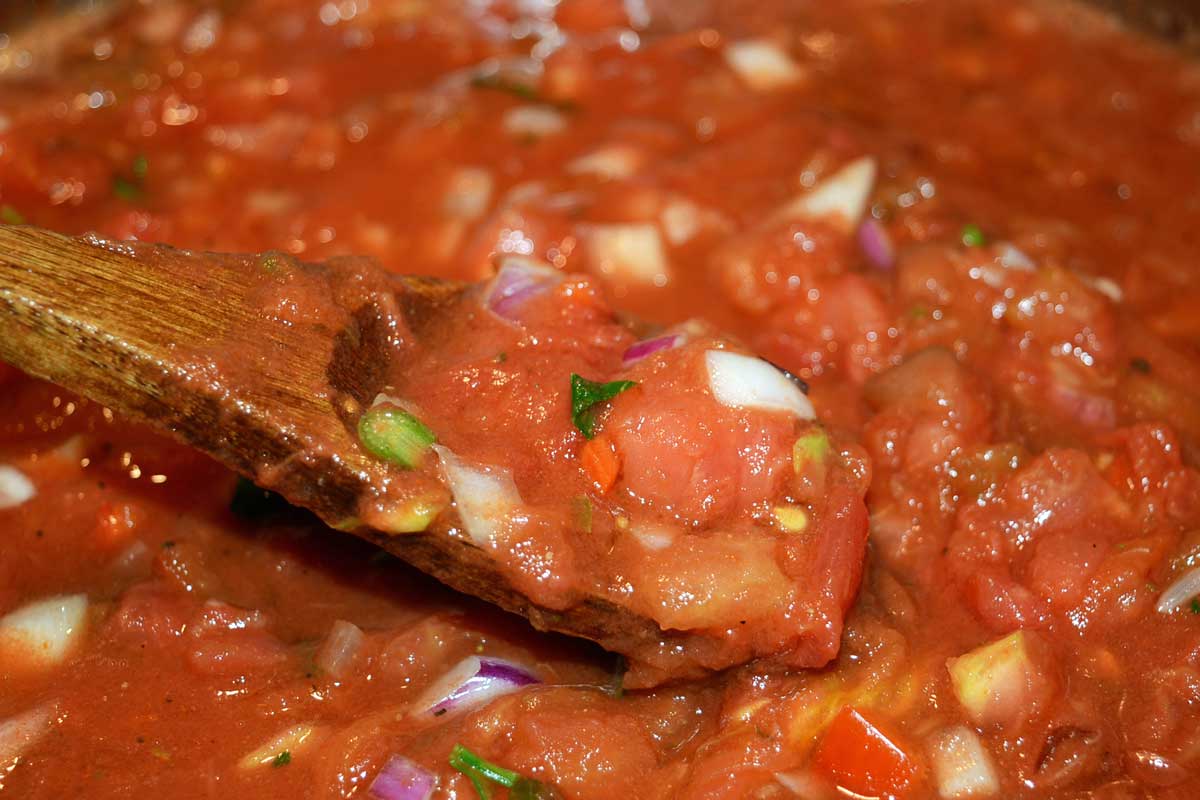
Heat the salsa to a gentle simmer. There is no need to cook it; you just want to get hot enough for canning.
Canning the Salsa
Prepare canning jars, two piece canning lids and hot water bath canner. Your canner will need time to heat up for processing. I put my canning jars in the canner water to heat them up, too.
Never fill cold jars with hot salsa! The difference in temperatures may cause the glass to break. You can heat them in the canning water, in a warm oven, or in the dishwasher.
Fill the jars with salsa, allowing 1/2 inch headspace from the top of the jar. Remove air bubbles. Wipe rims for any spills. Seat the lids and hand-tighten the rings around them.
For water bath canning salsa: Place the jars in the pre-heated canner. Make sure they are covered with at least 1 inch of water.
Bring to a boil and start the timer. Process the jars in a boiling-water bath for 15 minutes for 8 oz and pint jars.
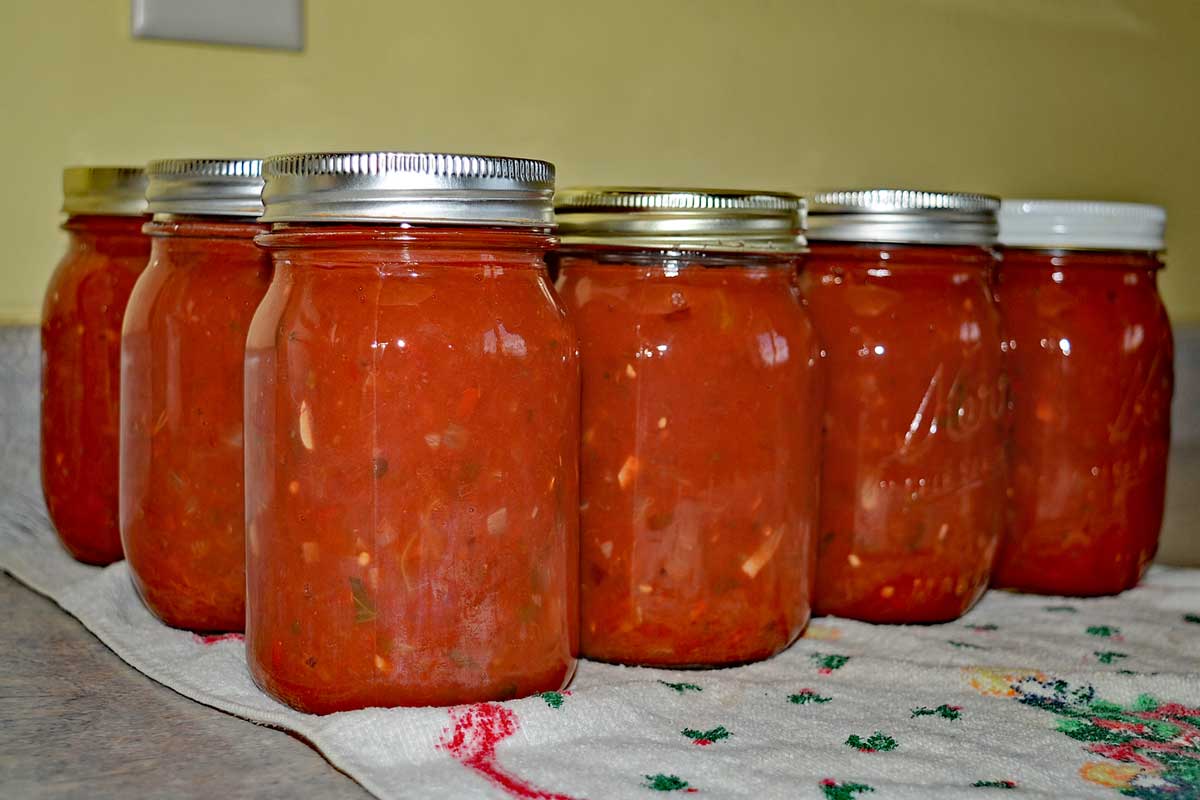
When processing time is done, turn off heat, remove lid and wait 5 minutes to remove jars. Remove jars from canner. Place 1″ apart on a kitchen towel on the counter top. Let the jars sit to cool completely (12 to 24 hours).
Remove rings and check seals. (Center of lid will not flex if properly sealed.) Wipe any drips, label and date and store in a cool, dry location out of direct sunlight. Best used within one year.
Makes around 12 pints. (16 to 18 pints with our Opalka tomatoes.)
Is your favorite salsa recipe safe for canning?
Thinking about canning salsa, but not sure your favorite salsa recipe is safe?
Some safety tips for canning salsa include:
- Always follow basic kitchen safety rules. Wash hands, equipment and produce, and use canning jars and lids that are in good condition.
- Add acid, such as bottled lemon juice, vinegar, or citric acid to lower the pH. For water bath canning, pH should be ≤ 4.6. Use a pH strip to test if you are not sure.
- Lemon may be substituted for vinegar, but vinegar may not be substituted for lemon. (Vinegar is less acidic then lemon.)
- Use purchased vinegar with 5% acidity (homemade vinegar may be less acidic). Acidity level is important for safe home canning.
- Use ripe, firm tomatoes, preferably paste tomatoes. Don’t used fruit that is overripe or rotting. Remove tomato skins to lower pH.
- It is safe to add additional dry spices such as salt, pepper or ground cumin. Do not add extra low acid fresh ingredients such as peppers or onions.
- Do not use flour or cornstarch for thickening, only canning safe thickeners like Clear Gel.
- Store home canned salsa in the refrigerator after opening.
- Store any jars that did not seal (or opened jars) in the refrigerator and use within 2 weeks.
- Do not eat home canned salsa with bulging lids, off smells or any other signs of spoilage.
If you want to store your favorite salsa recipe, but are not sure if it’s safe for canning, try freezing instead. You can also refrigerate fresh salsa and use within one to two weeks.
Check it out at Safe Salsas for Canning for additional information.
Altitude Adjustments
If you are at an altitude higher than 1,000 feet above sea level, adjust processing time as indicated.
Altitude Feet Increase Processing Time
- 1,001- 3,000 5 minutes
- 3,001- 6,000 10 minutes
- 6,001- 8,000 15 minutes
- 8,001-10,000 20 minutes
FAQ
You can substitute bottled lime juice in equal amounts. Do not use fresh lime juice, as acidity may vary.
Yes. You can omit cilantro or stir in fresh herbs after opening the jar.
You can, but it’s unnecessary for this tested recipe. Processing time and temperature can vary, and texture may change.
Separation is natural. Tomato solids may float while liquid settles below. Shake gently before serving.
Yes. Meaty paste tomatoes like Roma or Amish Paste give thicker salsa with less simmer time.
Salsa Recipe for Canning
This home canned salsa recipe rates an “Awesome” from friends and family alike. Hot or mild – you choose how spicy you like it.
- Prep Time: 1 hour
- Cook Time: 15 minutes
- Total Time: 1 hour 15 minutes
- Yield: 12 pints 1x
- Category: Condiment
- Method: Canning
Ingredients
- 20–22 pounds of paste tomatoes
- 3 cups onions, finely chopped
- 2 cloves garlic, minced
- 1/4 cup fresh cilantro or parsley, finely chopped
- 1/4 cup celery, finely diced
- 1 cup assorted mild peppers, finely chopped
- 4 hot peppers, finely chopped
- 2 Tablespoon salt
- 1 Tablespoon dried oregano leaf
- 1/2 teaspoon black pepper
- 1 teaspoon ground cumin (optional)
- 1 teaspoon chili powder (optional)
- 1 cup 5% apple cider vinegar
- 3 6–ounce cans tomato paste or 9 Tablespoons tomato powder(optional)
- 1/4 cup E-Z Gel or Clear Gel (optional)
Instructions
- Prepare jars, lids, and bands. Wash in hot, soapy water and rinse well. Keep jars warm until ready to fill. Fill water bath canner and start it heating.
- Blanch and skin the tomatoes. Remove seeds, chop into chunks, and drain.
- Finely chop onions, garlic, cilantro (parsley), sweet and hot peppers. Caution: Use gloves when handling and chopping hot peppers. I leave the hot peppers until last to minimize risk of spreading the hot pepper juice around my work area.
- Place all salsa ingredients except vinegar and E-Z Gel in a large stockpot. Dissolve E-Z Gel (if desired) in vinegar, add vinegar mix to stockpot. Mix salsa thoroughly.
- Heat the salsa to a gentle simmer. There is no need to cook it; you just want it heated through.
- Fill the jars with salsa, allowing 1/2 inch headspace. Remove air bubbles. Wipe rims for any spills. Seat the lids and hand-tighten the rings around them.
- Place the jars in the pre-heated canner. Make sure they are covered with at least 1 inch of water. Bring to a boil and start the timer. Process the jars in a boiling-water bath for 15 minutes for 8 oz and pint jars.
- When processing time is done, turn off heat, remove lid and wait 5 minutes to remove jars. Remove jars from canner. Place 1″ apart on a kitchen towel on the counter top.
- Let the jars sit to cool completely (12 to 24 hours). Remove rings and check seals. (Center of lid should not flex if properly sealed.) Wipe any drips, label and date and store in a cool, dry location out of direct sunlight. Best used within one year.
Makes around 10-12 pints.
Nutrition
- Serving Size: 1/4 cup
More Homemade Condiment Recipes
Don’t forget to check out more of our Canning Recipes and Preserving Guides, including:
- Home Canned Spaghetti Sauce
- Tomato Soup Recipe for Canning
- 2 Homemade Ketchup Recipes – Canned or Probiotic
- No Canning Required Dill Pickles
- Tomatillo Salsa (Salsa Verde)

This article is written by Laurie Neverman. Laurie grew up in the kitchen, learning baking and home cooking from her momma. At age 15, she and her mom and two sisters created Irene’s Custom Cakes & Catering. This was her summer job through most of high school and college.
Originally published in 2009, last updated in 2025.
Can this recipe safely be cut in half? I only have about 10 pounds of tomatoes and would like to attempt this recipe today. Thank you.
Sure, just mind your proportions.
Thank you for your response…. I used the kerr lids with rings, to be honest I don’t know what the other ones are… the lid is super tight, im storing them now and removed the rings..
I had some salsa left over and before it went into the pot I tasted it and it was really hot, after I simmered it and got it hot for jarring it got mild… bummer… still good but I was hoping it would keep the heat, especially since I used X hot Hatch peppers..
Thank you so much for your awesome advice…
Stella
If you make another batch, you can safely add a spoonful or two of dry spices (like cayenne powder) without affecting safe canning. Just something to keep in mind if you want more “oomph”.
Hi Laurie
I made some salsa using fresh tomatoes, followed a ‘tested’ recipe just like it said, filled the jars and left the same amount of head space as recommended .
I used the pressure canner and after the timer went off and the canner cooled (decompressed too) I pulled out the jars and noticed the head space was way bigger . I let them cool over night and now I see like moisture on the inside of the jars where the extra head space is. Is the salsa still safe to eat?
Stella
If the seal is still intact, the salsa should be safe. Sometimes during the canning process extra liquid is forced out of the jars. It happens. This is why I prefer flexible metal lids over the Tattler lids.
During processing, a vacuum is pulled in the headspace of the jar. This vacuum naturally pulls down the lid. (Giving us that distinctive “popping” noise when the jars seal.) On Tattler lids, you manually screw down the lids at the end of processing. This may create a false seal where the air in the headspace has not been properly evacuated, leading to food spoilage. More on that here – https://commonsensehome.com/comparison-of-jarden-and-tattler-lids/
Anyway, as long as you have a seal that you didn’t need to screw into place, you should be good.
Hi Laurie
just a quick question, with your recipe can canned whole or diced tomatoes be substituted for fresh tomatoes and still be safe to can?
I’ll be using a pressure canner but I can also use it like a water bath canner, does one process make it safer than the other?
Thank you for your time
Stella
You should be able to substitute canned diced tomatoes, but I would increase the weight because they are packed in liquid that should be strained off. Either water bath canning or pressure canning should work just fine.
ok, so I’m a little slow, drain the toms and increase the weight to match what the recipe calls for correct? I have a 6 lb can so im going to assume i’ll need more once drained …
sorry to bug you,…
thank you
stella
I’ve never attempted to use canned tomatoes in the recipe, and can’t remember the last time I purchased store tomatoes, so I’m not sure how much liquid is in there in proportion to the fruit. My best guess to make this work would be to drain the tomatoes and then weigh them – but this would be a little high since the starting weight with raw tomatoes includes skins, seeds and excess juice that’s removed/drained off. Maybe around 16-80 pounds drained tomatoes? When I’ve drained my tomatoes after chopping, I end up with around 7 quarts in volume. There is no simple answer, unfortunately. If you give it a go, you may way to get pH strips to test the finished salsa and make sure the pH is below 4.6 for safe canning. If not, you could freeze, or add more vinegar.
Made your salsa with my daughter and we love it! Would it be okay if I shared a link to your recipe on my blog?
A link would be just fine. Glad you enjoyed the recipe.
Do you happen to know how runny or soupy the salsa is if you don’t use the ultra gel?
It depends on the water content of your tomatoes, and how much you drain them. Paste tomato varieties will give a less runny salsa. If you’ve had a lot of rain,odds are your salsa will be more watery, no matter how much you try and drain the tomatoes. The excess liquid will come out during processing.
I made this recipe today. The salsas are still in the hot water canner at this moment. Somehow, I came out with 20 pints from your recipe once I started ladling it all out. Not half pints, pints. I used 20 pounds of tomatoes. No I did not make a mistake weighing them. I did forego peeling them, but I cannot imagine how that would have doubled the recipe. Do you think it could have been the reason? I strained probably half of them. The rest I just poured the excess juice off my cutting board before adding the tomatoes to the pot. I sure hope it turns out okay…I figured since the bulk of the excess was undoubtedly tomatoes it would still be acidic enough. I hope it doesn’t taste like chopped tomatoes instead of salsa!
If you didn’t drain them at all, that would account for the difference. Draining thoroughly significantly improves the taste and thickness of the salsa.
Oh goodness! Well I hope I didn’t mess it up too much. I did drain the half I chopped in the food processor. The half I cut by hand I just poured off the juice from the cutting board prior to adding the tomatoes to the pot. The sample I had prior to processing them was yummy! We will find out when they cool.
I tried makin b salsa for the first time last year. I used the Ball recipe and it tasted so vinegary that it was thrown out. I want to try again as we eat a lot of salsa. My question is why the vinegar? Why apple cider vs. White or other types? Can that be substituted or a reduced quantity and still keep the pH level safe?
The first time I made salsa I tried the Ball recipes – and we hated them, too.
The vinegar is used in home canned salsa recipes to lower the pH of the salsa, making it safe for canning. (This recipe is also tomato heavy compared to most fresh salsas, which also helps with the pH.)
I like using apple cider vinegar in canning because I like the flavor, and it comes from apples. Most white vinegar comes from a variety of sources, including wood pulp. I use it white vinegar for cleaning, but it can be substituted in canning recipes if you like. The pH is the same. Lemon or lime juice can also be substituted for the vinegar in this recipe – but they give a more pronounced flavor.
Hi, I’m gad to see this blog still up and running. I have been canning salsa for years with an old-school hand me down recipe (which we love) but my recipe instructs to put 1 tbsp. lime juice per jar (quart)… not added to salsa mixture. I have tomatoes ‘draining’ tonight and am going to try the apple cider vinegar this time around. I have not read this recipe before and an curious the taste comparison… I have read that it is safe for water bathing, I’m thinking the time would remain the same.
Hi Laurie, I am going to give your salsa a try – never canned it before. Quick question, have you canned kimchi before? I made it last summer but had to keep in refrigerator because of fermentation. Haven’t been able to find a safe recipe for canning. Thank you!
If you can kimchi, you’ll lose the probiotics, but I would think you could can it in a similar manner to sauerkraut.
I Canned this salsa summer of 2014 and again summer of 2015. The best homemade salsa I have ever had. Wasn’t watery like some. Best ever!!! Thanks so much for sharing this recipe!
Glad you like it. We’re looking forward to restocking soon.
Used this for my first time canning salsa. So far so good. I did change the spices just a bit because I do not like cumin and I left out the celery (didn’t see that on the ingredient list when I made my shopping list) but added more onion to make up the difference. added 1/4 cup dried red pepper flakes because we like things SPICY!!!! I didn’t have enough for the last pint so I put it in a bowl in the fridge to cool and once it cooled Oh my! The best salsa ever!!!!! I used lime juice instead of vinegar because that is what my mom always did. the spicy with the lime juice and cilantro is just such a good combo! I also generously doubled the cilantro as we can’t get enough of it. How long do you let your jars sit before you open them to eat the salsa?
You can eat the salsa at any time, as you’ve found from the bowl in the fridge. Do watch for signs of spoilage. You added extra ingredients, which could affect the pH.
Thanks for this great recipe! Every jar is gone! I was worried about how long it would be good for. It didn’t last even 1 month! I think I have found the perfect Christmas gift for all my people! Thankfully the climate I live in supports fresh produce all year round!
Lucky you! We ran out over a month ago, and are probably still several weeks to a month from getting enough ripe tomatoes for salsa. Glad you like it!
our jars didnt seal can we do them over
Jars may be reprocessed, but you should check the headspace, wipe the rims clean and probably use new lids if the original ones appear malformed. I wouldn’t put them right back in again, because whatever caused the failure the first time will probably cause a failure again.
I haven’t yet tried your salsa recipes. I have been looking for information to can some killer cherry salsa I came up with a few years ago. Have only eaten it fresh, but wanted to can it and have some last throughout the year. So I think from some of the things I have been reading is that I need to use lemon juice, (bottled for strength consistency) to make it acidic so it will not spoil. Or perhaps vinegar. I do already use lime in my salsa, but think it must need the lemon or vinegar too. Basically I just replace tomatoes with cherries and use several different chilies and make it pretty hot.
Cherries are safe to can on their own, it’s the addition of other ingredients that bumps up the pH. If you test your final product, that should give you an idea whether or not it’s safe for canning. A pH lower than 4.6 is considered safe for water bath canning.
When everything is prepped and hot, how many jars do you end up with from this recipe? I want to make sure I have enough Mason jars before I start.
Usually I end up with 10-12 pints.
Do you have a recipe for carrot salsa. Thanks
That’s not one I’ve tried, although there are a number of them on the internet. I think the pH would make canning unsafe.
Could I substitute fresh tomatoes that I have frozen in the freezer. I was overrun with tomatoes this year??
It would be more difficult to work with mushy tomatoes, but you could give it a try.
Hi Laurie I have tons of Roma tomatoes I don’t have anyway to weigh them. Do you know how many cups instead?
I’ve never measured specifically by cups, but I do end up filling my 26 cup vintage Tupperware bowl, slightly heaped, twice over – so around 58 cups?
Thankyou 🙂
Hi Laurie thanks for such a detailed article w your recipe…I am chopping today but a bit confused about TOM. measurement…in one reply above u said approx. 6quarts which is 24 C. …in another reply you say 58 C. !!! Did you mean you fill your 8qt. Pot twice?( a few inches from the top…) did I misread?
…I don’t I have a way to measure out my tomatoes in pounds and it seems I have 16 cups w/o the liquid so I want to be sure to divide your recipe exactly … I was really hoping to do this canning today because I got all the ingredients together and Have taken over the kitchen! Haha.
If you don’t have time to reply today is it OK to cook the mixture slightly and refrigerate-as I’m going away tomorrow -and then reheat and can a couple of days from now ? Thank you so much for sharing all your trials and errors with less experienced canners, it’s really appreciated !
The 58 cups is whole, raw tomatoes, and that’s only an approximate volume. I use the weight of the tomatoes to tell when I have enough. There’s gaps between them, and cores (stems), skins, seeds, etc that are removed during processing. Once processed, everything fits into a large (8 quart) stockpot.
What if the lids on the jars don’t pop, seal, after a water bath?
Then you need to refrigerate and use sooner rather than later, or reprocess.
Hi Laurie! Thank you for posting your canning experiences and recipes. I have NEVER attempted canned and have always found it freaking scary! Lol! However, I would like to try your salsa recipe. I have a question though. ..what’s the difference between a hot water bath and actually using the pressure cooker? How do you know which method to use? Is either safe for salsa? Thanks again for your help! ????
Hi Christina.
Water bath canning involves submerging the jars in boiling water for a set period of processing time. It is suitable for high acid foods. Pressure canning (not pressure cooking) involves processing the jars in a sealed pressure canner at elevated temperature and pressure. You must can all low acid foods. You can can high acid foods, but most people just water bath can them. Some folks prefer dealing with the steam over dealing with a big pot of boiling water, which is why I give both options for this recipe. It is heavy on tomatoes and also has added vinegar, which should keep the pH below 4.6.
I highly recommend you check out the Ball Blue Book for a basic canning overview. I also answer many common canning questions here – https://commonsensehome.com/canning-questions-answered/
The Natural Canning Resource Book – https://commonsensehome.com/the-natural-canning-resource-book-book-review/ – explains in detail the chemistry behind safe canning and food preservation in general.
Quick question – about how many cups of copped tomatoes do you end up with after processing the 22 pounds of fresh ones?
My 8 quart stockpot is within a few inches of the top, so probably around 6 quarts?
Tried making this salsa this tear.best ever.Your right my husband even said it was better than the leading store bought brand.thanks loads for sharing…God bless you
how do you store them?
how long they will last?
thankks
The jars of salsa? Store the salsa in a cool, dry location out of direct sunlight. I have a canning pantry that I use for storage. Light and heat exposure will reduce shelf life.
The salsa will easily keep for a year or more under proper storage conditions, if it lasts that long.
Just finished our 3rd year of canning your wonderful salsa. Thanks for the recipe – it was our first try canning salsa 3 years ago and we’re so glad you pointed us in the right direction.
You’re very welcome. We did 103 pints this season (and I’m still not sure how long they’ll last).
Hi I have made salsa before and it turned out mushy. Can you tell me what I was doing wrong?
Thank you 🙂
Not completely sure what you mean by “mushy”, but I’m guessing the tomatoes were more like puree than chunks? There could be several different reasons:
Overripe tomatoes – if tomatoes are too ripe, they simply don’t hold up to canning
Waterlogged tomatoes – really wet weather near harvest will also make them squishy and mushy for canning
Chunks were cut too small – tomatoes will break down some during processing, so keeping chunks roughly 1/2 inch square will help some of them stay intact
Overmixing and overcooking – Mix and cook the salsa only as much as need to blend ingredients and heat through. The more you mix and cook, the more the tomatoes will fall apart.