
Homemade Salsa Recipe for Canning

This post may contain affiliate links. Read my full disclosure here.
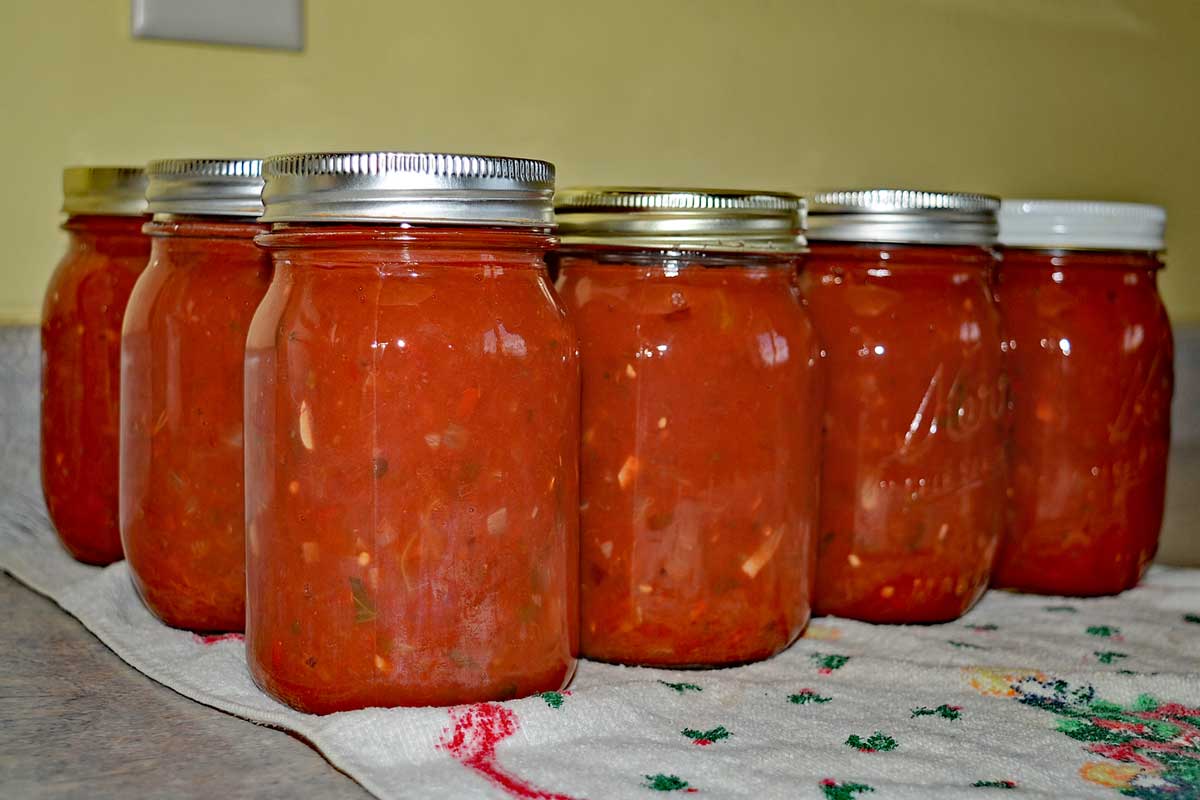
‘Tis the season for garden-fresh tomatoes, peppers, and onions. One of our favorite ways to enjoy them all year long is with a tested salsa recipe for canning. This classic tomato salsa is packed with flavor and safe for water bath canning when prepared as written.
We’ve been making this home canned salsa for years, and it’s always a hit. Whether we’re scooping it up with tortilla chips, or spooning it over tacos, it’s always delicious. Once you’ve made homemade salsa, the store-bought versions just don’t compare.
Would you like to save this?
This salsa recipe is similar to a popular commercial brand, but we like ours better. You can taste the difference in canning salsa with your fresh local produce at the peak of ripeness.
Note: Though the recipe contains vinegar, it does not have a strong vinegar flavor like the Ball Blue Book salsa recipes. We tried those and no one in the house liked them.
Table of Contents
Quality Ingredients Count
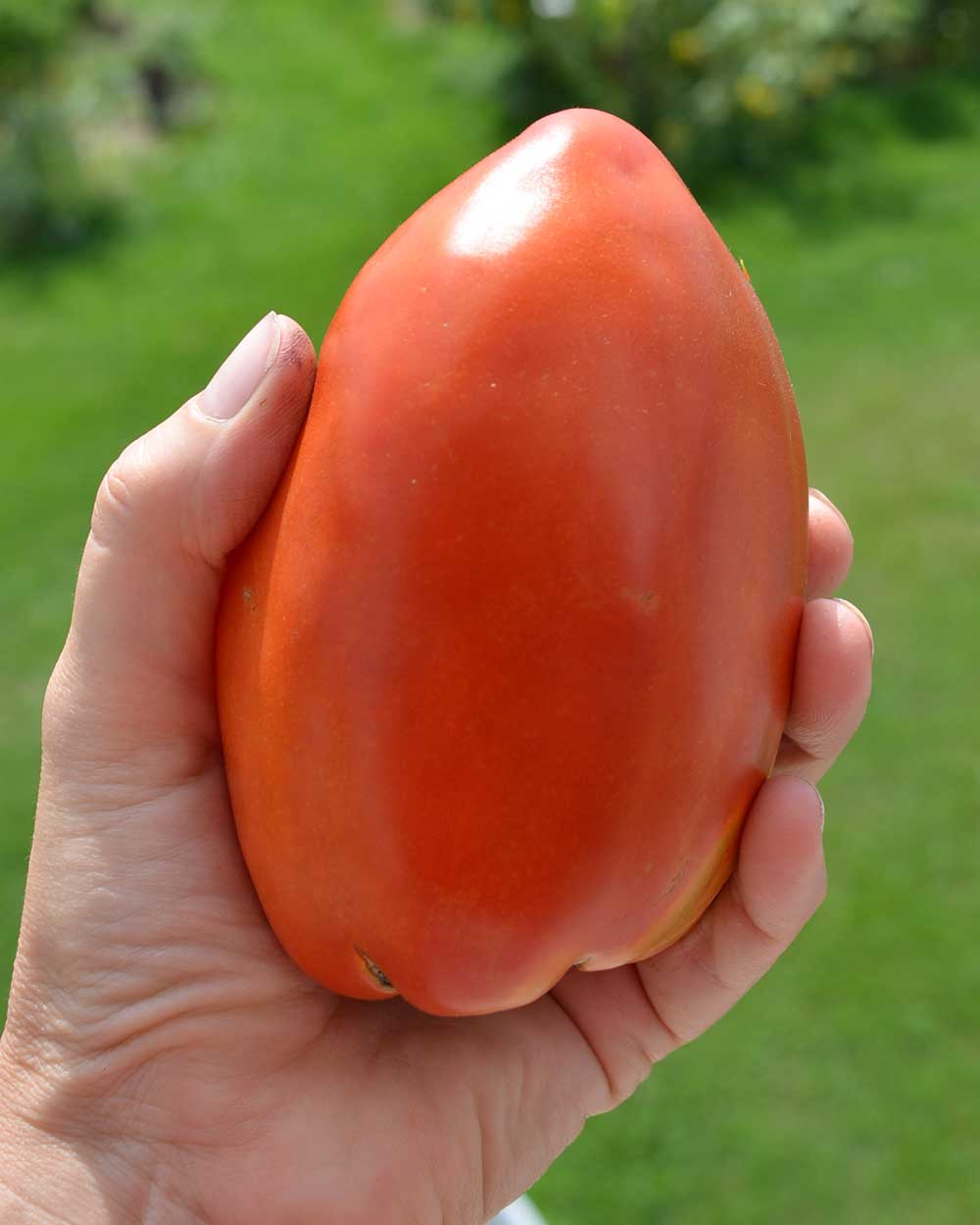
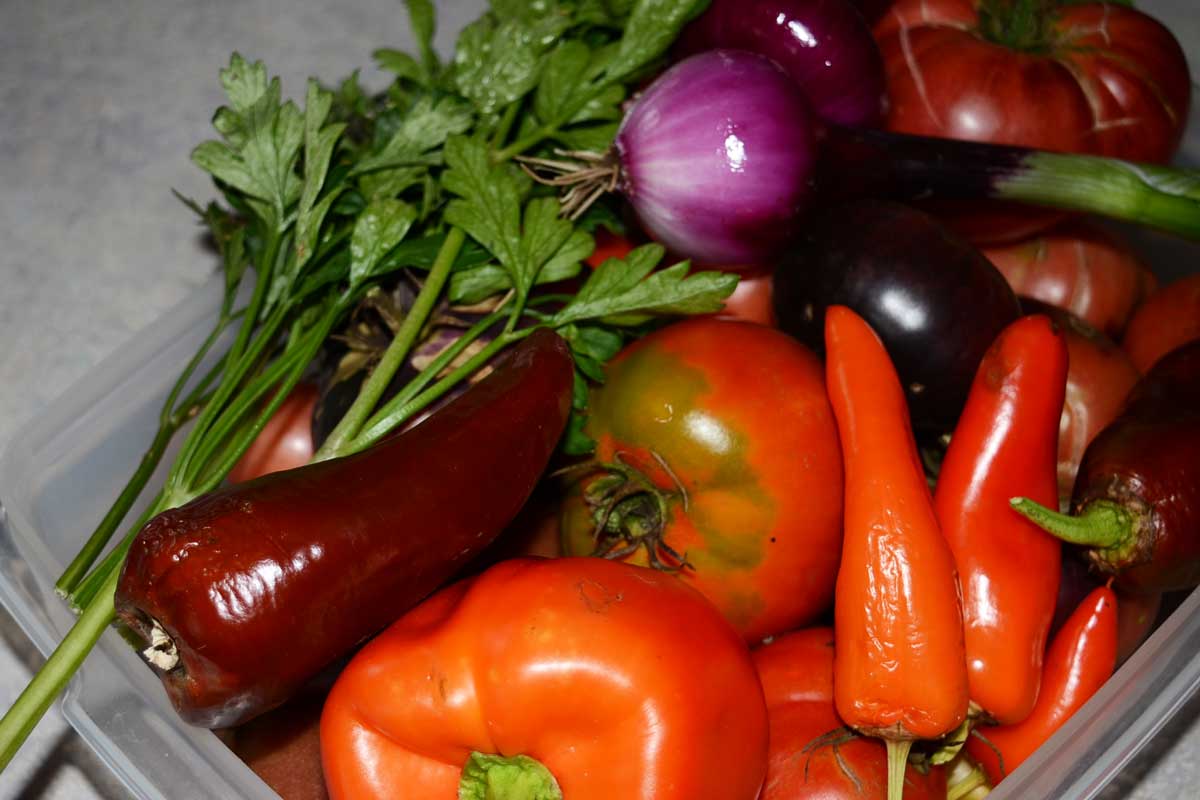
When it comes to making homemade salsa, fresh ingredients are key. Start with the right type of tomato. Paste tomatoes are best, as they have more “meat” and less juice and seeds.
We love salsa so much that we’ve been saving seeds, adapting the variety “Opalka” to local conditions. These beauties are often one to two pounds per fruit, which means a lot less peeling. We keep them isolated in the garden, away from other tomato plants.
Organic spices are great if you can get them. Cilantro gives you a more authentic flavor, but my parsley grows much better than my cilantro. I’m also one of the people who think cilantro tastes like soap, so I usually use parsley.
Use any type of sweet peppers – red, yellow, orange or green bell peppers, or banana peppers. Just don’t exceed one cup chopped per batch. Any type of hot pepper is fine, too. Use what you have, selecting the heat level that’s right for you.
For thickening, either tomato paste or tomato powder will work. Paste is usually easier to find in stores, but powder is a little easier to use. It takes half as much powder as paste.
E-Z Gel and Clear Gel are ultrafine cornstarch, and also help thicken the salsa. They are recommended over corn starch for canning because they don’t form clumps in your recipe. I like E-Z Gel best, as it blends more easily.
Salsa Recipe for Canning
Note: For safety, do not increase the amount of low-acid ingredients like onions, garlic, or peppers. You can safely reduce them if you prefer a milder flavor, but do not reduce the vinegar.
Ingredients
- 20-22 pounds of tomatoes
- 3 cups onions, finely chopped
- 2 cloves garlic, minced
- ¼ cup fresh cilantro or parsley, finely chopped
- ¼ cup celery, finely diced
- 1 cup assorted mild peppers, finely chopped
- 4 hot peppers, finely chopped
- 2 Tablespoons sea salt
- 1 Tablespoon dried oregano leaf
- ½ teaspoon black pepper
- 1 teaspoon ground cumin (optional, but recommended)
- 1 teaspoon chili powder (optional, for more heat)
- 1 cup 5% apple cider vinegar
- 3 6-ounce cans tomato paste, or 9 Tablespoons tomato powder (optional, for thicker salsa)
- ¼ cup E-Z Gel or Clear Gel (optional, for thicker salsa)
Prepping the Tomatoes
Blanch and skin the tomatoes. To blanch tomatoes, place them in boiling water for 30 to 60 seconds, until the skins start to split.
As soon as the skins start splitting, remove the tomatoes and place them in a cold water/ice water bath. This stops the cooking so they don’t get mushy, and makes them cool enough to handle for peeling. Slip off skins.
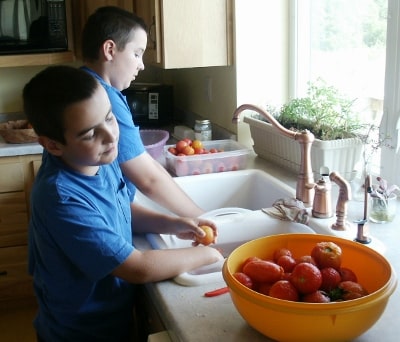
To finish the tomato prep, dice the tomatoes into chunks and remove seeds. Place in colander to drain off excess juice. If you like, strain the juice and drink it or can it separately. With our Opalka tomatoes, there isn’t much extra juice.
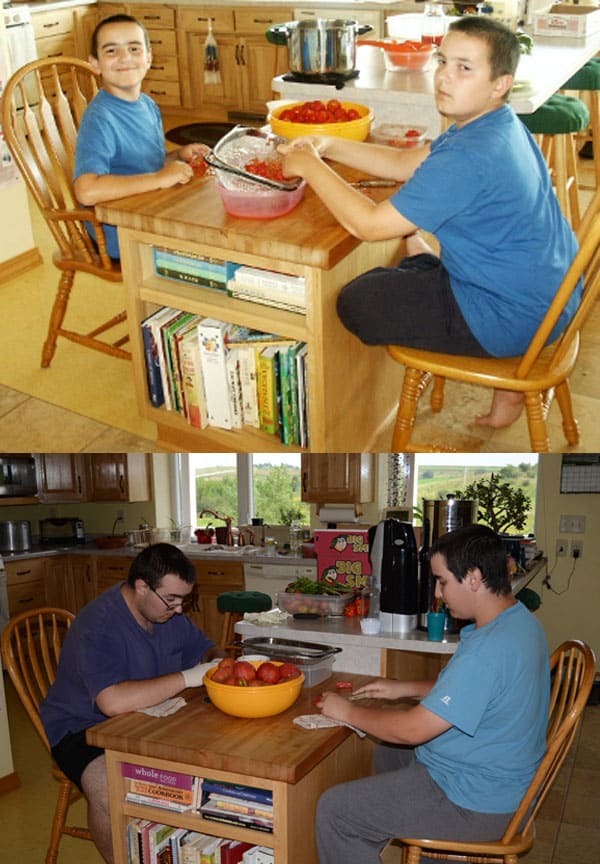
In our kitchen, the boys chop tomatoes while I prep the rest of the ingredients.
Prepping the Rest of the Salsa Ingredients
Finely chop onions, garlic, cilantro (parsley), sweet and hot peppers using a knife or food processor.
Caution: Use gloves when handling and chopping hot peppers. I leave the hot peppers until last to minimize risk of spreading the hot pepper juice around my work area.
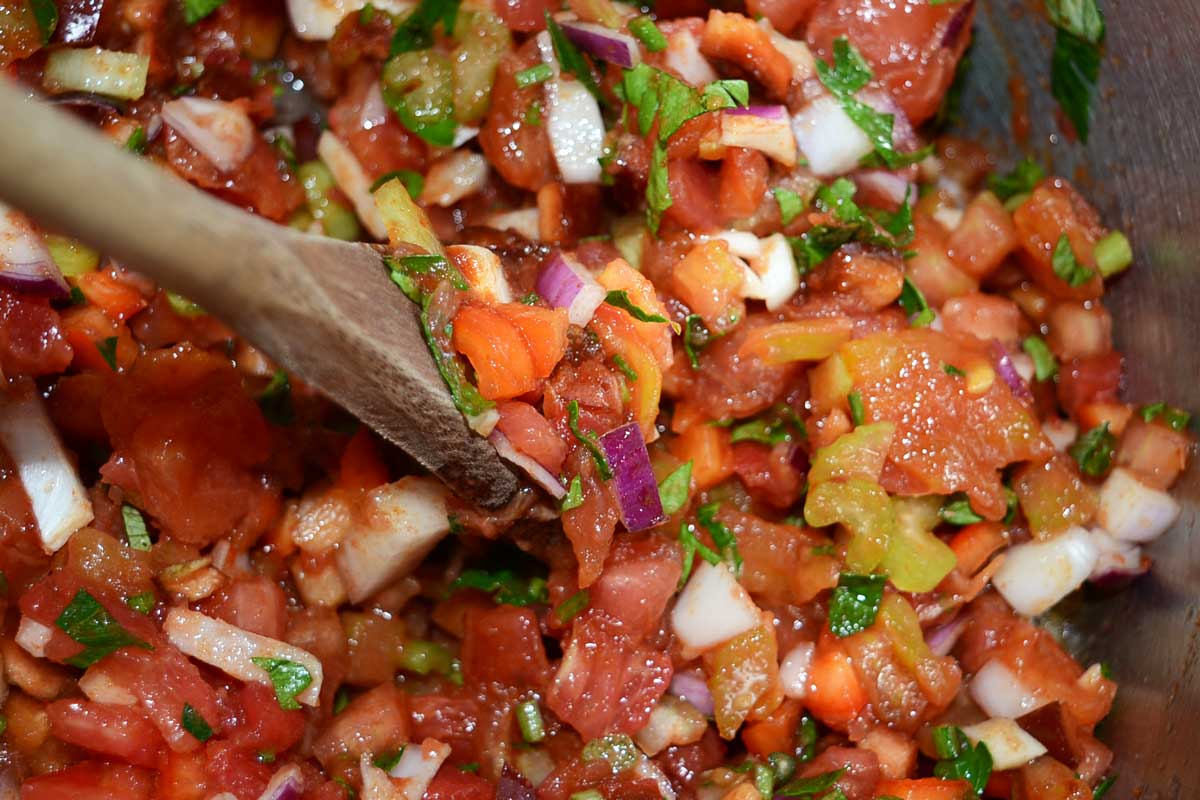
Place all salsa ingredients except vinegar and E-Z Gel in a large stockpot. Dissolve E-Z Gel (if desired) in vinegar, add vinegar mix to stockpot. Mix salsa thoroughly.
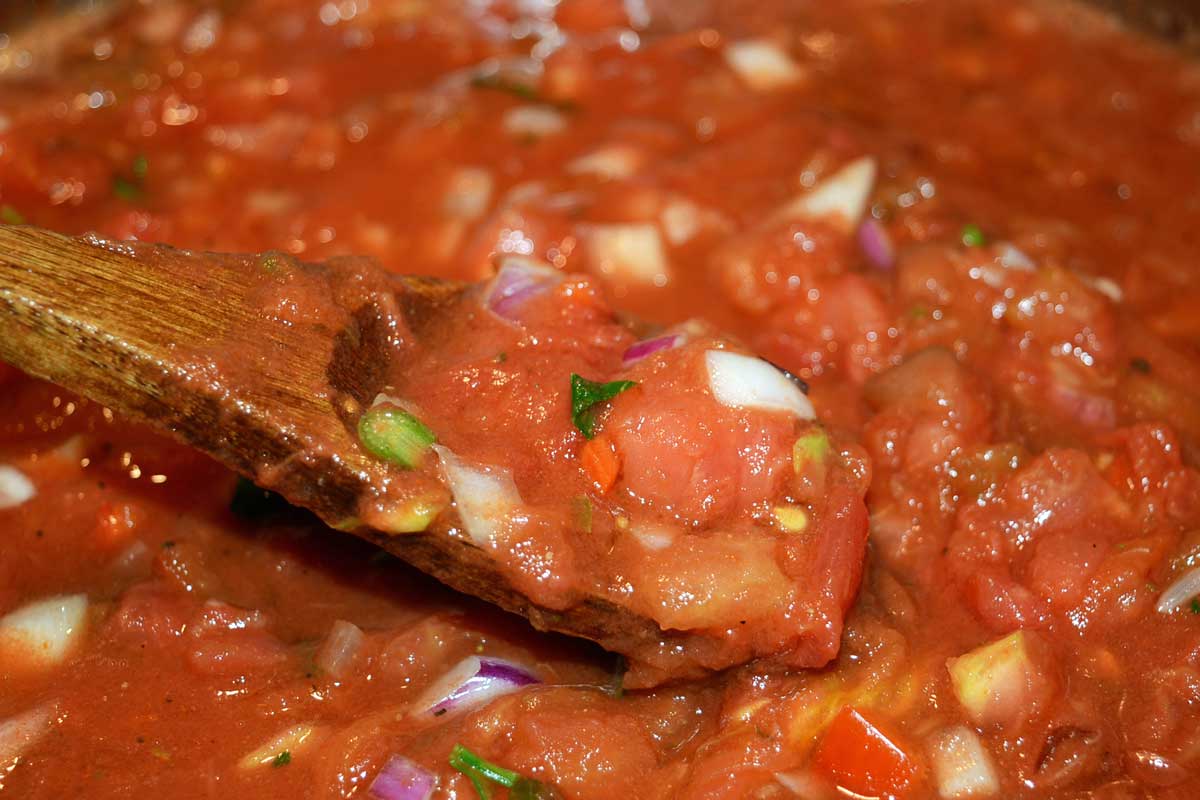
Heat the salsa to a gentle simmer. There is no need to cook it; you just want to get hot enough for canning.
Canning the Salsa
Prepare canning jars, two piece canning lids and hot water bath canner. Your canner will need time to heat up for processing. I put my canning jars in the canner water to heat them up, too.
Never fill cold jars with hot salsa! The difference in temperatures may cause the glass to break. You can heat them in the canning water, in a warm oven, or in the dishwasher.
Fill the jars with salsa, allowing 1/2 inch headspace from the top of the jar. Remove air bubbles. Wipe rims for any spills. Seat the lids and hand-tighten the rings around them.
For water bath canning salsa: Place the jars in the pre-heated canner. Make sure they are covered with at least 1 inch of water.
Bring to a boil and start the timer. Process the jars in a boiling-water bath for 15 minutes for 8 oz and pint jars.
When processing time is done, turn off heat, remove lid and wait 5 minutes to remove jars. Remove jars from canner. Place 1″ apart on a kitchen towel on the counter top. Let the jars sit to cool completely (12 to 24 hours).
Remove rings and check seals. (Center of lid will not flex if properly sealed.) Wipe any drips, label and date and store in a cool, dry location out of direct sunlight. Best used within one year.
Makes around 12 pints. (16 to 18 pints with our Opalka tomatoes.)
Is your favorite salsa recipe safe for canning?
Thinking about canning salsa, but not sure your favorite salsa recipe is safe?
Some safety tips for canning salsa include:
- Always follow basic kitchen safety rules. Wash hands, equipment and produce, and use canning jars and lids that are in good condition.
- Add acid, such as bottled lemon juice, vinegar, or citric acid to lower the pH. For water bath canning, pH should be ≤ 4.6. Use a pH strip to test if you are not sure.
- Lemon may be substituted for vinegar, but vinegar may not be substituted for lemon. (Vinegar is less acidic then lemon.)
- Use purchased vinegar with 5% acidity (homemade vinegar may be less acidic). Acidity level is important for safe home canning.
- Use ripe, firm tomatoes, preferably paste tomatoes. Don’t used fruit that is overripe or rotting. Remove tomato skins to lower pH.
- It is safe to add additional dry spices such as salt, pepper or ground cumin. Do not add extra low acid fresh ingredients such as peppers or onions.
- Do not use flour or cornstarch for thickening, only canning safe thickeners like Clear Gel.
- Store home canned salsa in the refrigerator after opening.
- Store any jars that did not seal (or opened jars) in the refrigerator and use within 2 weeks.
- Do not eat home canned salsa with bulging lids, off smells or any other signs of spoilage.
If you want to store your favorite salsa recipe, but are not sure if it’s safe for canning, try freezing instead. You can also refrigerate fresh salsa and use within one to two weeks.
Check it out at Safe Salsas for Canning for additional information.
Altitude Adjustments
If you are at an altitude higher than 1,000 feet above sea level, adjust processing time as indicated.
Altitude Feet Increase Processing Time
- 1,001- 3,000 5 minutes
- 3,001- 6,000 10 minutes
- 6,001- 8,000 15 minutes
- 8,001-10,000 20 minutes
FAQ
You can substitute bottled lime juice in equal amounts. Do not use fresh lime juice, as acidity may vary.
Yes. You can omit cilantro or stir in fresh herbs after opening the jar.
You can, but it’s unnecessary for this tested recipe. Processing time and temperature can vary, and texture may change.
Separation is natural. Tomato solids may float while liquid settles below. Shake gently before serving.
Yes. Meaty paste tomatoes like Roma or Amish Paste give thicker salsa with less simmer time.
Salsa Recipe for Canning
This home canned salsa recipe rates an “Awesome” from friends and family alike. Hot or mild – you choose how spicy you like it.
- Prep Time: 1 hour
- Cook Time: 15 minutes
- Total Time: 1 hour 15 minutes
- Yield: 12 pints 1x
- Category: Condiment
- Method: Canning
Ingredients
- 20–22 pounds of paste tomatoes
- 3 cups onions, finely chopped
- 2 cloves garlic, minced
- 1/4 cup fresh cilantro or parsley, finely chopped
- 1/4 cup celery, finely diced
- 1 cup assorted mild peppers, finely chopped
- 4 hot peppers, finely chopped
- 2 Tablespoon salt
- 1 Tablespoon dried oregano leaf
- 1/2 teaspoon black pepper
- 1 teaspoon ground cumin (optional)
- 1 teaspoon chili powder (optional)
- 1 cup 5% apple cider vinegar
- 3 6–ounce cans tomato paste or 9 Tablespoons tomato powder(optional)
- 1/4 cup E-Z Gel or Clear Gel (optional)
Instructions
- Prepare jars, lids, and bands. Wash in hot, soapy water and rinse well. Keep jars warm until ready to fill. Fill water bath canner and start it heating.
- Blanch and skin the tomatoes. Remove seeds, chop into chunks, and drain.
- Finely chop onions, garlic, cilantro (parsley), sweet and hot peppers. Caution: Use gloves when handling and chopping hot peppers. I leave the hot peppers until last to minimize risk of spreading the hot pepper juice around my work area.
- Place all salsa ingredients except vinegar and E-Z Gel in a large stockpot. Dissolve E-Z Gel (if desired) in vinegar, add vinegar mix to stockpot. Mix salsa thoroughly.
- Heat the salsa to a gentle simmer. There is no need to cook it; you just want it heated through.
- Fill the jars with salsa, allowing 1/2 inch headspace. Remove air bubbles. Wipe rims for any spills. Seat the lids and hand-tighten the rings around them.
- Place the jars in the pre-heated canner. Make sure they are covered with at least 1 inch of water. Bring to a boil and start the timer. Process the jars in a boiling-water bath for 15 minutes for 8 oz and pint jars.
- When processing time is done, turn off heat, remove lid and wait 5 minutes to remove jars. Remove jars from canner. Place 1″ apart on a kitchen towel on the counter top.
- Let the jars sit to cool completely (12 to 24 hours). Remove rings and check seals. (Center of lid should not flex if properly sealed.) Wipe any drips, label and date and store in a cool, dry location out of direct sunlight. Best used within one year.
Makes around 10-12 pints.
Nutrition
- Serving Size: 1/4 cup
More Homemade Condiment Recipes
Don’t forget to check out more of our Canning Recipes and Preserving Guides, including:
- Home Canned Spaghetti Sauce
- Tomato Soup Recipe for Canning
- 2 Homemade Ketchup Recipes – Canned or Probiotic
- No Canning Required Dill Pickles
- Tomatillo Salsa (Salsa Verde)

This article is written by Laurie Neverman. Laurie grew up in the kitchen, learning baking and home cooking from her momma. At age 15, she and her mom and two sisters created Irene’s Custom Cakes & Catering. This was her summer job through most of high school and college.
Originally published in 2009, last updated in 2025.
can i add sugar to this? if so how much? thanks!
You could add sugar and safely can it. I’m not much of an “extra sugar” sort of person, but I think up to a cup could be dissolved in without dramatically changing the texture.
Looks great! I’m researching safe water bath canned salsa, and I was thinking of using green tomatoes and miscellaneous hot peppers as end of the season Salsa. Could I sub green for red safely, and no gels?
Of course, I would not change your great recipe at all because it’s tried and tested.
That should be fine, as the green tomatoes are more acidic than fully ripe tomatoes.
Does this salsa have to sit for a certain period of time before eating it ?!
The flavors blend a little more after a few days, but my sons are happy to eat any leftovers that don’t make up a full jar right away.
Have you ever done this without blanching the tomatoes? I know it is more time consuming, but curious your thoughts on removing the skins without blanching
No, sorry, I haven’t. Skinning 22 pounds of tomatoes without blanching sounds like a pain in the backside. I know some folks skip peeling and just chop up the tomatoes. If you don’t mind more chewy salsa and skin bits, that would be another option.
Wondering if you can half this recipe without worry or if any substitutions need to be made. Thanks so much.
Cutting it in half is just fine.
I have not made your salsa recipe yet, but am going to try it when my tomatoes are ready! I wanted to ask if you have ever used the oven to process your canning? Or know any food safety issues about using it? Would love to hear your thoughts and recommendations! Someone suggested it to me years ago and I thought it made sense, same temp as boiling water and in the oven for same amount of time, or longer maybe. Thanks
Oven canning is not recommended. Although the temperature range is similar (or higher in an oven), convective heat transfer (air to jars) does not work as well as conductive heat transfer (water to jars). Odds are you’d damage the sealant on the ring before getting safe internal temperatures throughout the salsa.
If you feel that you did not add enough lemon juice to reduce the ph can you reprocess the salsa adding ac vinegar? Is the evidence of spoilage obvious, like a bulging lid, smell or other signs?
Thank you
Lemon is more acidic than vinegar. If you replace the vinegar with lemon, it should be fine. If the pH is too high and you’re breeding botulism spores, there would be no obvious signs of the problem. If the pH is low enough to prevent botulism (4.6 or lower), spoilage would be likely be indicated by mold growth, bulging lids or other obvious signs of spoilage. If reprocessing is needed, it should be done within 24 hours.
Yes, less onion and dropping the sweet peppers and celery should be okay. Lemon can be substituted for vinegar.
Thank you so much!!! I can’t wait to make this!!
You’re welcome.
I have got to try this recipe next year. We didn’t have a garden this year, but next year I WILL have a garden, even if it’s in containers. I love home canned everything. No preservatives and I know what is in there.
Don’t forget your farmers markets. Sometimes you can get good deals if you buy in bulk or ask for “seconds” – fruit that’s not cosmetically perfect, but is just fine for processing.
Is it possible to use Chia Seeds as a thickener instead of Xanthan Gum or Corn Starch?
You could try it, but if you want to store it, you would need to freeze it, not can it.
Thank you!
You’re welcome.
I din’t read through all the comments but if I don’t have the things to can salsa, can I freeze this in baggies or containers?
Yes, it can be frozen. Containers would work better than baggies.
First time canning salsa, could I add corn and black beans without changing the acidity? Anxious to give this salsa recipe a try. Thanks for any help you can give me.
Corn and black beans are both low acid and would make the recipe unsafe to can. If you want to add these ingredients, please freeze for storage instead.
I’m new to canning and trying to understand pressure canning versus water bath. If you add corn and black beans to this salsa which are low acid, can you just pressure can it to make it safe? Thank you in advance for any help!
In theory, yes – BUT – there’s no way to test the finished product and confirm that it will heat evenly to ensure safe processing. You’re adding chunky,starchy bits that are likely to make the salsa thicker. Thick product slows down heat transfer. This may mean that the processing time needs to be increased to make sure that it heats all the way through, or it could push it to the point where it would not be recommended for home pressure canning, like pumpkin butter. (It’s safe to can pumpkin chunks, but it is not safe to can pumpkin butter.)
thank you for your response! That makes sense to me that you can only use tested canning recipes so you know how much processing time it needs.
It’s safe to make up your own recipes in some cases, too, but you have to be follow the rules. For instance, a mixed berry jam would be safe because berries generally have a low pH, and the sugar in jam ties up free water, which bacteria need to breed. Thick product and high pH product can easily get dangerous, especially in combination.
Laurie, what if I don’t have fresh parsley or cilantro? Can I use dried? If so, what amount of dried equal 1/4 cup fresh? Thanks!
Generally, the ratio is 3:1, that is, 3 times as much fresh herb as dried. So if you were to use dried, a heaping tablespoon would be roughly equivalent.
Laurie, try a batch substituting half of the oregano with Mexican oregano, it’s amazing!
Thanks for the tip!
You gave a time for quart size jars. Is it safe to can salsa in quart jars?
With this recipe, yes, it should be, because of the added acid and high tomato ratio.
When I made salsa, I forgot to add the vinegar. Can I open all the jars, add the vinegar and then can again?
I would dump all the salsa back into a single pot, add the vinegar, and then can, to ensure it’s evenly mixed.
Hi,
I am new to canning and am wondering if I can salsa, when I go to open it to eat do I have to heat it up for safety reasons or can I eat cold straight from the jar?
The acidity levels should keep it safe straight out of the jar. My youngest eats dozens of jars every year. 🙂
Can I add fresh corn off the cob to this? I have it in the freezer.
Not if you want to can the finished salsa. If you add corn, you should freeze the salsa instead.
You specify “sea salt”. Is this because you want the coarse grain salt, or could I easily substitute table salt? Thanks!
I prefer the flavor and trace minerals of sea salt, but you could use non-iodized table salt.
….or pickling salt. Table salt has anti-caking additives. Read the ingredients on your table salt, mine also says sugar. I Use pickling salt for everything I preserve.
Also, an added trick to speed up peeling tomatoes (and make it sooooo much easier) score an “X” on the bottom side of your tomato before blanching. After you cool it, you can peel it like a banana from the bottom.