
Warm & Golden Dandelion Wine Recipe (Old-Fashioned Wine Making)

This post may contain affiliate links. Read my full disclosure here.
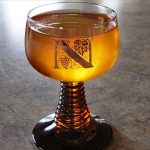
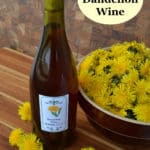
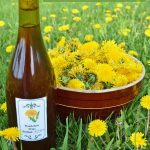
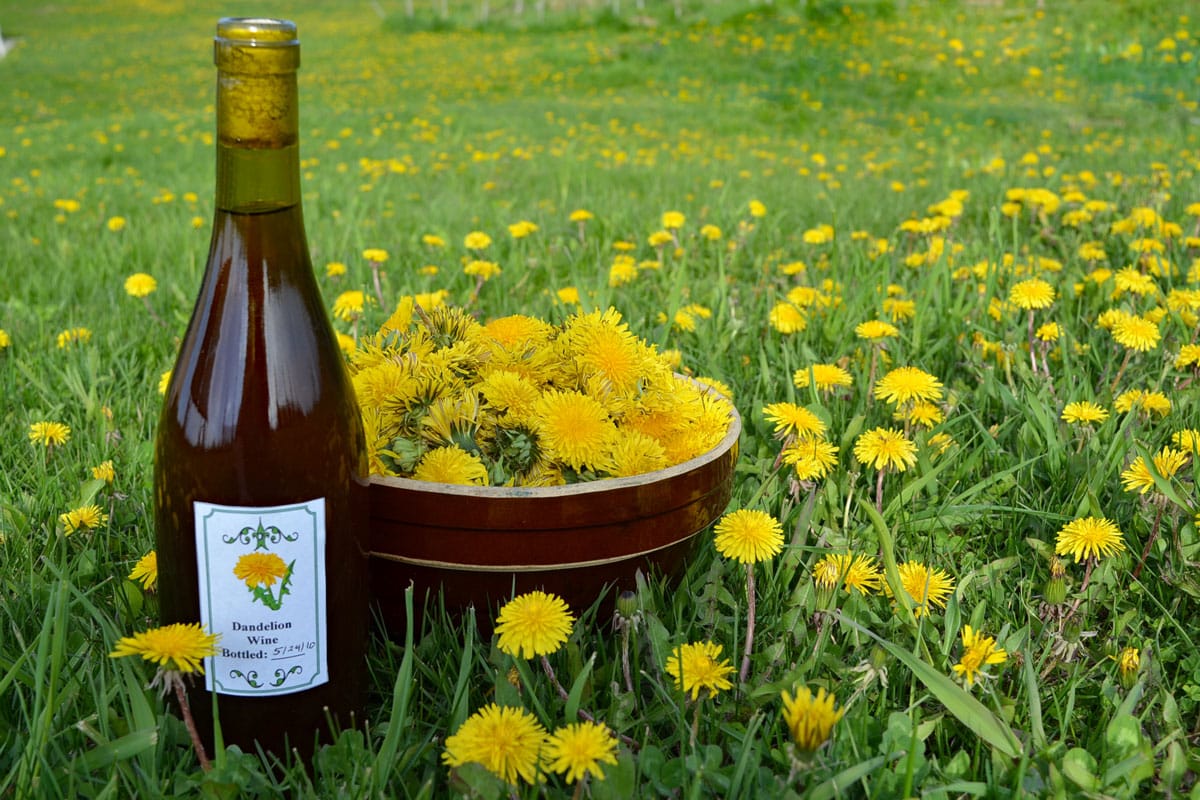
Wine out of dandelions? You bet! Making homemade dandelion wine is a longstanding family tradition. We don’t make it every year, but I do like to keep a few bottles on hand for company.
The taste of this dandelion wine is rich, golden and warming – more like a good brandy than a wine. I’ve had friends who don’t normally like wine comment that they do enjoy this “spring tonic”. This is a “country wine” made from simple ingredients with basic equipment.
Would you like to save this?
When we get dandelions, we get LOTS OF DANDELIONS! They are everywhere! (Boy photos are from 2010. They have grown quite a bit since then, but I kept these photos here for the happy memories.)
Dandelions are wonderful for bringing up nutrients and breaking through compacted soil. This area of the yard had a lot of compaction from soil being moved around, so the dandelions were working overtime.
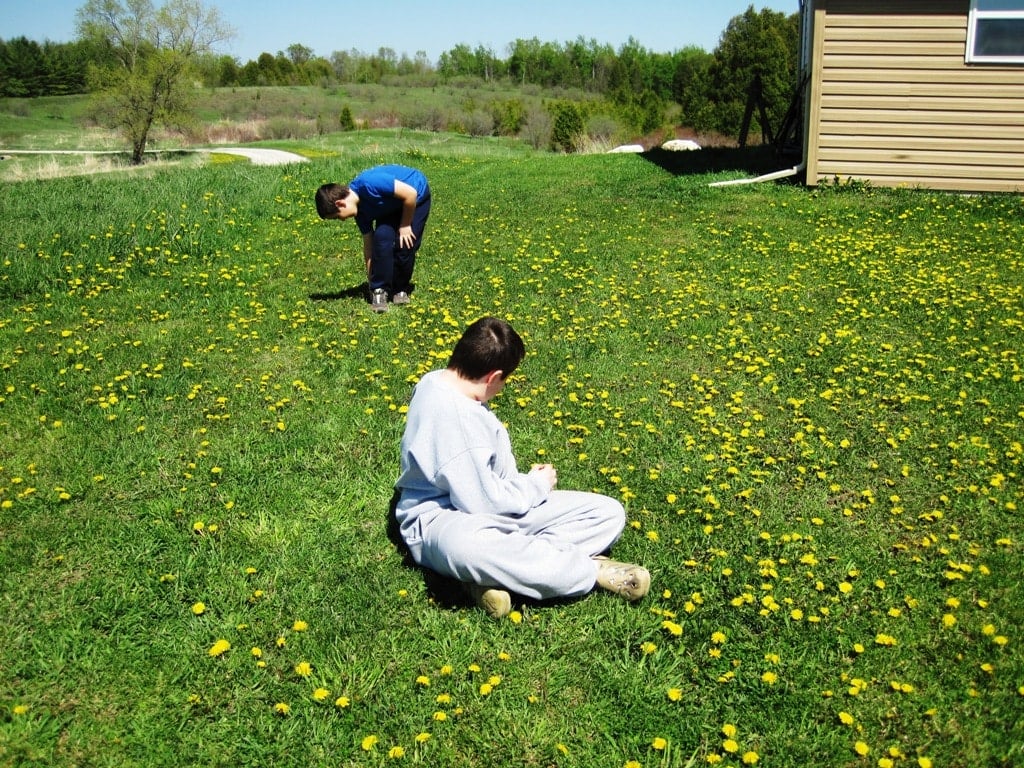
Table of Contents
Gathering the Flowers
Make sure your dandelion flowers are free of pesticides, herbicides and other contaminants. I usually don’t rinse the blossoms, though you can if they are dusty. They are sterilized during the first part of brewing. We gather bins of flower heads outside, and then bring them inside to remove the petals.
Don’t pick dandelion blossoms for wine or eating from an area used by pets for their “bathroom”. As I explained to a reader in the comments, I’m fairly sure goat pee will not wash off.
What part of the dandelion is dandelion wine made from?
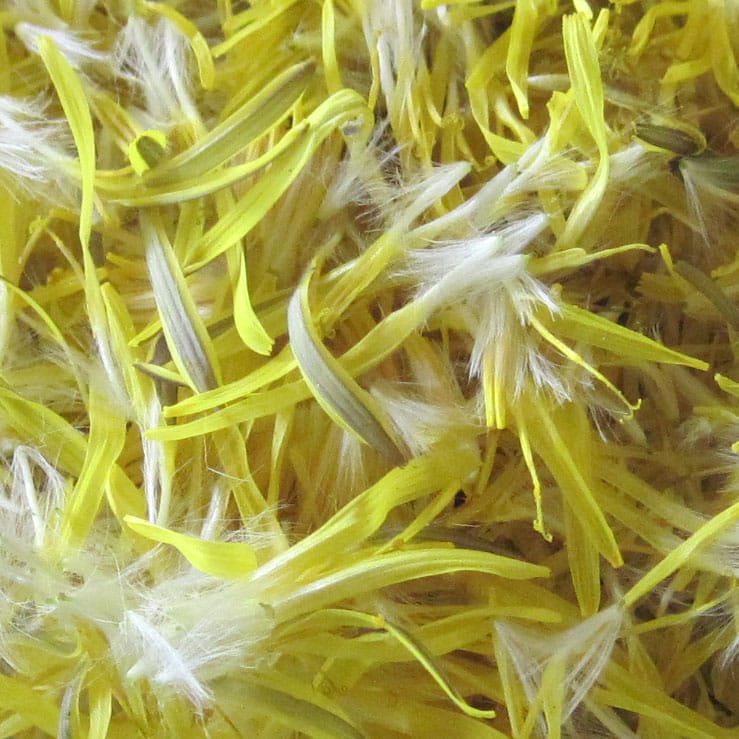
For dandelion wine, use the yellow flower petals only. Leaving the petals attached to the green base of the flower will result in a bitter, unpleasant wine. My neighbor made this mistake when she tried to make dandelion wine, and she ended up throwing out the whole batch.
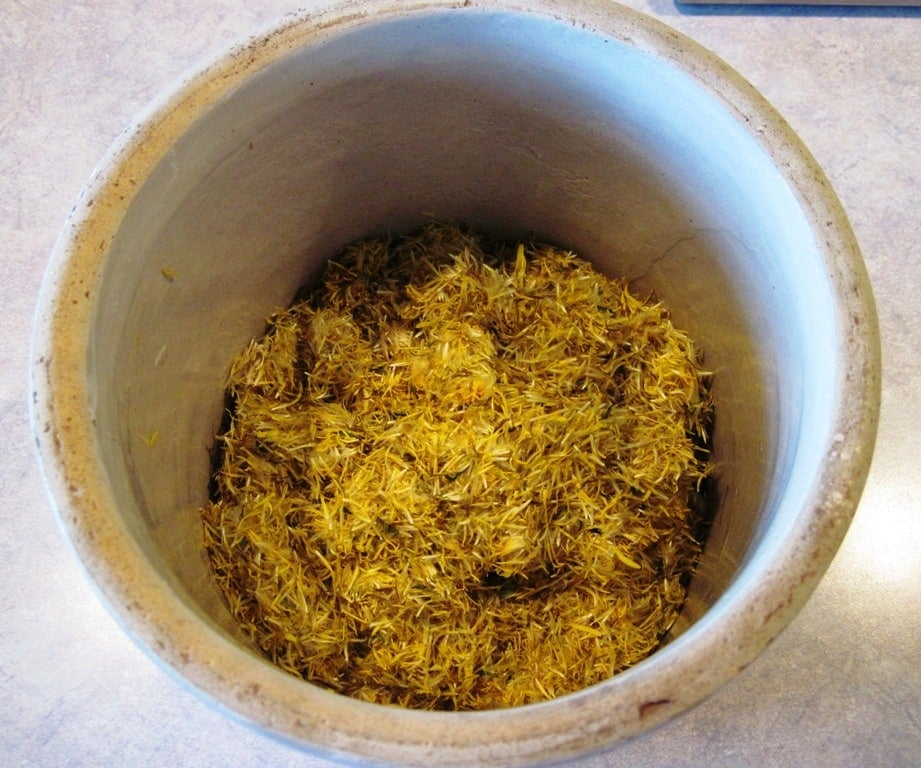
I use 3 quarts of loosely packed yellow dandelion petals (pictured below). Not 3 quarts of flower heads, 3 quarts of petals only.
If you don’t have enough dandelion petals from one picking, freeze the petals until you have enough.
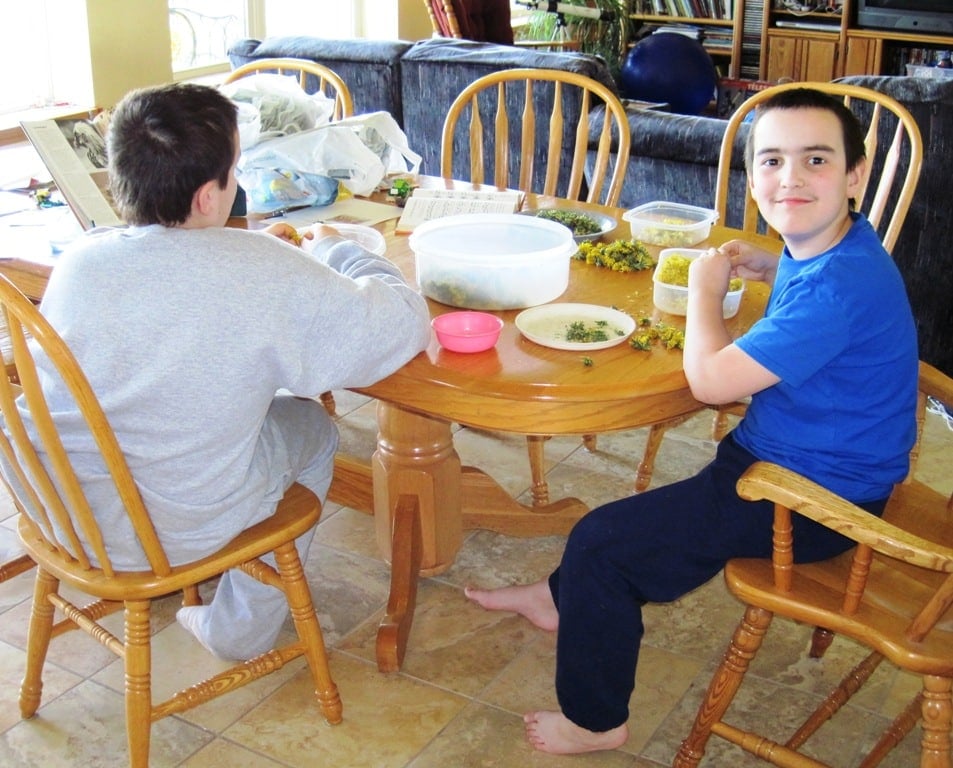
The boys and I sat down to a session of “second picking” to remove the yellow petals from the blossoms. You want to remove the petals as soon as possible after picking, as the flower heads close over time. Once they close, it’s tough to get the petals off.
If you are working alone, it may be best to pick some of the flowers needed, remove petals, then pick more flowers and repeat. That way, you won’t have trouble with the flower heads closing before you have time to clean them. It’ll also give you a chance to get up and stretch.
Making Homemade Dandelion Wine
“Dandelion wine, believed to be of Celtic origin, is regarded as one of the fine country wines of Europe. In the late 1800s and early 1900s, it was not proper for ladies to drink alcohol. However, dandelion flower wine was considered so therapeutic to the kidneys and digestive system that it was deemed medicinal even for the ladies.“
Adapted from Dandelion Medicine, in combination with my mother’s recipe.
Remember, all your fermentation vessels should be glass, ceramic, stainless steel or food grade plastic. Never ferment in aluminum or iron, as it can react with the wine.
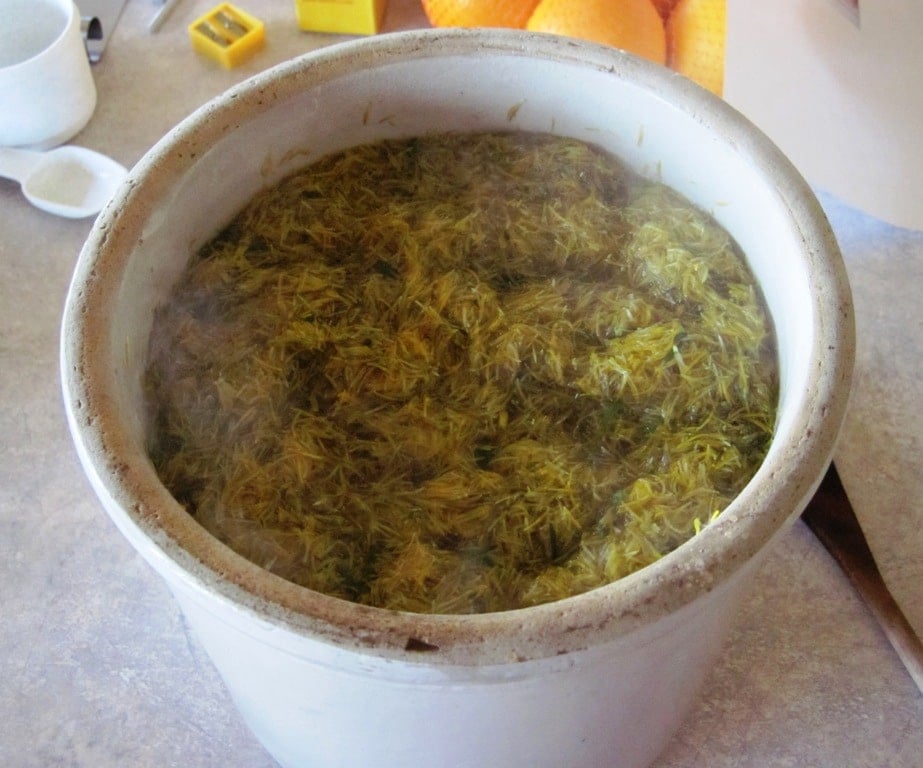
I normally use my two gallon crock for one gallon of wine, since the fruits bubble up during fermentation. You can see in the photos below that a one gallon crock gets very full.
Ingredients
- 3 quarts dandelion petals, loosely packed
- 1 gallon water
- 2 oranges, with peel, preferably organic
- 1 lemon, with peel, preferably organic
- 3 pounds sugar
- 1 package champagne yeast or wine yeast (this yeast finishes at around 12-14% alcohol)
- 1 pound raisins, preferably organic
How to make dandelion wine – Directions
1) Collect the blossoms when they are fully open on a sunny day, after the morning dew clears. Remove green parts and measure out 3 quarts of loosely packed petals.
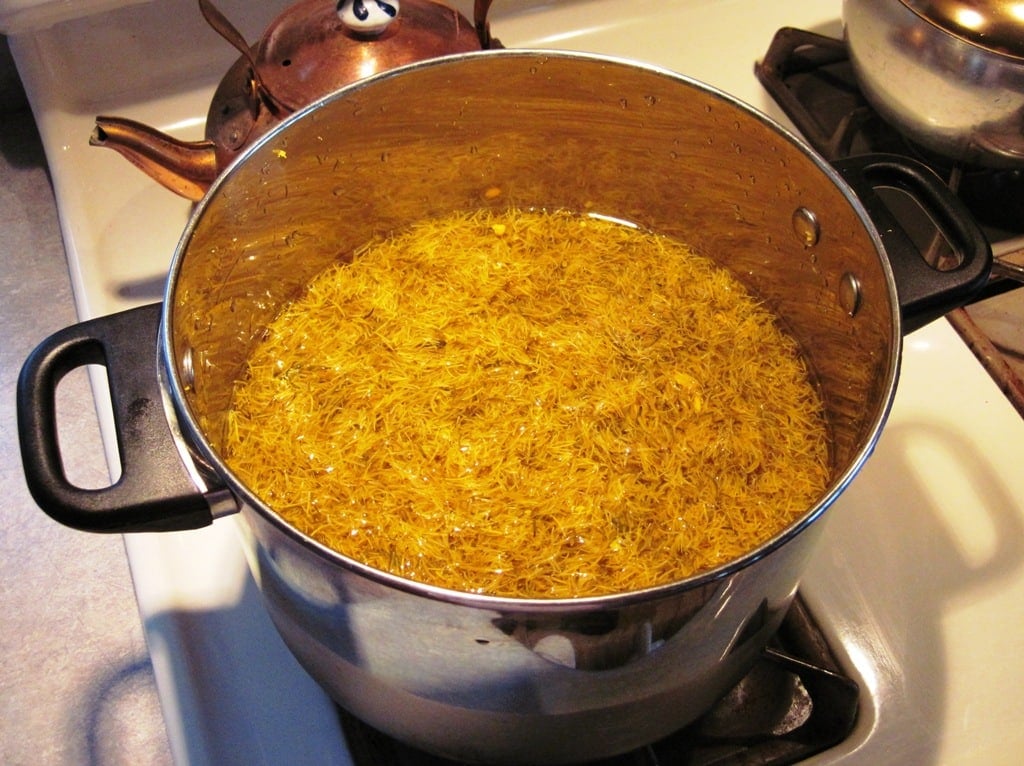
2) Bring the water to a boil and pour it over the flowers in a large pot or crock. Cover with a towel to keep dust out and let steep for three days. Stir daily to keep the petals submerged in your “dandelion petal tea”. They will develop a musty smell, which is normal.
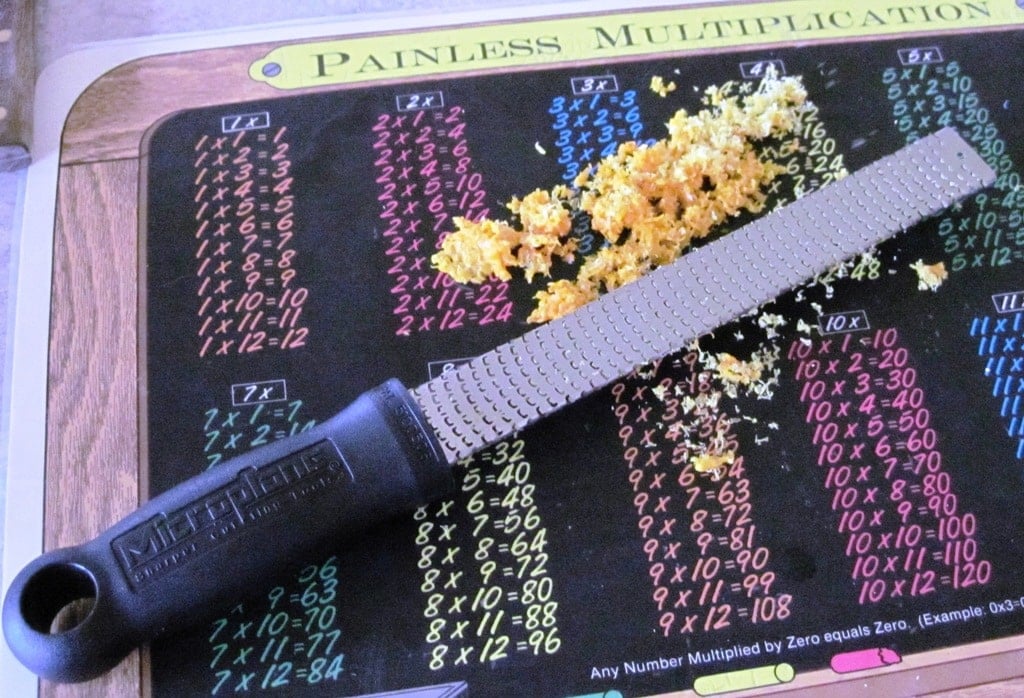
3) Prepare the oranges and the lemon. Zest about half of the rind and peel off the rest in thin strips. You want to minimize the amount of white pith added to the brew.
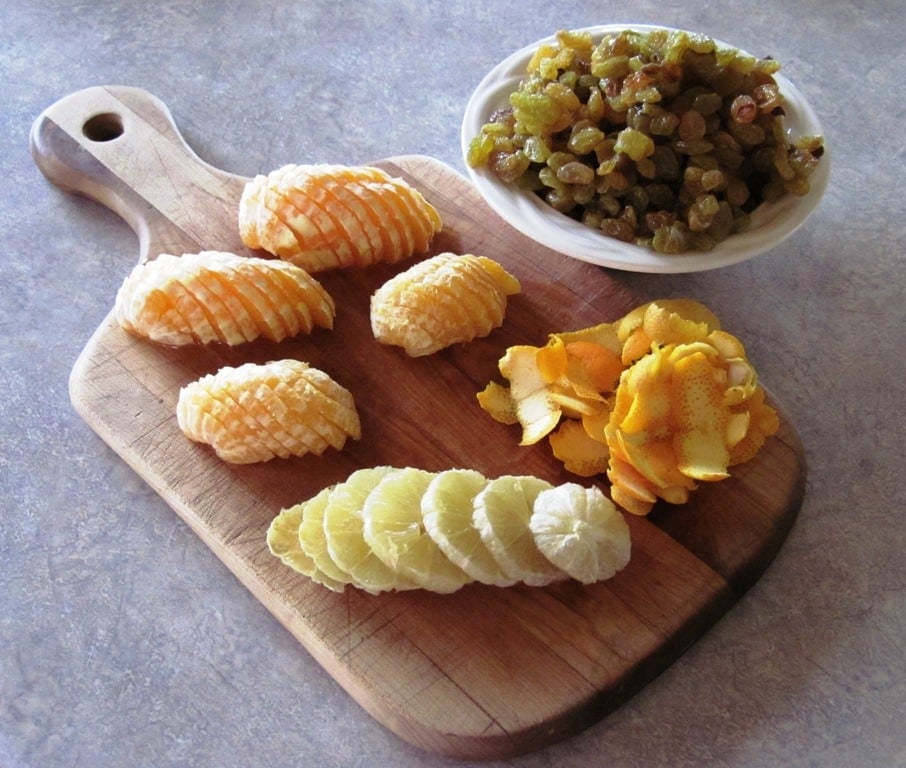
4) Clean most of the pith off the fruit and slice into thin rounds.
5) Add the lemon and orange zest to the flower-water mixture and bring to a boil. Remove from heat, strain out solids. Dissolve the sugar in the flower water. Allow to cool to room temperature.
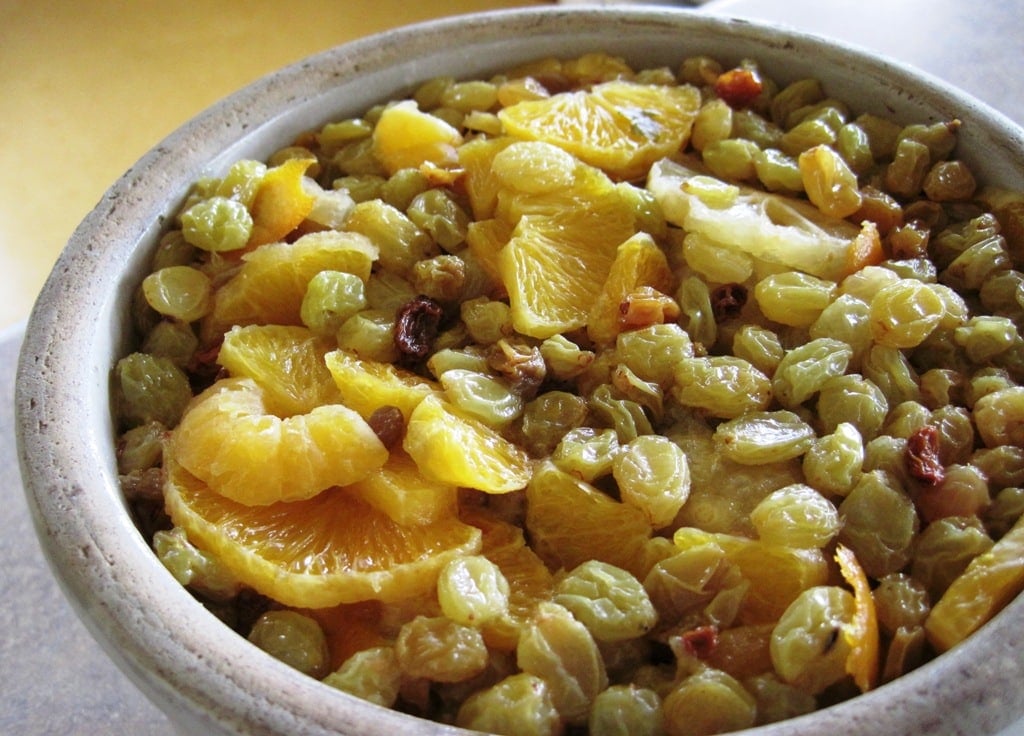
6) Add the yeast, raisins, and orange and lemon slices and rind strips to the liquid. Put everything into a crock (or wide mouth carboy with airlock) to ferment. I cover my crock with a clean cotton towel held down by a rubber band to keep dust and bugs out. (Not shown.)
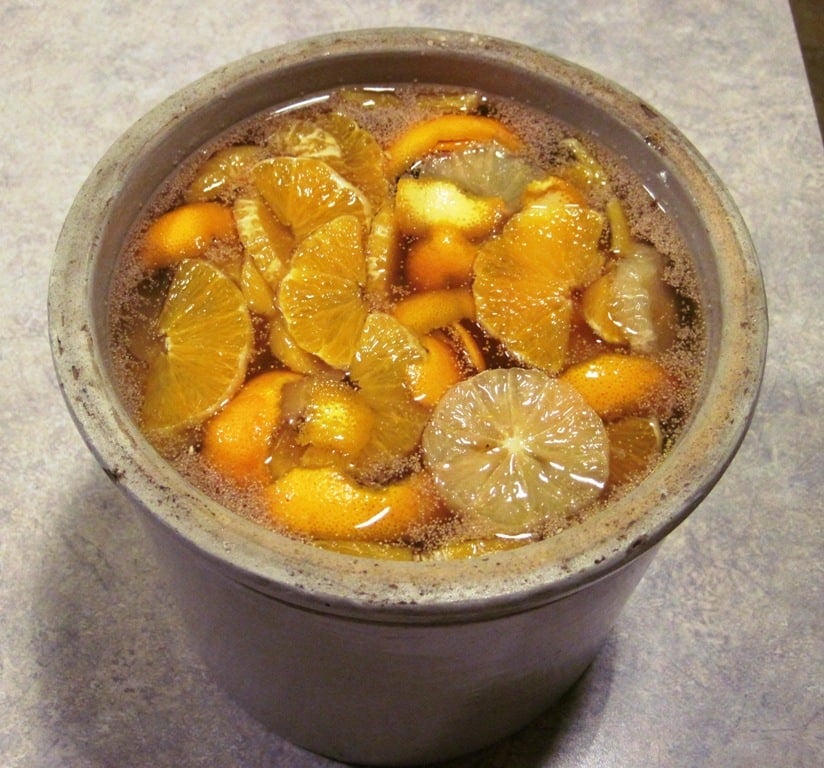
Stir daily with a wooden spoon or non-reactive stir stick. When the yeast gets active, the bubbles will lift the fruit up to the top of the wine. You want to stir so all the fruit gets pushed back under the surface and wet down daily.
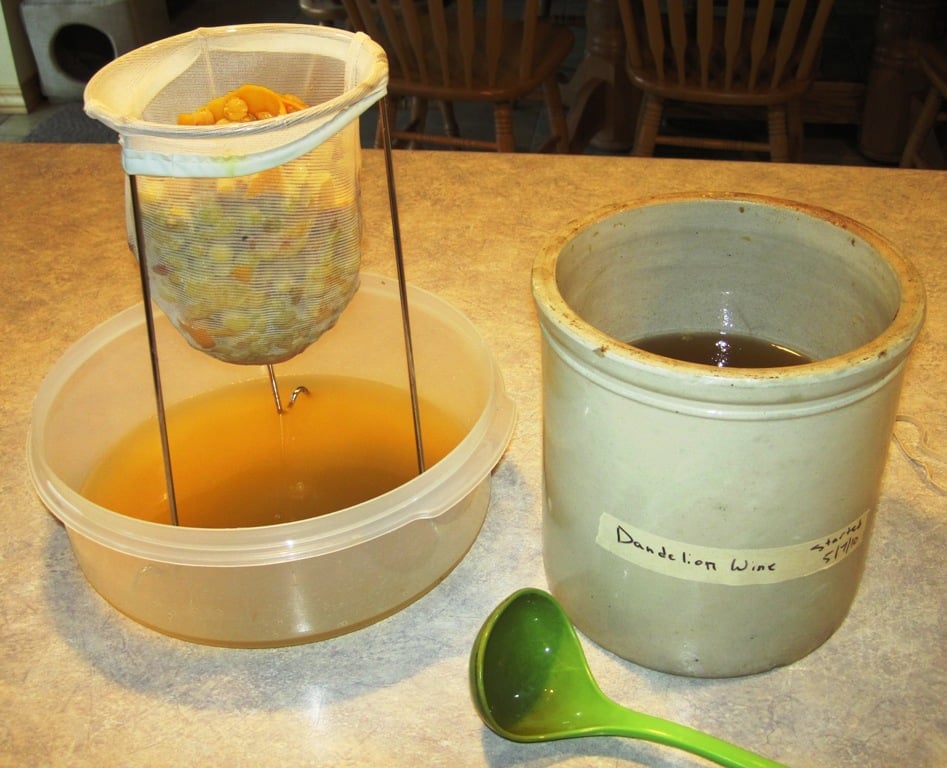
7) When the primary fermentation mixture stops bubbling (1 -2 weeks), fermentation is almost done. Strain the liquid through several layers of cheesecloth, a flour sack towel, or a jelly bag.
Bottling the Wine
You have two options for bottling your homemade dandelion wine. You can let it finish in bottles, or move to a carboy and then bottle.
To finish in bottles: After straining, move the young dandelion wine directly to clean bottles. Slip a deflated balloon over the top of each bottle to monitor for further fermentation. When the balloon remains deflated for 24 hours, fermentation is complete. You will probably need four or five 750 ml bottles.
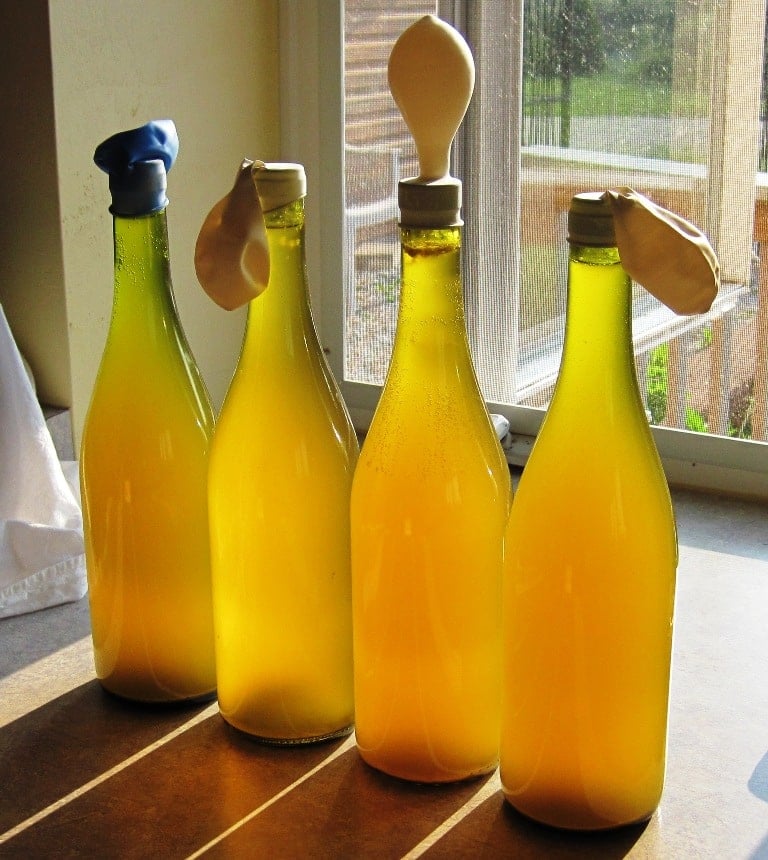
Cork the bottles and store in a cool, dark place for at least six months before drinking.
NOTE: Do not seal bottles tightly before they finish fermenting, and don’t put them somewhere warm. Otherwise, you’ll end up with exploding bottles, like my sister, Mary, when she stashed them in a closet. Apparently, it sounded like there were bombs going off or they were being shot at.
If you would like a clearer wine, transfer the strained dandelion wine into a one gallon carboy with airlock before the final bottling. Allow to ferment in the carboy for 2-3 months, and then rack into the bottles.
If you’d like to download a pdf of my wine labels, use this link: Printable Dandelion Wine Labels.
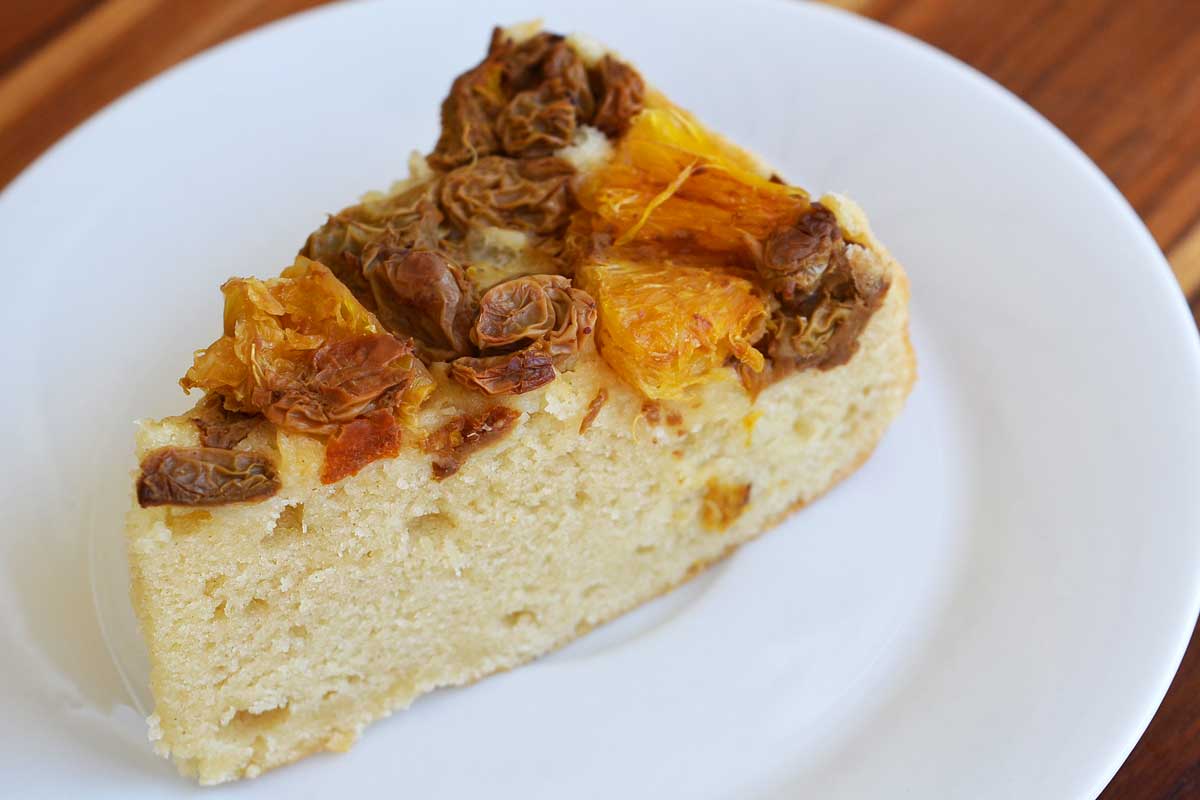
If you don’t want to send the wine fruit to the compost pile, try Dandelion Wine Fruitcake.
Recommended Materials for Making Dandelion Wine
- Wine Yeast – store extra yeast packs in the fridge or freezer. I normally use Lalvin Wine Yeast EC-1118.
- 2 Gallon Crock – 2 gallons gives you space for fermentation.
- Wine Bottles – It’s fine to wash and reuse old wine bottles. You will probably need five 750ml bottles.
- Corks – It’s best to use new corks. I like the #9 Straight Wine Corks.
- Wine Bottle Corker – This double lever model works like a charm.
- Gallon carboy with airlock – optional, for clearer wine.
Old-Fashioned Dandelion Wine Recipe
A smooth and hearty flower wine with citrus notes that will warm you from head to toe.
- Yield: 4–5 bottles 1x
Ingredients
- 3 quarts dandelion petals, loosely packed
- 1 gallon water
- 2 oranges, with peel, preferably organic
- 1 lemon, with peel, preferably organic
- 3 pounds sugar
- 1 package wine yeast
- 1 pound raisins, preferably organic
Instructions
- Collect the blossoms when they are fully open on a sunny day. Remove any green parts and measure out three quarts of petals.
- Bring the water to a boil and pour it over the flowers in a large pot or crock. Cover with a towel to keep dust out and let steep for three days. Stir daily to keep the petals submerged.
- Prepare the oranges and the lemon. Zest (finely grate) about half of the rind and peel the rest off in very thin strips. You want to minimize the amount of white pith added to the brew.
- Finish peeling the citrus, and slice them into thin rounds.
- Add the lemon and the orange zest to the flower-water mixture and bring to a boil. Remove from heat, strain out solids, then add the sugar, stirring until it is dissolved. Allow to cool to room temperature.
- Add the yeast, raisins, and orange and lemon slices and rind strips to the liquid. Put everything into a two gallon crock (or wide mouth carboy with airlock) to ferment. I cover my crock with a clean cotton towel held down by a rubber band. Stir daily with a wooden spoon or non-reactive stir stick.
- When the primary fermentation mixture stops bubbling (1 -2 weeks), fermentation is almost done. Strain the liquid through several layers of cheesecloth or a flour sack towel.
Bottling the Wine
You have two options for bottling your homemade dandelion wine. You can let it finish in bottles, or move to a carboy and then bottle.
To finish in bottles: After straining, move the young dandelion wine directly to clean bottles. YOu will probably need four or five 750 ml bottles. Slip a deflated balloon over the top of each bottle to monitor for further fermentation. When the balloon remains deflated for 24 hours, fermentation is complete.
Cork the bottles and store in a cool, dark place for at least six months before drinking.
If you would like a clearer wine, transfer the strained wine into a one gallon carboy with airlock before the final bottling. Allow to ferment in the carboy for 2-3 months, and then rack into the bottles.
Notes
Do not seal bottles tightly before they finish fermenting. Always store your wine in a cool location.
Is Dandelion Wine Alcoholic?
Yes. If you use wine yeast as recommended in the recipe, you should end up with around 12 to 14 percent alcohol.
If you’re feeling adventurous, you may be able to nurture wild yeast from the raisins to do the fermenting. Wild yeast brews will have a lower alcohol content, because wild yeast dies off if the alcohol levels get too high.
You can learn more about using wild yeasts in the book, “The Wildcrafting Brewer“.
Is Dandelion Wine Medicinal?
Nearly every part of dandelion is full of nutritional value, with vitamins and minerals packed in every part of the plant. Aside from its great taste in wine making, it also has been used throughout history for its medicinal properties.
For more information, check out this article on Dandelion Benefits.
To dig even deeper into this amazing plant, check out The Dandelion Workshop online course. It includes a printable guide and step-by-step videos for making a variety of dandelion recipes and remedies.
You may also enjoy:
- Harvesting and Using Dandelion Roots
- Low Sugar Dandelion Jelly Recipe
- Dandelion Fritter Recipe
- How to Make Dandelion Root Tea
- Get Rid of Dandelions Without Chemicals
I’ve also answered a lot of reader inquiries in the comments, so be sure to have a look if you have questions. If you don’t find your answer (or would like to share some wine making stories or observations), leave a comment below.

This article is written by Laurie Neverman. Laurie mixes her rural background and engineering training to create a unique and resilient homestead. She enjoys getting to know wild plants and using them for food and medicine. Her most unique experiment to date was quackgrass wine.
Originally published in 2010, last updated in 2026.
Today’s quarantine rabbit-hole lead me from Ray Bradbury to this page. I looked a number of recipes, but thoroughly enjoyed your presentation. This is the keeper, and I can’t wait to try making this! I’m especially impressed that you’ve remained so actively engaged with your audience since you posted this ten years ago!! Great work Laurie.
“Nature loves to make hooch”
Thanks, Scott.
Without our readers, it’s just me yammering to myself on the internet. Also, as an information seeker myself, I hate it when I go to a website, have questions, and can’t get through to anyone. I always try to treat others like I would want to be treated.
Thanks for this recipe. Wondering if you can help since I’ve scoured the internet now and can’t find a clear answer. I’ve started making dandelion wine back in early May (similar recipe to yours). I’m at the stage now where I’ve siphoned into a new carboy demijohn and removed most of the sediment. So about 2 months since starting. The airlock stopped bubbling weeks ago. I just left it in the carboy to settle out.Siphoned now, it tastes like wine, a little sharp, but I think in the right direction.
1) Still very turbid so there must be more yeast floating around despite letting it stand for several weeks. How long does it take to clear up? I don’t want too bottle until it’s more clear, but less confident this will settle any further…
2) the liquid doesn’t fill the carboy entirely. Only 3/4 full. Should I (can I) top up to leave less headspace under the airlock? Does it matter?
3) How might I make this into a sparkling wine? I’ve read you add sugar syrup once the fermenting has stopped entirely and right before bottling. However, I’m confused about which additives to use mentioned on other websites. I want to preserve the wine obviously, but I don’t want to inhibit the fermentation that would make it fizzy…
Lots of questions, I know. Thanks for any help you can give! x
1- If you are concerned about turbidity, rack and filter through a coffee filter to remove more of the lees. It will take time for all the wine to work through the filter (hours), so plan accordingly.
2 – It’s best if your carboy is filled nearly to the top, with just 1-2 inches of air space. If you are close to this, you can add a little pure water. Otherwise, you can add a little sugar water or white grape juice.
Alternatively, you could bottle temporarily in swing top bottles, and release the pressure once a week or so, if you can more evenly distribute your wine into those bottles without a large air space.
3 – I have not experimented with sparkling wines, as I am a lazy winemaker. If you are inclined to do so, the simplest option with be adding a little sugar syrup or the white grape juice and placing the wine is swing top bottles.
I’m guessing there are details about additives that stop the fermentation at a specific point to keep the bottles from exploding. That’s beyond the scope of my knowledge.
If you added the juice or sugar water, you could try going a little longer between “burbs”, and see if it builds up the fizz that you want. Make sure to store in a location where the mess will be contained if it explodes (the top blows off – the swing top bottles are unlikely to shatter except under extreme conditions).
Still confused whether you are required to collect 3 quarts of blooms then pick the petals from them or if you are required to collect 3 quarts total of straight petals?? I’ve read different accounts. Recipe looks super fun and my (2) quarts of petals are steeping currently. I decided to roughly meet half way and go with two quart jars of packaged petals! Thanks
I’ve seen it several ways. I don’t know how I can phrase it more clearly, as I already have “I aim for 3 quarts of yellow dandelion petals” in the post. I don’t say flowers, I say petals.
Gotcha. Hopefully 2 quart jars of tightly packed petals will make some decent wine! Thanks
I’m sure it will be fine. You can bet that generations past were not terribly specific with their brewing measurements. It’s all good.
Please can you tell me how much yeast is a “package” of yeast in weight terms. Thanks.
I would like to try your dandelion wine
5 grams (0.176 oz) – this should be wine yeast or champagne yeast, not bread yeast or nutritional yeast or other yeast.
Thank you for this very detailed recipe. I am also grateful for the years of comments available to read through to help me along. My son and I gathered blooms yesterday and I made the mistake of washing them. I say “mistake” though it was purposeful because we live in town and I don’t trust the blooms not to have been contaminated. Washing them makes them close up IMMEDIATELY, which makes processing them much more difficult. It took me about three hours to process the flowers and I nearly gave up a million times. It’s only the reality of quarantine and nothing better to do that kept me going. I don’t have all the ingredients (thanks covid-19) but I should be able to get them all within three days, and since I was able to start the petals steeping I figure I’m ok. I will add the other ingredients as soon as I get them. We will look for a more sanitary field for our next attempt. Looking forward to Resurrection Dandelion wine next Easter!
If you were closer, I’d share my flowers. We always have a ton of them.
What do you think or know about using a good quality dehydrator to dry the petals then storing them air-tight, once thoroughly dried, until I have enough to make a batch of wine?
I haven’t tried it, but since the base is something like tea, it might work. You might lose some volatile compounds during dehydrating, so freezing would probably give a better flavor.
Hi,
I have been looking at what I thought were dandelions in my yard, only to discover I have a mixture of cat’s ear, hawkweed and dandelion.
Is it Ok to mix the three together? I went out collecting dandelions to try making dandelion honey (before attempting wine) and only had about 1/2 a cup all up.
My thinking is they are all edible, so I should be able to combine them right? but wondering if anyone has tried it, and what it does to the flavour?
Thanks
As long as the flower petals are edible, making wine with them should be fine. If you don’t have enough petals from one picking, you can freeze the petals until you save up enough.
Country wines made with mixed blossoms will have unique flavors, but as long as there are no bitter flowers, it should be fine.
If i’m traveling to collect Dandelion flowers what do you recommend storage wise to keep them from wilting? I live about an hour away from the collection site I have picked out and plan to use them immediately, but I’m concerned they may spoil or lose some of their perkiness , moisture, and potentially flavor before I use them
Have you ever made your own raisins in the oven for your dandelion wine recipes? I’m concerned about the preservatives, dyes, and pesticides used to grow boxed grapes.
Finally, what is your experience with adding honey to sweeten the wine and brew more of a mead? I’ve only heard that dandelion wine is harsh on the palette so I’m confused as to why people rave about making their own.
Would you have time to remove the flower petals at the collection site? Once picked, it doesn’t take long for the blossoms to start closing, and then the petals become difficult to remove. Either way, I’d probably pack them in a cooler (if it’s warm) for the ride home.
I haven’t made my own raisins, since our grape plants have just started producing. I do normally buy organic raisins to reduce the contaminant level. There should be no problem with substituting homemade raisins if you have them available.
I have not made dandelion mead, but I see no problem with doing so. As for dandelion wine being harsh on the palette, I wonder if those wines didn’t remove the greens properly or let the wine age enough. This recipe has been reliably smooth, although it does pack a kick.
I’m devastated.
I got the bubblier attachment for the gallon carboy and it stopped bubbling, I guess weeks ago. My fella says if the bubblier is dry it lets in bacteria. And the bubblier is DRY. Also Italy likely oxidatized.
Any salvation?
Not sure about Italy, but yes, the airlock should have water in it to work properly.
Take a small sip of the booze and see what it tastes like. Alcohol is a natural preservative, and country wines like this have a fairly high amount of alcohol, so it may still be okay to bottle.
My 2 week fermentation is about halfway done and though it is bubbling it has never risen or been an aggressive bubble, only a light fizzing noise like you just poured a soda. Do I not have enough yeast? I used a whole pack but maybe the water was a little too hot? The room it is fermenting at is usually 68 degrees so maybe that is why it’s not aggressive? Wondering if you have any advice/tips. Also, I plan to rack into a carboy once the fizzing is done. How do you know when it’s ready for bottling? Thanks in advance!
Have you tasted it? What does it smell like? If it has a mild alcoholic smell/flavor, you’re on the right track.
I usually give mine 2-3 months in a carboy when I use a carboy.
Okay thanks for the tips. Another question I forgot to ask. Though your recipe does not specify it appears that you use golden/yellow raisins for your batch. I also notified that many other recipes online say to use golden raisins. I used just standard red raisins, is that going to cause a big difference? I ask because there is a good chance that I start a second batch before actually tasting this one. Maybe I’ll try a batch of each.
Either will work. I use organic raisins. If I can get golden, I’ll use them. If I can’t, I don’t worry about it.
Another question. I purchased an alcohol hydrometer to test my wine and did not realize that’s you are supposed to take a reading the beginning and end (I had already been fermenting for a few weeks). Any chance I could use your first reading to get a ballpark for when I test it? Any other options/tips would be appreciated for measuring the alcohol level.
I’m sorry, I haven’t tested mine. I just wing it.
His Laurie
My wife and I decided to make your recipe, we also read it wrong and put in 3 quarts of plucked petals. The wine has a beautiful color to it, but who will it taste? We’re currently at the balloon stage of the recipe, they look like they are ready to take flight. Is this normal? Also for the final stage we used half gallon carboys, we have some sediment on the bottom, will this affect the flavor of the wine?
Thank you for the recipe and your time.
Extra petals aren’t a problem.
It sounds like your yeast is still quite active, so burp the balloons as needed.
You’ll probably want to rack off the wine and leave the lees behind for a clearer finished product. Lees can be left in, but the bottom of the bottles will have a more yeasty flavor profile.
Can I pick and stock pile petals before brewing or do I have to brew the day of picking
Yes, you can stockpile petals. Make sure to remove them from the flower base right away, and keep them in the freezer.
If I’m pulling the petals and they are starting to look white and fluffy at the base, are they too old to use? (Like perhaps they are starting the process of going to seed). Or is that the way they look all the time? The flowers are still all soft and bright yellow, it’s just the bases of the petals after I pull them off.
I will wait for the fall crop if these are too old.
The petals are normally white at the very bottom.
OK, I guess I’ve come this far, might as well carry on….Thank you. I;ll let you know how it turns out. Thanks again! So lovely to find this kind of support online!
Hi Laurie,
Thank you so much for this recipe! I am at the – boil the dandelions and strain. I have to admit the dandelions are smelling a bit cheesy after three days of steeping, but i am plunging on, hoping for the best…. any advice?
thanks again, Jaynie
Never fear – it’s not unusual for the steeping petals to development enough funk to hang with George Clinton.
But not Bill Clinton as that may turn them rancid
Never put Bill Clinton directly in your wine.
Thank you so much for sharing this recipe! I have the same question about smell. After 3 days of steeping, I’m really surprised by the smell. It smells like a string cheese or vomit. I went ahead and continued with the process, but I wondered if this is at all normal and if so, when this will change. Thank you!
The petals by themselves do tend to develop a rather earthy odor after steeping, but once the petals are strained out and the sugar and fruit is added, the aroma shifts to sweet and yeasty.
PS. When you say – cover and steep for three days – how tightly covered is that? I am going to throw it away and try again, it really does smell bad! 🙁
Jaynie
Cover with a towel so it breaths but keeps bugs out, not plastic wrap covered.
I just clarified this in the post.
Hi Laurie,
I am interested in trying this recipe and I just picked several quarts of dandelion flowers. Given that raisins are being used and that dandelion flowers are great sources of wild yeasts too, have you, or anyone whose tried your recipe, done so without the dry wine yeast?
Thanks,
Steven
We the method used in this recipe (with the petals being covered in boiling water to steep), the yeasts are cooked, but I’m sure people do it.
I haven’t tried it because of the higher risk of accidentally making a batch of vinegar, but in the original version of Wild Fermentation, the author reserves about half a cup of petals to add until after the wine cools. (His recipe is a little different than this one in other ways, too.) He also adds 1/2 cup “berries for wild yeast”.
In the book The Wildcrafting Brewer, the author focuses on nothing but fermenting with wild yeast in a variety of ways. He highly recommends making up a wild yeast starter before you begin brewing, so you know you have active yeast, and gives several starter variations.
I have a five gallon carboy, can i use that for this recipe?
If you wanted to make a larger batch, yes. For a single batch, it would be oversized. It’s best not to have too much air space above the wine once you move it into a closed vessel. With only a small space above the wine, the fermentation process can fill that gap with carbon dioxide, helping to prevent spoilage.
Yikes. Ok. I’m scared about bottling!! Since you mentioned explosions.
And I want the best flavor.
To add an extra layer of safety (and get a clearer wine), instead of moving to bottles with balloons on them, you can go to a gallon carboy and ferment in that for six months before racking into bottles. That allows extra time for any remaining active yeast to settle down, and more fines will settle to the bottom of the carboy.
Great directions for dandelion wine, and I love your photos! I’ve shared your recipe and story link in my post “Yank That Dandelion – And Eat It!?“
I’m planning on trying this. A couple of silly questions: Can I use cheesecloth to cover the crock while it’s steeping? And wouldn’t I also need a funnel to get the wine in the bottles? Thanks…looking forward to trying this.
If you use cheesecloth, make sure it has a tight weave to keep dust and bugs out. A lot of the cheesecloth sold now is thin garbage.
Yes, a funnel does make filling bottles easier, if you go straight to bottles from the crock like I did in the post. If you go to a carboy in between, a siphon hose is the best option to transfer from carboy to bottle.
Hi
Can you translate your ingredients to metric measurements please as we poor souls in the EU don’t understand your US measurements. ie. Cups ? Quarts ? is a US quart 40oz as it is in England. See what I mean. Best regards Steve.
Hi Steve. All measurements are in U.S. measurements, given that I’m from the U.S. I’m a little tight for time this morning, but but there are these awesome unit conversion tools available online – completely free! – that will help you with these measurements and any others that you encounter.
Unit Converters is a personal favorite. Go to https://www.unitconverters.net/, and select volume, then pick your desired measurements from the lists.
I made this last year and everyone loves it. I started a gallon batch 2 days ago. I now have enough for another batch. My question is can I add this batch with the other? I don’t have enough containers for 2-3 batches.
Yes, as long as there is room in the fermenting vessel and you give it all enough time to age. As a country style wine it’s pretty forgiving.
Can’t wait to make this when they dandelions start showing up. I generally have a bunch of craisins for salad ir whatever. So I am gonna do I a batch with those and with raisins. I will let you know the results.