
How to Stop Diarrhea Fast: Home Remedies That Help

This post may contain affiliate links. Read my full disclosure here.

Most of us have experienced diarrhea at some point. If you’re looking for ways to stop diarrhea, you’re not alone. Whether it’s caused by a stomach bug, bad food, or a digestive condition, frequent bathroom trips can leave you exhausted and dehydrated.
The good news is that acute diarrhea usually improves within a few days with rest, plenty of fluids, and simple home remedies. The key is supporting your digestive system, preventing dehydration, and giving your body time to recover.
In this article, we’ll cover what helps to stop diarrhea, what to avoid, and simple ways to feel better faster. We also watch for warning signs that mean it’s time to call a doctor.
Would you like to save this?
Table of Contents
What Is Diarrhea?
Diarrhea means having loose, watery stools more often than normal. Most people also experience an increased urge to have a bowel movement, stomach cramps, bloating, or nausea.
The condition develops when your digestive tract moves food too quickly or doesn’t absorb enough water from the intestines.
Acute vs. Chronic Diarrhea
Doctors generally divide diarrhea into two categories:
- Acute diarrhea lasts less than two weeks. It’s commonly caused by viral infections, bacteria, parasites, medications, or food poisoning.
- Chronic diarrhea lasts four weeks or longer. It may be related to conditions such as irritable bowel syndrome, inflammatory bowel disease, celiac disease, or lactose intolerance.
Persistent diarrhea that lasts more than a few days deserves closer attention, especially if it’s accompanied by:
- fever
- dehydration
- blood in the stool
Common Symptoms of Diarrhea
Along with loose stools, the symptoms of diarrhea may include:
- Frequent bowel movements
- Abdominal cramping
- Urgent need to use the bathroom
- Bloating
- Nausea
- Fatigue
- Mild fever
- Loss of appetite
The biggest concern isn’t usually the diarrhea itself—it’s dehydration. (And of course no one wants to fill their pants while attending to daily tasks.)
The Biggest Risk: Preventing Dehydration
Every loose stool removes water and electrolytes your body needs to function. Children, older adults, and people with chronic illnesses are especially vulnerable. That said, people of all ages can become dehydrated if fluid losses are severe.
Signs of dehydration include:
- Dry mouth
- Dark urine
- Dizziness
- Rapid heartbeat
- Extreme thirst
- Little or no urination
- Weakness
Replace Lost Fluids Early
The best treatment starts with replacing lost fluids before dehydration develops.
Good options include:
- Plain drinking water
- Homemade broth
- Coconut water (in moderation – too much may make symptoms worse)
- Weak herbal tea
- Oral rehydration solutions such as Pedialyte or homemade electrolyte drinks
If diarrhea is severe, oral rehydration solutions work better than plain water. They replace sodium and potassium as well as fluids.
Foods That Help Slow Diarrhea
Your digestive system often benefits from a simple, bland diet while it recovers.
Generally recommended foods include:
- Bananas
- White rice
- Applesauce
- Toast
- Plain potatoes
- Oatmeal
- Plain crackers
- Cooked carrots
- Chicken broth
These foods are easy to digest and help firm up stools to stop diarrhea. I’d stick with real food, not too spicy or greasy, in small portions. If your appetite is poor, homemade gelatin made with fruit juice and herbal tea can provide fluids and a little protein.
Get our herbal gelatin recipe.
After the worst symptoms have passed, try some plain yogurt or kefir. Beneficial bacteria may help restore normal gut flora.
Foods to Avoid
Until you’re feeling better, it’s best to avoid foods that can further irritate the intestines.
Skip:
- Fried foods
- Fatty meals
- Spicy foods
- Alcohol
- Coffee
- Excess sugar
- Artificial sweeteners containing sorbitol
- Dairy products if you suspect lactose intolerance
It’s also wise to avoid high fiber foods such as raw vegetables, beans, bran cereals, and large salads until stools have returned to normal.
While fruit is healthy, large amounts of fruit juice can worsen diarrhea because of their natural sugars. Many juices contain a lot of fructose, which can draw extra water into the intestines (an osmotic effect). That’s why juice is often used to soften stools in constipated children.
See Home Remedies for Constipation.
Home Remedies That May Help Stop Diarrhea and Soothe Your Symptoms
Flushing your intestinal tract so clear that it feels like you might be able to whistle is no fun at all. (Though I make jokes about it because I make jokes about everything.) Try these natural remedies to speed healing.
Ginger Tea
Ginger has long been used to calm upset stomachs and reduce nausea. A warm cup of ginger tea may soothe digestive discomfort.
Chamomile Tea
Chamomile contains plant compounds with mild anti-inflammatory properties and may help reduce intestinal cramping.
Peppermint Tea
Peppermint can relax intestinal muscles and ease spasms in some people.
Rice Water
The starchy water left after cooking white rice has been used traditionally to help replace fluids and may gently slow loose stools.
Rest
Your body heals more quickly when you slow down. Extra sleep and avoiding strenuous activity allow your immune system to focus on recovery.
Extra TLC for Your Bottom
After the tenth trip to the bathroom, a burning backside may feel almost as bad as the diarrhea itself. Wipe gently, and try a peri bottle or bidet for cleaning. A thin layer of coconut oil or petroleum jelly on the anus can protect skin and reduce further irritation.
Over-the-Counter Medications
If you don’t have a fever or bloody stools, over-the-counter medications may provide temporary relief.
Bismuth Subsalicylate
Products containing bismuth subsalicylate (such as Pepto-Bismol) can help stop diarrhea while also easing nausea and upset stomach. (Mom always kept a bottle of “the pink stuff” in the fridge door.) It should not be given to children recovering from viral illnesses because of the risk of Reye syndrome.
Loperamide
Loperamide (Imodium) slows movement through the intestines, which can reduce diarrhea. However, it’s generally not recommended if diarrhea is caused by certain bacterial infections or parasites. This is because stopping diarrhea may keep harmful organisms in the body longer.
![Peri Bottle Postpartum Essentials [3-Pack] – Portable Bidet Perineal Squirt Bottle – Feminine Hygiene Essential – By DIMES](https://m.media-amazon.com/images/I/31X-9LK07IL._SL160_.jpg)


Could It Be Something More Serious?
Most short-term diarrhea resolves on its own. However, ongoing symptoms can point to an underlying medical condition.
Possible causes include:
- Irritable bowel syndrome (IBS)
- Inflammatory bowel disease (Crohn’s disease or ulcerative colitis)
- Celiac disease
- Lactose intolerance
- Certain medications
- Thyroid disorders
- Digestive enzyme deficiencies
If diarrhea keeps returning or becomes chronic diarrhea, your healthcare provider can help identify the underlying cause.
When to See a Doctor
Seek medical attention if you have:
- Diarrhea lasting more than two to three days with no improvement
- Persistent diarrhea lasting longer than one week
- Blood or black stools
- Severe abdominal pain
- Fever above 102°F (38.9°C)
- Signs of severe dehydration
- Frequent vomiting that prevents drinking fluids
Infants, older adults, pregnant women, and anyone with a weakened immune system should seek care sooner because dehydration can develop quickly.
Preventing Diarrhea
Not every case is preventable, but these habits lower your risk:
- Wash hands thoroughly before eating and after using the restroom.
- Drink safe drinking water, especially while traveling.
- Cook meats thoroughly.
- Refrigerate leftovers promptly.
- Wash fresh produce well.
- Avoid eating food that may have become contaminated during preparation or storage.
- Be cautious with raw seafood and unpasteurized dairy products.
Many cases of food poisoning begin with contaminated food. Eat local, grow your own, and practice good kitchen hygiene.
See:
Protect Yourself from Salmonella and E Coli Naturally.
What’s a Healthy Bowel Movement? (7 Tips for Better BMs)
Cyclospora: Why This Foodborne Parasite Can Cause Weeks of Diarrhea
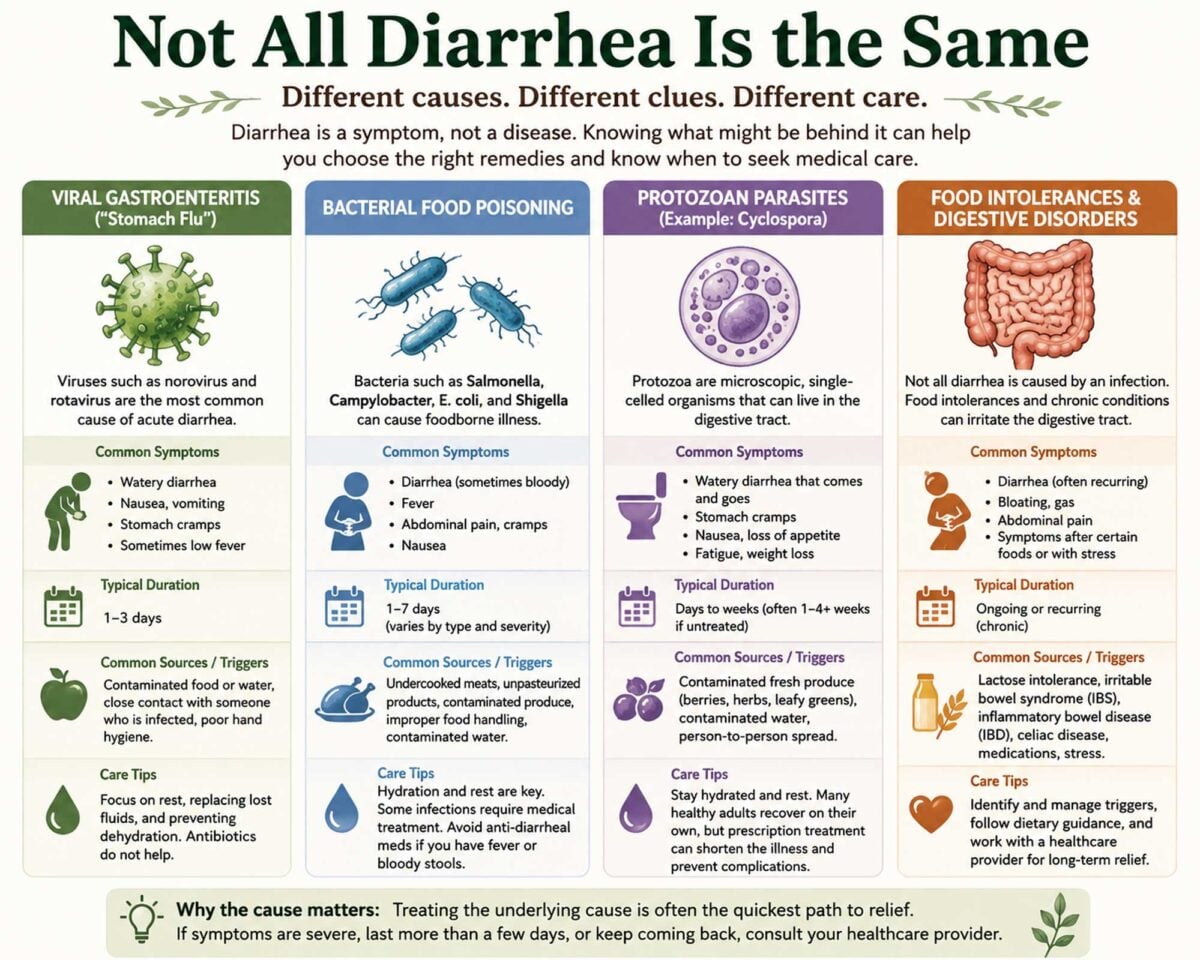
Recent outbreaks of cyclosporiasis have reminded us that not all cases of diarrhea are caused by viruses or bacteria. Cyclospora is a microscopic protozoan parasite that spreads through contaminated food or water, especially fresh produce that has been exposed to infected human waste.
It’s a single-celled protozoan parasite (a coccidian protozoan), more closely related to organisms that cause malaria and toxoplasmosis than to intestinal worms. That explains why:
- Anthelminthic (deworming) medications generally don’t work against Cyclospora because they’re designed for multicellular worms like roundworms, hookworms, and tapeworms.
- Typical antibiotics (such as amoxicillin or doxycycline) also don’t work well because Cyclospora isn’t a bacterium.
- The standard treatment is trimethoprim-sulfamethoxazole (TMP-SMX, Bactrim or Septra) because this particular antimicrobial also interferes with metabolic pathways used by certain protozoa.
So it’s really an antiprotozoal effect, even though the medication is classified as an antibiotic.
Cyclospora infections can cause watery diarrhea that comes and goes for several weeks if left untreated. Other symptoms may include stomach cramps, nausea, loss of appetite, fatigue, and weight loss.
If you think you may have cyclospora, the most important things you can do at home are to:
- stay hydrated
- replace lost electrolytes
- eat easy-to-digest foods
- get plenty of rest
The parasite is highly resilient; normal chemical washes, vinegar rinses, or baking soda soaks do not kill it. According to guidelines on Johns Hopkins Medicine, the only surefire ways to remove the risk are peeling the produce or cooking it thoroughly to at least 158°F (70°C).
Although herbs such as oregano, thyme, and rosemary are antiparasitic, they haven’t been tested for Cyclospora infections in people. Boiron DiarrheaCalm homeopathic remedy has a lot of positive feedback for traveler’s diarrhea, so it may be of help.
Many healthy adults eventually recover without specific treatment, but recovery can take weeks. See guidelines for When to See a Doctor above to decide if you need additional care.
Be Patient When You’re Trying to Stop Diarrhea
I know we all want to get back to normal life as fast as possible when we get sick. BUT – our bodies purge material that needs to be eliminated. As the saying goes, “Better out than in” for toxic material.
Most cases of diarrhea improve within a few days with rest, fluids, and simple foods. The most important priority is preventing dehydration by replacing lost fluids early and often. Be patient, and give your body the time it needs to heal. See a health care provider if needed.

This article is written by Laurie Neverman. Laurie is a lifelong learner with a passion for natural remedies and holistic healing. She’s successfully improved her eyesight and cleared her psoriasis.