
Harvesting and Using Dandelion Roots for Food & Medicine

This post may contain affiliate links. Read my full disclosure here.

Dandelion roots have long history of use as food and medicine. I’ll share the best time to dig dandelion roots, tips for preserving them, and how to use them. Who doesn’t like free food and medicine?
Note: Never harvest dandelion roots from lawns or other areas treated with herbicides or pesticides. The roots accumulate anything sprayed on the soil.
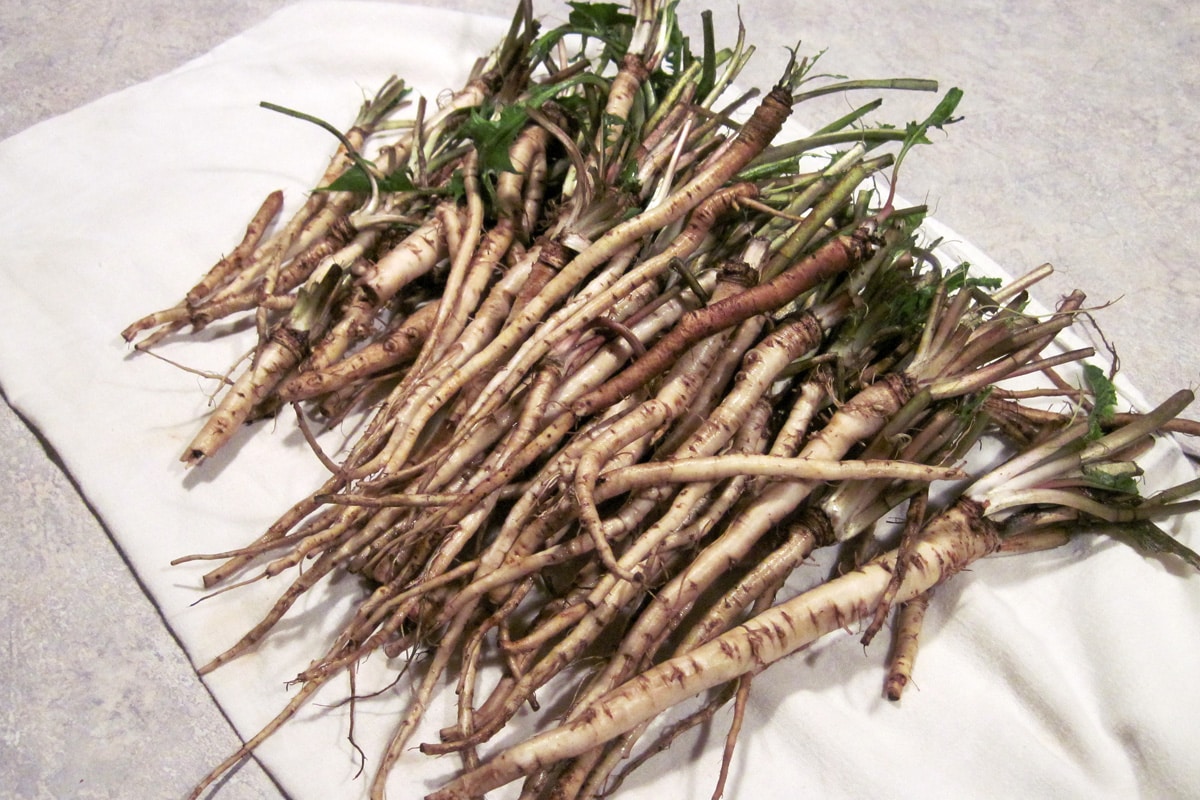
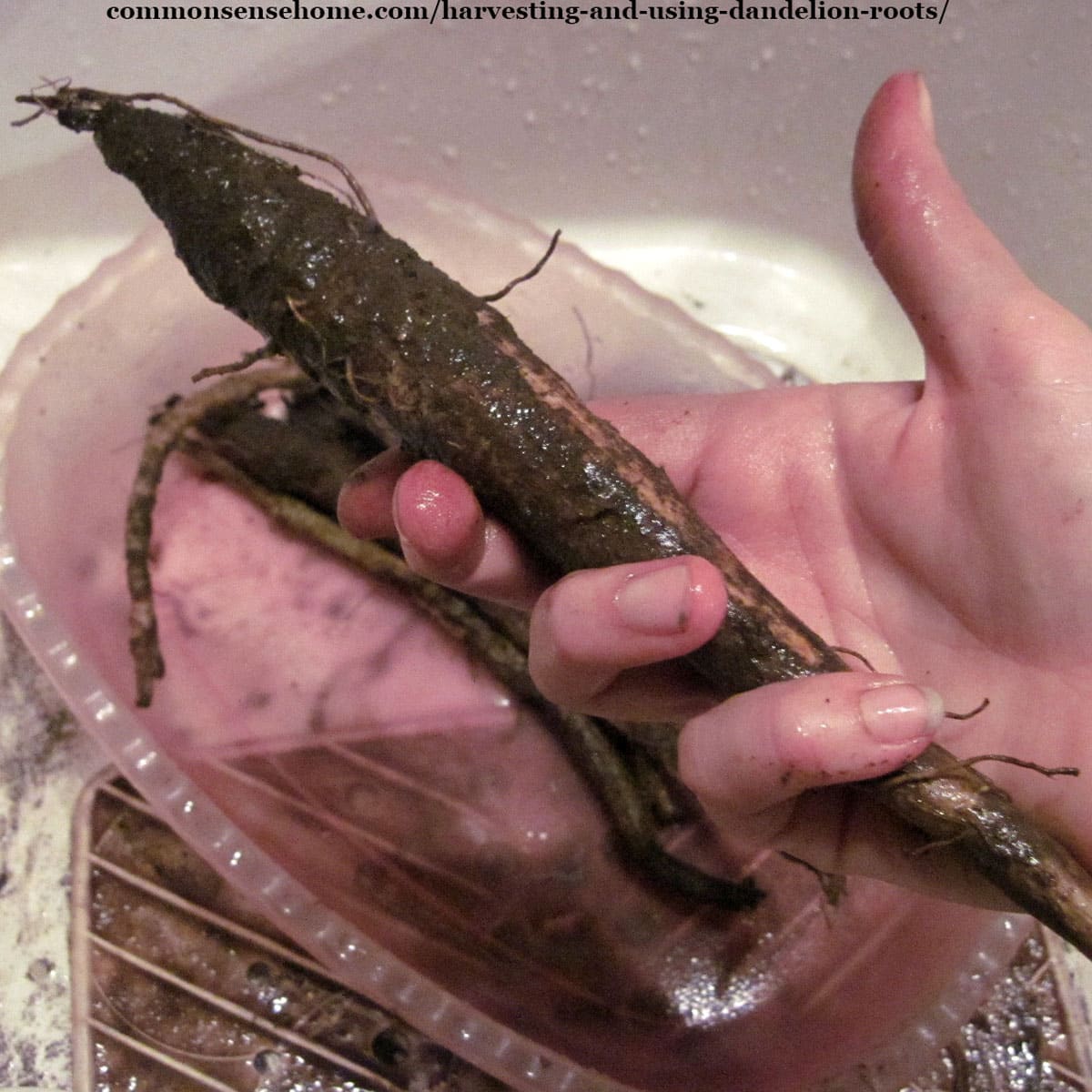
I dug up this pile of dandelion roots while harvesting other fall root vegetables from the garden.
Would you like to save this?
Table of contents
When Should I Harvest Dandelion Roots?
Harvest dandelion roots from late fall through early spring, when the plant is dormant and has stored up energy in the root. (Spring dandelion greens are less bitter, if you are using the whole plant.)
For medicinal use, most sources say fall harvest is best. In fall, the levels of inulin (insoluble fiber) are higher and the fructose levels are lower.
The freezing of winter converts the inulin to fructose, which makes spring roots more palatable for eating. Spring roots are less bitter and chewy – just make sure you dig them before the plants start to blossom. Spring roots are also higher in taraxacin, which stimulates bile production.
What’s the Best Way to Harvest Dandelion Roots?
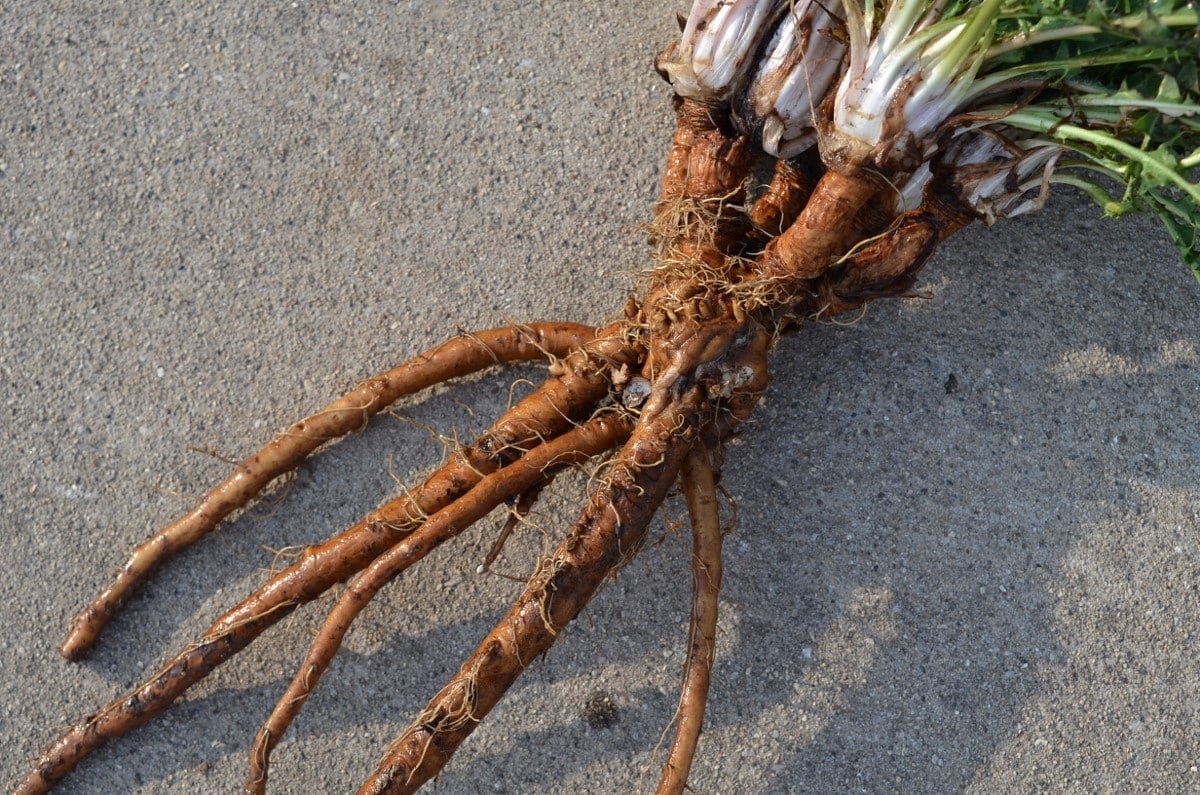
To dig roots, use a dandelion digger or a sturdy fork. Try to damage the root as little as possible so you don’t lose much sap, which is where the medicinal properties lie. Deep, rich soil produces the thickest, easiest to harvest roots.
I always let a few dandelions go in the garden, as they are great for reaching deep into the soil to bring up nutrients.
Select large, vigorous plants – small, spindly plants have small roots that are not really worth harvesting. Sometimes you find larger roots with dark cores. These are older plants, and the roots will be tough. They’re still fine for making dandelion root tea and medicinal use.
You can chop and freeze the roots to use later, but the most common storage method is dehydrating. Rehydrate your dried roots in soups, or use them for teas or tinctures.
How to Dry Dandelion Roots
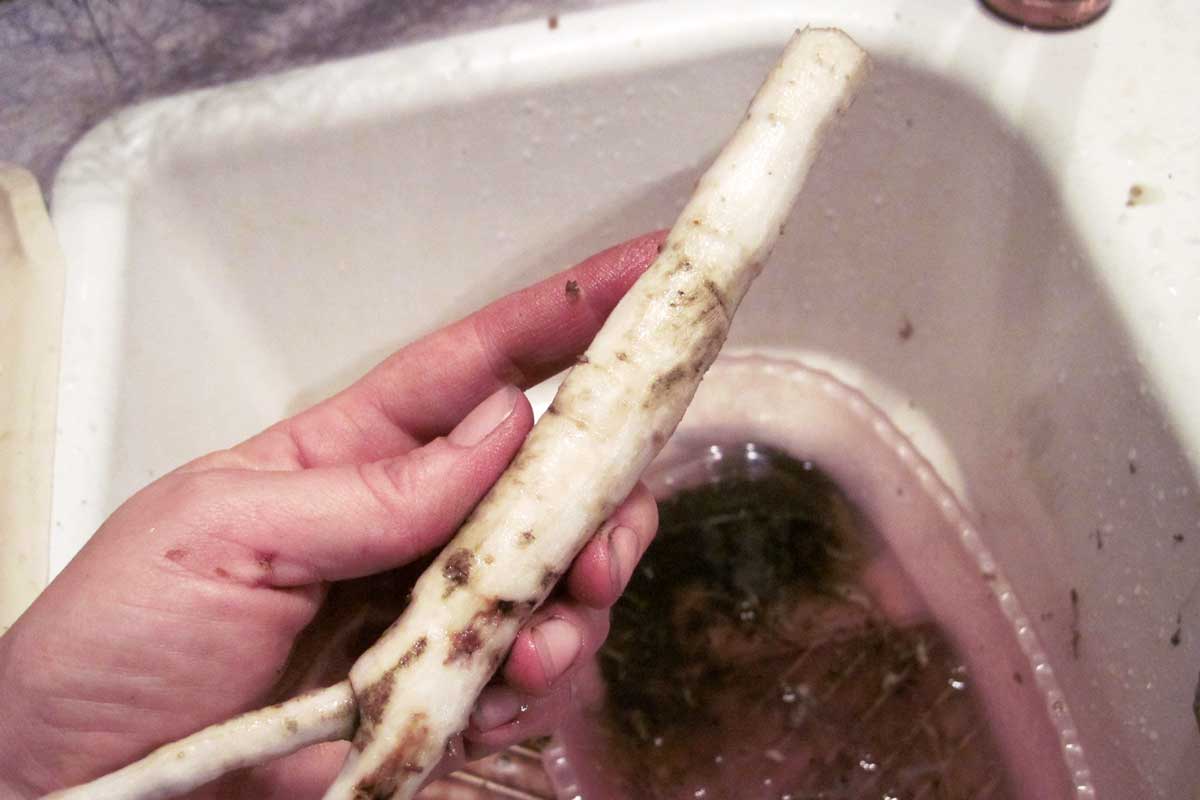
Begin by scrubbing roots well with a vegetable brush, or peeling larger roots.
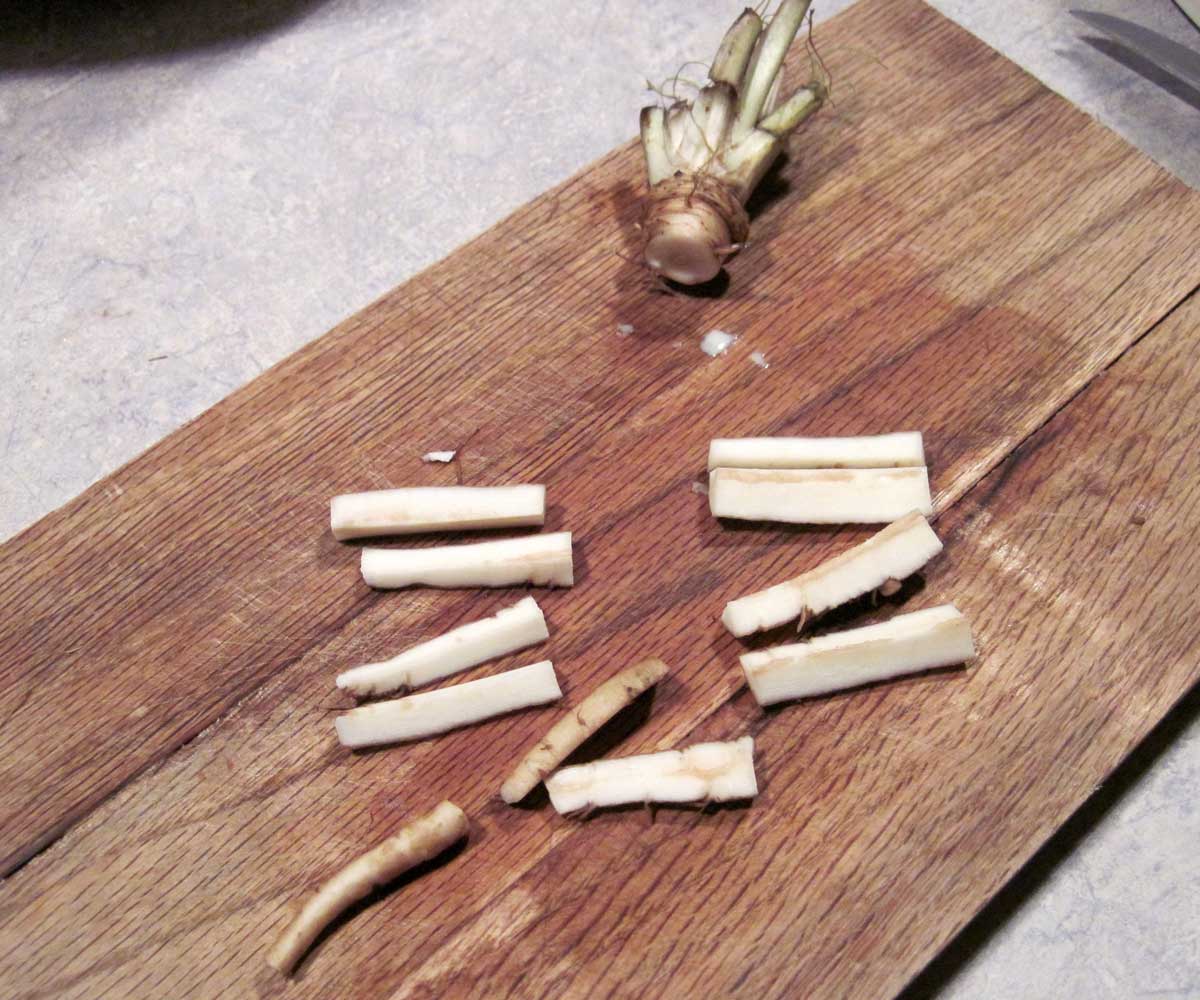
Slice thick roots lengthwise into strips of uniform thickness to decrease drying time and encourage uniform drying.
Spread the chopped roots in a single layer on dehydrator sheets. Dry the roots at 95°F (35°C) until brittle.
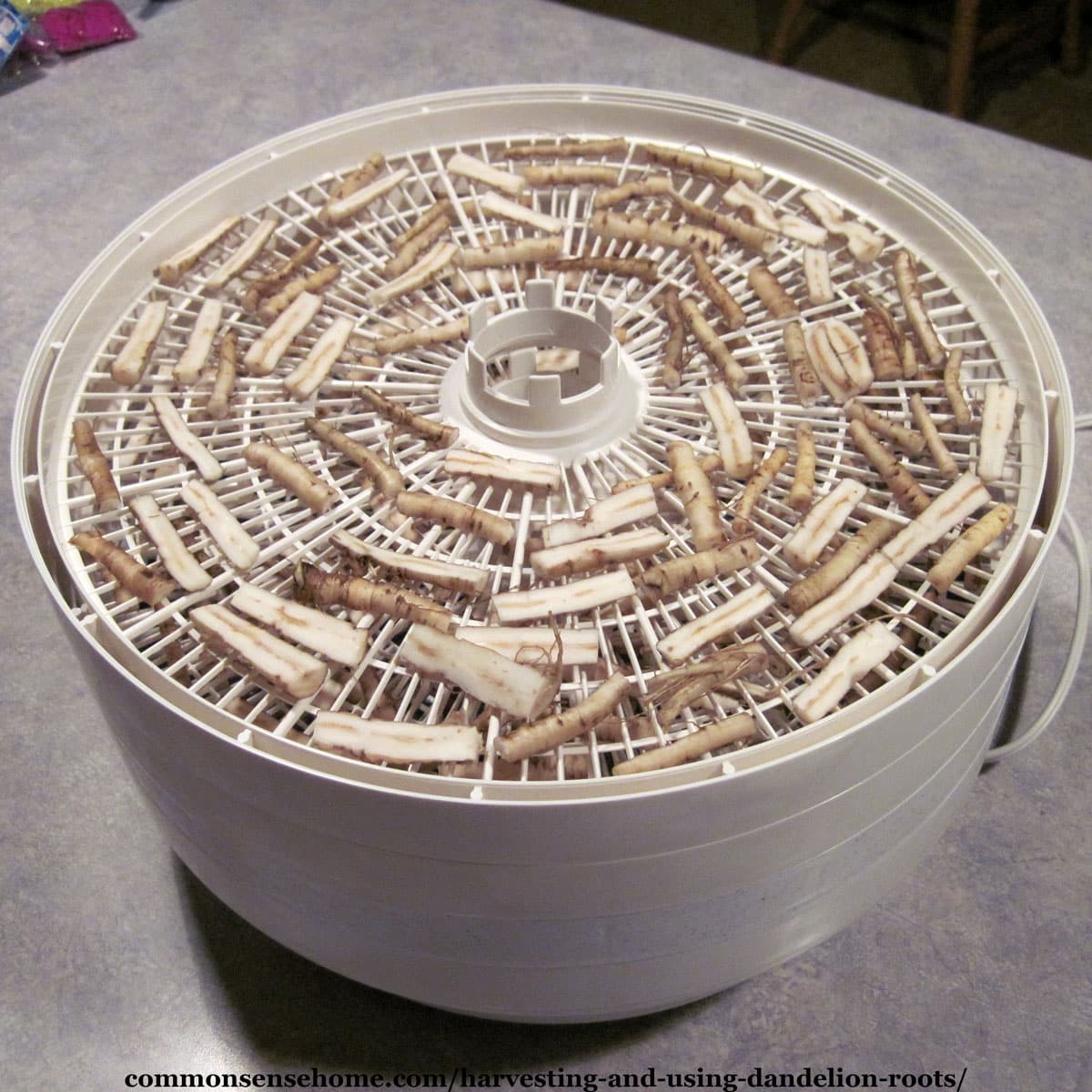
If you don’t have a dehydrator, spread the root pieces in a single layer and place in a dry location with good air flow. Air dry for 3 to 14 days (until brittle). Dried roots will keep for a year or more.
Don’t have time to dig or a clean spot to harvest?
You can buy clean and prepped roots, teas, and extracts online, ready to use, including:

How to Cook Dandelion Root
If you don’t mind a little bitterness, dandelion roots are safe to eat raw. The flavor is mildest in late winter/early spring. Katrina Blair notes in “The Wild Wisdom of Weeds” that she makes dandelion relish with ground roots, apple cider vinegar, and honey. You can also add the shredded roots to homemade sauerkraut.
Peel roots from older plants before cooking. Younger roots are fine with a good scrub. You can treat them like other root vegetables, though some people may notice the bitterness. My crew is used to the stronger flavors of wild plants.
Cut the cleaned roots into uniform pieces, and toss with a bit of oil and salt. Spread on a baking sheet. Bake the roots at 375℉ (190℃) for about 30 minutes, until fork tender.
Boil roots for about 10 minutes with a pinch of baking soda in the water. Change the water and boil for 10 minutes more to reduce bitterness. Eat the cooked roots warm or chilled. The inulin in the roots acts as a prebiotic, promoting the growth of beneficial bacteria in the colon.
If you like bold flavors, simply chop the root and add it to soups or stews. The Wild Wisdom of Weeds includes a simple dandelion root stew recipe, with the following ingredients:
- 1 cup fresh dandelion roots, shredded
- 2 tablespoons sweet white miso
- 1 avocado, diced
- 1/2 cup scallions, diced
- 1 cup fresh yellow squash, shredded
- 6 cups water
- 1 tablespoon fresh garden herbs, minced
Add all ingredients to a pan and heat through, stirring to blend well. Note that the raw or lightly cooked roots may produce flatulence for some, due to the inulin content.
Medicinal Uses
Dandelion root has been used to treat everything from arthritis to hangovers. In traditional medicine, dandelion (Taraxacum officinale) root is used many ways, including as a:
- Liver ally and diuretic
- General tonic
- Anti-inflammatory
- Digestive stimulant
- Deobstruent (clears and opens ducts)
- Sedative
Most scientific studies have been in vitro or animal studies. Dandelion root extracts show promise against cancerous cells, type 2 diabetes, liver damage, and more. As a diuretic, dandelion clears excess fluid, lowering blood pressure.
In “A comprehensive review of the benefits of Taraxacum officinale on human health” the authors review 54 studies. They found that the most commonly reported effects of dandelion were hepatoprotective, antioxidant and anticancer activities.
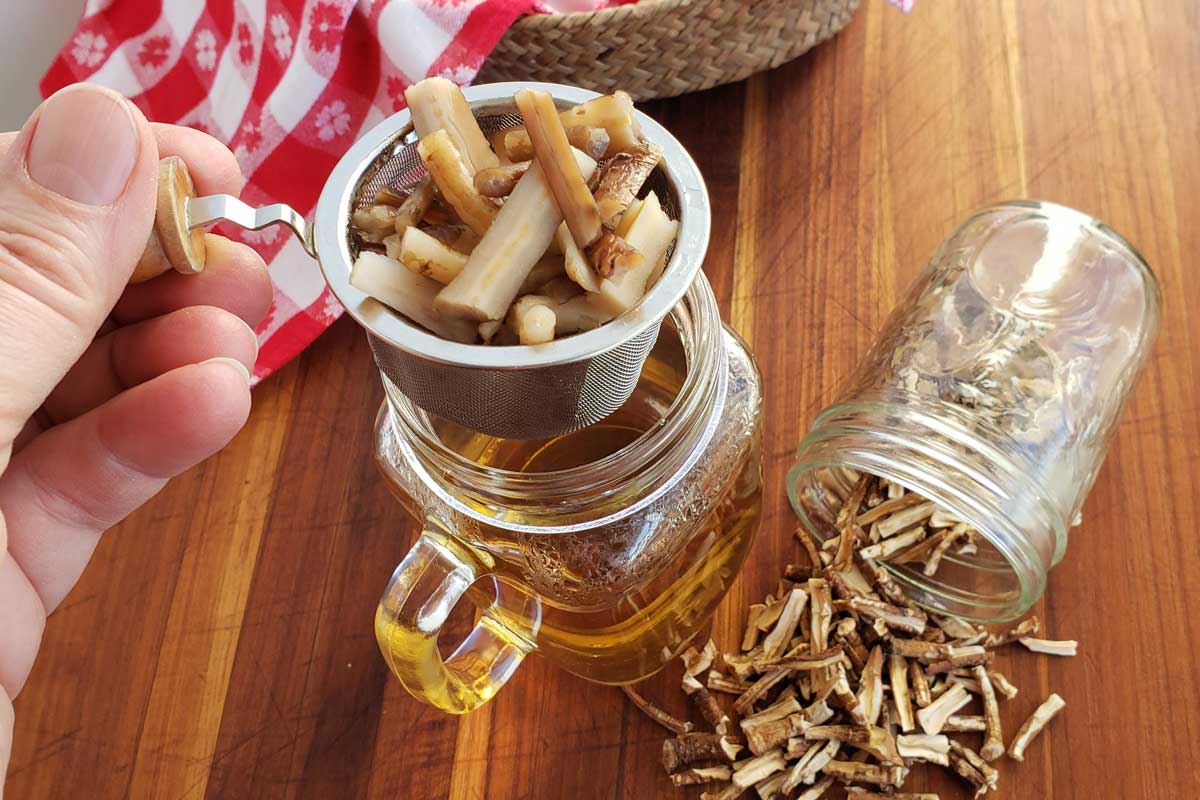
To extract the medicinal compounds from the roots, use a decoction or tincture. Decoctions are water based, while tinctures are generally alcohol based. A decoction is essentially a strong tea.
Make a Dandelion Root Decoction
To make a decoction, place one ounce of dried roots or two ounces fresh roots (by weight) in a pan with one pint of water. Bring to a boil, cover, and simmer for 20 minutes. Strain and compost the spent roots.
See How to Make Dandelion Tea for recipe variations, including roasted root tea and healing tea blends for specific ailments.
Make a Dandelion Root Tincture
To make a tincture, place dandelion root in a jar and cover with 80 proof (40%) vodka. Cover tightly and allow to steep 4-6 weeks, shaking daily.
Strain out plant material and store in a dark glass bottle. Label and date.
Side Effects and Allergic Reactions
While rare, dandelion sap can cause contact dermatitis in sensitive individuals. As a diuretic, it may flush medicines out of your body faster. If you are allergic to plants in the daisy family, you may react to dandelion.
Do not use dandelion root if you have irritable stomach or bowel, or if you have an acute inflammation. (source)
If you suspect you have gallstones larger than 1.5 millimeters, avoid using dandelion root. You might accidentally flush the stones into the bile ductwork. There they can get stuck and cause a lot of pain.
Note: Always talk to a healthcare professional before taking any herbal medicine if you are on prescription medications. This article is not intended to treat, cure, or prevent illness, or replace professional medical advice.
More Information on Dandelions and Using Wild Plants
Wild plants are a wonderful resource for those who seek healthy, nourishing food with abundant nutrition. The flavors can be strong, but I find that the more I eat, the more I crave them. I hope you’ll give this humble weed a chance in your garden and your kitchen.
Don’t forget to check out the other Wildcrafting posts, including:
- Benefits of Dandelion
- How to Make Dandelion Wine
- Easy Dandelion Fritters
- Dandelion Flower Jelly
- How to Get Rid of Dandelion Without Chemicals

This article is written by Laurie Neverman. Laurie is a lifelong learner with a passion for natural remedies and holistic healing. She’s successfully improved her eyesight and cleared her psoriasis.
can I use food grade pure vegetable glycerine instead of alcohol to make dandelion and other tinctures.
If you prefer to avoid alcohol, you can make a glycerite using vegetable glycerin. It creates a slightly sweet, milder extract that’s easier to take than traditional tinctures.
You’ll need:
Dried dandelion root (chopped or coarsely ground)
Vegetable glycerin
Distilled water
A glass jar with lid
Instructions:
Fill your jar about ½ full with dried dandelion root.
In a separate container, mix 3 parts vegetable glycerin with 1 part distilled water. (This helps thin the glycerin so it extracts better.)
Pour the mixture over the root until it’s fully covered, leaving about an inch of headspace.
Stir well to release any air bubbles (glycerin is thick).
Cap, label, and store in a cool, dark place.
Let it infuse for 4–6 weeks, shaking every few days.
Strain through cheesecloth and bottle your finished glycerite.
To use: Take in small amounts (typically 1–2 droppersful), as needed.
Note: Dandelion root is tough and rich in bitter compounds that extract more effectively with heat or alcohol. If you’d rather skip alcohol, a simple decoction (simmering the root in water) is often a stronger and more effective option than a glycerite. The shelf life of glycerites is 1-3 years, versus 5+ years for an alcohol based tincture.
Very interesting article. I had some inflammation over the last week and had a dandelion salad yesterday that helped some. I think I’ll have a few more while they’re in their best season. My chickens eat our nettle before I can get to it, but I do have plenty of burdock and dandelions. My husband and I noticed we have fewer dandelions in our pasture (NW WI) this year, which we thought was odd. We’ve never sprayed because it is cut for hay. Thanks for the great info.
Wild plant populations ebb and flow with the soil and weather conditions, so it may be that your pasture is changing over time, or it’s just not the best year for them. Cooking mellows out the bitterness a bit as the leaves age, but yes, the spring greens are the most palatable.
How long before dandelion pills show improvement ?
Every person is different, and pills come in different dosages, and dandelion is used for many different ailments, so that’s a very open ended question. If you work with a healthcare provider/herbalist who knows your medical history, they may be able to give you an estimate of when they would expect improvement in whatever you are attempting to treat.
Where can I purchase fresh not dry dandelion root? I am in Texas and the root never gets that big. I love the way they taste.
I’ve never seen fresh root offered for sale, probably because most people treat them like a weed and they wilt quickly after harvest. You could try having a friend ship some from a different area, but I don’t think they would hold up well during shipping.
Just wondering how concerned i should be if a neighbor two doors away from me is using heavy chemicals on his lawn. I do harvest dandelions & other herbs from my property. Should i do a soil treatment to help the soil cleanse & become healthier…. just as a preventative. Im not sure how i can test to see if the chemicals are reaching my yard. Its fairly flat here but on the wet side.I live in a swampy area. Appreciate any advise!
Thank you…i am a huge fan of the dandelion & enjoyed all of your shared info!
Without testing, it’s impossible to say if or how much anything your neighbor uses is reaching your yard.
Some possible remediation options for protection:
Planting deep rooted plants that you don’t intend to use as a buffer between you and the neighbor.
Continuing to improve your soil structure by adding clean organic matter (straw, wood chips, compost, leaf mulch – nothing with herbicide or pesticide residue).
Using bioactive surface treatments like compost tea or EM-1 Effective microorganisms to boost activity of the microbes that break down and eliminate soil toxins.