
Warm & Golden Dandelion Wine Recipe (Old-Fashioned Wine Making)

This post may contain affiliate links. Read my full disclosure here.
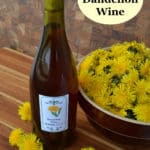
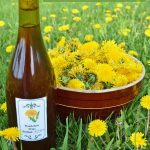
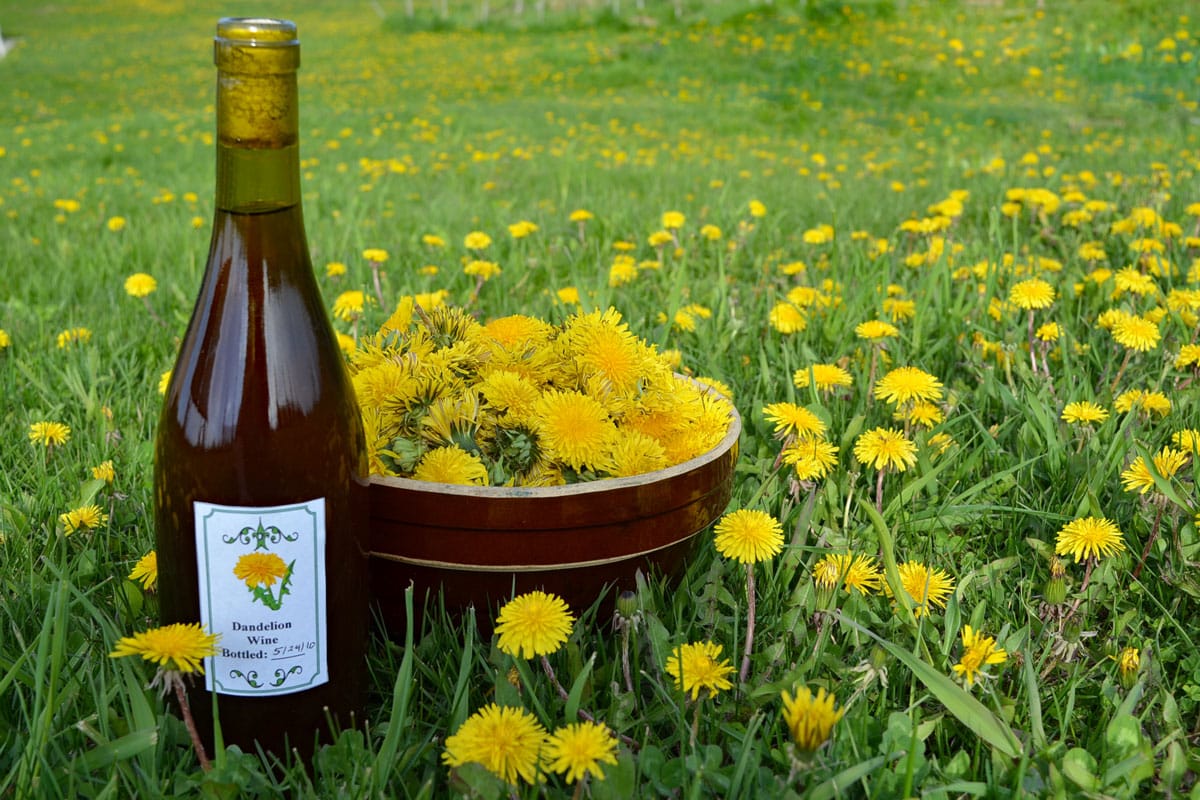
Wine out of dandelions? You bet! Making homemade dandelion wine is a longstanding family tradition. We don’t make it every year, but I do like to keep a few bottles on hand for company.
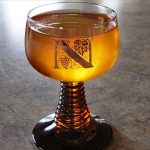
The taste of this dandelion wine is rich, golden and warming – more like a good brandy than a wine. I’ve had friends who don’t normally like wine comment that they do enjoy this “spring tonic”. This is a “country wine” made from simple ingredients with basic equipment.
Would you like to save this?
When we get dandelions, we get LOTS OF DANDELIONS! They are everywhere! (Boy photos are from 2010. They have grown quite a bit since then, but I kept these photos here for the happy memories.)
Dandelions are wonderful for bringing up nutrients and breaking through compacted soil. This area of the yard had a lot of compaction from soil being moved around, so the dandelions were working overtime.
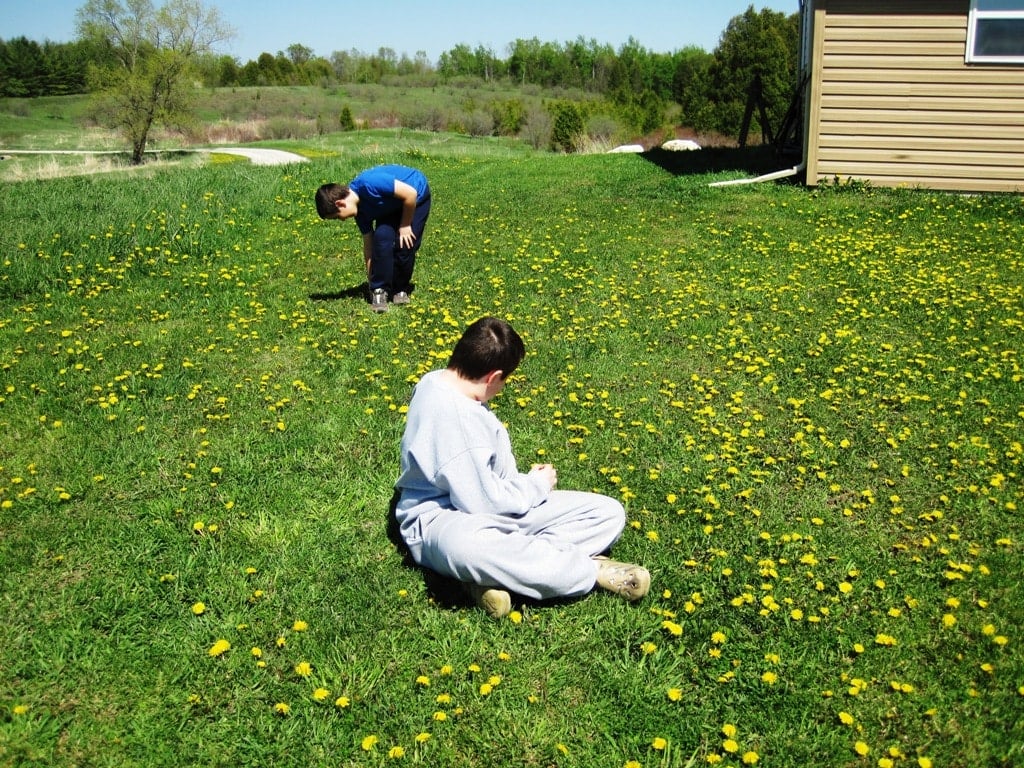
Table of Contents
Gathering the Flowers
Make sure your dandelion flowers are free of pesticides, herbicides and other contaminants. I usually don’t rinse the blossoms, though you can if they are dusty. They are sterilized during the first part of brewing. We gather bins of flower heads outside, and then bring them inside to remove the petals.
Don’t pick dandelion blossoms for wine or eating from an area used by pets for their “bathroom”. As I explained to a reader in the comments, I’m fairly sure goat pee will not wash off.
What part of the dandelion is dandelion wine made from?
For dandelion wine, use the yellow flower petals only. Leaving the petals attached to the green base of the flower will result in a bitter, unpleasant wine. My neighbor made this mistake when she tried to make dandelion wine, and she ended up throwing out the whole batch.
I use 3 quarts of loosely packed yellow dandelion petals (pictured below). Not 3 quarts of flower heads, 3 quarts of petals only.
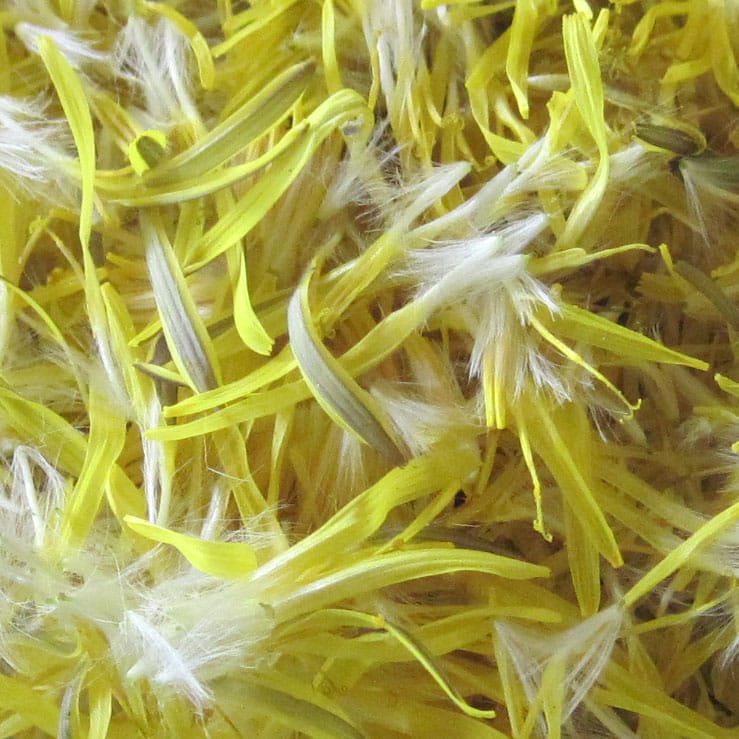
If you don’t have enough dandelion petals from one picking, freeze the petals until you have enough.
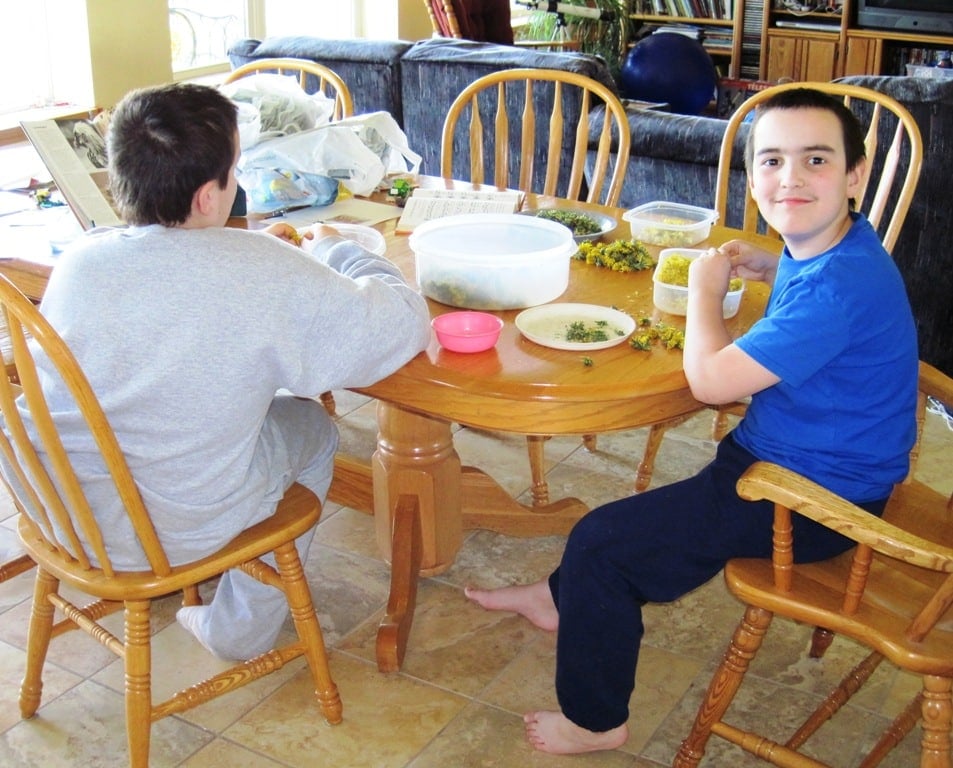
The boys and I sat down to a session of “second picking” to remove the yellow petals from the blossoms. You want to remove the petals as soon as possible after picking, as the flower heads close over time. Once they close, it’s tough to get the petals off.
If you are working alone, it may be best to pick some of the flowers needed, remove petals, then pick more flowers and repeat. That way, you won’t have trouble with the flower heads closing before you have time to clean them. It’ll also give you a chance to get up and stretch.
Making Homemade Dandelion Wine
“Dandelion wine, believed to be of Celtic origin, is regarded as one of the fine country wines of Europe. In the late 1800s and early 1900s, it was not proper for ladies to drink alcohol. However, dandelion flower wine was considered so therapeutic to the kidneys and digestive system that it was deemed medicinal even for the ladies.“
Adapted from Dandelion Medicine, in combination with my mother’s recipe.
Remember, all your fermentation vessels should be glass, ceramic, stainless steel or food grade plastic. Never ferment in aluminum or iron, as it can react with the wine.
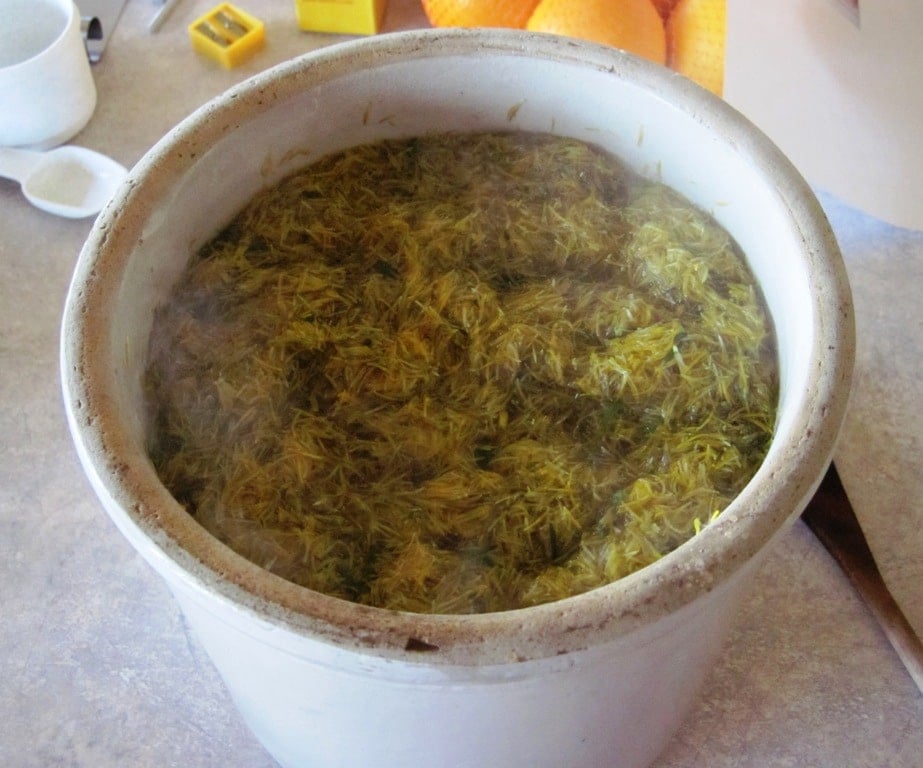
I normally use my two gallon crock for one gallon of wine, since the fruits bubble up during fermentation. You can see in the photos below that a one gallon crock gets very full.
Ingredients
- 3 quarts dandelion petals, loosely packed
- 1 gallon water
- 2 oranges, with peel, preferably organic
- 1 lemon, with peel, preferably organic
- 3 pounds sugar
- 1 package champagne yeast or wine yeast (this yeast finishes at around 12-14% alcohol)
- 1 pound raisins, preferably organic
How to make dandelion wine – Directions
1) Collect the blossoms when they are fully open on a sunny day, after the morning dew clears. Remove green parts and measure out 3 quarts of loosely packed petals.
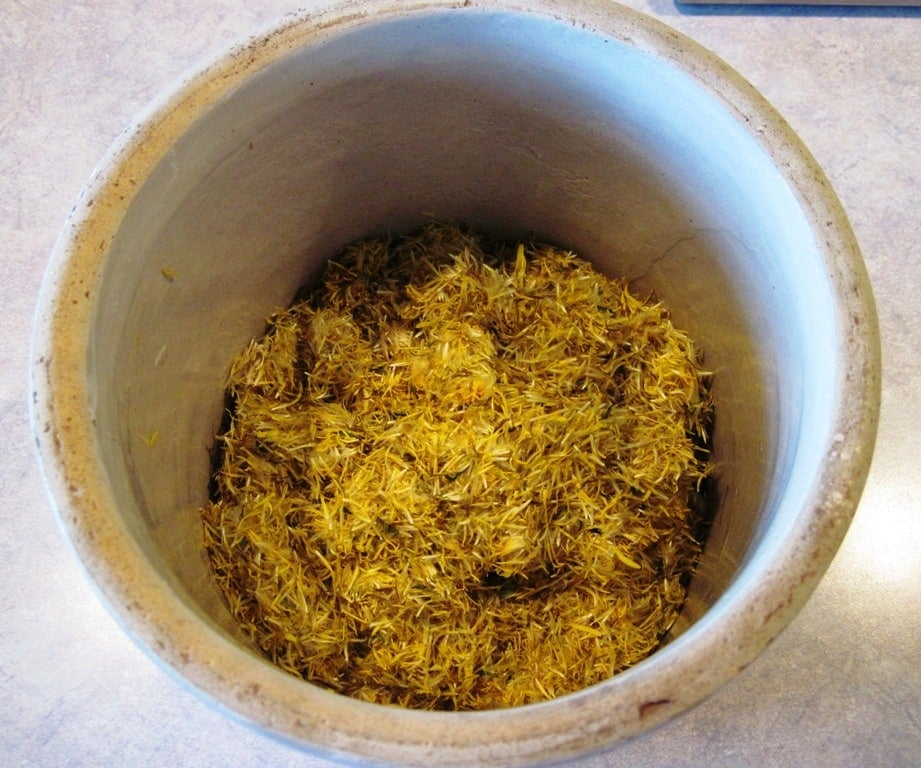
2) Bring the water to a boil and pour it over the flowers in a large pot or crock. Cover with a towel to keep dust out and let steep for three days. Stir daily to keep the petals submerged in your “dandelion petal tea”. They will develop a musty smell, which is normal.
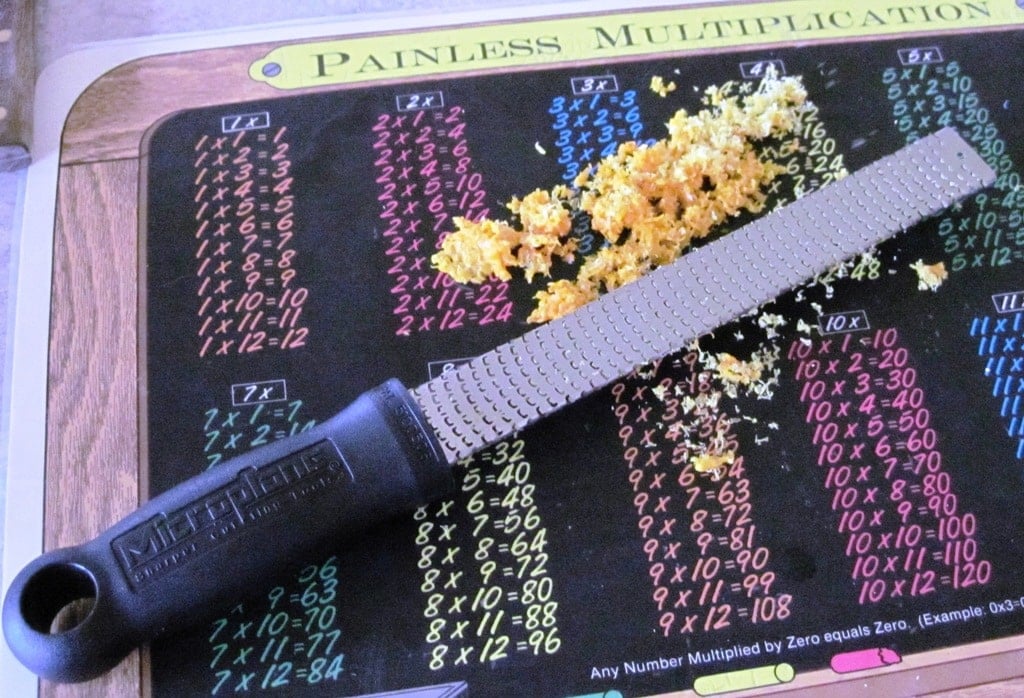
3) Prepare the oranges and the lemon. Zest about half of the rind and peel off the rest in thin strips. You want to minimize the amount of white pith added to the brew.
4) Clean most of the pith off the fruit and slice into thin rounds.
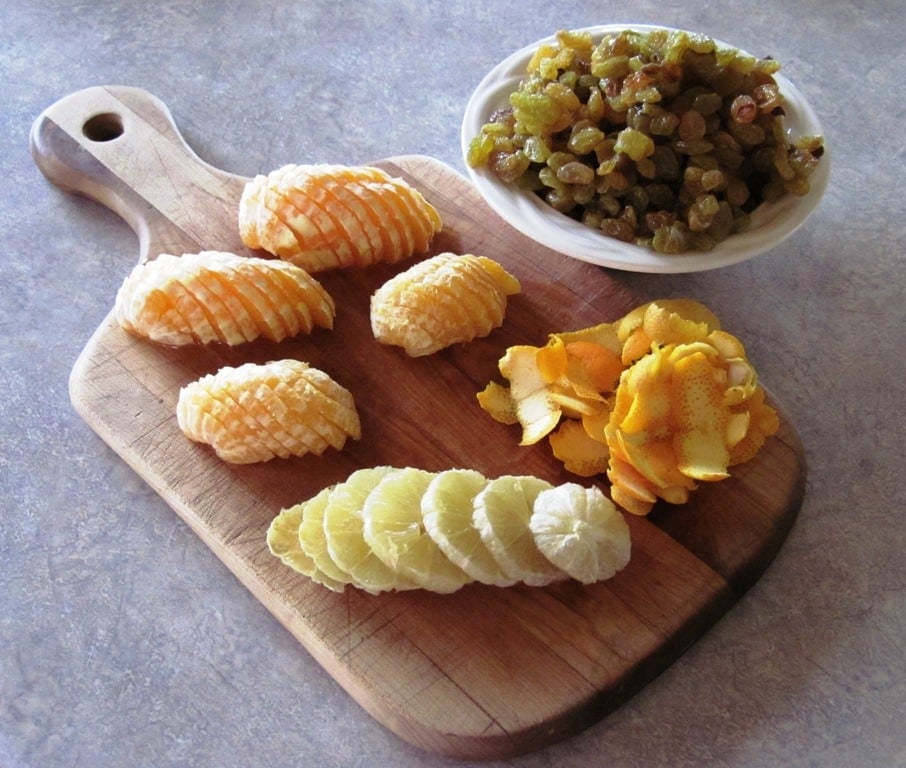
5) Add the lemon and orange zest to the flower-water mixture and bring to a boil. Remove from heat, strain out solids. Dissolve the sugar in the flower water. Allow to cool to room temperature.
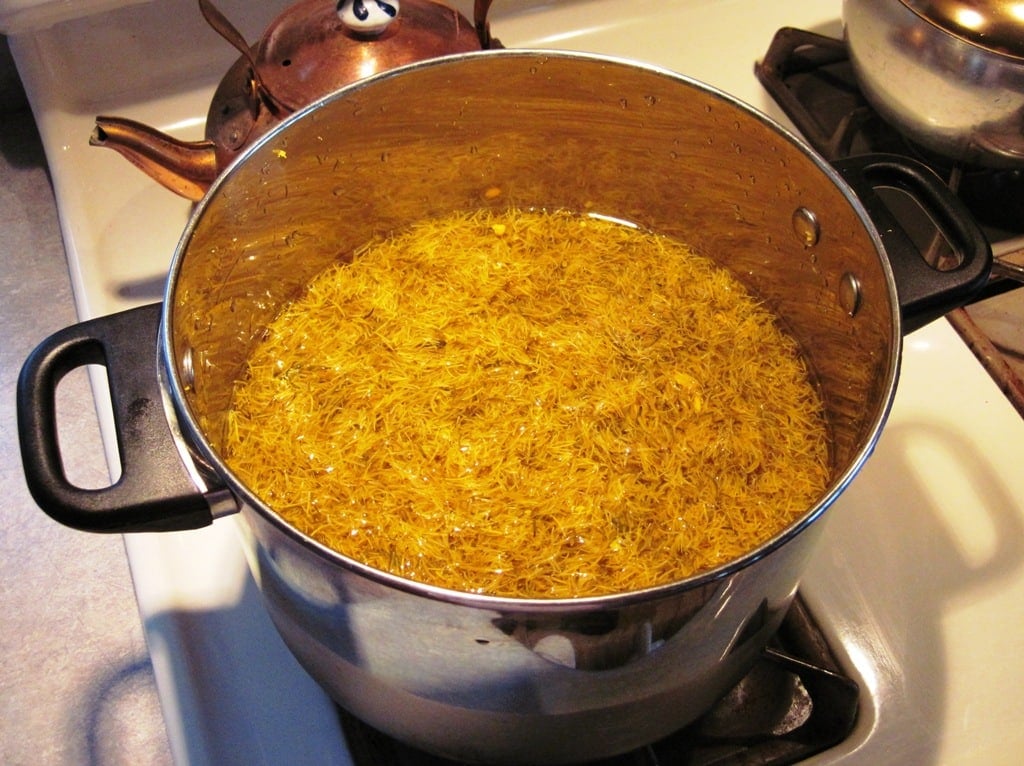
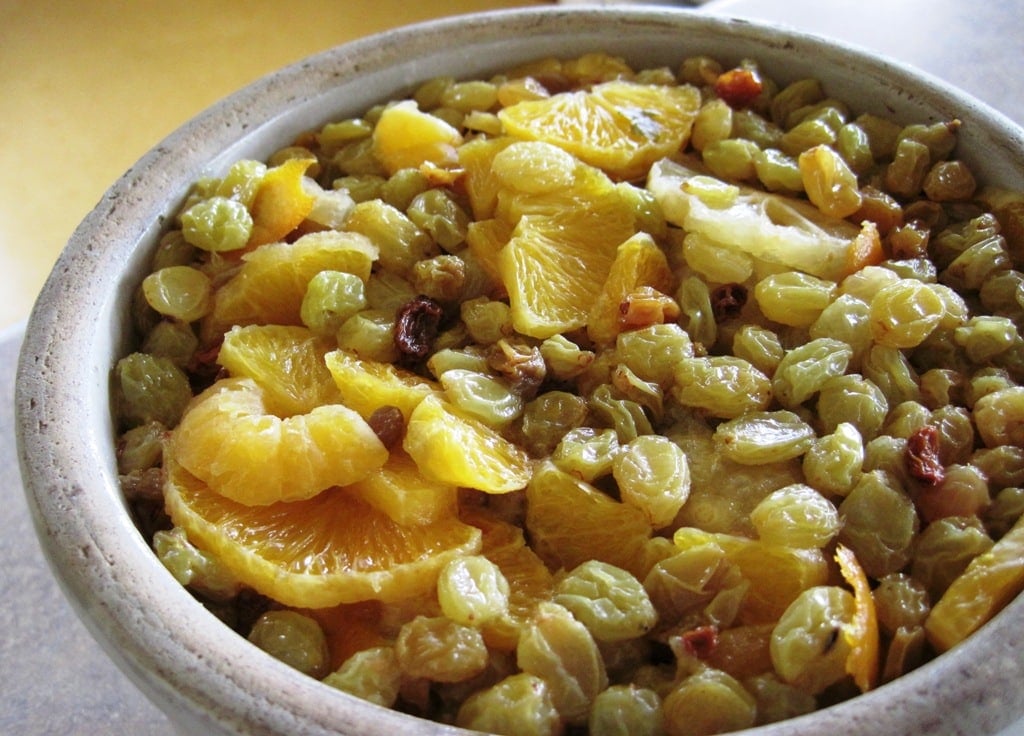
6) Add the yeast, raisins, and orange and lemon slices and rind strips to the liquid. Put everything into a crock (or wide mouth carboy with airlock) to ferment. I cover my crock with a clean cotton towel held down by a rubber band to keep dust and bugs out. (Not shown.)
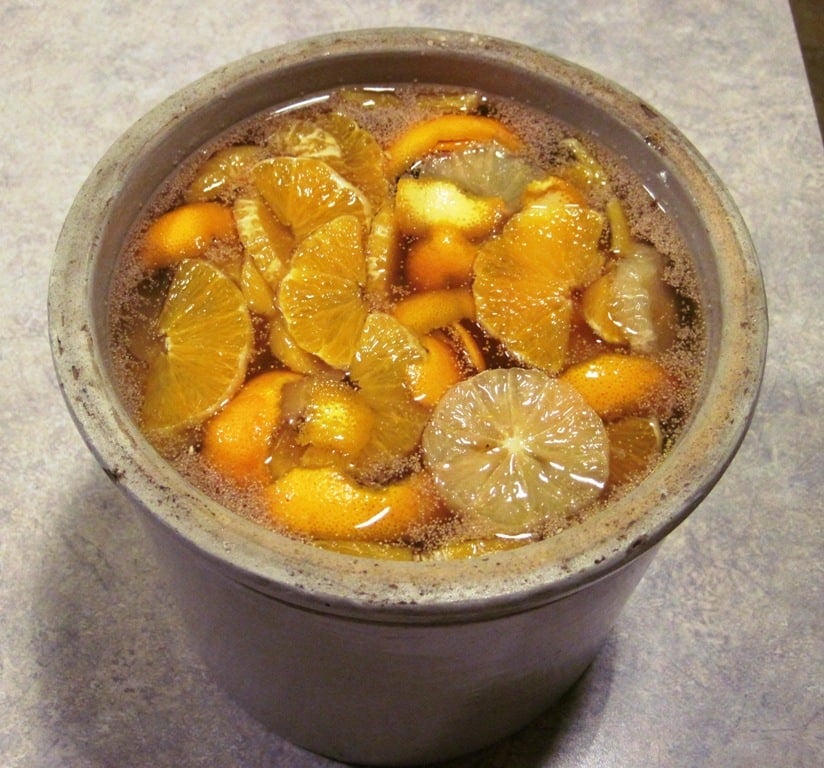
Stir daily with a wooden spoon or non-reactive stir stick. When the yeast gets active, the bubbles will lift the fruit up to the top of the wine. You want to stir so all the fruit gets pushed back under the surface and wet down daily.
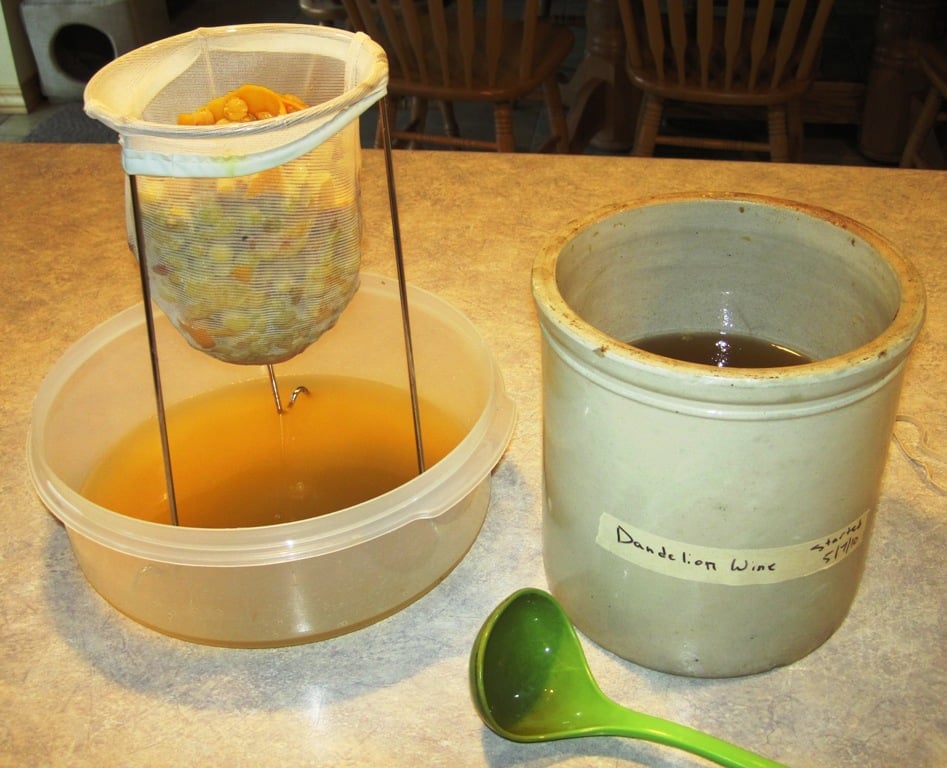
7) When the primary fermentation mixture stops bubbling (1 -2 weeks), fermentation is almost done. Strain the liquid through several layers of cheesecloth, a flour sack towel, or a jelly bag.
Bottling the Wine
You have two options for bottling your homemade dandelion wine. You can let it finish in bottles, or move to a carboy and then bottle.
To finish in bottles: After straining, move the young dandelion wine directly to clean bottles. Slip a deflated balloon over the top of each bottle to monitor for further fermentation. When the balloon remains deflated for 24 hours, fermentation is complete. You will probably need four or five 750 ml bottles.
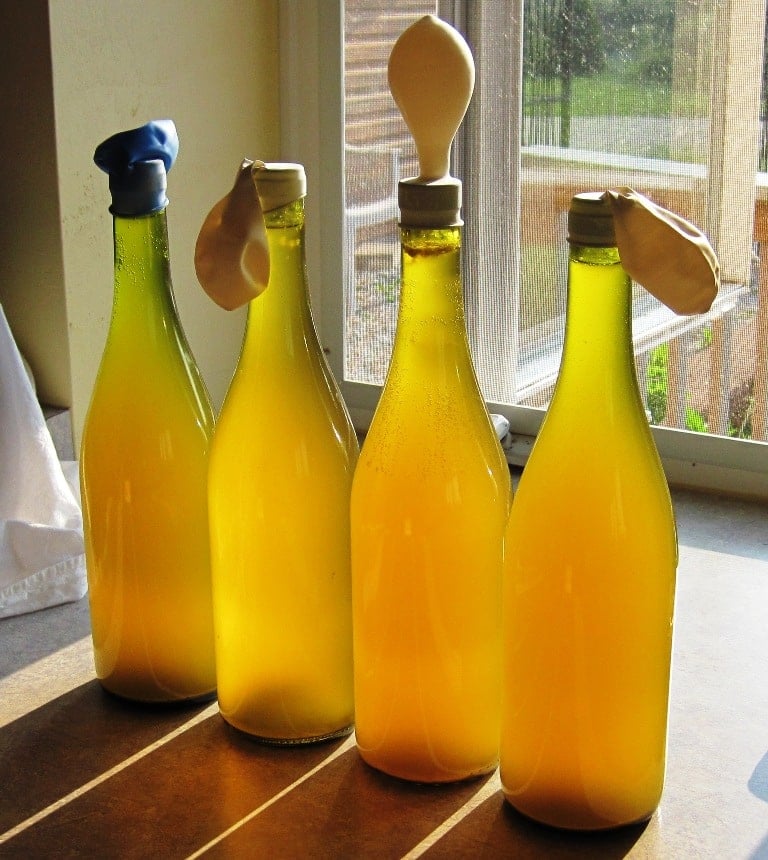
Cork the bottles and store in a cool, dark place for at least six months before drinking.
NOTE: Do not seal bottles tightly before they finish fermenting, and don’t put them somewhere warm. Otherwise, you’ll end up with exploding bottles, like my sister, Mary, when she stashed them in a closet. Apparently, it sounded like there were bombs going off or they were being shot at.
If you would like a clearer wine, transfer the strained dandelion wine into a one gallon carboy with airlock before the final bottling. Allow to ferment in the carboy for 2-3 months, and then rack into the bottles.
If you’d like to download a pdf of my wine labels, use this link: Printable Dandelion Wine Labels.
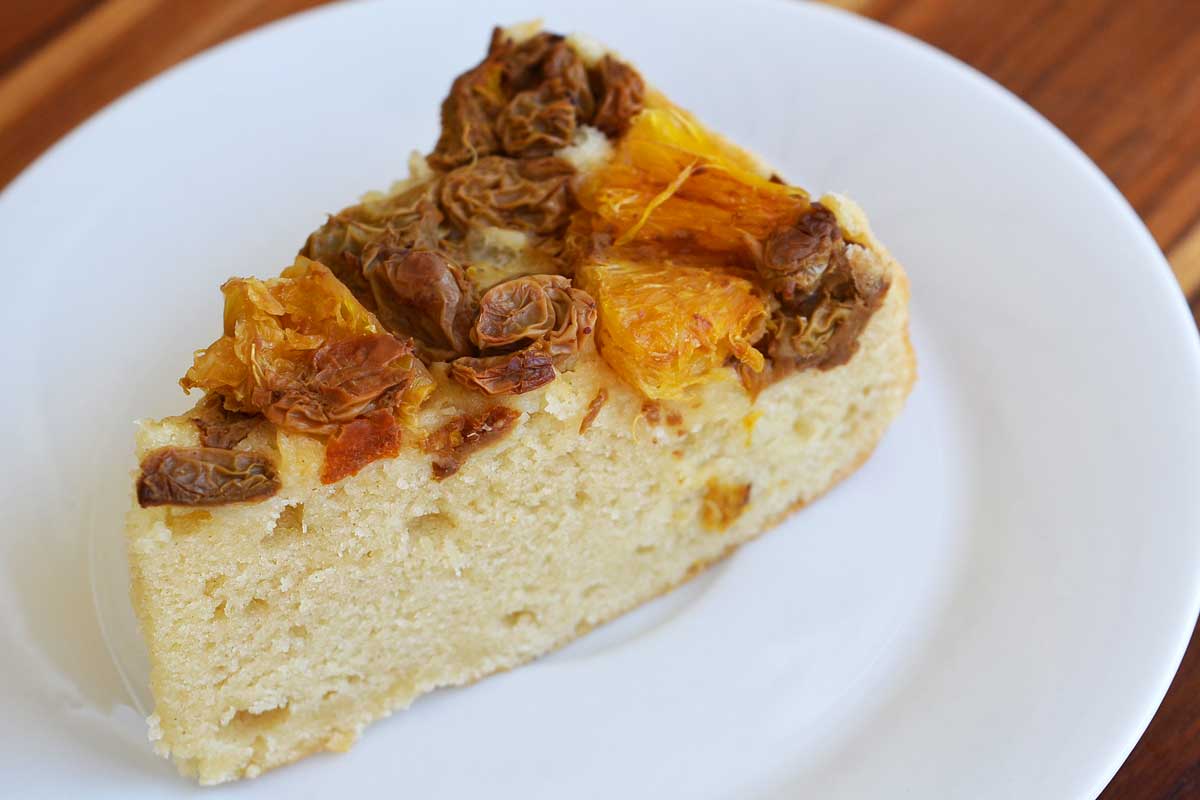
If you don’t want to send the wine fruit to the compost pile, try Dandelion Wine Fruitcake.
Recommended Materials for Making Dandelion Wine
- Wine Yeast – store extra yeast packs in the fridge or freezer. I normally use Lalvin Wine Yeast EC-1118.
- 2 Gallon Crock – 2 gallons gives you space for fermentation.
- Wine Bottles – It’s fine to wash and reuse old wine bottles. You will probably need five 750ml bottles.
- Corks – It’s best to use new corks. I like the #9 Straight Wine Corks.
- Wine Bottle Corker – This double lever model works like a charm.
- Gallon carboy with airlock – optional, for clearer wine.
Old-Fashioned Dandelion Wine Recipe
A smooth and hearty flower wine with citrus notes that will warm you from head to toe.
- Yield: 4–5 bottles 1x
Ingredients
- 3 quarts dandelion petals, loosely packed
- 1 gallon water
- 2 oranges, with peel, preferably organic
- 1 lemon, with peel, preferably organic
- 3 pounds sugar
- 1 package wine yeast
- 1 pound raisins, preferably organic
Instructions
- Collect the blossoms when they are fully open on a sunny day. Remove any green parts and measure out three quarts of petals.
- Bring the water to a boil and pour it over the flowers in a large pot or crock. Cover with a towel to keep dust out and let steep for three days. Stir daily to keep the petals submerged.
- Prepare the oranges and the lemon. Zest (finely grate) about half of the rind and peel the rest off in very thin strips. You want to minimize the amount of white pith added to the brew.
- Finish peeling the citrus, and slice them into thin rounds.
- Add the lemon and the orange zest to the flower-water mixture and bring to a boil. Remove from heat, strain out solids, then add the sugar, stirring until it is dissolved. Allow to cool to room temperature.
- Add the yeast, raisins, and orange and lemon slices and rind strips to the liquid. Put everything into a two gallon crock (or wide mouth carboy with airlock) to ferment. I cover my crock with a clean cotton towel held down by a rubber band. Stir daily with a wooden spoon or non-reactive stir stick.
- When the primary fermentation mixture stops bubbling (1 -2 weeks), fermentation is almost done. Strain the liquid through several layers of cheesecloth or a flour sack towel.
Bottling the Wine
You have two options for bottling your homemade dandelion wine. You can let it finish in bottles, or move to a carboy and then bottle.
To finish in bottles: After straining, move the young dandelion wine directly to clean bottles. YOu will probably need four or five 750 ml bottles. Slip a deflated balloon over the top of each bottle to monitor for further fermentation. When the balloon remains deflated for 24 hours, fermentation is complete.
Cork the bottles and store in a cool, dark place for at least six months before drinking.
If you would like a clearer wine, transfer the strained wine into a one gallon carboy with airlock before the final bottling. Allow to ferment in the carboy for 2-3 months, and then rack into the bottles.
Notes
Do not seal bottles tightly before they finish fermenting. Always store your wine in a cool location.
Is Dandelion Wine Alcoholic?
Yes. If you use wine yeast as recommended in the recipe, you should end up with around 12 to 14 percent alcohol.
If you’re feeling adventurous, you may be able to nurture wild yeast from the raisins to do the fermenting. Wild yeast brews will have a lower alcohol content, because wild yeast dies off if the alcohol levels get too high.
You can learn more about using wild yeasts in the book, “The Wildcrafting Brewer“.
Is Dandelion Wine Medicinal?
Nearly every part of dandelion is full of nutritional value, with vitamins and minerals packed in every part of the plant. Aside from its great taste in wine making, it also has been used throughout history for its medicinal properties.
For more information, check out this article on Dandelion Benefits.
To dig even deeper into this amazing plant, check out The Dandelion Workshop online course. It includes a printable guide and step-by-step videos for making a variety of dandelion recipes and remedies.
You may also enjoy:
- Harvesting and Using Dandelion Roots
- Low Sugar Dandelion Jelly Recipe
- Dandelion Fritter Recipe
- How to Make Dandelion Root Tea
- Get Rid of Dandelions Without Chemicals
I’ve also answered a lot of reader inquiries in the comments, so be sure to have a look if you have questions. If you don’t find your answer (or would like to share some wine making stories or observations), leave a comment below.

This article is written by Laurie Neverman. Laurie mixes her rural background and engineering training to create a unique and resilient homestead. She enjoys getting to know wild plants and using them for food and medicine. Her most unique experiment to date was quackgrass wine.
Originally published in 2010, last updated in 2026.
I wonder if you can make dandelion jelly. I have a recipe for honeysuckle jelly. I am guessing it would work the same.
Absolutely! We generally have plenty of fruit jellies available so I don’t do many flower jellies, but dandelion petals do make a lovely golden jelly.
Dandelion petals make a wonderful jelly. To get a better stronger flavour steep in the water for at least two days…….in a cool spot. Mine reminds me of Buckwheat honey.
Hi there! Found your post from Fat Tuesday 🙂 It caught my eye because for the past 2 weeks I’ve been covering how to cook with dandelions over at my blog. I love the cookie idea, will definitely try it! With the flowers, I made muffins, a cream of dandelion soup, and some veggie burgers – also made other foods with the greens..this is such an amazingly versatile plant!
Anyways, here are the links in case you’re interested 🙂
Dandelions: Friend or Foe? Part 1 (Greens)
Dandelions: Friend or Foe? Part 2 (Flowers)
Sarah – thanks for sharing the links. Be sure to stop back later in the week for Wildcrafting Wednesday. These types of posts would be a great addition to the blog hop.
Hello Laurie, this is awesome, my grandpa made many wines out of fruits, I was too little to remember what all he used but remember the large dijon glass bottles. I don’t know where to find fresh yeast, the grocery store don’t carry them no longer and I couldn’t find it at a health food store either. Any alternative? My grandma made Dandelion honey, made with blossoms and probably sugar, unfortunately I don’t have a recipe so need to google it, but I loved the taste, this wine must be awesome with the orange/lemon parts!!
By using just the petals and the zest, this version is a lot less “foxy” than the wine my mom used to make. I’ve got this year’s batch of petals steeping right now.
As for yeast, a good quality champagne yeast will work well. You can generally find that type of yeast at homebrewing stores if you have any in your area, or buy it online retailers, such as amazon.com. Here’s a link to a yeast variety I have used regularly – http://www.amazon.com/gp/product/B00434CB74/ref=as_li_tf_tl?ie=UTF8&tag=commosensehom-20&linkCode=as2&camp=1789&creative=9325&creativeASIN=B00434CB74“>Red Star Champagne Yeast (10 Packs) Dried Yeast
Demijohn’s, I believe they are called…Dijon is a delicious French mustard LOL!
Simi , here is a recipe for Dandelion Jelly ! http://www.simplycanning.com/dandelion-jelly.html
Yes, 🙂 Thank you!
If I remember correctly, the initial ferment at three days smelled exactly like you described – not something I'd want to drink, rather musty/foxy.
This was my first time making dandelion wine on my own. My mother used to make it when I was a little girl. I suspect there may still be some 30 year old wine in her basement. (She passed away in January 2010, and we hadn't made wine together in many years.) I couldn't get her recipe, but this is similar to what I remember.
The original instructions said to add all of the peelings, but you'll note I only added the zest during the boil. I did this because I remember my mom's recipe having peelings in it. I did trim most of the pith from the peelings I added with the fruit. The pile of ingredients with the cutting board is what went into the boiled and strained liquid.
I hope this answers your questions! It smells very yeasty as it brews, but it mellows over time.
if you want a realllly strong wine,after it stops working add more sugar and vitamin c.this will keep the yeast from dieing,too much alcohol kills the yeast.
Hi… So my brew has steeped for three days, perhaps minus a few hours, lol, and today I noticed that both jars of steeping petals/flowers looked a tiny bit murky, and when I pulled off the lid to continue the recipe, they were bubbling slightly, and smelled unappealing, lol! I decided to come and ask you how it is supposed to smell after the 3 days of steeping. Keep in mind that they smelled like fermenting flowers, and I am sensitive to flowers, so that is probably why I thought they smelled "ugh!"
I added the peels, boiled for a bit, and then strained out the solids. Then I added sugar, and tasted. They both tasted like overly sugary herbal tea, and I couldn't tell the difference between the jar with the greens, and the jar without. I have labeled them so that if they do end up tasting different, I'll know which one, and why.
Lastly, despite reading the recipe several times, I still had it in my head that there was only a handful of raisins in each, and when I finally realized that there is a pound of raisins in each jar, I was like, "Whoa! I have to go buy more raisins!" lol. At least I have time before they are cool. I'm having fun with this recipe, thanks so much for posting it!
Lastly, have you ever made Dandelion Wine before? I noticed you mentioned you mom makes it too. Do you always make this same recipe? Have you played with the ingredient amounts? Also, in the instructions, you say add the peels, boil, and strain out the solids, but then in the pic, it looks like the peels are in the crockpot. Or did I misread that?
Have a happy day!
Roxanne
http://www.5degreesofweirdness.blogspot.com
Good luck, Roxanne. Just to warn you – the greens will make the resulting brew much more bitter. I hope you'll stop back and let me know how your brew turns out.
I wonder if it depends where they grow? I left ALL the sepals on and there was no bitterness at all!
Could be. I know if conditions are dry, it really brings out the bitterness in wild greens.
I decided that since today was gorgeous with tons of dandelions, that I would try this recipe. I am currently steeping the petals 🙂 One thing I noticed… I've never made any kind of wine before, just kombucha, so I read the directions before going out to harvest. As I was picking the petals away from the greens, hours later my gallon jar was still only 1/3 full, and I thought, "Getting three quarts of petals is going to take me FOREVER!" Then I came back, reread your post, and stared at the pictures… finally I realized that the 3 quarts indicated the amount of blossoms BEFORE picking the petals off, oops, lol!
Since I picked so many dandelions, I decided to give up on plucking petals after I had half filled my gallon jar with them, and put the rest of the blossoms (which had shriveled up long before now) into a second gallon sized Jar. I know you said that greens retard the fermentation, but I want to try it anyway 🙂
Have a happy day!
We did the same thing, measured it by the petals alone lol and didn’t catch our mistake till reading your post just now! But what we’re going to do next time is put them in water right away after getting a cupful, so they dont wilt. I mean, they gotta go in the water anyway, right! 🙂 Our dandelion wine had a kick! 😉
It warms you up down to your toes. 🙂
So I think I’ve picked roughly 3 quarts of blossoms, unseparated from the sepals. But I’m unsure what that equals for separated petals. Some of my petals are saved and frozen from a couple of weeks ago, and they’ve become compacted and hard to measure. I can kind of ‘fluff them up’ as it were.
My question is how many quarts (or cups) of loose petals did you add to the water, if you can remember? If I end up adding more (or less if I came up short) do you know whether that would ruin the final product?
Thanks!
I aim for 3 quarts of yellow petals, not 3 quarts of flower heads with sepals. The petal measurement doesn’t need to be exact. You won’t ruin the wine by having a little less or a little more.
The 3 quarts of loose petals go in the water.
You can weigh then 8 to 9 ounces for one gallon.
Ewwwwwww! No dogs on our place, just cats. I do always examine the area before harvesting. maybe you could get together with a country friend to harvest. Many hands make light work.
Wow dandelion wine! Sure helps to have some helpers to pick all those dandelions and help clean them. I made it one year but was so worn out by it all I never managed it again–so far. It was fun and delicious though! Thanks so much for posting this project. I just love dandelions. We live in the city now so I have to be more careful foraging as there are so many dogs around!
Thanks for stopping by, Jennifer. I'm still waiting for this year's dandelions to get uncovered by the latest snowfall, but this post gives me hope. 🙂
How exciting! My front yard is covered in dandelions– now I know I can drink them. I am going to have to get out there to start harvesting right away.
What’s the weight of one package of wine yeast?
A standard packet of wine yeast weighs 5 grams (0.176 ounces).
I am very excited to try this! 3 questions. 1) Can I reduce the sugar, as I like dry to semi dry wine?
2) Do you need to siphon the wine off the lees at any point?
3) Are the raisins absolutely necessary? (Again, concerned about sweetness)
You could probably cut the sugar a small amount, but the finished wine isn’t overly sweet. I wouldn’t skip the raisins. They add body.
For a clearer wine, rack to a carboy after the initial ferment. Ferment in the carboy for 3-6 months before bottling.
Thank you so much for you wine instructions ..I tried making dandelion wine in 1973 using your crock method. Had it upstairs in the hallway and we had a flood of the mississipi that reached the 2nd story and was afraid to even taste it . The water was about a 2 inch level on the crock ..So now I get to try again . Love your post
It contains 5 grams of yeast so add a little more for the package.
Six months was the time recommended by the recipe. In my past experience, dandelion wine can be a little harsh on the palate and the flavor improves with age. For better or worse, I haven't tried it yet. Things have been a little crazy around here and we don't drink much, so I was hoping to hit it with some of my girlfriends, but it just hasn't happened yet. Soon!
Why do you have to waite so long? I've made grape wine and it took 2 to 3 weeks for it to be ready to drink. I see it s been almost a year. How did it turn out?
lol, Jasmine – it sounds so exciting when you comment about it. 🙂 For us it's just a normal day playing in the weeds. One week in and the wine smells absolutely wonderful. It's going to be tough to wait six months to try it.
Laurie, this is incredible. I have to repost this on Facebook. My goodness – amazing. I love how you involve your boys to help. Great pictures, Laurie.
ahhhhh you fixed it!!!! I'm so very glad I can leave a comment now!
Wow, you guys were really busy. It's funny since I started harvesting dandelions a few years ago….well, I had less go to seed and less dandelions in the yard now! I do allow some to go to seed in some safe places so I can have the greens.
I can't wait to hear how the wine taste! Love your crock!
It smells really nice now (three days in) – very floral and fruity. The initial aggressive bubbling that nearly forced the fruit out of the crock has subsided somewhat, but it is still very active.
I look forward to finding out how the wine tastes. Keep us posted.
Oh MY!! You were not kidding when you Facebooked about the Dandelions. Your yard looks like mine did last year – a sea of yellow. I'm going to keep this post book marked in case the second round of dandelions is big. The first round this spring was a lot but nothing like last year. Although I may keep ahead of them with the mowing since I am mowing and blowing the grass into long swaths to rake up and mulch the garden with this year.
Hi Laurie!
Success!!! I’ve always wanted to try my hand at wine making and last year was the year! We had so many dandelions on our property. I found your site and went with your recipe above others I had seen. First of all, let me say I love your site and all the wonderful information that you have on it. I’ve emailed you and you’ve responded back to me quicker than I expected you would given your obvious busy life. You’re amazing!
I just knew the Dandelion Wine would be good because even the wooden spoon tasted good each time I stirred it. I bottled it at the end of last July and decided to open one this past weekend on Father’s Day. We have 4 grown children as well that were eager to sample. Everyone loved it and I could not be more pleased! It is a beautiful golden color, rich and warming just as you say.
This wine is so simple to make and well worth the time it takes to remove the petals. Just put on a favorite program on tv and petal away. I’ll be making more. Thanks Laurie!!
Blessings to you and yours,
Sharon
I’m glad it worked out well for you, Sharon. It’s still one of my favorite homemade wines.