
25 Cheap Ways to Keep Your House Warm in Winter

This post may contain affiliate links. Read my full disclosure here.

You don’t need to spend a fortune to keep your house warm in winter. A few simple changes can reduce heat loss, improve comfort, and help lower your heating bill. Some of the best fixes cost little or nothing. Others require a modest investment but can save money year after year.
We live in northeast Wisconsin, where winter temperatures sometimes drop well below zero. Our home combines passive solar design, radiant floor heating, and a masonry wood stove, but many of these tips work just as well in older homes, apartments, and houses with conventional central heating.
We’ll start with the easiest fixes, then look at ways to improve energy efficiency and stay comfortable without cranking up the thermostat.
Table of Contents
- Quick Wins: Keep Your House Warm Today
- Why Does Your House Lose Heat?
- Stop Drafts and Reduce Heat Loss
- Get More Heat from Your Heating System
- Take Advantage of Free Heat
- Stay Warm Without Turning Up the Thermostat
- Heating Safety and Common Mistakes
- What Should You Fix First?
- Build a Warmer, More Resilient Home
Quick Wins: Keep Your House Warm Today
If you’re short on time or money, start here. These simple changes can help keep warm air inside and cold air outside.
- Close curtains and blinds at night. Insulating window coverings help reduce heat loss through glass.
- Open sunny windows during the day. Let sunlight provide free heat, especially through south-facing windows.
- Block drafts under doors. Use a rolled towel or draft stopper until you can install proper weatherstripping.
- Keep heating vents and radiators clear. Furniture and curtains can block heat circulation.
- Wear warm slippers and layers. Keeping your feet warm can make the whole house feel more comfortable.
These small steps won’t replace good insulation or an efficient heating system, but they’re a good place to start.
Why Does Your House Lose Heat?
Before spending money on improvements, it helps to understand how heat moves. Heat naturally flows from warmer areas to cooler ones. In winter, your house loses heat through walls, ceilings, floors, windows, and doors.
There are four main ways heat moves:
- Conduction: Heat passes through solid materials, such as walls and window glass.
- Convection: Warm air rises while cooler air sinks, creating circulation.
- Radiation: Heat transfers between surfaces without direct contact. This is why you can feel chilly sitting near a cold window.
- Air leakage: Warm indoor air escapes through cracks and gaps while outdoor air enters.
A well-insulated house reduces heat transfer, while air sealing limits unwanted drafts. The best energy saving improvements usually involve reducing heat loss before adding more heat.
Stop Drafts and Reduce Heat Loss
Keeping the heat you already have is often cheaper than producing more.
1. Seal Drafty Windows and Doors
Check around exterior doors, window frames, and other openings for air leaks. Use weatherstripping around moving parts and appropriate caulk for stationary gaps.
Door sweeps help block cool air entering beneath exterior doors. For a temporary fix, place a draft stopper or rolled towel against the bottom of a door.
If you’re not sure where the drafts are coming from, carefully check around windows and doors on a windy day. You can also use an infrared thermometer or thermal camera to identify unusually cold surfaces, although these don’t directly measure air leakage.
2. Add Insulating Window Coverings
Windows can be a major source of winter heat loss. We use double-honeycomb cellular shades to help insulate our windows. We open them for sunshine and close them after sunset.
Thermal curtains, window quilts, and other insulating coverings can also help. For best results, choose coverings that fit close to the window and limit air circulation around the edges.

3. Install Window Insulation Film
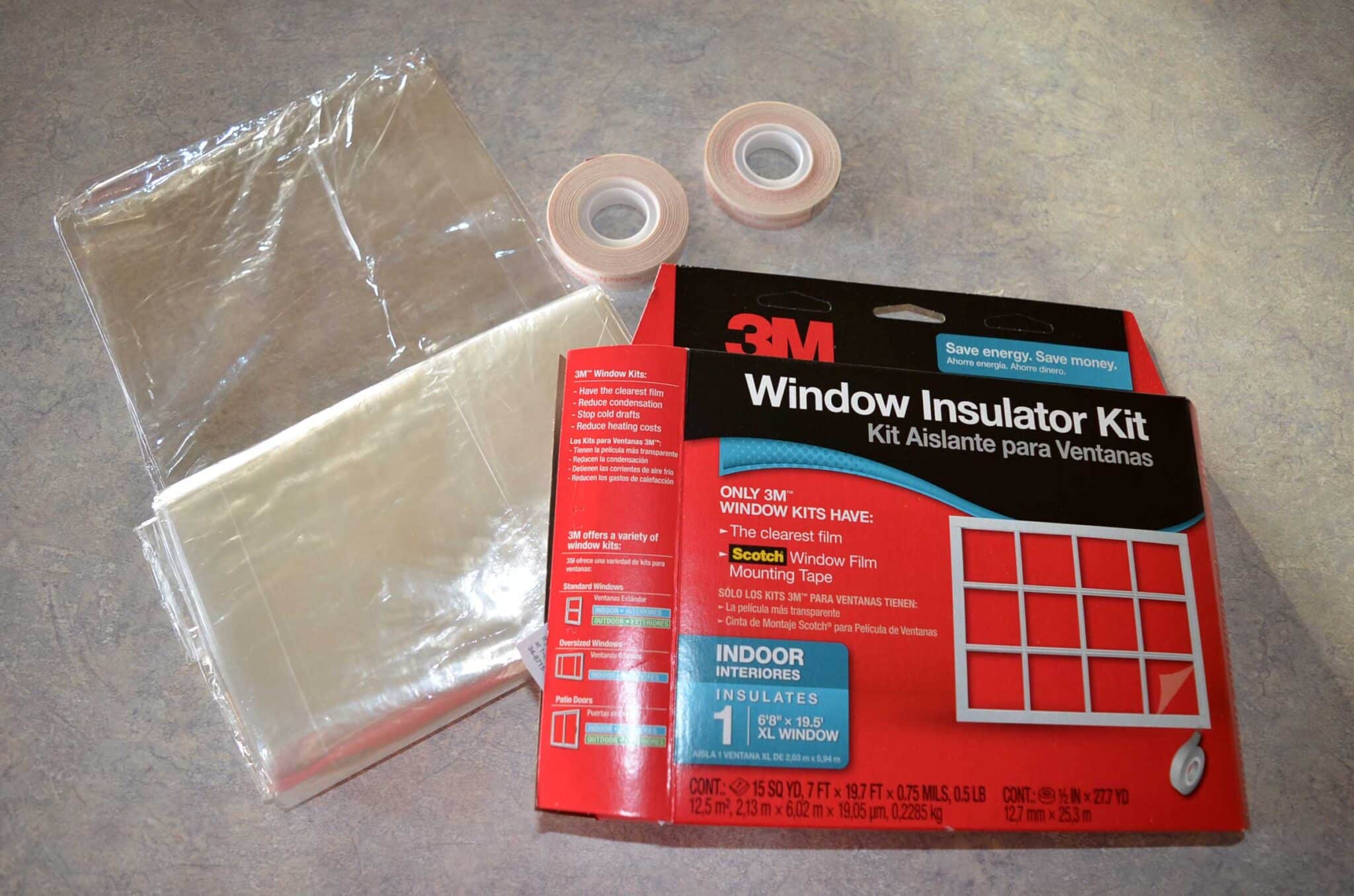
If replacing windows isn’t in the budget, interior window insulation film is an inexpensive alternative. These clear plastic kits attach around the window frame and shrink tight with a hair dryer, creating an additional air space.
They’re particularly useful for older, drafty windows and can often be removed in spring. A properly installed kit generally looks better and seals more effectively than taping blankets or plastic shower curtains over the windows.
4. Insulate Attic Access Doors
Warm air rises, and attic openings can allow heated air to escape. Check the insulation and weatherstripping around attic hatches and pull-down stairs. An insulated attic stair cover can reduce heat loss without requiring a major renovation.
Be sure to maintain required clearances around electrical fixtures and other heat-producing equipment.
5. Insulate Exposed Heating Pipes and Ductwork
Heating pipes and ductwork running through unheated basements, crawl spaces, or attics can lose heat before it reaches your living space. Use insulation rated for the specific application, and seal accessible duct leaks with approved duct mastic or UL 181-rated foil tape.
Don’t cover equipment or components that require ventilation, inspection, or service access.

6. Add Rugs to Cold Floors
Cold floors can make a room uncomfortable even when the thermostat reads 70°F. Area rugs and carpets add a layer of insulation between your feet and the floor. They’re especially helpful over tile, concrete, and poorly insulated floors.
Rugs won’t fix missing insulation underneath the floor, but they can make a noticeable difference in comfort.
7. Check for Hidden Air Leaks
Some of the biggest drafts come from places you rarely notice. Look for gaps around plumbing penetrations, electrical outlets on exterior walls, recessed lighting, and basement rim joists.
Use appropriate air-sealing materials, and remember that some openings require fire-rated products. Don’t seal intentional ventilation openings or combustion-air supplies.
For larger problems, a professional home energy audit with blower-door testing can help identify where your house is losing heat. Check with your utility to see if they offer assistance with home energy audits.
Get More Heat from Your Heating System
Once you’ve reduced drafts, make sure your heating system delivers warmth where you need it.
8. Keep Heating Vents and Radiators Clear
Forced-air heating systems depend on good airflow. Move furniture, rugs, and other obstructions away from supply and return vents.
For radiators and baseboard heaters, leave enough clearance for warm air to circulate. Avoid covering electric baseboard heaters, which can create a fire hazard.
9. Use Ceiling Fans Wisely
Warm air collects near the ceiling, especially in rooms with high ceilings. A ceiling fan running slowly can help redistribute that warmth.
Many fans use clockwise rotation in winter to create a gentle upward airflow, but check your fan’s instructions. The goal is to circulate warm air without creating an uncomfortable draft.
In rooms with radiant floor heating, ceiling fans may provide less benefit because the heat is already concentrated near the floor.
10. Adjust Your Thermostat Carefully
Lowering your thermostat when you’re asleep or away can reduce energy bills. A programmable or smart thermostat makes this easier.
However, the best settings depend on your heating system. Some heat pumps operate more efficiently with smaller temperature changes, and radiant floor systems often respond slowly because of their thermal mass. Experiment with modest adjustments rather than making large temperature swings.
11. Maintain Your Heating Equipment
A neglected heating system can waste energy or become unsafe. Replace or clean furnace filters as recommended, keep outdoor equipment clear of snow, and schedule appropriate professional maintenance.
If you use a wood stove or fireplace, inspect and clean the chimney regularly. A properly maintained heating system provides more dependable warmth, especially during extreme cold.
12. Don’t Automatically Close Vents in Unused Rooms
It seems logical to close heating vents in rooms you’re not using, but this can cause problems with forced-air systems.
Closing too many registers may increase duct pressure, reduce airflow, and interfere with equipment operation. It’s generally better to keep registers open unless your system was specifically designed for zoning.
You can close interior doors to manage comfort in some situations, but make sure rooms have adequate return-air pathways and don’t allow plumbing areas to get too cold.
13. Use Reflective Panels Behind Radiators
Radiators mounted against poorly insulated exterior walls may lose some heat into the wall. A purpose-made reflective panel behind the radiator can help redirect radiant heat toward the room. The benefit depends on the radiator type and wall construction.
Follow manufacturer clearance requirements, particularly around electric heating equipment.
Take Advantage of Free Heat
Not every source of warmth requires turning up the thermostat.
14. Use Passive Solar Heating
Sunshine is one of our favorite sources of free heat. Open curtains and blinds on sunny windows during the day, particularly those facing south in the Northern Hemisphere. Close insulating coverings after sunset to reduce heat loss.
Our home was designed to take advantage of passive solar heating, but even conventional homes can benefit from this simple habit. Learn more in Passive Solar Heating Basics.
15. Use Thermal Mass to Store Heat
Materials such as brick, stone, concrete, and water absorb heat and release it gradually as temperatures change. Our masonry wood stove uses thermal mass to provide steady warmth long after the fire burns down. Sunlight striking a masonry floor can have a similar effect.
Adding thermal mass isn’t always practical in an existing home, but it’s worth considering when remodeling or planning new construction.
Learn more about masonry heaters and radiant heat.
16. Make Use of Heat from Everyday Activities
Cooking, baking, and other household activities release some heat into your home. Winter is a great time for homemade bread, soups, and other slow-cooked meals.
However, don’t leave the oven door open for heating or use your stove as a space heater. The heat from normal cooking will enter the room without creating unnecessary safety risks. Remember to use kitchen ventilation when needed to remove moisture and combustion fumes.
17. Keep Fireplace Dampers Closed When Not in Use
An open fireplace chimney can pull a surprising amount of warm air out of your home. Make sure the damper is closed when the fireplace is completely cool and not in use. For fireplaces that are rarely used, a properly fitted removable chimney draft blocker may reduce heat loss.
Never close a damper while a fire or hot embers remain, and don’t block a flue serving active heating equipment.
Stay Warm Without Turning Up the Thermostat
Sometimes the most economical way to stay comfortable is to warm the people rather than the entire house.
18. Dress in Warm Layers
A wool sweater, warm socks, and comfortable slippers can make a big difference. Layering traps insulating air close to your body, allowing you to stay comfortable at a slightly lower indoor temperature. Natural fibers such as wool are particularly useful because they provide insulation even when slightly damp.
See The Ultimate Guide to Practical Cold Weather Clothing.
19. Keep Your Feet Warm
Cold feet can make the rest of your body feel chilly. Try insulated slippers, wool socks, or a small foot warmer when sitting at a desk. My mother-in-law used a heated foot warmer while working on genealogy, and it got plenty of use during cold weather.
Choose products with appropriate safety certification and follow the manufacturer’s instructions.
20. Use Blankets and Throws
Keep warm blankets near your favorite sitting areas. A wool throw over your lap can make reading, knitting, or watching a movie much more comfortable. At bedtime, add an extra blanket or use warmer bedding rather than heating the entire house to a higher temperature.
Our cats also appreciate this strategy. A warm lap and a cozy blanket make excellent winter accommodations, at least according to them.

21. Warm Your Bed Before Sleeping
Climbing into cold sheets isn’t much fun. A hot water bottle or an electric mattress pad can warm the bed before you get in.
Use hot water bottles with protective covers, not boiling water, and inspect them for wear. Follow electric bedding instructions carefully, particularly regarding folding, damaged cords, and overnight use.
See No More Cold Feet in Bed for more tips for toasty toes.
22. Heat the Space You’re Using
If you spend most of your time in one room, supplemental heating may be more economical than raising the temperature throughout the house. An appropriately sized electric space heater can provide targeted warmth.
Note: Electric space heaters can use a lot of energy. You won’t save money with them unless you reduce enough heating elsewhere. Keep portable heaters at least three feet from combustible materials, plug them directly into wall outlets, and turn them off when unattended or sleeping.
See also: Best Solutions for Battery-Operated Space Heaters


Heating Safety and Common Mistakes
Saving money isn’t worthwhile if it creates a fire hazard, moisture problem, or frozen pipes.
23. Control Moisture Without Wasting Heat
Bathroom and kitchen exhaust fans remove moisture and pollutants. Use them when needed, but don’t leave them running unnecessarily. A timer switch can help prevent a bathroom fan from running for hours after a shower.
Make sure exterior exhaust dampers close properly to prevent cold air from blowing back into the house. Although indoor air can become dry in winter, excessive humidity causes condensation and may lead to mold.
24. Protect Pipes in Cold Areas
If you’re reducing heat in unused rooms, remember that plumbing still needs protection. Pipes near exterior walls, in crawl spaces, or in poorly insulated areas can freeze during extreme cold. Maintain adequate heat in vulnerable spaces and address drafts around plumbing.
For more information, see How to Prevent Frozen Pipes.
25. Prepare for Emergency Heating
Winter storms can knock out power and leave homes without central heating. If you rely on electricity for your furnace controls, circulation pumps, or fans, even a fuel-burning heating system may stop working during an outage. Plan ahead for a safe backup heat source.
Some portable propane heaters are specifically rated for indoor use, but they require strict adherence to manufacturer instructions, including ventilation, placement, and fuel handling. Never use outdoor-only heaters, grills, camp stoves, or generators inside your home or garage.
Install working carbon monoxide alarms and smoke alarms, and never assume that an oxygen-depletion sensor replaces proper ventilation or carbon monoxide detection.
For more options, see How to Stay Warm During a Power Outage.
What Should You Fix First?
You don’t have to tackle everything at once. Start with the improvements that address your biggest comfort problems.
| If your problem is… | Start here |
|---|---|
| Drafts around windows and doors | Weatherstripping, caulk, window film |
| Cold rooms despite adequate heat | Check airflow, insulation, and air leaks |
| Cold floors | Rugs, slippers, floor insulation |
| High heating bills | Air sealing, attic insulation, heating maintenance |
| Uneven temperatures | Check vents, ceiling fans, and heating distribution |
| Worries about winter outages | Backup heat and winter preparedness planning |
If you own your home and plan to stay for years, larger investments in insulation and air sealing may pay off over time. If you’re renting or working with a tight budget, focus on removable improvements and simple habits.
Build a Warmer, More Resilient Home
Keeping your house warm is about more than saving money. It’s also about making your home comfortable and dependable when winter weather gets rough.
You don’t need to do everything at once. Start with one drafty door, one cold window, or one improvement to your heating system. Small changes add up.
Want to take the next step?
- Planning construction or remodeling? Read Best Ways to Keep Your House Warm – New Construction and Remodeling.
- Getting ready for winter storms? Start with our Winter Preparedness Checklist.
- Building a more resilient household? Get the free Common Sense Preparedness Quick Start Guide for practical steps to protect your family and home.
For a more complete approach, my book Common Sense Preparedness: Building Resilience for Uncertain Times covers home and shelter, food, water, sanitation, and the everyday skills that help us handle unexpected challenges.
What’s your favorite inexpensive way to keep warm in winter? Share your tips in the comments.

About the Author
Laurie Neverman is the creator of Common Sense Home and author of Common Sense Preparedness: Building Resilience for Uncertain Times. She holds a bachelor’s degree in Math/Physics and a master’s degree in Mechanical Engineering, with a focus on renewable energy.
Laurie and her family live in northeast Wisconsin in a passive solar home with insulated concrete form walls, radiant floor heating, solar energy systems, and a masonry wood stove. Drawing on her engineering background and more than 20 years of hands-on homesteading experience, she shares practical ways to make homes more comfortable, efficient, and resilient.
Originally published in 2017. Last updated in 2026.
We are going to Florida for the winter. Should we let the house freeze, after emptying the pipes and toilets and drains, or should
we leave the heat on low…and if so, how low.we have heated floors in the kitchen ad one bathroom, the rest is heated with convection baseboards. Also, should we empty the hot water heater? We live in Canada.
Thank-you
For safety (just in case a room where plumbing is on an exterior wall goes cold even if the heating is working), it would probably be best drain the house if you are going to be gone for over a month.
I wouldn’t let the house freeze, because the freeze/thaw process damages materials, even if the plumbing is drained. Keeping the temperature set at 50F (10C) while you are gone should protect the house, and may protect the plumbing without draining.
As I mentioned above, my main concern is plumbing in exterior walls when there are bitter cold temps. Those weeks of “arctic vortex” weather can cause problems even when the heat is running at normal set temps.
This is useful. In the wintertime (I live in England) I have a nice hot roaring fire in my loving room at night time. I also put on central heating too. Another way to stay warn is to buy handwarmers and use a hot water bottle as well. In the olden days, people used to use baked potatoes apparently and melt snow. Also you can use a hairdryer to heat yourself accordingly.
Other options include a small portable electric heater. Or you could always equip yourself with a jacket. Do not forget to turn off at night however.
In Michigan the temps have reached more than 20 degrees (fahrenheit) below zero several times in my life. I had a house that had an extremely cold south wall. I painted the exterior flat black and it was then noticeably warmer (at least ten degrees) even into the night.
Another house I had I also painted the south wall black to very good effect. But on the north side I set up a semi-circle line of mirrors that heated the house so well you could feel the warmth by sticking your hand into the light reflected in the windows.
Lots, and lots, and lots of sex
According the study “Energy Expenditure during Sexual Activity in Young Healthy Couples“, young healthy couples produced an average of 3.6 kcal/min. This equals 14.2 btus/min,or 852 btus/hour. At 40 to 45 btus per square foot (estimated use in cool climates for furnace sizing), you’d need a 100,000 to 112,500 btu furnace to heat a 2,500 square foot home.
Assuming you could engage in energetic sexual activity for an hour straight, you could heat a small room – for that hour.
I’m very envious of Stephen’s canopy bed! My best tip for a warm bed is to put an old duvet under the bottom sheet. Then you’re inside a duvet sandwich, which is divine! I actually sewed a rectangle of dimple fleece to the middle of a cheap fitted sheet and made pillowcases out of dimple fleece too. A-mazingly cosy to get into on a cold night. Also found that a long-pile fleece throw over me and under the duvet works really well. Another few tips: if you’re single, lie a folded blanket down one side of the bed (under the covers). If you take two hot water bottles to bed, you can push one under the blanket and cuddle the other. When the first one has gone cold in the small hours, pull the other one out from its nest and it’ll still be warm. And don’t forget bed socks! (Writing this in glorious June in England – black sky and pouring rain – and thinking about readying my home for winter).
Thanks, Jerri.
I made a modern version of a canopy bed, with all the extras like TV, etc. The house can go to almost freezing (have to mind the water pipes!) but inside the canopy bed it gets as warm as 78+!degrees!!!
Bubble wrap on windows can help keep heat in. Use a spray bottle of water and lightly mist the window and place the bubble wrap directly to the glass. Bubble side against the glass. We peel this off in spring and reuse each winter.
Get Mortite which is a weatherstrip and caulking
cord. I use it to seal the gaps between windows where lots of air tends to blow in. It is cheap, about $8 a box, easy to apply with your hands snd has no odor. Many uses for this.
a cheap alternative to Mortite is rolled up newspaper, place under and around the window (if you can).
I am not sure the idea of having a steamy hot bath to warm the house is a good idea, imagine the moisture level created inside the house once it cools down, the mildews are going to have a feast day! Keeping our home dry is absolutely essential because dampness is the cause of us feeling cold.
In our area of the country, it’s cold enough that the air is quite dry. People run humidifiers to moisturize the air.
Great tips. Try to keep ourselves warm rather than the whole house. Besides the old fashion water bottles, my wife and i have electric mug warmers. They use only 14 watts of electric each, add some moisture to the air, and warm us up a bit. We got some plant seed warmer pads (use about 17 watts each). Put them under the plants so they gave give off heat after the heater are turned off. Lastly we each had foot warmers – on high they use 90 watts each. By using these smaller heaters, we save the 600 watts of power that is used ever time our central heating blower turns on. Not only has our electric bill gone done but we are using less oil then ever before. They say the average home in the northeast uses about $2500 a year on oil. We use half of that. This year it may even be less.
Well done.
I live in a large 125 year old farmhouse out in the sticks. Electricity is not always something I can rely on. Big wrap around porch shades all windows so no solar window gain.
Here are my survival tips.
*Rigid board insulation in the windows. Cut to fit tight and tape around to seal any gaps.
*Japanese Hot water bottles are rugged, will hold heat 12 hours and do not leak. You can get the metal ones and put them on a stove or use boiling hot water in the plastic ones. They come with a cloth cover or you can wrap them in a towel.
*Area rugs. These can be cleaned each spring and rolled up for winter so you wood floors cool in the summer but the rugs warm in the winter. (shop sales)
*Eva interlocking floor mats. These are cheap & easy to put out. I put these down in areas that an area rug is not functional. Closet floors, Kitchen etc.
*Cut to fit washable bathroom carpet. This is specially made for bathrooms and can come back up and go in the washing machine. Dry on low in a dryer or the rubber backing could melt.
*Visqueen sheeting taped over the outside and inside of unused exterior doors. I have 6 exterior doors but really only use one. In an emergency, the plastic sheeting can be pulled down to exit.
*Rigid insulation sealing unused fireplaces.
*Emergency blankets (these are shiny metal and run a buck or two) These reflect heat back. I have them sealing the fronts of inwall air conditioners and anywhere else air escapes.
*Cow hides over the top of the all the blankets on the bed. I don’t do this because I don’t have cow hides, but when I was a kid, mom would throw a cowhide over each bed as part of the tucking in ceremony for us kids.
*Flannel under the fitted sheet. I just can’t stand flannel sheets, but I’ve found that putting a flannel blanket under percale sheets holds in the heat.
*0 degree extreme sleeping bags on the really cold nights. Put them on the bed and snuggle up.
Future plans. A wood burning furnace, Reflectix, Cork flooring or subflooring.
Thanks for sharing all your tips, Jill.
Some utilities provide free home energy audits. If available, this might help you determine the best “bang for your buck” in terms of energy efficiency updates. The older farmhouses (in my experience) tend to have almost no insulation and weatherstripping, so even modest improvements can make a big difference in comfort levels and heating costs.
Update: Managed to keep the electric bill under $28 a month for the last year and a half now. The propane last year was $400 (heater, dryer, stove). I’d still like to not have the propane cost. Looking into the DIY soda can solar heaters or fireplace inserts that don’t require electricity.
That electric bill is crazy cheap. They charge us more than that per month simply to keep the power connected.
On the east coast, electricity is crazy expensive! It’s over 15 per kWh!
REROUTE THE AIR FROM YOUR DRYER!!
The best thing I’ve learned through the years to cheaply heat my house in the winters is to reroute the hot air from my clothes dryer. If you don’t own a stock in the electric company, stop wasting the heat you pay for when you dry your clothes.
So instead of heating the outdoors by letting the dryer push air out, let it warm your home by rerouting the vent to push hot air inside.
All you need is:
-A bucket with a lid- mine is roughly 2 or 3 gallons. Don’t get anything smaller.
-A flexible coil vent
-Water
-A drill with (large) drill bits (or something to cut the lid with)
Directions:
Now basically destroy the lid of your bucket. It felt stupid to do this, but it’s necessary to make holes in the lid of the bucket. One hole needs to be big enough to fit the flexible aluminum tube that carries the hot air from your dryer. Then drill a few other holes for the hot air to escape. Mine has 8 small holes that all measure about 1/4 inch. I drill the big hole in the very center of the lid and drill the smaller holes in a circle around it. However, it doesn’t really matter where you place the holes, so long as your dryer vent fits in the big hole and hot air can escape through the little holes. Just make sure you can still pop the lid on to the bucket tightly
Next, fill the bucket about 1/2 of the way with water. The purpose of the water is to filter out the lint that usually just blows outside. It also acts as a great humidifier when the air gets cold and dry. Feel free to add essential oils to the water, too! It will smell awesome throughout your house.
Now, place the lid on the bucket, and shove the aluminum tube in about 3 inches.
If your big hole is too big and the vent doesn’t want to stay put, there’s an easy fix. Usually, when you buy a flexible aluminum tube, it comes with a circular metal clamp. Once you get the tube in, put the clamp around the vent and secure it in place on the inside of the lid.
Now, turn your dryer on! Voila! “Free” heat- or at least it won’t cost you any extra in heating costs.
You are welcome. 🙂
This will work (if the humidity isn’t a problem). I lived in a couple of houses where this was done. In both homes, a pair of panty-hose were used as the lint filters. It worked in the older homes that could breathe, but the added humidity can cause real problems. Older homes that “leak” or breathe can generally better deal with the humidity. Very tight newer homes can have serious problems with the humidity, including black mold. Our fix was to use a Heat Recovery Ventilator (HRV) to avoid the humidity. We use the Fantech HRV. It is expensive but it works. A 2nd benefit is that it brings in warmed fresh air. Also consider a gas dryer, as natural gas and propane should remain fairly inexpensive.
Really Great list. Personally I find that traditional ways of keeping warm often work best. A hot water bottle always keeps me toasty. I also rely on my draught excluder to keep our living room warm. And I’m always nagging everyone to close the doors behind them and keep the heat in!
Sleeping in a pop up tent, in the house (with as many buddies/pets as possible too) will trap body heat in… for those desperate nights. It kinda makes extreme situations kinda fun. I said kinda. Any “tent” set up is a good aid to trap body heat. My husband was stuck in his car once and “tenting” helped him greatly.
Another cheap and unusual way to keep the warmth into your home: use kitchen, aluminum foil on the wall behind the radiators under the windows. The shiny side of it will help the heath bounce back inside your room rather than escaping out the windows.
Thanks for the tips, great read!
Place blankets UNDER your fitted sheet. This help keep the cold from coming up under the bed. I have a heated blanket for my car that plugs into the auxiliary sockets like a electric blanket in case I get trapped in my car.
Draft dodger for the doors to keep the cold from coming in under the doors.
Heat bricks and wrap in towels place at foot of bed under the covers.
insulation strips around all windows and doors to keep out cold.
Cover inside and out side of windows with clear plastic to stop drafts from coming in.
Draft dodgers can also be set on window sills to block more cold from coming in.
If the power goes out do not open the fridge door any more than necessary. Keep the most used item in an ice chest like milk or other drinks so they are easier to get to.
Lined plastic table cloths over windows to hold out drafts better.
Thanks, CC.
I actually keep a few flat rocks on my wood stove when I’m not cooking on it, in winter. Then, I take one, wrap it in a towel and put under my feet when using the computer or lay at the foot of the bed, under the covers, to pre-warm it in the cold room I sleep in, since I don’t heat upstairs where the bedroom is. A hat with earflaps I can tie under my chain to keep it from pulling off, helps at night too when it is extremely cold. We can adapt to the cold, the heat is more difficult.
what is the best method to keep plastic or bubble wrap on windows during winter plez
To apply bubble wrap – spray a light film of water on the window, press on bubble wrap, bubble side down.
This is the first time that I have seen hot water bottles recommended. I think they went out of fashion as electric blankets and central heating seem to be the norm these days. Hot water bottles are great to cuddle up to in the daytime and during the summer I put them in the freezer for those uncomfortable hot nights.
Everything old is new again. I really like our Core products hot/cold packs, too, as they have more thermal mass than water and so hold the heat longer. They do require a microwave to heat, so if that’s not an option, a hot water bottle is a functional substitute.
how about hot or warm bricks wrapped in a cloth as my dad used to help keep his feet warm.
Nothing wrong with that. I have that included in the “no more cold feet” post.
The cold shower thing would never work for a person with Raynauds! Could lose fingers and toes(frost bite). I freeze in the Summer haha!
Yes, you certainly have to be mindful of health conditions. My niece deals with Raynauds, and it can be challenging.
One of the best ways to keep warm in my opinion is to build your own cold resistance. I do this by taking cold showers. By cold, I mean COLD. All the way cold with no heat. It’s easiest to start doing it in summer and then move into the winter. But if you do it enough and learn to tolerate the cold water with different tricks, you’ll become cold tolerant and you’ll actually start to love the cold.
Regular cold exposure may also help stimulate healing and promote overall health. It’s popular in some parts of the paleo/primal circles. (For instance, Mark Sisson mentions it in his book Primal Blueprint.) And of course, the Nordic countries have long enjoyed cold exposure in combination with sauna use.
Don’t do this one if you are on blood thinner medication.
OMG Holden!! A cold shower would seize me up for days! It sounds like torture, but if it works for you, hey, good on ya. How “cool” that we are all so different.
….forgot to mention – My Scottish Gramma kept a bottle of cherry brandy in her closet – “just a nip to warm the insides” on cold nights.
This also greatly boosts the immune system. Heard of a man in Russia who decided to commit suicide because he had terminal cancer. He went outside in sub zero weather almost naked. He actually cured his cancer.
Use pool noodles for drafts in doorways/doors
I wouldn’t think those would stay in place very well because they are so light, unless the gap is big enough that you can jam them under the door.
Rather than pool noodles, use pipe insulation ‘noodles’. Or slit the pool noodle so it will fit over the bottom edge of the interior door. Also, I have windows that I have cut foam insulation boards to fit. I cover the 2″ foam board with fabric, making a pleat that runs on each side, to prevent air movement. This has been a life saver for me at times. Sew in little loops of fabric near the side pleats to pull out the inserts when desired.
Use a foil blanket under the bottom sheet and on top of the upper sheet. The foil blankets help reflect your body heat back at you.
Wear thicker, warmer clothing, like fleeces, woollen jumpers, thick socks!!, etc. At night use the fleece or woollen blankets on your bed. Revert back to sheets, brushed cotton, and blankets using your quilt on top. Hot water bottles are a must, and if you have younger children, refill theirs before you go to bed. Lastly family cuddles of an evening under duvets, blankets etc then on really cold nights consider ‘buddy’ sleeping, ie sleeping together.
Great tips! Thanks.
You’re welcome.
For those trying to keep warm, if the heat goes out.. cover over ur dining room table with heavy quilts. Put ur sofa pillows on the floor under the table, making a tent . Body heat will help keep it warm beneath the table. Keep an ice chest with water, snacks,etc. Close by..
Here is something that I happened upon many years ago when I could not afford to have the baseboard heater on in my bedroom: Instead of sleeping with a sheet over you, then blankets and quilts on top of that, have a knitted or crocheted blanket/afghan over you, then the sheet on top of that, and then any added blanket(s). The knitted blanket against your skin with the sheet over it traps your body warmth amazingly well. The kids always had hot water bottles with the heat on low in their rooms. Taking Fido into bed was also helpful. You’ve heard the expression “it’s a three-dog night”? That means it’s so cold you need to have three dogs in bed with you – just one or two are not warm enough!
Good tip. I hadn’t thought about using the knitted blanket right next to the skin. And keeping your feet warm makes a huge difference in comfort. Our current place holds the heat better, but I remember back in the old farmhouse growing up, pulling my clothes into bed with me to warm them up a little because the bedroom was so cold.
i have done this many a time…even still sometimes if i happen to wake up to a cold morning and i had the sense to put them beside the bed the night before!
I agree. I have 4 dogs. They make wonderful bed mates.
Use pool noodles for drafts in doorways
my grandmother completed her pHD seated at a typewriter in a full ski suit with two hot water bottles in it. we were always taught that its a crime to heat a whole house just to keep the space of one person warm. yes, we are scottish.
My compliments to your grandmother’s frugality, sturdiness and intellect.
we always layer beds like so: hot water bottles, thin cotton sheet, quilt with wool batting, tweed blanket, downy cover (with real feathers- plastic is NOT insulating but does trap moisture), lightweight thin tweed blanket, lightweight large sheepskin.
light layers on top prevents feathers from getting squashed airless.
this works down to minus 10 outdoor AT LEAST, even for a skinny person.
Do you need to heat the house at all, other than to keep the pipes from freezing?