
Above Ground Root Cellars & Other No-Dig Food Storage

This post may contain affiliate links. Read my full disclosure here.



When you can’t dig a traditional root cellar, an above ground root cellar may be an option for fruit and vegetable storage. Even without a cellar, you can still adapt other spots for long term food storage with a little creativity.
For those in warm climates – sorry, the physics are not in your favor, unless you have a spring house. The good news is that you can still eat local year round, and we have tips for that, too.
Would you like to save this?
Table of Contents
How Root Cellars Work – and When They Don’t
The goal of a root cellar is to create cool, damp conditions that extend the shelf life of stored food.
In a traditional root cellar in a hole in the ground, it is cool and damp, with no direct sunlight. Below roughly three to four feet, the ground maintains a fairly steady temperature (roughly 50-60°F in most areas). This steady ground temperature helps keep the root cellar cool.
For more information on building root cellars and other in ground storage, see “Root Cellars 101“.
Root cellars need air circulation. Fresh air drops in to help lower the temperature in the cellar, and stale air vents out. This removes excess ethylene gas generated by certain produce that prematurely ages the produce.
No air flow at all = rotten produce. This is why burying an old fridge or freezer in the dirt with no ventilation is a bad idea.
Traditional root cellars also have gravel floors or dirt floors. This helps moderate humidity levels. Most produce prefers fairly high humidity to keep it from withering and wilting. Think of the conditions in the crisper drawer in your fridge.
If:
- your soil drains poorly
- you have a high water table
- your area has underlying rock with very little soil
- you live in a warm climate
then an in ground root cellar is not a good choice.
How much does an above ground root cellar cost?
The cost of an above ground root cellar varies widely. If you build a sandbag root cellar yourself it can be as little as $500 but most will cost $2500 to $25,000+.
One way to reduce the cost is to combine and above ground root cellar with a safe room (storm shelter). That might get you some funding from FEMA, see more in our related article: Safe Rooms Checklist.
How do we get close to root cellar conditions above ground?
One option is a walk in cooler, like the one my friend, Amber built in South Carolina. See Build Your Own Walk In Cooler with a CoolBot Controller and A/C Unit for more information.
Another alternative is a true above ground root cellar, with earth mounded around a structure that sits above ground. Folks build these out of cinder blocks, old tires, or poured concrete structures.
They don’t have as much earth around them so they don’t insulate as well as a standard root cellar, but they work fairly well. They can also do double duty as a storm shelter, as mentioned above.
If you don’t have the inclination to build a mini Hobbit house in the backyard, you may be able to repurpose space you already have available.
Above Ground “Root Cellar” Style Options for Cold Climates
Think about areas around your home that stay cooler, but don’t freeze. These are prime targets for your food storage space. There are also many crops that store well without the moisture of typical root cellar, such as:
- Dried shell beans
- Dehydrated produce and herbs
- Bulk grains
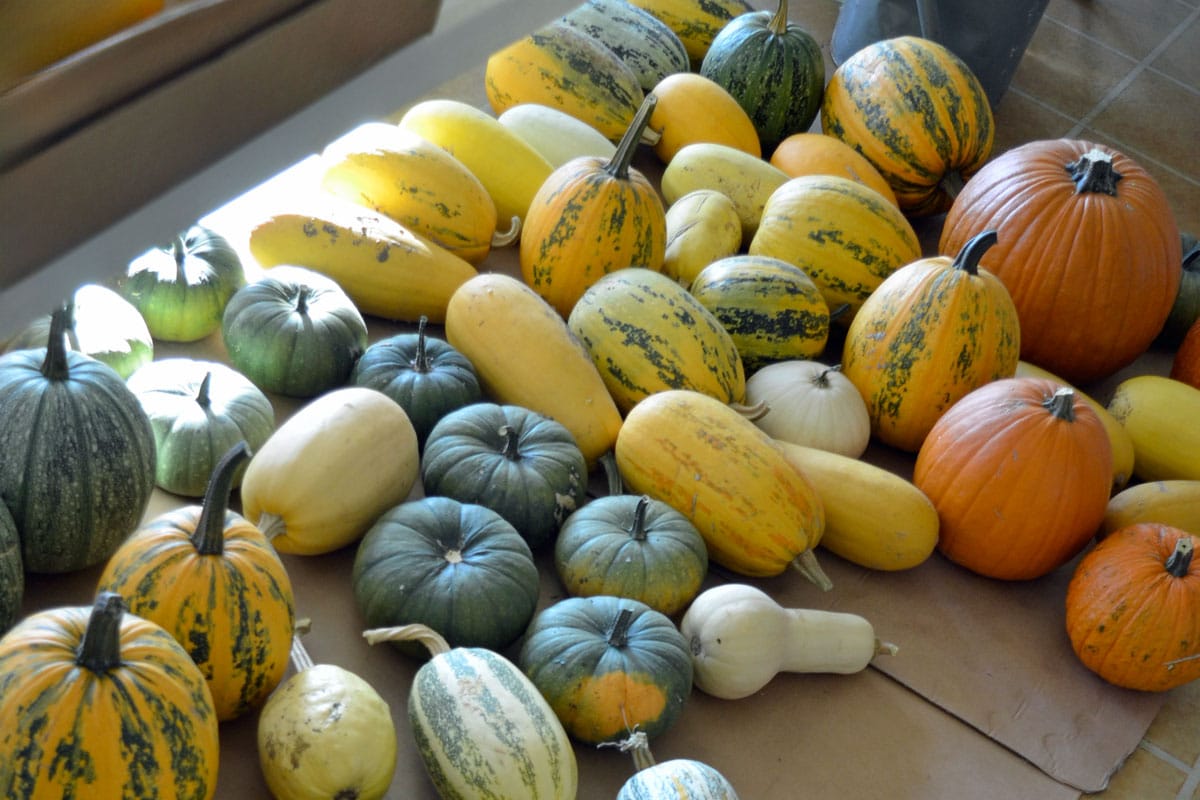
- Pumpkins and winter squash
- Onions and garlic
- Watermelons (thick skinned storage varieties)
All of these store well in cool, dry conditions. And sometimes, “close enough” works. An insulated garage or porch won’t match a root cellar, but you can still store apples or root vegetables there for a time.
Garages and Outbuildings
If you have a garage or outbuilding, you may be able to adapt it for food storage. You want to buffer your produce from temperature swings. Use coolers or insulated bins if your building is not insulated. Be mindful of rodents and plan accordingly.
Note that it’s possible for fresh produce in open bins to absorb any chemicals in the air (such as gasoline fumes). Keep that in mind when you are planning.
We have an insulated garage attached to the house, which I refer to as the “seasonal fridge”. We usually don’t see freezing temps inside the garage until nighttime temperatures dip into the single digits.
Easy Apple Storage
We used to hit the local you-pick orchards when the boys were younger. Now, we harvest apples from our own trees.
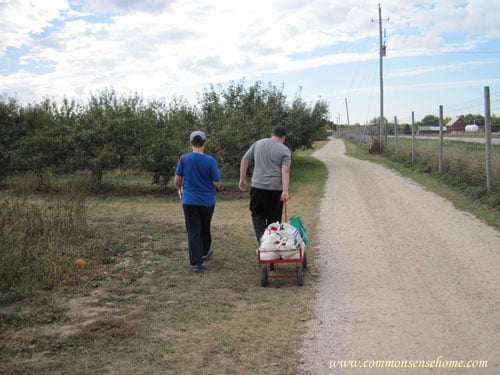
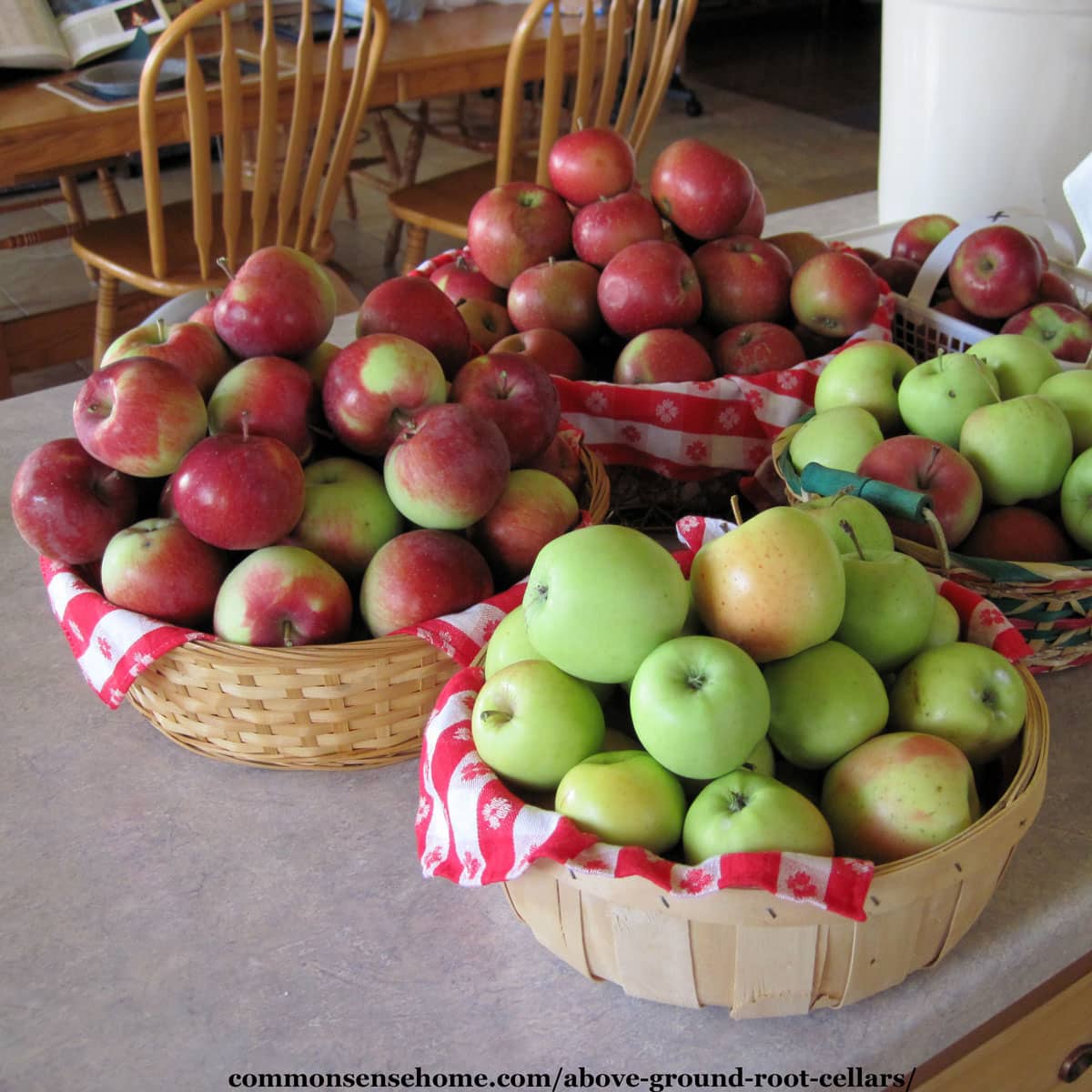
I remove damaged apples, as a single damaged apple really can spoil the whole bin. We pack the apples in old coolers or heavy duty cardboard boxes and place them in the garage. The boxes go on metal shelves to make them harder for rodents to access and use them first. We keep the coolers at ground level and use them later.
We leave the cooler spigot open and leave the lid propped open about 1/4 inch to provide ventilation. I check the bins regularly to remove any apples with signs of spoilage. The best keepers easily last until January or later.
Porches or Decks
Unheated porches or attached decks with space underneath may work as an “above ground root cellar”. Pack produce in bins or insulated coolers under the porch/deck.
Watch out for pests, such as rodents. Heavy duty plastic storage buckets will deter mice and bugs, but rats can gnaw right through plastic.
Remember, rodents can cram their bodies through any openings they can get their heads through. If they find their way into your stash, you must take measures to control them and keep them out.
See Best ways to get rid of mice in your house and garage for more information.
Inside the House
Attics, pantries, bedrooms, stairwells – all of are fair game for food storage. Look for unheated or minimally heated areas of the house.
Closets on exterior walls in minimally heated rooms could get very close to actual root cellar conditions. Hiding some squash in a box under the bed may work well for you. Just don’t forget you put them there or the smell of rotting squash will remind you.
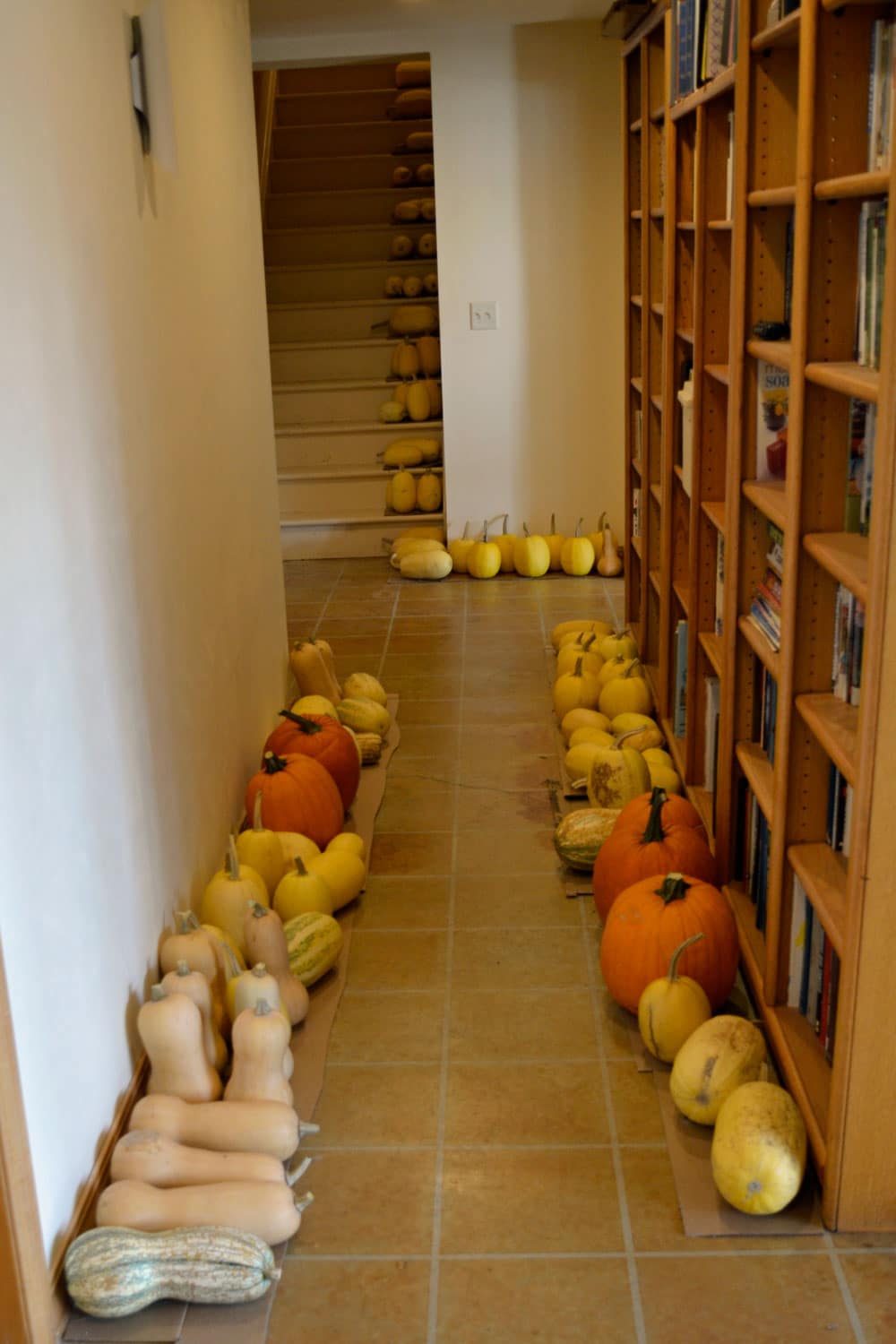
I tuck squash and pumpkin along one side of the stairway from our basement to garage as “overflow storage”. I also stash them in a basement hallway. We grow a LOT of winter squash as food for us and food for our ducks and chickens. As they get used up, I condense the storage areas together.
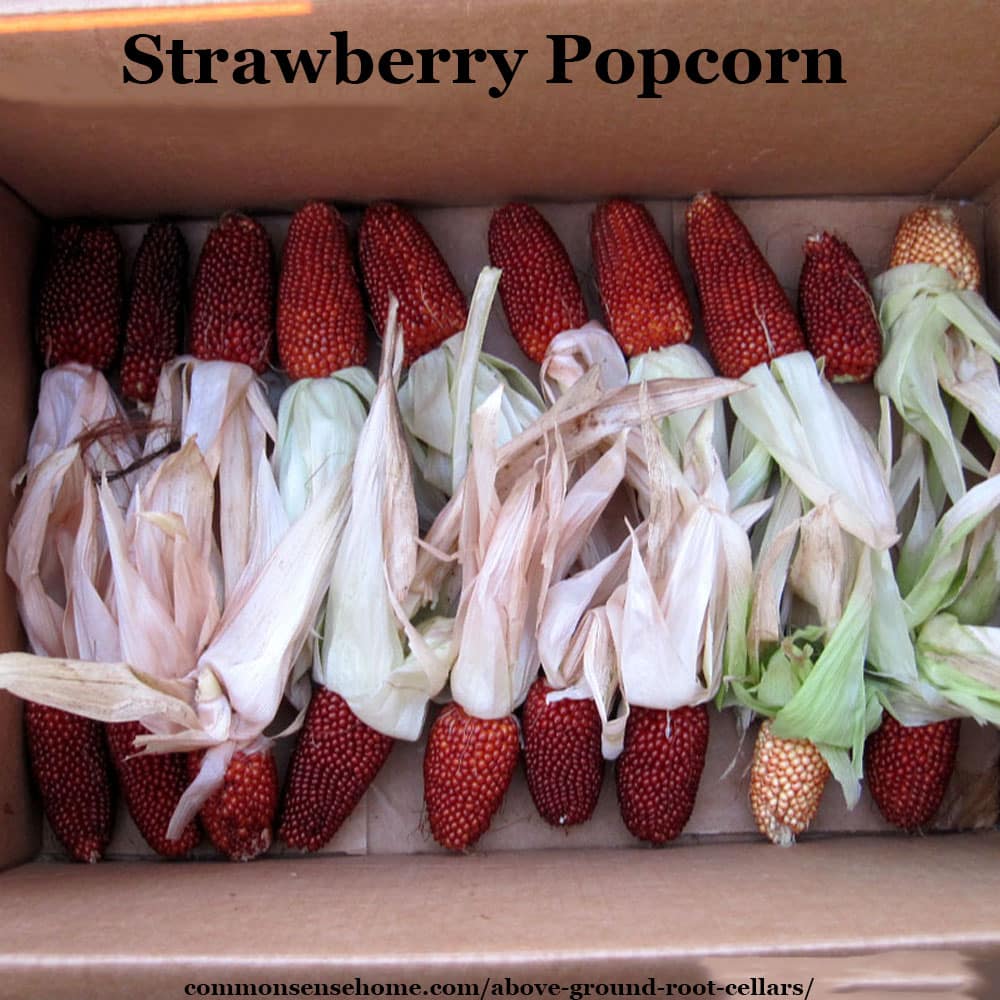
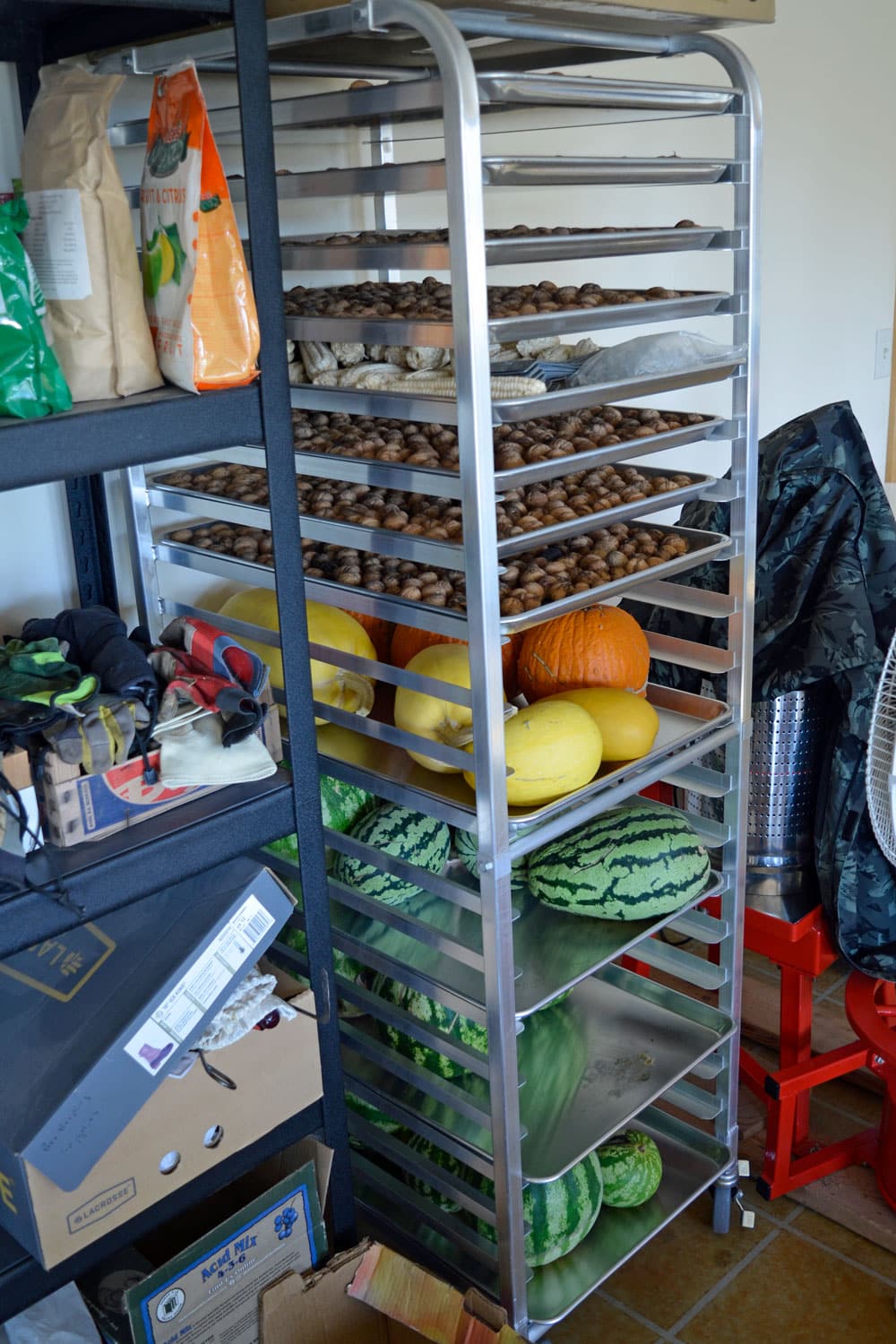
We have a bakers rack that I also use for produce storage. In this photo, I have walnuts and flint corn curing on upper racks. There are winter squash and watermelon on lower racks.
One of our readers shares:
I don’t wash off storage produce until I am ready to cook it. This leaves the protective exudates on and really extend shelf life far beyond store bought squash of all kinds.
Cukes turn yellow and seedy, but taste fine and remain juicy for quite a while. Just brush off leaves and the crumblier soil once squash is cured.
I also pack them in 5 gallon paint strainer bags to keep fruit flies off. I tuck small ones in a napkin and pack them together so the skins don’t touch. Several small ones will fit into one paint bag.
Think Outside the Root Cellar
Root cellars, including above ground root cellars, are useful – but not a best fit for everyone. You can still store quite a bit of produce without electricity or processing if you get creative. These options work best for those in cooler climates without high humidity. For hot and humid conditions, my friend Paula share her tips on page 2.

This article is written by Laurie Neverman. Laurie and her family have 35 acres in northeast Wisconsin where they grow a food forest and annual gardens. Along with her passion for growing nutrient dense food, she also enjoys ancient history, adorable ducks, and lifelong learning.
Visit page 2 for warm climate ideas from southwest Louisiana.
I don’t know why your article is supposed to be about above ground root cellars because it seems you spend most of it trying to talk people out of it. Telling them the physics are against them instead of offering real solutions or finding a cool dark corner of their house like some sorta pack ratting gopher. And creating an unsightly mound in their yard? Really? smh.
How about instead have a conversation involving double walled construction and the advanced in spray foam insulation, and ventilation air circulation systems with humidifiers. And how about the use of geothermal to keep an above ground root cellar cooler. Help people, don’t pretend.
David, what you are proposing is NOT a root cellar, it’s a walk in cooler.
A root cellar relies on natural conduction, transferring the cool ground temperature to the storage area. It is not dependent on powered air circulation, humification, or cooling.
If you are insulating your storage area from the ground, then it is not a root cellar. If you are using electrically powered cooling, it’s a cooler, not a root cellar.
Most people searching for information on root cellars want a low cost, low tech solution. Geothermal cooling systems are not that.
For people who want mechanically cooled above ground storage at a reasonable price, I’d suggest reading the article “Build Your Own Walk In Cooler with a CoolBot Controller and A/C Unit“.
Every one of these pages is a waste of my time. I wish everything involving food storage said, “If you live in Florida and want electricity free food storage, just close this page now. You’re screwed”
Thanks for summing that up, Adam. Yes, if you live in Florida, where it is excessively hot and humid much of the year, food is not going to keep well like it would without electricity in other climates. That’s why I had my friend chime in with her extended growing schedule. I can’t change biology and climate.
I am going to try a broken freezer with a smaller Styrofoam cooler in a garage as a root cellar.
Just make sure to provide adequate ventilation.