
Winter Car Kit Checklist for Cold Weather Travel

This post may contain affiliate links. Read my full disclosure here.
A good winter car kit can turn an unpleasant roadside delay into a manageable inconvenience – and help keep you safe if you’re stranded in cold weather.
Over the years, I’ve done a lot of winter driving. As the eldest in the family, I became the family chauffeur once I got my license. Later, I made monthly round trips between Green Bay, Wisconsin, and Duluth, Minnesota, for Guard duty. Since we live in Wisconsin, I still make sure our vehicles have winter emergency supplies when cold weather hits.
You don’t need to carry everything on this list for every trip. Start with the basics, then add supplies based on your climate, driving conditions, and how far you travel.
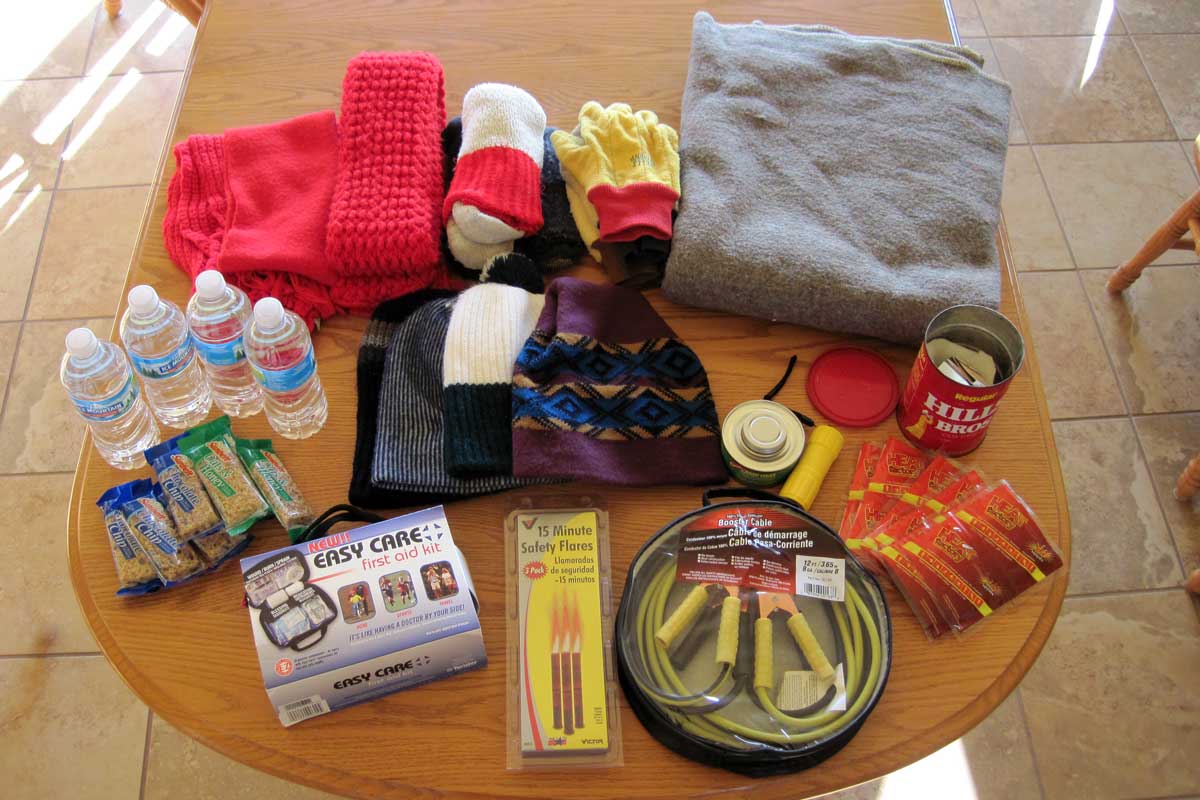
Table of Contents
Basic Winter Car Kit Checklist
At a minimum, your winter car emergency kit should include:
- Ice scraper and snow brush – To clear snow and ice from windows, mirrors, lights, and the roof.
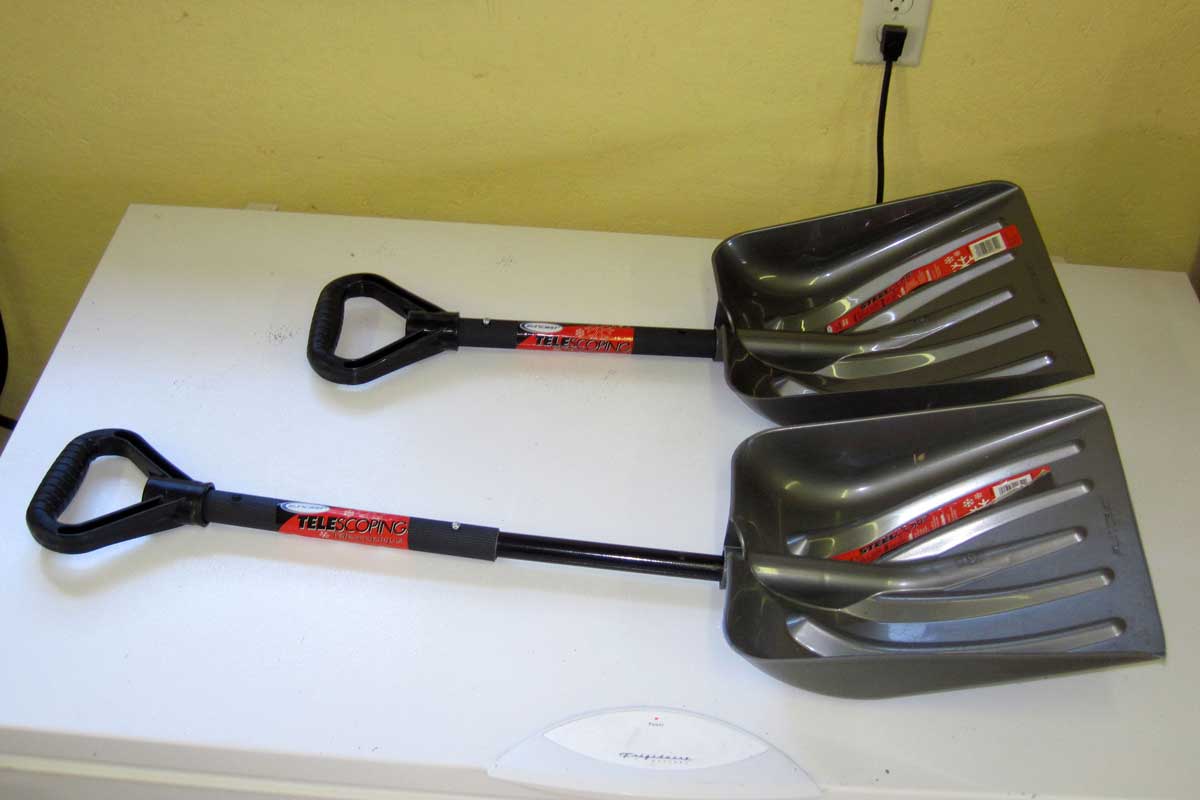
- Small snow shovel – A sturdy folding or compact shovel helps clear snow around tires and the exhaust pipe.
- Jumper cables or portable jump starter – Cold weather is hard on batteries.
- Flashlight or headlamp – Include spare batteries or a reliable backup.
- Warm blankets – Wool blankets or sleeping bags help conserve body heat.
- Extra winter clothing – Hats, mittens, wool socks, and warm boots.
- First aid kit – Include basic supplies for cuts, injuries, and personal needs.
- Nonperishable snacks – Granola bars, jerky, dried fruit, or other ready-to-eat foods.
- Drinking water – Bring fresh water when traveling, especially in freezing temperatures.*see below
- Traction material – Sand or traction mats can help if your tires get stuck.
- Phone charger and charging cable – A car charger and charged power bank provide backup options.
- Emergency contact information and paper maps – Useful when phones or internet connections fail.
- Reflective warning triangles or LED emergency lights – Help make your vehicle visible when conditions allow safe placement.
If you regularly carry passengers, pack enough warm clothing, blankets, food, and water for everyone.
Keep the most important survival supplies inside the passenger compartment, not buried in the trunk. You may not be able to reach the trunk if your vehicle is stuck in deep snow or damaged in an accident.
For vehicle maintenance before winter arrives, see our Winter Vehicle Preparation Checklist.
Building a Complete Winter Car Survival Kit
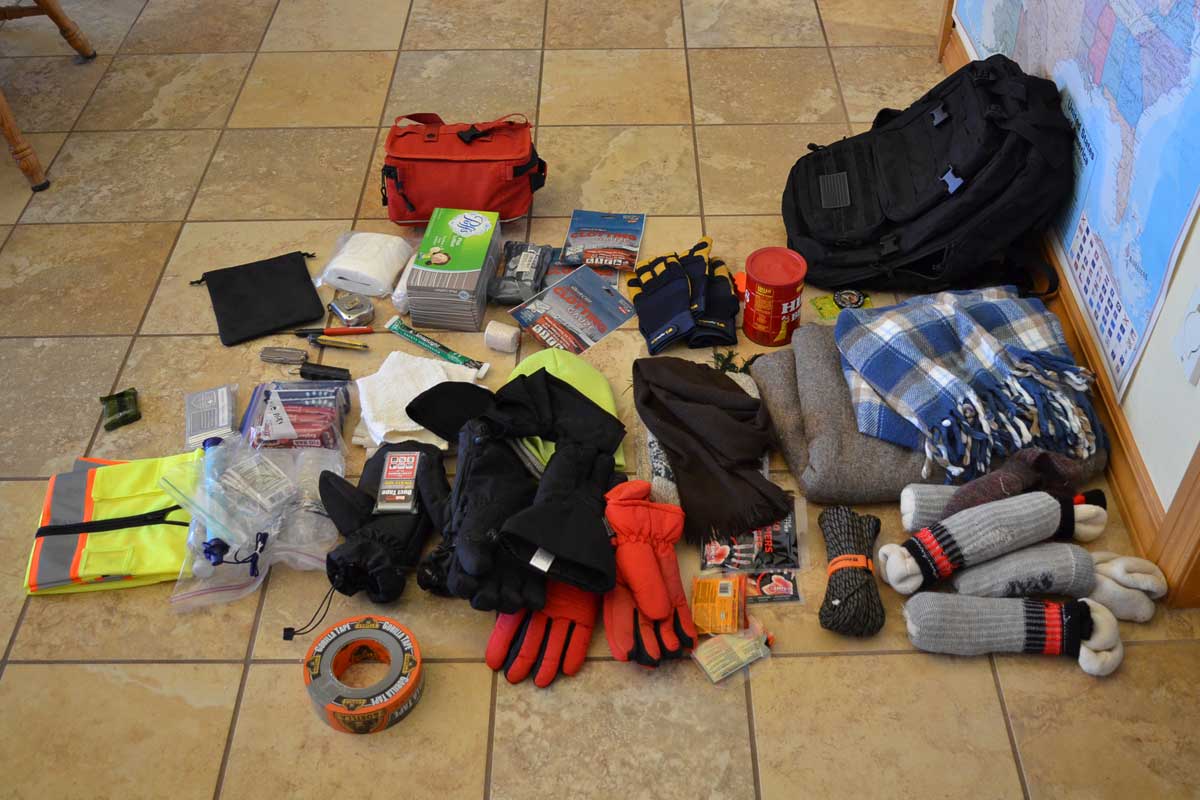
The basic supplies cover many common winter emergencies. For longer trips, rural driving, or severe winter weather, I recommend adding more equipment.
Warmth and Sleeping Gear
If you’re stranded overnight, staying warm becomes a priority.
Consider packing:
- Wool blanket – Wool provides insulation even when damp and is naturally flame resistant.
- Warm sleeping bag – Especially helpful in extremely cold climates.
- Emergency blankets – Lightweight, compact, and useful as an additional wind or moisture barrier.
- Small pillow – Makes an extended wait more comfortable.
- Chemical hand warmers – Helpful for keeping fingers and toes warm.
A good sleeping bag takes up more room than an emergency blanket, but it provides considerably better insulation. Emergency blankets are useful backups, not substitutes for proper winter clothing and bedding.
Extra Winter Clothing
You may leave home wearing ordinary shoes and a light jacket, expecting to spend only a few minutes outside. A breakdown can change those plans quickly.
I recommend keeping the following in your winter car kit:
- Warm hat that covers your ears
- Insulated mittens or gloves
- Wool socks (large enough to avoid restricting circulation)
- Long underwear or thermal base layers
- Extra shirt and pants
- Wind-resistant winter coat
- Scarf or neck gaiter
- Insulated winter boots
Dry clothing is especially important. If you get soaked while digging out a vehicle or changing a tire, changing into dry layers helps prevent dangerous heat loss. Wool socks are one of my favorite multipurpose items. Oversized socks can even serve as emergency mittens.
For more clothing suggestions, see our Practical Cold Weather Clothing Guide.
Food and Water for Winter Emergencies
Pack foods that are ready to eat without cooking.
Good options include:
- Granola or energy bars
- Homemade jerky
- Dried fruit
- Nuts and trail mix
- Crackers or other shelf-stable snacks
- Hard candy
Choose foods that tolerate freezing and temperature changes. Chocolate and some energy bars may become rock hard in very cold weather. Speaking of freezing…
*If you store water in the car, use freeze-tolerant containers with room for expansion, and check them regularly. If you use plastic water bottles, make sure you empty a little water out of each bottle. That way, the plastic won’t burst if they they freeze. Add some drink mix packets if you don’t like plain water.
Don’t rely on being able to melt snow for drinking water. Melting snow takes heat and time, and roadside snow may be contaminated.
First Aid Kit and Personal Supplies
Every vehicle should have a basic first aid kit. Include bandages, gauze, gloves, wound dressings, and other supplies you’re trained to use.
We also carry more advanced trauma supplies, including tourniquets and hemostatic dressings. These can be lifesaving for severe bleeding, but proper training is important. See our Best First Aid Kit article for recommendations.
Other useful personal supplies include:
- Prescription glasses or spare contacts
- Essential medications needed during travel
- Lip balm and tissues
- Toilet paper in a waterproof bag
- Wet wipes (which may freeze)
- Hand sanitizer
- Garbage bags
- Feminine hygiene supplies
- Baby or toddler supplies, if needed
- Paper and a permanent marker
- Deck of cards or a small book for long delays
Avoid leaving temperature-sensitive medications in a vehicle. Carry those with you and follow their storage instructions.
Winter Emergency Car Kit Tools
A few tools can help you handle minor problems without waiting for a tow truck.
Snow and ice removal
Keep a sturdy ice scraper, snow brush, and compact snow shovel in every vehicle. A small kneeling pad is also helpful when working near the ground in snow.
Battery and electrical problems
Carry heavy-duty jumper cables or a portable jump starter compatible with your vehicle. Check and recharge portable jump starters regularly, since cold temperatures reduce battery performance. A small fuse assortment and basic multitool may also come in handy.
Flat tire supplies
Check that your spare tire, jack, and lug wrench are present and in good condition. Many newer vehicles have no spare tire, so know what your vehicle provides.
Tire sealant or an inflator may help with some small punctures, but they won’t repair every flat tire. Follow the vehicle and tire manufacturer’s recommendations.
Never attempt to change a tire where passing traffic, unstable ground, or snow and ice make the job unsafe. Calling roadside assistance is the better choice in those situations.
Visibility and emergency equipment
- Reflective safety vest
- LED emergency warning lights or reflective triangles
- Vehicle-rated fire extinguisher
- Seat belt cutter and window escape tool
- Waterproof flashlight or headlamp
- Duct tape
- Paracord or utility cord
- Winter-rated windshield washer fluid
Keep the seat belt cutter and escape tool within reach of the driver, securely mounted so it doesn’t become a projectile. Some window-breaking tools don’t work on laminated side windows, so check your vehicle’s glass and choose an appropriate tool.
A heavy duty tow strap is safer than ropes or chains, but make sure you know how to use it. Incorrect towing or recovery can cause serious injury and/or damage a vehicle.
Getting Unstuck in Snow and Ice
Even a well-maintained vehicle can get stuck during winter driving. A small snow shovel is often the first tool you’ll need. Clear snow away from the tires and underneath the vehicle before attempting to move.
For additional traction, consider:
- Sand – Provides grit under spinning tires.
- Traction mats – Designed to give tires a surface to grip.
- Kitty litter – Non-clumping litter may provide some temporary traction, but clay litter can turn slippery when wet.
- Tire chains – Useful in certain winter conditions where permitted and compatible with your vehicle.
- Winter tires – Improve traction and braking in cold weather, snow, and ice.
Tire chains aren’t suitable for every vehicle. Check the owner’s manual for clearance restrictions and installation instructions before purchasing them.
Avoid spinning the tires aggressively. This can dig the vehicle deeper into the snow or damage the drivetrain. If you’re stuck in deep snow, on a dangerous roadside, or in an area with poor visibility, it’s better to call for help than risk injury trying to free the vehicle.
How to Store Your Winter Car Kit
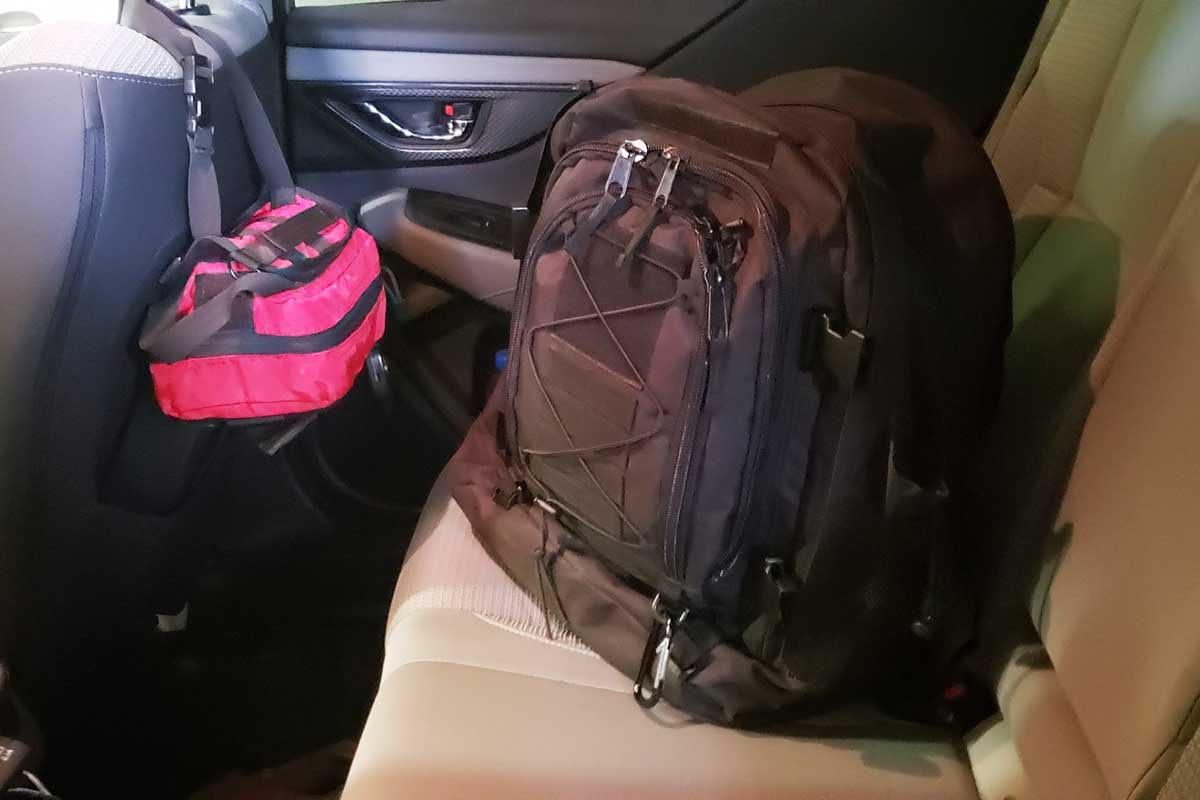
You don’t need an expensive organizer. A sturdy backpack, tote, or storage bin works well. We use large backpacks because they’re easy to organize and can be carried if necessary. A tote may be more convenient for larger items.
I separate the kit into two groups:
Keep inside the passenger compartment:
- Blankets and warm clothing
- Flashlight
- First aid kit
- Phone charger and power bank
- Food and drinking water
- Emergency contact information
- Seat belt cutter and window escape tool
Store securely in the trunk or cargo area:
- Snow shovel and ice scraper (where readily accessible)
- Jumper cables
- Traction mats or sand
- Additional tools
- Spare clothing and sleeping gear
- Vehicle recovery equipment
Secure heavy equipment so it won’t shift or become a hazard during sudden stops. Make sure everyone who drives the vehicle knows where the emergency supplies are stored.
What to Do If You’re Stranded in Winter Weather
Having a winter car survival kit is only half the equation. Knowing how to use it matters just as much.
If your vehicle becomes stranded:
- Stay calm and assess the situation. Check for injuries, traffic hazards, and immediate dangers.
- Call for help. Contact emergency services if anyone is injured or in danger. Otherwise, contact roadside assistance or a tow truck.
- Stay with your vehicle in most situations. Your vehicle provides shelter and is generally easier for rescuers to locate than someone walking through snow.
- Make yourself visible. Turn on hazard lights when appropriate and use reflective equipment if it is safe to do so.
- Stay warm. Put on extra clothing, wrap up in blankets, and minimize unnecessary exposure to the cold.
- Prevent carbon monoxide poisoning. Before running the engine, make sure the exhaust pipe is completely clear of snow. Run the engine only intermittently for heat, with a window slightly open, and check that drifting snow hasn’t blocked the exhaust again.
- Conserve your phone battery. Share your location and situation with someone, then limit unnecessary phone use.
Do not use candles, Sterno, camp stoves, charcoal burners, or other open-flame heaters inside the vehicle. They create fire and potentially deadly carbon monoxide hazards.
If snow is accumulating around your vehicle, periodically check the exhaust area before restarting the engine. Never run the engine in an enclosed or poorly ventilated space.
If you’re stranded on a busy highway, follow emergency personnel’s instructions and prioritize staying out of traffic.
Don’t Forget Emergency Contact Information
Most smartphones allow you to store emergency contacts and medical information that first responders can access without unlocking your phone.
On an iPhone, set up your Medical ID in the Health app and enable “Show When Locked.” On Android, look for “Safety & emergency” or “Emergency information” in your phone’s settings.
Include emergency contacts, important medical conditions, allergies, and medications as appropriate. This information can help emergency personnel contact your family or provide care if you’re unable to communicate.
Keep a paper copy of important contact information in your vehicle, too, in case your phone is damaged or loses power.
Check Your Winter Car Kit Each Fall
Before winter weather arrives, take a few minutes to inspect your supplies.
- Replace expired food and first aid supplies.
- Check flashlight batteries and recharge power banks.
- Make sure extra clothing still fits.
- Inspect blankets and sleeping bags for moisture or damage.
- Check your shovel, scraper, and jumper cables.
- Confirm that your spare tire and tire-changing equipment are ready.
- Update emergency contact information.
- Add supplies for new passengers or changing family needs.
For longer trips, check the weather forecast and road conditions before leaving. Keep your fuel tank adequately filled or your electric vehicle sufficiently charged, and let someone know your route and expected arrival time.
Stay Safe this Winter!
You don’t have to build the perfect winter car kit all at once. Start with a warm blanket, extra clothing, an ice scraper, a flashlight, and a few basic emergency supplies. Add equipment as your budget allows and your driving conditions require. A little preparation now can make a big difference when winter weather doesn’t cooperate.
What do you keep in your winter car kit? Share your favorite supplies or lessons learned from winter driving in the comments.
Related Articles
Car Won’t Start in the Cold? Check Out these Troubleshooting Tips
All Season Roadside Emergency Kit
Winter Preparedness Checklist for You and Your Home
About the Author

August Neverman IV has decades of experience with emergency preparedness, winter driving, and practical problem-solving. He served in the U.S. Air Force and Air National Guard and worked with emergency preparedness teams at Brown County Government, the Medical College of Wisconsin, and HSHS, a 13-hospital healthcare system. He shares practical advice to help families prepare for emergencies without unnecessary expense or fear. Learn more about August.
Originally posted in 2011, last updated in 2026.
Don’t forget medications, pain pills, asthma inhalers, etc. A small backpacker stove and some ground coffee or tea can do wonders to lift the spirits.
I saw on a TV talk show that a bag of kitty little is good to have in truck in winter months. It will help get out of slick road condition if you get stuck and need some traction.
correction:
” kitty litter in trunk.. sorry :>)
Industrial Trash Bags (3 or 4) (bought at Lowe’s or Home Depot) can be used to keep you dry and warm if used over clothes or can be used to make a temporary shelter if need be.
Plastic grocery sacks or small drawstring bags to cover exterior mirrors. Anytime I think it might ice over I bag my mirrors so I don’t need to risk damaging them.
Smart.
cool idea
I always have a bag of kitty litter or old rugs in the trunk in winter. They help give you the traction you may need to get off a patch of ice
old rugs ! awesome idea ! or more wool blankets …
I found those shovels, or ones just like them at least at Staples last year on clearance…$3 each, so bought one for each vehicle. Glad to hear they work well as we never used them…winter was ending. This is a great reminder post. Thank you!
Unless the snow is really hard packed or more ice than snow, they do a decent job. (Of course, ice is problem with most plastic shovels – and everything else.)
This is such a helpful post. Definitely bookmarking it to take a look at again as winter approaches. Thanks so much!
Thanks, Jodi. I’m really hoping we don’t have another winter like the last one.
Thank you all for these smart tips!. I’d been in a ditch in a 1982 Ford Mustang II due to wintery black ice in Nebraska years ago. I had… jumper cables and a sun shield.. It was COLD and getting colder.I was looking at spending the night in my car. Fortunately, a fellow church member spotted my car and drove me to a nearby church of ours. Never want to be in that tight spot AGAIN. EVER.
Black ice is nasty! My sister and I ran into miles and miles of it on our way back from Chicago to northwest WI one winter. Traffic had slowed to a crawl, and then pretty much stopped. We ended up taking shelter with a benevolent trucker at a truck stop. He let us use his sleeper while he slept behind the wheel. Awful nice gentleman to run into on a cold and dangerous night.
It’s also a good idea to have clothes and blankets in bright colors. If you have to leave the vehicle, you want to be highly visible. Construction or hunting attire is not fashionable, but it can be a lifesaver on a dark road at night.
All vehicles should have an ABC type fire extinguisher in the passenger compartment, where the driver can get to it easily. If (heaven forbid) there is a fire, you need to be able to fight through the flames, to get to safety.
The single most important piece of vehicle emergency equipment anyone can carry is a cel phone.
Are the water bottles in the img evian?
No. I can’t remember the brand name at the moment, but it was a local store brand.
really should only have the water bottles 2/3rds full or a freeze will burst your bottles
My water bottles never burst. They are useless here of course because they stay frozen all winter.
Toilet paper. I know the city slickers might find this one strange, but out in the country, in an emergency, I like to have options! LOL Wipes might be better – could serve multi-purposes – depending on local average temperatures of course!
This is true. You just never know how long you may be stuck.
You have forgotten to say that EVERYthing should be WOOL, not any kind of acrylic, Wool is thermodynamic so cools you down and warms you up so if you have to walk you wont sweat then chill … this is essential.
You will have a hard time finding pure wool these days. They are almost always a wool ‘blend’ using some form of polyester…yuk!!!
Also, I wish I could carry this in my vehicle, however I am a rural mail carrier, and have to use all the space for mail. I worry I might someday get caught and need this stuff, but won’t have it. I do manage to make room for a medium sized tool tote with a great first aid kit I put together myself. The clothing and blankets and most of the other tools, no room.
A blanket might be something you could stuff under the seat, just in case. I did find real wool blankets at Fleet Farm. They were old European army surplus – complete with straw sticking to them. (Maybe former horse blankets?) Some of the new blends aren’t so bad, especially for under layers, but wool is still a reliable choice.
What about the emergency blankets that are reflective? They are supposed to hold your heat in and are very small. If you don’t have room for a real blanket, perhaps those would work??? I also read that you could pack things inside a plastic barrel like what 5 gallon paint comes in so that it could double as a water carrier. Including a metal coffee can gives you the option of having something you could heat water with. Include some matches in a water proof container. If you were stuck somewhere remote, this might be good.
They work, the reflective material helps BUT… but no where near as good as a real wool blanket. The ones I have used tear easily (some of the more expensive ones are tougher). We suggest both the emergency blanket AND the wool blanket. The combo can be very good in a bad situation. The emergency blanket can be used as a ground liner to keep moisture from getting into the wool and reflect heat back up. They also can be used as a rain or snow shield (as long as it doesnt tear). It can be used to reflect heat from a fire or heated rocks again as long as it doesnt tear a lot. Get a couple different brands and try them outside at a football game or other winter sports event. Most are flimsy and tear far too easily. A couple of alternates are the “All Weather Blanket” or the “woobie“
I’m glad you shared this in the NLN Lounge. Now that my car is ready for winter since the inspection is done, I need to get the inside of the car ready.
I need to get in for new tires before the weather gets rough. Glad I’m not out in the mountains. Thanks for stopping by.
I always add “kitty litter” to the list, helps if some one needs traction in a slippery situation. & Car Games or Books to pass the time till help arrives.
I second that! I’ve seen plenty of little sports cars getting stuck going into their uphill driveways and sliding into embankments. Especially with the snowplow humps. It’s hard for them to get traction already but even harder when they’re on top of something and you can’t dig out under the car.
Make it’so the old fashioned kitty litter, and not the newer clumping kind that will turn to mush in the snow.
Yes, nothing clumping or clay based. Either will get things more slippery, not less.
Auto grade DE diatomaceous earth … is not very heavy and stays dry
Good post. We are taking our oldest son to college in Utah after the holidays so it is good to have a reminder on winterizing the car and supplies..It’s been a while since we drove in winter country..
If you have little ones, packing some powd formula and diapers and wipes for emergencies are a good idea. We also keep a spare set of clothes including socks and underwear for everyone in the car. Nothing nice, but good to have if you get soaked trying to get said car started or unstuck. Or if one of you kids is a random vomiter. Yep, those clothes have come in handy more than a few times.
Yes! Rallllpppphhh rode with us a time or two in our car. From that day forward we were prepared!
Oh dear… Thankfully we’ve never been blessed with that one.
Don’t pack kiddies clothes that are the exact size. Pack small adult size stuff or even larger. Big can be shortened, pinned, belted etc where as clothes that are too small are useless.
I used a vacuum packer to condense down clothes for the “kid pack” helps with saving space.
Using the vacuum sealer is a great idea for keeping everything dry and compact. Thanks.
You also might want to carry an empty gas can. Gas stations nowadays don't have a can to loan out if you run out of gas and have to walk. If you drive a pick-up, carry a can in the bed during storms.
In addition to a blanket, I carry a sleeping bag…
I pack our kits in those plastic totes. Also, add a roll of TP (for starting a fire if need be and for "normal use") You also might want to add a small bottle of hand sanitizer, it works for clean ups and as a fire starter as well. I was thinking about adding one of those power packs this year, just in case the battery in my truck goes dead, I can still charge up my phone as I wait for help.
Good reminders! Thank you!