
Squash Vine Borers – Prevention, Damage, and Organic Control

This post may contain affiliate links. Read my full disclosure here.
Squash vine borers (Melittia cucurbitae) are one of the most frustrating pests for gardeners growing summer squash, winter squash and pumpkins, and other cucurbits. A healthy squash plant can look perfectly fine one day and be wilted and collapsing the next.
The good news is that once you understand the squash vine borer adult, its life cycle, and the signs of squash vine borer damage, it becomes much easier to protect your plants and even save the plant if you catch the infestation early.
Table of Contents
Identification of Squash Vine Borers
Squash vine borers spend part of their lives as moths and part as caterpillar-like larvae hidden inside plant stems. Most gardeners notice the damage before they ever see the pest itself.
Would you like to save this?
Larvae
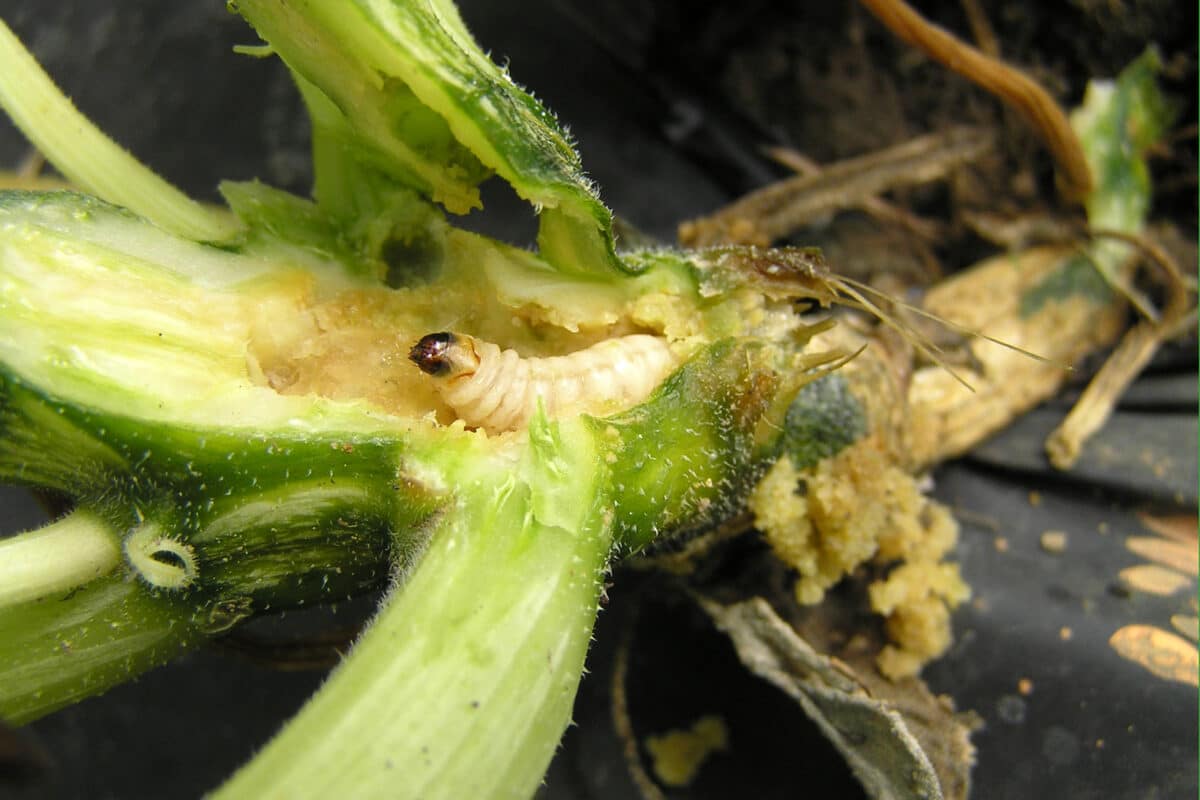
The larvae are creamy white with a brown head and grow to roughly an inch long. They have a plump, segmented appearance similar to a grub or caterpillar.
These larvae are the destructive stage of the insect. Shortly after the eggs hatch, the young borers tunnel directly into the stems of the plants, feeding from the inside out. Because they are hidden inside the vine, they can be difficult to spot until the squash plant begins to wilt.
Adult Moths
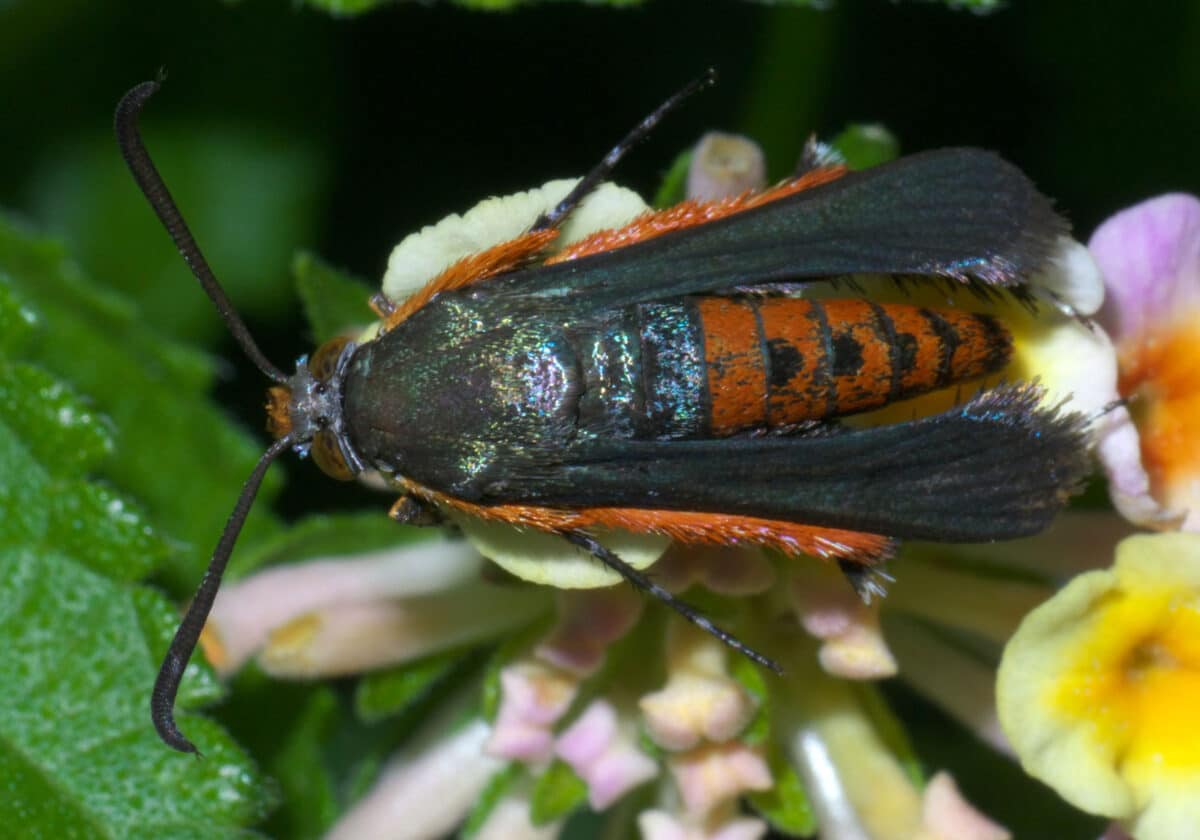
The squash vine borer adult is a day-flying moth that resembles a wasp. It has clear wings and bright orange-red markings on its abdomen, and the wings are metallic green near the body.
Unlike many moths that are active at night, the adult moth flies during the daytime, often hovering around the base of the plant while searching for places to lay eggs.
Plants Attacked by Squash Vine Borers
Squash vine borers primarily attack members of the cucurbit family, particularly:
- Summer Squash (e.g., zucchini, yellow squash)
- Winter Squash (e.g., Hubbard, acorn, and pumpkin)
- Gourds (e.g., decorative and edible gourds)
- Melons (occasionally affected, though less commonly than squash)
Some plants are more vulnerable than others. Soft-stemmed squash plants are usually attacked more heavily, while varieties with tougher or more solid stems often have better resistance.
The worst borer damage we ever had happened in an extremely wet season. Plants were waterlogged and stems were squishy, and the borers decided to stop in for a snack.
Life Cycle of Squash Vine Borers
Understanding the life cycle is one of the keys to preventing squash vine borer infestations.
- Egg Stage: Adult moths lay small, reddish-brown eggs on the stems of squash plants, usually near the base. These eggs hatch within 7-10 days.
- Larval Stage: After hatching, larvae immediately burrow into the plant stem, where they feed for four to six weeks, hollowing out the inside of the vine.
- Pupal Stage: Once fully grown, larvae exit the plant and burrow into the soil, where they form cocoons and overwinter as pupae.
- Adult Stage: In late spring or early summer, adult moths emerge to mate and lay eggs, beginning the cycle again.
Damage Caused by Squash Vine Borers
The most noticeable symptom of squash vine borer damage is wilting leaves, even when the plant has sufficient water. Other signs include:
- Frass (sawdust-like excrement) near the base of the plant
- Holes or entry points in the stem
- Yellowing and stunted growth
- Rotting vines
- Complete collapse of the plant if infestations are severe
Squash bugs are another common pest. Learn more identification and how to get rid of squash bugs.
Prevention Strategies
Preventing squash vine borer infestations is much easier than dealing with a badly damaged vine later in the season.
Use Squash Vine Borer Resistant Squash Varieties
While no squash is completely immune to squash vine borers, some varieties are more resistant:
- Butternut Squash: Its tough, solid stems make it less susceptible.
- Seminole Pumpkin: This variety is vigorous and less affected by borers.
- Dickenson Pumpkins The pumpkins grown for Libby’s pie filling.
- Tromboncino Squash: A vining variety that often withstands attacks better than bush varieties.
Autumn Prairie Pumpkins specializes in heirloom varieties that are naturally resistant to squash vine borers. They have over 25 varieties from around the globe, and have an easy to follow variety chart to help you choose the best squash for your needs.
When I use resistant varieties, we don’t get borer damage. Our soil is healthy enough that our crops are fairly pest resistant. That said, weird weather creates stress, which can make even healthy plants more prone to insect damage.
If you want to grow cucurbits that are not naturally resistant, like zucchini and jack’o lantern pumpkins, try the strategies below.
Use Row Covers
Floating row covers can help prevent the adult moth from reaching your squash plants to lay eggs. Keep row covers in place until flowering begins, then remove them for pollination.
Wrap the Stems
Some gardeners wrap the lower stems with aluminum foil or fabric strips to make it harder for larvae to enter the vine.
Rotate Crops
Avoid planting squash and pumpkins in the same location every year. Crop rotation helps reduce the number of overwintering borers in the soil. If you have ducks or chickens that can work the garden beds before planting, they’ll clean up a lot of pests.
Monitor Plants Frequently
Check the base of the plant regularly during the growing season for eggs, frass, or holes in the stems. Watch for unusual wilting.
Try Companion Planting
Some gardeners find that companion planting helps reduce squash vine borer pressure. Strongly scented flowers and herbs may help confuse or deter the adult moth while also attracting beneficial insects.
Popular companion plants for squash include:
Companion planting is not a guaranteed solution, but it supports pollinators and beneficial insects. Plus, it smells good and adds beauty.
Active Control Methods
If you spot activity early, you may still be able to stop the infestation before severe damage occurs.
Hand Remove Eggs
Inspect stems frequently and scrape off any eggs before they hatch.
Bacillus thuringiensis
Bacillus thuringiensis (Bt) can help control young larvae. Some gardeners inject bacillus thuringiensis directly into the stem using a syringe, while others spray the stems regularly during peak moth activity.
Diatomaceous Earth
Sprinkling diatomaceous earth around the base of the plant may discourage egg laying.
Trap Adult Moths
Yellow bowls filled with water can sometimes help trap adult moths.
How to Save a Plant Damaged by Squash Vine Borers
If borers have already entered a squash plant, you may still be able to save it:
- Identify Infested Areas: Look for frass and holes in the stem.
- Surgical Removal: Carefully cut open the stem with a sharp knife and remove larvae by hand.
- Stem Care: After removal, bury the damaged section with soil and water well. This encourages the plant to send out new roots.
- Inject Bt: Apply Bacillus thuringiensis inside the hollowed-out stem to kill any remaining larvae (optional).
- Mulching: Covering the base of the plant with soil or compost can encourage secondary root growth and strengthen the plant.
Conclusion
Squash vine borers can quickly destroy squash plants, but understanding how they work makes them much easier to manage. Watching for the adult moth, checking the base of the plant regularly, using row covers, and planting resistant varieties can go a long way toward preventing squash vine borer problems.
Want to learn more about natural pest control? Get the Resilient Gardening Series Pest Defense Kit.


This article is written by Laurie Neverman. Laurie and her family have 35 acres in northeast Wisconsin where they grow dozens of varieties of fruiting trees, shrubs, brambles, and vines, along with an extensive annual garden. Along with her passion for growing nutrient dense food, she also enjoys ancient history, adorable ducks, and lifelong learning.