
How to Make Maple Syrup and Maple Syrup Substitute

This post may contain affiliate links. Read my full disclosure here.
This is a guest post by Bette Lambert of Silloway Maple.
Maple syrup is a delicious, healthy alternative to refined sugar, and is enjoyed on the table as well as in many recipes. It’s simple to make maple syrup in the backyard, though once bitten by the sugaring bug, many go on to expand their operations!
Would you like to save this?
Note: If you’re here from the “50 Things You Should Make Instead of Buy” article, we do have a quick and easy homemade maple syrup substitute at the bottom of the page.
7 Steps to Make Maple Syrup
- Identify your maple trees and wait for the right temperature.
- Gather your syrup making equipment.
- Tap the trees.
- Gather the sap.
- Boil the sap.
- Filter and bottle the syrup.
- Enjoy your real maple syrup!
#1: Identify Maple Trees and Wait for the Right Temperature Range
There are many species of maple trees. The sap gathered from all of them can be boiled down into syrup.
Most syrup is produced in the northern states, but can be made as far south as Tennessee.
The temperature must drop below freezing at night and rise above during the day for the sap to run. Trees should have at least a twelve inch diameter before being tapped.
When the maple trees start budding, sugaring is over, as the sap produces bitter syrup.
#2: Gather Your Syrup Making Equipment
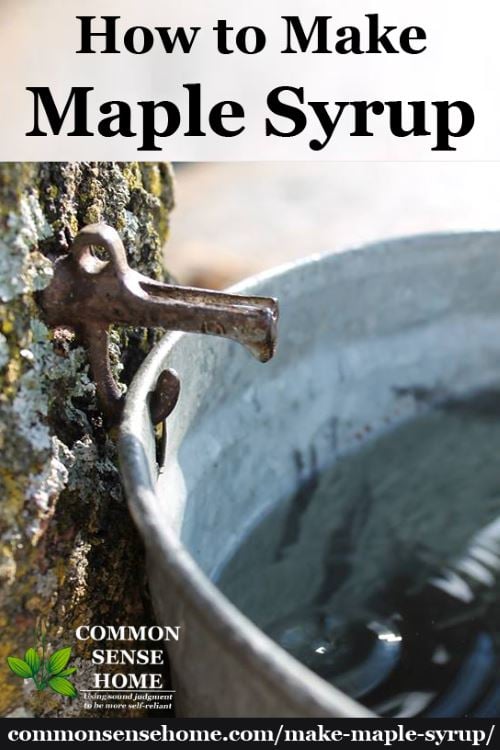
Traditional maple syrup making equipment includes sap spouts, buckets, and covers; which are available in hardware stores, from maple sugaring equipment suppliers, or used from other sugarmakers.
To tap the trees you will need a drill and bit, and a hammer. The minimum that a backyard sugarmaker must do is to drill the taphole and tap in the spout.
To collect the sap: Milk jugs or even plastic bags can be hung on the spout; or plastic, food-grade tubing can be connected to the spout and the sap run into a bucket or collecting tank on the ground.
To boil the sap into syrup: Plan how you will boil the sap – a simple pan on the stove, a turkey fryer, an outside set-up over a fire-place, or a larger, purchased arch and evaporator.
Editor’s note: a friend of mine cooked her maple syrup down in her kitchen – once. It left a sticky film on every surface. I highly recommend processing outside or in a sugar shack.
#3 – Tapping Maple Trees
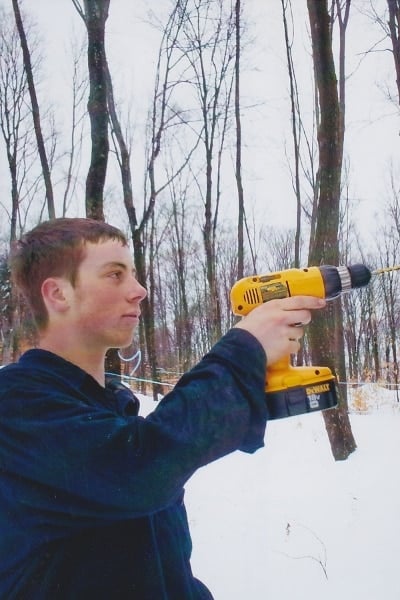
Tap the trees in the early spring, as daytime temperatures rise above freezing. Drill a hole the size of your spout, at a slight incline. (Note angle above.)
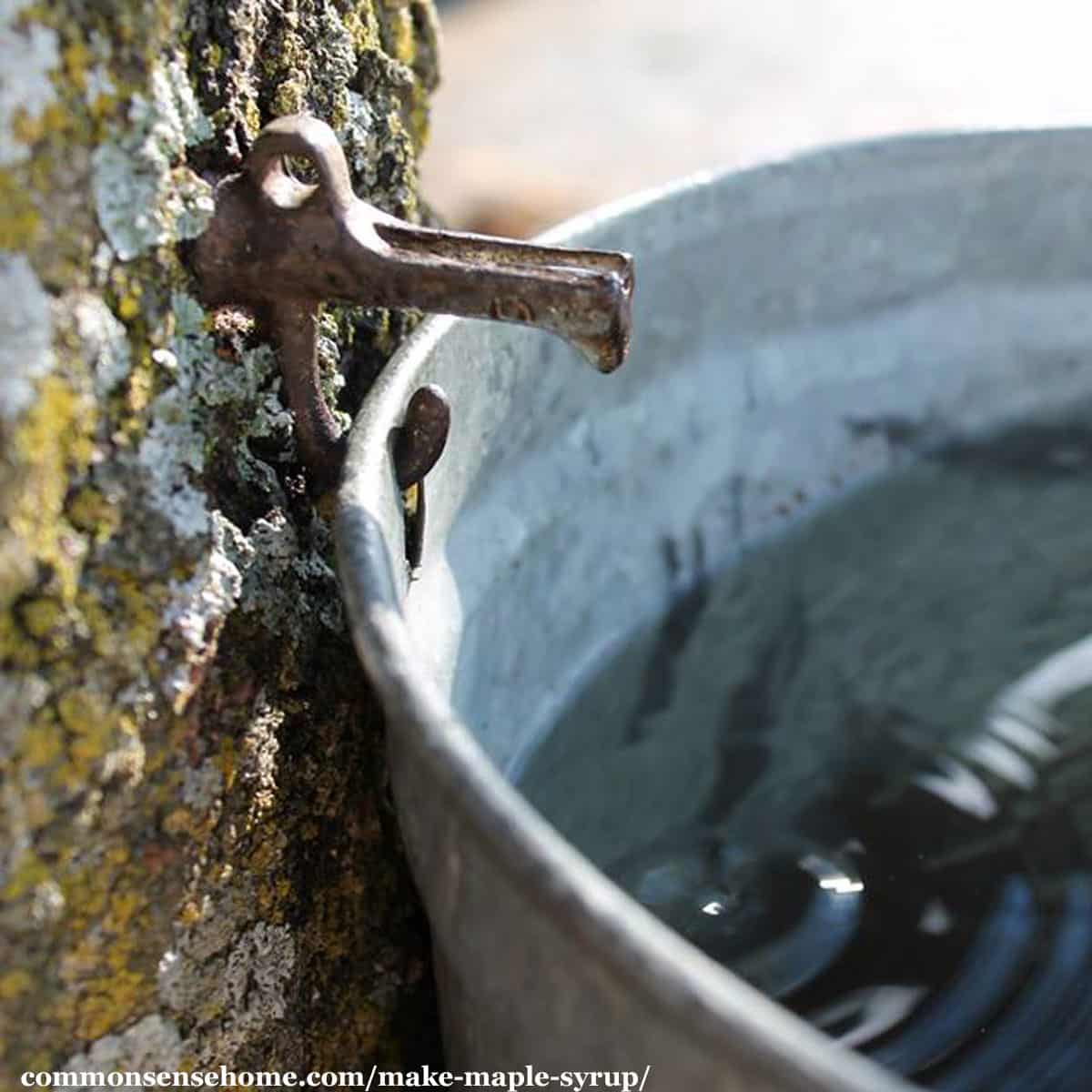
Tap the spout into the hole firmly, hang the bucket, and put the cover on to keep out rain and bugs. This is the magic moment, as the first drop of clear, sweet sap runs off the spout – often onto an eagerly waiting tongue!
#4 – Gather the Sap
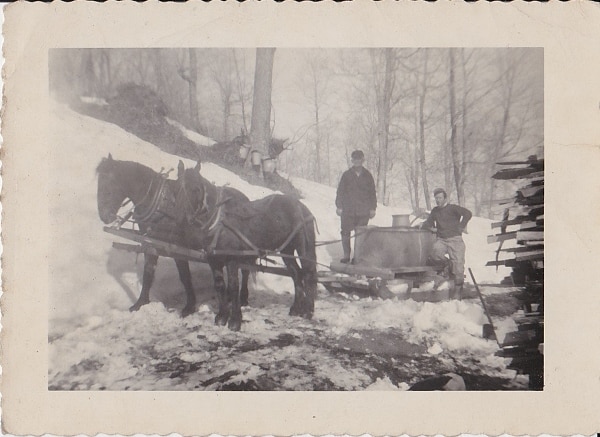
Sap is perishable, and should be gathered and boiled daily, or kept cold in a storage container until boiling. Filter the sap to remove any impurities.
#5 – Boil the Sap
Boil the sap until it reaches seven degrees above the boiling point of water on that day, or until it “aprons”, or runs off a spoon in a sheet. You can also test to see if your maple syrup is ready by using a hydrometer. (See Syrup Hydrometer Instructions to learn how a hydrometer is used for syrup making.)
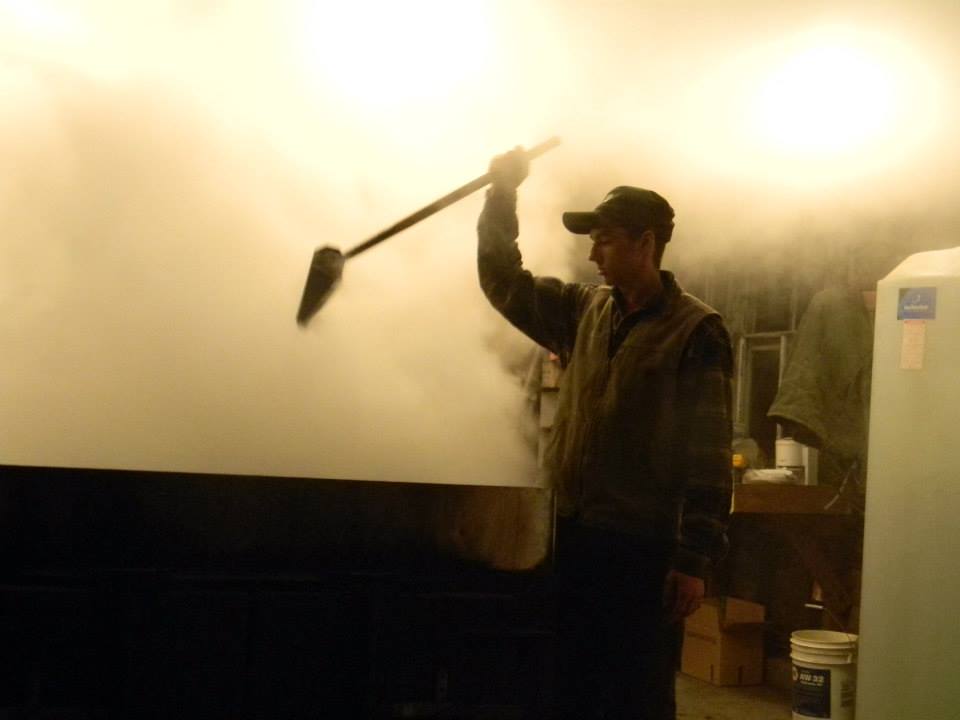
Whenever maple sap is boiled, it tends to foam up and boil over the side of the pan. Rubbing a little butter around the rim of the pan, or dripping in a few drops of milk or dairy cream during boiling will keep the sap or syrup from boiling over.
My Dad always said, “Never turn your back on boiling sap!” The amount of milk is just a few drops to any size kettle, though dripping in a few more drops is more frequently needed with a larger quantity.
Sugar on Snow
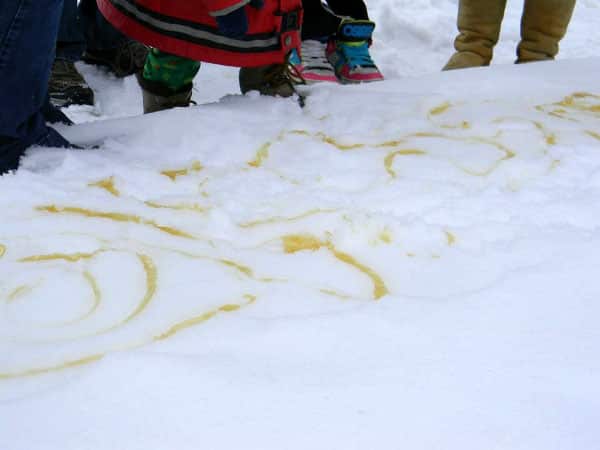
Sugar on snow is made by boiling pure maple syrup to 233 degrees, on a candy thermometer. Do not stir.
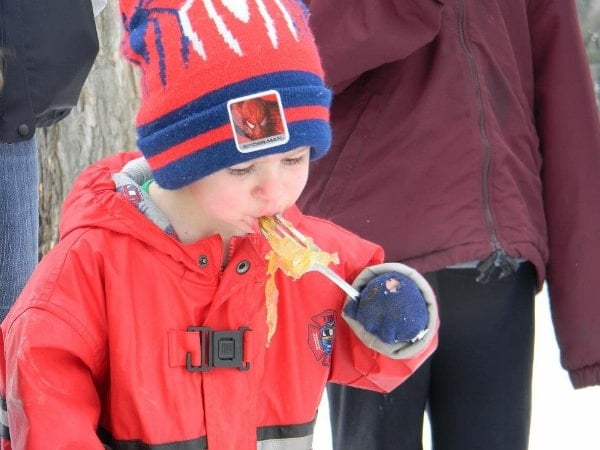
We drizzle the hot syrup over pans of packed snow-or directly onto fresh snowbanks! Each person is given a fork to twirl the taffy-like candy up on.
Those in warmer climates may use purchased maple syrup and pour it over crushed ice.
Maple Cream and Candies
We produce maple cream by boiling it to the soft ball stage, cooling it without moving to room temperature, and whipping into a smooth, creamy spread.
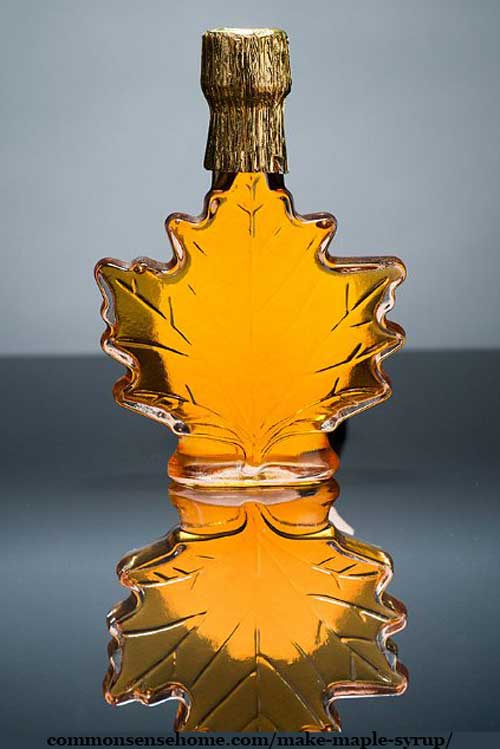
Candies, traditionally shaped in molds as maple leaves, are made by boiling the syrup to 243 degrees, and then stirring the syrup while it is hot and pouring into molds before it sets up.
My children used to boil the syrup, and then roll the candy into little balls, pressing in nutmeats. A wonderful treat, made from their big sugar maple in the yard.
#6 – Filter and Bottle the Syrup
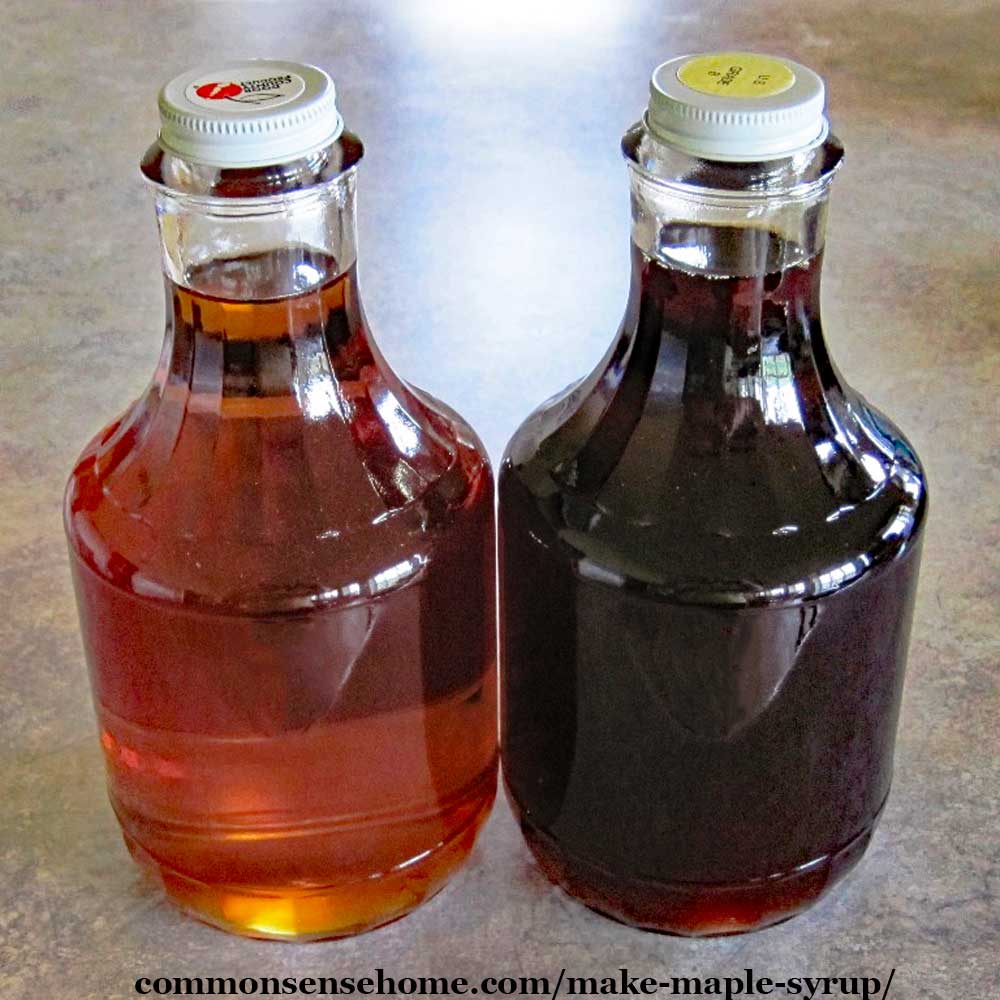
Filter the hot syrup through clean wool or synthetic syrup filters to remove niter, or sugar sand. Niter occurs naturally. It is gritty and gives the syrup a cloudy appearance.
Syrup is canned in Mason jars, commercial syrup containers, or kept in either the refrigerator or freezer.
At Silloway Maple, we can our syrup in glass and in plastic jugs by heating it up to 180 degrees. We leave no head space and do not process it in a canner.
The syrup keeps indefinitely, though some say the flavor is best preserved for long periods by freezing. It does not expand, when frozen, like cider.
Once the container has been opened, it should be refrigerated. If any mold does form on your syrup, it is harmless and can be removed by gently heating and skimming off.
#7 – Enjoying Your Maple Syrup
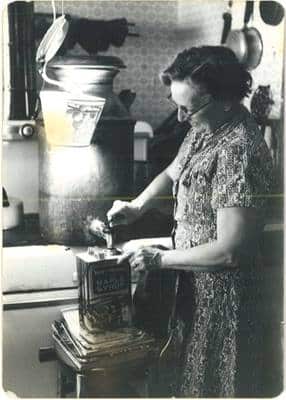
Maple syrup makes many sweet treats. Enjoy your syrup as pure maple cream, hard sugar, fudge, and maple sugar on snow.
How to substitute maple syrup for sugar (works for most recipes):
- Use ¾-1 cup of maple syrup for each cup of sugar.
- Decrease liquid by 2-4 tablespoons for each cup of syrup used.
- Add ¼ teaspoon of baking soda.
- Decrease oven temperature by 25 degrees.
Maple granola is one of our family favorites, and is very easy to make.
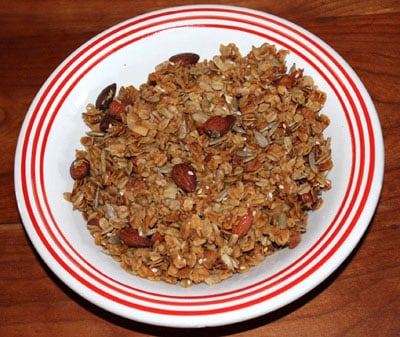
Maple Granola Recipe
Courtesy of Silloway Maple
Ingredients
- 7 c. rolled oats
- 1 c. coconut
- 1 c. almonds
- 1 c. sunflower seeds
- 1 c. oil
- 1 c. maple syrup
- 1 T. vanilla
Directions
Combine the dry ingredients in a large bowl. Mix the oil, syrup and vanilla in a separate bowl, and pour over the oat mixture. Mix well, and spread on baking sheets.
Bake in 300 degree oven for two hours, stirring occasionally. Remove from oven, and add raisins or any additional dried fruit. Store in a tightly closed container.
Is Maple Syrup Healthy?
While maple syrup is a sugar and should be enjoyed in moderation, it does contain naturally occurring minerals such as calcium, manganese, potassium and magnesium.
It’s also a natural source of beneficial antioxidants and phenolic compounds. (See “54 beneficial compounds discovered in pure maple syrup” for more information.)
Why are these compounds important?
A quote from the article linked above notes, “We know that the compounds are anti-inflammatory agents and that inflammation has been implicated in several chronic diseases, such as heart disease, diabetes, certain types of cancers and neurodegenerative diseases, such as Alzheimer’s.”
The researcher (Seeram) further concludes, “I can guarantee you that few, if any, other natural sweeteners have this anti-oxidant cocktail of beneficial compounds.”
I hope this post will encourage you to make maple syrup, and that it will become a tradition for your family like it is for mine.
Visit Silloway Maple in Vermont
If you don’t have access to maple trees, we do sell Pure Vermont Maple Syrup, Maple Cream and Maple Sugar Coated Nuts in our online store, or you can visit a local producer near you to enjoy some real maple syrup.
This is a guest post by Bette Lambert of Silloway Maple in Randolph Center, Vermont. Bette is the mother of six children, all homeschooled. She is a maple sugarmaker and homemaker.
Silloway Maple is family owned and operated. They recently built a new solar-powered sugarhouse, which also produces part of the energy used on the family dairy farm.
Daughter Laura manages the business Facebook page, Silloway Maple, where you can view photos of their sugarhouse, as well as an extensive library of maple syrup making photos.
More Maple Goodness
For more information on how to make maple syrup and other maple products:
Some featured recipes:
- Maple Leaf Cookies Made with Real Maple Syrup and Maple Glaze
- Easy Candied Walnuts – For Snacking or Gifts
- Pumpkin Spice Waffles with Maple Cinnamon Whipped Cream
- Maple Macaroons – Refined Sugar Free, Gluten Free, Delicious!
- Indian Pudding
Want to stock up on syrup? Learn how to store it for best shelf life.
For those of you visiting from the “50 Things You Should Stop Buying and Start Making” post who don’t happen to have maple trees available and were looking for a quick and easy homemade maple syrup substitute.
Homemade Maple Syrup Substitute
For those who want to make maple syrup substitute at home.
Adapted from All Recipes.com
Ingredients
- 1 cup water
- 1 cup white sugar
- 1 cup brown sugar or sucanat
- 1 tablespoon maple flavored extract (buy pure maple extract here)
Directions
Bring the water and sugars to a boil in a saucepan over medium-high heat. Reduce heat to medium-low, and stir in the maple extract; simmer 3 minutes longer.
Use immediately, or store in a mason jar in the refrigerator for up to two weeks. For a thicker syrup, use two cups brown sugar. You may also substitute 2 cups sucanat (less refined cane sugar) for the sugars. Makes 2 cups of syrup.
I still highly recommend real maple syrup. Real maple syrup has trace minerals and flavor that can’t be matched with refined sugars and extract.


Originally published in 2014, updated in 2015, 2018.
Well, we tried for the first time last year and it turned out very tasty . My only question is my syrup is very thin and runny did I just not boil it down enough?
I’m not sure what consistency you’re looking for or what you obtained, but if you hit the right temp it should be “done”. Real maple syrup does tend to be thinner than standard commercial syrups that are corn syrup based.
We have a few maple trees along our fence line. How many trees does it take to produce enough sap for, say, ½ liter or ½ quart of syrup?
From Cornell University:
It helped me alot you should follow how they make it!
I am 82, grew up in Oklahoma, so didn’t have a maple tree. My mother always made “substitute maple syrup” with water, sugar, maple flavoring, minus the brown sugar. Today, living in Louisiana, still make the syrup for my grand-daughter’s waffles. She knows no other, at my house, loves it.
I boiled my sap down to 219-220 degrees. Then, I filtered it and put it into clean jars, let them all cool, and put them in my freezer. This morning, when I looked, the syrup looks like heavy cream? I took one jar out and let it thaw and it returned to the usual syrup consistency and appearance.
What did I do wrong? Is it edible?
I’m not sure, but it doesn’t sound like you did anything wrong, just that the syrup was frozen.
Why does it turn white when I put it in the freezer?
I’m guessing that what you’re seeing is sugar crystals forming, or ice crystals. Either should disappear with gentle heating.
It’s great to read all the comments from across the country-and Uruguay! We are tapping here now, and looking forward to boiling. There is a lot of snow in the woods! Please stop by if you are traveling through Vermont, and have a look at our website if you live in a climate too warm to make your own “liquid gold”!
Hi Bette! The real stuff is so much better than the substitutes. I don’t remember if I mentioned to you about adding the substitute recipe, but I did it because the post got featured on a site that was sending people here with text saying maple syrup was “so gosh darn easy to make”, so I felt that I had to include something for that crowd. Hopefully most of our readers will understand what’s involved in creating the real thing and will appreciate it.
Thanks for your Homemade Maple Syrup Substitute. You’ve made my day until I saw that little ingredient: “maple syrup extract” !
You have to know two things. First: I’m 57 y.o. and I’ve no job ’cause there’s no job discrimination’s law in my country: Uruguay. Also, my only son is 5 y.o. At Uruguay there’s no possibilities of collecting maple trees’ sap.
So, I have to eat my “homemade” pancakes (I cannot access to “Aunt Jemima” powder) with other than maple syrup and that’s the biggest regret of not being there.
Yours sincerely,
Jorge
You don’t have to use the extract, it just makes it taste more like maple syrup.
Bread machine breads:
Milk can be substituted for water and your fat of choice can be substituted for oil
I use honey or maple syrup instead of sugar
I also use the bread machine to take care of the bread, but put the dough in a pan and bake it at the end. The times are listed below – different temperatures are listed. If I am not baking anything else, I usually use the 400 degree listing.
Our absolute favorite is the oatmeal bread. It only lasts about 3 days without going moldy or being too dry – freeze it if you don’t intend to use it up quick.
The wheat bread is heavy. I don’t add anything to make it rise a bit better.
With any bread machine, always Put into container in order It is listed – Hot water first …..
Options
Can mix milk and 1/3 c water to make 1 1/8 c
2T. Butter melted can replace oil
Can sprinkle ¼ c sugar mixed with 2 tsp.
cinnamon and roll up dough and bake
Can bake in bread pan:
350 for 40 min. or
Metal 400 for 35
Or 425 for 30 min.
1 ½ # loaf
Put into container in order
It is listed.
White bread
1 1/8 C. warm water
1 ½ Tbsp. vegetable oil
1 1/2 Tbsp honey
3 c. white flour
1 ½ tsp. salt
2 tsp. dry yeast
OATMEAL BREAD the best one!
1 1/8 C. warm water
1 ½ Tbsp. vegetable oil
2 Tbsp honey
½ c. ground quick oatmeal
2 ½ c. flour
1 tsp. salt
2 tsp. dry yeast
WHEAT BREAD
1 1/8 C. warm water
1 ½ Tbsp. vegetable oil
1 Tbsp honey
Scant 2 c. white flour
1 c. wheat flour
1 tsp. salt
2 tsp. dry yeast
BRAN BREAD
1 1/8 C. warm water mixed with milk
2 Tbsp. melted butter
2 Tbsp molasses
2 ½ c. white flour
½ c. crushed bran cereal
1 tsp. salt
2 tsp. dry yeast
The kids kit would be great for my grandchildren to get started in maple syrup making!
Thanks for the post! I grew up in Upstate New York and we enjoyed fresh maple syrup every year. One of my teachers had a sugar bush and when I was in grade school we went on a field trip to see how they make maple syrup. It was fun to see the sap in the buckets and to get a taste and then to see how they boiled the sap to make the syrup. Sure would like to try to make my own here in Washington state.
cant wait to try this!
Did you know that in the email you used last year’s date?! I have never that myself (rolling eyes). My street is only 2 blocks long but was built more than 50 years ago. Almost every house has a huge maple tree and my next door neighbour has a fire pit. Now I just need access to a large metal pot.
Nope, completely missed that. It was a really long day. Too late now.
I am ready to tap.
We have a large leaf Maple in our front yard..hoping though we don’t get long stretches of freezing weather, I am able to make this a success!
Found this article to be very helpful and insightful. I’ve always wanted to make my own maple syrup. Thanks for sharing!
We just started experimenting with maple syrup. I now understand why it’s so costly to buy.
Thank you so much for the tutorial! First I Pinned it, THEN I wanted to enter the contest 😉
I would love to try this
LOVE real maple syrup!!
Hi…Thanks Laurie….You have inspired me to GET GOING….We have 30+ Giant Leaf Maple trees on our property. We have heard you can also tap these trees. So…HOPEFULLY…we can do…this year… I know it is a little harder…and our temperatures flux more…up and down…in the area…(East of Lake WA…and Seattle)…But you can still see the trees drip…and it takes more sap to get your volume. Any other helpful hints would be appreciated…Blessings…Nadine