
How to Make Homemade Extracts – Vanilla, Lemon and Almond

This post may contain affiliate links. Read my full disclosure here.
I do a fair amount of baking, especially once the weather gets cooler, so I figured I could save quite a bit of money if I learned how to make homemade extracts. It turns out it couldn’t be much simpler – the biggest skill required is patience – and I can have plenty of extract for pennies on the dollar compared to buying high quality extract.
Would you like to save this?
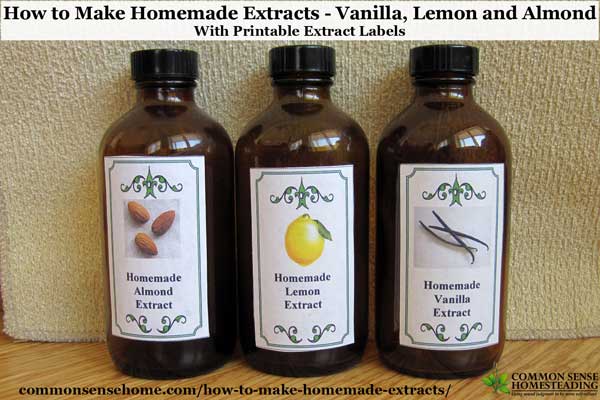
This post covers how to make the three homemade extracts I use the most – vanilla, almond and lemon.
Always make sure all your containers and kitchenware are well cleaned. If you want, you can sterilize by boiling for ten minutes, plus one minute per every 1000 feet above sea level. I haven’t boiled, I’ve just used well-washed everything, and I haven’t had any problems.
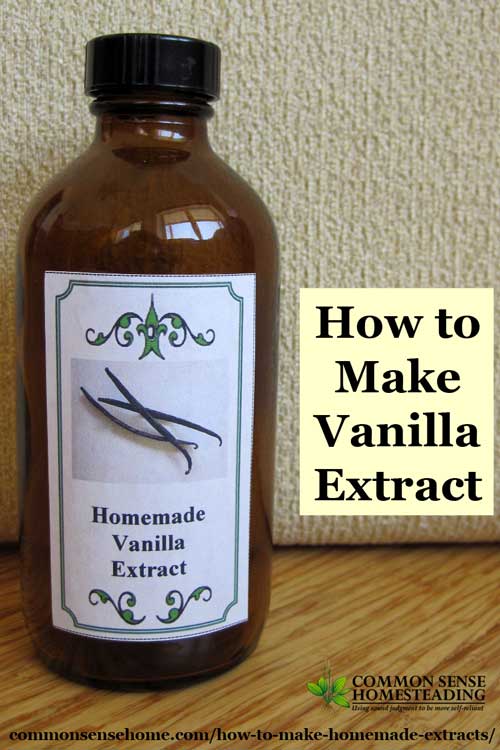
How to Make Homemade Vanilla Extract
1. Use 2 ounces of vanilla beans and one pint vodka for every pint of extract that you want to make. (For one cup of extract, use one ounce, and so on.)
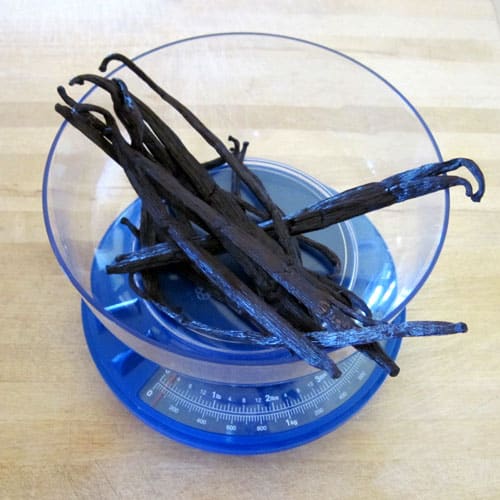
2. Chop the beans into 1/4 to 1/2 inch long pieces. Many recipes call for slicing and scraping, but if you simply cut the beans into small pieces, you can get the same results with much less mess and effort.
3. Place the cut vanilla beans in a lidded, glass jar with 80 proof (40% alcohol by weight) vodka. I prefer to use vodka bottled in glass rather than plastic, and watch for whatever’s on sale. Lately I’ve been using Svedka. You can see the bean pieces at the bottom of the jar and the floating vanilla flecks.
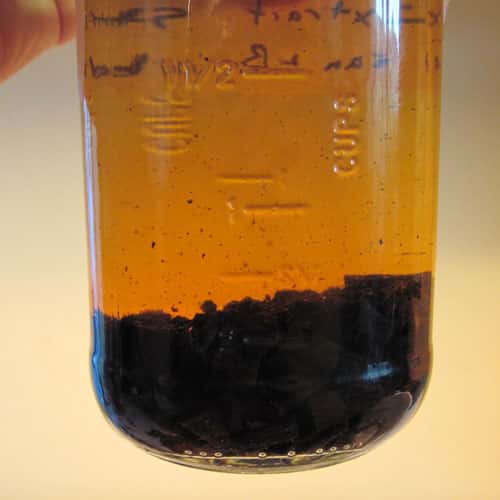
4. Shake the bottle once a day for at least a month, and you have homemade vanilla extract. I usually aim for two to three months. The color and flavor will deepen with age.
5. Strain the finished extract through cheesecloth or a coffee filter and place in a dark bottle. You can order bottles online or find them in some specialty stores, or reuse empty extract bottles that you already have on hand. Alternatively, you can measure right out of your brewing bottle and continue to let the rest steep, or pour off some and let the rest steep. I like to bottle what I’m using separately to reduce any risk of contamination from dipping into an open jar (even if it is filled with alcohol). You really don’t need to strain if you’re just pouring off the top, and you can add more alcohol a few times (depending on how much you draw off and how strong your beans are).
6. Store in a cool, dark location.
If you buy the vanilla beans in bulk you can save even more (I have split orders with friends). You can also buy assortments of beans and mix and match types for subtle flavor differences. I think my homemade extract with a mix a beans tastes and smells as good or better than any commercial extract I’ve tried.
Purchase Boston Round Bottles, 4 Oz Pack of 12
For gift giving, you may want to consider using different alcohols (such as brandy or rum) combined with different bean types for a truly unique gift. Or just make up one big batch and split it into small decorative bottles.
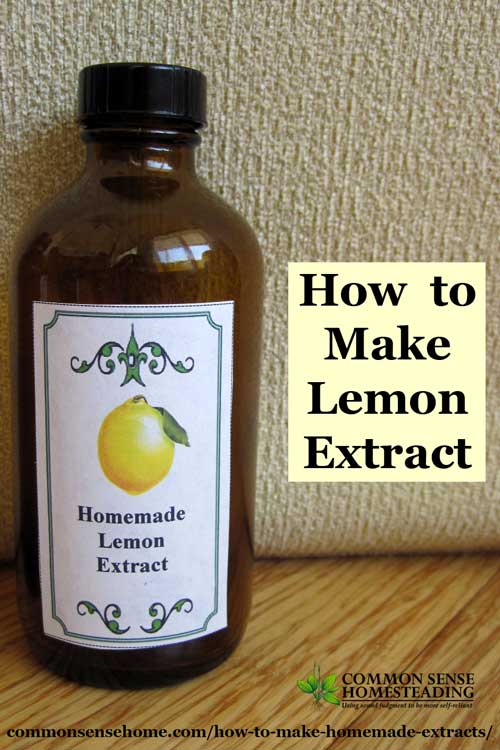
How to Make Homemade Lemon Extract
This recipe is based on the post “How to Make Baking Extracts” from the Denver Post.
1. Combine the zest from 1 lemon, 1 teaspoon sugar and ½ cup 80 proof (40% alcohol by weight) vodka. Don’t use the pith (white part) of the lemon- just stick to the yellow – as the pitch is bitter. I like to use my Microplane zester to get a beautiful, fine lemon zest.
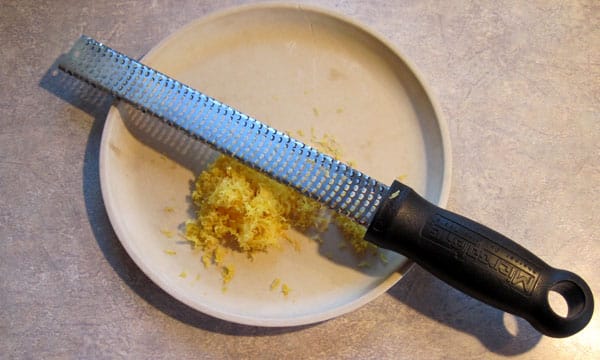
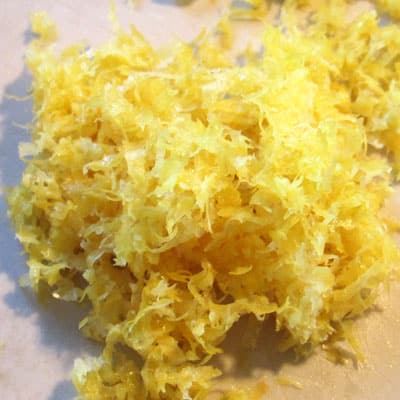
2. Place zest, sugar and vodka in a lidded, glass jar.
3. Shake the bottle once a day for at least a month, and you have homemade lemon extract. I usually aim for two to three months. The flavor will improve with age.
4. Strain the finished extract through cheesecloth or a coffee filter and place in a dark bottle. Alternatively, just pour off a small portion for use and allow the rest to continue steeping.
5. Store in a cool, dark location.
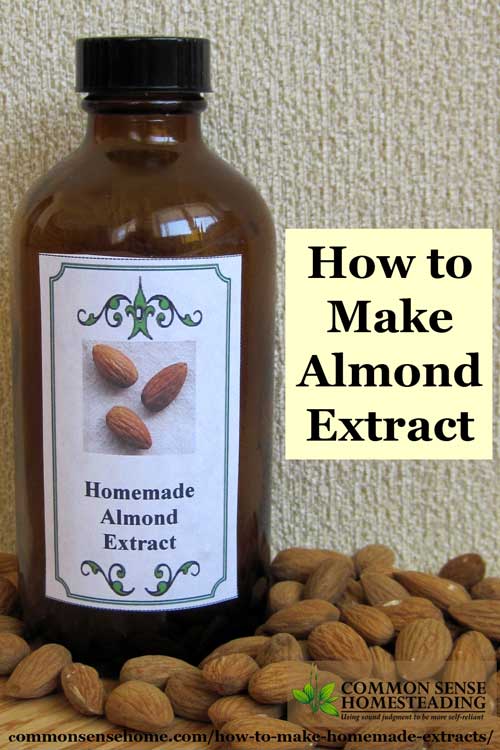
How to Make Homemade Almond Extract
Commercial almond extract is made with bitter almonds, which contain a cyanide precursor, which I don’t suggest brewing at home.; In fact, some folks argue that you should not use natural almond extract at all, only the synthetic. For my part, I’m more likely to trust nature than chemists. I’ve read that the same pits and seeds that contain the cyanide precursors also contain anti-cancer compounds. I don’t go out of my way to consume extra seeds and pits, but I don’t worry if they occasionally get eaten.
These instructions are based on the E-how post “How to Make Your Own Almond Extract“. By now, you know the drill, but we’ll go through the steps and proportions.
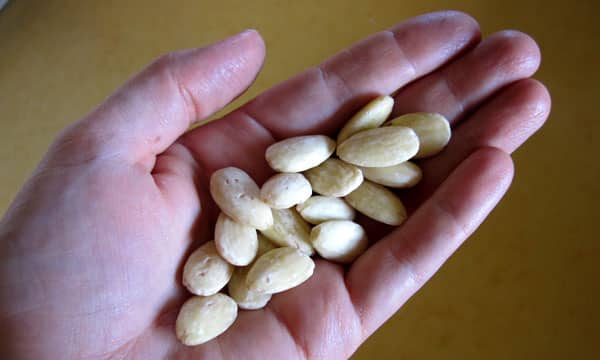
1. Use 12 whole, raw skinless almonds and one pint 80 proof (40% alcohol by weight) vodka for every pint of extract that you want to make.(For one cup of extract, use 6 almonds, and so on.) My almonds had been in the freezer for while, so I used more. The skins will make the extract more bitter, so it’s best to opt for skinless. Better tasting almonds make better tasting extract.
2. Chop almonds and place almonds and vodka in a lidded, glass jar. More surface area means more flavor transfer from almonds to alcohol.
3. Shake the bottle once a day for at least a month, and you have homemade almond extract. I usually aim for two to three months. The flavor will improve with age.
4. Strain the finished extract through cheesecloth or coffee filter and place in a dark bottle. Alternatively, just pour off a small portion for use and allow the rest to continue steeping.
5. Store in a cool, dark location. This extract will not taste as strong as commercial almond extracts, so you may want to make a small batch and see if you like it before making it in quantity.
And now you know how to make homemade extracts.; The same concept can be used with homegrown mints for homemade mint extract, or to make homemade orange extract and coconut extract. The shelf life is indefinite – alcohol is a preservative. I’d still recommend using in a year or two because the flavor will fade once the solids have been removed.
If you want to try different fruit extracts, like watermelon or strawberry, I’d recommend dehydrating or freeze drying the fruit first to concentrate the flavor.
If you’d like to use the labels shown in the photos above, just click on the image below. The file is large, so it make take a couple minutes to open.
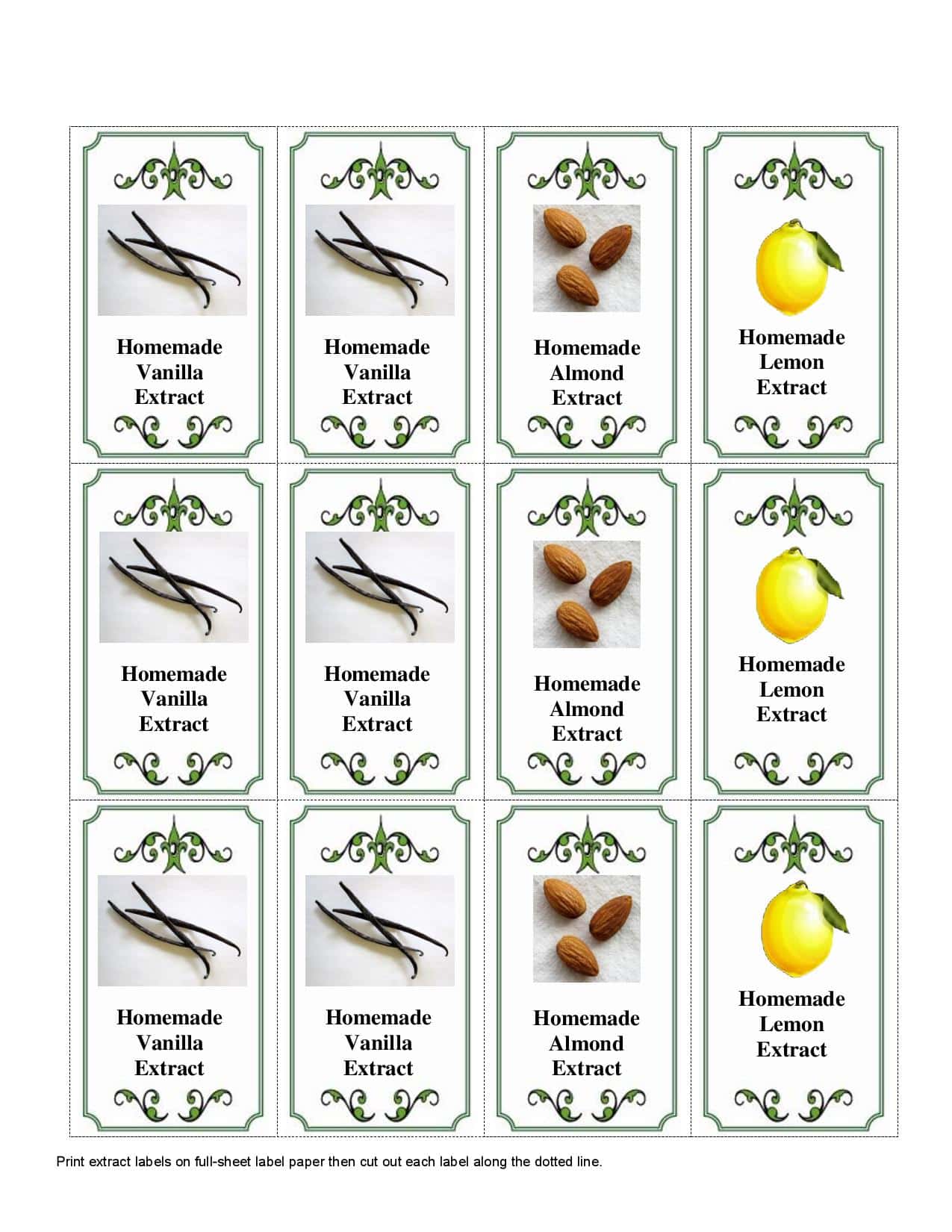
Update: I just added a jpg copy of the labels, shrunk down to fit on 4 oz bottles. This will only fill about half a page when printing. Download extract labels sized for 4 oz jars.

More Great Extract and Infusion Recipes
- How to Grow Stevia and Make Your Own Extract
- Easy Chocolate Mint Extract
- How to Infuse Herbs in Oil, Water, Vinegar, Alcohol or Honey

Originally published in 2012, updated in 2016.
Hello, I am interested in learning beauty alchemy and I am trying to make a few recipes here and there. I see you’ve done more than a few extracts in your day and I was wondering if I were to make a watermelon extract if I would have to soak that in alcohol as well?
Typically extracts do have an alcohol base, but you can make a liquid flavoring with a liquid glycerin base. Just substitute three parts food grade liquid glycerin and one part pure water for the alcohol.
As I’ve mentioned in other comments, because of the high water content of watermelon, I’d dehydrate it before attempting to make and extract or flavoring, to concentrate the flavor.
Has anyone tried this for the fruits of the blushwood tree (fontainea picrosperma)?
I don’t believe we have those around here.
I want to make cherry extract. If I made it now would it be good come Christmas? Or would it go bad before then? Anyone know?
If you want to try it, it would probably be best to dehydrate or freeze dry the cherries first, to concentrate the cherry flavor. In our area(near Door County, Wisconsin, know for its cherries), people put cherries in brandy and call it “cherry bounce”. I tried it one year, but there wasn’t much cherry flavor.
Do any of the good, healthy fats leach into the extract? With my Keto lifestyle (I’m new and still learning), I hoped that making as many of my kitchen staples as I can, will make them fit better in my health plan.
The “healthy fats” from? Extracts are typically a small part of any recipe and have a negligible impact on diet.
Sorry, I was referring to almond extract. But your reply makes sense, too little to count.
Duh. ;-P.
Thanks!
I also make my own vanilla extract. I let it sit for at least 2 months or longer. Leaving beans in the liquid insures good strong flavor clear to the end. Another enhancement that I use is to get vanilla flavored vodka. Just one step further to a gourmet flavor.
For almond extract, couldn’t you just use Amaretto?
The flavor should be similar.
Hi,
To get a more concentrated flavor could you slowly heat the extract and concentrate it? I realize that it will be mostly the alcohol that evaporates first.
You may get mixed results because some of the aromatic compounds may also be driven off with heat. If you try it, try a small batch and see if you like the results. I’d very much like to hear the results.
Can make pistachio extract with this method?
You could give it a try, but I don’t think the flavor would be very strong. I’d try a small batch and see if you get the flavor you’re looking for – or not.
I’m about ready to toss it all out, and then start over.
I’ve bought slivered almonds, vodka, and put it in the closet. Sometimes I forget it’s there, but on the average, I shake if not every few days, then about after a week or two. The bottom line? After about five months, I smell no almond — only the vodka. What did I do wrong? I thank you.
What did the slivered nuts smell like when they first went in? Unfortunately, nuts can take a long time to get from the tree to our cupboards, and lose a lot of flavor along the way. If they didn’t have much flavor to start, your extract won’t either. Even with better quality nuts, homemade almond extract still lacks the kick of commercial extract. Have you tasted it? Worth a double check before you toss it. If you didn’t get the flavor you want, it’s still usable as plain vodka in drinks.
I shared this link on fb a couple yrs ago. It just popped up in my memories & I’m going to try them. I’m trying to eat healthier & be less dependant on store bought items…I prefer homegrown & homemade. I’m also going to start following you. Thanks for the knowledge.
Welcome, Lori.
My almond extract has a like green haze above the almonds. And my lemon and lime extract are cloudy as well. Made coconut too and it has a cloudy film on top. The only one that looks clear is my mint. I used 40 proof vodka 7xs distilled not sure what I did wrong. They have been steeping for about a month but I’m concerned I’m gonna kill someone if they try it. I have not been consistent in my shaking the bottles once daily. Keep forgetting since they are tucked away and full-time work and 2 kids. Should I consider this a loss? Some hard are extemely tightened with their lids so not sure it’s an air leakage thing.
Open it, strain it, take a look and see what you have. Booze kills most pathogens. A cloudy film is not necessarily a cause for concern.
40 proof or 40%? 40 proof is only 20% alcohol which is way too low of an alcohol content to make extract and preserve it. You really should use 80 proof (40% alcohol) and 70 proof (35%) minimum and 100 proof (50%) maximum. Some states sell what is called diluted alcohol (40 proof or 20%) which I found out about when I moved to Ohio. You definitely fo NOT want to use this as it won’t preserve the extract and you will get results like you described.
What do you think about course grinding the almonds in a coffee grinder? More surface area!
I don’t think it would hurt, but I still don’t think it would get that commercial extract flavor.
Do you have any suggestions on how to make a caramel extract? I’m new to making extracts and would appreciate the help. Would it be oil based or alcohol based?
Caramel flavor comes primarily from browned (caramelized) sugar. I think it would be difficult if not impossible to make a homemade caramel extract with good flavor. The commercial caramel extracts are mostly synthetic, with ingredients like propylene glycol and “natural flavors”. If you wanted to try making a caramel flavored liquid, you could caramelize some sugar and dissolve it in alcohol. Another option that may work better (depending on how you’re using it) would be SweetLeaf Sweet Drops Liquid Stevia Sweetener, English Toffee Flavor. It has a good caramel/toffee flavor and minimal aftertaste. It contains only Purified water, organic stevia leaf extract, natural flavors, vanilla extract, natural aromatics. The flavor is very concentrated, so a bottle lasts a long time. I’ve used it for flavoring my coffee and kombucha, and in baking.
Love this idea and have started my own large batch to put in smaller bottles! I have a question though… I used a large 2 gallon beverage dispensing jar and my extract is very cloudy… Is that normal? I am very concerned that it is bad. The jar isn’t air tight and I am wondering if that is causing an issue. Please let me know what you think. Thanks!
If you used at least 40 proof alcohol, you should be okay in the short term. It’s a natural preservative. It would be best to use an airtight container because over time the alcohol will evaporate, which could lead to problems.
Hi! I am interested in doing all these extracts for Christmas presents… and am curious, if more surface area means more flavor, why do you not grind the almonds to make the pieces similar in size to the vanilla bean and lemon peel?
Thanks!
You certainly can do that, and it may help a little, but unfortunately the almonds only pack so much “oomph”, no matter how they are processed.
Ever tried making a coffee bean extract from a roasted bean?
No, since I’m the only one that likes coffee in the house, but if you try it I’d love to hear how it comes out.
I’ll be giving it a whirl so will let you know, Laurie.
Thanks!
Can you help??? I made some vanilla, lemon and orange extracts in April (not all combined in the same jar…..) and instead of having lovely flavoured extracts, all I can taste is the vodka, which is pretty intense and not very pleasant.
I’m not sure where I went wrong. The alcohol volume was only 35% so could it be that.
Any help or suggestions would be most appreciated.
Thanks
I’m not sure what would have happened, as I’m never had a batch fail. Maybe your beans were dried out or poor quality? The citrus extracts might not be as strong as store extracts, but they should still taste like citrus. Maybe your citrus peel was dried out and low in oils? All the flavor comes from the oils, so if you’re not getting flavors, you’re lacking oils for some reason.
Thanks for the suggestions. However the beans were freshly bought and a good quantity – I thought if I’m going to the trouble of making some, it might as well be made using good ingredients.
Again the oranges and lemons were freshly bought though I can’t remember how many of each I used. I’ll give them until Christmas (the taste has slightly improved as time has gone one). If they’re still yucky then I’ll try a new batch.
Thanks again for your help x
I wonder if the proof on the alcohol could have that much of an effect? I know that some people use even higher concentrations of alcohol, but other people say not to do that because it pulls out more bitter compounds. Very curious.
It may be that the variety of oranges or lemons have slightly different chemical compounds (not synthetic chemicals) that provides the taste or strength of the peels and that may make a difference. I’ve always made my own vanilla from dark rum and vanilla beans but have never tried making any others so I’m just guessing here.
I was pretty surprised at what a simple process it is to make homemade extract, and motivated by your timely post to make some on my own. I ordered 1/2lb of Madagascar extract grade B beans from Amazon (came within a week in perfect shape), picked up some 16oz amber flip-top bottles from the local brewer’s store, and some vodka from another local store. It only took 40 minutes to cut up the beans, use a funnel to drop 2 oz into each of 4 bottles, and fill them with vodka. Voila! Christmas presents prepped. Now for the daily shaking…
Thanks for the information and motivation!
You’re very welcome!
I Luv ur natural talk plz Hw can I extract without using alcohol…
An extract, by definition, uses an alcohol base. You could attempt to make a flavoring by infusing the food items in vegetable glycerin or a mild flavored oil instead, but such a flavoring would not be used the same way in recipes.
Hello Laurie
This is fabulous! Thank you very much for recipes and tips. Especially the lemon extract.
(I giggled about your vanilla extract … I have black cherries soaking in a 1 gallon glass jar going on 4 years now LOL and liqueur to boot) .
I hope I’m not overstepping but would like to share this side note for some; gin is good for making extracts/cordials/liqueurs as it stays neutral .
Vodka is good but…potato vodka is best. Grain vodkas tend to overpower flavors, hence maybe that’s why for some people it doesn’t work.
My go to is potato vodka. I’ve been “boozing” with fruits/herbs in many different ways so I’m just speaking from my experiences)
Thanks for sharing your experience. My default is potato vodka, so I’m less familiar with the flavor profiles of other types of vodka. To my palate, gin brings its own flavors to the party more than vodka does, but those flavors would likely be a good accent to certain extracts, like citrus.