
Grandma Called it Medicine Leaf – Plantain Weed Remedies

This post may contain affiliate links. Read my full disclosure here.
Plantain weed is good medicine, from seed to root. In this article, I’ll share how I came to know plantain, and how to use the fresh leaves and dried leaves for natural remedies such as salve and tea.
Would you like to save this?
Table of Contents
Plantain Weed – Grandma’s “Medicine Leaf”

When I was a little girl, my father’s mother, Catherine, and I were very close. Mom was awfully busy trying to raise six kids and run a farm by herself, so I spent a lot of time with grandma (I’m the baby of the family).
Grandma had ever-bearing strawberries that she would pick as soon as they showed a blush of red, so the birds didn’t get them. There were always hollyhocks and poppies, the yellow transparent apple tree, lilacs, roses and a small vegetable garden.
Grandma and I would dance and sing on the front lawn, and every Saturday night we had a “date” watching HeeHaw.
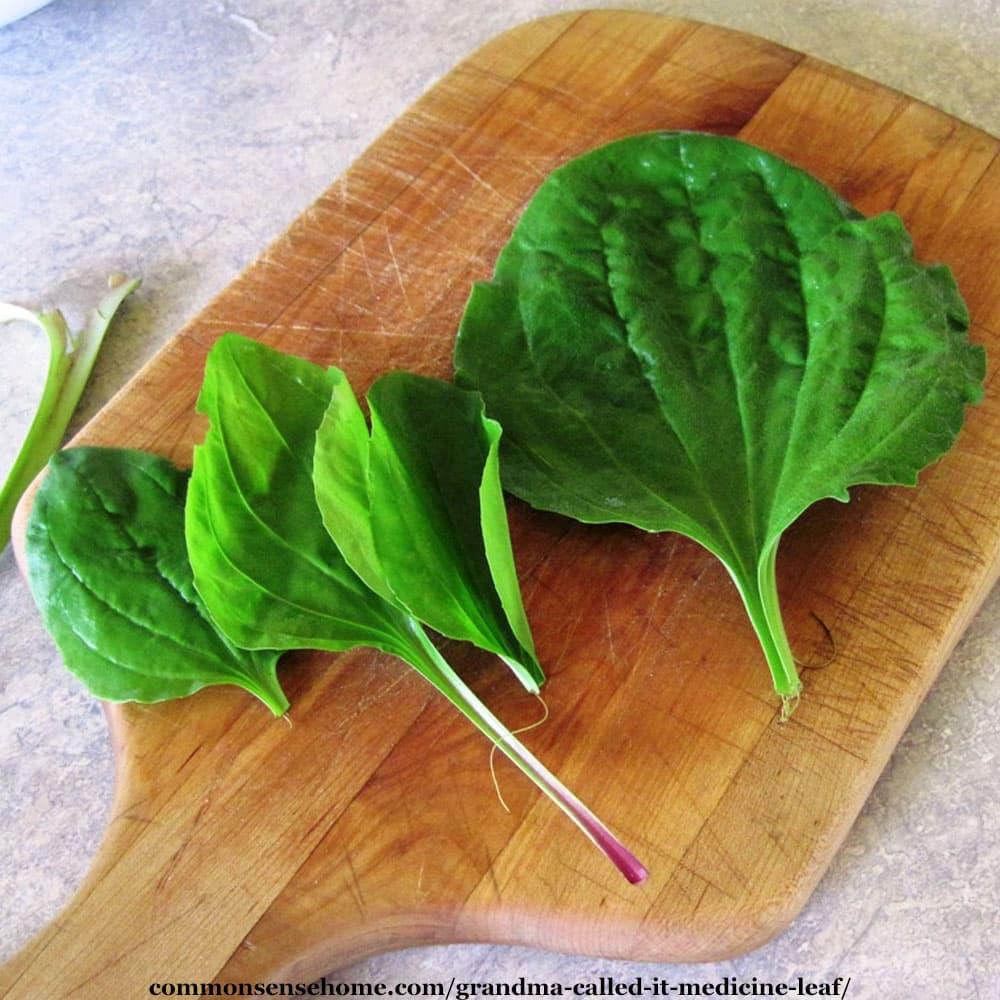
I remember grandma pointing to a broad leaf plant in the yard and calling it “medicine leaf”. She told me the Native Americans use to use it for medicine, but we never used it ourselves.
A New Look at Old Medicine
Fast forward about 30 years. I started hanging out with the grandmother of some boys in our local homeschool group, and she showed me how to use plantain leaf to make an infused oil.
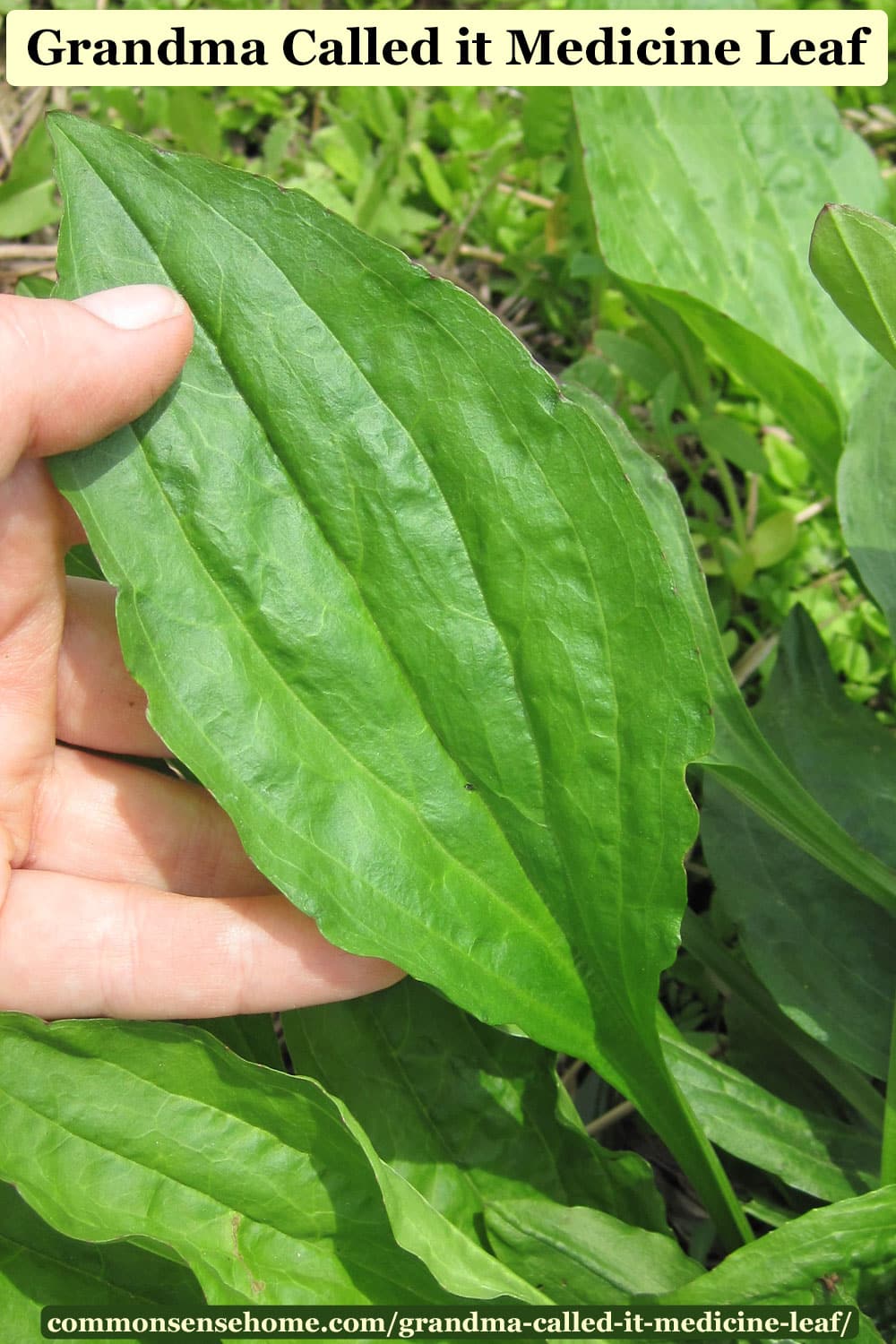
It turns out grandma’s “weed” was actually broadleaf plantain (Plantago major), and it’s close to miraculous for treating bug bites, stings and many other ailments.
Using plantain weed opened the door to my curiosity about the use of many common weeds. It truly changed my life, and that’s why I chose it for the logo of the website.

Now I look at wild plants with fresh eyes. (Many of them were carefully carried by settlers as food and medicine.) It’s a great feeling to know that I can find simple remedies almost anywhere.
I’m not the only one taking notice of plantain. The 2018 study “Plantago major in Traditional Persian Medicine and modern phytotherapy” looks at a wide range of medicinal uses of plantain, including treatment of:
- epilepsy
- eye disease
- toothaches and other oral health problems
- earaches
- pulmonary disorders
- gastrointestinal trouble
- liver disease
- urinary tract issues
- skin diseases
Note: For more detailed information on how to to identify plantain and food uses of plantain, see “Broadleaf Plantain – The “Weed” You Won’t Want to Be Without – Weekly Weeder #14“.
How to Use Fresh Plantain Leaf to Treat Insect Bites, Stings and Other Skin Irritation
The first time I put plantain weed to the test was for treating a wasp sting.
I was at my Great Uncle’s house scrubbing egg off a plate with a metal scouring pad, when “the pad” stabbed me. I set the scrubber down and out crawls a large black wasp. (Bill told me after the fact that, “Oh yes, he had seen some of those around.” I guess it didn’t like being used to scrub plates.
My finger started swelling and burning. I ran cold water on the sting, and yelled for my son to run outside and grab some plantain. He came back in a matter of minutes with a nice, healthy leaf, and into my mouth it goes. Chew, chew, chew – spit it out – onto the bite.
The worst of the pain subsided within minutes. I wrapped the green blob onto my finger with a band-aid and left it there for the rest of the afternoon and evening. (Plantain tastes very green, in case you’re wondering.)
Here’s what the sting looked like at the end of the day:
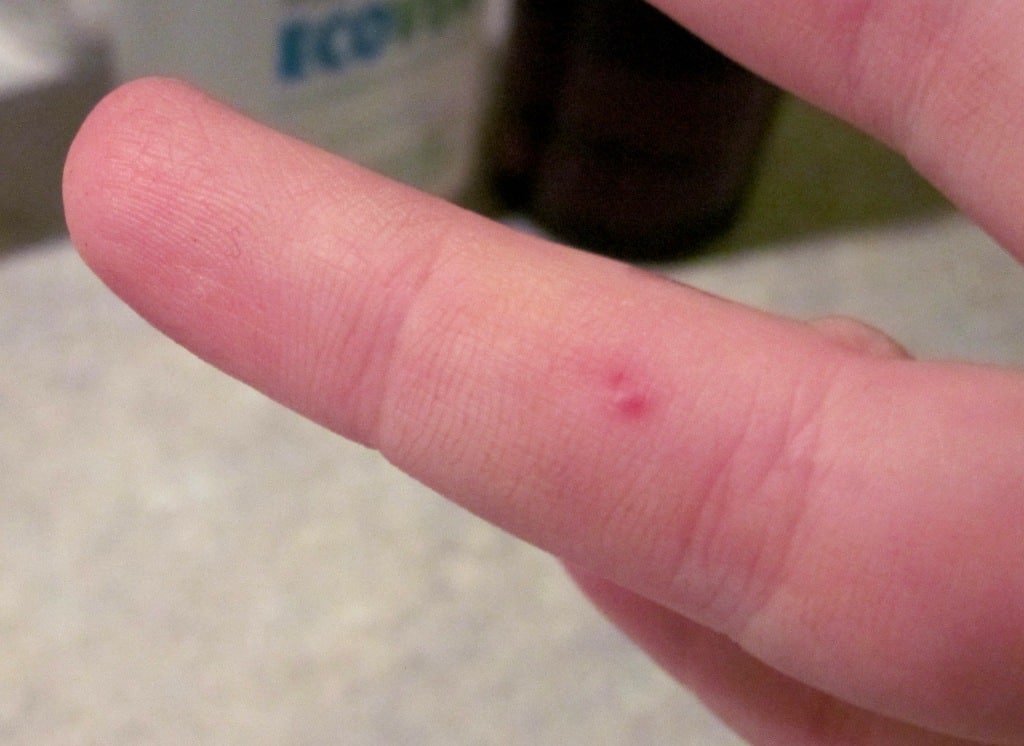
Note: insect damage is very clear, but there is no sign of inflammation or swelling (no welt). There was no pain at all the following day. The last time I was stung, the welt lasted for several days. This was so much better.
To use Plantain Leaves for Bites and Stings
- Find a clean leaf
- Chew or otherwise mash it to release juices
- Apply to affected area until pain/itching subsides
A plantain poultice also helps to heal cuts and incisions.
Plantain Weed for Slivers
Plantain has a natural drawing and anti-inflammatory action. This helps to reduce swelling, but it also helps to draw out slivers.
Simply crush or chew your plantain leaf, place it over the area with the sliver, bandage and leave overnight. In the morning the sliver should easily pop out.
You can use fresh plantain juice to treat poison ivy, sunburn and other skin irritations, but infused oil or salve is easier to apply.
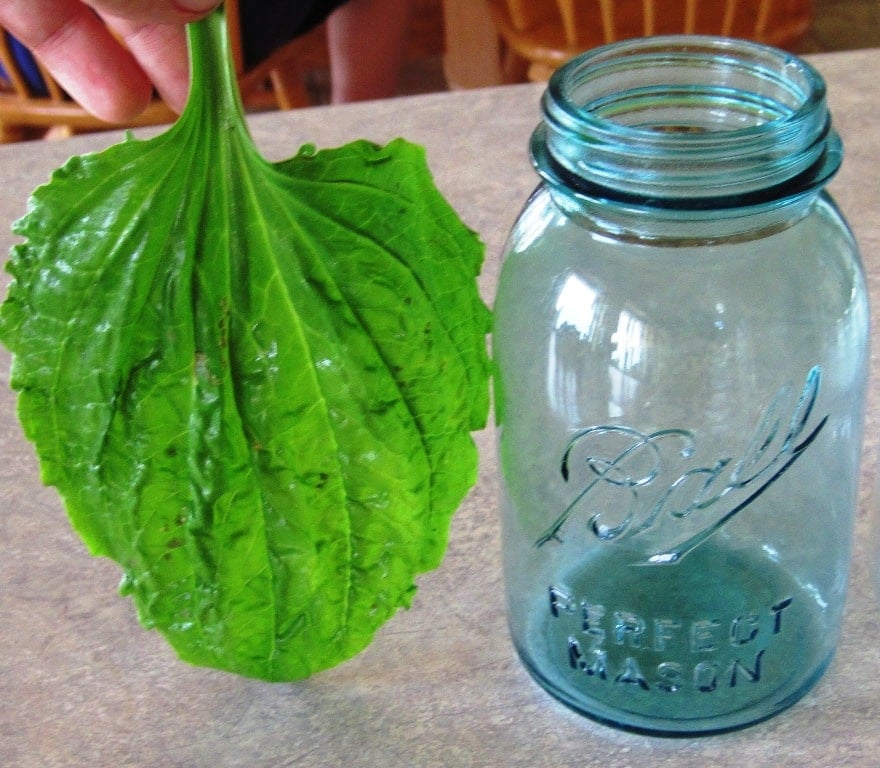
I visited my brother recently and he had some enormous plantain weed leaves. (My brother now lives in grandma’s old house.) Some of the leaves were nearly the size of a sheet of paper. Here’s one of them next to a quart Mason jar for comparison.
How to Make Plantain Infused Oil
Gather Plantain Leaves
First, gather up a bunch of plantain leaves. Minor damage is fine, but avoid mold or other signs of spoilage. Pick enough leaves to fill your container of choice. (Small jars work well.)
Wash and Prep Leaves
Wash the leaves and dry thoroughly. (I run mine through the salad spinner and pat dry with a towel.) You want these as dry as possible to help prevent mold in your infusion.
Finely chop the leaves and pack them into your jar until full. Cover leaves with olive oil or fractionated coconut oil. Poke/stir with a chopstick or other implement to remove air bubbles. Place lid on jar, label and date.
Infuse the Oil
I keep the jar in a sunny window for at least two weeks (usually four to six weeks), stirring daily to make sure the leaves stay below the oil. After several days it will start to smell like pepperoni – this is normal.
Sunlight exposure during this stage helps to prevent mold, but you don’t want the oil to get extremely hot.
Decant and Pack for Storage
Decant the oil (strain out the plant material) in four to six weeks. I use my jelly bag strainer. The oil is now ready to use.
For longer storage, allow the decanted oil to settle for a few days, then bottle the finished oil in dark jars. You may get sediment or water in the bottom as the oil settles – try to keep this out of your finished product by pouring off the oil carefully.
Seal the bottles, label, and store in a cool, dry, dark place.
Using Plantain Infused Oil
My first test of plantain oil came after an evening in the garden with a voracious cloud of mosquitoes. I rubbed catnip on my exposed skin, but they bit right through my shorts!
I must have had at least 20 bites on my tush. Oh man, did it itch! I took a quick shower and coated all my bites with some plantain oil. Again, within a matter of minutes, the pain and itching subsided.
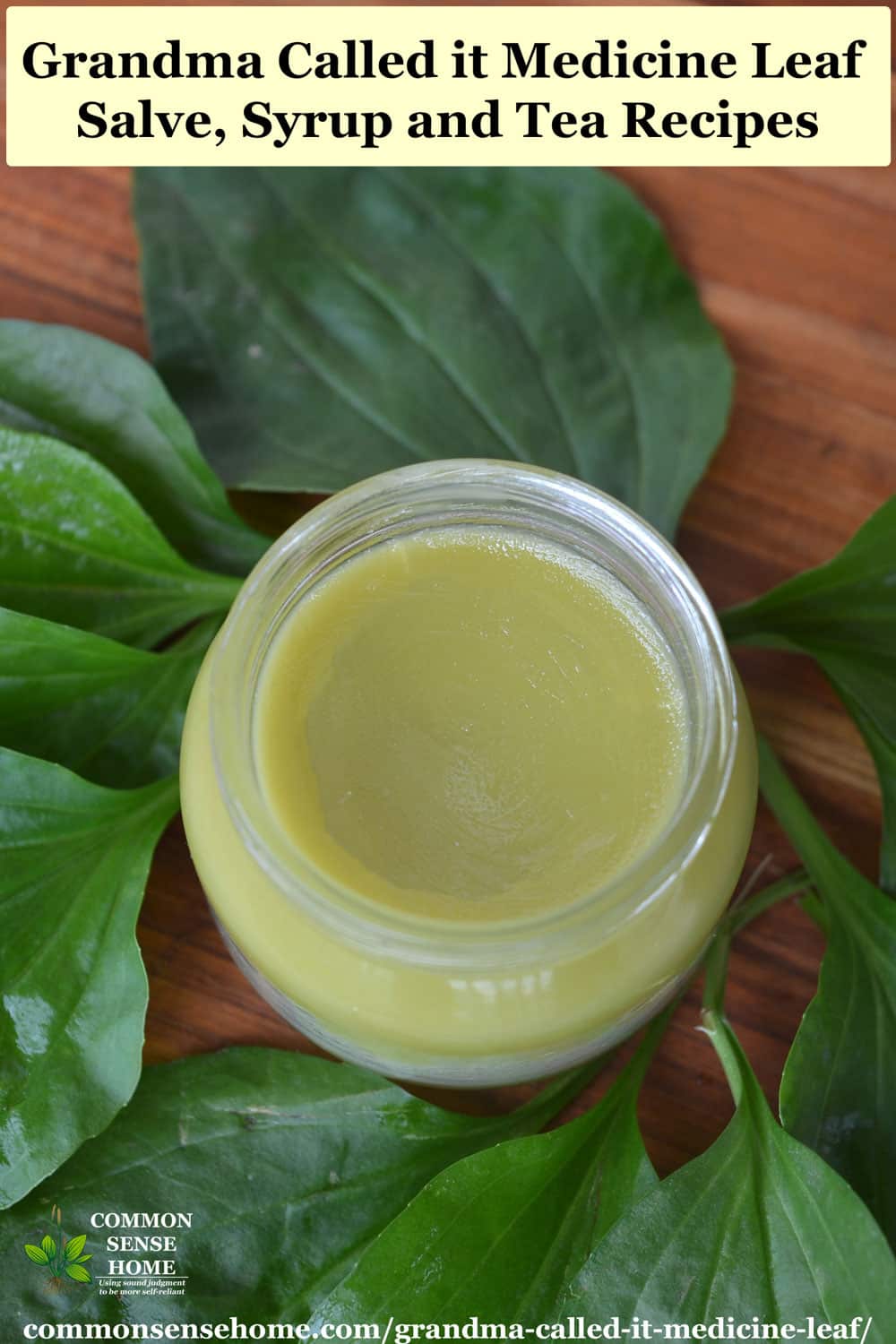
Simple Plantain Weed Salve
Plantain infused oil is great for covering larger areas, but plantain salve is nice for spot treating bites, stings or hemorrhoids.
Use 1 tablespoon of finely chopped beeswax for every ounce of plantain infused oil. Stir the oil and wax together over low heat until the oil is melted.
For more details, see “How to Make a Salve with Infused Oils“.
Plantain Leaf Tea
For internal use, try plantain leaf herbal tea.
Place one heaping teaspoon of crumbled dried leaves or one to two fresh leaves in a mug. Cover with boiling water and infuse for ten minutes. Strain and drink, adding a little honey for sweetness, if desired.
Drink a mug of plantain tea three times per day to help clear out colds and soothe digestion.
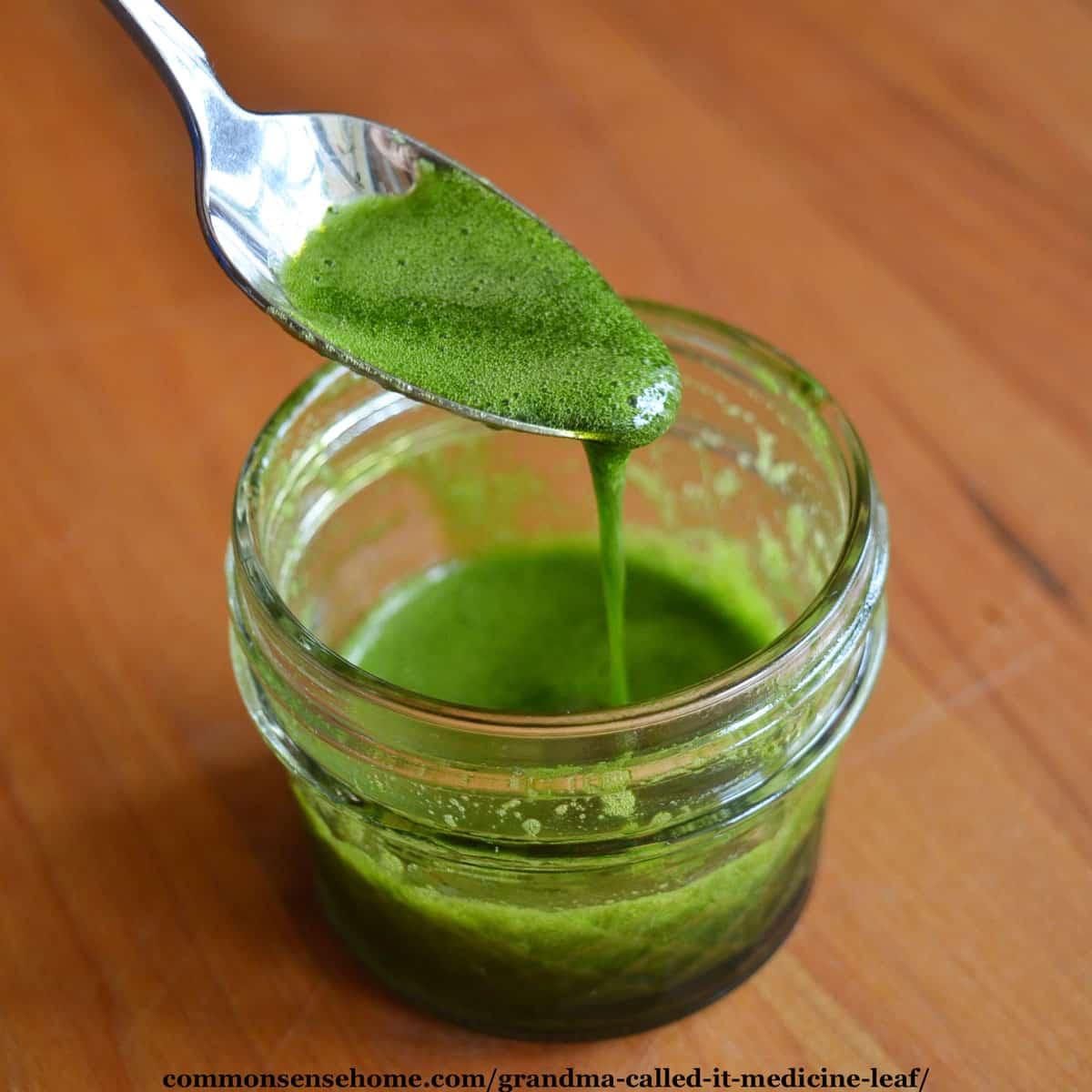
Plantain Juice with Honey
This plantain weed remedy is recommended in Backyard Medicine for coughs and stomach ulcers. It can also be used externally for ulcers and other sores. (Honey also has a long history of medicinal use.)
Juice fresh plantain leaves and mix the juice with an equal amount of honey. Pour into sterilized bottles and keep in a cool location.
Dose: 1 teaspoon as needed for coughs, 1 tablespoon three times daily for stomach ulcers.
Note: Ribwort plantain (Plantago lanceolata) works best for juicing, but any plantain variety has similar medicinal properties.
Dig deeper into the wonders of plantain in The Wild Apothecary series – volume 1.
Get Plantain Products and Seeds Online
Want someone else to prep the oil for you, or don’t have plantain readily available?
You can get plantain infused oil, plantain seeds, dried plantain leaf, powdered plantain, plantain extract, and plantain infused lip balm.
Have you used plantain? Do you have a favorite recipe or tip to share? I’d love to hear from you.
You may also enjoy:
- 15 Ways to Naturally Reduce Cholesterol
- Easy Homemade Cough Drops for Treatment of Sore Throats and Coughs
- Natural Remedies for Colds and Flu to Help You Feel Better Faster
Originally posted in 2010, updated in 2019.
Lovely post on my favorite medicinal herb. I love that it grows everywhere. They say that it grows wherever mosquitoes live and wherever nettles grow… funny how God provides the perfect remedy right where it is needed, eh?
I have been wondering how to best preserve it though since our fresh season is so short. I've just put it in freezer bags and tossed it in the freezer… the whole leaves are nice for larger burns. Now I will have easy access to a ready remedy when I preserve it in oil!
It grows wild in many places, but you can also purchase seeds.
How would one obtain this plant? This is my 1st time to hear of it!
Wow! Never know how useful weeds are! I'll have to see if we have any in our backyard!
Manuela – many of our "weeds" are very useful. Yet another reason not to spray herbicides and pesticides. 🙂
Wow – I had no idea and I have that "weed" in my yard. Good to know it's so useful!
Journey11 – thanks for stopping by. I hope the plantain poultice is helpful for you. I'm not allergic, but it worked amazingly quickly for me so hopefully it will provide you some relief, too.
Hi, I'm visiting from the Barn Hop. This is a great post, very informative! I dabble a little bit in herbal medicine and tried eating plantain before (as you say, it's very green tasting!) I am going to make up some of this oil and definitely try the poultice next time I get stung. I'm a beekeeper and also allergic to wasps, so I'll be eager to see how it works!
You're welcome. I've often wondered if you get to meet up with new people in heaven. My mom and a close friend's mom both passed away recently, and I wonder if they've gotten a chance to meet and compare notes.
Thanks for your comments on my post Laurie, I think our Grandmas would have made great friends 🙂 I learned many natural ways from her as well.
Thanks for commenting, Janelle. I received some comfrey from a friend of mine. It was quite small when I got it, so I've been givign the patch time to get established, but I'm looking forward to experimenting with it this season,
I’ve used comfrey dry leaves store in airtight jar after crushing. Mix with water enough to moisten ( like a paste) put on bites, skin irritations. My friend had a flesh eating, put poultice on. Hadn’t had a problem since. Been 3 yrs. Comfrey is awesome
Hello
Made a salve with plantain,comfrey, calendula ,essential oils.
Turned out to be a true miracle salve imo ! Wrote every ingredient & step I took down & lost it. So devastated over that, so keep your “recipts”close!That was done by stovetop. Had trouble with cold infusion, mold developed. I’ve been afraid to do the sunny window method because of the heat I get in my only sunny window. Thinking it would cause plant matter & oil to spoil. A sunny window with no direct sun, is that right? But I’ve read others just put it directly in the sun, I’m a bit confused…
Oh! The deep fried herb thing….mine were definitely crunchy that first time. That was directly in a pot on gas burner at lowest possible flame for hours. I recently got a double boiler & am curious to see if herbs stay softer this way.
Have been gathering & drying all the plantain I can, there’s a competition between chickens, flea beetles(they love it!) & i expect mildew soon from all the wet weather we’ve been getting.
Backyard medicine and commonsense at home…you bet!
The way I learned (and some frown on this) is sunny window with sun exposure. If the leaves have a high moisture content, keep the lid off and cover with a cloth and rubber band instead, so the excess moisture can evaporate. Stir daily, pushing the plant material below the oil.
We have comfrey leaf and do all of the above with comfrey although I have long wanted to plant some plantain to add to it. Thanks for the post!
Oooooo…chickiepea, thanks for sharing the tips! I like quick and easy. Have you ever done anything with the seeds? I harvested a bunch this fall (with the plan to plant some in an orderly fashion next spring). I know they make psyllium fiber from the seeds, but I'm not sure about the methodology or exactly what type of plantain.
We LOVE plantain. Our bunnies do too 🙂
You can also heal your gums with it, clean your teeth with it, or use it to stop a toothache. Roll some up chew it lightly, then stick it between your cheek and gums. Sleep with it there and then remove in the morning and brush with plain water.
Thank you for this post! I am fairly new to herbal remedies and am currently planning and plotting a medicinal herb garden for next spring. I am DEFINITELY adding plantain to the seed list and cannot wait to make some oil and salve. We live in the country and bee/wasp stings are a way of life…now my boys can get a little comfort when stung!
Thanks again!
JoAnn
Awesome post Laurie – I've long known I could use this somehow but I never knew how. I especially love the part where you chewed your own poultice!
Diana – too funny! You're very welcome. Plantain is wonderful stuff. You can also turn this oil into a salve by heating gently and adding some beeswax. My batch was finally ready to decant, so I made salve along with the oil. It works just as well on mosquito bites.
I made salve out of mone great stuff ty for sharing
I like of natural medicine. God bless you all.
You have got to be kidding me Laurie!!! You are not going to believe this! I was SEARCHING forever online trying to figure out what this weed was in my backyard that my chickens have been enjoying! This is it!!!!! Oh my wow, I'm so excited you don't even know! My backyard is literally FILLED with plantain! Ah… I am so making this and excited that my chickens are getting some sort of benefit from eating it, ha! I'm SO GLAD you submitted this to Simple Lives Thursday. Thanks Laurie!!
I also noticed that our chickens like plantain A LOT and havea goal of collecting enough to give them each the equivalent of 2 leaves of dried, crumbled leaves a couple times a week mixed into their mash.
One thing I have noticed is that they will not eat it if it has any traces of powdery mildew, which can be barely visible when it starts to appear. It gets a slightly frosty look when fog or cool, rainy weather sets in for a few days.
They eagerly eat the plantain until that point each Summer, and after that and won’t touch it.
Fortunately, it grows all over the meadow areas of our property. too and a little hunting can turn up a patch that grows so sparsely it dries too quickly to mildew. The fool-proof way to check for that is to offer it to a hen!
That’s an interesting observation. Thanks for sharing.
Yeah – talk to grandma while you still can! There are so many questions I wished I had asked my mom and grandmas while they were still here. I guess I'll have to remember to ask when we finally see each other again.
I love this stuff, and it's SO EASY.
Why unbelievable! My grandma used to talk about the "medicine leaf" too! (My great-grandmother was 1/2 Native American). Wonderful post. Now that I'm older I should sit and talk to my grandma about it (without thinking its cookie talk).
God Bless
When you talk about juicing the leaves, how do you do that? With a mechanical juicer or a blender?
A juicer would probably work the best, but make sure to dice the leaves first or the strings are likely to plus the juicer. You may be able to blend and mash through a strainer, but the leaves are not very juicy.