
The Easiest Way to Get Rid of Broccoli Worms

This post may contain affiliate links. Read my full disclosure here.
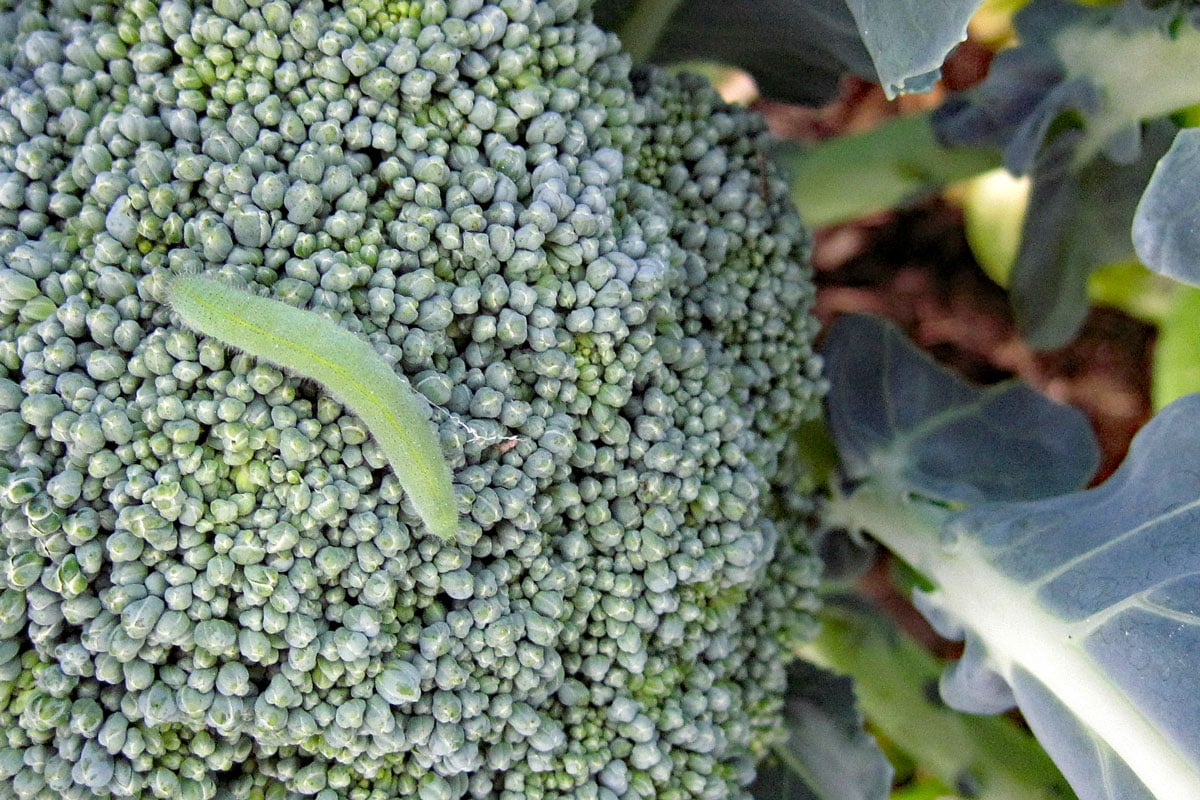
Years ago, when I had my first broccoli harvest from my own garden, I was talking to my mom about the pesky green broccoli worms hiding in the nooks and crannies. She told me about the simple kitchen trick that she used that might just be the easiest way to get worms out of broccoli.
Of course, you can eat the worms. My sister ate one last year on cooked broccoli and said it tasted like broccoli. 🙂 I’m just not that hungry – most of the time. I did fry up some one morning for breakfast with my eggs and broccoli.
Would you like to save this?
Table of Contents
The Easiest Way to Get Worms Out of Broccoli After Picking
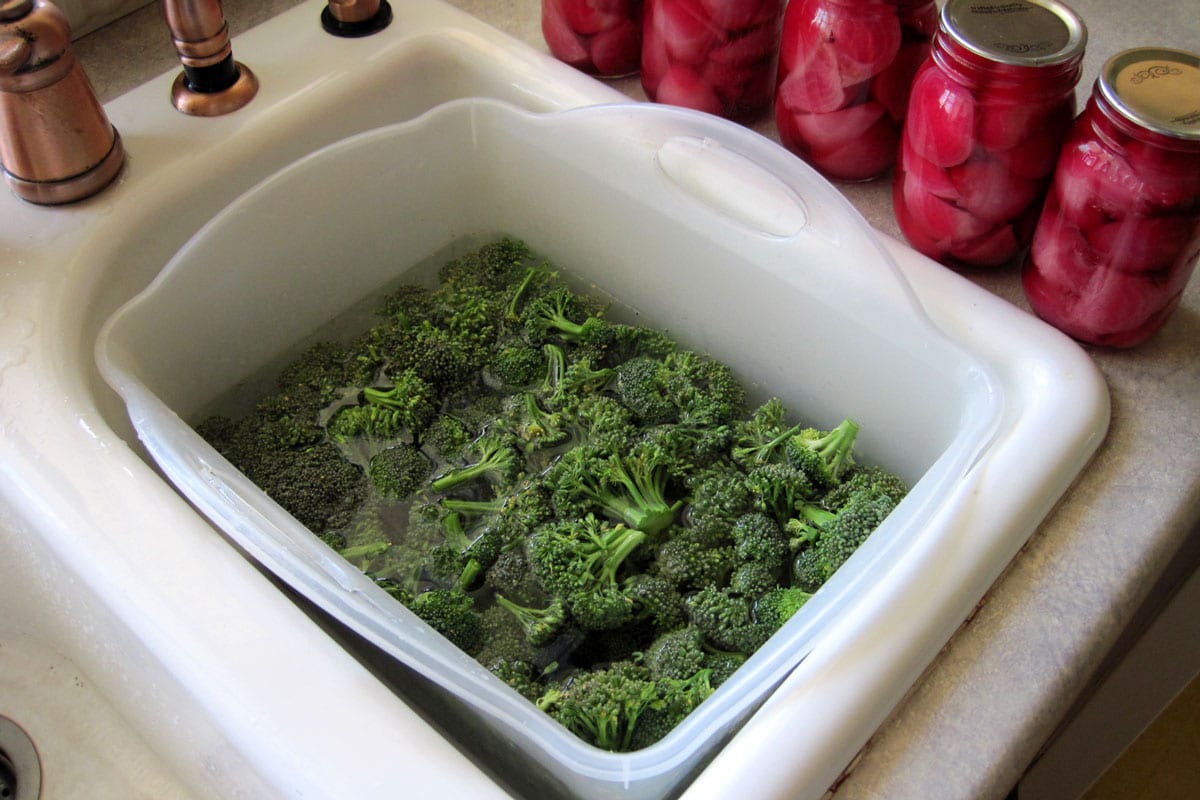
Here’s mom’s tip to get worms out of broccoli heads or Brussel sprouts. Simply fill a basin with hot salt water and dump the broccoli florets in. Let sit around 20 minutes, swishing vigorously with your hand every so often to dislodge the more stubborn unwelcome guests.
I don’t measure exactly, I just throw about a handful of canning or table salt in my Rubbermaid dish pan. (BTW, this dish pan is really handy for toting dish water and rinse water out to water my flowers. Salt water like this gets dumped on the gravel to kill unwanted weeds.)
Why warm water? When hit with cold temperatures, the natural react is to contract – or potentially hold on tighter. Warm water is relaxing, like a nice little broccoli worm hot tub. They relax, let go, and the salt does its job.
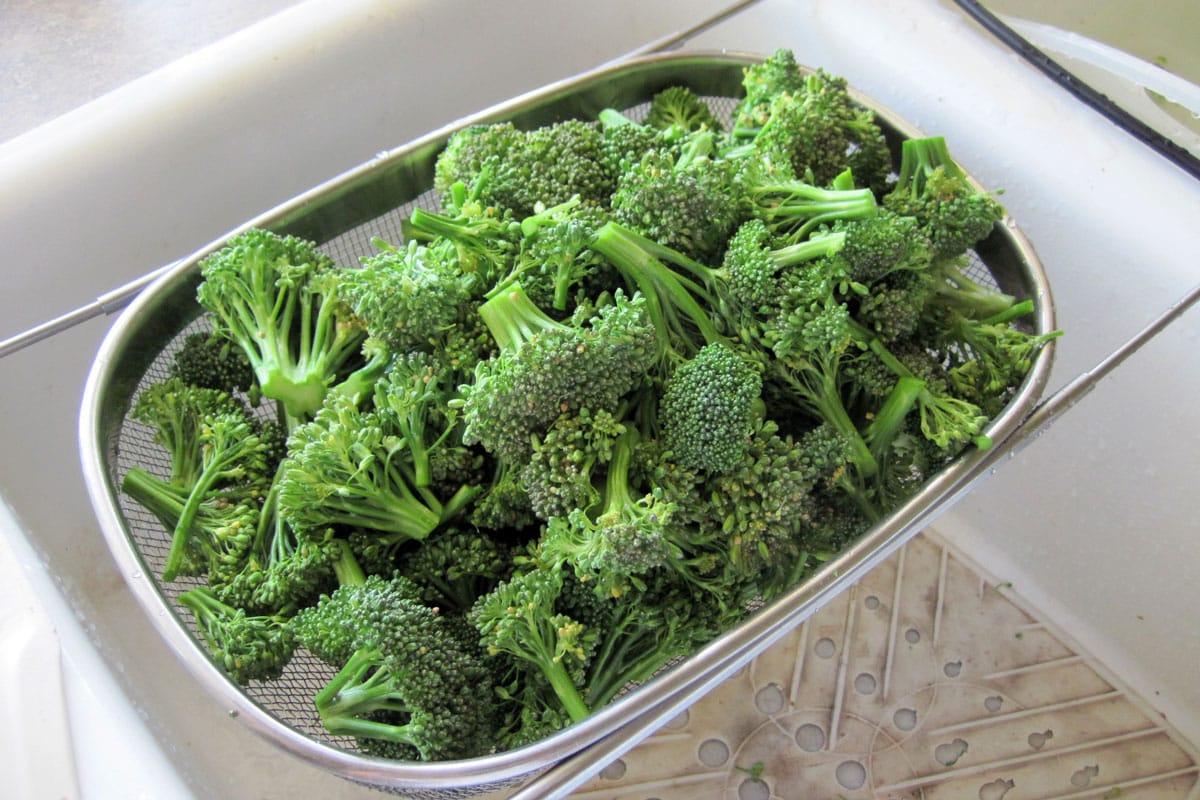
After soaking, drain in a colander and rinse with cold water. Use right away, refrigerate in a sealed container so it doesn’t get limp, or process for storage.
My friend, Chris, at Joybilee Farms uses a similar method to get rid of broccoli worms, but she uses cold salt water and adds 2 tablespoons of vinegar.
Soaking the broccoli. The pink canning jars are a batch of pickled beets I just finished.
Draining the broccoli in my over the sink strainer.
All the worms that used to be hiding in a sink full of broccoli.
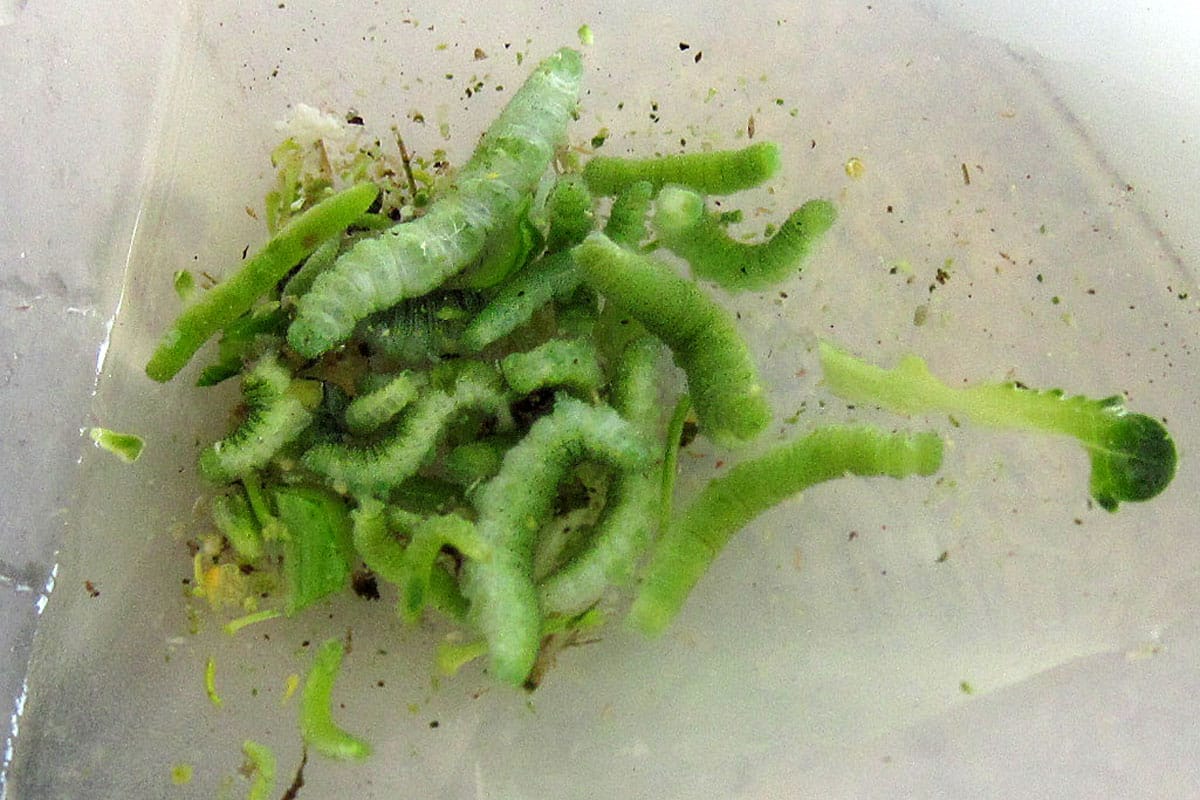
Broccoli Worms in the Garden
If you want to avoid broccoli worms completely, you can barricade the plants with physical barriers such as:
- Floating row covers
- Mesh cages
- Fine insect netting
Prevent cabbage butterflies from laying eggs on your plants in the first place. That said, physical barriers aren’t always practical.
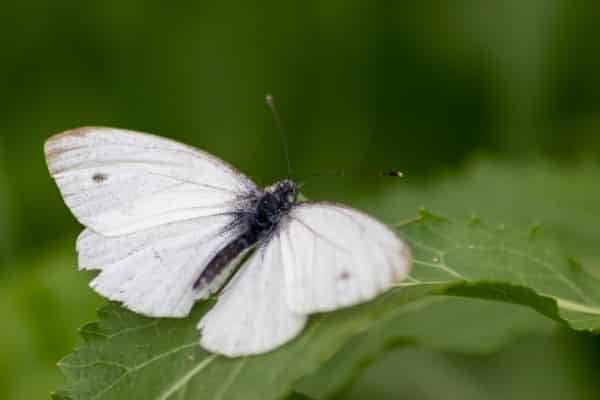
In windy areas, row covers can become sails. In mixed or irregular garden beds, cages may not fit well. And if your garden layout changes every year, permanent structures can be hard to justify.
Some gardeners solve this by building custom cages using wood frames covered with window screening. This is an excellent option if you have uniform raised beds or a handy helper.
We have too much wind for row covers, and my planting area is never the same size twice, so I don’t use physical barriers. A friend of mine with a crafty husband has some beautiful custom built broccoli cages covered in window screening.
I have used Bt (Bacillus thuringiensis) spray in the past to keep the broccoli worms in check, but reconsidered after researching more about what effects Bt may have on healthy gut bacteria. (You can read more about this in the post, “Bt Corn“) You can also use a light dusting of diatomaceous earth.
Companion Plants: Helpful, But Not Foolproof
Strong-scented herbs and companion plants can help confuse or deter cabbage butterflies. Plants often used near broccoli include:
- Thyme
- Sage
- Rosemary
- Dill
- Onions
These companions may reduce egg-laying pressure, but butterflies are persistent. Think of companion planting as support, not full protection.
Strengthening Plants to Reduce Damage
One of the most effective strategies for managing broccoli worms is simply this: grow healthier broccoli plants. My tactic to minimize broccoli worm damage is to simply fertilize the beejeezus out of the plants and give them lots of TLC. (I cover this in the How to Grow Broccoli.)
When broccoli plants grow vigorously:
- They outpace worm damage
- Leaves regenerate quickly
- Heads form before infestations escalate
When there’s good rainfall, rich soil, and steady growth, broccoli worms may be present—but damage stays minimal.
In contrast, the worst infestations often show up during:
- Drought years
- First-year garden beds
- Poorly amended soil
In those conditions, even a small number of worms can overwhelm plants.
Hand Picking: Simple and Effective
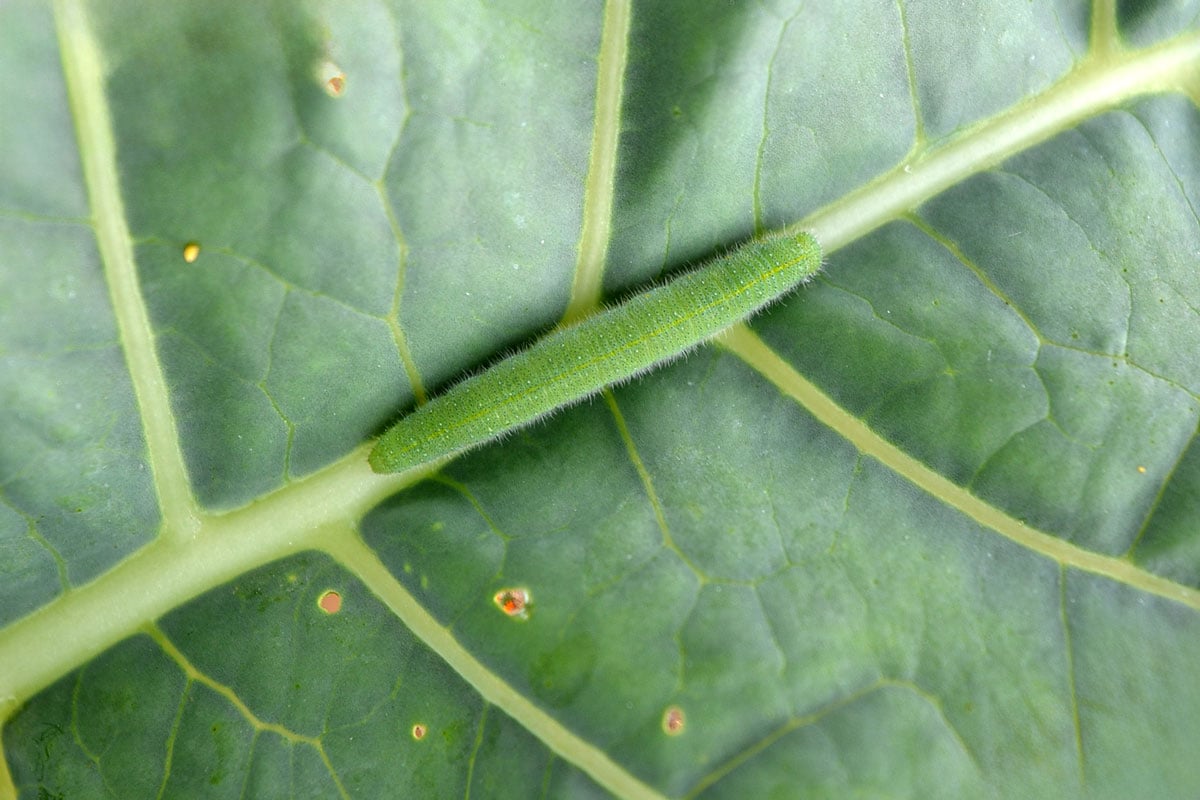
If you spot broccoli worms early, hand removal is surprisingly effective.
- Check the undersides of leaves
- Look along leaf ribs and inside developing heads
- Pick worms and drop them into soapy water
It’s not glamorous, but it works—especially in smaller gardens. Regular inspections keep populations from exploding.
Encouraging Natural Predators
Broccoli worms have plenty of enemies—if you invite them into the garden.
Beneficial Insects
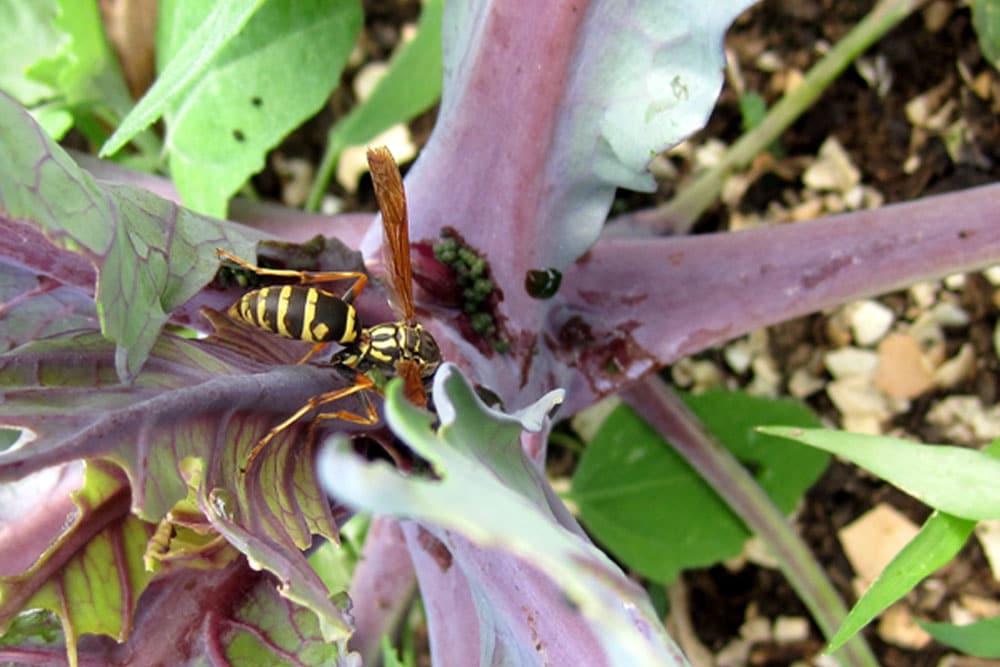
Certain parasitic wasps lay eggs in cabbage worms, stopping them before they mature. I’ve also noticed wasps carrying the worms back to their nests. To boost beneficial insect populations, avoid broad-spectrum insecticides and plant plant nectar-rich flowers nearby.
Birds
Birds will happily hunt caterpillars if you make the area welcoming.
Helpful additions include:
- Bird perches (sticks or branches near plants)
- A bird bath or shallow water source
- Shrubs or shelter nearby
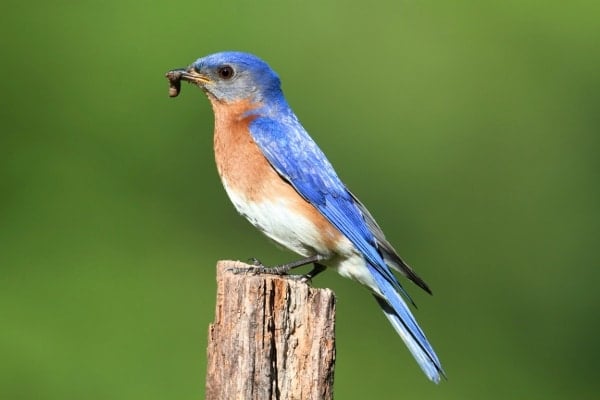
We notice birds actively foraging around broccoli, cabbage, and cauliflower when perches are available.
Balance Beats Eradication
Broccoli worms are a normal part of gardening with brassicas. Their presence doesn’t mean you’re doing something wrong. In most cases, the goal isn’t total elimination—it’s balance.
Healthy soil, vigorous plants, beneficial insects, birds, and attentive observation work together to keep damage manageable. Grow strong plants, support your garden ecosystem, and don’t panic at the first hole in a leaf. Most years, broccoli worms end up being a minor inconvenience—not a
Broccoli Recipes
Once you have your broccoli clean, you may enjoy these recipes:

This article is written by Laurie Neverman. Laurie and her family have 35 acres in northeast Wisconsin. They grow dozens of varieties of fruiting trees, shrubs, brambles, and vines, along with an extensive annual garden. Along with her passion for growing nutrient dense food, she also enjoys ancient history, adorable ducks, and lifelong learning.
Originally published in 2014, last updated in 2026.
The image of the worms relaxing in a hot tub is so unexpectedly funny and precise—it makes the whole method feel almost humane, which is a lovely way to handle a kitchen chore. I also ended up opening Lowes weekly ad afterward because it carries the same thread a little further.
Have you tried Spinosad? I’ve been using it for the last couple years and when used as directed find that it provides a 100% reduction in cabbage worms on brassicas.
It is a certified organic pesticide and I haven’t been able to find any information indicating harmful effects in humans. It is commonly sold as a concentrate “Monterrey Garden Insect Control”. Make sure to apply in the evening so it has time to dry before pollinators show up in the morning.
It’s supposed to control aphids as well, but it doesn’t seem to be as effective against them on my tomatoes this year . I recommend Neem oil for aphids.
We have a lot of pollinators in our gardens, including our honey bees, so I avoid broad spectrum insecticides, even natural ones.
Back when I was growing broccoli regularly, I routinely used this method. It is not 100% effective, though. Some worms get stuck in the florets and cannot float out.
Neem oil while the broccoli is growing is an organic way to get rid of the worms and their eggs so you don’t have so many to remove before eating
Just found some worms when eating fresh broccoli, had dreams about last night. Picked some Florettes today, picked some out, tried to identify them. Guess the Texas ones look a little bit different. I’m going to use your cleaning method, warm to hot water salt and swish around. Next fall are use BT. Enjoyed your post, not sure how I found it, but intend to sign up with my email address. I’m a novice gardener
If I remember correctly, there are a couple different butterfly species that are happy to feed on cabbage family plants, although I’ve only seen the one type in our area. The salty Jacuzzi option works with most insect hitchhikers.
Used netting for the first time. No cabbage moth, no green bugs. A few snails got into the leaves but not one green worm anywhere near the broccoli head so far !! Very happy!
If you have a small patch and/or low wind, that’s a great option.
We have a small fish tank at home, and our fish LOVE these juicy green treats. So whenever I find them in my broccoli, I drop them into the fish tank and they are instantly devoured. We also feed them any mosquitoes we catch sneaking into our home.
The chickens and ducks love them, too.
What is “stressed broccoli”? I bought some 2X2 plants at a local nursery I trust & finally got broccoli to grow this year. When it was just starting to produce heads I found a few green caterpillars on on so diligently removed all I could find. It was the only of 4 plants. Later I transferred them into our new raised bed w/ great soul-(no chemicals) & I picked one the other day cause it was bolting. I didn’t have time to prepare so laid them in frig. Next day I picked it up & saw several little caterpillars! I cleaned it & found more!! There was no visible sign initially, so now I’m grossed out! I cut the florets off the 3 that looked “bolts”-I hope to clean & eat them but I’m a bit nervous. I sprayed the 4th & other 3 plants with water, vinegar & soap. (?) will the caterpillars invade rest of our raised bed?
Stressed broccoli is a broccoli plant that is under stress.
This stress can be caused by bad weather (too hot, too cold, too wet, too dry – dry and hot tend to be worse than wet and cold) or other factors, like a lack of nutrients in the soil or transplanting.
I would never recommend moving a broccoli plant after it started making a head. They should only be transplanted when small. Also, even if the plants are small, if they are badly root bound (roots circling tightly in the pot) they will likely fail to thrive. Odds are if the plants were moved after they had started to make heads, they will be unlikely to make any significant heads – they will bolt instead.
The worms hide amazingly well – and yes, if they are on one or more plants, they will likely spread (the butterflies will lay more eggs and make more babies). I know they’re creepy, but you know for certain that your veggies support life, unlike chemical coated veggies. They’ve also been eating a gourmet vegetarian diet (your broccoli), so they taste like broccoli.
Gret tips. Thanks for posting.
I just started growing broccoli this year, and the first bunch I picked I used this trick and got a few worms – my second bunch I picked haven’t had any worms yet so my question is are there always worms in every bunch of broccoli?
No, there aren’t always worms in the broccoli. For instance, fall grown broccoli tends to have fewer worms, because it can be too cold for the cabbage butterflies. Stressed plants also tend to have more worms.