
Collagen Benefits: Healthy Skin, Joints, and More

This post may contain affiliate links. Read my full disclosure here.



Walk through any health food store and you’ll find shelves full of collagen products promising healthier skin, stronger joints, and younger-looking hair.
So what’s the truth?
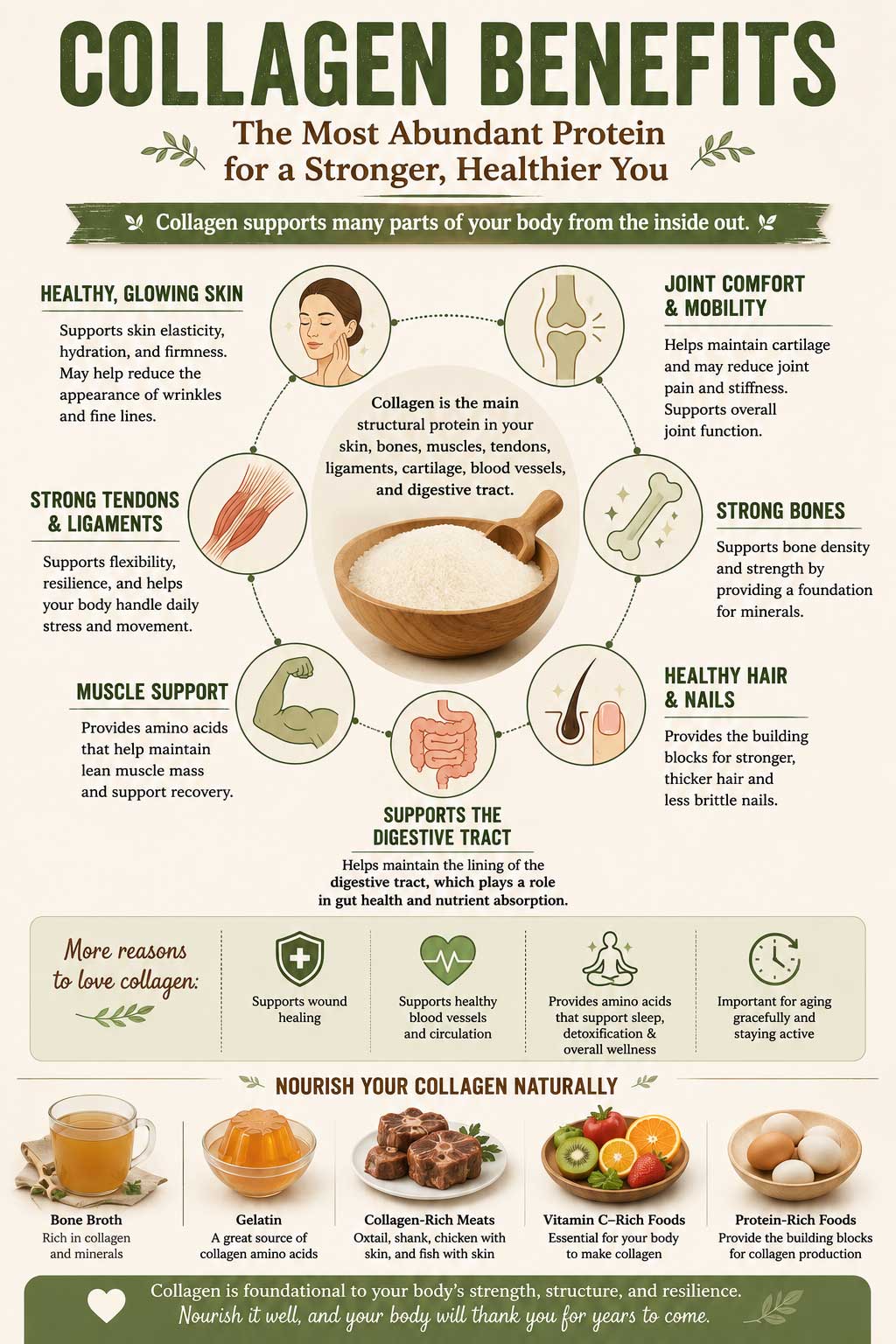
Collagen is an important structural protein found throughout your body. It helps form connective tissue, including skin, tendons, ligaments, cartilage, bones, blood vessels, and parts of your digestive tract.
While collagen supplements aren’t a quick fix, they may support healthy aging. Whether you choose collagen-rich foods or supplements, it’s helpful to understand how collagen works.
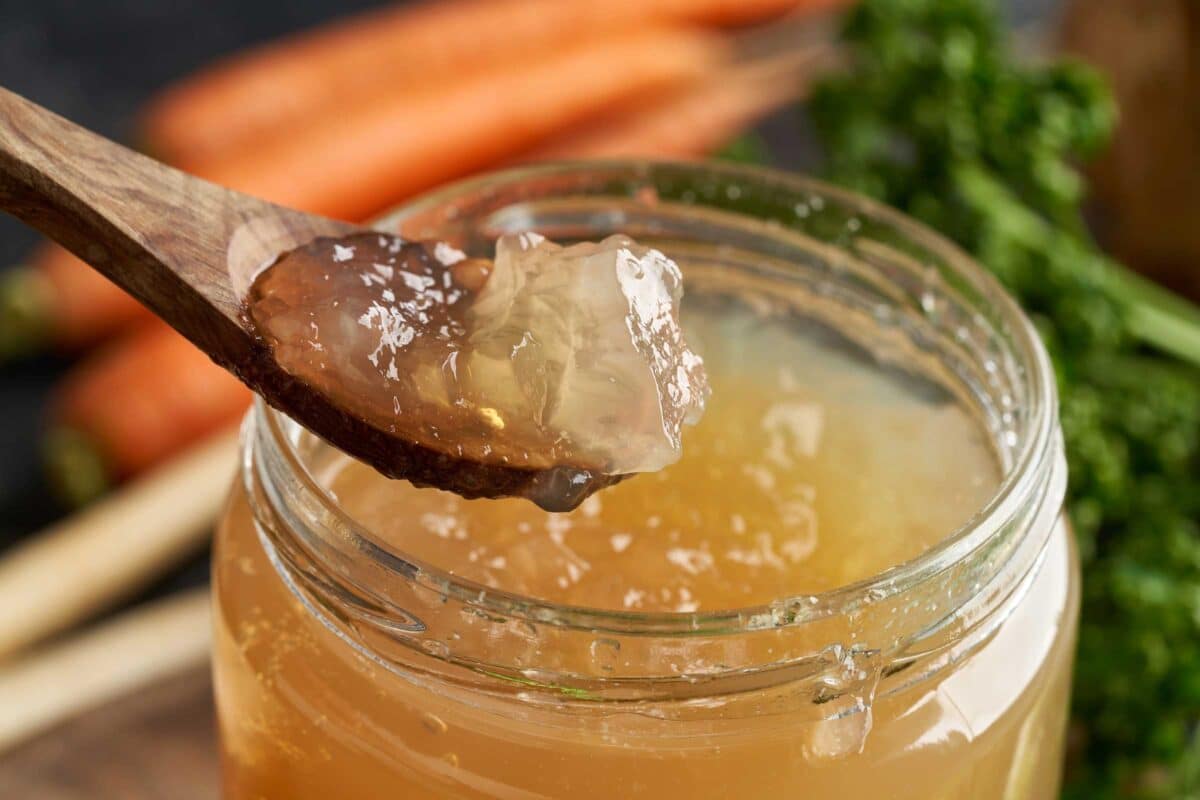
Would you like to save this?
Table of Contents
What Is Collagen?
Collagen is the most abundant protein in the human body, accounting for roughly one-third of your total protein. Think of it as the body’s framework. It provides strength and flexibility to tissues that need to withstand daily wear and tear.
Your body naturally makes collagen by combining amino acids from dietary protein with nutrients such as:
- Vitamin C
- Copper
- Zinc
- Iron
This process is known as natural collagen production. Unfortunately, the body’s natural collagen production gradually slows with age. Beginning in our twenties, collagen production decreases by about 1% each year.
Estrogen has a strong influence on collagen production. During the first five years after menopause, women can lose up to 30% of their skin collagen. This is followed by a slower decline of roughly 2% per year thereafter. This rapid loss is one reason wrinkles, thinning skin, and joint discomfort often accelerate around menopause.
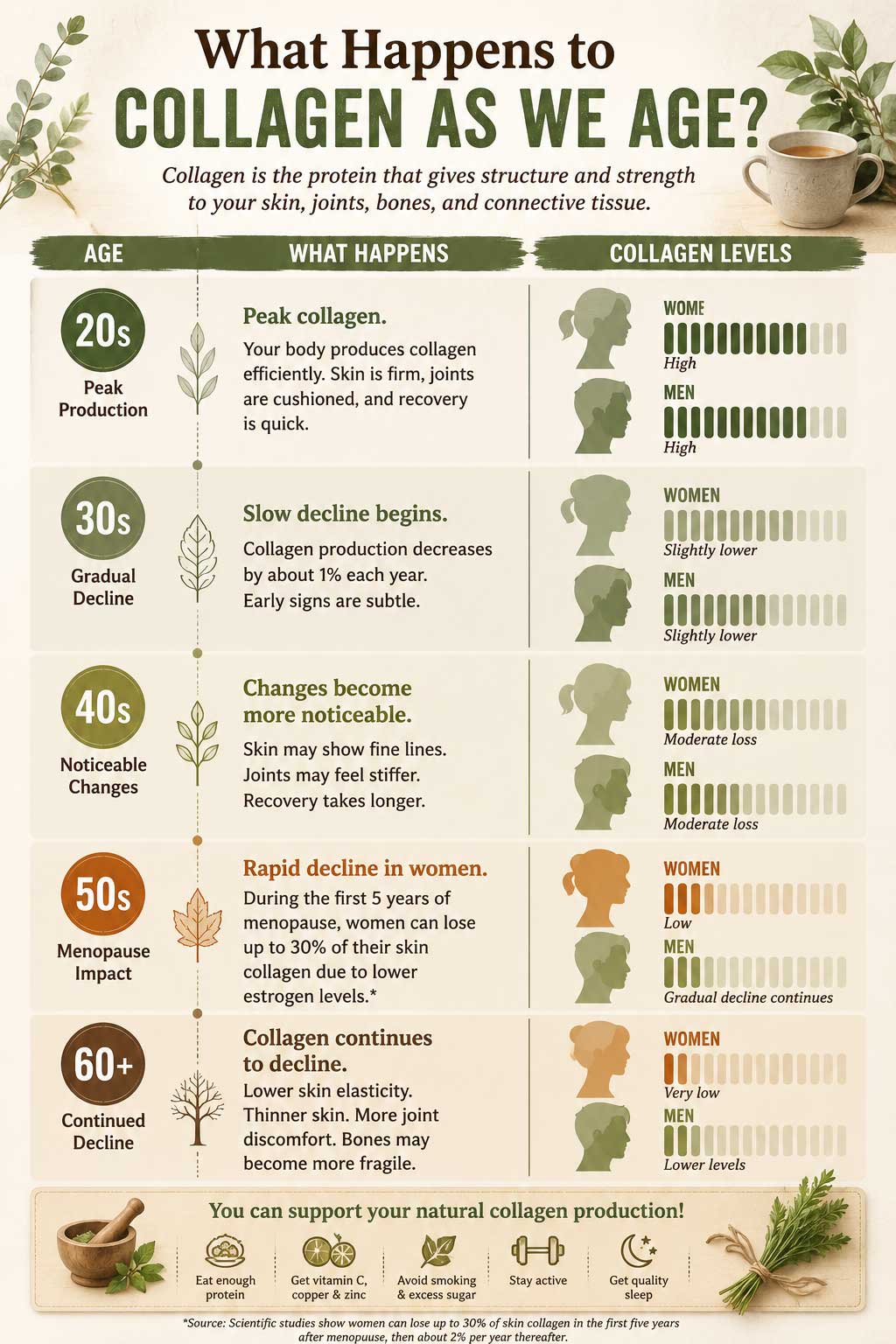
Signs Your Body’s Natural Collagen Is Declining
As collagen levels decrease, you may notice:
- More wrinkles and fine lines
- Reduced skin firmness
- Slower wound healing
- Joint stiffness
- Aching knees or hips
- Less flexible tendons and ligaments
- Weaker nails
- Hair that becomes thinner or more brittle
These are often considered normal signs of aging. Lifestyle factors like smoking, excess sun exposure, poor nutrition, and chronic stress can speed collagen loss.
Types of Collagen
Scientists have identified at least 28 types of collagen, but three make up the vast majority found in the body.
- Type I supports skin, bones, tendons, and ligaments.
- Type II is found primarily in cartilage and is especially important for joint health.
- Type III helps support muscles, blood vessels, and internal organs.
Most collagen supplements contain Types I and III, while specialized joint formulas may include Type II collagen.
Collagen vs. Gelatin vs. Collagen Peptides
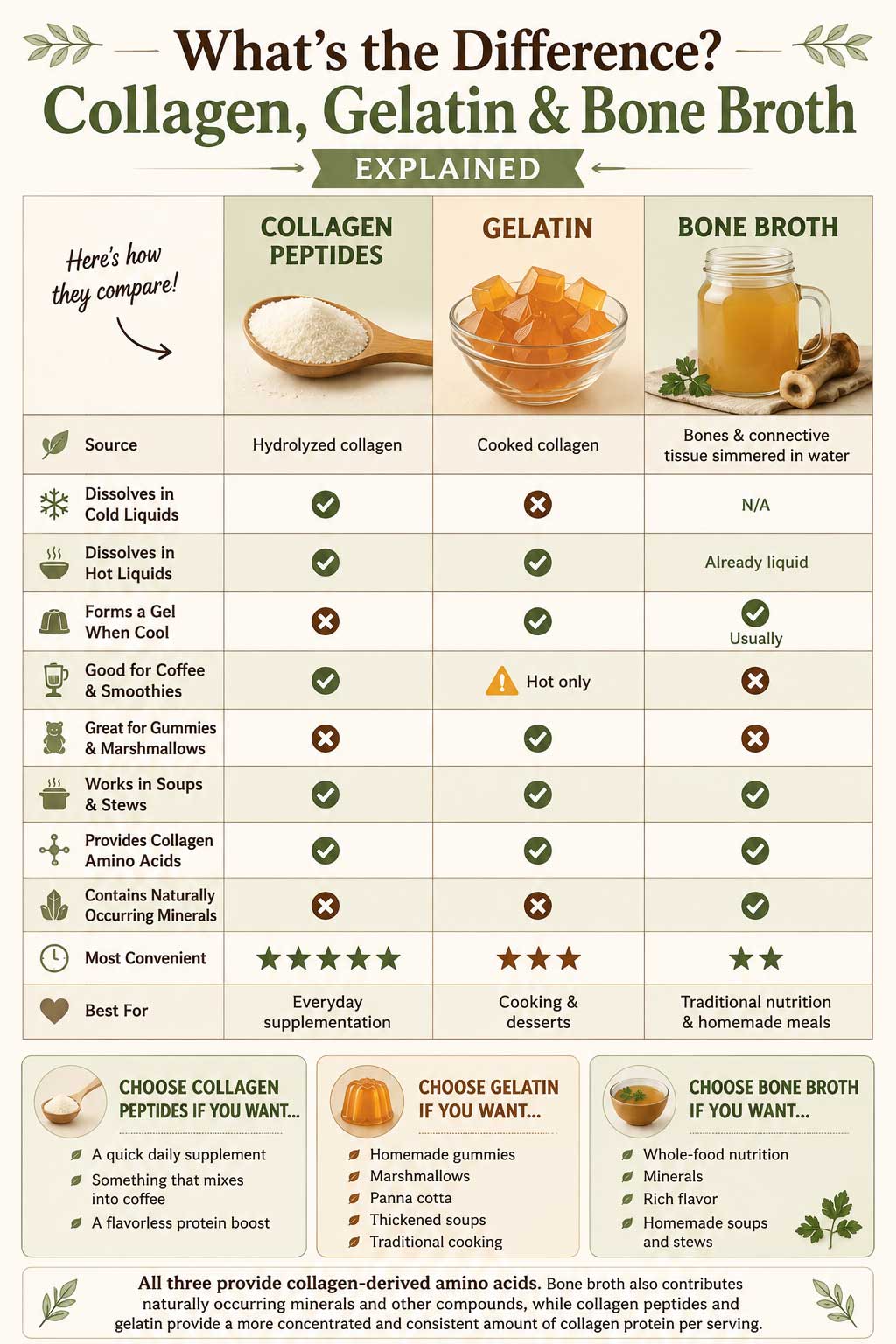
These terms are often used interchangeably, but they’re not exactly the same.
Collagen is the intact structural protein found in animal connective tissues.
Gelatin is collagen that’s been cooked. It dissolves in hot liquids and gels when cooled. This makes it ideal for homemade gummies, marshmallows, panna cotta, and traditional bone broth.
Hydrolyzed collagen, also called collagen peptides, has been broken down into smaller protein fragments through a process called hydrolysis. Because the protein is broken into smaller peptides, it dissolves easily in hot or cold beverages and does not gel.
From a nutritional standpoint, gelatin and collagen peptides provide many of the same important amino acids. The biggest difference is how they’re used in the kitchen.
Collagen Benefits Supported by Research
Interest in collagen has exploded over the past decade, leading to numerous clinical studies. While research is still developing, several areas show encouraging results.
1. Supports Skin Health
One of the best-studied collagen benefits involves skin health. Several randomized controlled trials have found that oral collagen supplementation may:
- Increase skin hydration
- Improve skin elasticity
- Reduce wrinkle depth
- Help enhance skin smoothness
These improvements appear gradually, typically after eight to twelve weeks of consistent use. I’m no model, but I’ve been told my skin looks good for my age, and I take collagen peptides daily. (I think it helped me recover from my psoriasis outbreak, too.
It’s important to remember that healthy skin also depends on adequate protein, hydration, thoughtful sun exposure, and good nutrition.
2. May Help Reduce Joint Pain
Collagen is a major component of cartilage, the cushioning tissue inside joints. Cartilage naturally wears over time, like hose gaskets and other bendy bits. Collagen isn’t a cure for arthritis, but it may be a useful tool to help your body heal.
Some studies suggest that oral collagen supplements may help reduce joint pain. Active adults and those with mild osteoarthritis saw some of the best results. Results vary, but many participants reported improved comfort during daily activities after several months of supplementation.
3. Supports Tendons and Ligaments
Athletes and physically active adults place significant stress on their tendons and ligaments. Some emerging research suggests collagen supplementation combined with resistance exercise may help support healthy connective tissue remodeling after exercise or injury.
This is one reason collagen has become popular among runners, weight lifters, and older adults trying to remain active.
4. Helps Maintain Bone Health
Bones are built on a collagen framework that provides flexibility while minerals like calcium provide hardness. As collagen declines with age, bone strength can also decrease.
Some early studies suggest collagen supplementation may help support bone density in postmenopausal women. It makes sense to me that our bones, like trees, need to be flexible as well as strong. Collagen benefits include support for that flexible framework.
5. Provides Important Amino Acids
Collagen contains large amounts of glycine, proline, and hydroxyproline.
These unique amino acids help build:
- Skin
- Cartilage
- Tendons
- Ligaments
- Bones
- Blood vessels
Glycine also plays roles in sleep, detoxification, and making glutathione, one of the body’s major antioxidants. Muscle meat contains glycine and proline in moderate amounts, but very little hydroxyproline.
Traditional diets naturally included more collagen than many modern diets. This is where supplements can help bridge the gap when you’re not regularly eating as much collagen rich food.
Collagen Benefits for Hair and Nails
Many people report stronger nails or healthier-looking hair after taking collagen. Some small studies suggest collagen supplements can improve nail growth and reduce nail breakage. I think it helps me. I have naturally thinner nails, but less issues with breakage since adding more collagen.
Hair growth depends on many factors, including genetics, hormones, nutrient status, and overall health. Collagen is one piece of the puzzle, not a miracle cure.
The Best Foods for Supporting Collagen Production
You don’t necessarily need an expensive supplement to support collagen production.
A balanced diet should include foods rich in collagen, such as:
- Homemade bone broth
- Beef shank
- Oxtail
- Chicken skin
- Fish skin
- Slow-cooked cuts with connective tissue
- Gelatin-rich soups and stews
See Beef Stock Recipe (from Scratch)

To make the most of these foods, pair them with nutrients your body needs to build collagen, including:
- Citrus fruits
- Bell peppers
- Berries
- Leafy greens
- Eggs
- Seafood
- Nuts
- Seeds
Eating enough total protein remains one of the most important ways to support your body’s collagen needs.
Should You Take a Collagen Supplement?
If you don’t regularly eat collagen-rich foods, supplements can be a convenient option. Most studies showing benefits have used collagen peptides or hydrolyzed collagen, typically providing 2.5 to 15 grams daily.
When shopping, look for products with:
- Third-party testing
- Minimal added ingredients
- Grass-fed or pasture-raised
- Clear labeling of serving size
I choose Perfect Supplements collagen and gelatin in my kitchen. I’ve been using their products for years, and trust their quality.
I like them so much that I became an affiliate, which means I earn a commission at no extra cost to you. You can get 10% off your Perfect Supplements purchase by using the coupon code “COMMONSENSE10” at checkout.
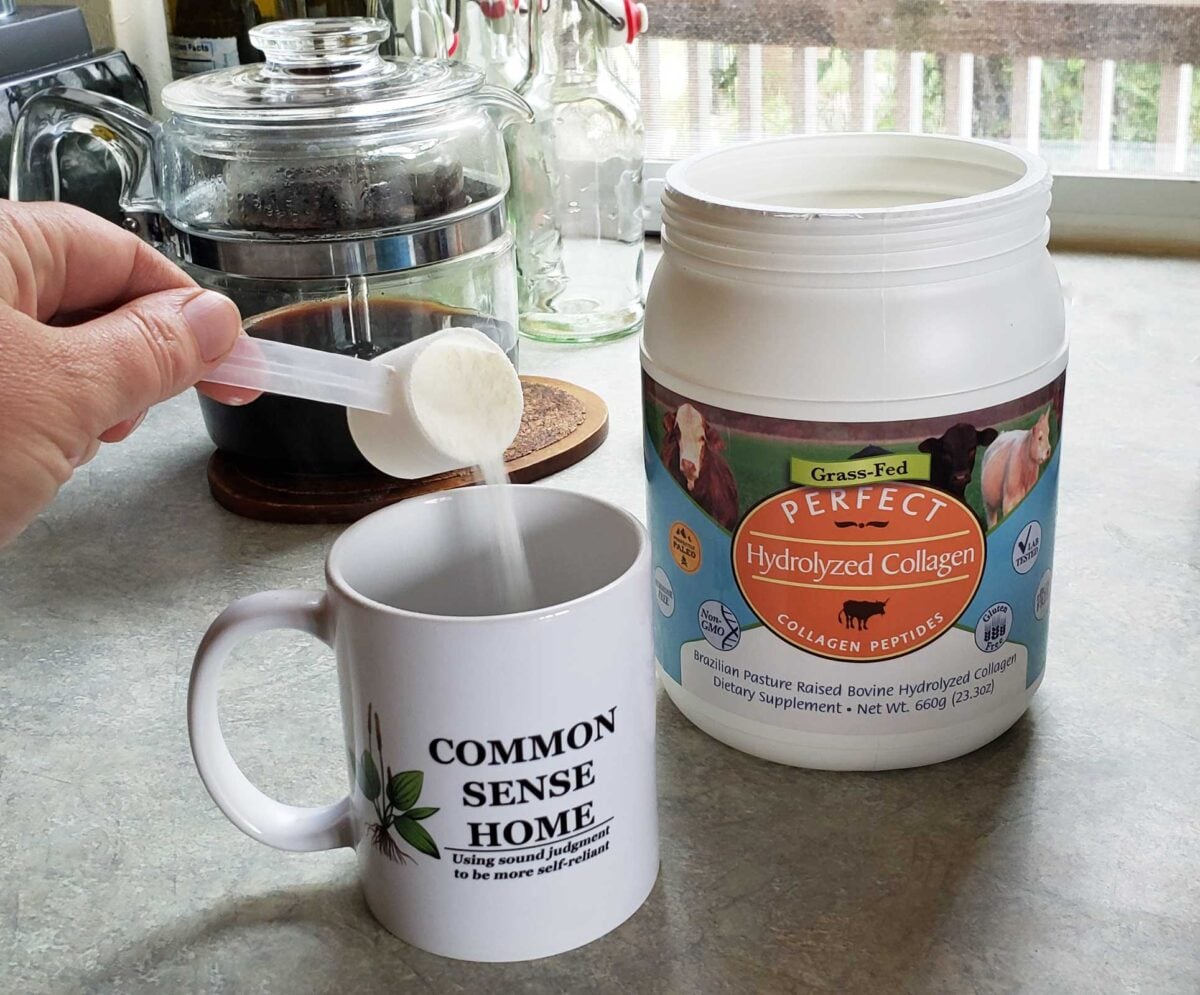
Because collagen is an incomplete protein, it shouldn’t be your only protein source. I find collagen supplements help me meet my protein intake for the day, as my appetite isn’t as large as it once was.
Are Collagen Supplements Safe?
For most healthy adults, collagen supplements appear to be well tolerated.
The Food and Drug Administration regulates collagen supplements as dietary supplements rather than medications. That means manufacturers are responsible for product safety and quality. Supplements do not undergo the same pre-market approval process as prescription drugs. (Of course, given the ongoing problems with those, that’s not saying much.)
Choosing products from reputable companies that conduct independent quality testing can help ensure you’re getting what the label claims. If you have food allergies (especially fish, shellfish, chicken, or beef), check the ingredient source carefully before purchasing.
Get Collagen Benefits in your Daily Routine
The least expensive way to get the benefits of collagen is to include traditional collagen-rich foods whenever possible. Homemade bone broth, slow-cooked soups, and recipes made with quality gelatin provide collagen along with other nutrients. For convenience, I prefer a high-quality collagen peptide powder.
You can also add some fun to your food with gelatin recipes, such as:
- “Jello” made with fruit juice
- Homemade Marshmallows (gelatin holds them together, too)
- Homemade gummy candy
Think of collagen as one building block—not a magic bullet. Your body continually repairs and rebuilds itself. We can help with the right raw materials – nourishing foods, regular movement, adequate sunshine, good sleep, and stress management.

This article is written by Laurie Neverman. Laurie is a lifelong learner with a passion for natural remedies and holistic healing. She’s successfully improved her eyesight and cleared her psoriasis.