
Coffee Grounds in the Garden: What Works

This post may contain affiliate links. Read my full disclosure here.

Waste not, want not. Instead of dumping them in the trash, use those coffee grounds in the garden. Let’s sort through what works, what doesn’t, and how to use spent grounds the right way.
If you drink a cup of coffee most mornings, you have a steady supply of garden input sitting in your kitchen. But are coffee grounds really good for plants? Are coffee grounds acidic, and what about using them for slugs? Here’s what’s going on with the leftovers from your morning brew.
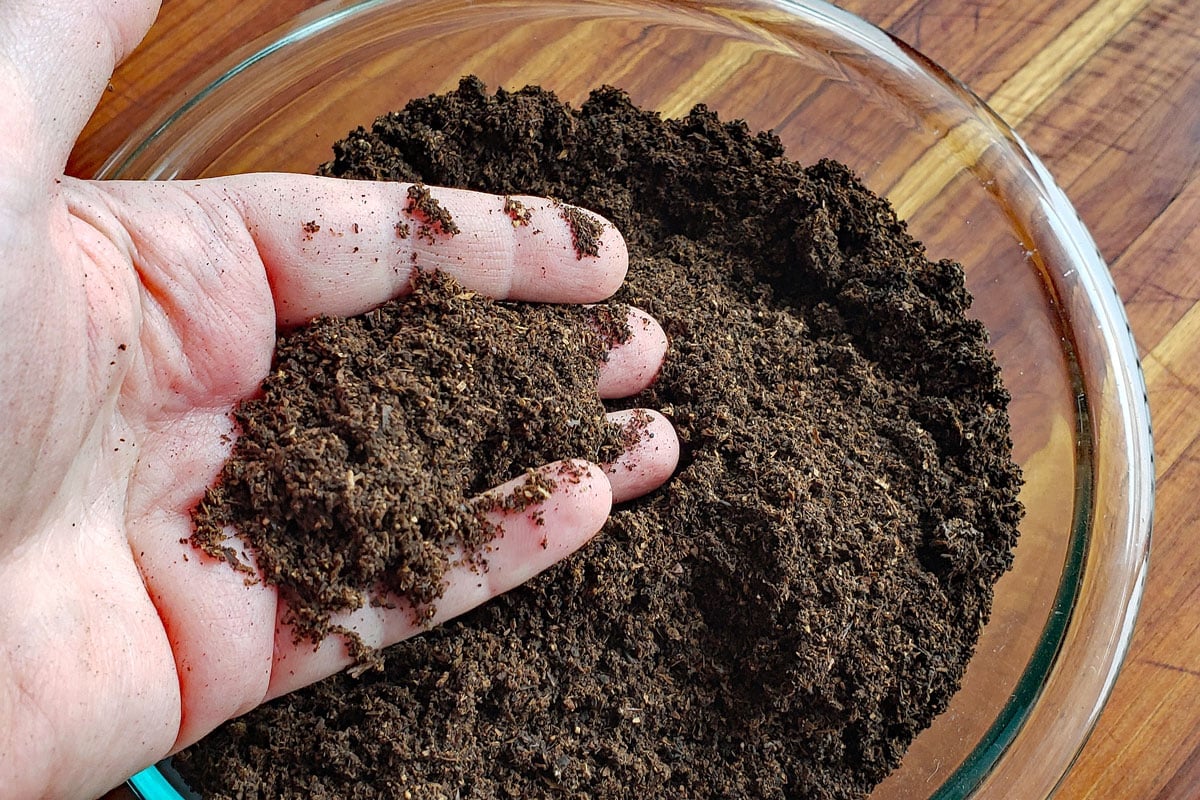
Table of Contents
Nutrients in Spent Coffee Grounds
Coffee grounds contain:
- Small amounts of nitrogen
- Trace minerals like potassium and magnesium
- Organic matter that improves soil structure
However, the nitrogen in grounds must break down before plants can use it. That means coffee grounds are more of a soil conditioner than a fast fertilizer. They work well added to a compost pile. That said, there are situations where you can use the grounds right in the garden, which will get to in a bit.
Best Way to Use Coffee Grounds: Compost First
Adding grounds in your compost is the safest and most effective method. (And pushes the “easy button”, which I like.) Coffee grounds are considered a “green” compost ingredient because they contain nitrogen. They help balance high-carbon materials like:
- Dried leaves
- Straw
- Wood shavings
For best results:
- Mix grounds thoroughly into the pile
- Combine with brown materials
- Avoid layering them thickly in one spot
Used properly, grounds in your compost feed microbes, speed decomposition, and create richer finished compost for your garden beds. It’s fine to mix in herbal coffee blends, too. It all breaks down and feeds the soil.
Using Coffee Grounds Directly in the Garden
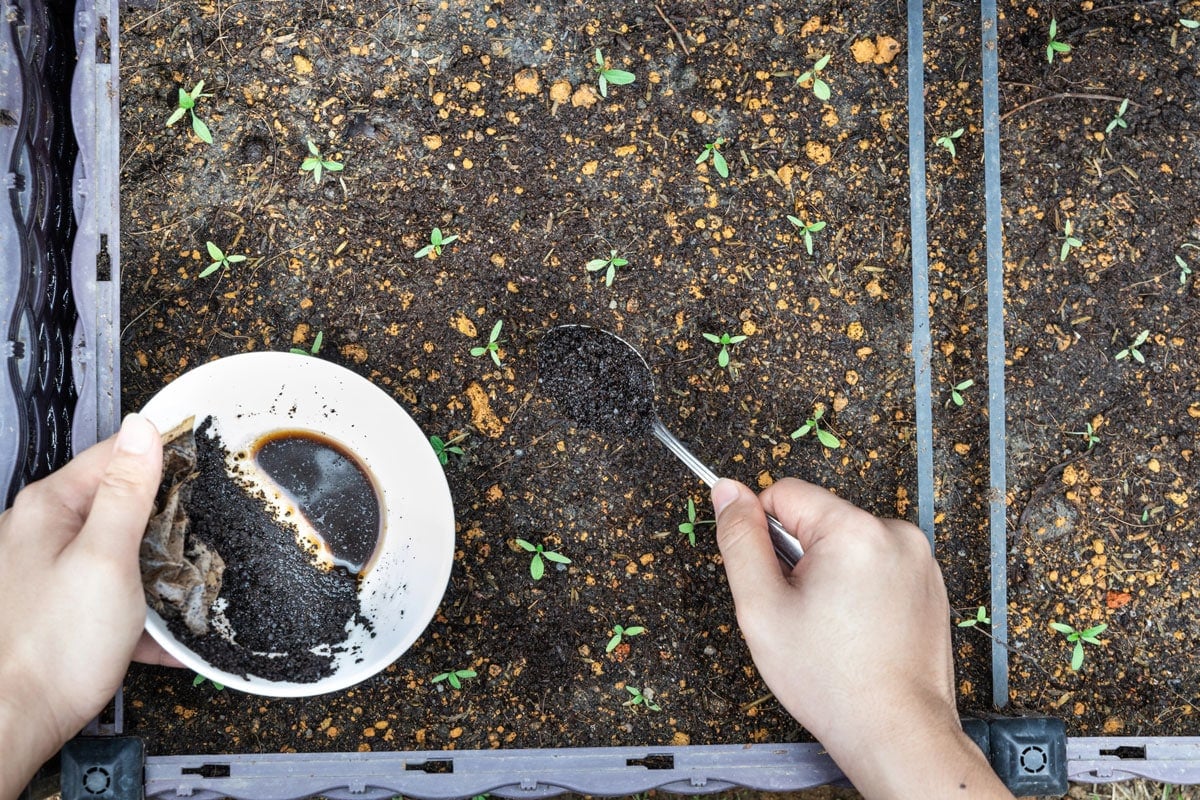
You can use small amounts of coffee grounds directly in beds. Don’t go crazy with grounds! As they break down, they can tie up nutrients and make them unavailable to plants.
Light Soil Amendment
Sprinkle thinly and mix into the top few inches of soil. Thick layers can:
- Form a crust
- Shed water
- Slow air movement to plant roots
You end up with this crusty coffee ground mat that tries to smother plants and soil. Not good.
Side Dressing
Add modest amounts of coffee around heavy feeders like tomatoes or corn, then cover with mulch.
Worm Bins
Worms love coffee grounds — in moderation. They help grit digestion, but too much can create imbalance. How much is too much? If your worms seem lethargic or start dying, ease up on the grounds.
Are Coffee Grounds Acidic?
A common gardening myths is that coffee grounds are highly acidic and will dramatically lower soil pH. In reality, most spent coffee grounds are close to neutral (around pH 6.5 to 6.8).
Oregon State University Extension Service notes that the acidity ends up in the coffee, not in the leftover grounds. Fresh, unbrewed grounds may be slightly acidic, but the caffeine in those grounds is not good for your plants. (Plus, who wants to put coffee in the garden instead of their coffee cup?)
Bottom line: Coffee grounds are not a reliable way to acidify soil. If you’re trying to adjust pH for acid loving plants like blueberries, you’ll get better results from amendments such as elemental sulfur.
Would you like to save this?
While coffee grounds won’t dramatically lower soil pH, they can still benefit acid loving plants by:
- Increasing organic matter
- Supporting beneficial soil biology
- Improving moisture retention
Use them as part of a broader soil-building strategy, not as a standalone solution.
Do Coffee Grounds Repel Slugs?
This is another popular claim. The idea is that caffeine repels or kills slugs. Laboratory studies have shown concentrated caffeine solutions can deter them. However, typical household spent coffee grounds are far less potent.
Sprinkling grounds around plants may provide mild deterrence, but:
- They must stay dry
- Rain quickly reduces effectiveness
- Thick layers can harm soil structure
If you’re battling slugs, try barriers like crushed eggshells, diatomaceous earth, or copper tape. Alternatively, you can mix one part water with two parts strong brewed coffee for a caffeinated soil spray – but I’d rather drink the coffee. Ducks also love slugs.
I have found that spent grounds sprinkled over plants helps to deter flea beetles. You can read more about flea beetle control here.
How Much Is Too Much?
Coffee grounds are helpful — but only in reasonable amounts.
Overuse can:
- Create dense, water-repelling layers
- Tie up nitrogen during decomposition
- Imbalance compost piles
As a rule of thumb:
- Keep coffee grounds under 20–25% of total compost volume
- In beds, use light, well-mixed applications
- Avoid dumping large daily amounts in one location
Remember, soil health thrives on diversity. Variety in organic matter is better than relying heavily on one input.
Where to Get Extra Coffee Grounds
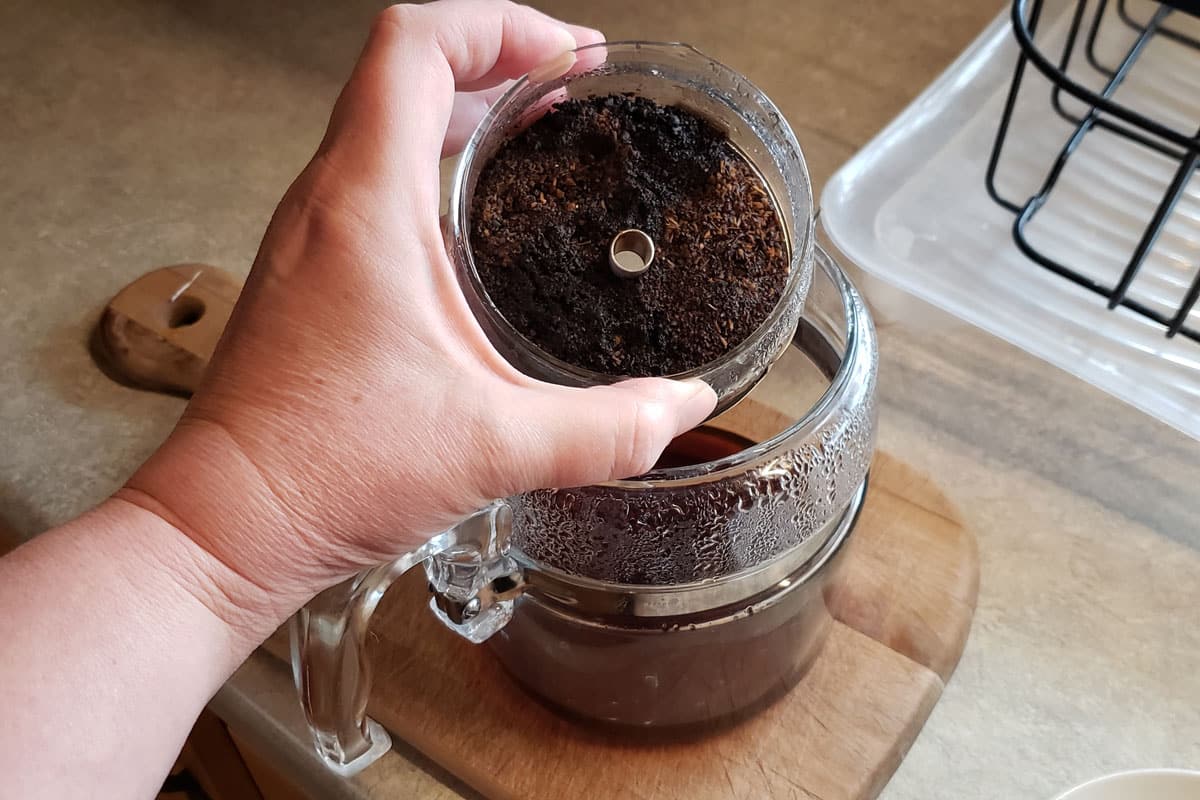
If you don’t drink much coffee, many local cafés will happily give away used grounds. Just make sure they are plain coffee (no flavorings or additives).
I try to spread the grounds out to dry or get them mixed into compost to reduce mold. The mold is part of the natural decomposition process, but that doesn’t mean I want it hanging around inside the house.
Final Thoughts on Coffee Grounds in the Garden
Coffee grounds are a useful, free soil builder, and sometimes a pest deterrent. Avoid heavy layering, use moderate amounts, and combine them with a mix of organic inputs. It’s one more way you can nurture your garden without spending big money, and keep useable material out of the landfill.
Want more inexpensive garden boosters? See:
The Right Way to Use Wood Ash in the Garden

This article is written by Laurie Neverman. Laurie and her family have 35 acres in northeast Wisconsin. They grow dozens of varieties of fruiting trees, shrubs, brambles, and vines, along with an extensive annual garden. Along with her passion for growing nutrient dense food, she also enjoys ancient history, adorable ducks, and lifelong learning.