
Winter Car Kit Checklist for Cold Weather Travel

This post may contain affiliate links. Read my full disclosure here.
Over the years, I’ve had to do a lot of winter driving. As the eldest in the family, I became the family chauffeur once I got my license. Later, I did monthly round trips between Green Bay and Duluth, Minnesota for Guard duty. I still end up regularly driving around the state for work, so I always have a winter car kit stocked when cold weather hits.
Our son ended up traveling home in an ice storm last week, so I decided it was a good time to recheck the kits. I cover the basics, plus gear you may need to deal with accidents and travel delays.
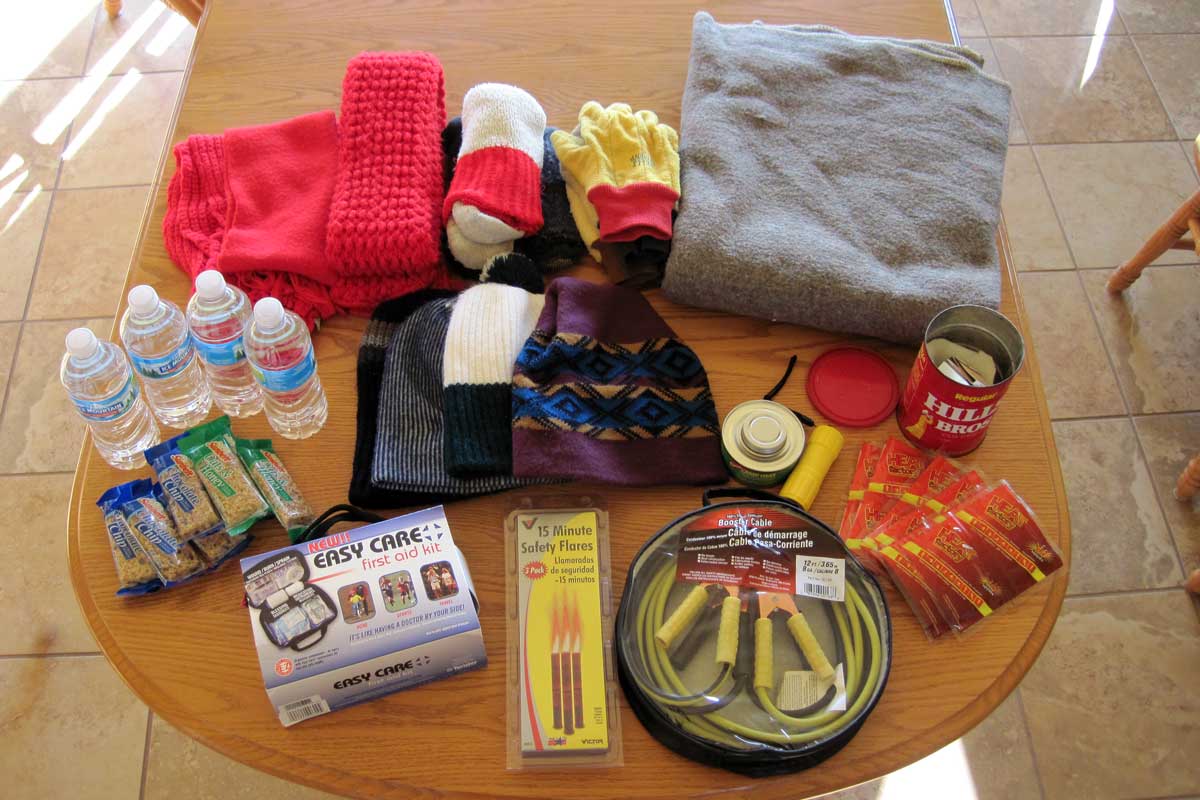
Basic Winter Car Kit
The most basic winter car emergency kit should include:
- Ice scraper and snow brush
- Jumper cables
- Blanket
- Flashlight with extra batteries
- First-aid kit
- Non-perishable snacks and bottled water
- Small shovel and sand (for traction if you get stuck)
- Paper maps
Store the kit in your back seat instead of the trunk, in case you can’t get to your trunk. It’s good to have a cellphone so you can call for a tow truck, if needed, or let other know where you are. You should also know how to read a paper map.
Check out the Winter Vehicle Preparation Checklist for recommended cold weather maintenance.
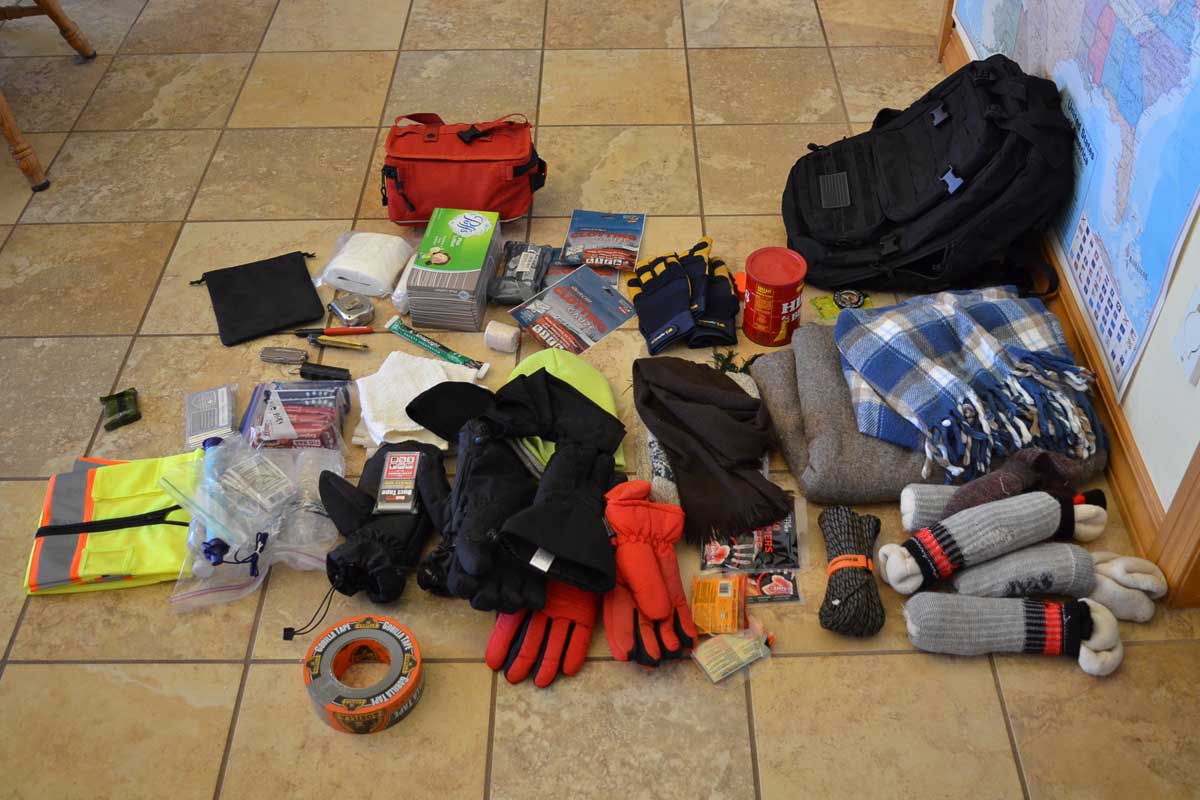
Full Winter Emergency Car Kit
In addition to the basics, I carry winter weather gear, survival supplies, and tools for roadside repairs.
First Aid Kit
You should have a basic first aid kit or trauma kit, depending on your skill level. Make sure you know how to use items in the kit. We have tourniquets and Quick Clot in our kits, and it’s important to use those correctly.
See our Best First Aid Kit article for recommendations.
Sleeping Gear
If you are stuck in the car off the road or snowed in somewhere overnight, sleeping gear is a good idea.
- Small pillow
- Wool Blanket – 100% wool is best, but they are really pricey. Wool keeps you warms even when wet. It doesn’t burn easily, so you can also use it to put out a fire.
- Warm Sleeping Bag
- Mini emergency blankets – these can be used in a lot of creative ways, such as a moisture barrier. Cover the windows to reflect the cold out and warm in.
Clothing for your Winter Car Kit
- Hats – Stash an extra hat or two in the trunk and inside the car.
- Layers – Long johns in your size and a full change of layered working clothes including underwear. If you get wet a set of dry clothes can make a huge difference.
- Outer jacket that stops the wind, if you’re not wearing one.
- Gloves – Large Winter gloves or mittens can go over your existing gloves for extra warmth
- Wool Socks – large sized (they should not be too tight). Large wool socks can do double duty as mittens.
- Scarf – You’ll be glad to have it if you end up walking.
- Boots – If you’re not wearing them, have them along. You could be going for a quick trip, and end up needing to walk long distance in the snow. Make sure to have room for wool socks. Even waiting in a car is better with heavy boots to keep your feet warm.
Food
- Snacks – include shelf stable snacks such as granola bars, jerky, or dried fruit.
- Water – Make sure you empty a little water out of each bottle. That way, the plastic won’t burst if they they freeze.
- Dry drink mix for the water, if you’re one of the people who don’t like plain water.
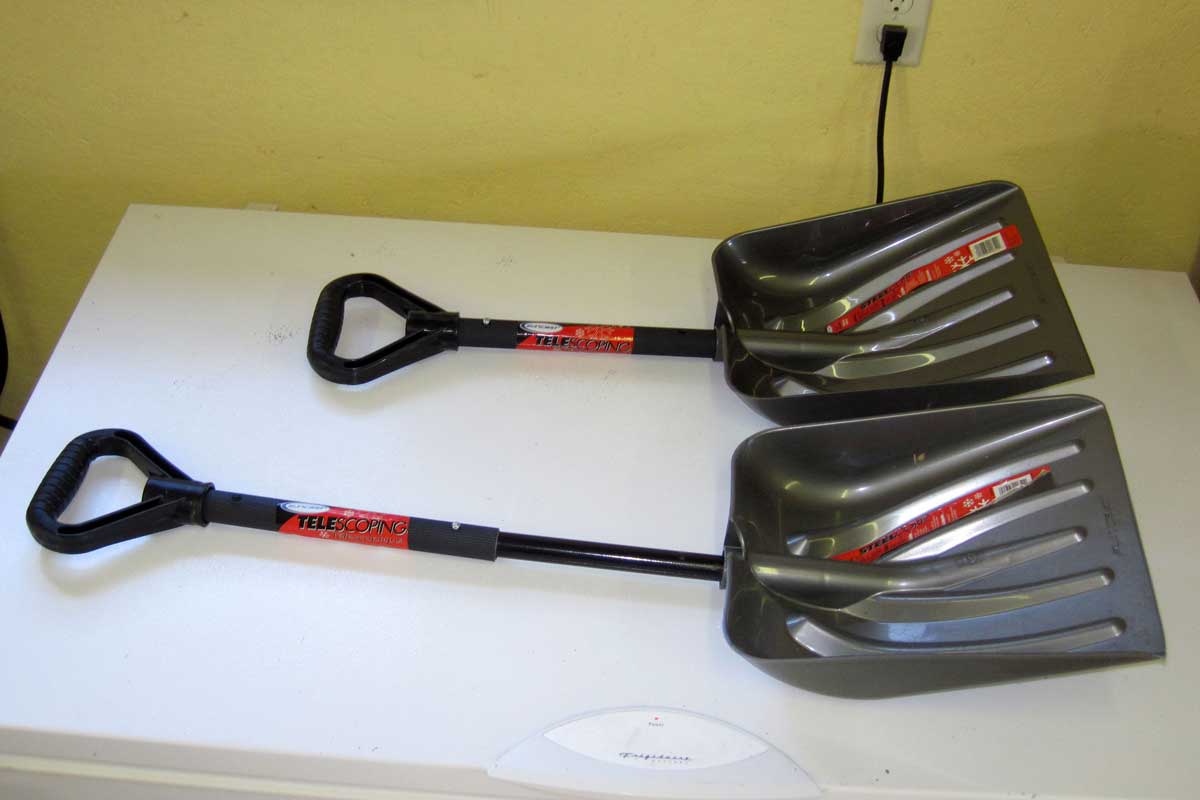
Winter Emergency Car Kit Tools
- Snow and ice scraper with brush
- Car shovel – These are small, collapsible shovels for emergency use.
- Sharp Rescue Knife. Consider a rescue knife. It can break a car window and cut a seatbelt. Keep it within reach of the driver.
- Flashlights. Remember to have at least one waterproof flashlight (look for IPX rating). See also “Best Cheap Flashlight” and “Brightest Flashlights” articles. Swap batteries each SPRING and FALL, and keep extra batteries in cold weather.
- Jumper Cables – cold decreases battery life , and the heavier gauge gets more power to the car being jumped. The higher 800 amp cable is better than the 400 or 600 amp cables.
- A Leatherman multi-tool for small repairs
- Car Fire extinguisher
- Quick flat recovery Fix a Flat (or similar) for flat tires
- Regular Road Flares or Electronic Road Flares. Electronic flares avoid the risk of fire, but require 6 AAA batteries.
- Brightly colored Reflective Vest. A reflective jacket or poncho makes you more visible.
- Tire Iron or Lug Wrench and a heavy duty scissor car jack or bottle jack with stand.
Other Supplies
- Heavy Tow Strap – a strap is a LOT safer than just rope or chain.
- Duct Tape has an insane number of uses. It can seal a crack in a window, hold on a broken mirror, or tape a trunk shut. In first aid situations – immobilize a limb, create temporary splints and as a bandage. We keep a roll in each vehicle.
- Fuse kit – various types.
- Paracord to make makeshift tent, tie a door closed, or hood. This version is very versatile. Tie something to the top of the vehicle.
- De-Icer Windshield Washer Fluid
- Sharpie pens can be used to write on pretty much anything, which is useful in an emergency.
- Emergency Phone Numbers – keep a paper list in your car. Your cellphone might be dead, but the police or a good Samaritan may have a phone.
- Cell phone charger cable
- Empty Gas Can – Extra gas lets you keep the engine running more to keep you warm. Just make sure the exhaust is kept clear.
Personal Items
- Keep an extra pair of prescription glasses, sunglasses and/or contacts in your car. Remember, the sunglasses are as important in the winter snow as in the summer glare.
- Medications, and other items like aspirin or ibuprofen. Keep these in your first aid kit.
- Kleenex, some wipes
- Toothbrush, floss and toothpaste
- Lip balm
- Feminine hygiene items or adult diapers, as needed
- Baby/toddler items, if needed
- Deck of cards and/or other travel games. These are great if you are stuck in the snow or a hotel.
- A notepad to leave notes or doodle.
- A towel wrapped around a few cloth diapers, wash cloth or wash cloths is a great add on. You can use the wipes to clean up and towel to dry off. Moist wipes are a good option also, a small package can help clean up a mess.
- Couple rolls of toilet paper (in zip lock bags) and a couple of garbage bags. The garbage bags are multi-function. If you had a window blown out you can use the bag with Duct Tape to “seal” the hole to keep you warm.
Warmth
- Hand Warmers – Warm hands, feet, or anything else.
- Lighter or waterproof matches
- Candle in a metal container or Sterno – You can use this for heat or melting snow for water.
** Note: Be careful with open flame inside a vehicle. Nearly everything inside a car is flammable. ALSO flame can use up your oxygen if the car is too tight. Keep your exhaust pipe clear and crack a window open if you feel light headed.
Would you like to save this?
Traction
Ashes or sand – put some under your tires for traction when stuck. Though commonly recommended, clay kitty litter gets slippery when wet.
Tire chains – especially if you don’t have snow tires. Research the right chain type for your vehicle.
Snow tires – Nokian or Michelin are good snow tires. Make sure to check that your spare tire is in good condition.
How to Store Your Winter Car Kit
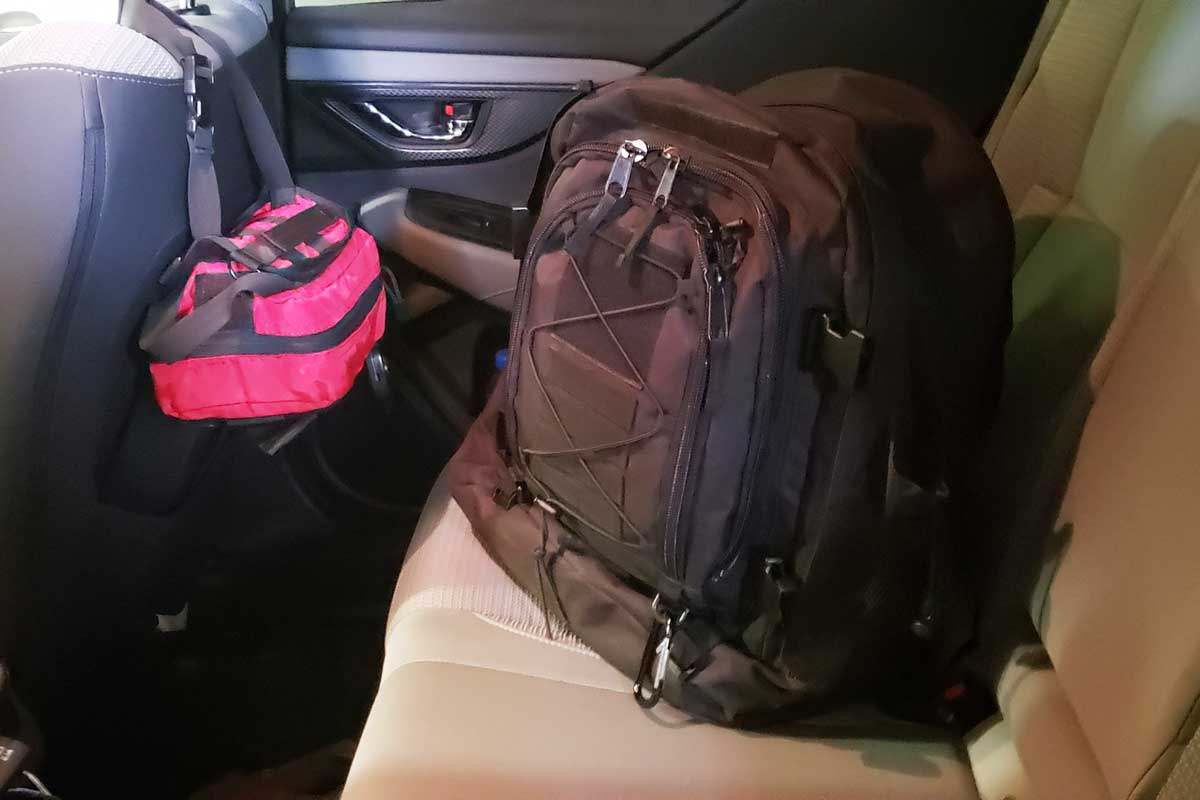
We recommend a large Tactical Backpack which holds 40L and expands to 64L. We have two and like them. It has multiple compartments and a belt strap in case you need to hike home in an emergency. Some people use totes to store their winter car kit.
I keep the shovel and scraper separate from the rest of the pack, and food items separate from combustibles. If you pack nothing else, you should have hats and blankets enough for all regular passengers and a good ice scraper. The snow shovel and jumper cables are the next most important.
Buy a Winter Emergency Car Kit
You can buy a pre-packed winter car survival kit, but most of them are pretty skimpy, or just have car related items.
The “Always Prepared 125-Piece Roadside Assistance Auto Emergency Kit ” looks to be better than most. But even this fairly good one needs extras.
We suggest you add: flashlights, duct tape, Quick Clot, Sharpie pens, wool blanket, fire extinguisher, ice scraper, and a shovel.
Don’t Forget Contact Information
A friend of mine reminded me about another consideration – emergency phone numbers. Paper and electronic.
“As an EMT, I was trained to look at victims cell phones (if they were unconscious) and I would look in their contacts list for a number listed as “ICE”. Ice stands for “In Case of Emergency”. Everyone should have a number for US to contact in case of an accident or medical emergency.”
Since you SHOULD lock your phone, consider leaving a ICE paper note or emergency contact list in your glove compartment, with names numbers and relations. Alternately leave it in your wallet or purse.
Stay Safe this Winter!
Let us know if you pack anything we missed, and please pass this post along to friends if you find it useful.
Related Articles
Car Won’t Start in the Cold? Check Out these Troubleshooting Tips
All Season Roadside Emergency Kit
The Ultimate Guide to Practical Cold Weather Clothing

This post was written by August Neverman IV. August has a strong background in emergency preparedness. He served on several emergency preparedness teams during his tenure at Brown County WI Government, the Medical College of Wisconsin, HSHS, a 13-hospital system and emergency response training during his time with the Air Force and Air National Guard. Learn more about August.
Originally posted in 2011, last updated in 2024.
Love to read this article. I am totally inspired by your work and got some great ideas. Thanks and keep sharing 🙂
There’s more than one reason to keep your fuel tank topped up in the winter. In the cooler months condensation occurs in fuel tanks that are less than full. If you get enough water in your fuel tank from condensation, it will foul your carburetor or fuel injector system causing your vehicle to stop running. Many people blame that on the gas stations where they buy fuel but it’s more often just condensation. I use a large plastic tub with a lid for my vehicle emergency kit. I keep a light weight & a heavy weight blanket along with a couple of fleece throws. Some spare seasonal clothing, a full change including a hat. A spare pair of walking shoes. Some umbrellas & cheap plastic ponchos in colors not found in nature. (in other words, highly visible) Flashlights, (with emergency flashers built in) essential tools, a homemade BSA Buddy Burner, a 1 quart enameled coffee cup, some coffee & tea bags, individual sugar & honey packets, bottled water, a six pack of ramen noodles, (cooks in 3 minutes) a first aid kit, a small USB solar battery charger & some reading materials. And my cell phone goes with me wherever I go. In the days before the prevalence of cell phones I have been stuck on the roadside for several hours on more than one occasion, in all types of weather. So I eventually learned what I needed to keep with me at all times. Experience is the best teacher… =/
You are right! Tell your friends, family and neighbors. Everyone should take your example and make it fit their area. Laurie and I lived near Duluth Minnesota and the freezing weather was VERY HARD on cars (and people). When we switch from summer to winter we swap walking shoes for snow boots and leave the work gloves but ADD gloves, mittens and hats (stuffing the gloves/mittens inside the hat). We also throw in wool socks which can double as gloves. We suggest you keep a wool blanket in the car also, it wont burn easily so it can be used to put out a fire or just wrap up in the back seat to keep warm on a long trip. Wool will also keep you warm even if its wet. A kneeler pad can be a godsend when its -20F and your are kneeling to change a tire or clear the car. The quick way to make sure the gas doesn’t get water/moisture is to add HEET to the car gas tank every other time you add fuel. Chocolate bars and other hard candy are good for a quick pick me up and last nearly forever. All the best!
Good post. A few more things that weren’t said in the article.
– Keep as much of the food and meds in a wide-mouth thermos. It’s not just high temperatures that affect shelf life and potency, temperature variations as well. When it’ll be freezing outside and inside the trunk, the thermos should keep the temperature inside more or less constant.
– A shovel that’s not telescopic is less likely to break. Mine is from Fiskars, a reputable Swedish company, and it’s pretty solid. It wasn’t expensive either.
– Get one of those flashlights that are hand-crank. That way, you won’t have any surprises. Keep in mind batteries discharge quicker in cold temperatures.
Dan “Survival” Sullivan
This is a very good list of item to store in your car. I would like to add that just in case things get wet, put your TP in a ziplock bag to keep it dry. I’ve had things break and get stuff soaked in the bin I car in my car, but the TP has always remained dry.
Thanks, Larry. I’ll add a note about that.
Thanks for a very comprehensive list and great ideas from all. Did I miss a flashlight? I also have a NOAA emergency radio (crank up style). And a tarp might be useful if you have to change a tire in the snow (or for shelter). I would add for 2nd or 3rd tier of emergency readiness for car … I have a tool that has a covered razor for cutting off a seat belt if it gets stuck in an accident situation and another tool on it is that piece you can use if you spin into water and the windows short circuit to break them and escape plus it has a flashlight with it. Granted you may never need it but doesn’t hurt to have it on hand.
I never thought to carry a fire extinguisher in the car I may add that. And I also like the idea of using a tote container to keep all the e-items in the trunk. I would keep the wool or fleece blankets in the car ( if rolled up good pillows). And I have 2 seat back organizers for hand warmers, small first aid items, tissues, wipes, cheap rain ponchos, extra gloves, maps etc. and sm. food snacks. Extra sm. umbrella in glove compartment (can help with snow). Thanks again. Time to make sure everything is there for 4 riders.
Flashlight is on the list right after water. 🙂
Thanks for your input. (That reminds me – I need to stick the umbrella back in the van.)
O I forgot to add, for those who have allergies to wool, there are fabrics which wick moisture away from the body. Sometimes manmade can be a good thing. I’ve used these for other uses so I know they work.
I bought several of those one way valve type plastic bags. I keep a change of clothing for each person which rides in the car. They are reusable and since they are one-way they work for keeping those old/wet clothes in and can be rolled up to get the air out. Much better than using food saver bags. I will be using many of these ideas this year with the new used car. Thanks. 🙂
What the hell do u need an empty gas can for if ur stuck and run out of gas, your not going to walk anywhere in snow like ur having throughout the country today. Its a little unsafe but so is gas in the car tank… I would want a little emergency gas available for those few extra hours of warmth before u run out of gas to put in the tank. just wondering
If you’re carrying around a gas can with just a little gas, the motion of the vehicle will cause it to aerosolize, effectively creating a bomb, since the fumes burn much more readily than liquid gas. I really wouldn’t recommend this. No, you’re not likely to be hiking with 3-5 feet of snow on the ground, but if you have any sense or warning, you’re not likely to be out driving in it, either. The gas can would honestly be pretty low on my list – BUT – say you are stuck for a while and drain your tank, then can get out, but you have no gas to do so. Catch a lift to the service station, get your gas, get a ride back, put it in your tank and get out instead of calling a tow truck.