
Stevia Plant – How to Grow It & Use It

This post may contain affiliate links. Read my full disclosure here.
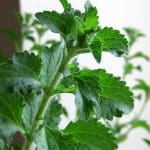
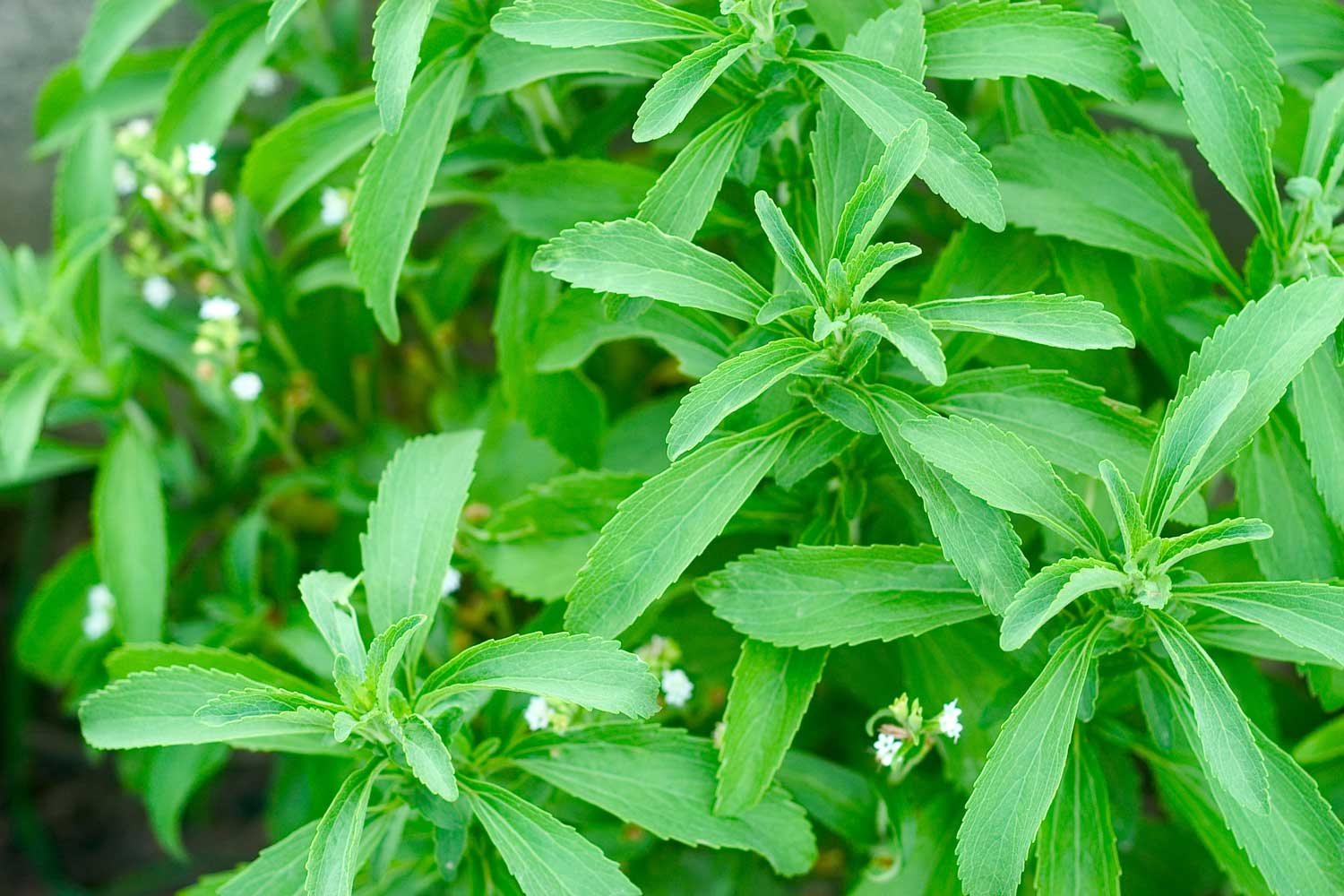
The stevia plant (Stevia rebaudiana) is one of those garden additions that easily pays for itself. This sweet herb produces intensely sweet leaves you can use fresh, dried, or turned into extract—making it a practical, homegrown sugar substitute.
If you’ve ever looked at those tiny bottles of stevia extract and thought, “That’s pricey for what it is,” you’re not wrong. The good news? Growing stevia at home is straightforward, and once you have a healthy plant, you can make your own sweetener for pennies.
Let’s walk through what stevia is, how to grow it successfully, and how to make stevia extract at home.
Would you like to save this?
Table of contents
What is a Stevia Plant?
Stevia is a small shrub native to South America, especially Brazil and Paraguay, where it has been used for centuries as a natural sweetener. The leaves contain compounds called steviol glycosides, primarily stevioside and rebaudioside, which are responsible for its intense sweetness.
Depending on the variety and growing conditions, stevia leaves can be 50 to 300 times sweeter than sugar—without raising blood glucose levels. That’s why stevia has become popular as a natural sweetener for those trying to reduce sugar intake.
Unlike many artificial sweeteners, stevia is heat stable, so it can be used in cooking and baking (though it behaves differently than sugar, which we’ll touch on later).
The Joint FAO/WHO Expert Committee on Food Additives has evaluated purified steviol glycosides and considers them safe within recommended intake levels. This helped pave the way for wider use in commercial stevia products.
See “Are There Any Side Effects of Stevia” for a more in depth discussion.
Growing Stevia in Your Garden
Growing stevia is similar to growing other tender herbs, but it does have a few quirks to keep in mind.
Stevia prefers full sun, especially in cooler climates like ours in northeast Wisconsin. In hotter areas, a little afternoon shade can help prevent stress. It thrives in well-drained soil rich in organic matter, and like many herbs, it doesn’t appreciate heavy chemical fertilization. Too much nitrogen can lead to lush growth with reduced sweetness.
Consistent moisture is important. In its native habitat, stevia often grows near water sources, so aim for evenly moist soil—not soggy, but never bone dry. A layer of mulch helps regulate moisture and soil temperature.
Plants typically grow 1–3 feet tall and about as wide, forming a bushy, leafy plant. Give them room to spread, whether in garden beds or containers.
Since stevia is frost-sensitive, treat it like a tender perennial. It may overwinter in warm climates (zone 8+), but in colder regions, you’ll want to bring plants indoors or take cuttings before frost.
A well-tended stevia plant may produce for 3-5 years or more, but becomes less vigorous with age. You can start new plants with cuttings or natural layering. (Plants will often root where a stem stretches and contacts the ground.)
Starting Stevia from Seeds or Plants
You can grow stevia from seed, but germination can be a bit inconsistent. If you’re starting seeds indoors, plant them 8–10 weeks before your last frost date in a light seed starting mix. Barely cover the seeds, as they need light to germinate, and keep temperatures warm (around 75–80°F).
Seedlings usually appear within 1–2 weeks. Once they’re growing well, thin to one plant per cell and keep them under good light to prevent legginess.
Many gardeners prefer starting with nursery plants for a more reliable start. Either way, wait until all risk of frost has passed before transplanting outdoors. I’ve had good luck with starting plants from seed indoors and transplanting out to the garden. You can grow many plants from seed for the price of one nursery plant.
When and How to Harvest Stevia Leaves
Timing matters when harvesting stevia leaf. For the sweetest flavor, harvest leaves before the plant flowers. Once flowering begins, the plant shifts energy away from leaf production, and the sweetness can decline.
You can harvest fresh leaves as needed or cut back the plant by half once or twice during the growing season to encourage bushier growth.
If you plan to overwinter your plant, leave several inches of growth intact so it can recover.
Drying and Storing Stevia Leaves
To preserve your harvest, you can dry the leaves for later use.
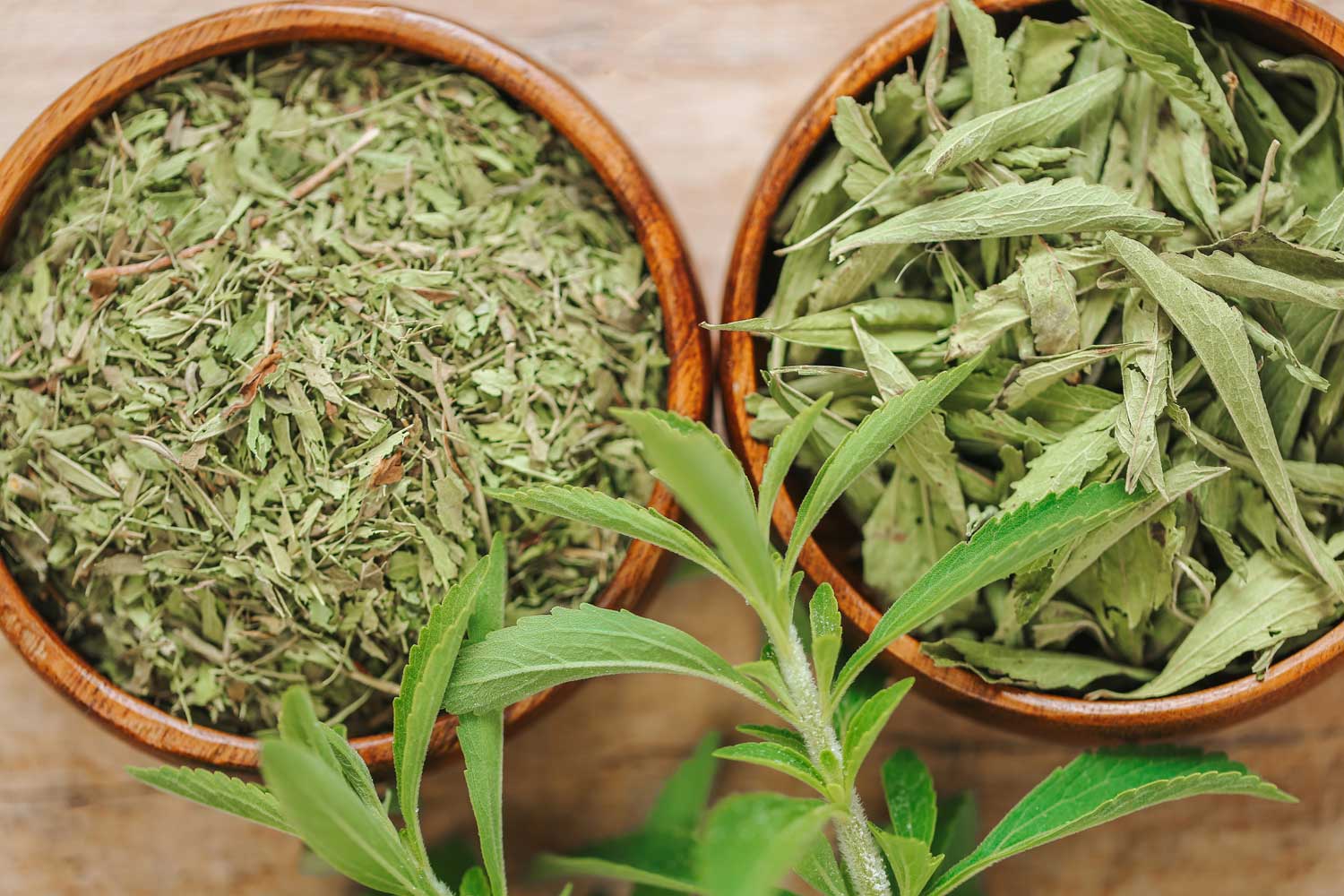
Cut stems and hang them in small bundles, or strip the leaves and dry them on low heat in a dehydrator. Once fully dry, store the dried leaves in an airtight container away from light and moisture.
Dried stevia keeps well for a long time, and you can crush it into stevia powder as needed. Keep in mind that whole leaf stevia has a slightly different flavor than refined products—more herbal, less “clean sweet.”
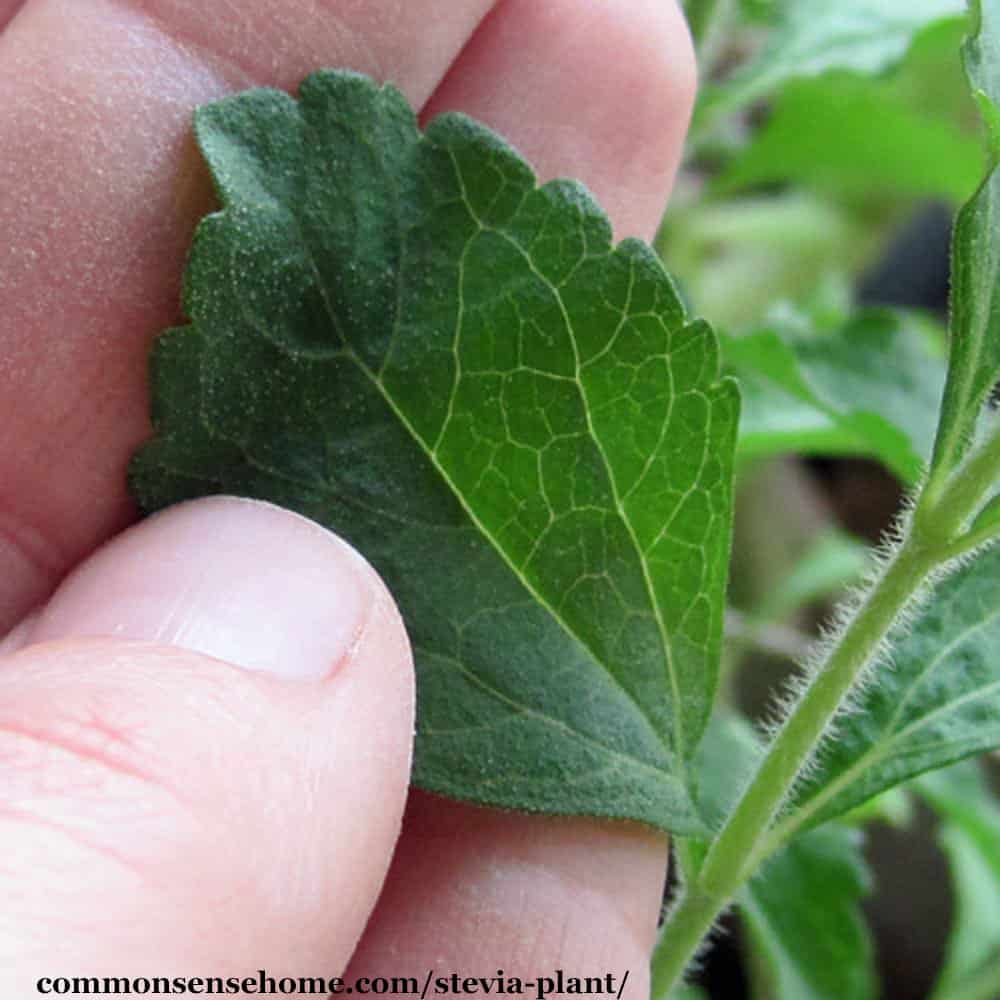
If you look closely, you can see that the leaves and stems are somewhat fuzzy.
Stevia is a naturally sweet tasting herb. You can chop and tear the leaves and add them directly to tea blends, or make a stevia extract as directed below.
How to Make Stevia Extract (Alcohol Method)
If you really want convenience, learning how to make stevia extract is a game changer.
Start with clean stevia leaves, either fresh or dried. Chop them and place them in a glass jar, then cover completely with vodka or another neutral alcohol.
Seal the jar and let it sit in a cool, dark place for about two days, shaking occasionally. Don’t let it steep too long, or bitterness can increase.
Strain out the plant material using a fine filter. To improve flavor and shelf life, gently warm the liquid on low heat for 20–30 minutes to evaporate some of the alcohol. Do not boil.
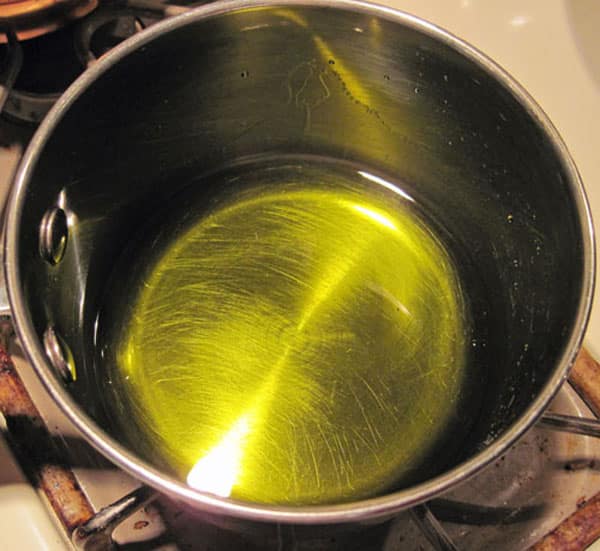
Once cooled, store your extract in a dark bottle. (I recycled a vanilla extract bottle.) Tincture bottles with droppers are great if you have them available, as it only takes a few drops of extract to sweeten a drink or recipe.
Don’t let it sit longer to try and get a stronger flavor. Longer steeping can increase bitterness. Don’t include stems so you have more material. They don’t contain much steviol glycoside, which is what makes the stevia sweet.
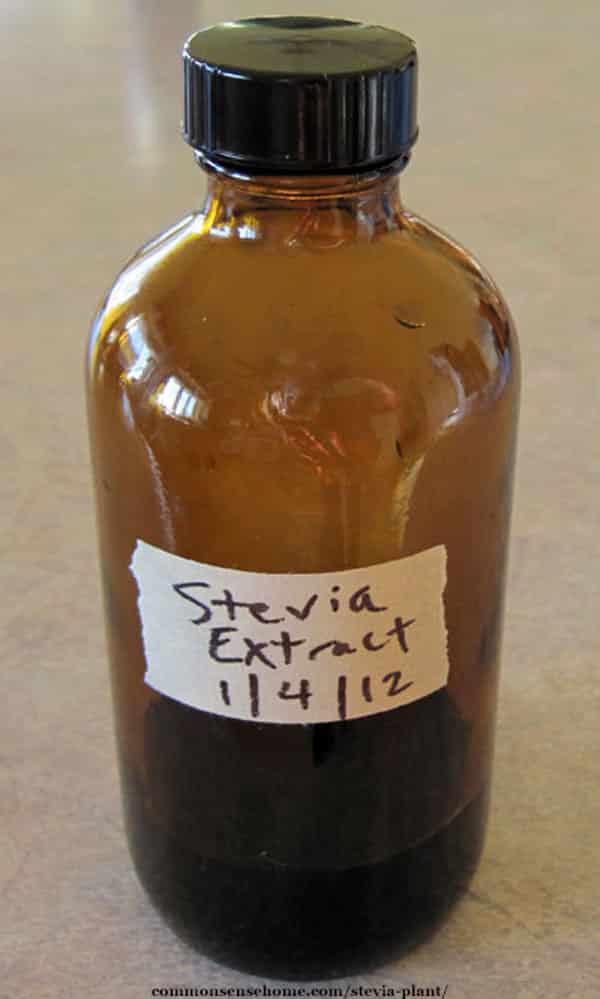
Cover, label and date. This stevia extract will keep for around three months in the refrigerator. I found this extract to be quite sweet with very little bitterness. Given that the tiny bottles of extract sell for at least $10 each, you can see how going homemade can save money.
You can watch the video below to see me make up our latest batch of extract. (If video doesn’t display, make sure ad blockers are off.)
Make Homemade Stevia Extract with a Water Base
For an alcohol-free option, combine dried stevia leaves with hot (not boiling) water and let them steep for about 40 minutes.
Strain and store in the refrigerator. This version has a shorter shelf life—about 1–2 weeks—but works well for sweetening tea or other beverages.
Using Your Stevia Plant
You can use stevia in several forms:
- Fresh leaves – add to tea or herbal blends
- Dried stevia – crush into powder for recipes
- Liquid extract – easiest for consistent sweetness
Because stevia is so concentrated, a little goes a long way. It doesn’t behave like sugar in baking, so expect some trial and error.
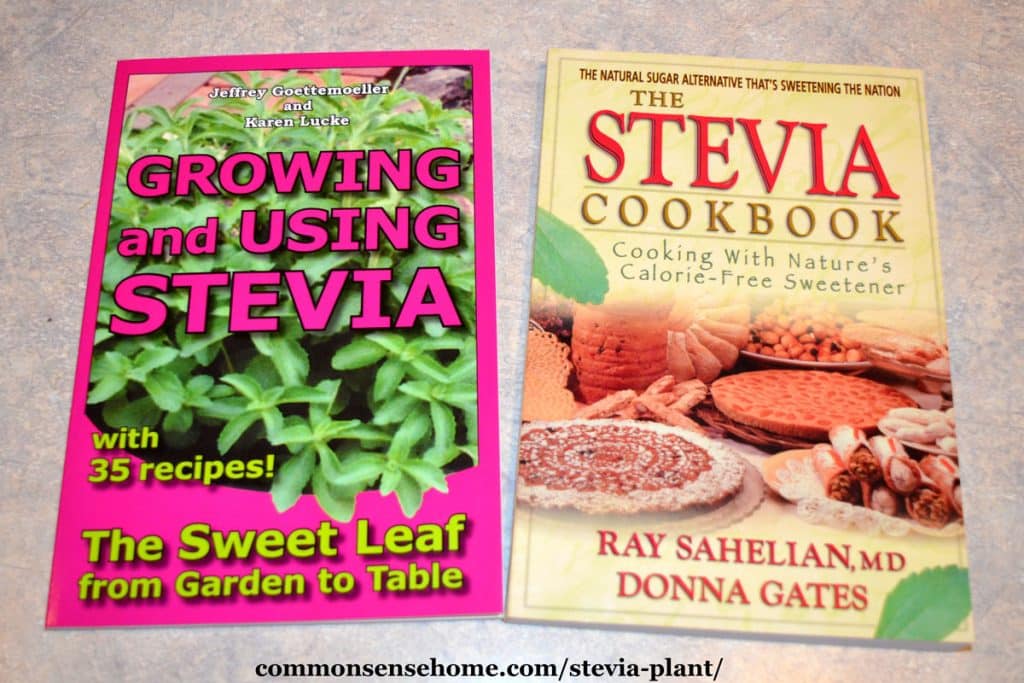
As a rough guideline, just a few teaspoons of dried stevia can replace a cup of sugar. Results vary depending on the recipe. I suggest getting a stevia cookbook to shorten the learning curve.


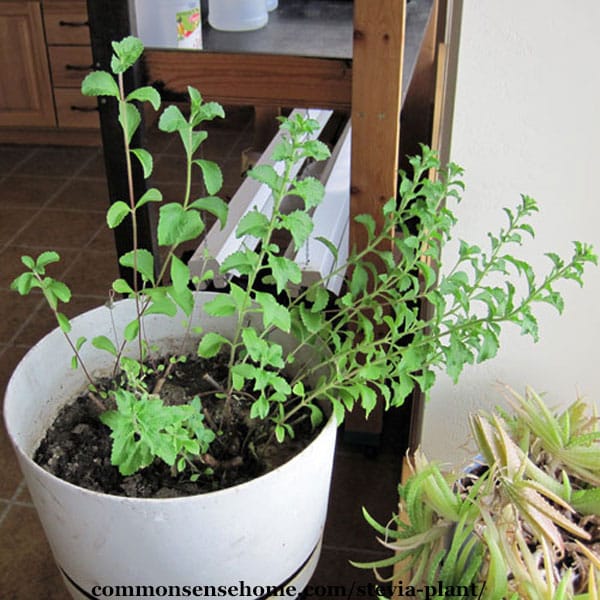
Here’s a plant that was dug up from the garden in fall and kept inside for the winter. You can see it is getting a bit leggy due to lack of sunlight.
Why Grow Your Own Stevia?
Store-bought stevia products are convenient, but they’re often highly refined and blended with other ingredients. When you grow your own, you control the process—from soil to sweetener.
Plus, it’s one more step toward a more self-reliant kitchen. I’ve kept plants growing for several years at our home in northeast Wisconsin. My only regret is that I didn’t learn how to make stevia extract sooner and save myself some money.
You may also enjoy:
- How to Make Homemade Extracts – Vanilla, Lemon and Almond
- 8 Small Vegetable Garden Ideas & Growing Tips
- How to Infuse Herbs in Oil, Water, Vinegar, Alcohol or Honey
This article is written by Laurie Neverman. Laurie and her family have 35 acres in northeast Wisconsin. They grow dozens of varieties of fruiting trees, shrubs, brambles, and vines, along with an extensive annual garden. Along with her passion for growing nutrient dense food, she also enjoys ancient history, adorable ducks, and lifelong learning.
Originally published in 2012, last updated in 2026.
Home Depot sells stevia plants but they sell out quick because they are large 8″ pots for $6
Thanks for the post on stevia I usually just put the dried leaves in my bulk tea but this extract would be better. Can you make peach extract at home. I’ve seen peach vodka but would like more peach and less vodka… thanks karen
If you wanted to try for a peach extract, I’d start with dried peaches (not treated with sulfites) and dice them finely to try and concentrate the flavor. Cover the diced dried peaches with vodka and let steep for at least 6 weeks – longer is better.
great site, you’re wonderful!
-just a couple of comments about stevia….(I’ve been growing it for some 12 years now).
1. Stevia is notoriously difficult to start from seed; the seeds are only viable for a short period of time – a few weeks to a couple of months- the freshest seed is the most likely to germinate
2. Stevia, being a perennial, doesn’t have to be replaced every year ( one of my plants is 6 years old and still going strong). That said, it is very frost sensitive and must be protected from the cold – failure to do so will make it into an ‘annual’. I live in N. Cal, in a ‘microclimate’ that pretty much guarantees several nights w/ below-freezing temperatures. My stevia plants do fine as long as I remember to take a couple of critical precautions when frost is predicted. The first, most obvious, is covering the plant completely- I’ve used ‘frost-protective plant cover’, sheet plastic, and bedsheets, all with successful results (although, if a ‘hard’ frost was predicted I would only trust the sheet plastic). The second, less obvious (but just as important!) precaution is to make sure the plants are sufficiently hydrated! This requires a little more foresight and effort-my plants go dormant in the winter, appearing completely lifeless until May or June. This makes it easy to forget that even dormant, these plants still have some moisture requirement: never let your stevia get bone-dry, even when ‘dormant’. In fact, plants suffering from dehydration are more susceptible to frost damage than are plants that are adequately irrigated.
3. Stevia can’t tolerate lack of water but it hates ‘wet feet’. Plant it in a well-drained location ( or mix) and water it regularly.
4. Stevia is not a ‘full-sun’ plant- not here in N. Cal, anyways. Lots of bright but indirect sunlight during the summer in ‘warm’ climes.
5. If you do have several plants, ‘comparison-test’ them against one another for sweetness and taste -more often than not, leaves from some stevia plants will be sweeter, or less so, than leaves from other stevia plants ; also, some plants will produce leaves that ‘taste better’ (or that leave a less unpleasant ‘aftertaste’) than others. THOSE are the plants you’ll want to propagate cuttings from to give to your friends/family/neighbors.
Spread the ‘sweetleaf’ love!
Hi, any idea where we can buy the stevia plant from? Thanks
There is at least one seller offering live stevia plants on Amazon, but reviews have been mixed. You may be able to find them at some garden centers, or via mail order nurseries that sell live plants.
Thank you for the tutorial I am very interested in growing steveia as my nephew and a few of my friends are diabetic. I have gotten my herbal seeds from “LeJarden De gourmet” in the past. I have recently found a fantastic place for all types of seeds. at ” botanical intrests .They are from Colorado but ship everywhere. ALL SEEDS ARE NON GMO . and many are heirloom too. Lots of people like mountian rose herbs. I do like their herbas and teas. I prefer Glorybee foods ( out of Oregon) for my castille soap, it smells better and is thicker. Glorybee also has tons of things for folks that like to raise bees.
Hi! I just want to know if how can you tell that the extracts can be stored in the refrigerator until 3 months??? thanks this book was really helpful 🙂
I don’t understand the question.
Thank you for this wonder article. I am just learning about growing stevia and am interested to harvest and use it as stevia is the only sugar I use currently for myself.
Thank you very much for sharing your knowledge on stevia. I really appreciate that you explaned how to use it once harvested. Can you tell me if stevia has any salt tolerance? I live on the coast of florida. I am definately showing my uncle your site, he has diabetes. Thnx bill
Welcome, Bill.
I dug around looking for clear indication that stevia could tolerate salt exposure, and in a potted herb listing at Garden Harvest Supply, while they clearly indicated a number of plants that are salt tolerant, stevia was not one of them (although it was listed for sale).
Interesting article, I have one question. What is the advantage in using alcohol extraction over water?
The alcohol can extract different compounds than water alone.
I have been growing stevia for the past two years in a pot. last year I just cut the plant back to about 6 in of
the root. It came back really nice this year. I live in BRITISH COLUMBIA CANADA the winters can get very cold but not always i just bring the plant in for the winter.
I have tried both drying and freezing the leaves I did not like the outcome. thanks for the info on the liquid
process. I am diffidently going to try both.
RITA
I hope you find a flavor that works for you.
I’m so excited to see how this turns out. The leaves have been in the jar for 24 hours so far. I just went and bought 4 baby stevia plants for about $2 each. I took all the leaves off and got started. I’ve run out of stevia and I refuse to pay $8/box of “organic” stevia that really isn’t organic or resembles stevia. Fingers crossed this is a permanent replacement.
Thank you for this post, I am just starting into using Stevia and am excited for the adventures ahead. Sorry for what may be a dumb question, but I do not drink alcohol and so I have no idea where or how to buy the vodka you use in your extract recipe. Can you please let me know how to know what to buy, where to get it, and perhaps an estimate of what I should be paying for it.
Additionally, since the vodka would only be used to make extracts, how long will it keep?
Thanks
Vodka in a glass bottle will keep indefinitely. Remember, alcohol is a preservative. You can also buy fairly small bottles. I just buy larger ones because it’s cheaper per ounce and I use it for extracts and tinctures, and it keeps forever. Many grocery stores (at least in our area) have a liquor department. Otherwise just check the yellow pages or google “liquor store”, or asks friends who do imbibe where they recommend shopping.
Here in Oregon, no hard alcohol sales in stores, you must go to a State “Liquor Store” for buying vodka, etc.
I’ve worked to your instruction, with fresh leaves; it just tasted nice and sweet. However, putting it into the coffee, gives a strong bitterness to the drink; have tried everything from dried/powdered/fresh/water-solution/vodka-based, leafes but nothing seems to work; either it tastes too ”planty” or it increases a bitterness – especially in coffee.
Any idea how to vercome this bitterness? Your advice would be appreciated, since I have 3 large stevia plants growing here in Spain, and would love to use them.
Thanks
I’ve largely stopped drinking coffee, because it’s hard on your adrenal glands, but in the comments of this stevia post at Real Food Forager (http://realfoodforager.com/stevia-is-it-as-good-as-they-say/), a reader mentions that they sprinkle the dried stevia leaves right on top of their coffee grounds when making their coffee. At the very least, it would be simple to try.
My husband just asked me what I was going to do with the huge plant out back in our yard. Now, we know what to do with the stevia plant.
I’ve have the drying the leaves under control as I already dry, leeks, green onion, chives, chili peppers, garlic, various basil, (globe is my favorite), sage, peppermint, catnip, parsley, etc. Mmmm, delicious!
Thanks so much for the information and your knowledge; it is appreciated.
You’re welcome, Pam.
Please remind people not to use “Rubbing Alcohol” !!!!
That would be bad.
Very nice, It is very useful specially for new comer in gardening. I have one in my garden
When you use vodka to make the stevia extract, is it still considered a calorie free or low calorie sweetener? How much of the calories from the vodka remain in the final product?
I’m not certain how many calories remain (I’ve never been a calorie counter), but you only use a very small amount for sweetening – a few drops. Given the tiny volume used, it must count as a low calorie sweetener.
Hi Laurie. Thanks for the great article. I will try it tomorrow. Then I will report how it has worked for me. At the moment I use a very pure powder (Reb-A> 97%). I think especially for tea homemade Stevia Extract is perfect.
THis was great information! Like many others I’ve grown stevia for a few years now and the first year didn’t know what to do with it or how to use it.
I live in Ohio. I’ve had 3 plants sprout from seed out of many. I got 2 the first year and 1 the next. THe first year I expected to have to re-sprout new seeds the next spring since it is a warm weather plant, but we had a mild winter and IN THE GROUND they overwintered and came back the next spring! I was so excited!
So last winter and this, I’ve covered the plants in the ground with a thick layer of straw. Last winter was mild here also, so this year will be a better test. I do have them planted against a brick wall that is south facing, so if there’s sun, it gets full sun most of the day. Another experiment I tried this summer was to divide the oldest plant in half to see if I can create 2 plants from the one. The smaller one that I dug off wasn’t doing well so we’ll see if it can come back in the spring. I have had success from dividing other perennial plants in the past so I thought it was worth trying. We shall see.
I have dried stevia that I already ground into powder, so I’ll have to try the extract that way until next summer. I did try making a tea, but let it sit too long and it got VERY bitter and I had to throw it away. I’ve also tried putting some in the top of the coffee maker with my tea bags for making iced tea. One time it turned out great and the other time, not so great. But I wasn’t sure how much to put in.
THanks again! It’s so nice to be able to learn from others’ experiments!
Thanks for sharing your experience.
hello I have been looking into making my own Stevia but still a little confused. The Extract is that liquid? how do i use it to put into my coffee.. lol (sorry might be a silly question). So basically I use the leaves dried or fresh and add them to boiling water and then just let them seep for 40 mins. Once i drain it, I place the water into something and place in the fridge? Thank you for your help.. Just want to get it right the first time.. hehe 🙂
Yes, the extract is a liquid. When you make the stevia extract with just water, it’s sort of like a strong “tea” of the stevia leaves, which you add to your main beverage to taste. Like any herbal tea, it has a limited shelf life, so do store any that you don’t use right away in the refrigerator and use within a week.
Hi Laurie. Like they all said ‘Great post’. I am a type 2 diabetic with a sweet tooth, and am certainly interested in a sugar substitute. I have just bought my first Stevia fluid in a 50ml bottle and feel sure that at €9, it’s more expensive than French perfume. As a pensioner it feels a bit hard on the pocket so I turned to the internet because I was sure you were out there somewhere, and bless you there you were. My question is, as I live in a sunny climate (Tenerife) where we never experience frost and the winters are very mild (around 12- 18 deg. c.) do you think I could just leave the plants outside all year and keep harvesting them? As the plants originated in South America my feeling is I could, but I just wondered if you were from California or Florida I could be wrong. I apologise if this point has already been raised. I read up to fifty posts and gave up looking and decided to ask.
Thanks,
Mike
If you don’t freeze in winter in the winter you should be good to go. Even here, I just bring mine inside in a pot for winter and put them back outside after risk of frost has passed. If your plants start to look to leggy or rough, you can clip them back to the ground and they should regrow more bushy. Feed them some compost or other natural fertilizer once a year or so.