
Stevia Plant – How to Grow It & Use It

This post may contain affiliate links. Read my full disclosure here.
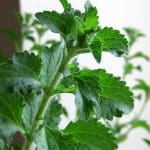
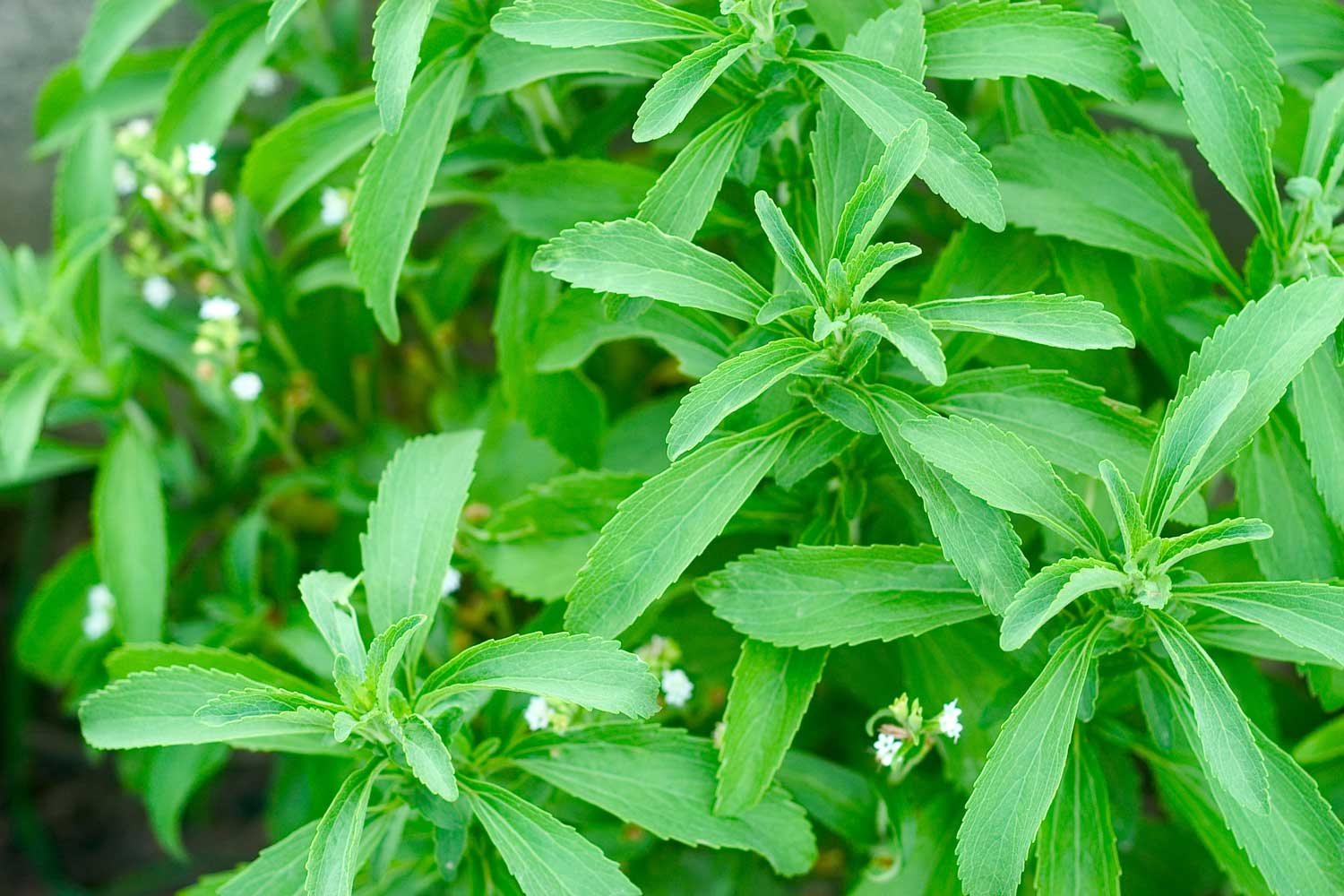
The stevia plant (Stevia rebaudiana) is one of those garden additions that easily pays for itself. This sweet herb produces intensely sweet leaves you can use fresh, dried, or turned into extract—making it a practical, homegrown sugar substitute.
If you’ve ever looked at those tiny bottles of stevia extract and thought, “That’s pricey for what it is,” you’re not wrong. The good news? Growing stevia at home is straightforward, and once you have a healthy plant, you can make your own sweetener for pennies.
Let’s walk through what stevia is, how to grow it successfully, and how to make stevia extract at home.
Would you like to save this?
Table of contents
What is a Stevia Plant?
Stevia is a small shrub native to South America, especially Brazil and Paraguay, where it has been used for centuries as a natural sweetener. The leaves contain compounds called steviol glycosides, primarily stevioside and rebaudioside, which are responsible for its intense sweetness.
Depending on the variety and growing conditions, stevia leaves can be 50 to 300 times sweeter than sugar—without raising blood glucose levels. That’s why stevia has become popular as a natural sweetener for those trying to reduce sugar intake.
Unlike many artificial sweeteners, stevia is heat stable, so it can be used in cooking and baking (though it behaves differently than sugar, which we’ll touch on later).
The Joint FAO/WHO Expert Committee on Food Additives has evaluated purified steviol glycosides and considers them safe within recommended intake levels. This helped pave the way for wider use in commercial stevia products.
See “Are There Any Side Effects of Stevia” for a more in depth discussion.
Growing Stevia in Your Garden
Growing stevia is similar to growing other tender herbs, but it does have a few quirks to keep in mind.
Stevia prefers full sun, especially in cooler climates like ours in northeast Wisconsin. In hotter areas, a little afternoon shade can help prevent stress. It thrives in well-drained soil rich in organic matter, and like many herbs, it doesn’t appreciate heavy chemical fertilization. Too much nitrogen can lead to lush growth with reduced sweetness.
Consistent moisture is important. In its native habitat, stevia often grows near water sources, so aim for evenly moist soil—not soggy, but never bone dry. A layer of mulch helps regulate moisture and soil temperature.
Plants typically grow 1–3 feet tall and about as wide, forming a bushy, leafy plant. Give them room to spread, whether in garden beds or containers.
Since stevia is frost-sensitive, treat it like a tender perennial. It may overwinter in warm climates (zone 8+), but in colder regions, you’ll want to bring plants indoors or take cuttings before frost.
A well-tended stevia plant may produce for 3-5 years or more, but becomes less vigorous with age. You can start new plants with cuttings or natural layering. (Plants will often root where a stem stretches and contacts the ground.)
Starting Stevia from Seeds or Plants
You can grow stevia from seed, but germination can be a bit inconsistent. If you’re starting seeds indoors, plant them 8–10 weeks before your last frost date in a light seed starting mix. Barely cover the seeds, as they need light to germinate, and keep temperatures warm (around 75–80°F).
Seedlings usually appear within 1–2 weeks. Once they’re growing well, thin to one plant per cell and keep them under good light to prevent legginess.
Many gardeners prefer starting with nursery plants for a more reliable start. Either way, wait until all risk of frost has passed before transplanting outdoors. I’ve had good luck with starting plants from seed indoors and transplanting out to the garden. You can grow many plants from seed for the price of one nursery plant.
When and How to Harvest Stevia Leaves
Timing matters when harvesting stevia leaf. For the sweetest flavor, harvest leaves before the plant flowers. Once flowering begins, the plant shifts energy away from leaf production, and the sweetness can decline.
You can harvest fresh leaves as needed or cut back the plant by half once or twice during the growing season to encourage bushier growth.
If you plan to overwinter your plant, leave several inches of growth intact so it can recover.
Drying and Storing Stevia Leaves
To preserve your harvest, you can dry the leaves for later use.
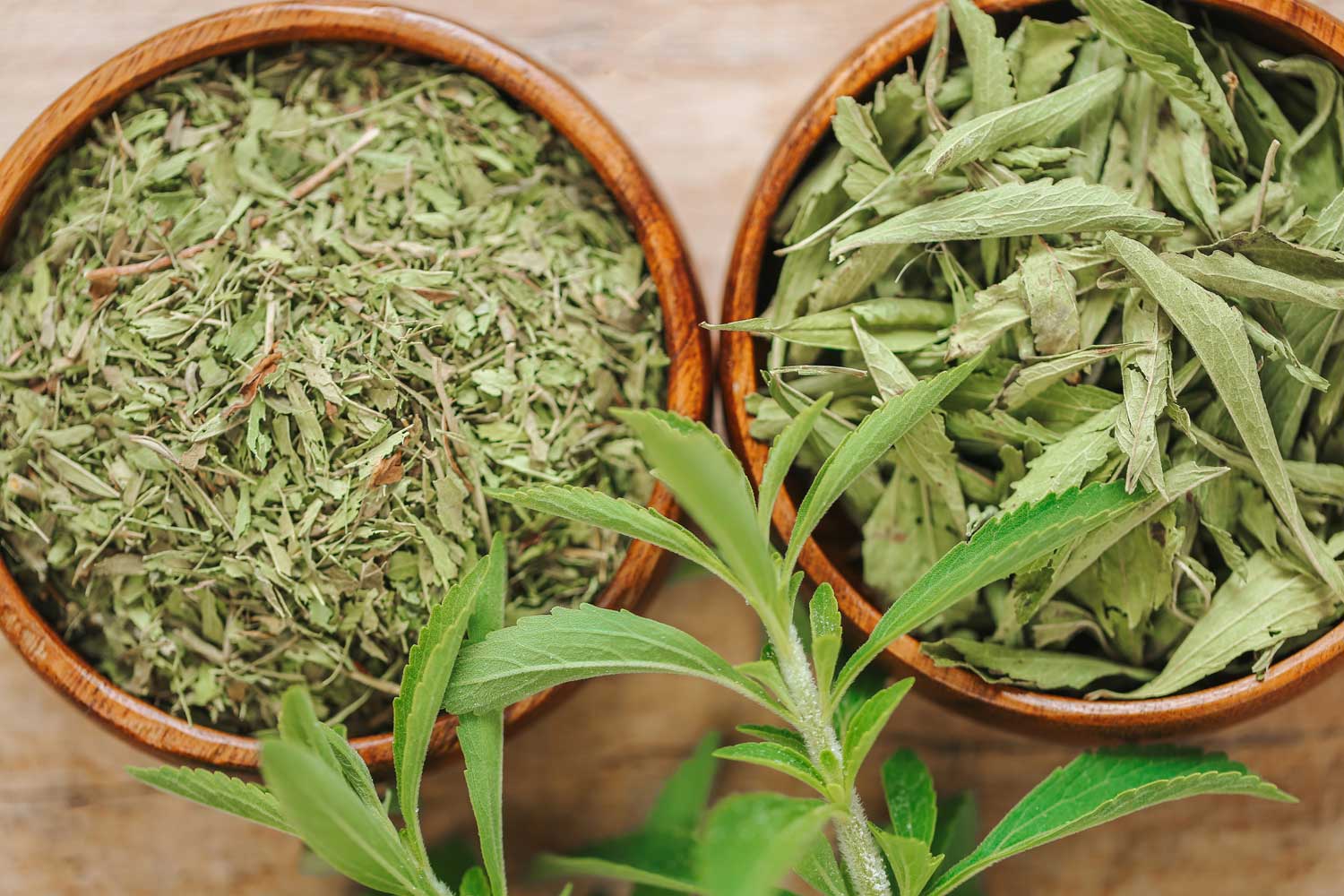
Cut stems and hang them in small bundles, or strip the leaves and dry them on low heat in a dehydrator. Once fully dry, store the dried leaves in an airtight container away from light and moisture.
Dried stevia keeps well for a long time, and you can crush it into stevia powder as needed. Keep in mind that whole leaf stevia has a slightly different flavor than refined products—more herbal, less “clean sweet.”
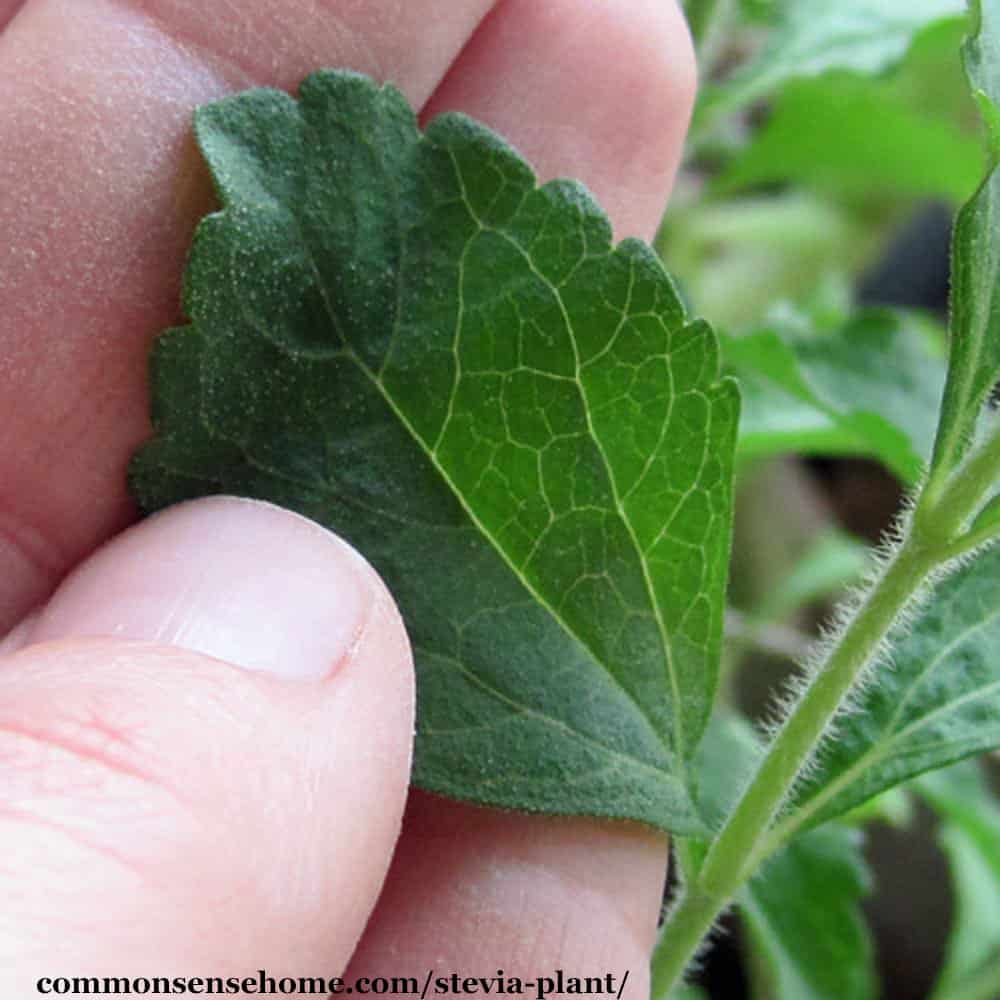
If you look closely, you can see that the leaves and stems are somewhat fuzzy.
Stevia is a naturally sweet tasting herb. You can chop and tear the leaves and add them directly to tea blends, or make a stevia extract as directed below.
How to Make Stevia Extract (Alcohol Method)
If you really want convenience, learning how to make stevia extract is a game changer.
Start with clean stevia leaves, either fresh or dried. Chop them and place them in a glass jar, then cover completely with vodka or another neutral alcohol.
Seal the jar and let it sit in a cool, dark place for about two days, shaking occasionally. Don’t let it steep too long, or bitterness can increase.
Strain out the plant material using a fine filter. To improve flavor and shelf life, gently warm the liquid on low heat for 20–30 minutes to evaporate some of the alcohol. Do not boil.
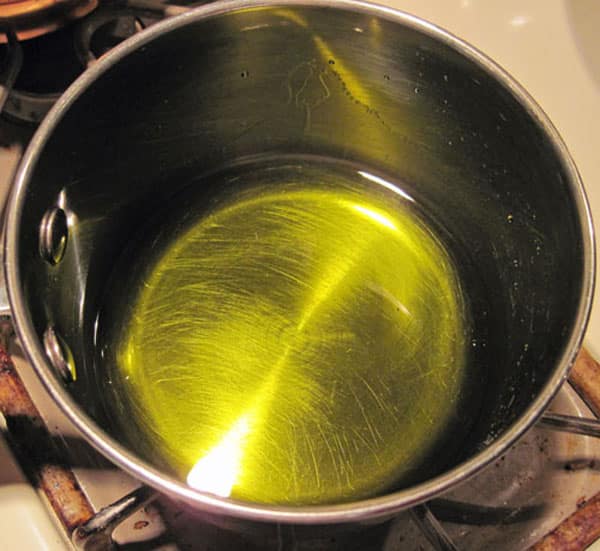
Once cooled, store your extract in a dark bottle. (I recycled a vanilla extract bottle.) Tincture bottles with droppers are great if you have them available, as it only takes a few drops of extract to sweeten a drink or recipe.
Don’t let it sit longer to try and get a stronger flavor. Longer steeping can increase bitterness. Don’t include stems so you have more material. They don’t contain much steviol glycoside, which is what makes the stevia sweet.
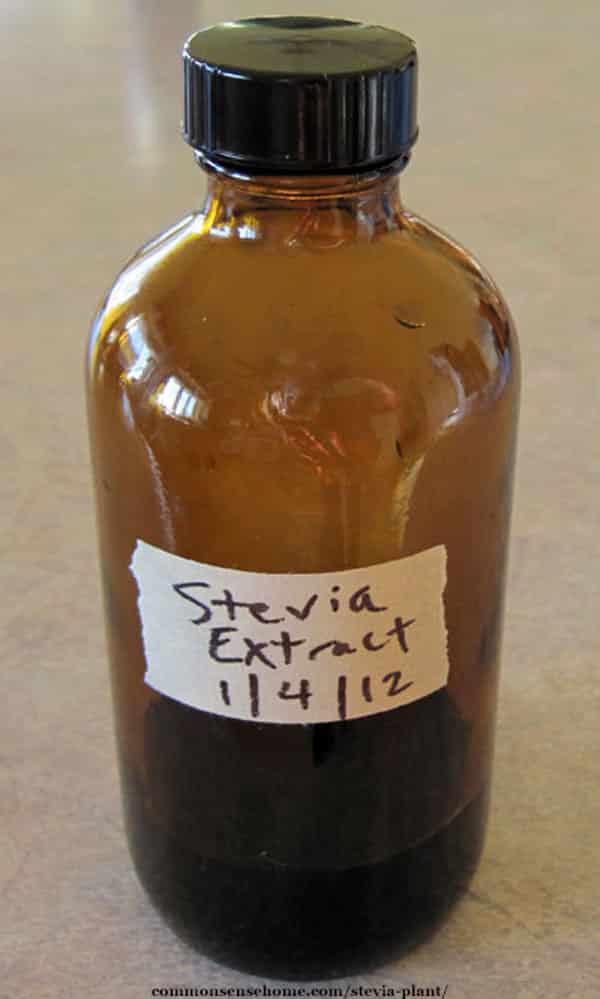
Cover, label and date. This stevia extract will keep for around three months in the refrigerator. I found this extract to be quite sweet with very little bitterness. Given that the tiny bottles of extract sell for at least $10 each, you can see how going homemade can save money.
You can watch the video below to see me make up our latest batch of extract. (If video doesn’t display, make sure ad blockers are off.)
Make Homemade Stevia Extract with a Water Base
For an alcohol-free option, combine dried stevia leaves with hot (not boiling) water and let them steep for about 40 minutes.
Strain and store in the refrigerator. This version has a shorter shelf life—about 1–2 weeks—but works well for sweetening tea or other beverages.
Using Your Stevia Plant
You can use stevia in several forms:
- Fresh leaves – add to tea or herbal blends
- Dried stevia – crush into powder for recipes
- Liquid extract – easiest for consistent sweetness
Because stevia is so concentrated, a little goes a long way. It doesn’t behave like sugar in baking, so expect some trial and error.
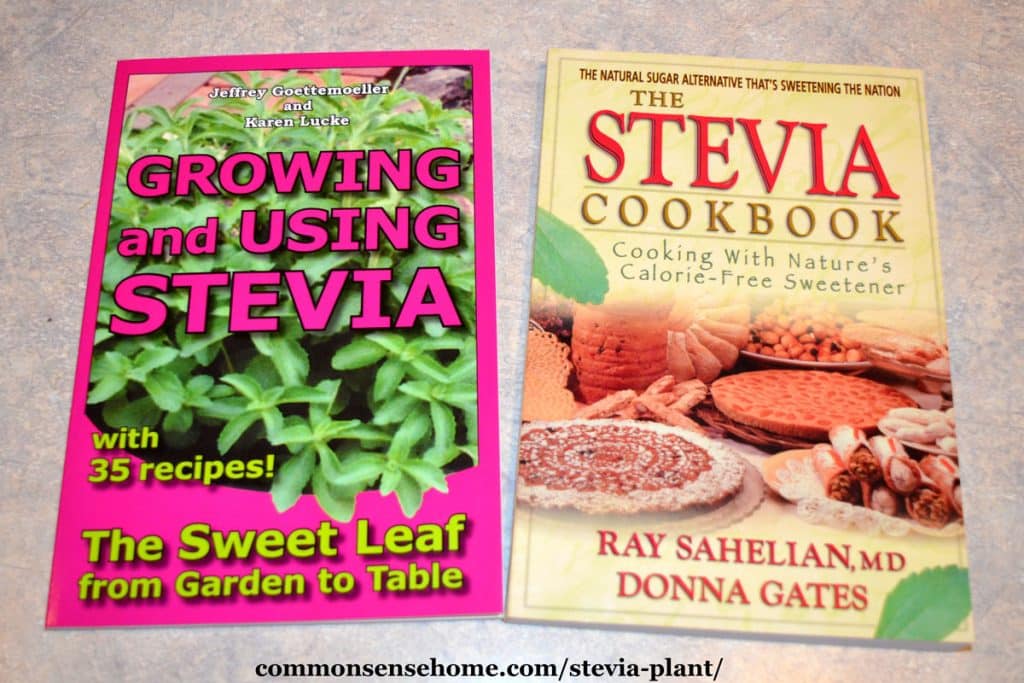
As a rough guideline, just a few teaspoons of dried stevia can replace a cup of sugar. Results vary depending on the recipe. I suggest getting a stevia cookbook to shorten the learning curve.


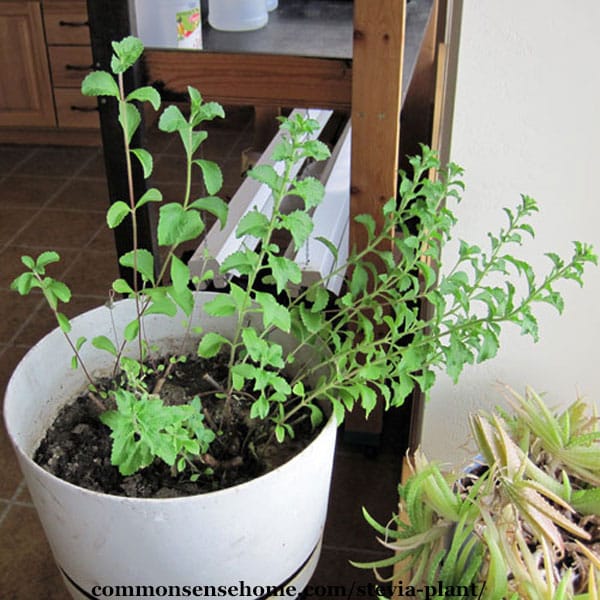
Here’s a plant that was dug up from the garden in fall and kept inside for the winter. You can see it is getting a bit leggy due to lack of sunlight.
Why Grow Your Own Stevia?
Store-bought stevia products are convenient, but they’re often highly refined and blended with other ingredients. When you grow your own, you control the process—from soil to sweetener.
Plus, it’s one more step toward a more self-reliant kitchen. I’ve kept plants growing for several years at our home in northeast Wisconsin. My only regret is that I didn’t learn how to make stevia extract sooner and save myself some money.
You may also enjoy:
- How to Make Homemade Extracts – Vanilla, Lemon and Almond
- 8 Small Vegetable Garden Ideas & Growing Tips
- How to Infuse Herbs in Oil, Water, Vinegar, Alcohol or Honey
This article is written by Laurie Neverman. Laurie and her family have 35 acres in northeast Wisconsin. They grow dozens of varieties of fruiting trees, shrubs, brambles, and vines, along with an extensive annual garden. Along with her passion for growing nutrient dense food, she also enjoys ancient history, adorable ducks, and lifelong learning.
Originally published in 2012, last updated in 2026.
Is it crop able in North India????
Yes, stevia is grown in India, including North India, but production costs are higher than some other crops. The article “Why Indian farmers are struggling to ensure stevia becomes a product for the masses explains more.
Great article! I appreciate the detail. I’ve tried growing stevia from seed for the past three years. This year I purchased seedlings …and I now have 6 very large plants! I am ready to use your advice and make my own extract!!
Have fun. You can dry some, too, for extract later.
Thank you for all this detailed info!! I was excited to see stevia in my local garden centre, and am even more excited now to give them a try!
You’re welcome.
CAN YOU PLEASE SIGN ME UP FOR YOUR NEWSLETTERS.
No problem. You’ll be receiving the confirmation email shortly.
How many leaves should I put in my smoothie if I’m using the fresh leaves?
Because of variations of plant sweetness, leaf size, smoothie size and personal taste preferences, it’s impossible for me to give a specific number. I’d suggest starting with a small number of leaves, then adding more (or less the next time around) to taste.
I grew Stevie for the first time this year. I’ve enjoyed it in my hot tea almost every night. Many times I include fresh spearmint also. I still need to add a tiny bit of sugar though. Going to try making the extract for winter. Thank you!
You’re welcome. A little sugar is better than a lot of sugar. 🙂
Thanks for a very informative and inspiring…in that- this I MUST try…article. As a reformed diet soda drinker I have been searching and searching for something to satisfy my love of sweet drinks and I’m so hopeful this will be the answer. I’ve been down the road with all the processed so called “natural” sweeteners, only to learn they are all with negative issues. I’m hoping to find some plants to start in Tucson, Az. Someone mentioned Home Depot?? I will begin my search there. Many, many thanks for inspiring me!!
I hope it works out for you.
I just recently bought a small Stevia plant. This article came at an excellent time. Thank you so much. I’ve learned so much from you.
You’re welcome.
I’ve been growing stevia for years now but haven’t used it much because of the bitter aftertaste. I’ll give using the fresh leaves instead. Thanks. I grow it in pots..just cut it back and put it in a basement window and keep it damp. It gets leggy but comes back when I put it outside. I’ve propagated a few plants by air layering (burying long stem at about half way til it roots). It was worth it at the time after searching for about 5 years and spending $10 on one small plant. Seedlings are now more available.
I’ve never completely gotten rid of the aftertaste, but fresh is less bitter than dried. I’ve kept my plants alive for years, too, in a similar fashion.
wonderful article. Thank you soooo much. Are you aware of the history of Stevia in America? I got turned on to Stevia in the 70’s. It was illegal then the sugar consortiums had lobbied and made it illegal to grow or sell. A gentleman in Brownsville Texas told me of his trials and problems with bringing Stevia to us.
Yep, I’m familiar with the history – and how things didn’t change much until the big companies wanted to offer refined stevia products. Then suddenly it was magically okay (even though it had been used in other countries for decades).
Ok I haven’t read all the comments so if this is a duplicate question I’m sorry. If you make this alcohol extract it only lasts 3months. The water one 1month. If I make up a lot can it be frozen…. I use drops in my tea but a single bottle lasts me quite along time as I add only two drops. I don’t want it to go bad. Suggestions???????
Hi, I was wondering if you could tell me, I am stewing some rhubarb, can I just throw Stevia leaves in to sweeten it?
If you dice them finely, it may give you enough sweetening. Do keep in mind that the flavor will not disperse evenly through a substance as a granulated sweetener would.
Thank you for these directions for making the extract. I’ve gotten as far as putton dry stevia leaves in vodka for a couple days. But I began using it right after that because my husband didn’t think there would be a need to heat it. I find that it wasn’t very sweet and I could taste the alcohol. I’m going to try heating it tonight because I think it would be beneficial.
The main reason we’re making our own extract instead of purchasing the expensive liquid stevia is because I have yet to find a brand that doesn’t have other things included. It’s infuriating! Prepackaged liquid stevia either has vegetable glycerin or other sweeteners / sweetness enhancers which I cannot tolerate. Sweeteners cause a severe reaction and makes my joints hurt. The only way I’m able to enjoy anything sweet is by using stevia. And when the liquid stevia I’m buying has those other ingredients, it causes the same kind of reaction. I thought I found a good one recently (Sweet Leaf) as it only had organic stevia, filtered water and natural flavor listed as ingredients. Well, come to find out “natural flavor” means inulin in this case. I had awful joint pain after using it!
Yes, it’s very frustrating that simple, good food is so hard to find. You think you’re buying one thing, and it turns out to be something else.
How do you over winter them? I get cutting them to 6 inches, but then what? Mine are still in my garden. Had two plants that are now 4 plants.
Yes, I’ve overwintered mine for several years now. I have them in a pot, so I just bring them inside. Originally, I moved them into the pot from the garden. In a milder climate (I live in Wisconsin), you might be able to overwinter them in the garden.
This is my first try at growing Stevia. I grew one plant this summer. I knew something should be done with is soon – but what?? So glad I found your post! Thank you for taking the time to share this great information. My Stevia is now happily hanging in my dining room drying. I saved out some to make the vodka extract. :0)
Glad I was able to help.
I was curious about making powdered Stevia. I use liquid for most things but for cooking I generally use a combination of powdered Stevia and Xyotol.
You can dry and powder stevia, but it will make a green powder that does not dissolve in liquids. The white commercial powder product is heavily refined.
how to get rid of the bitterness of stevia
There is no practical way for the home processor to completely eliminate the bitterness of stevia. It can only be minimized in the extract by proper handling.
Good Article – will try to make some extract. Stevia is super easy to grow and propagate. We grew some this year.
Can you freeze the water based liquid stevia extract?
Can you use fresh stevia leaves-instead of dried- for the water based stevia extract
I haven’t tried either, but freezing should work. Fresh leaves would be less concentrated than dried, so you would need to use more.
Ok just read this. So with the water based extract you would use dried leaves. That makes sense. I will dry mine then make what I need. Thanks.
You can use dried leaves for the alcohol based extract, too. Dried leaves and a fresh batch every few months are probably your best best.
Have you or anyone tried putting the extracted stevia/vodka mixture in the dehydrator to concentrate rather than heating on stove? I am so scared of ruining this by forgetting and letting the mixture get too hot.
Trying to concentrate it in a dehydrator seems to be making more work than needed. The cooking/concentrating process is fairly forgiving, and you can set a kitchen timer to help remind you to check your mixture.