
Pea Trellis Ideas for a Bigger, Easier Harvest

This post may contain affiliate links. Read my full disclosure here.
If you’ve ever tried growing peas without a trellis, you know what happens. The vines sprawl, the pods hide, airflow drops, and harvest turns into a bit of a treasure hunt.
Give peas something to climb, and everything gets easier.
A good pea trellis keeps plants upright, improves air circulation, makes harvesting simpler, and often boosts production. It’s one of those small efforts that pays off in a big way—especially in a busy spring garden.
Would you like to save this?
Table of contents
Do Peas Really Need a Trellis?
Technically, no. But practically? Yes, most of the time.
Peas are natural climbers. Their delicate tendrils are designed to grab onto nearby supports and pull the plant upward. When you give them that structure, they use their energy more efficiently—less time flopping around, more time growing and producing.
The main exception is very short, bush-type varieties. These compact peas are often bred for containers or small spaces and may only reach 1–2 feet tall. Even then, a little support can still help keep things tidy.
For everything else—garden peas, snap peas, and snow peas—a trellis is well worth it.
How Tall Should a Pea Trellis Be?
This depends on what you’re growing.
- Short varieties (2–4 feet): A 3–4 foot trellis is usually enough
- Taller varieties (5–7+ feet): Plan for a 6-foot or taller support
- Vining heirlooms: Some can surprise you and keep climbing if you let them
If you’re not sure, it’s better to go a little taller than you think you need. Peas that outgrow their trellis tend to flop over at the top, which defeats the purpose.
See also Growing Peas – How to Plant, Grow, and Harvest Peas.
When to Set Up Your Trellis
Timing matters more than people expect. I like to put my trellis in place right after the seedlings emerge. That way, the vines can start climbing early instead of tangling together on the ground.
Trying to add a trellis later usually means wrestling with delicate vines. Peas don’t appreciate that kind of handling.
How to Grow Peas on a Trellis
The good news is, peas do most of the work for you. Their tendrils naturally reach out and grab onto anything nearby. Once they find a support, they’ll start climbing without much help.
That said, a little guidance early on can make a difference:
- Gently guide wandering vines toward the trellis
- If needed, loosely tie them with soft cloth or twine
- Avoid tight ties—peas don’t need much encouragement
Once they’re established, they’ll take it from there.
My Favorite Pea Trellis Setup
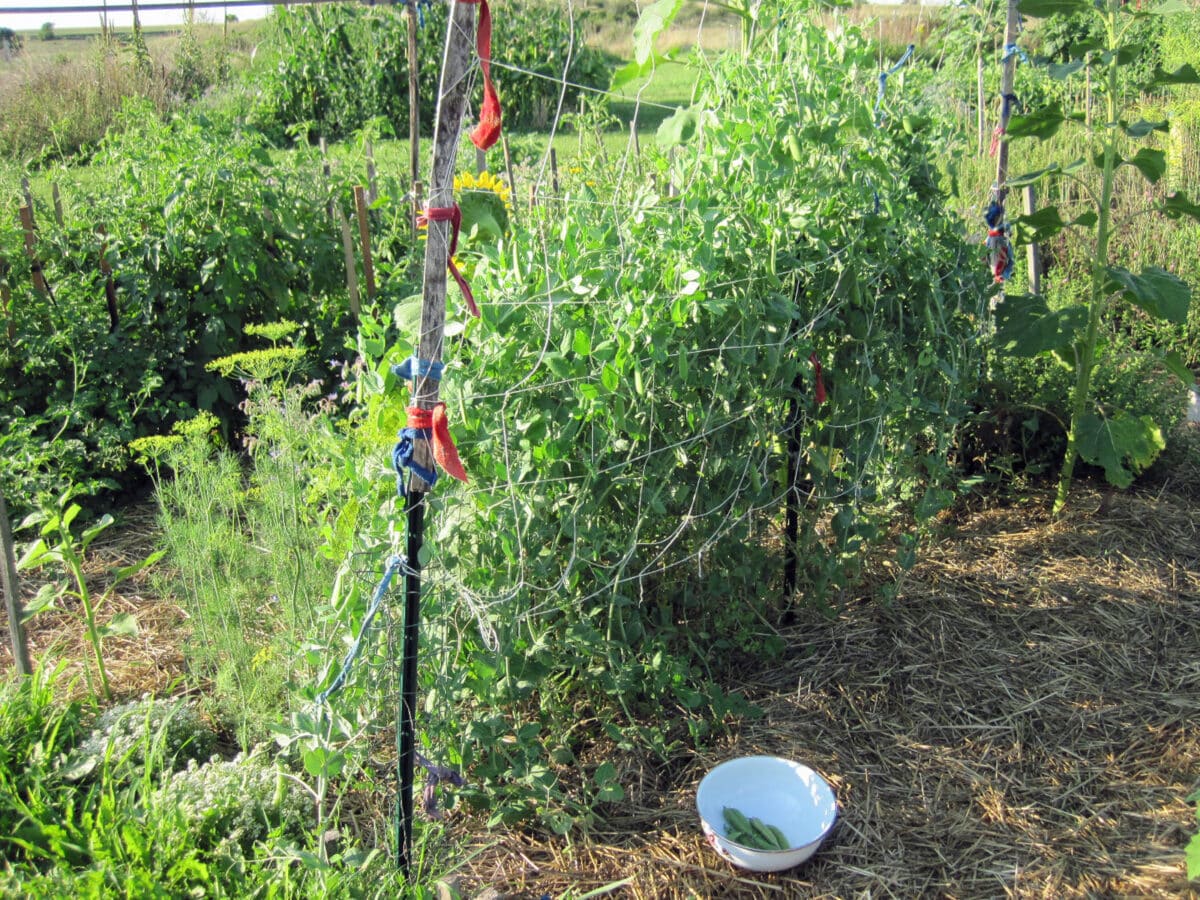
Over the years, I’ve settled into a system that keeps things simple and manageable. I plant peas in a double row, mulch between the rows, and then place the trellis right down the center.
This setup has a couple of nice benefits:
- Keeps weeds down where they’re hardest to reach
- Makes harvesting easy from both sides
- Provides good airflow through the plants
It’s one of those small layout tweaks that makes the whole bed work better.
Pea Trellis Ideas (From Simple to Sturdy)
You don’t need anything fancy to grow great peas. Some of the best trellises are made from materials you already have on hand.
1. Garden Fence Trellis (Great for Shorter Peas)
For peas in the 3–4 foot range, a sturdy section of garden fencing works beautifully. Just make sure it’s well supported.
In windy areas (like ours), I brace the fence every 3–4 feet with solid posts. Otherwise, a heavy crop or strong gust can send the whole thing tipping over. The VineSpine garden trellis works well for short rows.
2. Trellis Netting on Posts (Best for Taller Peas)
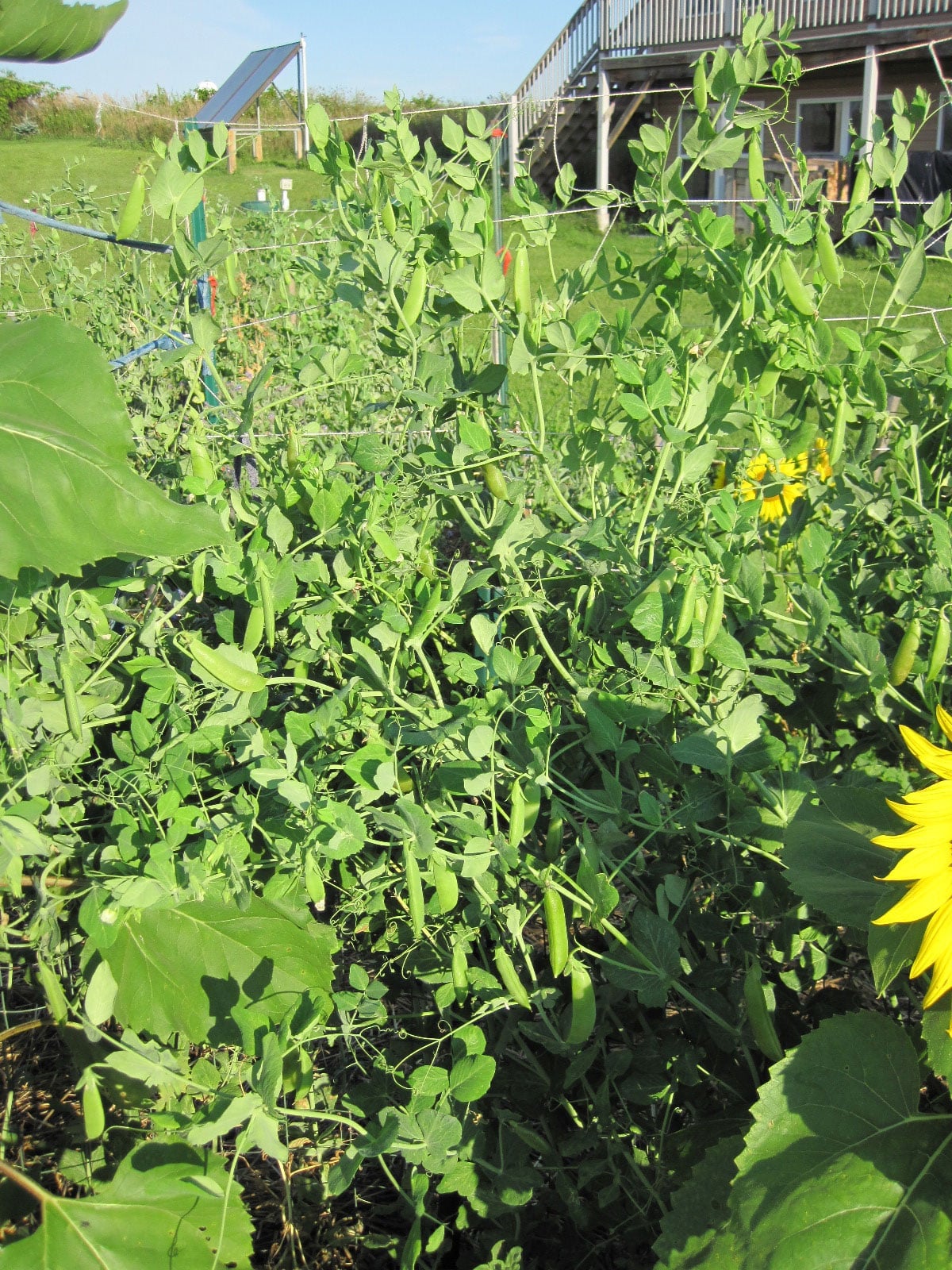
For snap peas and snow peas that really like to climb, trellis netting is hard to beat.
- Set sturdy posts at each end of the row
- Add a top support bar if needed
- Stretch the netting tightly between them
This gives the vines plenty of places to grab and keeps everything upright as they grow. See the Grow Pole Beans post for more detailed information. (I grabbed better photos of our beans than our peas.)
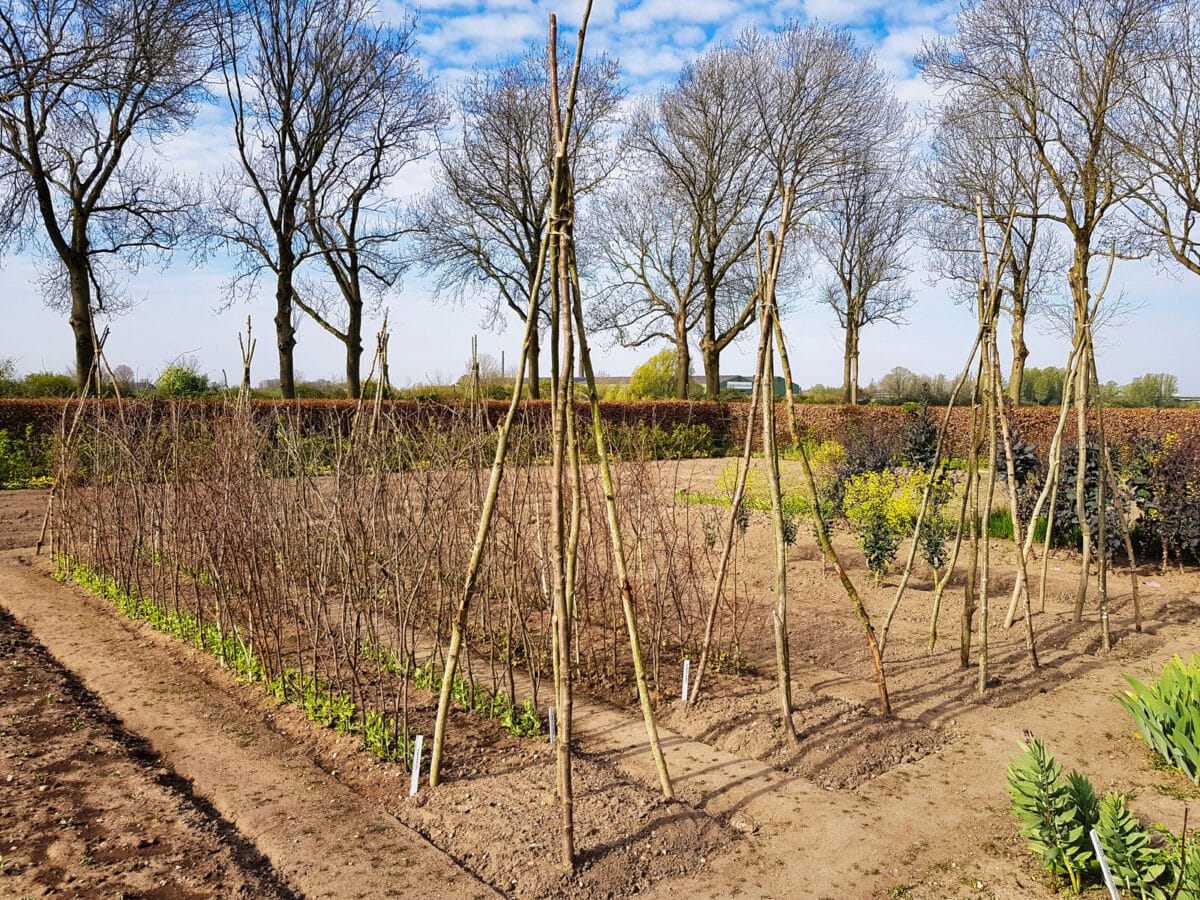
3. Pea Teepees
A classic option, especially for smaller garden beds. Use bamboo poles, branches, or saplings tied together at the top to form a cone. Plant peas around the base and let them climb up. Simple, functional, and easy to move if needed.
Note – If you get high winds, you may want to add a center fence post for support.
4. Cattle Panel Arches
If you want something a little more permanent (and a bit eye-catching), try cattle panels bent into arches. They’re strong, long-lasting, and tall enough for even the most enthusiastic pea varieties. Plus, they double nicely for other crops later in the season.
5. Natural Branch Trellis
If you’re pruning trees or clearing brush, save some of those twiggy branches. Stick them into the ground in a loose row, and you’ve got a natural trellis that peas will happily climb. The extra texture gives tendrils plenty to grab onto.
A Quick Note on Wind and Stability
This is one place where it pays not to cut corners. Pea vines may look delicate, but once they’re full of foliage and pods, they catch the wind like a sail. A flimsy trellis can collapse right when the plants are at their peak.
If you get regular wind, go heavier on supports than you think you need. It’s much easier to build it sturdy from the start than to fix it mid-season.
You Need a Pea Trellis!
A pea trellis isn’t complicated, but it makes a big difference. Your plants stay healthier, your harvest gets easier, and your garden looks more organized overall. They last for years, so you can use your trellis again and again. Once you try it, you’ll never want to grow peas without one.
You may also appreciate:
- 5+ Terrific Tomato Trellis Ideas for a variety of garden trellises that can easily adapt to many crops
- 11 Vertical Garden Advantages You’ll Love
- Vertical Vegetable Garden Ideas (Over 20 Photos)
This article is written by Laurie Neverman. Laurie and her family have 35 acres in northeast Wisconsin. There they grow dozens of varieties of fruiting trees, shrubs, brambles, and vines, along with an extensive annual garden. Along with her passion for growing nutrient dense food, she also enjoys ancient history, adorable ducks, and lifelong learning.