
Natural Remedies for Anxiety and Stress Relief

This post may contain affiliate links. Read my full disclosure here.

For some people, anxiety shows up as racing thoughts. For others, it’s a tight chest, poor sleep, or a sense of always being “on edge.” Natural remedies for anxiety work with your body to help you ground and get your head back in the game.
It’s estimated that nearly 20% of adults had an anxiety disorder in the last year. This makes it one of the most common mental health issues. While there’s no single cause, one thing is clear—modern life doesn’t make it easy on our nervous systems.
The good news is that many natural remedies don’t require anything fancy or expensive. They’re often the same steady, grounded habits that people have relied on for generations. When practiced consistently, they help calm the nervous system, reduce anxiety symptoms, and build mental resilience.

Table of contents
- Why Natural Remedies for Anxiety Focus on the Whole Body
- Supporting the Nervous System (Starting with the Vagus Nerve)
- Less Noise, More Breathing Room
- Time Outside: A Natural Reset for Body and Mind
- Gentle Movement That Settles the System
- Sleep: The Foundation That Affects Everything Else
- Food, Blood Sugar, and Mood
- Herbs as Natural Remedies for Anxiety
- Relaxation That Works with Your Body
- The Role of Connection
- When You Need More Support
- Building Calm, One Step at a Time
Why Natural Remedies for Anxiety Focus on the Whole Body
Anxiety isn’t just a mental health issue—it’s a whole-body experience.
When your body senses stress, it shifts into a protective mode. Your heart rate increases, muscles tense, breathing changes, and stress hormones rise. This response is meant to help you deal with short-term danger. Unfortunately, when it stays switched on, it can leave you feeling wired, tired, and overwhelmed.
That’s why the most effective approaches don’t just focus on thoughts. They work with behaviors that let your body know it’s “safe”.
Supporting the Nervous System (Starting with the Vagus Nerve)
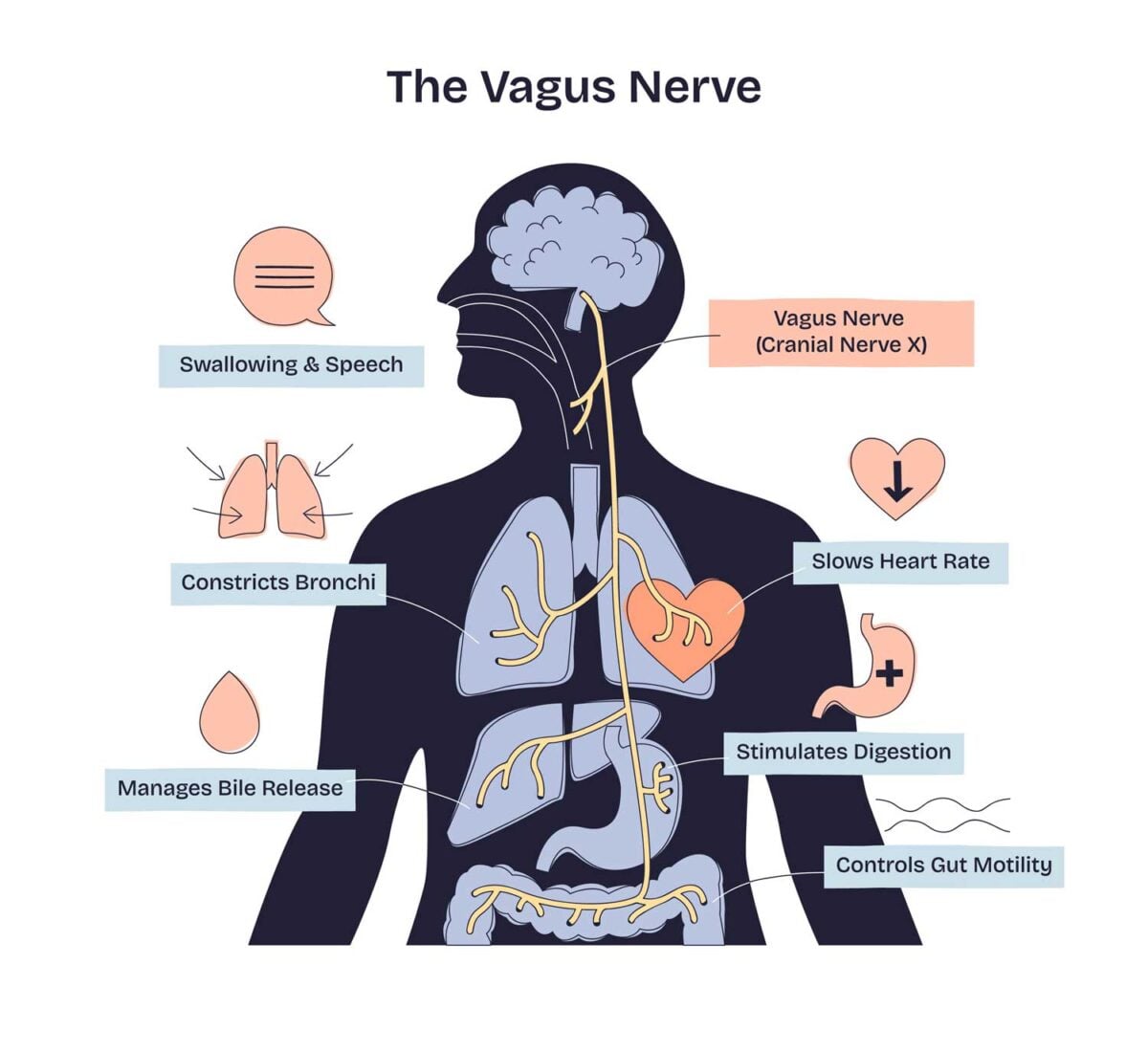
One of the body’s built-in tools for calming down is the vagus nerve. You can think of it as a communication highway between your brain and body. It helps shift you out of “fight or flight” and back into a more settled state.
Simple ways to support vagus nerve function:
- Slow, deep breathing (long exhales are especially helpful)
- Humming, singing, or chanting
- Splashing cold water on your face
- Gentle stretching or yoga
- Spending quiet time in nature
This is how we build mental resilience. Not by avoiding stress entirely, but becoming better at moving through it and returning to balance.
Less Noise, More Breathing Room
It’s hard to feel calm when your mind never gets a break. Many of us are taking in a steady stream of information all day long—news, social media, notifications, etc. Even if we don’t realize it, that constant input keeps the nervous system slightly elevated.
Stepping back, even a little, can make a noticeable difference. You might choose to check the news once a day instead of throughout the day, or leave your phone in another room in the evening. Some people find that taking one day a week mostly offline helps reset their thinking.
It’s not about disconnecting from the world—it’s about giving your mind enough quiet to process it. We keep phones out of the bedroom. Late night scrolling is one of the most disruptive habits for sleep and mental health. Don’t do it.
Time Outside: A Natural Reset for Body and Mind
Spending time outdoors is one of the simplest and most reliable ways to reduce anxiety levels.
There’s research behind practices like forest bathing, but you don’t need a formal approach to benefit. Sitting outside with your morning coffee, taking a walk, or working in the garden can all help lower stress hormones and improve mood.
If conditions allow, you might even try walking barefoot on grass or soil for a few minutes. This practice—often called grounding or earthing—has been explored for its potential to support relaxation and reduce stress. (I have a full article on the benefits of walking barefoot if you’d like to explore that more.)
Gardening, in particular, offers a double benefit. You’re not only outside, but also engaging in gentle physical activity and meaningful work. If you’ve ever noticed how a bit of time in the garden settles your thoughts, there’s a reason for that. (You can read more in my post on the health benefits of gardening.)
Nature has a way of bringing the nervous system back into rhythm without forcing it.
Gentle Movement That Settles the System
When it comes to physical activity and anxiety, more isn’t always better. While regular movement helps reduce anxiety symptoms, overly intense exercise can make stress worse. This is where slower, more intentional practices really shine.
Traditions like tai chi and qi gong have been used for centuries to support both physical and mental balance. These practices combine slow, flowing movement with breath awareness, helping regulate energy and calm the nervous system.
Even a simple daily walk or light stretching can have a similar effect. The goal isn’t to push harder—it’s to move in a way that helps your body feel safe and steady again. You want to move freely, not like a saber tooth tiger is trying to eat you and you need to fight or run away.
Sleep: The Foundation That Affects Everything Else
Anxiety and poor sleep tend to feed each other. When you’re not getting enough quality sleep, everything feels harder to manage. Small stressors feel bigger, patience runs thinner, and your body has a harder time regulating itself.
Would you like to save this?
Simple ways to improve sleep:
- Keep a consistent bedtime
- Limit screens before bed
- Avoid heavy meals late at night
- Get natural light early in the day
- Sleep in a cool, dark room
Supporting sleep is one of the most overlooked ways to naturally reduce anxiety long term.
Food, Blood Sugar, and Mood
What you eat plays a bigger role in anxiety than many people realize. Highly processed foods and frequent blood sugar swings can contribute to feeling jittery, irritable, or fatigued. On the other hand, meals built around whole foods, healthy fats, and adequate protein tend to support more stable energy and mood.
This doesn’t require a perfect diet—just a gradual shift toward foods that nourish rather than stress your system. Be careful with caffeine overload, too, as it can make anxiety symptoms worse.
Herbs as Natural Remedies for Anxiety
Herbal remedies can be a helpful addition, especially for mild to moderate anxiety. The herbs themselves are healing, plus warm drinks are naturally soothing.
Lemon balm is a favorite for many people. It has a long history of use as a calming herb and is often taken as a tea or dietary supplement. Some studies show it may help reduce anxiety symptoms and support better sleep. Other commonly used herbs include chamomile, passionflower, and lavender.
As with anything, it’s best to start with modest amounts rather than jumping into high dose use. Be aware of possible side effects—especially if you’re taking medications. When in doubt, a conversation with your primary care provider is a good place to start.

Relaxation That Works with Your Body
Not all relaxation techniques are created equal. The most effective ones help your body—not just your thoughts.
Try:
- Deep breathing (4–6 second inhale, longer exhale)
- Progressive muscle relaxation
- Quiet sitting without stimulation
- Gentle, repetitive tasks (knitting, baking, handwork)
These practices may feel simple, but they work because they send consistent signals of safety to your body. It’s clear to your mind and body that there is no saber tooth chasing you when you have time to knit a scarf.
The Role of Connection
One piece that often gets overlooked is the importance of supportive relationships. Spend time in person with people who are steady, encouraging, and not constantly adding stress. Humans are wired for connection. Healthy social interaction helps regulate the nervous system in ways that are hard to replicate on your own.
This doesn’t have to mean a large social circle. It can be as simple as a few trusted people you can talk to, laugh with, or work alongside. Community is a form of resilience, too. It sends the message to your brain that you don’t have to fight off the saber tooth alone.
When You Need More Support
Natural approaches can go a long way, but sometimes additional help is needed—and that’s okay.
Cognitive behavioral therapy (CBT) is one well-studied option. It focuses on identifying unhelpful thought patterns and replacing them with more realistic, supportive ones. This helps reduce anxiety over time. It’s okay to see a qualified professional or your primary care provider if anxiety is interfering with daily life.
See also 7 Tips for Seasonal Depression.
Building Calm, One Step at a Time
Natural remedies for anxiety aren’t about quick fixes. They’re about creating a lifestyle that supports a calmer, more resilient nervous system.
When you:
- Spend time outside
- Move your body
- Nourish yourself well
- Give your mind space to rest
…you’re working with your body instead of against it. These small shifts may not feel dramatic in the moment, but over time they add up. Daily habits build the kind of resilience that carries you through both everyday stress and bigger challenges.
And that’s really the goal—not a perfectly calm life, but a steadier, more capable way of living it.

This article is written by Laurie Neverman. Laurie is a lifelong learner with a passion for natural remedies and holistic healing. She’s successfully improved her eyesight and cleared her psoriasis.