
How to Dry Tomatoes – Dehydrator, Oven, & Storage Tips

This post may contain affiliate links. Read my full disclosure here.


When the garden tomatoes start ripening, sometimes there are too many for fresh eating but not quite enough for canning. That’s when drying tomatoes comes in handy.
Dehydrating is one of the simplest ways to preserve tomatoes. You don’t need canning jars, a pressure canner, or much storage space. Once they’re dry, you can tuck them into the pantry to use in soups, sauces, pasta, and homemade seasonings.
In this article, I’ll show you how to dry tomatoes in a dehydrator or oven. We share which varieties work best, and how to store your finished tomatoes safely. We’ll also look at how to make tomato powder and use your dehydrated tomatoes in everyday cooking.
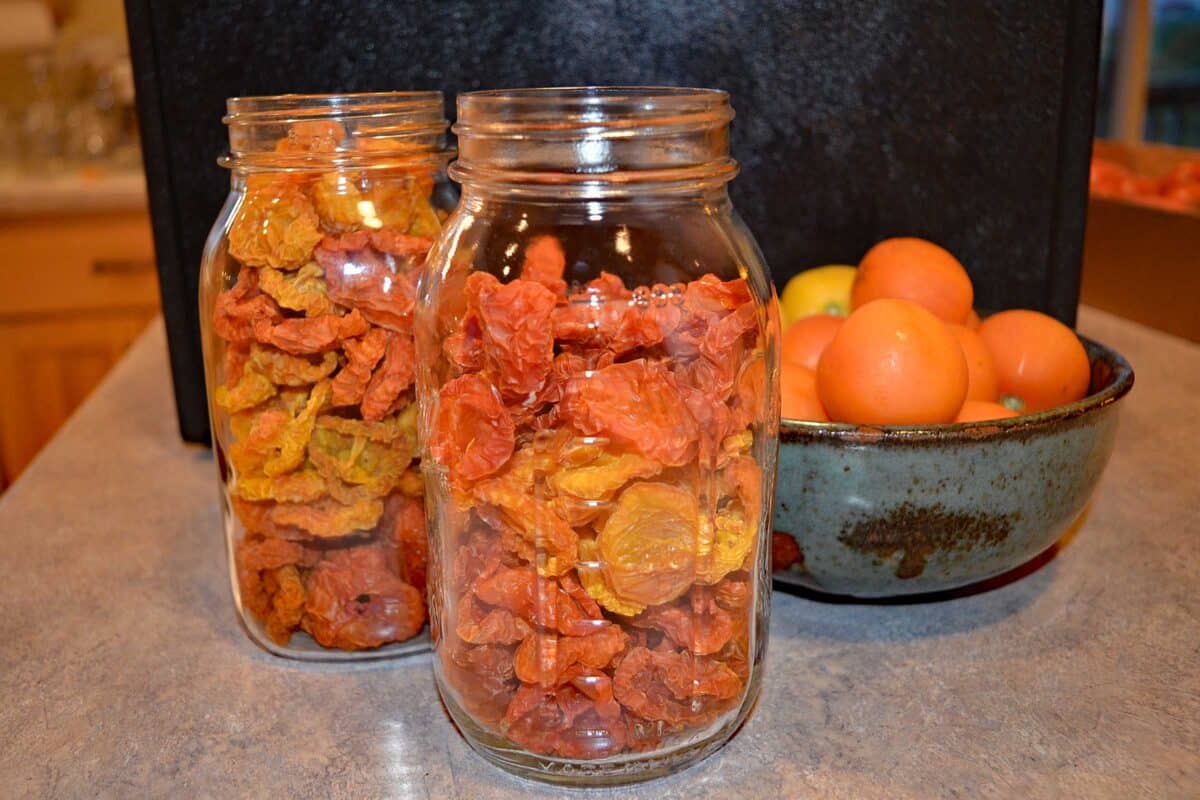
Would you like to save this?
Table of Contents
What Are the Best Tomatoes for Drying?
You can dry almost any type of tomato, but some varieties work better than others.
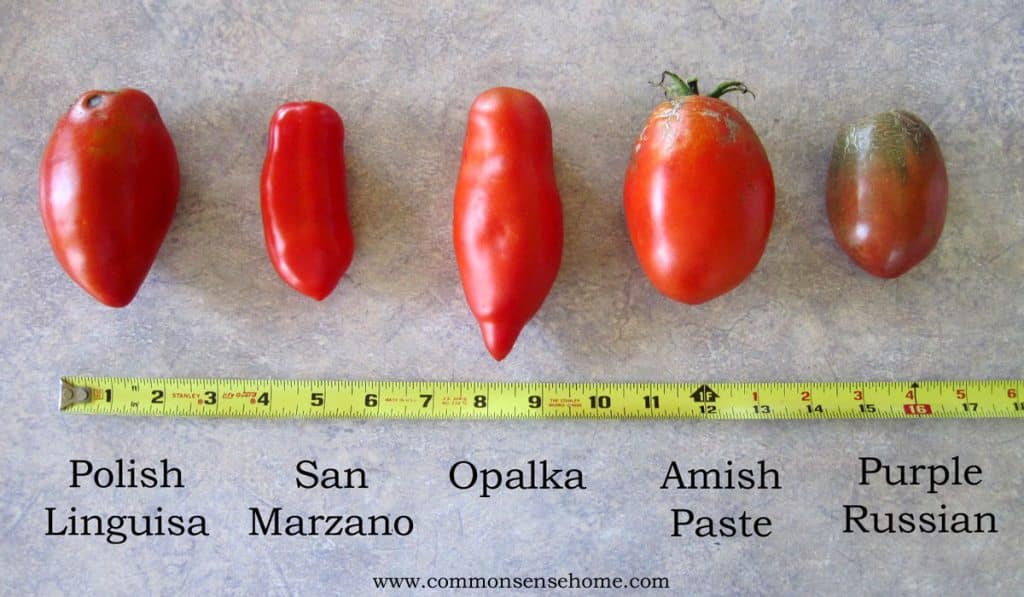
Roma tomatoes, plum tomatoes, and other paste tomatoes
These meaty tomatoes have fewer seeds and less juice than many slicing varieties, so they generally dry faster. Their firm flesh makes them an excellent choice for homemade sun-dried tomatoes.
Cherry tomatoes
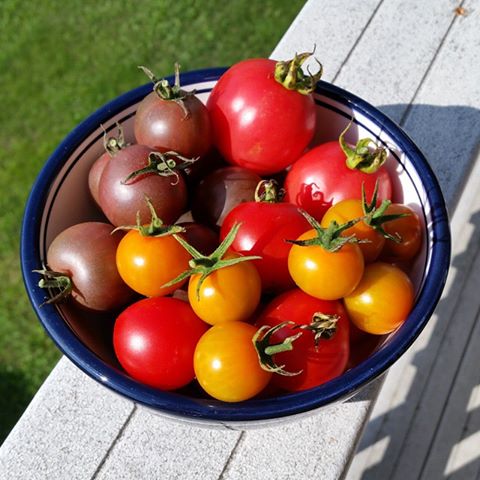
Cherry tomatoes have a naturally sweet flavor that becomes even more concentrated when dried. Cut them in half to speed up drying. They’re especially good for snacking and adding to salads or pasta.
Slicing tomatoes
Large garden tomatoes work, too. They contain more moisture, so drying may take longer. Cut them into even slices and remove some of the seed cavities if they’re especially juicy.
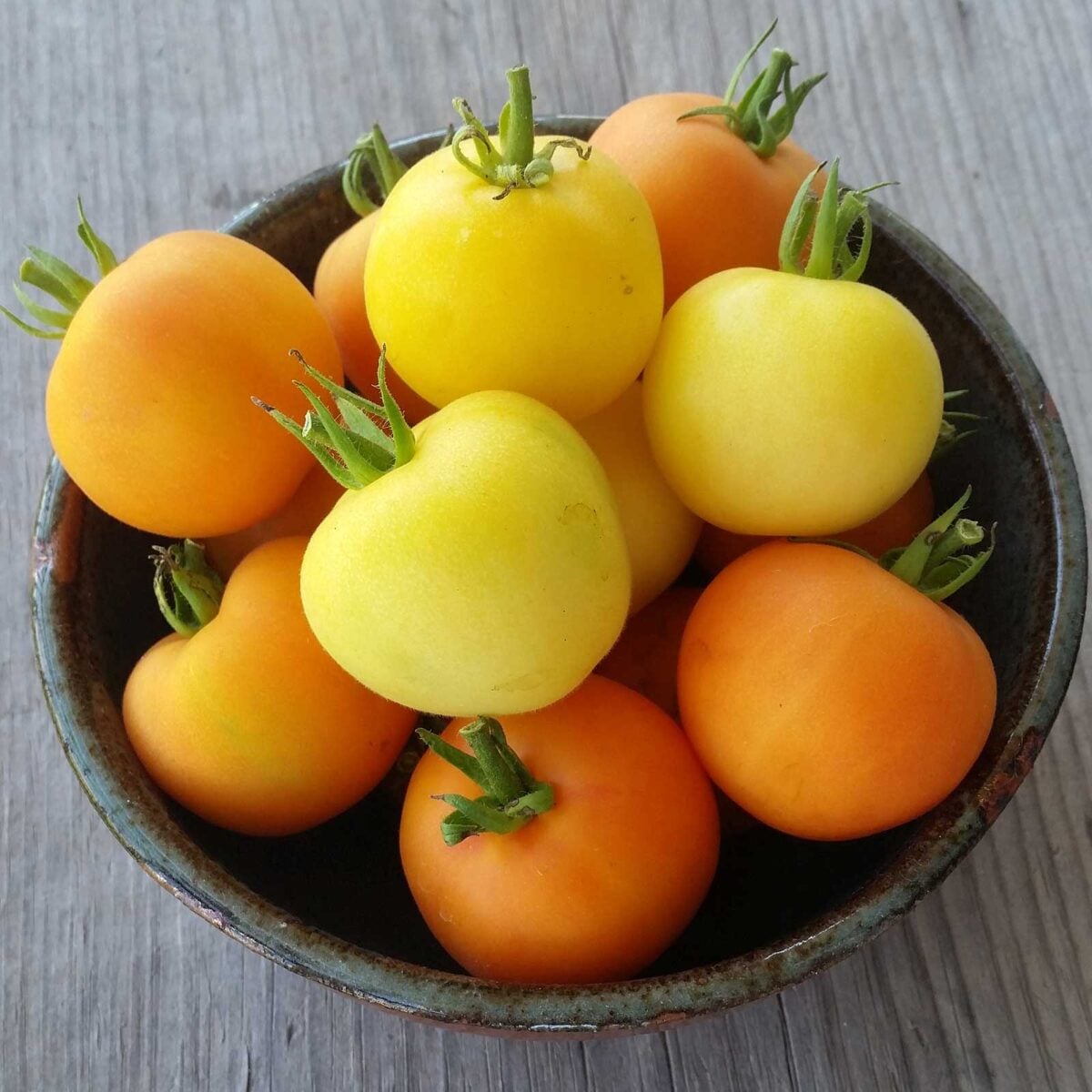
There’s a type of tomato that’s not widely available that’s one of my favorites for dehydrating – garden peach tomatoes. They have a thin skin that’s lightly fuzzy, like a peach. I do remove the seeds, but not the skins.
Learn more about different types of tomatoes.
Choose ripe, firm tomatoes that are free of mold and decay. Slightly overripe tomatoes are fine if they’re still sound, but skip anything with soft, spoiled spots.
How to Prepare Tomatoes for Drying
Wash the tomatoes thoroughly under running water and remove the stems. You don’t need to peel them before drying.
Cut small tomatoes in half. Cut medium and large tomatoes into slices about ¼ to ½ inch thick. Try to keep the pieces a similar size so they dry at roughly the same rate.
Place the tomatoes cut side up on your drying trays, leaving a little space between the pieces for air circulation. If desired, sprinkle them lightly with dried basil, oregano, or another favorite herb. Salt is optional.
Do not add olive oil before drying. Oil can interfere with moisture removal and complicate safe storage.
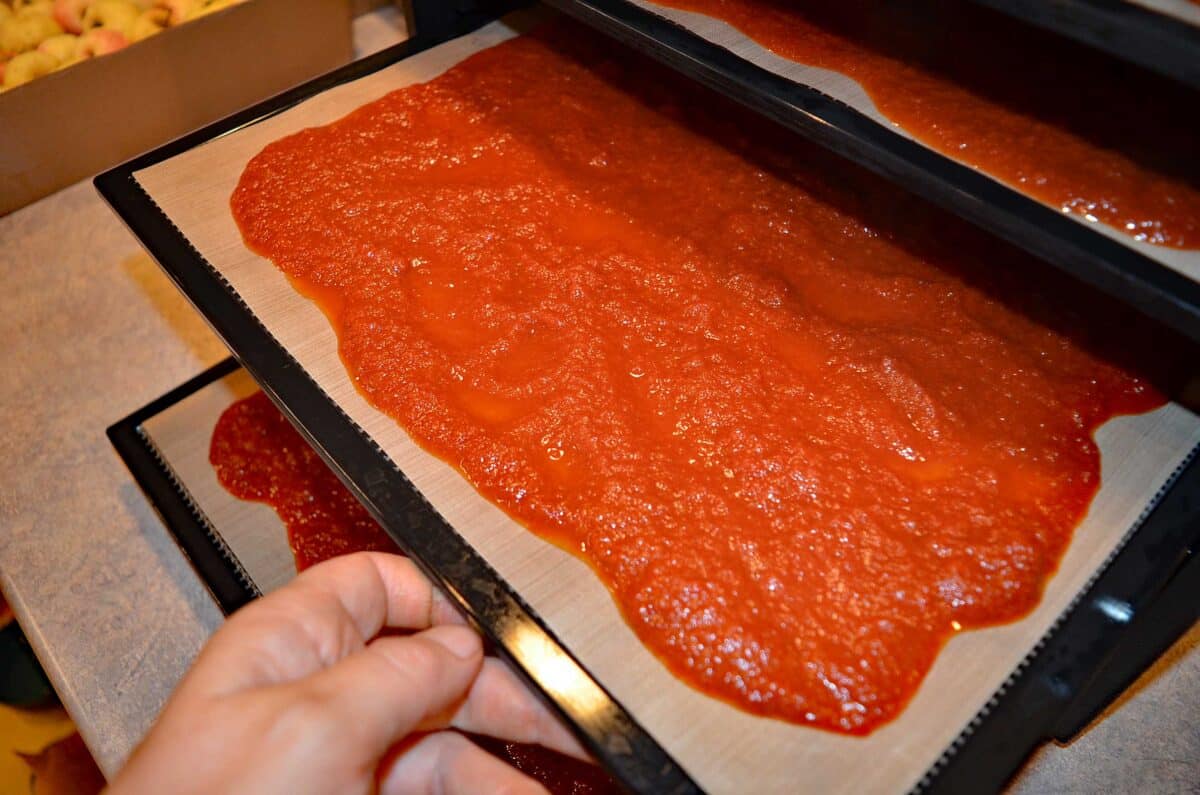
Sometimes I cook down and strain the fruit, and then dry the plain sauce like fruit leather.
How to Dry Tomatoes in a Food Dehydrator
A food dehydrator is my preferred option for dehydrating tomatoes. It provides consistent heat and airflow without tying up the oven all day.
- Arrange your prepared tomatoes in a single layer on the dehydrator trays, cut side up. Leave space between the pieces.
- Set the dehydrator to 135–140°F (57–60°C).
- Dry for approximately 6–24 hours, depending on the tomato variety, size, thickness, humidity, and dehydrator. I often load up at night before heading to bed and the tomatoes are ready in the morning.
- Rotate trays if necessary and check the tomatoes periodically. Remove smaller pieces as they finish drying.
- Allow the tomatoes to cool completely before checking for doneness and packaging.
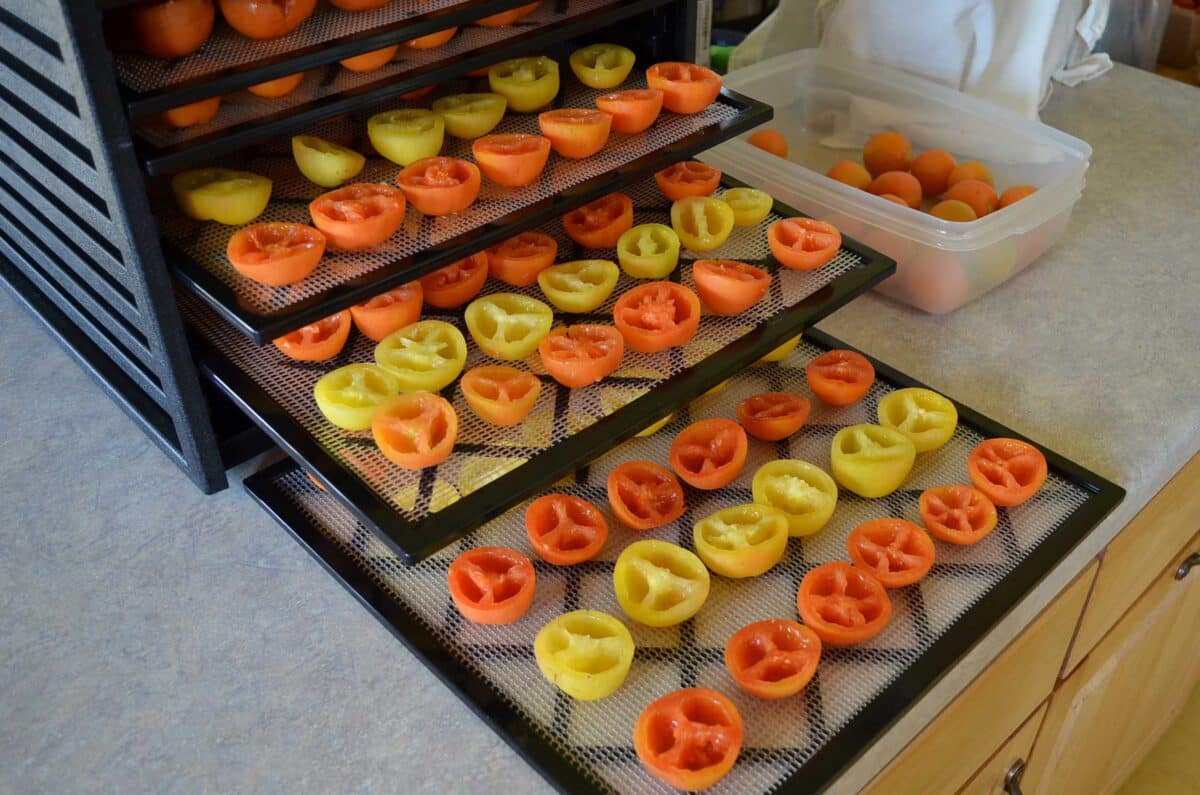
Your tomatoes should feel leathery to slightly pliable, with no visible moisture or sticky, wet areas. For tomato powder, continue drying until the pieces are completely crisp and brittle.
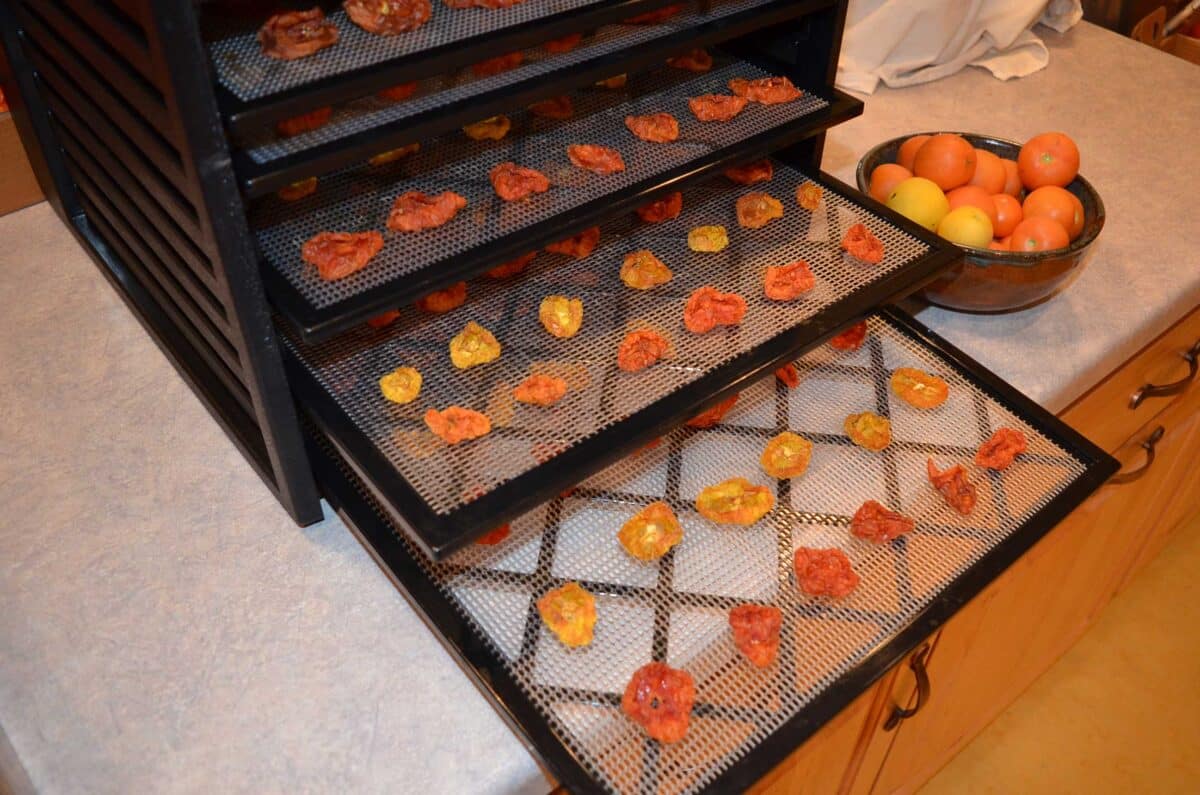
Don’t be surprised if cherry tomatoes take longer than expected. Their skins slow moisture loss, and particularly juicy varieties can take a while to dry.
How to Dry Tomatoes in the Oven
An oven works fine for drying smaller batches, provided it can maintain a low enough temperature.
- Preheat the oven to 140–150°F (60–66°C), or its lowest setting if it falls within that range.
- Arrange the tomatoes on oven-safe drying racks set over baking sheets, leaving room for air circulation.
- Place the trays in the oven. If your oven’s instructions permit it, leave the door slightly ajar to let moisture escape.
- Check the tomatoes periodically, rotating trays and turning pieces as needed.
- Continue drying until the tomatoes are leathery to crisp, with no remaining wet areas.
Expect drying to take approximately 6–24 hours, although thick, juicy slices may take longer.
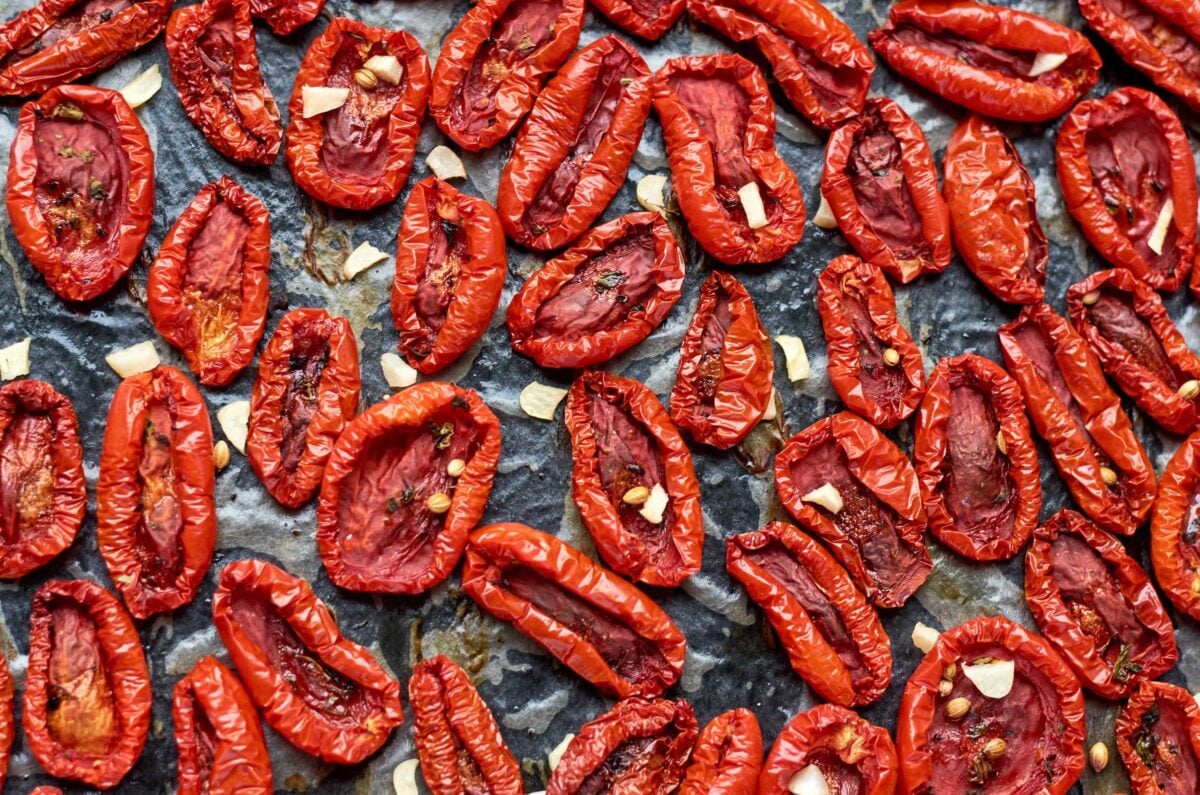
An oven that cannot maintain a sufficiently low temperature may roast the tomatoes rather than dry them. Roasted tomatoes are delicious, but they aren’t necessarily dry enough for shelf-stable storage.
If your oven has a convection setting or a built-in dehydrating function, follow the manufacturer’s directions.
How to Make Homemade Sun-Dried Tomatoes
Traditionally, sun-dried tomatoes are made by exposing sliced or halved fruits to several days of hot, dry weather. The sun slowly removes moisture, concentrating their flavor.
However, successful outdoor drying requires consistently favorable weather. The National Center for Home Food Preservation recommends:
- temperatures of at least 85°F
- humidity below 60%
- and good air circulation for outdoor fruit drying
If you live in a humid climate, as we do here in Wisconsin, outdoor drying is particularly challenging. Tomatoes may mold or spoil before they’re sufficiently dry.
How to Tell When Dried Tomatoes Are Done
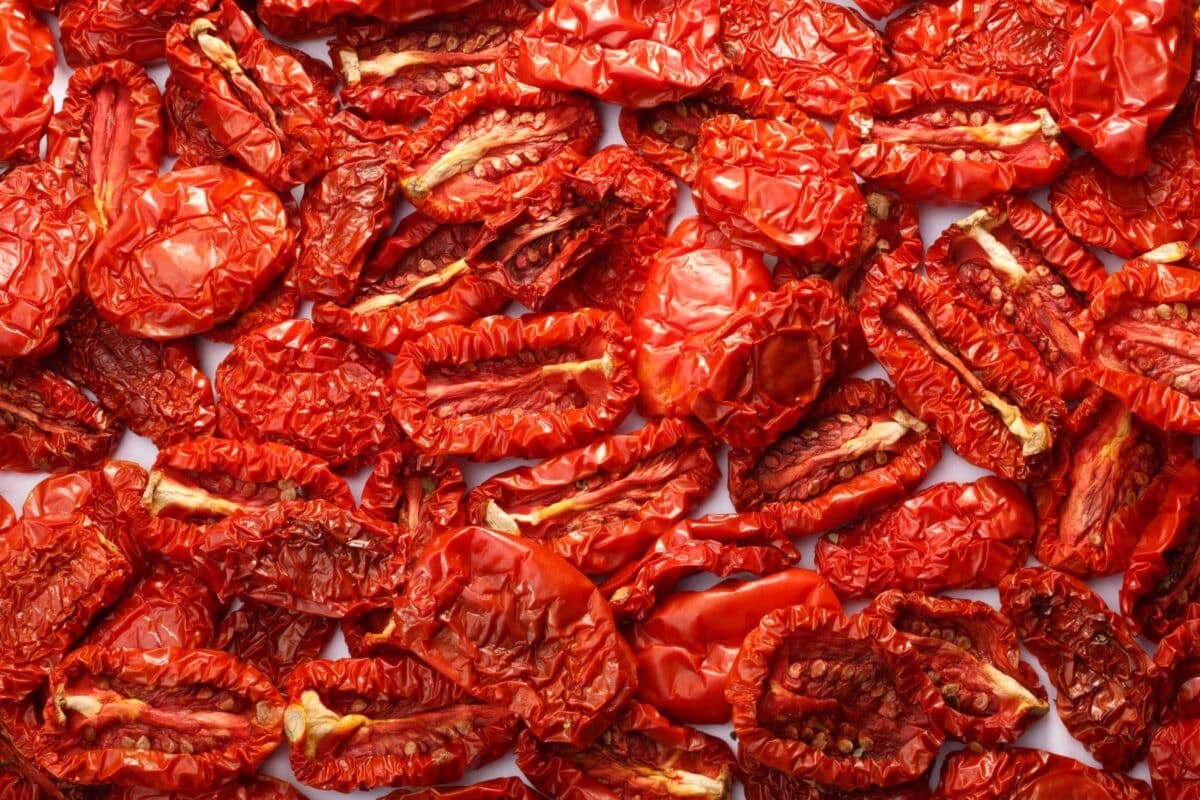
Leathery Finish
They should bend without releasing moisture. They may be slightly pliable but shouldn’t feel sticky or have any wet pockets. These work well for pasta dishes, soups, and rehydrating.
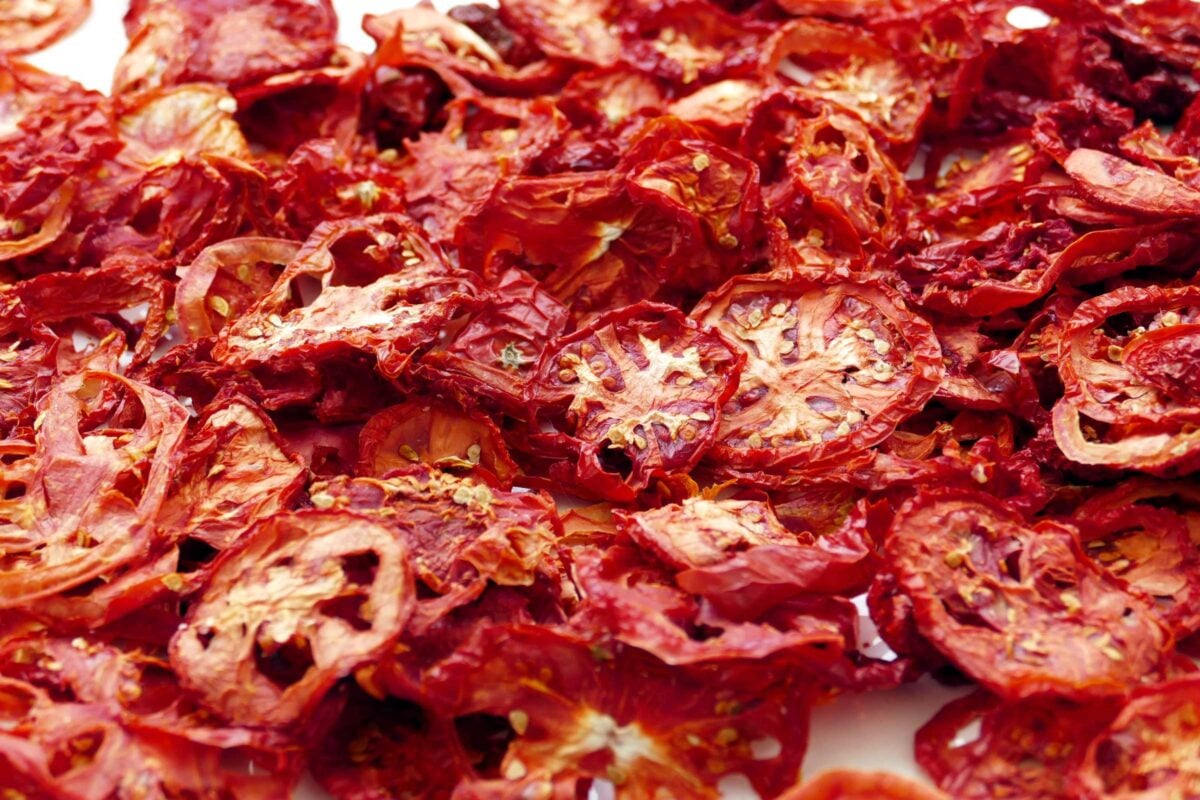
Crisp Finish
Dry slices until they snap or crumble easily. These are ideal for grinding into tomato powder and are less likely to retain hidden moisture.
Let the tomatoes cool before testing them. Warm tomatoes can feel softer than they will at room temperature. If you’re unsure whether a thick piece is completely dry, tear or cut it open and check the center. Return any pieces with visible moisture to the dehydrator.
If you’re looking for more ways to use your tomato harvest, try our:
How to Store Dried Tomatoes
Dried tomatoes take up far less storage space than other types of preserved tomato. This makes them an excellent addition to your pantry.
Allow the tomatoes to cool completely before placing them in an airtight containers. Glass canning jars work well because you can easily check for moisture.
Store dried tomatoes in a cool, dry, dark location, away from sunlight and temperature fluctuations. For best quality, plan to use them within 6–12 months. Freezing is another option for longer storage.
If you’re drying tomatoes for long-term storage, check the jars during the first several days. If you notice condensation, return the tomatoes to the dehydrator immediately. Discard any tomatoes that develop mold.
Can You Store Dried Tomatoes in Olive Oil?
Dried tomatoes packed in olive oil require special care. Oil creates an oxygen-free environment. Residual moisture can allow dangerous bacteria, including those responsible for botulism, to grow. I recommend storing them dry and adding olive oil when you’re ready to use them.
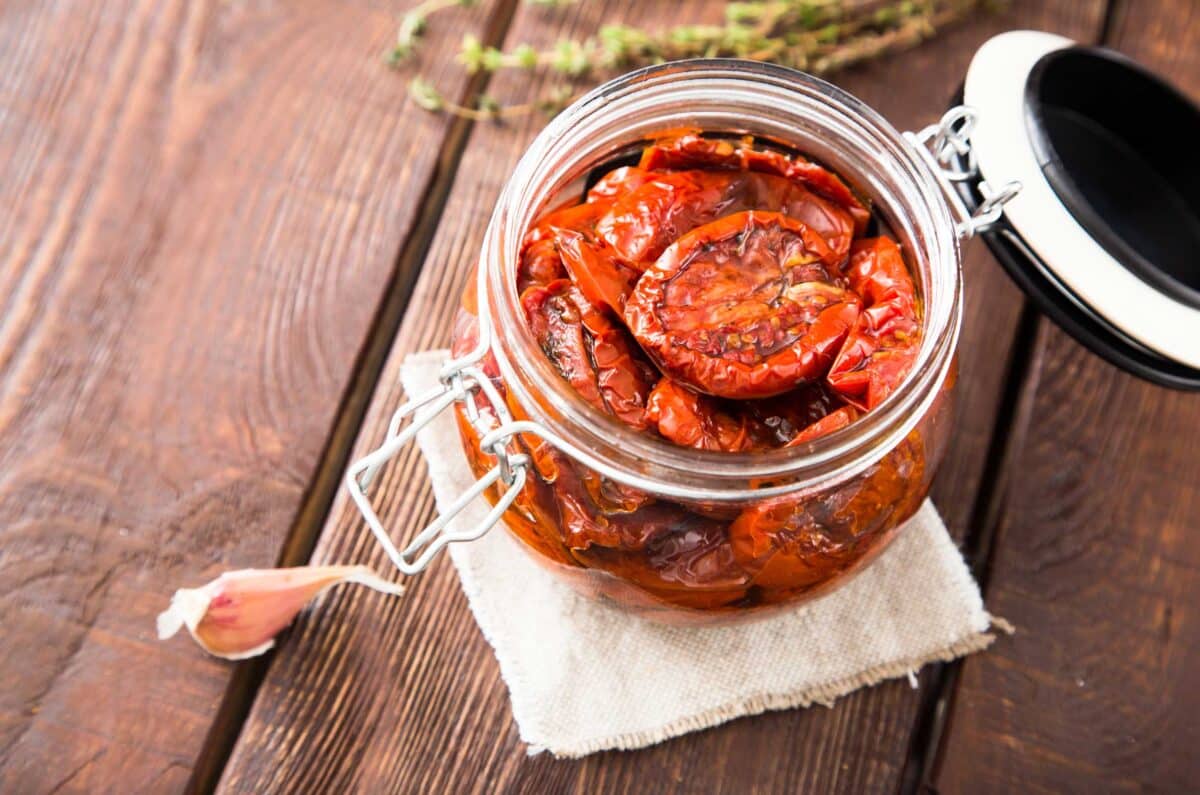
Oregon State University Extension provides specific instructions for preserving dried tomatoes in oil. Place plain dried tomatoes in a container and cover with olive oil. Store in the refrigerator and use within 6 months.
If you add garlic or herbs, refrigerate and use the mixture within four days, or freeze it for longer storage. Do not assume homemade tomatoes packed in oil are shelf-stable.
How to Use Dried Tomatoes
Dried tomatoes are handy to have in the pantry, especially when fresh garden tomatoes are a distant memory.
- Soups and stews: Chop dried tomatoes and add them directly to the pot. They’ll absorb moisture as the dish cooks.
- Pasta and pizza: Rehydrate tomatoes in warm water, drain, chop, and add to your favorite recipe.
- Homemade bread: Finely chop rehydrated tomatoes and mix them into bread dough with herbs and cheese.
- Salads: Soften dried tomatoes in warm water, drain, and toss with olive oil and seasonings.
- Tomato powder: Grind fully dried, brittle tomatoes into powder. Use the powder to add tomato taste to sauces, soups, dips, and salad dressings.

How to Rehydrate Dried Tomatoes
Place the dried tomatoes in a heatproof bowl and cover with warm water. Let them soak for approximately 20–30 minutes, or until softened. Thicker pieces may take longer.
Drain and use as desired. You can save the soaking liquid to add extra tomato flavor to soups and sauces. Soaking will not restore fresh texture, but it will make the tomatoes softer and easier to chew.
For a quick side dish, toss the softened tomatoes with olive oil, basil, garlic, and a little salt. Refrigerate leftovers promptly.
A well-stocked pantry starts with what you eat

Drying tomatoes is one small way to make your household more resilient. When you preserve foods you already grow and enjoy, you’re building a pantry that helps you through busy weeks, unexpected expenses, and interruptions in your normal routine.
In my book, Common Sense Preparedness: Building Resilience for Uncertain Times, we start with food and build from there, with practical ways to prepare your home and family for life’s uncertainties.
Because preparedness shouldn’t be about fear, it should be about options. And delicious, healthy food is one of my favorite options.

This article is written by Laurie Neverman, author of Common Sense Preparedness. Laurie grew up in the kitchen, learning baking and home cooking from her momma. At age 15, she and her mom and two sisters created Irene’s Custom Cakes & Catering. This was her summer job through most of high school and college.
Great article of the whole process as well as suggestions on how to use your dehydrated tomatoes. Thank you!
You’re welcome.