
Twenty Years of Gardening in Circles

This post may contain affiliate links. Read my full disclosure here.
When people visit our homestead, one of the first things they notice is the unusual garden south of the house.
Instead of neat rectangular beds laid out in rows, the garden is arranged like the spokes of a wagon wheel. Paths radiate outward from a central circle, creating wedges of growing space that have been planted and replanted countless times over the years.
It’s not the most efficient layout. It’s certainly not the easiest to maintain.
But more than twenty years after I first marked it out with a stick and some string, those wheel garden beds are still one of my favorite parts of the property.
An Empty Beginning
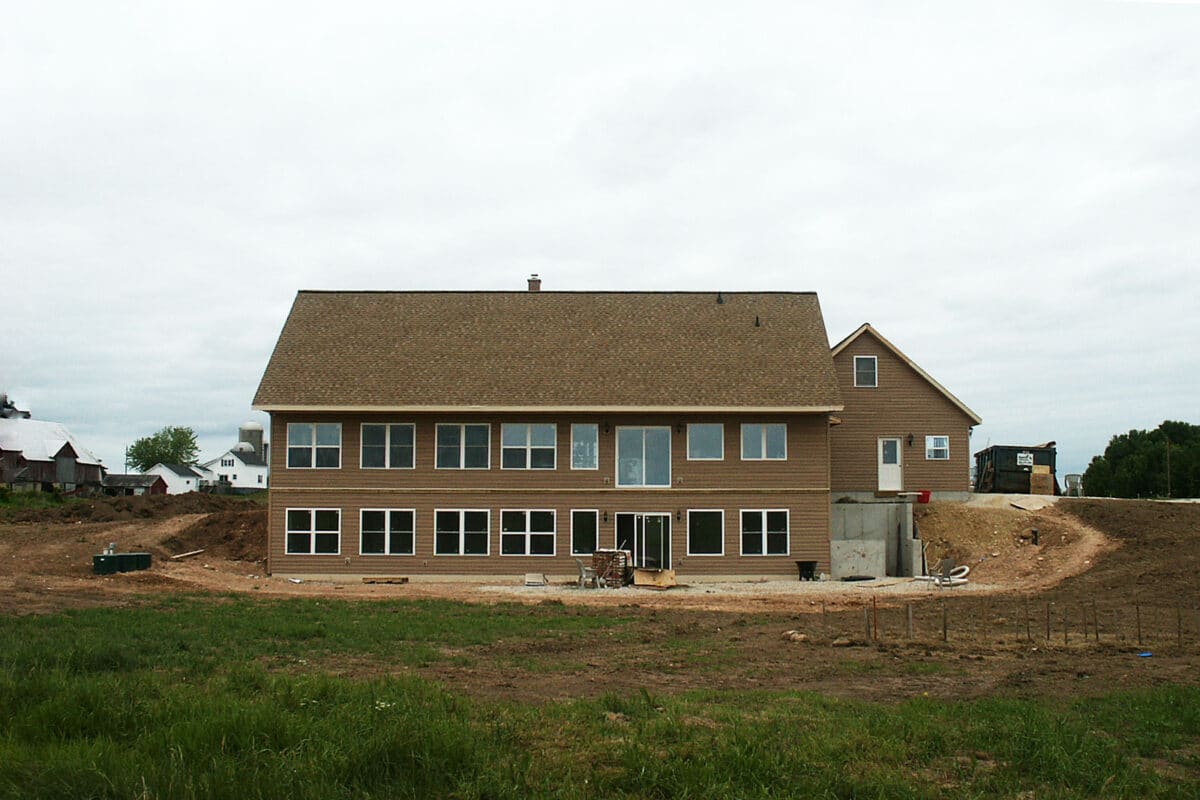
When we moved here in 2005, the property looked very different.
The house was newly constructed, and much of the area around it had been heavily disturbed during the building process. The land itself had once been pasture, but after construction there were piles of soil, compacted areas, exposed subsoil, and plenty of rough spots that needed attention.
Would you like to save this?
Like many new homeowners, we had a long list of projects and not much time or money to tackle them all at once. The boys were very little, so not too much help yet, and my husband is more of a “build things guy” than a “garden guy”.
My first “garden” wasn’t much of a garden at all.
I tucked a few leftover transplants from my mom into the ground south of the house and hoped for the best. There wasn’t a grand plan. There wasn’t even a proper garden space. Just a handful of plants and the desire to grow something. Mom and I used to talk every weekend (I miss her so), and gardening was often a part of the conversation.
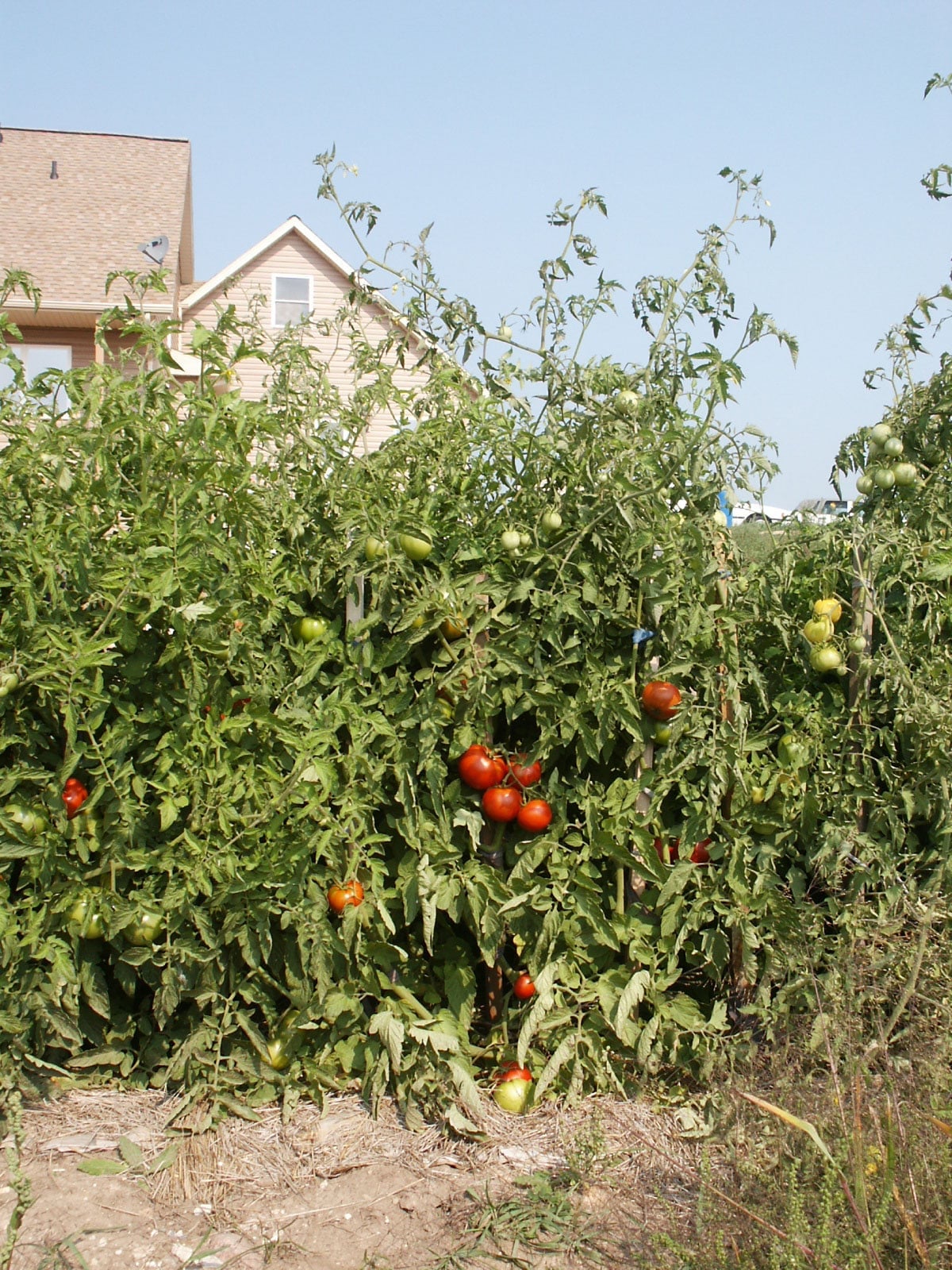
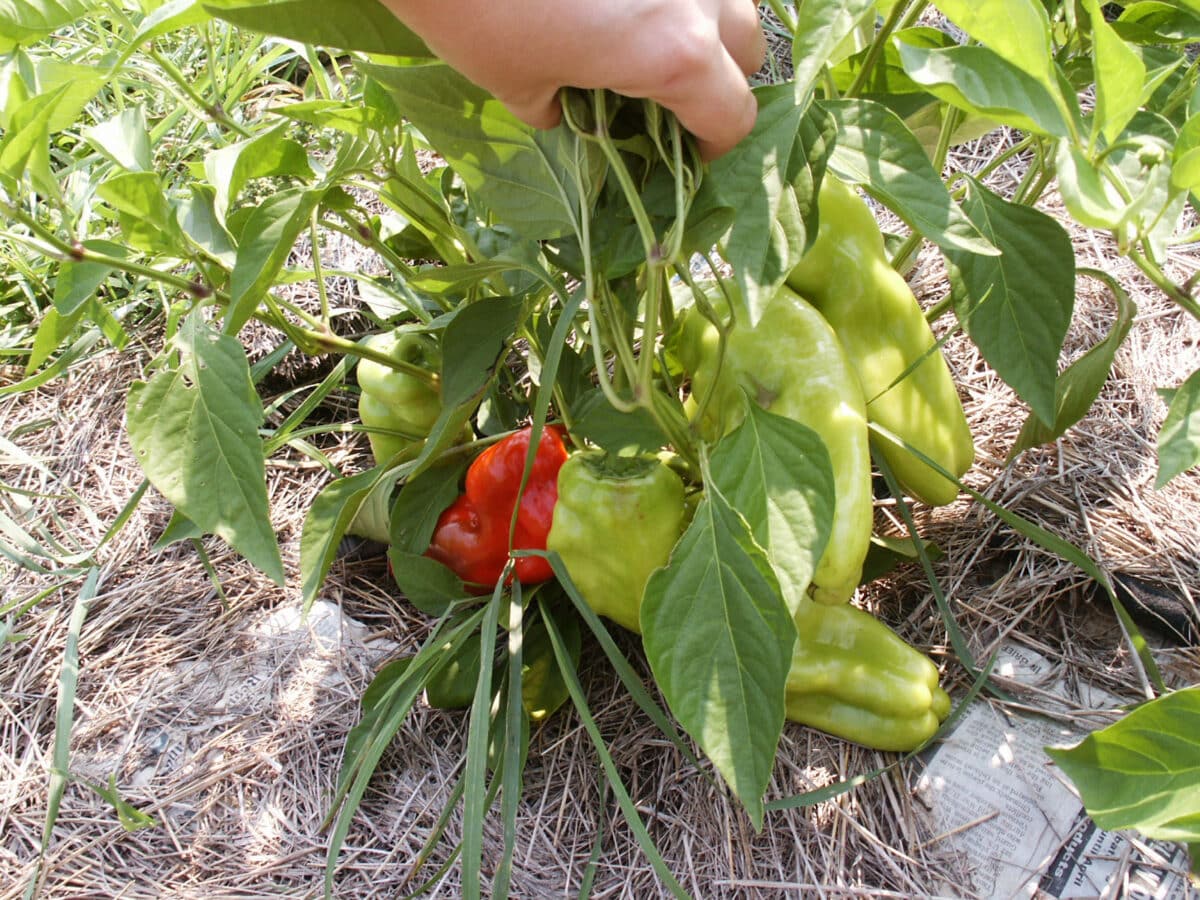
She gave me some tomato plants, which I planted way too close to each other so they grew into an impenetrable thicket. There were some pepper plants, eggplant, parsley, and rather pathetic Brussel sprouts that got devoured by cabbage worms. (The peppers and tomatoes produced well.) You could hardly tell it was a garden from a distance because it blended up with the overgrown yard.
The View from the Kitchen Window
One thing I did have was a view. Our home was designed with passive solar principles in mind, so the south-facing windows are large and let in plenty of light. One of those windows sits directly above my kitchen sink.
As I washed dishes, prepared meals, and went about daily life, I spent a lot of time looking out over the south yard. I started imagining what that space could become.
Most gardens are arranged in straight lines and rectangles. There’s nothing wrong with that, but I found myself thinking about something a little different.
What if the garden looked like a wagon wheel?
The idea stuck with me.
The more I looked out the window, the more I could see it in my mind.
A Stick, Some String, and an Idea
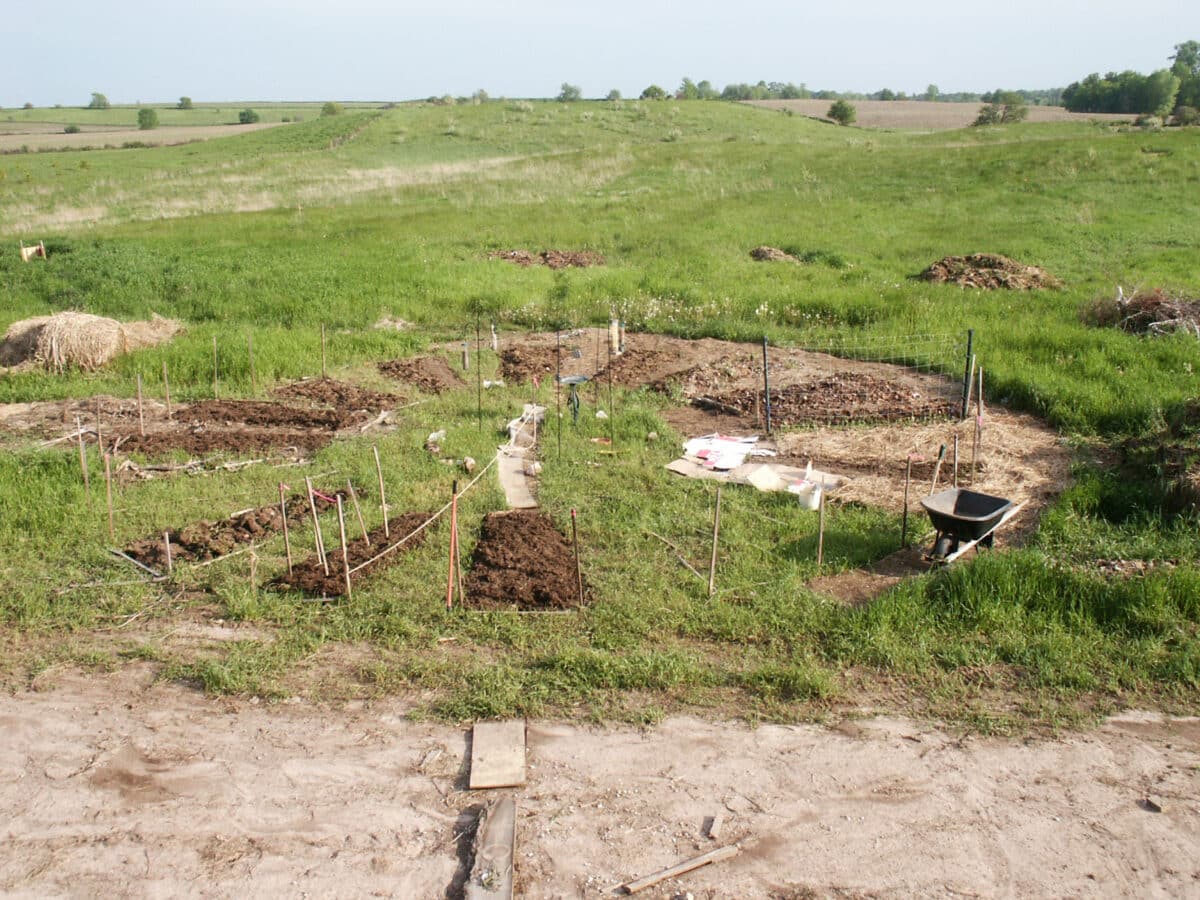
The following spring, I decided to stop imagining and start building. I grabbed a stick and some string and headed outside.
There were no professional plans. No surveying equipment. No software diagrams. (That would be my husband’s cup of tea. He redrew our house plans over 200 times.) I simply marked out a rough circle and divided it into sections that radiated outward like spokes.
It wasn’t perfectly symmetrical. Some sections ended up a little larger than others. But when I stepped back and looked at it, I could see the vision beginning to take shape.
That simple layout became the foundation for what would eventually become one of the defining features of our homestead.
A Garden That Grew With Us
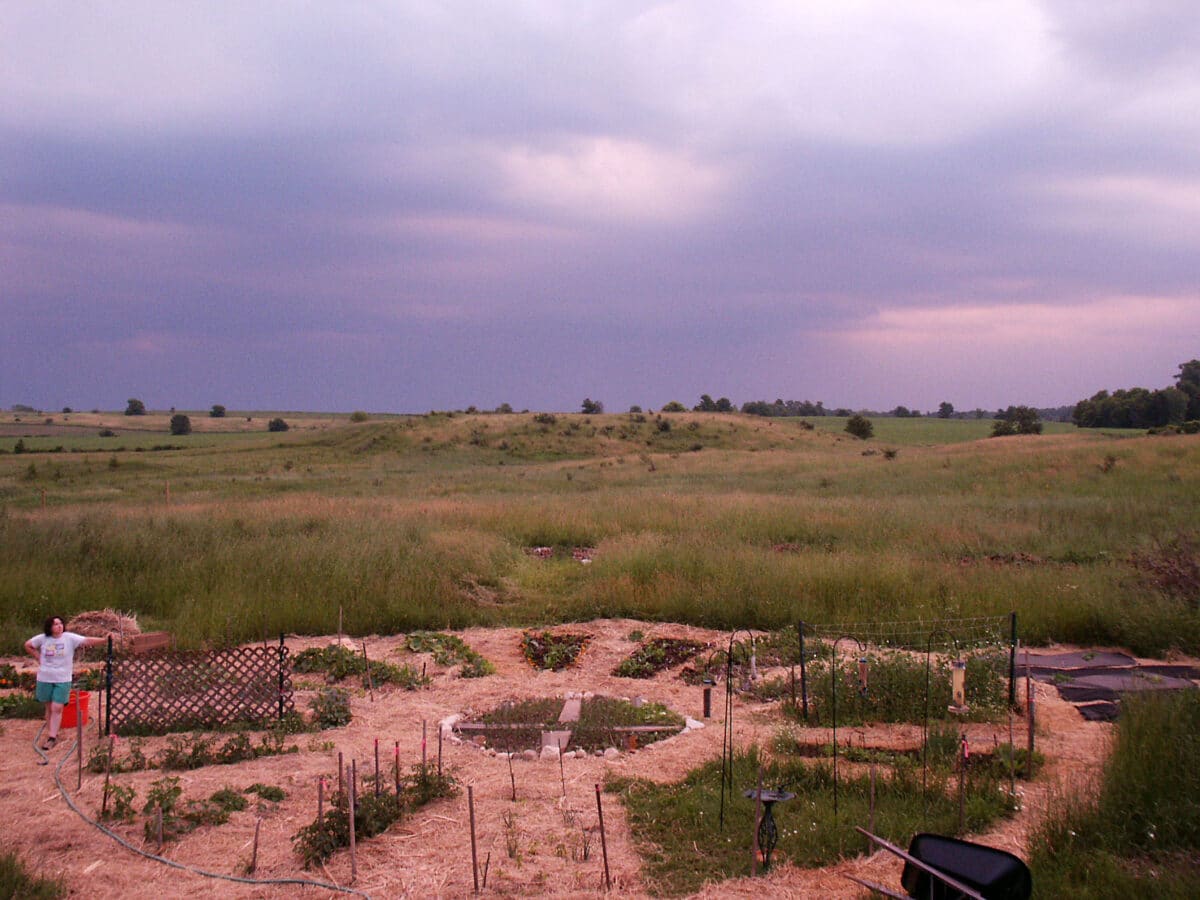
Over the years, the garden changed many times. Different crops came and went. Some seasons were productive. Others were disappointing. The soil was in rough shape to start due to construction, so it took some work. We had a lot of trouble with cutworms early on, since it had been converted from grassland.
We added new growing areas – some nearby in the south yard, others to the north on higher ground. First we planted the East Orchard, then the West Orchard, and raspberries, blueberries, blackberries, elderberries, nuts, and more. We built a 10×20 greenhouse, and then added a coop/garden shed attached to it. Then there was the workshop, flanking the yard to the south.
Yet the wheel garden remained. It became the focal point of the south yard, visible from the house throughout every season.
We planted a mix of vegetables, fruits (mostly melons), flowers, and herbs – a little bit of everything. Like the rest of the homestead, it evolved slowly over time rather than appearing all at once.
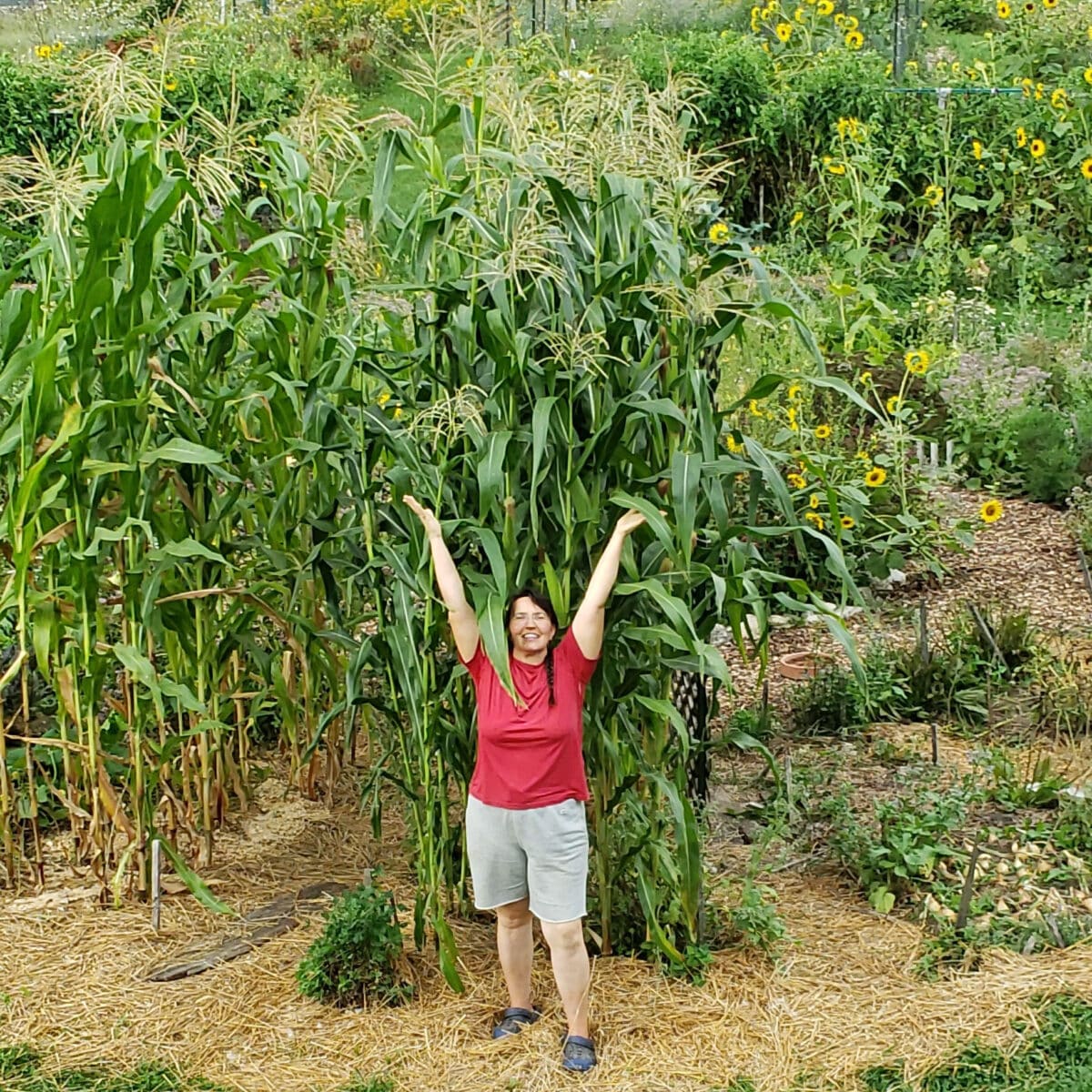
We mix in trellises for tomatoes, cucumbers, beans, and peas. Some years we cover the beds in landscape fabric and let vine crops sprawl all over. One year we grew corn that was around 12 feet tall. Since the beginning there’s been borage, beloved by the bees. I only planted it once, and it’s self-seeded ever since.
Catnip showed up on its own – along with the cats. Each year the cats find a few favorite plants to rub against and roll in while ignoring the rest. Mint family plants don’t grow exactly true from seed. Different seeds from the same plant produce new plants that may be more or less fragrant/flavorful. I’m guessing that since catnip is in the mint family, they pick the plants with the highest amount of “active ingredient”.
Losing the Shape
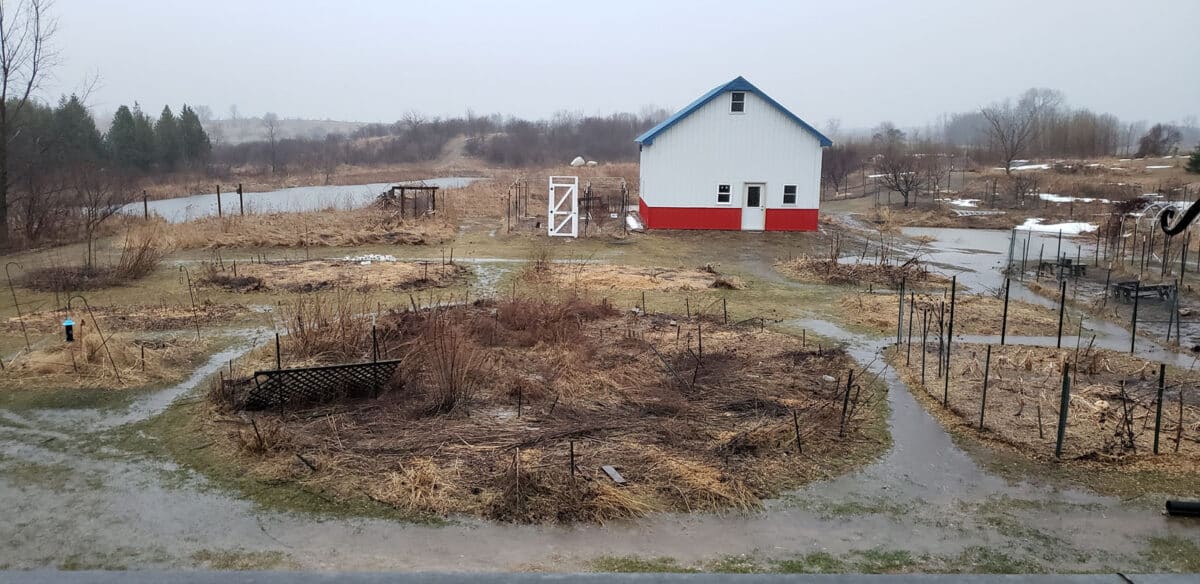
Then came a series of unusually wet springs. The wheel garden sits in one of the lower areas of the yard, and when the weather stays wet, that ground can become difficult to work.
Weeds thrived. Perennial herbs spread enthusiastically. The pathways became harder to maintain. Heck, everything became hard to maintain. We had so much standing water that plant roots were rotting in the ground.
Little by little, the clean lines of the wheel started to disappear. For a while, nature was reclaiming the space faster than we could manage it.
If you’ve gardened for any length of time, you’ve probably experienced something similar. Life gets busy. Weather refuses to cooperate. Projects get postponed. The garden you carefully planned starts making plans of its own.
Bringing It Back
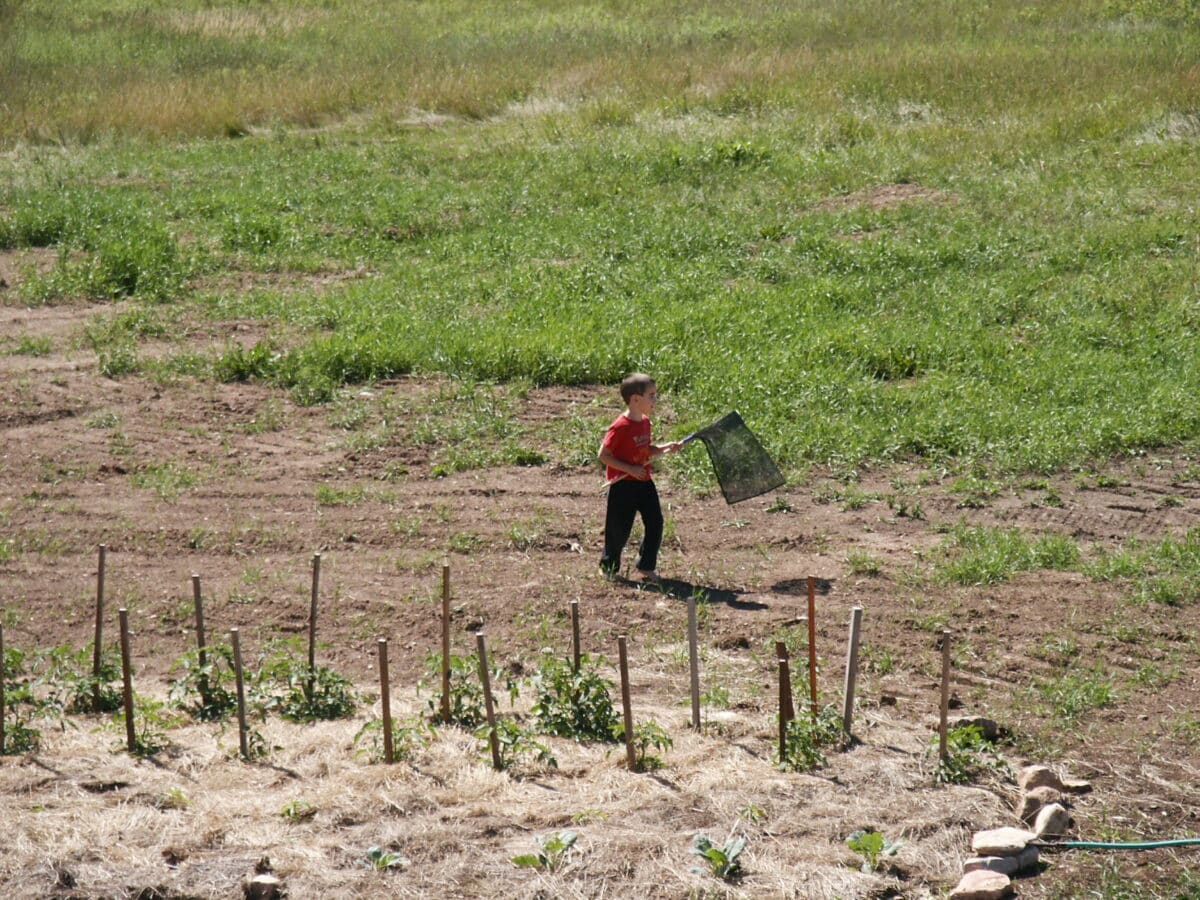
Last year, we decided it was time to reclaim the space. Instead of fighting the weeds one plant at a time, we took a bigger approach. My sons did most of the work to reclaim it, as I was working on writing my book, Common Sense Preparedness.
They used a weed whacker to trim back the out of control plants, leaving some patches of herbs. We covered the pathways with cardboard and thick layers of wood chips. The growing areas received partly composted cow manure. Within the growing areas, we made soil “islands” to plant in, and let the manure finish composting around them.
Then we planted crops that thrive when given room to spread in those “islands” – squash, pumpkins, and melons. Then we covered all the growing beds with landscape fabric and let the vine crops take over. This was done in mid-June 2025. I didn’t know if we would have time for crops to mature, but we figured we’d try.
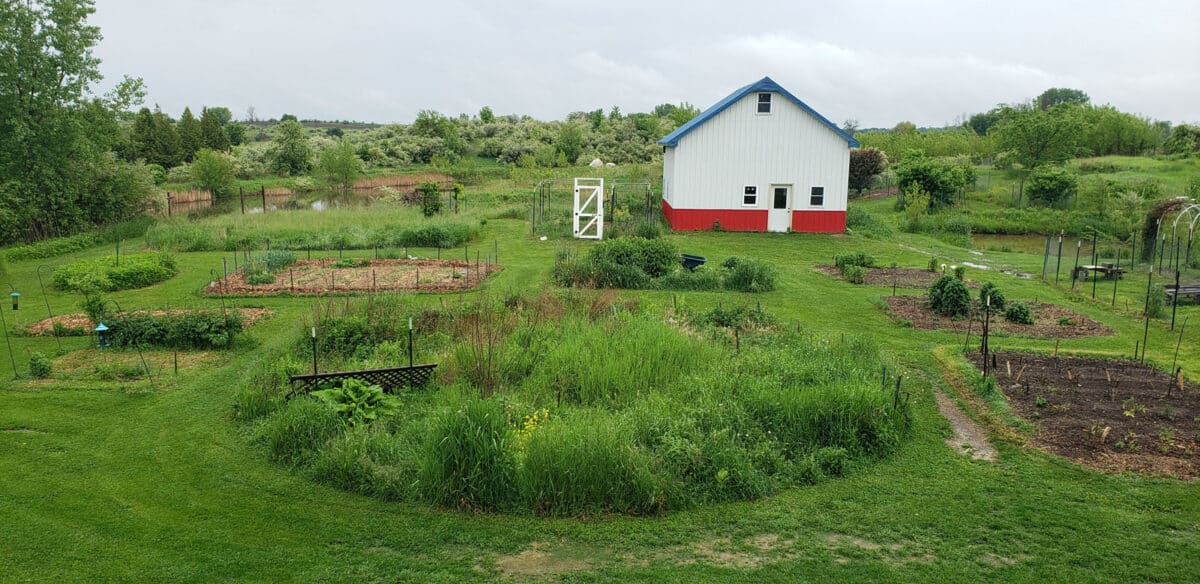
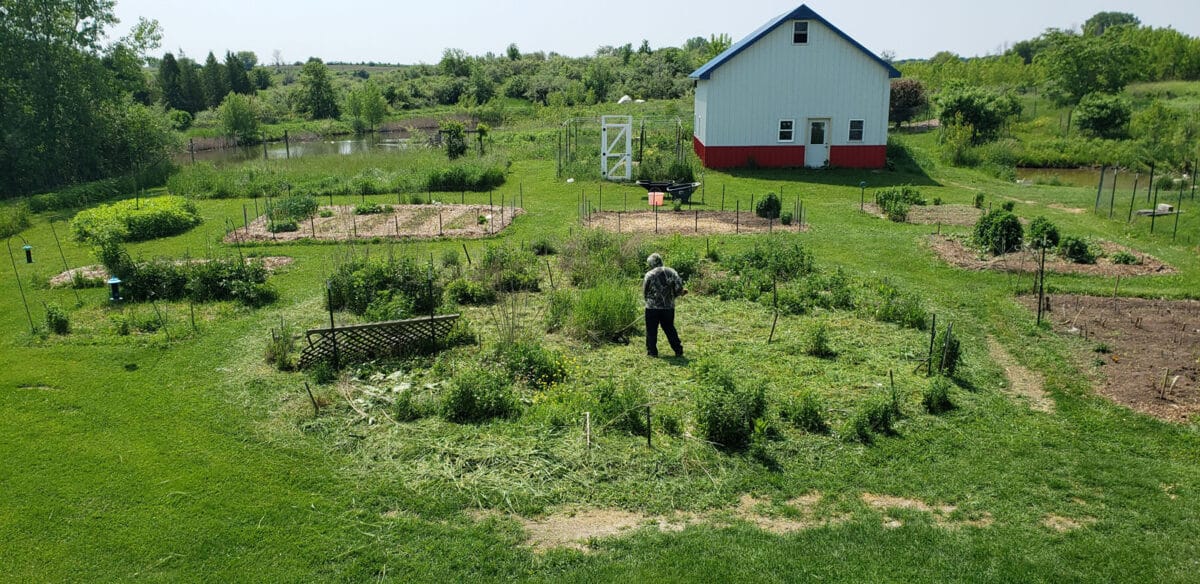
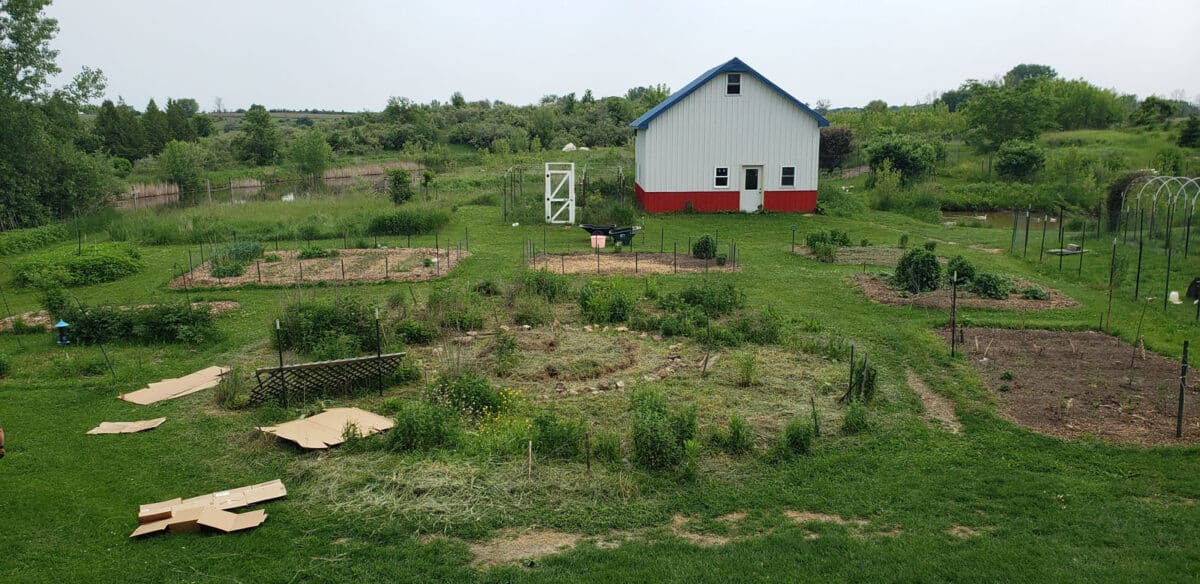
By the end of the season, the wheel shape had begun to emerge again. Not because we rebuilt everything from scratch, but because we worked with what we had. We also got a very nice crop of pumpkins and squash. The melons were not quite as happy.
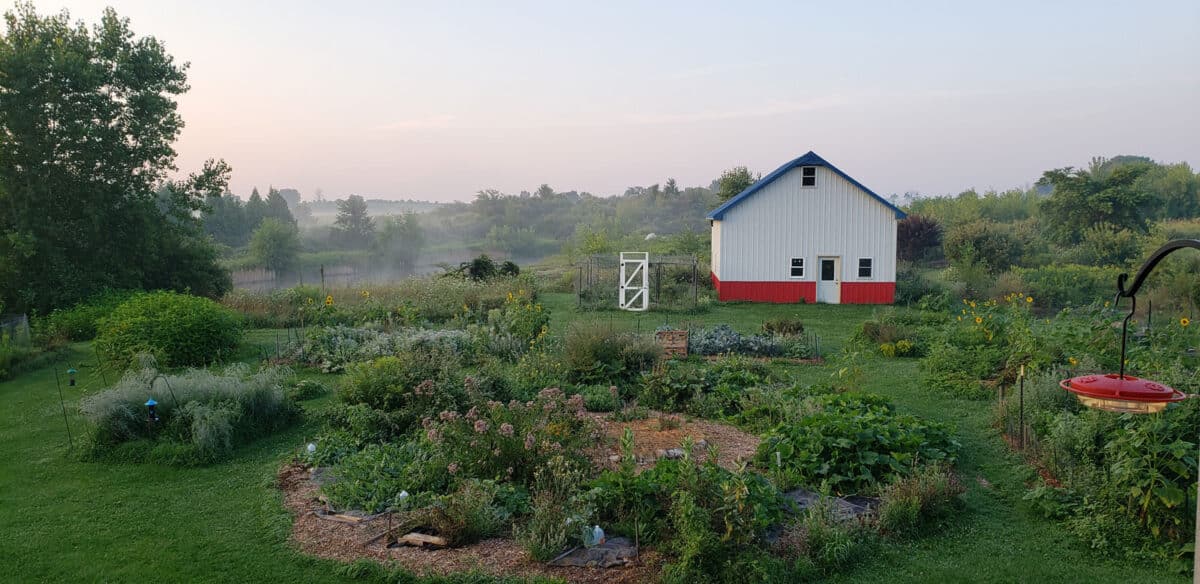
Another Season Begins
This year, the garden wheel is entering another chapter. We’re shifting back toward more traditional production, with greens, flowers, brassicas, herbs, and corn finding their place in the beds. We’re trying melons again in the very center, hoping that they’ll like the bed better with more composting of the manure.
Gardens have a way of reminding us that our plans are only part of the story. The weather, the wildlife, the soil, and sometimes pure chance all get a vote.
You can watch how the wheel has changed over the years in the slideshow below (or watch on YouTube). You can also see how various things have changed on the homestead around it.
Why I Still Love the Wheel Garden
When I first laid out those beds in 2006, I wasn’t thinking twenty years ahead. I simply thought a wheel-shaped garden would look nice outside the south windows. What I didn’t realize at the time was that the garden would become a record of the homestead itself.
It has been planted, neglected, expanded, reclaimed, and replanted. It has grown vegetables, flowers, herbs, weeds, and memories. It has survived wet years, dry years, changing priorities, changing schedules, and changing seasons of life.
Every time I stand at the kitchen sink and look out that south window, I don’t just see a garden.
I see twenty years of experiments.
Twenty years of mistakes.
Twenty years of learning.
Twenty years of growth.
The wheel isn’t perfect. Neither is the homestead. But both are still here. And maybe that’s the point. Building a resilient life rarely happens in a straight line. Sometimes it happens in circles.
This article is written by Laurie Neverman. Laurie and her family have 35 acres in northeast Wisconsin where they grow dozens of varieties of fruiting trees, shrubs, brambles, and vines, along with an extensive annual garden. Along with her passion for growing nutrient dense food, she also enjoys ancient history, adorable ducks, and lifelong learning.
Very encouraging. I used to hate gardening but now I am really enjoying it. I never hit where I want to be but I tell myself not to stress over it. That ruins the joy. Thank you!
You’re welcome. Looking back through the years of photos was a good reminder that even though we’re off to a rough start this year, the gardens have an amazing capacity to bounce back.
I love the wagon wheel design! I wish I could duplicate that in my own garden, but here in Palmer, AK, family gardens need to be fenced in to keep the moose out. My first summer of gardening here, I helplessly watched one moose devour 5 full grown cabbages, while another sucked down my sugar snap pea vines like spaghetti. Now we have 6′ fences around all the gardens. Keeps the chickens out too, which are just as destructive, but on a smaller scale.
Moose are so huge! Deer I can usually keep away from the gardens with spook bags (we fence around the trees and some shrubs), but moose also do not scare easy. Even the ducks can do a lot of damage when plants are small, so we have to keep them out of some areas. The chickens have a large run with a 4 foot fence, as they are not slowed down much by the two foot fence that works for the ducks. It seems like every location has its challenges for gardening.
Charming story. Thank you for the inspiration.
Learning Never Ends!