
Pear Fruit Leather Recipe (for the Dehydrator or Oven)

This post may contain affiliate links. Read my full disclosure here.
If you’re looking for another way to use up extra pears (especially very ripe ones), pear fruit leather is a great option. Fruit rolls are a sweet, chewy treat that stores well and makes a great lunchbox snack.
Drying fruit is one of the oldest ways of preserving the harvest, and it’s still a favorite in many homes today. Unlike commercial versions, homemade fruit leather doesn’t need added sugar, corn syrup, or artificial colors. (You can also dehydrate pear slices, too.)
Our local pear season is in late August into September, depending on the variety. This year appears to be a bumper crop, as I’ve seen a number of online postings in local groups about pears to share. Pears that have dropped off the tree tend to be soft in the middle, making them a good choice for leather, jam or wine.
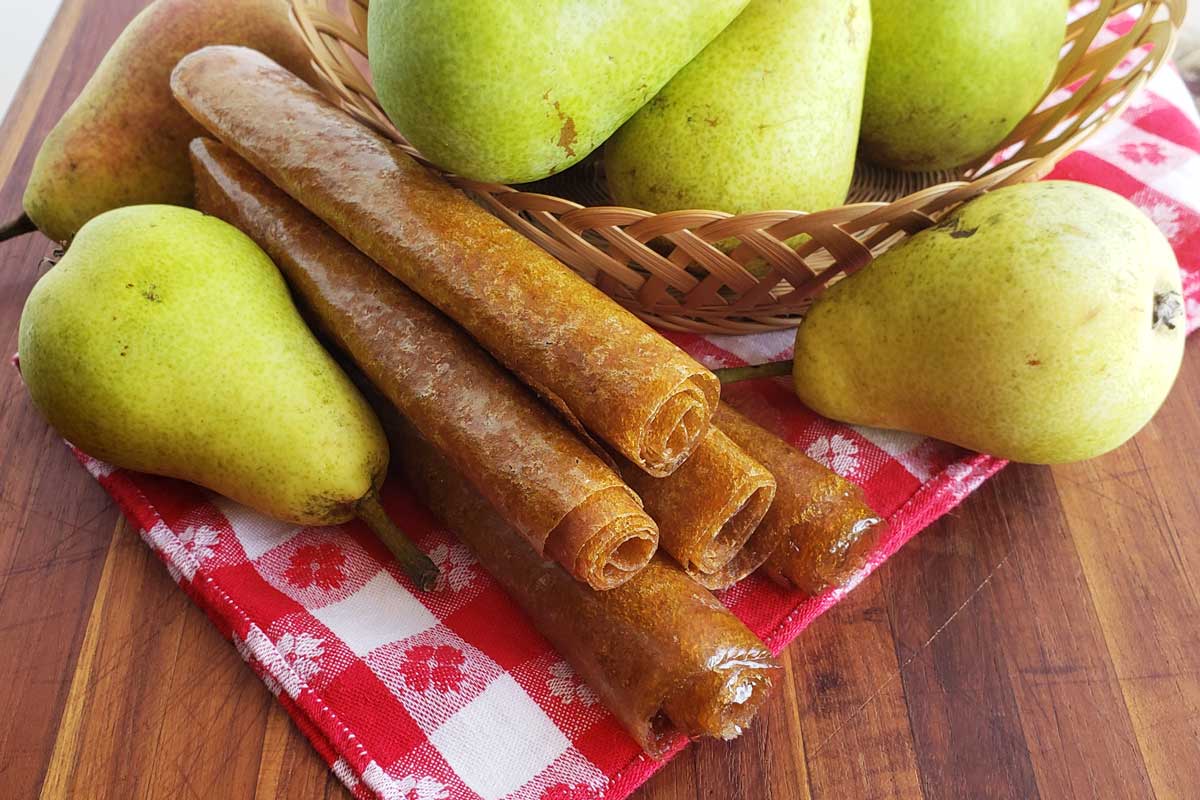
Table of Contents
How to Make Pear Fruit Leather
I use a blend of pears with apples, which provides a firmer texture and a little extra tartness to balance the pears’ mild flavor. Apples are also rich in pectin, which helps you get that “leathery” texture.
If you search online, some sources say pears are high pectin, others say they are low. From my experience, if I make a “pears only” leather, it tends to be more brittle. This indicates low pectin, so I do a blend.
It’s a good flavor combination, too. Blackberry fruit leather and pumpkin fruit leather are some of our other fall favorites.
Ingredients
- 4 cups ripe pears (cored and chopped)
- 4 cups ripe apples (cored and chopped)
- Water (just enough to prevent sticking during cooking)
- Optional: cinnamon, nutmeg, or ginger to taste
Instructions
You can scale this recipe up or down as needed, and it doesn’t need to be exact. Just use roughly equal amounts of pears and apples. Less ripe fruit has more pectin, riper fruit softens faster in cooking.
Step 1 – Cook the Fruit
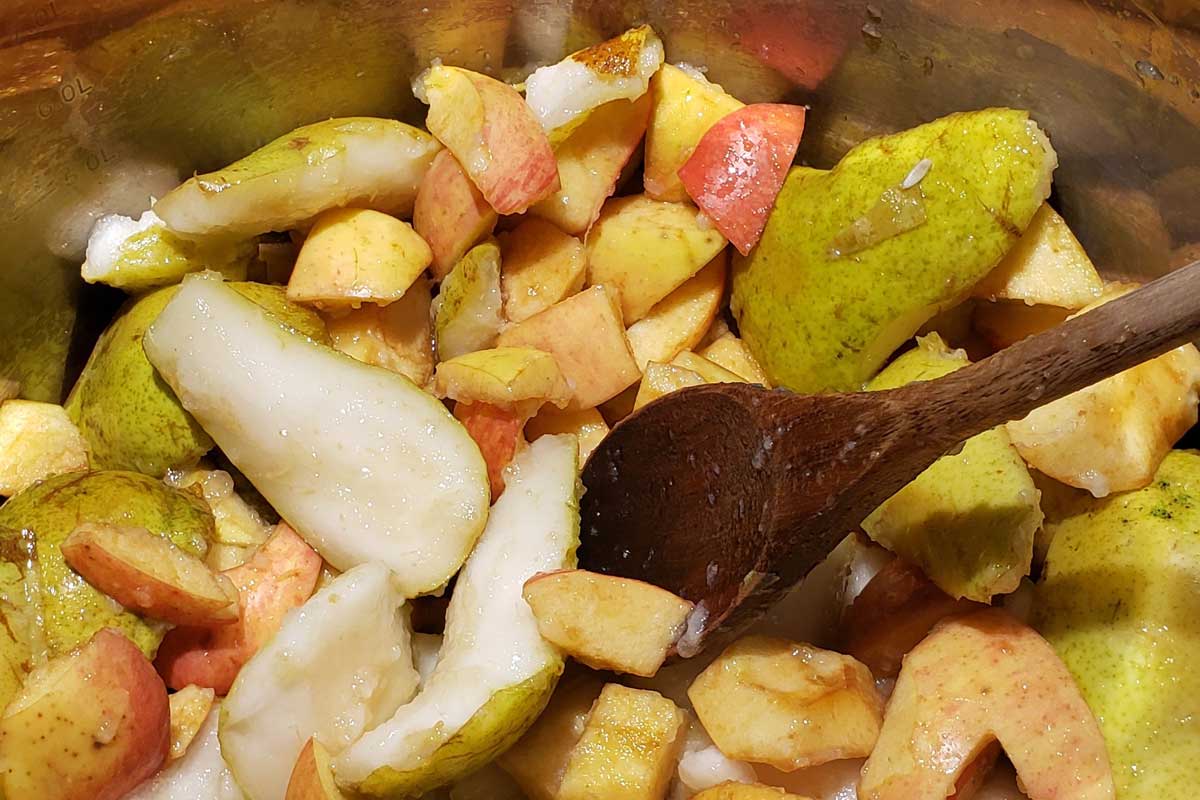
Place the pears and apples in a large saucepan with a few tablespoons of water. Simmer gently until the fruit softens, about 15–20 minutes. Stir occasionally to prevent scorching.
Step 2 – Puree
Once the fruit is tender, use an immersion blender or food processor to puree until smooth, or run the fruit through a food strainer. Taste and add spices if desired. The puree should be thick, not watery. If it seems runny, cook it a little longer to reduce.
Step 3 – Spread
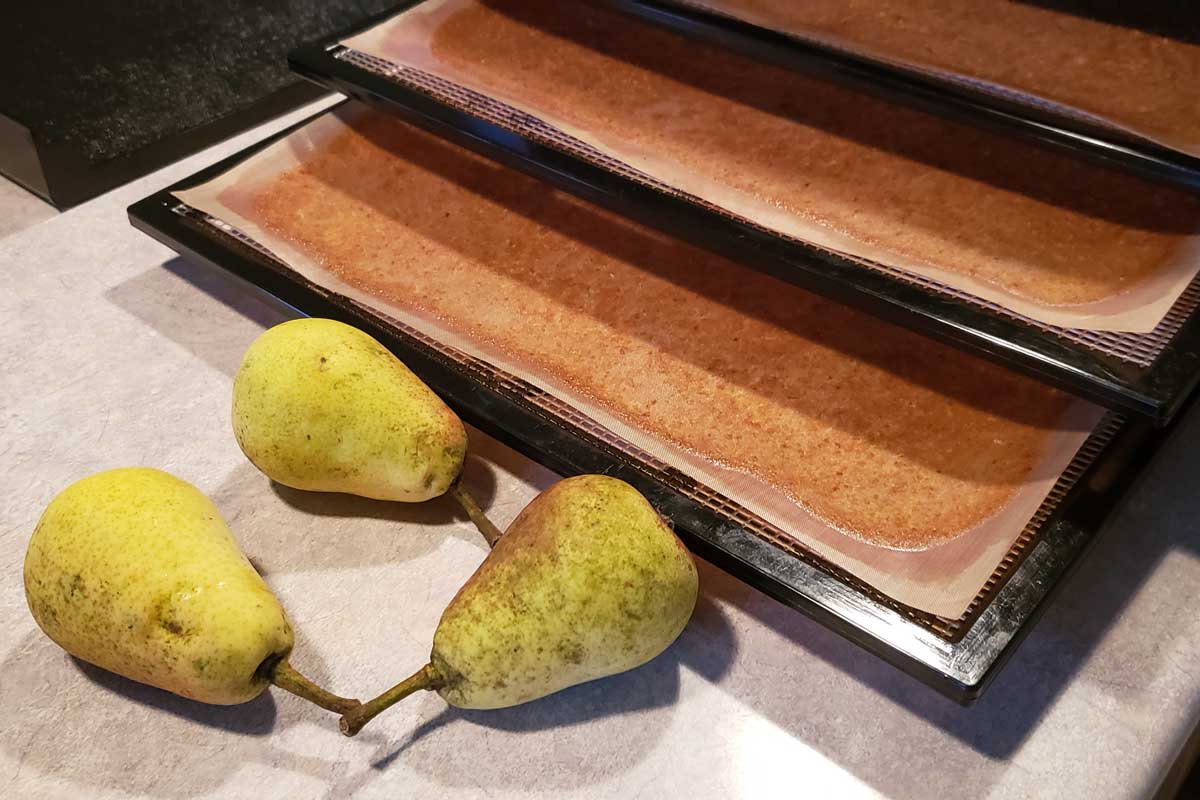
- For a dehydrator: Use fruit leather trays or parchment paper. Spread the puree evenly, about 1/8–1/4 inch thick.
- For an oven: Line a rimmed baking sheet with parchment paper or a silicone baking mat. Spread the puree to the same thickness.
Step 4 – Dry
- Dehydrator: Dry at 135°F (57°C) for 6–12 hours, depending on humidity and thickness. I usually prep mine in the evening and let it run overnight.
- Oven: Dry at the lowest temperature (usually 170–200°F / 77–93°C) for 6–8 hours. Prop the door open slightly with a wooden spoon to allow moisture to escape. Oven drying can be tricky, so check your leather hourly to see how the drying is going.
Would you like to save this?
Check for doneness: the leather should be dry to the touch but still pliable. It should only be a little bit sticky, not gluey.
Step 5 – Cut and Store
Peel the leather off the sheets. Use kitchen scissors or a sharp knife to cut into strips or squares. Roll them up in parchment paper if you like. You can dust it with cornstarch to reduce sticking, but I never bother.
Store in airtight containers at room temperature for 1–2 months, or in the freezer for up to a year.
Tips for Success
- No added sugar needed: If your fruit is ripe, the natural sweetness is plenty. If you want a sweeter flavor, add a drizzle of honey or maple syrup before drying.
- Flavor variations: Try adding a splash of lemon juice, or blend in a handful of berries with the pears and apples.
- Avoid cracking: Spread evenly. Thin edges dry faster and may get brittle—just trim them off and enjoy as a crunchy snack.
Using and Storing Pear Fruit Leather
If we plan to eat ours quickly, I may keep it in a zip top bag. For longer storage, I opt for wide mouth mason jars.
Stored properly in a cool, dry place, your fruit leather should last for several months. For long-term storage, keep it in the freezer. Even after a year, it will still taste fresh.
Pear fruit leather is perfect for quick energy on the go. Pack it for hiking trips, tuck it into lunchboxes, or keep a jar in the pantry for healthy snacking.
Can You Make Fruit Leather with Asian Pears?
Asian pears have a different texture than European pears – more crisp and watery. They also have a pH higher than 4.6, making them more prone to spoilage.
If you want to make Asian pear fruit leather, be generous with the apples. Cook down the puree to thicken, and add a tablespoon of lemon juice to the finished puree before drying.
PrintPear Fruit Leather Recipe (for the Dehydrator or Oven)

Simple to make and easy to enjoy, this fruit leather recipe is a fun option for preserving your pear harvest. Make as big a batch as you like, keeping roughly even proportions of fruit. (You don’t need to be exact.)
- Prep Time: 15 minutes
- Total Time: 15 minutes
Ingredients
- 4 cups ripe pears (cored and chopped)
- 4 cups ripe apples (cored and chopped)
- Water (just enough to prevent sticking during cooking)
- Optional: cinnamon, nutmeg, or ginger to taste
Instructions
- Place the prepared fruit in a heavy bottom pot with a bit of water to prevent scorching. Cook until softened.
- Puree the fruit with a stick blender or food processor, or run it through a food mill/food strainer. Add spices if desired, cook a bit longer if puree is too runny.
- Spread the fruit in an even layer about 1/8″ thick on dehydrator trays or oven sheets lined with parchment paper.
- Dehydrator: Dry at 135°F (57°C) for 6–12 hours, depending on humidity and thickness. I usually prep mine in the evening and let it run overnight. Oven: Dry at the lowest temperature (usually 170–200°F / 77–93°C) for 6–8 hours. Prop the door open slightly with a wooden spoon to allow moisture to escape. Oven drying can be tricky, so check your leather hourly to see how the drying is going.
- Peel finished fruit leather off the trays and store in an airtight container. Keeps for months at room temperature, or freeze for longer storage.
More Pear Goodness
Making pear fruit leather at home is simple and satisfying. It’s also a good way to use up pears that are too soft for canning or freezing. If you’re looking for more ways to preserve pears, check out our guides on:
- Canning pears
- Almond Pears (canning recipe)
- Pear wine
- Maple Pear Jelly
- Cranberry Pear Jam
- Pear Ginger Jam

This article is written by Laurie Neverman. Laurie grew up in the kitchen, learning baking and home cooking from her momma. At age 15, she and her mom and two sisters created Irene’s Custom Cakes & Catering. This was her summer job through most of high school and college.