
Honey as Medicine – Prevent Infection, Kill Bacteria, Promote Healing

This post may contain affiliate links. Read my full disclosure here.
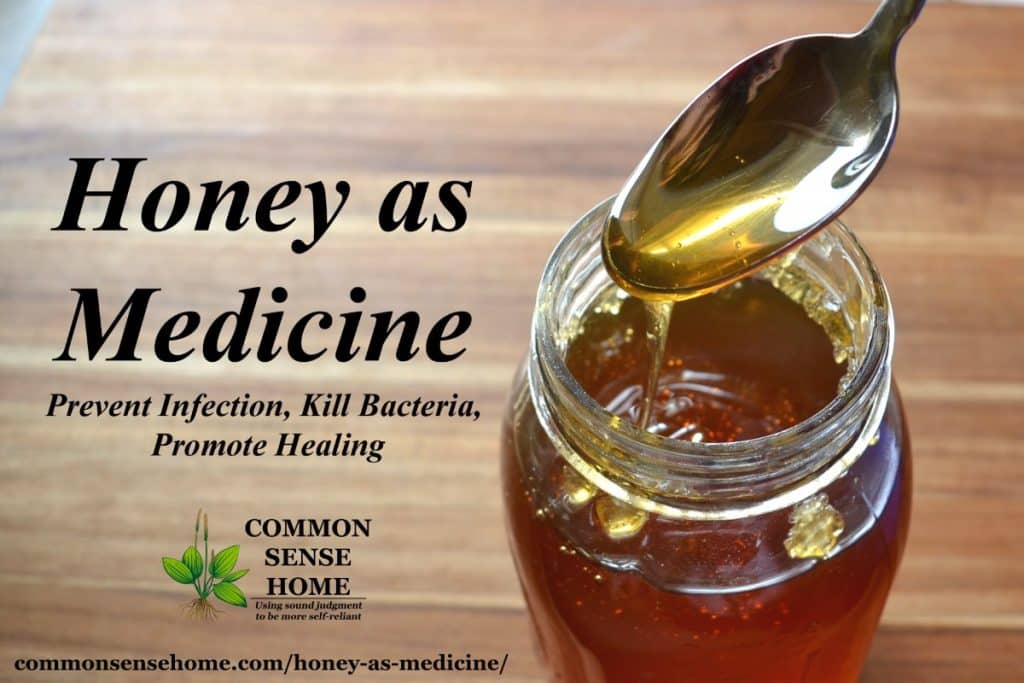
Did you know you can use honey as medicine? If I had to choose only one medicine I could have in stock, I think it would be honey. These days, specialty wound-care centers might agree.
Would you like to save this?
Honey has become a staple for those hard-to-heal wounds, such as diabetic leg ulcers, burns, even wounds with gangrene. It kills bacteria resistant to other antibiotics and actually heals tissue, nursing the skin back to health. Not only that, but it can decrease the pain. But here’s the catch. Some types of honey work better than others. Before we get into that, let’s go over the basics, like …
How Honey Prevents Wound Infections
- It seals the wound from outside contaminants.
- It’s a mild acid. Most bacteria can’t grow well in that.
- It has a low water content. Bacteria don’t like that either.
How Honey Kills Bacteria
- It dries them up. The high sugar content dehydrates bacteria.
- It produces hydrogen peroxide. When diluted with, say, body fluids, enzymes in the honey create a small amount of hydrogen peroxide. Enough to kill bacteria.
- Its enzymes create antibacterial chemicals we’re just beginning to isolate. Some types of honey produce more of these chemicals than others. Some don’t produce much at all.
How Honey Heals
Honey has been shown to speed up the growth of various body tissues. It helps form new blood vessels, collagen, and the epithelial cells that cover the underlying tissue. The way it does this is:
- Honey seals in the good tissue fluid containing enzymes and proteins that promote healing.
- It provides nutrition to the tissue.
- Honey decreases inflammation and swelling in a yet unknown way.
Some studies have suggested honey even decreases scarring.
Some Concerns About Using Honey
Even with all its antibacterial properties, honey can contain a few bacteria. Although some can cause bad skin infections, I can’t find a study where any have. Still, physicians worry because it’s possible. We do know babies have died ingesting honey that contained a few botulism spores. This is thought to be due to their still developing digestive system. To my knowledge, no one over 12 months old has ever even gotten sick from these sparse spores. Okay, now for the finale.
Some Types of Honey Fight Bacteria Better Than Others
Even though all types of honey are acidic and dehydrate bacteria, and most types create hydrogen peroxide in varying quantities, not all contain those other antibacterial chemicals we’re just now discovering.
Have you heard of Manuka honey? It’s made in New Zealand, and it’s known as the most effective honey and the one with the most antibacterial chemicals. That may be because it’s been studied the most or because it’s been marketed the most, or just maybe because it really is the best bacteria fighter.
Medihoney is Manuka honey that’s been zapped clean of bacteria (including botulism). The zapping may kill the peroxide-creating enzymes but apparently doesn’t harm the antibacterial chemicals. It’s the honey the wound-care centers use. I hoped to find a study comparing the antibacterial potencies of various U.S. honeys but could only find studies on honeys made abroad.
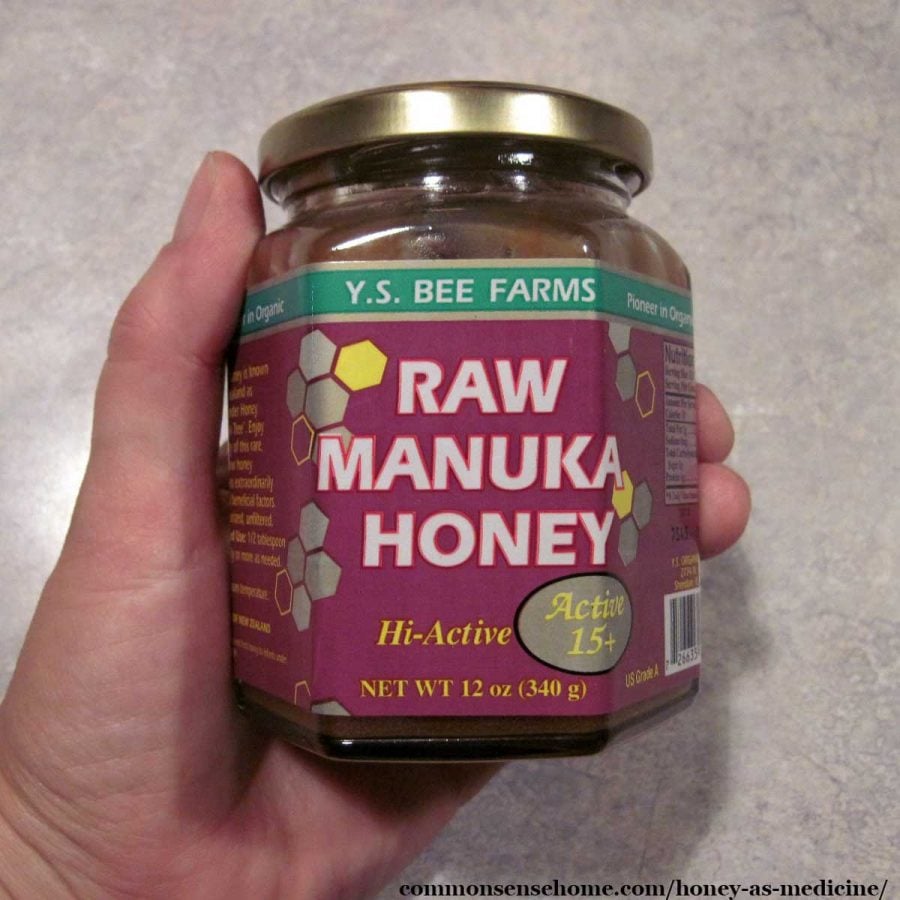
Honey as Medicine – Which Honey Should You Stock for Medicinal Use?
- I’d get some Medihoney for the medical survival kit. It’s more expensive, but it’s not going to spoil. (Actually no honey is going to spoil.)
- I’d have some good-tasting local honey for extra stocking supplies. Use it to eat, for coughs, etc., and for an antibacterial in a pinch. (Learn more about using honey for coughs in my blog post, “The Safest Cough Medicine“. Don’t feed it to babies. Laurie’s note: you can also use honey to make simple cough drops.)
Important caution: Never try to treat a bad wound by yourself when you can get medical help. For one thing, even with honey, it could turn into a very serious limb- or life-threatening infection.
How to Use Honey on Wounds
After cleaning the wound, put honey on one side of gauze or a clean cloth, and lay it onto the wound. Or pour a thin film of honey directly onto the wound and put the gauze over that. Either way, seal the honey in with surgical or duct tape on the edges of the bandage. Clean and repeat twice a day. If supplies are scarce and the dressing stays clean, you could cut that back to once a day or even a bit longer. Have you ever used honey for a skin infection? What type? Do you have some stored just in case?
Comment from Chody D. on the Common Sense Home Facebook page:
A friend of mine cut the end of her thumb off with a machete. She was keeping it covered in honey. I thought I was gonna have to force her to go to get antibiotics when it got infected. About a week later she came to my house and her thumb was COMPLETELY healed!!! I was shocked! I will never doubt the magical medicinal uses of honey again.
Is Manuka Honey Safe to Use on Pets?
Update by Laurie: Several people have asked whether it is safe to use manuka honey on pets. The answer is “yes”. You can read more about treating pets with honey at “Using Manuka Honey for Dogs, Horses, and other Animals“
Make Sure Your Honey is Real
Much of the honey on US store shelves is imported from China, and may be contaminated with heavy metals and illegal antibiotics. Look for products from local apiaries and other trusted brands.
This is a guest post by by James Hubbard, M.D., M.P.H. Dr. Hubbard teaches down-to-earth, improvisational survival medicine for disasters. He’s been a family physician for over over 30 years.
Disclaimer: This post is for general information only and not meant to be your only source of information on the topic. Use at your own risk. Please consult your health-care provider for personal advice.
Hello Lori, I met a couple about 2001 that was very iluminating about the healing capabilities of honey.
The wife was making dinner and when she opened the oven it blew up in her face. Before help arrived her husband smeared honey on all of the burned areas. The doctors told him that was the best thing he could have done because it block all the bacteria. And if you looked at her there wasn’t a scare to be seen. Ever since then I have always kept a jar of raw honey in the house. Now your story has even given people more reasons to have on hand at all times. Thank you for all the work you do in collecting and posting so much good information on being prepared for as many things as we can.
Thank you for sharing that story. August had a bad burn on his hand several years back (he put his hand on a hot tiller manifold). We treated it with honey and it healed beautifully with no scarring.
I got rid of my sons eczema by having him drink Georges aloe juice. You can also spray it on topically but he drinks 2oz twice a day. If he starts to get a flare up, he just drinks it that day and its gone by the next day..it tastes like water
Good morning,
I have enjoyed this article and comments. I am using Medihoney for my open wounds from my reconstruction surgery. The PA at my doctor’s office recommended it. I was not sure about the differences between it and Manuka honey. I know that we will be making sure we keep either on hand from now on.
Thanks for the information.
You’re welcome. Praying for speedy healing.