
5 Reasons You Need a Vine Spine Garden Trellis

This post may contain affiliate links. Read my full disclosure here.
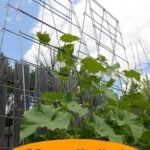
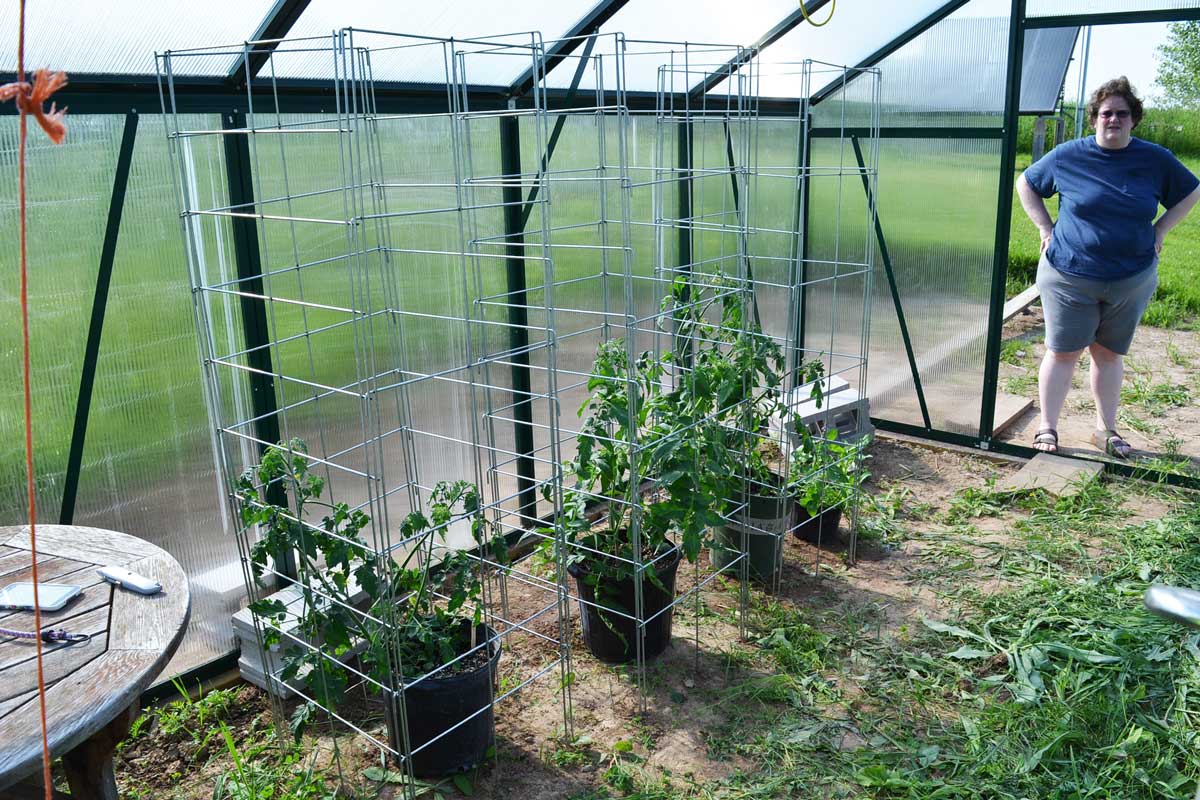
I’ve had my Vine Spine trellis for 10 years, so I figured it was time for an update. Back in 2015, I grew tomatoes in containers in the greenhouse, because we were working on the greenhouse foundation. I needed a tomato trellis that I could move with the containers. My standard tomato trellis option using pounded in posts was not going to work.
While I was thinking, I got an email from Better Bilt Products. They offered to send me some of their Vine Spine™ garden trellis system panels to try out in the garden. Here’s my take on why the Vine Spine™ is the best commercial garden trellis I’ve seen to date.
Would you like to save this?
Table of contents
#1 – The Vine Spine™ Garden Trellis is Versatile
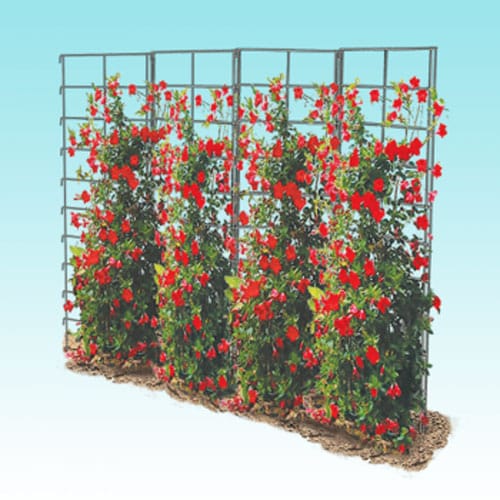
This garden trellis works for more than just tomatoes. Each trellis “kit” consists of twelve panels, which can be arranged in a number of configurations. You can set it up as a box for stand alone plantings in the ground (top photo), or in containers…
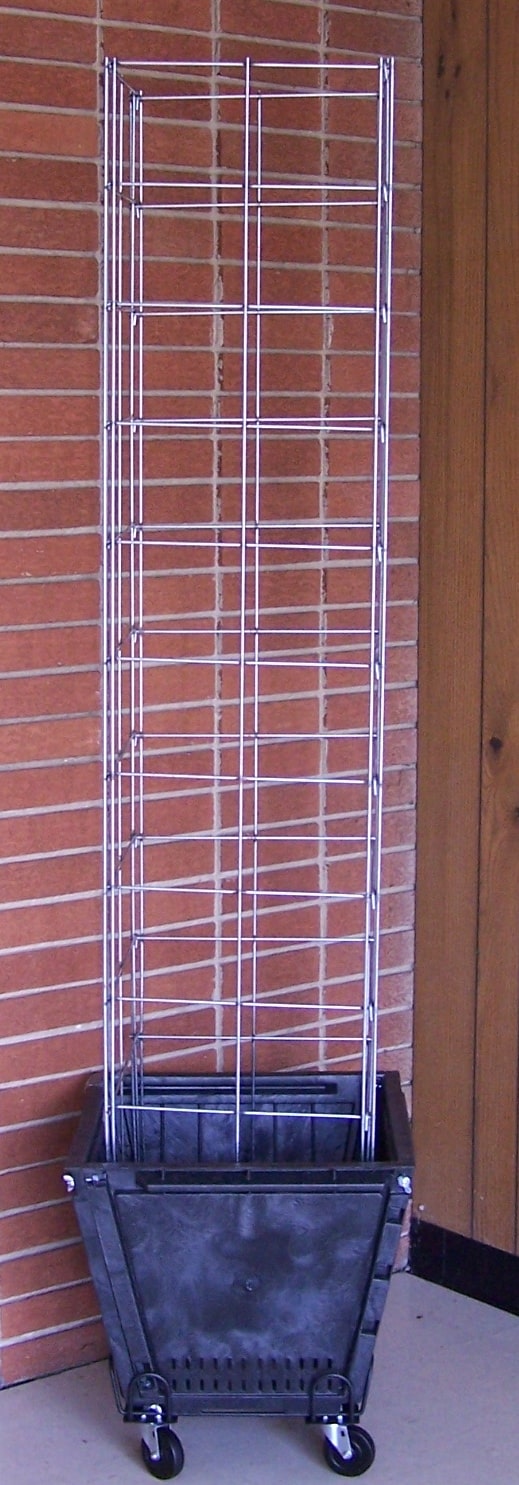
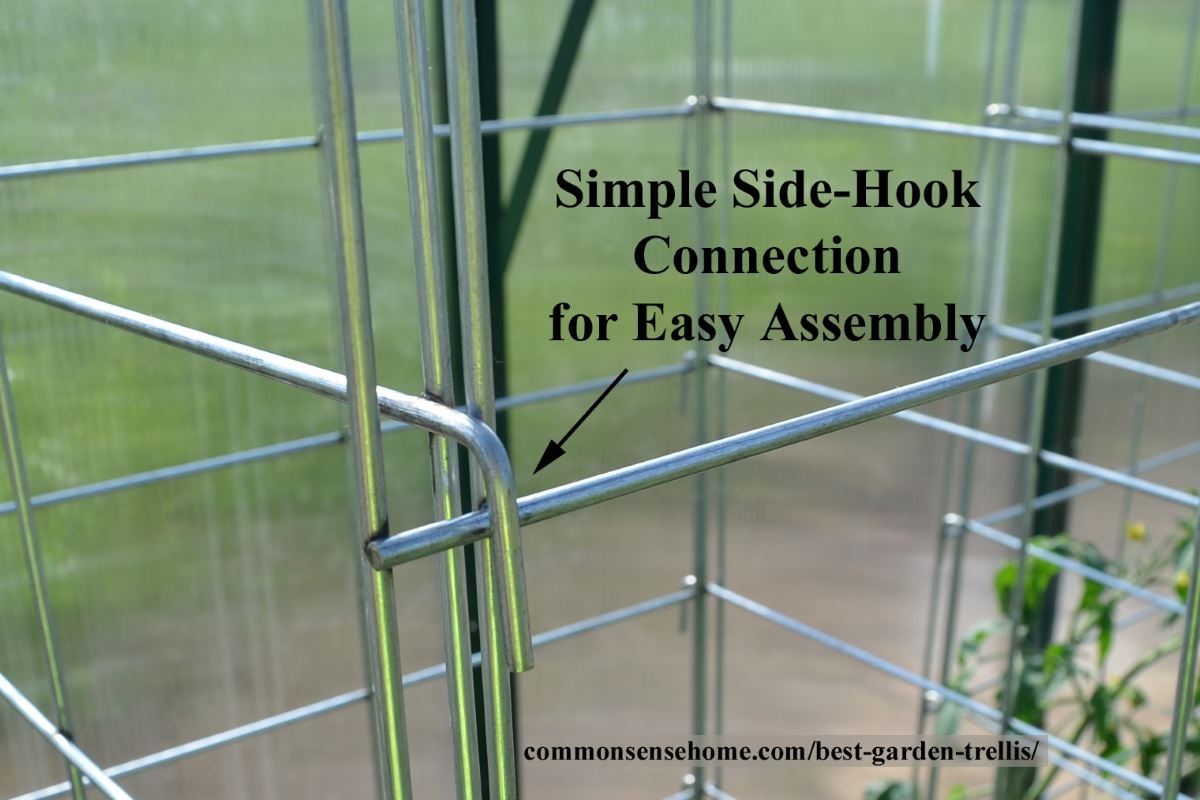
You can use the side-hook connectors to link a series of trellis boxes into a wall for wind resistance and extra support. When I use them in our garden, I add a t-post at the ends for extra wind protection. When I use them inside the greenhouse, I skip the extra support post.
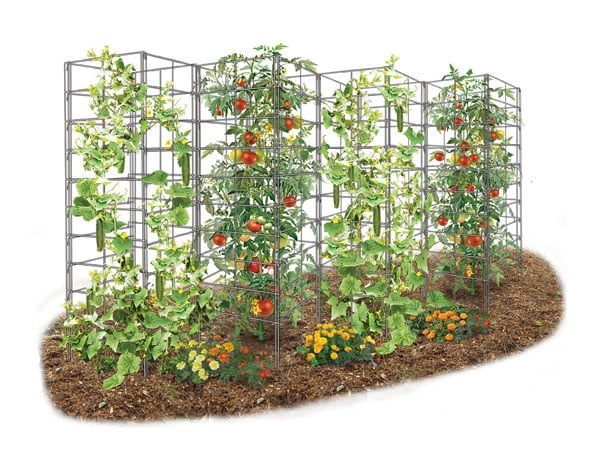
You can arrange the boxes as a “zigzag” support for a hedge or row of beans or peas. Or you can tether them flat against a wall or other upright support for vertical gardening or espalier applications.
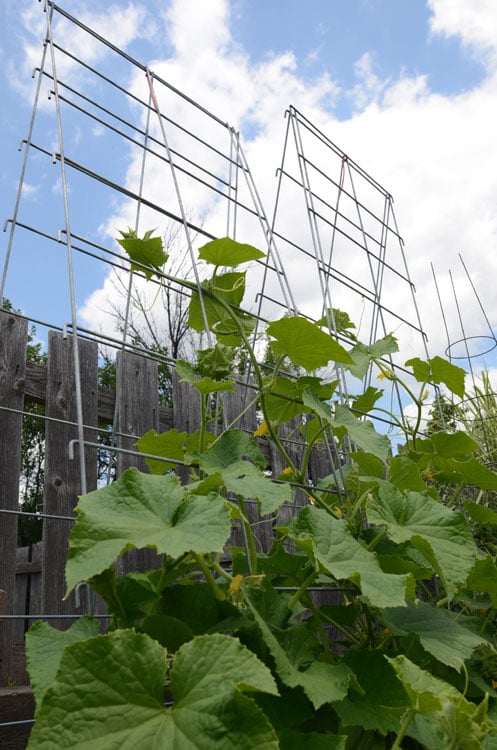
For vining crops such as cucumbers, squash or pole beans, you can choose an A-frame arrangement to get the vines up off the ground. This improves air circulation and reduces the risk of rodent damage.
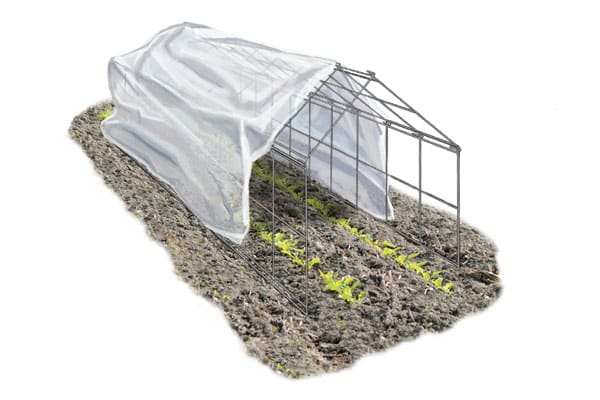
Finally, the panels can also be locked together to form a frame for a floating row cover or plastic to create a mini-greenhouse.
#2 – Strong and Durable
I don’t know about you, but the flimsy circular plant supports sold in most home improvement stores don’t work for me. Mom tried them for everything from flowers to tomatoes. Every single time either the plant got too big for the support, or the trellis tipped over in a wind storm. I tried using them a couple of times, and I had the same results.
As I mentioned above, the panels can be locked together in a diamond pattern to provide a more wind resistant support. Even with just two panels you can create a simple “V” shaped support that is much more tip resistant than a circle.
Dominic notes: “Every weld joint for 3/16” wire has a 2,000 lb. capacity. If a fruit is near one of those weld joints, it will be very strong. If fruit is slightly off one of the weld joints, you may experience a slight sag in an A-frame configuration.”
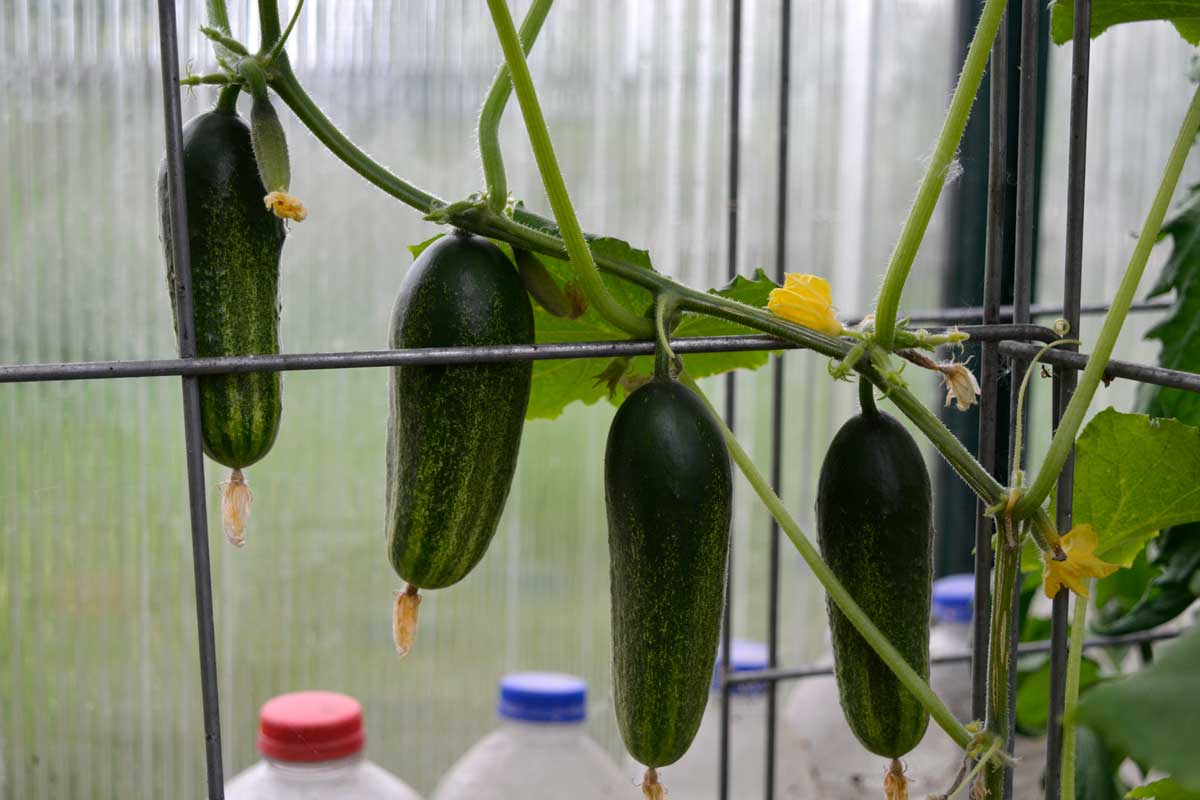
Here’s a shot of a beautiful line of cucumbers on our VineSpine trellis in the greenhouse.
#3 – You Can Mix and Match the Different Trellis Panels
I always thought it was cool that the boys’ Duplo block pieces worked together with their regular Lego pieces. That way, as they grew, they could use both sets together. With the Vine Spine™ garden trellis panels, you can mix together the panels with 6″ and 12″ openings however you like.
When I used them to box in my tomato plants in the greenhouse, I made sure that each plant had at least one panel with 12″ openings. That way it was easier to get my watering container in close to the pot.
#4 – Panels Store Flat
At the end of the season, it’s always a challenge to gather up the various garden supports and pack them up for storage. With the Vine Spine™ garden trellis modular design, you simply unhook the panels and lay them flat for storage.
No wrestling with big circle cages, and they go back together in seconds when it’s time to use them again. It is helpful to have two people on hand when you’re connecting multiple cages to make sure everything lines up correctly. We hang ours up on the wall of the garden shed attached to the greenhouse when not in use.
#5 – Made in America
Each Vine Spine garden trellis is made by Better Bilt Products, Inc. in Addison, Illinois. Better Bilt Products, Inc. has been proudly owned and operated by two generations of the Camp family since 1946. World News with Diane Sawyer ran a series titled “Made in America”. It said “if every one of us spent an extra $3.33 on U.S.-made goods every year, it would create nearly 10,000 new jobs in this country.”
From Dominic: “We make these trellises right here in our factory (Addison, IL). We beefed up the wire to outperform and outlast our competitors (both overseas and domestic).
Doing the math, we on average have a 45% greater cross section of material. We also have more overall wire compared to our competitors. Knowing this, there would be no issues with heavier vines like your winter squash you wish to support.”
Each panel is made with heavy duty 3/16″ galvanized wire for durability, strength, and weather resistance. These trellises are made to last.
Where to Order the Vine Spine Trellis
Ready to get your own Vine Spine garden trellis? Just visit Better Bilt Products, Inc.. The panels are sold in packs of 12, with either small openings or larger openings. I like the smaller opening for vining crops like cucumbers, but the large openings work well for tomatoes.
I know these panels are an investment, so I asked Dominic about the price. Here’s what he had to say:
When talking price comparisons retail to retail, we offer a very competitive value. I’m sure you are familiar with Gardener’s Supply? They offer 6-7 different wire trellis product options, whereas our system offers all 6-7 of theirs in 1 product.
Currently, we make other products using the same galvanized wire and have told our customers they would last 10+ years. (See our Top Hat Container Stabilizers as an example.) And after 7+ years – no complaints!
As you said, these would be an investment for a gardener. I ask myself a question when it comes down to making a decision on a product like this: What is the cost of convenience?
For a gardener to make their own trellis system, they have to access a truck that can carry 16’ hog panels. They must have the time and tools to fabricate to their own desired specs. We feel a large percentage of your average gardeners won’t have the means to haul. Nor do they want to take the time to fabricate themselves.
Our 12 pack pricing includes delivery across the continental US, ready to use right out of the box. My boss has a saying when comparing our trellises vs. the competition – “The most expensive thing you can buy is poor quality.” Certainly has a nice ring and truth to it.
Better Bilt also sells wire supports to keep pots from tipping over in the wind, smaller trellises for lighter jobs, plus an easy to assemble composting system. There are lots of great tools for the home gardener or professional grower.
10 Years of Using the Vine Spine Trellis
We got our Vine Spine trellis panels in 2015, so this will be our 10th year using the panels. They are holding up extremely well, and are easy to use and store. There’s no rusting and they are just as sturdy as the first year. I highly recommend them.
The only trouble we ran into was when they were loaded with tomato vines out in the garden and we had a big wind storm. The trellis tilted in the storm and we had to add extra supports. Now we add a t-post at each end by default when using them in the windy areas of the garden. In the greenhouse, I use them in a zigzag for cucumbers, which works great.
You may also enjoy:
- 8 Small Vegetable Garden Ideas & Growing Tips
- 11 Vertical Garden Advantages You’ll Love
- Growing Tomatoes (Organically) – 11 Tips for Success

This article is written by Laurie Neverman. Laurie and her family have 35 acres in northeast Wisconsin. They grow dozens of varieties of fruiting trees, shrubs, brambles, and vines, along with an extensive annual garden. Along with her passion for growing nutrient dense food, she also enjoys ancient history, adorable ducks, and lifelong learning.
Author’s note: Julie, the friend who photobombed the top photo, passed away in 2024. It was good to see her again in the old photos, so I didn’t edit her out, even though she is a bit distracting.
Originally posted in 2015, last updated in 2025.
We have some flowers at the back of our house that are toppling over so we’d use them on those and hopefully on tomatoes once we plant some – thanks!
Hello Laurie,
I would love to have a dozen sets of these, we have been trying to use many different things to support our growing plants, but I think these would be more efficient. I would use them to grow tomatoes, beans, peas, any climbing vegetable, they seem strong enough for small melons or pumpkins…
If you have a coop or similar bulk buying arrangement in your area, they can do discounts for large purchases.
I am always looking for better ways to garden. I would definitely try the tomato cage as well as the trellis for beans and peas.
What a great idea! There are so many things I could use them for, especially my tomatoes since they got so big last year the wire cages fell over.
I would use it for snow peas first then for my tomatoes and cucumbers later in spring.
We’d use these for our tomatoes, beans and cucumbers. This would be a massive upgrade for us since our cages and simple garden stakes seen to always fall.
I would use it to grow several varieties of grapes.
This would be for my parents garden. I’d use them as a shield so the next-door neighbours have some privacy; as they cut down part of the hedge. And as impetus to start gardening instead of mowing a huge lawn. Thanks.
P.S. Culling my blogs I’m following and you make it onto the short-list. Good job.
Thank you.
I would use these panels in so many ways in my garden, but I’m most excited about trellising my cucumbers. and I’d love to get rid of the squirrelly tomato cages! As I grown squash and melons, the shelf add-on would come in handy, too. Thanks!
This is the perfect solution to my city-lot backyard garden. The wooden stakes I am using now just aren’t holding up. And the available shelves will add the versatility to use these panels for melons and other large-fruiting vines. Definitely a must-have for next season!
Hi,
I would like to use it for squash (butternut, kabocha and acorn varieties), beans and melons. My squash has overgrown into my bean patch this year. Will definitely need a trellis for next year.
Thank you for this opportunity to win.
Shirley
I would love to try them on tomatoes.
I recently built several raised beds to use in my yard. These will give me lots of options to grow various items. Love them.
These are awesome. I would use them for my tomatoes and cucumbers now and in the future for green beans and other items as well. The shelf option would be interesting to see how it would hold up to the larger items but I would be interested.
I need to hold up (and hold back!) my raspberries, which are taking over my squash trellis. These are really good-looking trellises.
I need trellises or fences to hold up (and hold back) my raspberries. I think the A-frame configuration might work for that. Right now, the berries are mostly out of control and taking over the fences my squash are growing on.
These look awesome.
These look great. Strong, flexible, durable – perfect.
I’d use them for tomatoes, beans, peas and cucumbers.
either pole beans or cucumbers.
Just discovered that Muscovy ducks like tomatoes…. they would not get as many if I had these to support some of the closest tomatoes to their wandering area! Hint, Hint. Thank you for the chance to win!