
About Common Sense Home
Common Sense Home is a trusted online resource dedicated to empowering individuals and families to embrace self-reliant, sustainable lifestyles.
With its focus on practical advice and actionable solutions, the brand provides a wealth of knowledge in areas like gardening, food preservation, natural remedies, homesteading, and preparedness. It combines traditional wisdom with modern techniques, appealing to those who value resilience, independence, and a connection to the land.
Common Sense Home speaks like a trusted neighbor or mentor, offering guidance that’s both approachable and reliable. We’ve been at this for decades, and we know stuff, and share what we know.

Why we talk about Resilience and Abundance
We started the site simply to share our story, but it’s become more than that. We live in challenging times, and the “resilience and abundance” mindset is critical to prosperity.
Resilience
Resilience is the ability to adapt, recover, and thrive in the face of challenges, adversity, or change.
“Fall seven times, rise eight.” – Japanese Proverb
We empower individuals and families to adapt to challenges by building skills, creating food security through gardening and food preservation, and enhancing energy and resource efficiency.
We emphasize proactive measures to prepare for emergencies, while fostering a deeper connection with nature and a simpler, more intentional lifestyle.
Abundance
Abundance isn’t just about having more, but about appreciating and wisely utilizing what you have. It’s about becoming creators, innovators, and producers, instead of just consumers.
There’s enough “pie” for everyone if we learn how to make more “pie”. When we do well, we can share our surplus with others.
We encourage readers to cultivate abundance through practices like gardening, preserving food, and reducing waste. Be thankful, and build a life rich in skills and community. Live in harmony with nature, and enjoy meaningful experiences.
What’s the plant in the Common Sense Home logo?
Just in case you’re wondering about the plant in the Common Sense Home logo, it’s common plantain, Plantago major. My grandmother called it medicine leaf, and it was one of the first wild plants that I learned to use.
I chose as a reminder that the help you need might be found where you least expect it. It also teaches us to thrive in adverse conditions, as it grows in rough conditions, like sidewalk cracks and compacted soil.
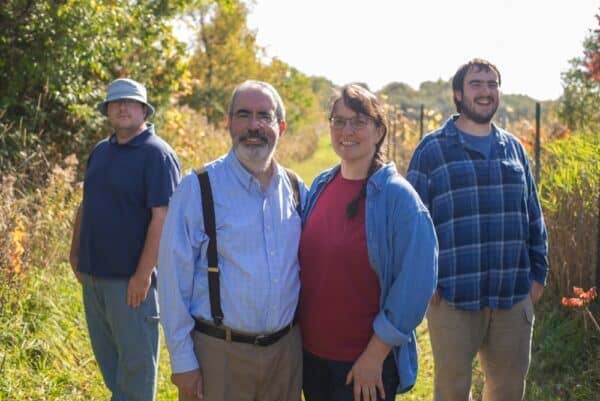
Our Story
Common Sense Home started as a way to share our story as we moved out to the country to pursue a more self-reliant lifestyle. Over the years, we’ve helped millions learn about growing your own food and medicine, food storage and preservation, emergency preparedness, and more.
Our Homestead
We began our marriage staying with family while we built our first home in the suburbs of Green Bay, Wisconsin. We filled the yard with dwarf fruit trees and gardens, but we always dreamed of our own place in the country.
In 2004, we decided to take the plunge and move so our sons would grow up on the homestead. We found our land when Laurie spotted a “For Sale” sign tipped over in a ditch. The home was built in an old cow pasture after we swapped land with a neighbor for a driveway to get to the landlocked pasture.
Our family’s Green Built certified home includes an attached greenhouse, root cellar and canning pantry, which extend the growing season and allow us to store food for year round use. We also built a coop/greenhouse complex, for chickens, ducks, and growing more food. Eventually we added two ponds, solar panels and a workshop.
Learn More About Our Northeast Wisconsin Homestead
Our Homestead – Then and Now – How Things Have Changed
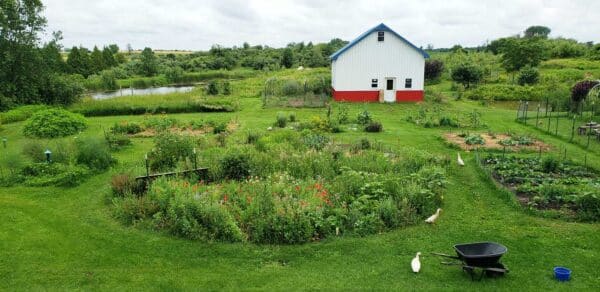
The Gardens
The raw land was rough, with compacted soil closer to the house and thick grass roots farther away. Our first garden was a sad, weedy mess, planted with a few leftover transplants from Laurie’s mother.
Over time, we added many garden beds, two orchards, nut trees and shrubs, and other edible and medicinal plants. We went from soil that the boys had to use a pick ax to break up to soil that looks like chocolate cake.
Overcoming Adversity
Things haven’t always been easy, but we’ve made it through as a family. In 2008, August lost his job during the economic downturn. After a year of freelancing, he found a full time position – an hour and a half away.
We debated selling the homestead and everything we’d worked for, but decided to hang on. August came home on weekends, and Laurie and the boys kept the homestead going. After five long years, August finally found a position back in the area and the family was back together full time again.
Then, in 2015, Laurie had a debilitating attack of psoriasis, with peeling, blistering skin over about a third of her body. When the “experts” told her to live with it, she took matters into her own hands, and figured out a way to clear her skin.
At the end of 2023, August’s full time job ended. He started a consulting business, but things are different from the first time he lost his job. Now, we have other revenue streams. We also produce most of our food and electricity. No matter what happens, we can make it through together.
Laurie Neverman

From a small dairy farm in northwest Wisconsin, to catering, to working as an engineer at the world’s largest solar water heating system, and back out to the country again.
August Neverman IV
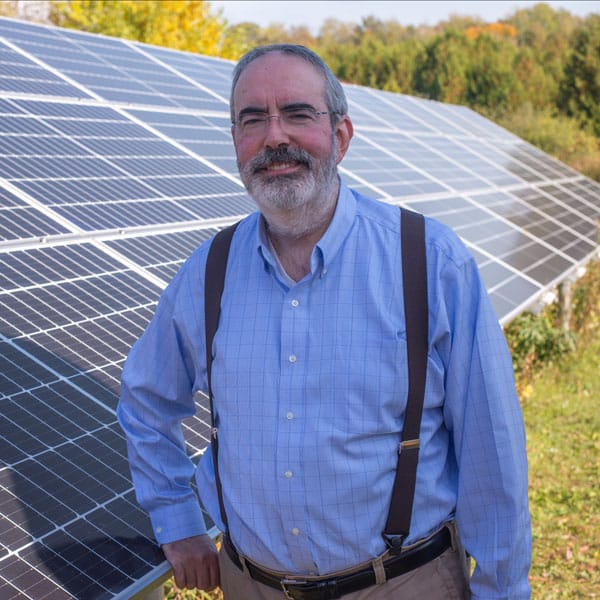
Broadband Champion, I/T and Cyber Security strategic coach, disaster preparedness and business continuity and business process consultant.
Duncan Neverman

Gardening guru, massage therapist in training, Mr. Fix It, kitchen whiz, energy healer, and duck whisperer.
August Neverman V

Tech troubleshooter, builder, repair guy, and chicken wrangler.
Contact Us
You can reach us via email at laurie@commonsensehome.com.
We do not accept unsolicited guest posts.
Most of the photos featured on the site are from our homestead, but we do use some stock photos from depositphotos.
Sorry, I meant integrity on line. Fingers faster than brain
I have been trying to get your newsletter and cannot get on. They said I must change to aol.com.
My e-mail stand for intergrity on line 24 Not aol. Can you see what you can do? I have a son and daughter-in-law so very interested in natural living and I am interested also. Thank you for anything you can do.
Vicki, I entered your email and it seemed to work. I’ve sent you a link to the book download page, and you’ll be receiving an email with a link that you need to click on to confirm your subscription. Welcome.
Laurie: My husband and I are seriously planning on building an ICF home in Savannah, GA. I read your article about living in an ICF home. Is it true the outside can be made to look like a normal home? Any advice or warnings you have for me I would appreciate. And is it true that it only costs about 10% more than regular homes?
Thank you
Hi Beth. Yes, the outside can be finished just like a conventional home, but the builder will have to know in advance what the finish will be. For instance, a brick exterior requires a slightly different pour so that there is a lip/ledge for the brick to rest on. It will also keep down costs if the house is rectangular, since that’s a much simpler pour. If you can fit your footprint to match typical building material dimensions, that will help keep costs down, too. You’ll note that our windows are lined up between the basement and main floor. This is preferred because it makes the structure safer and easier to build. I’m not sure what the current cost is, since we built a decade ago, but the 10% was our builder’s estimate at the time.
Overall the house has performed very well, but we did run into some trouble this past fall with some mold/mildew in the basement. We had a record setting snowfall last winter, coupled with a cold wet spring and a cool summer, then a cold, very wet fall. It set the stage for perfect mildew conditions. If you do choose ICF, make sure you have forced ventilation, and make sure you use it when needed. I try to use natural ventilation whenever possible, but with the lousy weather, it just didn’t work, and it took me a while to spot the problem because that room is used less frequently.
Not really a comment or reply just a huge question. You posted your mounds and almond joy recipes and mentioned the type of pans you used to do the bars. Could you give me a heads up as to where you found them as I haven’t come up with them yet. I would love to find them asap for New Years guests so no hurry =o)
Thanks for all you do I catch you on facebook..
Hi Connie. I ordered the molds I used off of amazon.com – the “cupcake” mold and the square silicon mold. There are links in the post, too – https://commonsensehome.com/homemade-mounds-almond-joy/
Laura
I found your beautiful vertical hanging succulent trellis idea on Pinterist. It was found on commonsensehome.com but I can’t find the instructions for making it. Can you help?
Daryl
I’d love to be able to do that, but unfortunately, someone pinned an image of something I’ve never done, and linked it to an unrelated post on my site. If you see this response, could you post a link to the pin that you saw? I have a friend who raises succulents, so I’m thinking about hiring her to make a similar project for all the people who’ve been asking.
What I’m passionate about at home is seeing evidence all the time of the health of the ecosystem. Our apples have little codlin moth, no doubt because of the thick undergrowth of weeds around them harbouring plenty of predators. It’s springtime for us, and the weeds are growing wonderfully. An Australian named Peter Andrews who has pretty revolutionary ideas about water management on the broad scale, talks about the value of letting the weeds go to seed, as that is when they are bringing the maximum amount of nutrients up from the depths of their root system. He advises waiting until seed is set before slashing or grazing them down. On a small scale, I use the catcher on the motor mower and lay it out around the fruit trees as mulch. Excess is composted, sometimes after sterilizing the seeds by exposure to hot sun in a black plastic bag, or by microwaving. I’ve a row of Chaenomeles japonica bushes which are very spiky, managed by pulling weeds and mulching once or twice a year. The weeds growing in the broken down mulch from previous years, are easy to pull by hand. What I need to learn about is all the other uses each individual weed can be put to. There is a vast pharmacopoeia’s worth out there. A herbalist once walked a group of us through a paddock, stopping to tell of this famine food or that medicinal herb, every few paces. Even in the Australian red center, the Aboriginals had lots of different resources. On a walk for us tourists at Uluru / Ayers Rock an elderly couple showed us a food source every 50ft or so.
That’s interesting! I’ve learned that many weed seeds are edible to humans, too, either as a cereal grain or sprouted for use as sprouts or microgreens. I don’t know if you took a peek at the garden post that went out in the newsletter, but in it I talk about the weed seeds in the garden.
Hi, I wanted to leave a comment regarding the epic kitchen giveaway but I don’t see it on your site. So I am leaving it here. I want to thank you for a chance to win and I love all the items. Have a wonderful holiday season.
Hi Lisa. The giveaway is here – https://commonsensehome.com/easy-cranberry-walnut-pie/
Hello Laurie!
Your new site design looks beautiful!! Thank you for all that you are doing for me, newbie homesteader in British Columbia, Canada!
Welcome, Teri, and watch for big changes over the next few weeks.
I was wondering if you had any suggestions for hot flashes, they are driving me crazy.
I don’t have a post on the site about that yet, but some of the remedies that help with a woman’s monthly cycle will also help ease menopausal symptoms. You might try – https://commonsensehome.com/herbal-remedies-for-pms/.
The article “Natural Remedies for Hot Flashes” also mentions Black Cohosh, Red Clover, Dong Quai, Ginseng, Kava and Evening Primrose Oil.
Also be careful when using herbal remedies, checking for possible drug interactions or sensitivities. Anything strong enough to be medicine is strong enough to use with care.
Love your web site, I am getting two of the same emails at a time.
Madell, did a quick search and found two emails listed for you, so I deleted the older one. Next week you should be down to one. 🙂
How I stumbled across your website . . . I don’t know (maybe with a simple cheese recipe). BUT I AM SO GLAD I DID!!!! I am so happily overwhelmed. Everything I ever wanted to try, experiment, etc. is here! I could read for months but of course that wouldn’t get me DOING. I am so excited. I started reading in the garden section. growing up and into young adulthood my mom & g’ma had green thumbs. Me? Mine was black!!!! Until they passed. I believe they willed me their green thumbs ’cause now I do pretty well in the garden. But I have so much to learn! I am temporarily in MD for the next year (an entire rotation of growing seasons) and had been unable to get my hands dirty until a nice opportunity arose. I was given about a 50yd x 25yd of an old corn field to play with. Whoo hoo! Oh no. I didn’t and still don’t know anything about the weird climate on this side of the country. The local Master Gardners came out and helped me get going. Obviously we didn’t only used about a 40 x 25 ft area. It would be too much for just me otherwise. I have so much to learn and am so grateful for the knowledge I am obtaining from your website. Thank you. I am looking forward to a bumper crop of vegies and storing seeds for next years garden in CA.
Welcome, Devora, and thank you for your kind words. God must have known I needed a pep talk. This weird weather and everything else going on with moving my husband home this spring has thrown a monkey wrench in my gardening, but I know I just need to stick with it and get things done, even though it’s a terrible mess right now. Thanks for taking time to leave a positive comment. 🙂
Laurie I love your articles. I studied horticulture for a couple of years in St. Louis and was able to work at Shaw’s Botanical Gardens through a work/study program through the school (several years ago!) That experience embedded a deep love of all things in the garden and it’s been a life long endeavor to always have a beautiful yard – with vegetable plants tucked in wherever I can! I noticed your grow lights. Do you have a good source for these? They used to sell the bulbs at the hardware stores but I have been unable to find them lately. I kept my Kumquat trees going this winter by a single full spectrum bulb in the garage but would love to expand to starting my seedlings again under the fixtures. I used to germinate my seeds in old metal ice cube trays with cut glass tops (to slide off and on) on top of the furnace in my basement. I miss the thrill of hundreds of flower and veggie seeds poking thru the mix! Regards, Kathy
We purchased ours at the hardware store, too, quite a while back. I noticed when searching online, I was getting a lot of results for single, screw in bulbs, and not much else. Maybe ask at a local gardening or hardware store?
Working in the earth is good for the soul. 🙂
So nice to stumble upon this blog! My husband grew up in Kewaunee and my in-laws still live there!
Small world. 🙂
How long will the herbal class be offered? Thank you.
It’s a work at your own pace program with open enrollment, so it should be available indefinitely.
Do you have printer friendly versions of posts available? We do not have internet at our farm. Thanks!
I just added the Print Friendly bottom to posts. Hopefully this will work for you.
Love the recipes. Like to cook with beans and always looking for new ideas. I have a request though. My mother had a cookbook for pinto beans that included a recipe for chocolate cake. Unfortunately it was lost in a house fire and I have been unable to find it. If anyone knows what I’m looking for and where to find it I would appreciate your help. Thank you.
Not sure what your mom’s recipe was like, but here are a couple chocolate bean cake options:
http://blueviolafarm.blogspot.com/2012/03/eat-your-beansfor-dessert.html
http://healthyindulgences.net/2009/05/healthy-chocolate-cake-with-a-secret/
Thanks very much for accepting me to your folds and want to express my joy for being part of your discussions,I read comments from the group and learn more as I keep using my common sense to lead my life,the use of our common sense could have saved our world the many lives lost to diseases created by man in search of real wisdom and common sense.
Thanks again and hope to be here till dooms day.
George Henry Amoah.
Skype:george-henry-amoah.
Hello,
Just thought I would throw my two cents out there for you.
Came here by way of Home on the Range (Brigid) blog.
What you post about is what I am striving for. I would like to get all gushy about how excited I am to see your blog…but just can’t put the words down and not cringe at them!
I can say that I am very grateful for finding my way to your electronic life. I can also thank you for sharing your life with us.
Sincerely, Pam
Thank you, Pam. It’s really nice of you to take the time to comment and share such positive thoughts. 2013 has been a bumpy year for us, but we’re still trying to hold on to the dream. We have each other, and are reasonably healthy, so in the end that’s the stuff that matters most.
HI, Just found your blog and I really like it.
I’ve been looking into growing stevia for I’ve
tried several from the stores and have not
found one that I like and plus the cost is crazy.
So I want to grow my own and well the seeds
you suggest don’t show an organic symbol and
I’m not always sure how to deal with seeds that
don’t have the organic symbol.
Also if I buy seeds now can I sow them outside
I am in zone 9 or 10 sounthern California?
Thanks for all your help and now that I’ve subscribed
I have a feeling I’ll be taking a journey with you all. 🙂
There aren’t all that many places that stock organic seeds just yet, and I haven’t yet come across any certified organic stevia seeds, but they may be out there. Many small producers find organic certification to be cost prohibitive.
I haven’t grown in zone 9/10, but I suspect that the seeds would indeed grow and germinate in your area directly sown outside. It just might be easier to baby the seedlings and keep track of them if they are sown inside and transplanted out. They tend to have a low germination rate, so every seed sown will not give you a plant – fussy little things that they are. Once they get growing, they are fairly tough.
Welcome to the site. We can learn together.
http://www.rareseeds.com
Hi Laurie, I was hoping to get your input on a project that I’ve been pondering, first a mini bio. I have serious back & neck problems as well as with my left knee, ankle & foot. I live on a fixed income so I am always looking to save where I can. I’m unable to work on my knee’s or in a bent over position as one would with gardening. I currently live in town and the duplex I rent has an attached brick flower bed out front that stands approx. 30″ from ground to top. This past summer I decided to plant Tomatoes in the flower bed and It worked great! I could stand and tend to my plant’s without all of the pain. I even enjoyed some of the comments people walking by would make about my beautiful flowers, lol.
However, the space is limited.
As for my project, I would like to build a raised garden, or what I’ve been referring to as a standup garden. I was thinking of a narrow rectangular shaped plot that would allow enough room for 2 rows of crops. This way I would be able to walk along one side of the plot tending to 1 row and back down the other side tending to the 2nd row with little or no bending involved.
My questions are:
1) What would the width of the plot need to be to accommodate 2 rows of plant’s (primarily vegetables)? The height of the box would be 24″-30″ with no floor, so room for the root system wouldn’t be an issue.
2) What materials would you recommend for the walls? I’m leery of any materials that may have been treated with any sort of chemicals for things such as weatherization, pests, etc.
3) What would be the best soil mixture for a plot of this type?
4) Lastly, I need to keep this as cost efficient as possible. I only need food for myself and wish to eventually have a constant 1 year supply of a continuous rotating stock of canned goods. (again, primarily vegetables)
Any advice would be greatly appreciated. Even as to whether or not this is a plausible idea.
Thank You for your time, God Bless,
Steve
I recommend checking out the book “Square Foot Gardening” to give you a detailed listing of spacing requirements of a large selection of crops.
As for walls, it really depends on your budget. Cedar and some other woods are naturally pest resistant without treatment, as are some composite materials. Check around your local lumberyard and home supply stores and see what’s available in your area that will fit your budget. Concrete might also be an option.
You can check out this post for good info on organic potting mixes: http://www.extension.org/pages/20982/organic-potting-mix-basics
Thanx Laurie,