
Stevia Plant – How to Grow It & Use It

This post may contain affiliate links. Read my full disclosure here.
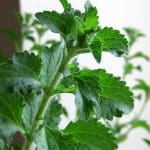
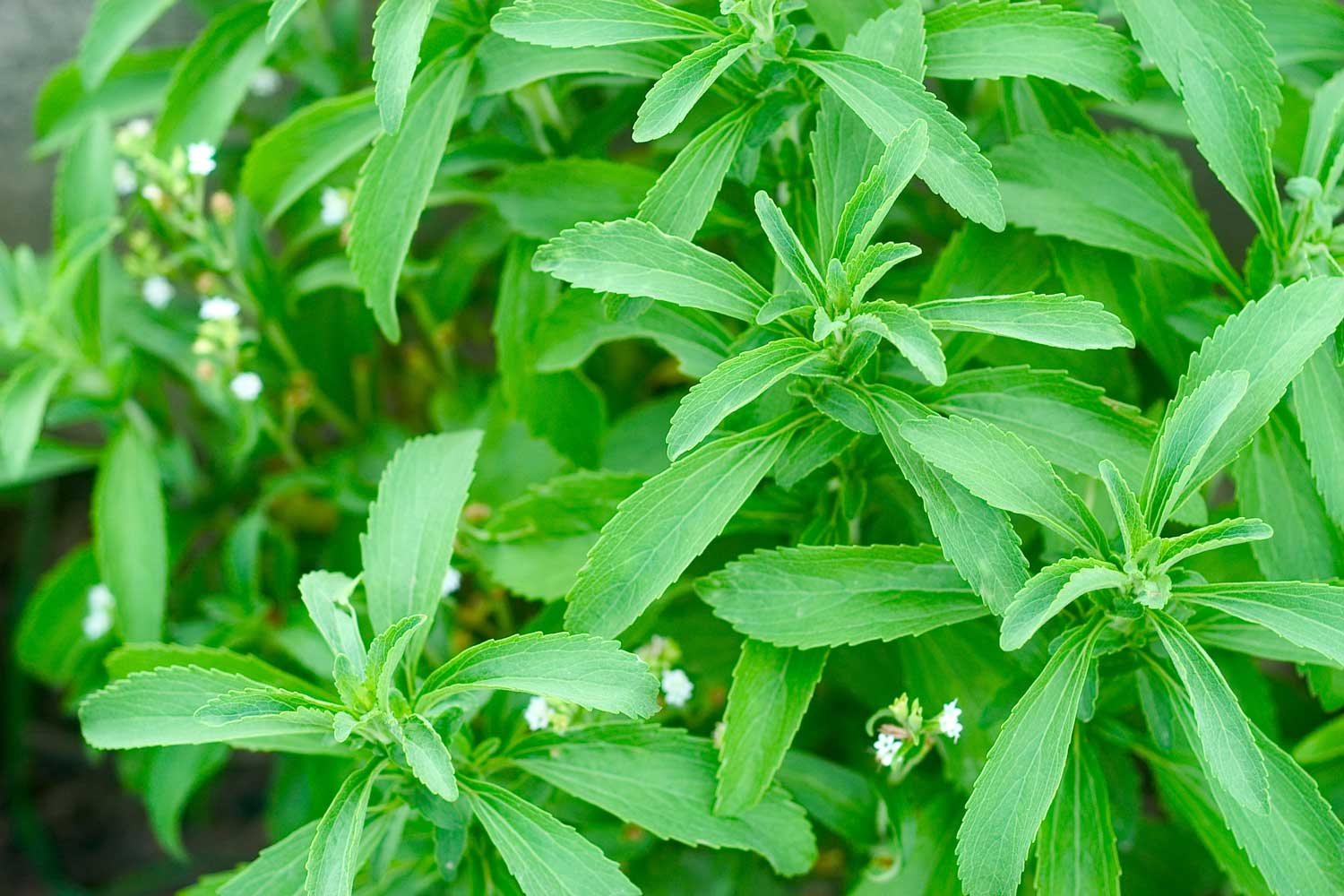
The stevia plant (Stevia rebaudiana) is one of those garden additions that easily pays for itself. This sweet herb produces intensely sweet leaves you can use fresh, dried, or turned into extract—making it a practical, homegrown sugar substitute.
If you’ve ever looked at those tiny bottles of stevia extract and thought, “That’s pricey for what it is,” you’re not wrong. The good news? Growing stevia at home is straightforward, and once you have a healthy plant, you can make your own sweetener for pennies.
Let’s walk through what stevia is, how to grow it successfully, and how to make stevia extract at home.
Would you like to save this?
Table of contents
What is a Stevia Plant?
Stevia is a small shrub native to South America, especially Brazil and Paraguay, where it has been used for centuries as a natural sweetener. The leaves contain compounds called steviol glycosides, primarily stevioside and rebaudioside, which are responsible for its intense sweetness.
Depending on the variety and growing conditions, stevia leaves can be 50 to 300 times sweeter than sugar—without raising blood glucose levels. That’s why stevia has become popular as a natural sweetener for those trying to reduce sugar intake.
Unlike many artificial sweeteners, stevia is heat stable, so it can be used in cooking and baking (though it behaves differently than sugar, which we’ll touch on later).
The Joint FAO/WHO Expert Committee on Food Additives has evaluated purified steviol glycosides and considers them safe within recommended intake levels. This helped pave the way for wider use in commercial stevia products.
See “Are There Any Side Effects of Stevia” for a more in depth discussion.
Growing Stevia in Your Garden
Growing stevia is similar to growing other tender herbs, but it does have a few quirks to keep in mind.
Stevia prefers full sun, especially in cooler climates like ours in northeast Wisconsin. In hotter areas, a little afternoon shade can help prevent stress. It thrives in well-drained soil rich in organic matter, and like many herbs, it doesn’t appreciate heavy chemical fertilization. Too much nitrogen can lead to lush growth with reduced sweetness.
Consistent moisture is important. In its native habitat, stevia often grows near water sources, so aim for evenly moist soil—not soggy, but never bone dry. A layer of mulch helps regulate moisture and soil temperature.
Plants typically grow 1–3 feet tall and about as wide, forming a bushy, leafy plant. Give them room to spread, whether in garden beds or containers.
Since stevia is frost-sensitive, treat it like a tender perennial. It may overwinter in warm climates (zone 8+), but in colder regions, you’ll want to bring plants indoors or take cuttings before frost.
A well-tended stevia plant may produce for 3-5 years or more, but becomes less vigorous with age. You can start new plants with cuttings or natural layering. (Plants will often root where a stem stretches and contacts the ground.)
Starting Stevia from Seeds or Plants
You can grow stevia from seed, but germination can be a bit inconsistent. If you’re starting seeds indoors, plant them 8–10 weeks before your last frost date in a light seed starting mix. Barely cover the seeds, as they need light to germinate, and keep temperatures warm (around 75–80°F).
Seedlings usually appear within 1–2 weeks. Once they’re growing well, thin to one plant per cell and keep them under good light to prevent legginess.
Many gardeners prefer starting with nursery plants for a more reliable start. Either way, wait until all risk of frost has passed before transplanting outdoors. I’ve had good luck with starting plants from seed indoors and transplanting out to the garden. You can grow many plants from seed for the price of one nursery plant.
When and How to Harvest Stevia Leaves
Timing matters when harvesting stevia leaf. For the sweetest flavor, harvest leaves before the plant flowers. Once flowering begins, the plant shifts energy away from leaf production, and the sweetness can decline.
You can harvest fresh leaves as needed or cut back the plant by half once or twice during the growing season to encourage bushier growth.
If you plan to overwinter your plant, leave several inches of growth intact so it can recover.
Drying and Storing Stevia Leaves
To preserve your harvest, you can dry the leaves for later use.
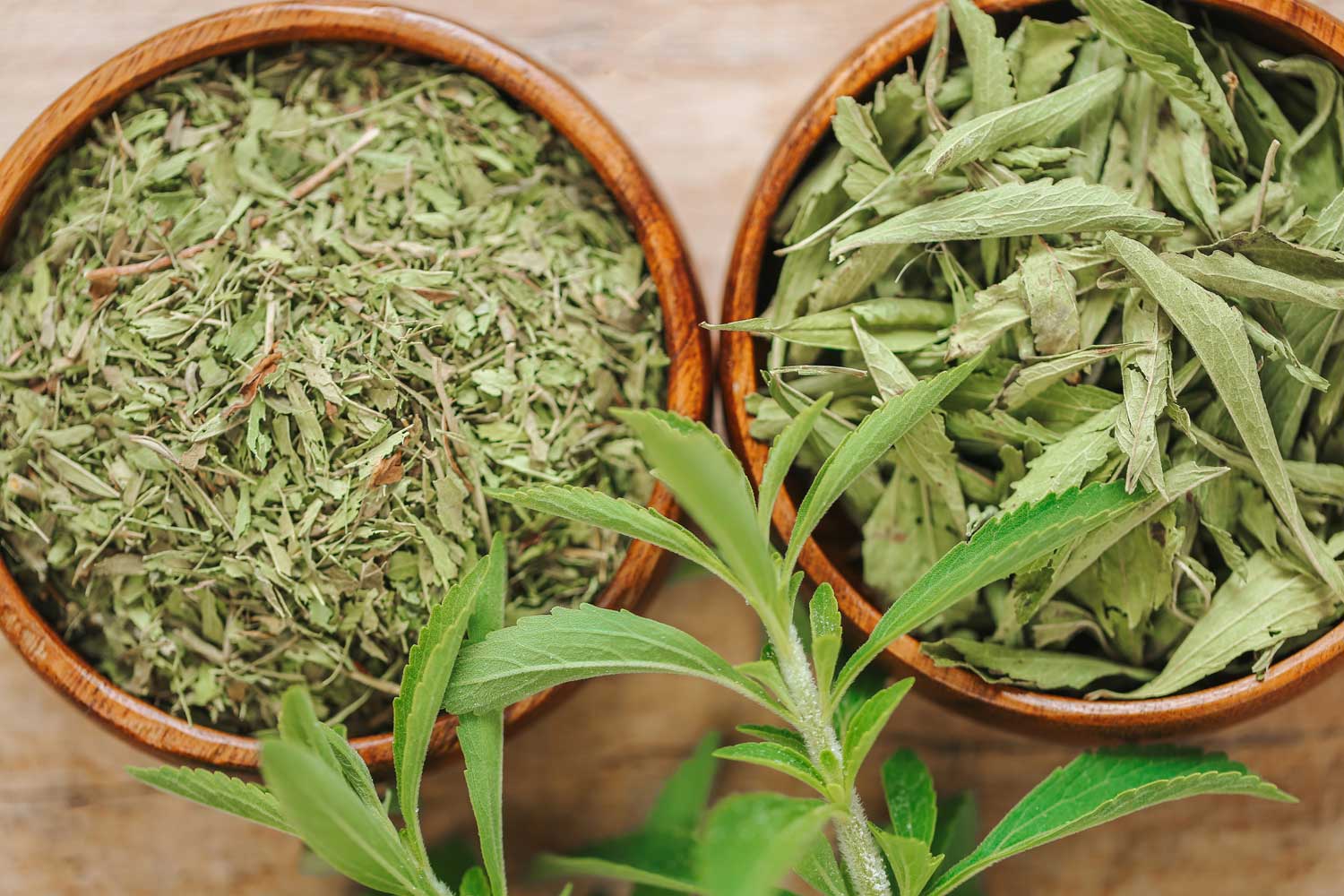
Cut stems and hang them in small bundles, or strip the leaves and dry them on low heat in a dehydrator. Once fully dry, store the dried leaves in an airtight container away from light and moisture.
Dried stevia keeps well for a long time, and you can crush it into stevia powder as needed. Keep in mind that whole leaf stevia has a slightly different flavor than refined products—more herbal, less “clean sweet.”
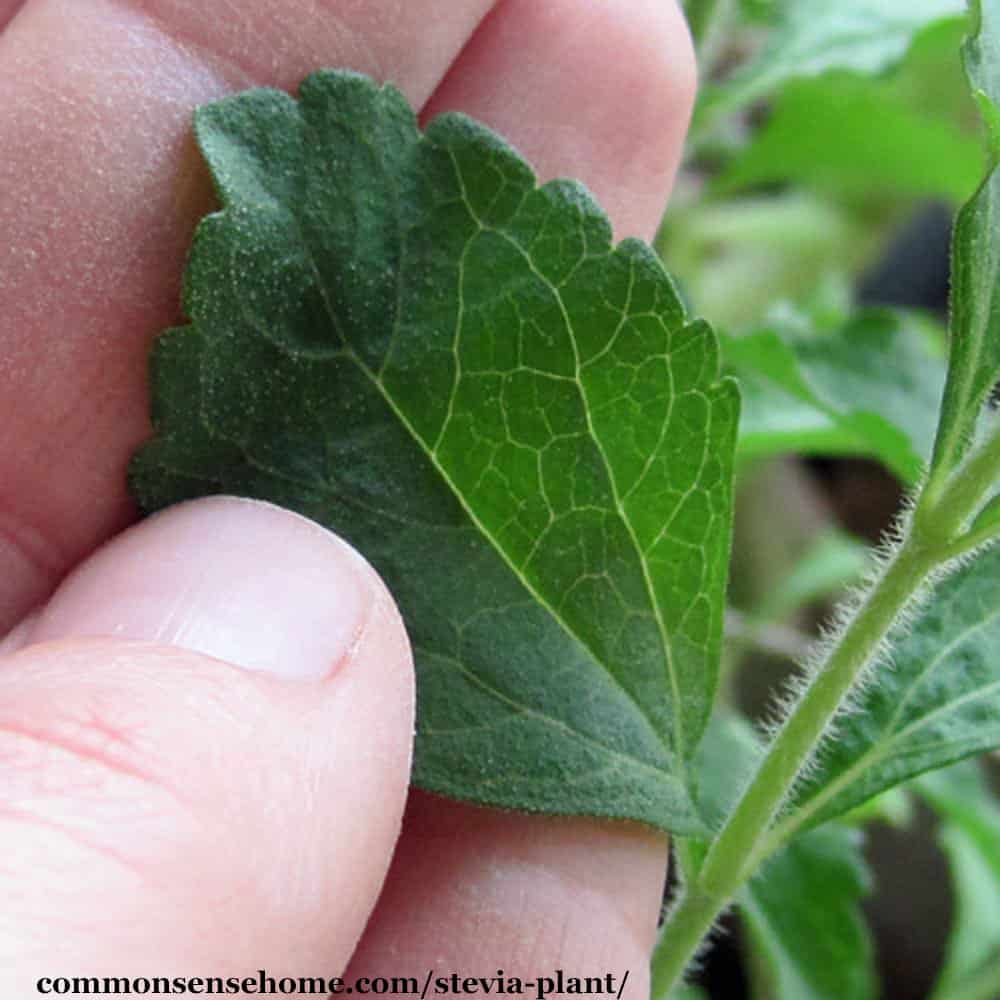
If you look closely, you can see that the leaves and stems are somewhat fuzzy.
Stevia is a naturally sweet tasting herb. You can chop and tear the leaves and add them directly to tea blends, or make a stevia extract as directed below.
How to Make Stevia Extract (Alcohol Method)
If you really want convenience, learning how to make stevia extract is a game changer.
Start with clean stevia leaves, either fresh or dried. Chop them and place them in a glass jar, then cover completely with vodka or another neutral alcohol.
Seal the jar and let it sit in a cool, dark place for about two days, shaking occasionally. Don’t let it steep too long, or bitterness can increase.
Strain out the plant material using a fine filter. To improve flavor and shelf life, gently warm the liquid on low heat for 20–30 minutes to evaporate some of the alcohol. Do not boil.
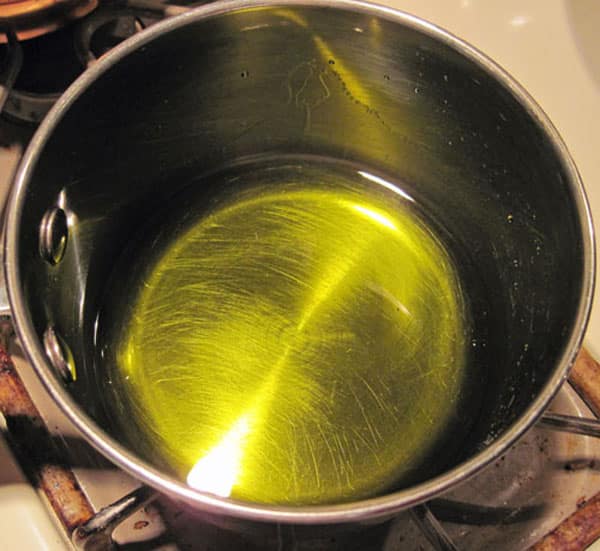
Once cooled, store your extract in a dark bottle. (I recycled a vanilla extract bottle.) Tincture bottles with droppers are great if you have them available, as it only takes a few drops of extract to sweeten a drink or recipe.
Don’t let it sit longer to try and get a stronger flavor. Longer steeping can increase bitterness. Don’t include stems so you have more material. They don’t contain much steviol glycoside, which is what makes the stevia sweet.
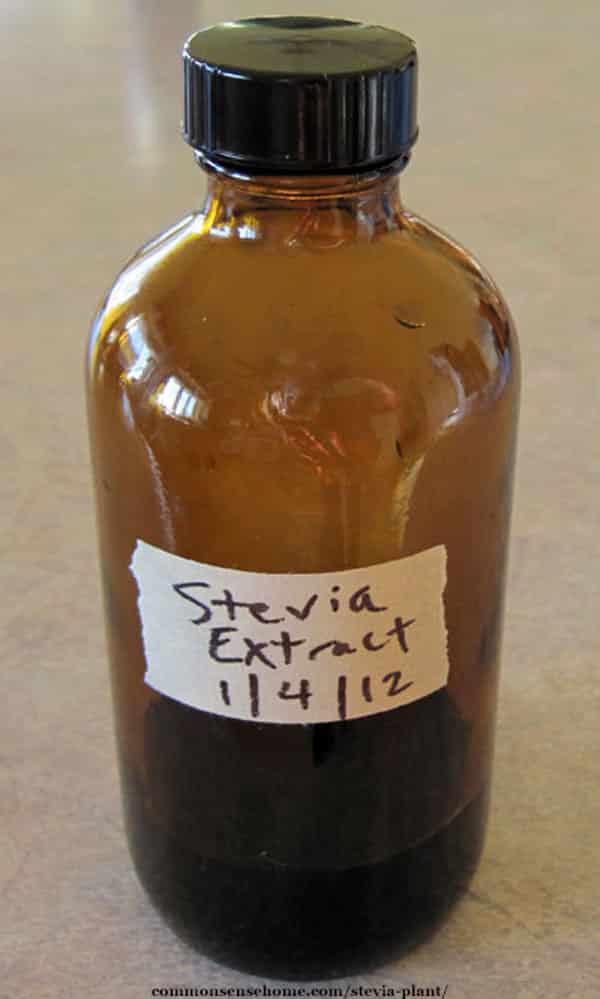
Cover, label and date. This stevia extract will keep for around three months in the refrigerator. I found this extract to be quite sweet with very little bitterness. Given that the tiny bottles of extract sell for at least $10 each, you can see how going homemade can save money.
You can watch the video below to see me make up our latest batch of extract. (If video doesn’t display, make sure ad blockers are off.)
Make Homemade Stevia Extract with a Water Base
For an alcohol-free option, combine dried stevia leaves with hot (not boiling) water and let them steep for about 40 minutes.
Strain and store in the refrigerator. This version has a shorter shelf life—about 1–2 weeks—but works well for sweetening tea or other beverages.
Using Your Stevia Plant
You can use stevia in several forms:
- Fresh leaves – add to tea or herbal blends
- Dried stevia – crush into powder for recipes
- Liquid extract – easiest for consistent sweetness
Because stevia is so concentrated, a little goes a long way. It doesn’t behave like sugar in baking, so expect some trial and error.
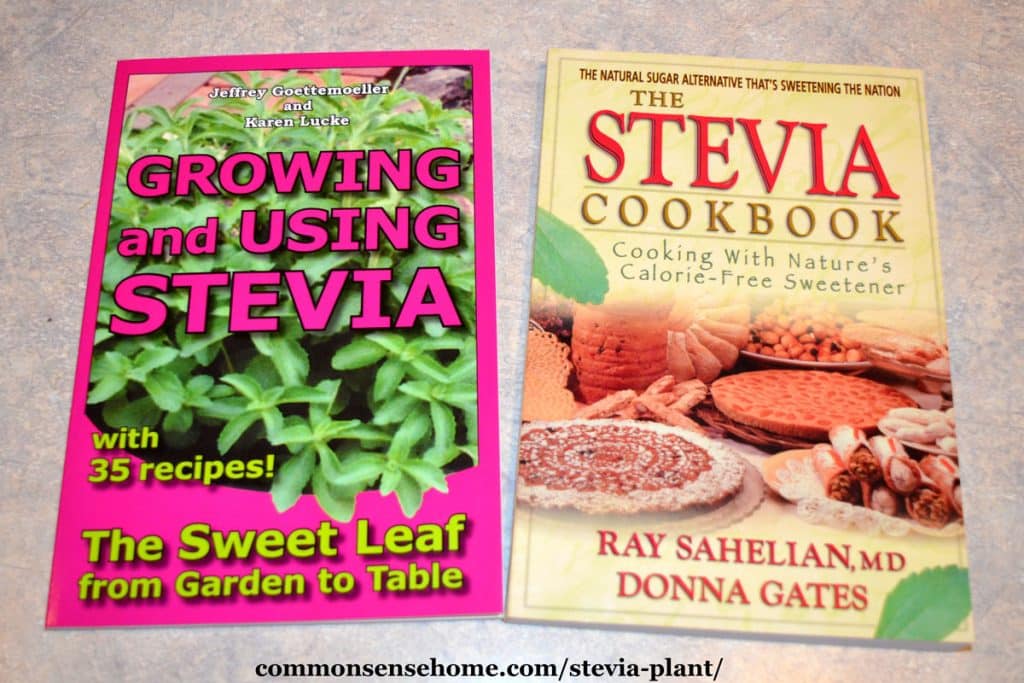
As a rough guideline, just a few teaspoons of dried stevia can replace a cup of sugar. Results vary depending on the recipe. I suggest getting a stevia cookbook to shorten the learning curve.


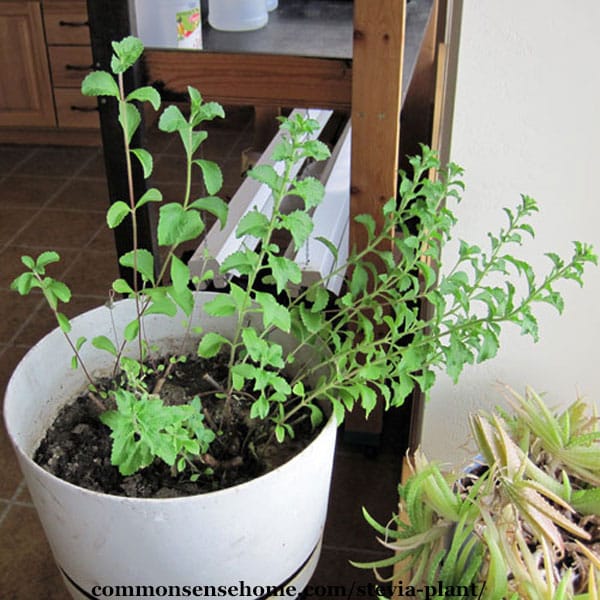
Here’s a plant that was dug up from the garden in fall and kept inside for the winter. You can see it is getting a bit leggy due to lack of sunlight.
Why Grow Your Own Stevia?
Store-bought stevia products are convenient, but they’re often highly refined and blended with other ingredients. When you grow your own, you control the process—from soil to sweetener.
Plus, it’s one more step toward a more self-reliant kitchen. I’ve kept plants growing for several years at our home in northeast Wisconsin. My only regret is that I didn’t learn how to make stevia extract sooner and save myself some money.
You may also enjoy:
- How to Make Homemade Extracts – Vanilla, Lemon and Almond
- 8 Small Vegetable Garden Ideas & Growing Tips
- How to Infuse Herbs in Oil, Water, Vinegar, Alcohol or Honey
This article is written by Laurie Neverman. Laurie and her family have 35 acres in northeast Wisconsin. They grow dozens of varieties of fruiting trees, shrubs, brambles, and vines, along with an extensive annual garden. Along with her passion for growing nutrient dense food, she also enjoys ancient history, adorable ducks, and lifelong learning.
Originally published in 2012, last updated in 2026.
Do you harvest leaves from your plant over the winter?? Or is it better to used dried leaves during the winter months?? Thanks for the great article! Can’t wait to give it a try…
You could harvest over winter, if the plant is inside and growing well. We go through the extract fairly slowly, so I’ve only done this a couple of times so far.
Can you use this in baking? If so, how would one do that? Thanks for this great post!
Yes, you can use it in baking, but it won’t brown like sugar and has different textural properties as well. Stevia is easiest to use with recipes that have been adapted for it. The Spunky Coconut cookbook is one that I use regularly that has liquid stevia sweetened recipes –
http://www.amazon.com/gp/product/098278113X/ref=as_li_tf_tl?ie=UTF8&tag=commosensehom-20&linkCode=as2&camp=1789&creative=9325&creativeASIN=098278113X“>The Spunky Coconut Cookbook, Second Edition: Gluten-Free, Dairy-Free, Sugar-Free
If you have a smaller batch, does it need to cook less than 20 minutes? And a larger batch more than 20? Or is it always 20 minutes? My vodka & stevia liquid is on the stove now! Thanks for this post! 😀
Sorry I didn’t catch this sooner. I was in the kitchen. It should cook around 20-30 minutes. You’re looking to reduce the volume by about half or so. Watch for the color change, but be careful not to burn it.
How dark should it get? I cooked mine on low for 25 minutes, was in kitchen watching the whole time so not to boil/burn it. It got really dark green and has a musky/sharp taste to it. Did I cook it too long? I’ve tried it twice and both times the result was gross. Help!
Maybe infuse it for a shorter amount of time before cooking? It should be green, and there will be a slight aftertaste (to my palate, it’s like black licorice or anise), but the aftertaste shouldn’t be stronger than the sweet taste. Unfortunately, plants being plants, there is variability in flavor and sweetness, but I would start with a shorter steep and see if that improves the flavor. Longer steeping tends to bring out more bitter compounds.
oh thank you so very much for all this information! i’m way post gastric bypass, very limited budget, have been growing one straggly plant all while diligently looking for this! now i’m so excited that i’m going to order some seeds to get some more plants going!
Elaine- I grew the plants for a couple years myself before I figured this out. I tried using the leaves fresh and dried, but this is so much more convenient once it’s done. I hope your seeds sprout well and you are soon set with stevia. 🙂
The extract only keeps for 2 weeks? Is there anything that can be done to make it last longer? I’ve been wanting to do this, but It seems like a lot of work to only last for a short time.
Tangerine – the only way to extend the shelf life is to add some sort of preservative – like alcohol. With the water based extract, you’ve basically got plant juice in a jar. Even though it’s sterilized, it’s only going to keep so long. Your only other option would be freezing, but I haven’t tried that and haven’t seen it recommended.
I tincture other herbs (which is what you’re doing when making this ‘extract’) and prior to the process being explained to gently heat this and evaporate the alcohol, you should be able to keep the ‘extract’ almost indefinitely for future use I believe. (This is my first season with stevia to harvest-so this is supposition on my part.) But my suggestion is if you have more than a few ounces, store what you will not immediately use without doing the ‘cooking’ step and process only the amount you can use in a few weeks. It requires more work each time you’re ready for a new ‘batch’, but could extend the shelf life of your extract for some time. I know I am able to keep ‘tinctured’ herbs for several (2-7) years just being aware of smell, color and making sure there is no visible growth that looks like molds. The alcohol is the preservative, so why boil off more than you can use at one period of time? If you aren’t interested in this sweetener for children, and will use it in things like hot tea or coffee, adding it right off, while your beverage is very hot causes most of the alcohol to evaporate anyway. Is it necessary to ‘cook’ it as part of the extract process at all?? or just to get out the alcohol for use? questions…ty .
Stevia, unlike many herbs, has an underlying bitterness. The longer is sits in the alcohol, the more of this bitterness gets into the extract. So – you could certainly extend the shelf like by keeping in the booze (I keep my tinctures longer, too), but the taste would not improve with age. Cooking off the alcohol isn’t absolutely essential, but it does concentrate the flavor, so you’re not doing shots of vodka to with your coffee or tea to get the desired sweetness level.
Lol! What if I want to do shots with my morning coffe or tea (just kidding). I had heard that lemon & apple are preservatives. Does anyone one know for sure about those options instead of tangerine?
I’ve never heard of apple and lemon being used as preservatives. Apples contain pectin, which can be used for making jams and jellies, and lemons contain acid, which can help make foods safe for water bath canning, but I don’t believe either is a preservative in and of itself.
Too funny….. you might not make it to work at all and you can blame the intoxicating coffee when your boss asks, hahahaha!
“I just had coffee this morning” – Irish coffee. 😉
I read somewhere (but please verify) that you can freeze the extract. I intend to try that this year.
I’ve never tried freezing the extract.
I do freeZe it. I cook with water on the stove then pour into ice cube trays and freeze. I make a cup of tea and place an ice cube in it. Works great.
Thank you, Claudia.
I grow stevia and find it impossible to grow from seed. Those darn seeds can be expensive too. One year I tried to root a stem from the mother plant. No matter how hard I tried, it wouldn’t root.
I dried the leaves but to be honest, they are bitter. I am going to try your method and make a fresh tincture.
Once I let the stevia go to seed and harvested the “seed.” Still no luck getting those darn seeds to take! Thanks for the great post.
Anna- Stevia can be a fussy germinator. I make sure to use fresh seed from a source I trust. I haven’t tried rooting a cutting yet, but I may this year since my plants are now two years old.
Thanks for taking time to comment and share your thoughts. 🙂
Out of 15 seeds I have one plant. The plant is really doing well and it’s a year old and about 8′ tall. Repotted the plant into a larger pot (3″pot to a 6″pot) towards the end of the summer. Now I know I need to cut the top of the plant to promote the branching, I will do that tomorrow. Looks as if I have a couple of root plants beginning.
I am planning a herb garden for the summer and plan to plant more stevia, I will begin the seeds this winter in hopes of having some plants large enough to put into the garden. I had hoped until I read your article that it would spread like a mint plant as the leaves look so similar……yeah I know in my dreams LOL!
Yep! Stevia is *not* a spreader like mint, at least not for me, although it will get leggy and sprawl if I don’t keep it trimmed. You may have some luck rooting cuttings from your original plant, if you wanted to try that.
I took a cutting from my mother plant and got it to root first time. My method was to sit it in a jar of water and add a small amount of willow water whenever the water level dropped noticeably. It took quite a long time to put out roots (I may have been a bit light with the willow water, but I almost killed it when I first put it in straight willow water), maybe a month or more, but eventually it put out good strong roots. The cutting/child plant is sitting outside in a pot (and a storm) as I write.
I imagine any rooting hormone would do the trick, I used willow water as it was free to make and fun.
That’s neat. I’ve never tried willow water, as I don’t have any willows handy, but I don’t mess around with cutting propagation too much, either. Thanks for sharing your experience.
Yep, Stevia is indeed slow to root — tho I had very little trouble originally starting my crop from (yes, expensive!) seed and really didn’t even do it right lol . . .
I imagine having trouble rooting em is bc I’ve had bad timing and wrong kinda cuttings – but even so, have btwn 25 to 50% success rate.
I’m guessing (and testing) young new shoots in spring this time (older woody-stem shoots have a hard time in late spring/summer).
Number of hours of light v. darkness might also be an important key
Another thing to experiment with is direct sunlight v. indirect v. controlled artificial lights.
What is “willow water”?
I have some willow bark I collected from a dead willow – I put a little of that in water right with the cuttings.
Can’t really tell if it makes a dif ? ? ?
Ani
Willow water is a homemade plant rooting hormone compound made from willow trees – http://deepgreenpermaculture.com/diy-instructions/home-made-plant-rooting-hormone-willow-water/
Thank you!
Can I use stevia leaf green powder to make an extract?
Yes, you can use the dried powder. From what I’ve read, the dried powder tends to be a little more bitter than the fresh leaves, but so far I’ve only use fresh.
So glad I found this, I just planted my first stevia plants and was wondering how I was goin to use it. Thanks so much for your info.
Pat – glad to help.
What a great article! I’ll be adding Stevia to my herb garden this year. I usually end up drying my other herbs but will make the Stevia extract as described. Thanks for sharing 😉
My stevia is hiding out in the greenhouse right now. We’ve still got night’s below freezing here. 🙂
I tried growing stevia this year, but it didn’t work out. Looks like maybe I didn’t keep the seeds warm enough for them to actually germinate!
This post is so helpful! I hope you don’t mind, I shared a link to it on my blog’s Facebook page. I’ve been talking about stevia and a sugar substitute this week.
http://www.facebook.com/pages/Raising-Isabella/244100415635129
Thanks for the article. I’ve wondered how to make an extract, how simple is that? Only one problem though, if I prepare the stevia and vodka as shown, I’d throw in some fresh mint and it would never make it to the stove!!! Add some fresh squeezed lime juice and a wonderful vodka mojito is in order! 🙂
I see your point… 😉
How can you keep this longer than 3 months…tks Karen
It’s better to dry some leaves and make a fresh batch when you need it. You can store it without cooking off some of the alcohol to extend the shelf life indefinitely, but then you would taste the alcohol.
I’ve also used glycerin (6 parts per 4 parts water)) as the menstruum. It has been stored for well over two years (I made way more than I thought I’d need) and is still good.
Fascinating…. I’ve been eyeing the Stevia plants at the hardware store, but didn’t know how to process the leaf to get to the sweet. I couldn’t quite fathom crushing leaves and stirring it into my coffee every morning… 😉
Oh yeah – the exact it MUCH easier! The leaves are sweet, don’t get me wrong, but to me they still taste “planty”, which is not something I want in my beverages (or chunks).
Very informative. I didn’t have much luck with germinating stevia seeds, three plants out of 24 seeds is all I got. I’m babying those three plants.
Keep those plants growing and you should have plenty of stevia, as they can get quite large. Good luck!
Outstanding information. I’ve grown purple cone flower for the echninacea but never considered this.
A few months back you mentioned a guest post on your blog on self defense but I don’t have an email. You have my email from this, feel free to contact me if you are still interested. My partner is an engineer and we both thoroughly enjoy your blog.
Thank you so much for the helpful info!
Just planted my stevia seedling and am looking forward to making herbal teas and extracts. Thanks so much for the information.
You’re welcome. Enjoy.
laurie, another WONDERFUL article. you are so full of information 🙂
Hello, I have grown a stevia plant….do the flowers produce more seed? Or is it easier to clone the plant?
If you have a plant with good flavor, cloning is the best option. The flowers may produce seeds, but germination rates are low, and the new plants don’t always have the same flavor profile as the original plant.
Great post. Visiting from The Barn Hop.
I’ve seen so many “grow your own stevia posts” out there but none of them go on to describe how to USE it once you’ve grown it. Thanks much – can’t wait to try out the extract!
Can be shade dried, crushed into powder and kept into a tight lid container and used in any beverage as a sugar substitute. Can be used by obese and diabetics. Its sweetness is 1cup of stevia = 300/400 cups of cane sugar depending on the variety of stevia plant.
thank you for this fantastic article! we use alot of stevia around here, and it would certainly be nice to not have to spend so much money on it! i’ll be adding the stevia plant to my potted herbs this summer 🙂
Thank you for this post. I grew stevia last year and dried it, but wasn’t sure where to go from there. It’s still hanging in the basement!
Dried leaves for consumption can also be purchased from San Francisco Herb co or Atlantic Spice. Check both sites because price may vary according to availability and your physical location (for shipping). Last time I ordered it was a $35 minimum. They ship in bulk. Both dried botanicals and herbs. Some bulk spices and dried foods. They also carry bottles and droppers. Vodka works great with other dried botanicals to draw absolut and i LOVE these instructions. Ya shoulda been a teacher!!!
Thanks, Kelly. I do homeschool me boys, and “teach” here. I also acted as an assistant instructor back in college (statistics class -ugh – don’t miss that at all!). Life is learning.
My plants are doing great. I was wondering if the fresh leaves can be brewed along with a tea bag to ad sweetness to tea or even coffee?
PS: gave up on seeds and bought Bonnie plants.
Placing the fresh leaves to brew with tea will work to some extent (not quite the same flavor profile, but there is sweetness). Trying to brew fresh leaves with coffee, not so much – although a French press might be more effective than an automatic drip machine.
I also bought the Bonnie stevia plants. They were sold in the herb section at Home Depot in my hometown of New Freedom, Pennsylvania. They were about four inches tall. I planted them in a sixteen inch pot. Within about three weeks the plant were almost a foot high. Now they are about two foot high and look like a small shrub. I’m very happy with my first experience with stevia. It couldn’t be any easier.
I made sun tea with tea bags and a sprig of stevia plant….nice.
Hi, that is how I typically use my stevia leaves. You don’t need many leaves to sweeten a 1/2 of tea